1 of 4
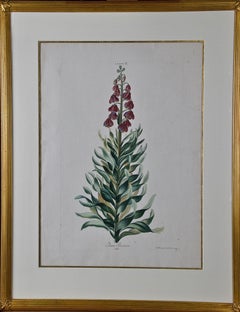
UnknownJapanese Floral Woodblock Print - 10c.1900
c.1900
$275List Price
About the Item
- Creation Year:c.1900
- Dimensions:Height: 14.5 in (36.83 cm)Width: 21 in (53.34 cm)
- Medium:
- Movement & Style:
- Period:
- Condition:
- Gallery Location:Brooklyn, NY
- Reference Number:Seller: JPF_0101stDibs: LU1442210568772
Authenticity Guarantee
In the unlikely event there’s an issue with an item’s authenticity, contact us within 1 year for a full refund. DetailsMoney-Back Guarantee
If your item is not as described, is damaged in transit, or does not arrive, contact us within 7 days for a full refund. Details24-Hour Cancellation
You have a 24-hour grace period in which to reconsider your purchase, with no questions asked.Vetted Professional Sellers
Our world-class sellers must adhere to strict standards for service and quality, maintaining the integrity of our listings.Price-Match Guarantee
If you find that a seller listed the same item for a lower price elsewhere, we’ll match it.Trusted Global Delivery
Our best-in-class carrier network provides specialized shipping options worldwide, including custom delivery.You May Also Like
"Lilium Persicum" Ehret 18th Century Hand Colored Botanical Engraving
By Georg Dionysius Ehret
Located in Alamo, CA
A beautiful and important 18th century hand colored copperplate engraving of lillies which was most likely designed by Georg Dionysius Ehret (1708-1770) and engraved by Johann Michae...
Category
Late 18th Century Naturalistic Still-life Prints
Materials
Engraving
$2,175
H 27.5 in W 21.63 in D 1.13 in
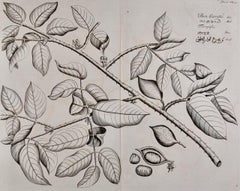
Fever Nut Plant "Ban Caretti": A 17th Century Engraving by Hendrik van Rheede
Located in Alamo, CA
This is a 17th century engraving of a fever or bonduc nut plant entitled "Ban Caretti" by Hendrik van Rheede tot Drakenstein, plate 20 from his 'Hortus Indi...
Category
Late 17th Century Naturalistic Landscape Prints
Materials
Engraving
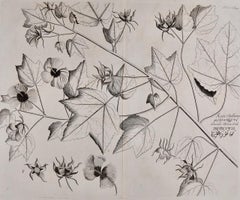
"Katu-Belluren": A 17th Century Botanical Engraving by Hendrik van Rheede
Located in Alamo, CA
This is a 17th century engraving of a vine spinach plant entitled "Katu-Belluren" by Hendrik van Rheede tot Drakenstein, plate 46 from his 'Hortus Indicus M...
Category
Late 17th Century Naturalistic Landscape Prints
Materials
Engraving
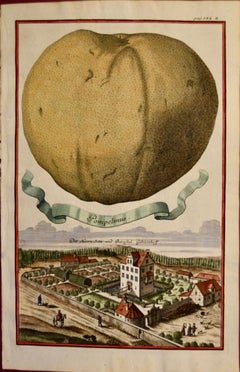
Pompelmus (Grapefruit): An Early 18th C. Hand-colored Engraving by Volckamer
By Johann Christoph Volkhamer
Located in Alamo, CA
This is an early 18th century hand-colored copperplate engraving of the anatomy of grapefruit by Johann Christoph Volkhamer, entitled "Pompelmus (Grapefruit), Der Herra Sitz und Burg...
Category
Early 18th Century Naturalistic Still-life Prints
Materials
Engraving
Citrus (Cedar Flower): An Early 18th C. Volckamer Hand-colored Engraving
By Johann Christoph Volkhamer
Located in Alamo, CA
This is an early 18th century hand-colored copperplate engraving of the anatomy of a Cedar Flower citrus fruit by Johann Christoph Volkhamer, entitled "Cedro di fiore e Sugo doppia (...
Category
Early 18th Century Naturalistic Still-life Prints
Materials
Engraving

Pee-amerdu Plant: A Rare 17th Century Botanical Engraving by H. van Rheede
Located in Alamo, CA
This is a rare 17th century engraving of a plant entitled "Pee-amerdu" by the Dutch botanist Hendrik van Rheede tot Drakenstein, plate 19 from his 'Hortus Indicus Malabaricus' (Garden of Malabar), published in Amsterdam in 1686 by Johann van Someren. The engraving depicts the Pee-amerdu plant, a large leafed plant climbing plant off the Malabar Coast in India. The plant is noted for its medicinal uses. It may be related to Tinospora species. Rheede's 19th century publication featured illustrations of exotic plants and fruits labelled with script in the upper right corner in Latin, Malay, Arabic, and Sanskrit. Hortus Indicus Malabaricus is believed to be the earliest comprehensive published work on the flora of Asia and the tropics. The 17th century treatise featured important illustrations of 740 plants of the region, including Indian medicinal plants.
The engraving is printed on 17th century laid, chain-linked watermarked paper. The sheet measures 14.88" high by 18.75" wide. There is a central fold, as issued. There are a few faint smudges, a spot in the upper margin and there is minimal irregularity of the left edge of the paper where the print was previously bound in the 17th century publication. The print is otherwise in very good condition.
There are additional Rheede botanical engravings from his 'Hortus Indicus Malabaricus' publication that are listed on my 1stdibs storefront and online website. These would make for an impressive display grouping. A discount is available for purchase of two or more of the prints.
Hendrik Adriaan van Rheede tot Drakenstein...
Category
Late 17th Century Naturalistic Landscape Prints
Materials
Engraving
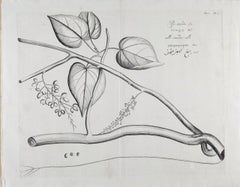
Citamerdu (Amrita) Plant: 17th Century Botanical Engraving by Hendrik van Rheede
Located in Alamo, CA
This is a rare 17th century engraving of a plant entitled "Citamerdu" by the Dutch botanist Hendrik van Rheede tot Drakenstein, plate 21 from his 'Hortus Indicus Malabaricus' (Garden of Malabar), published in Amsterdam in 1686 by Johann van Someren. The engraving depicts the Citamerdu plant, also known as Tinospora cordifolia plant or Amrita and Guduchi. It is a deciduous plant with heart-shaped leaves, greenish flowers, and pea-shaped fruits. Rheede's 19th century publication featured illustrations of exotic plants and fruits labelled with script in the upper right corner in Latin, Malay, Arabic, and Sanskrit. Hortus Indicus Malabaricus is believed to be the earliest comprehensive published work on the flora of Asia and the tropics. The 17th century treatise featured important illustrations of 740 plants of the region, including Indian medicinal plants.
The engraving is printed on 17th century laid, chain-linked paper, watermarked with an elaborate crown design. The sheet measures 15.75" high by 18.75" wide. There is a central fold, as issued. There are a few small spots, but the print is otherwise in excellent condition.
There are additional Rheede botanical engravings from his 'Hortus Indicus Malabaricus' publication that are listed on my 1stdibs storefront and online website. These would make for an impressive display grouping. A discount is available for purchase of two or more of the prints.
Hendrik Adriaan van...
Category
Late 17th Century Naturalistic Landscape Prints
Materials
Engraving
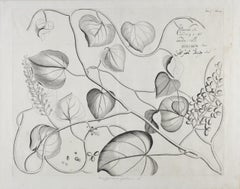
Caunga Cucumber Plant: A 17th Century Botanical Engraving by Hendrik van Rheede
Located in Alamo, CA
This is a rare 17th century engraving of a plant entitled "Caunga" by the Dutch botanist Hendrik van Rheede tot Drakenstein, plate 6 from his 'Hortus Indicus Malabaricus' (Garden of Malabar), published in Amsterdam in 1686 by Johann van Someren. The engraving depicts the caunga plant, also known as Inca cucumber or horned squash, which is a climbing vine that produces edible, cucumber-like fruits. Rheede's 19th century publication featured illustrations of exotic plants and fruits labelled with script in the upper right corner in Latin, Malay, Arabic, and Sanskrit. Hortus Indicus Malabaricus is believed to be the earliest comprehensive published work on the flora of Asia and the tropics. The 17th century treatise featured important illustrations of 740 plants of the region, including Indian medicinal plants.
The engraving is printed on 17th century laid, chain-linked paper, watermarked with an elaborate crown design. The sheet measures 15.25" high by 18.88" wide. There is a central fold, as issued. There is a small dark spot on the left which appears to represent a paper inclusion which occurred when the hand-made paper was produced. The print is otherwise in excellent condition.
There are additional Rheede botanical engravings from his 'Hortus Indicus Malabaricus' publication that are listed on my 1stdibs storefront and online website. These would make for an impressive display grouping. A discount is available for purchase of two or more of the prints.
Hendrik Adriaan van Rheede tot Drakenstein...
Category
Late 17th Century Naturalistic Landscape Prints
Materials
Engraving
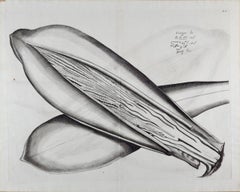
Flowering Digitalis Plants: An Original 17th C. Botanical Engraving by E. Sweert
By Emanuel Sweert
Located in Alamo, CA
This beautiful and extremely rare early 17th century hand-colored copperplate engraving of four flowering Digitalis plants by the Dutch artist and botanist Emanuel Sweert is plate 6 ...
Category
Early 17th Century Naturalistic Landscape Prints
Materials
Engraving

Emanuel SweertFlowering Digitalis Plants: An Original 17th C. Botanical Engraving by E. Sweert, 1612
$1,375
H 15.5 in W 10.38 in
Orchids" Framed 19th C. Hand-Colored Engraving of "Lycaste Skinneri" by Fitch
By John Nugent Fitch
Located in Alamo, CA
This beautiful, original hand-colored orchid lithograph entitled "Lycaste Harrisoniae Eburnea" Orchids by John Nugent Fitch is plate 100 in Robert Warner's publication 'The Orchid Al...
Category
1880s Naturalistic Still-life Prints
Materials
Engraving
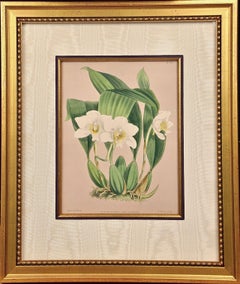
John Nugent FitchOrchids" Framed 19th C. Hand-Colored Engraving of "Lycaste Skinneri" by Fitch, 1882
$975
H 20.5 in W 17.25 in D 1.25 in