Modern Art

54,431 Results
MODERN STYLE

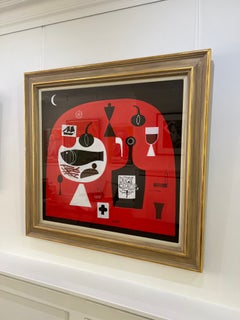
The first decades of the 20th century were a period of artistic upheaval, with modern art movements including Cubism, Surrealism, Futurism and Dadaism questioning centuries of traditional views of what art should be. Using abstraction, experimental forms and interdisciplinary techniques, painters, sculptors, photographers, printmakers and performance artists all pushed the boundaries of creative expression.

Major exhibitions, like the 1913 Armory Show in New York City — also known as the “International Exhibition of Modern Art,” in which works like the radically angular Nude Descending a Staircase by Marcel Duchamp caused a sensation — challenged the perspective of viewers and critics and heralded the arrival of modern art in the United States. But the movement’s revolutionary spirit took shape in the 19th century.

The Industrial Revolution, which ushered in new technology and cultural conditions across the world, transformed art from something mostly commissioned by the wealthy or the church to work that responded to personal experiences. The Impressionist style emerged in 1860s France with artists like Claude Monet, Paul Cézanne and Edgar Degas quickly painting works that captured moments of light and urban life. Around the same time in England, the Pre-Raphaelites, like Edward Burne-Jones and Dante Gabriel Rossetti, borrowed from late medieval and early Renaissance art to imbue their art with symbolism and modern ideas of beauty.

Emerging from this disruption of the artistic status quo, modern art went further in rejecting conventions and embracing innovation. The bold legacy of leading modern artists Georges Braque, Pablo Picasso, Frida Kahlo, Salvador Dalí, Henri Matisse, Joan Miró, Marc Chagall, Piet Mondrian and many others continues to inform visual culture today.

Find a collection of modern paintings, sculptures, prints and other fine art on 1stDibs.

to
5,843
27,978
11,021
7,553
5,785
4,930
Overall Width
to
Overall Height
to
1,291
6,615
43,177
6,205
286
472
1,080
2,455
2,132
6,982
7,518
5,891
3,144
1,072
1,160
119,886
64,064
57,292
29,295
14,498
9,667
6,972
6,315
4,265
3,195
2,511
2,316
2,123
593
30,294
20,819
4,449
32,664
16,600
12,130
8,923
8,401
6,433
4,797
4,076
3,807
3,614
3,472
3,256
2,658
2,352
2,147
2,062
1,800
1,732
1,705
1,630
10,880
9,821
9,692
6,162
6,098
7,079
2,492
1,344
436
380
6,082
27,521
36,771
19,692
Style: Modern
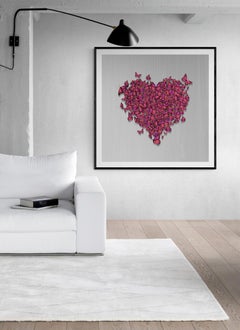
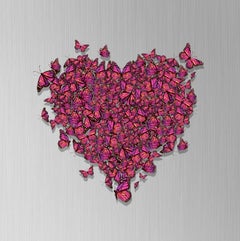
"BUTTERFLY HEART" 36x24 Pop Art Archival Print Butterflies Unsigned Edition

"BUTTERFLY HEART" 36x24 Pop Art Archival Print Butterflies Unsigned Edition

By Destro

Located in Los Angeles, CA

Archival pigment pop art print of butterflies creating a heart shape created by DESTRO DESTRO is an LA based pop artist. and image creator. Printed on museum grade poster paper....

Category

21st Century and Contemporary Modern Art

Materials

Archival Ink, Archival Pigment

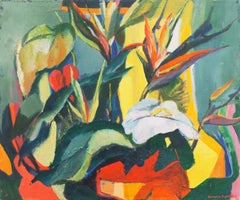
Antique American Modernist Orchid Flower Still Life Framed Luminous Oil Painting

Antique American Modernist Orchid Flower Still Life Framed Luminous Oil Painting

Located in Buffalo, NY

Antique American modernist still life oil painting. Oil on canvas, lain to board. Framed. Measuring: 29 by 23 inches overall, and 24 by 18 painting alone. Excellent condition, read...

Category

1920s Modern Art

Materials

Oil

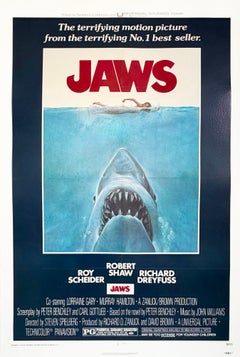
Jaws 1975 Original Vintage One Sheet Poster

Jaws 1975 Original Vintage One Sheet Poster

By Roger Kastel

Located in London, GB

An Original Vintage Theatrical Linenbacked One-Sheet Movie Poster Measures 27″ x 41″ / 69 x 104 cm Artist: Roger Kastel Jaws, the classic 1975 Steven Spielberg Universal man-eatin...

Category

1970s Modern Art

Materials

Photographic Paper

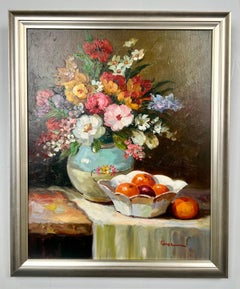
Floral Still Life, Flowers, Vase & Fruit Oil Painting in Silver Frame Signed

Floral Still Life, Flowers, Vase & Fruit Oil Painting in Silver Frame Signed

Located in Plainview, NY

Floral Still Life, Flowers, Vase & Fruit Oil Painting in Silver Frame Signed A richly detailed still life oil painting signed "Torez" in the lower right corner, depicting a lush mix...

Category

1990s Modern Art

Materials

Oil

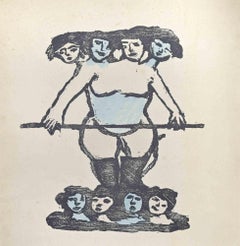
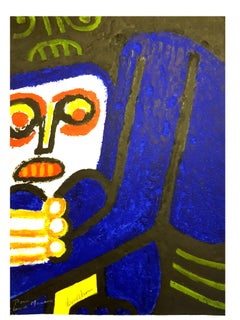
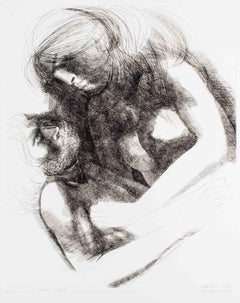
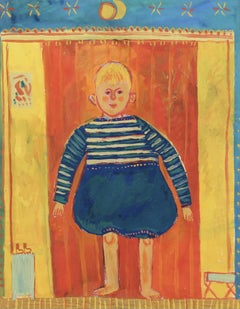
Bengt Lindstrom - Original Handsigned Engraving

Bengt Lindstrom - Original Handsigned Engraving

By Bengt Lindström

Located in Collonge Bellerive, Geneve, CH

Bengt Lindström - Original Handsigned Engraving The Seven Deadly Sins. 76 x 56 cm Signed in pencil by Bengt Lindström Paris, ABCD, 1976. Original etching in color Limited edition 90 ex. This is the unique copy offered to Claude Manesse, The story of B. Lindström was collected by Frederick Towarnicki, assisted by Agathe Malet-Buisson. The engravings were drawn on the presses of Claude Manesse. Bengt Lindström (1925-2008) Bengt Lindström was born on September 3rd, 1925 in Storsjökapell, a small isolated village in the Swedish province of Norrland. The young child thus grew up in that vast, mythical and harsh expanse of mounts, glistening lakes and endless forests known as Lapland. His father was a primary school teacher who was fond of Lapps and who showed great interest in their ethnic group and culture. The child was only three days old when Lapp King Kroik, his godfather, administered the Baptism of the Earth, where the child is conveyed between two roots of a tree to grant him protection from the Gods. Lapps as well as local lumberjacks would occasionally abandon their silent ways to tell him and reveal the tales, legends and mysteries of the Great White North. 1935-1945 : He left Storsjökapell and headed to Härnösand, where he wrote short science-fiction novellas, became a renowned athlete and began to paint. 1944-1946 : Isaac Grünewald Art School in Stockholm, Sweden. Study drawing with Aksel Jörgensen at the Copenhagen Fine Arts School in Denmark. He realized his first two lithographs, Meditation and Le Modèle Etendu (The Stretched Model). 1947-1952 : He arrived in Paris. He travelled to Italy, where he visited Florence and Assisi, developing a deep fascination for Giotto and Cimabue. He was granted a scholarship by Swedish magazine Aftontidningen, which helped him move into a workshop in Arcueil, France. He began working on mosaics. 1953-1967 : He returned to Paris, once again taking up lithography and engraving, which holds a vital position in his work. He moved into a workshop in Rueil-Malmaison. This was the start of his collaboration with the Rive Gauche Gallery in Paris. London Tooth & Sons Gallery Director M. Cochrane purchased a large number of his works. He left the workshop in Rueil-Malmaison to settle in Savigny-sur-Orge, France. He began taking to figurative art with Masks, Gods and Monsters. He exhibited with the Nouvelle Figuration Group at the Mathias Feld Gallery. He also began working with the Ariel Gallery in Paris. 1968-1978 : Lindström completed a series of 10 lithographs about Scandinavian mythology. He also completed a series of drypoint works. An association with the Protée Gallery in Toulouse, France, led to exhibitions at the Protée Gallery II in Paris starting in 1984. He executed a large mural painting the Grand Hotel in Härnösand, Sweden. He also made two large frescoes for the Nacksta-Sundsvall covered market in Sweden. He took to sharing his working time between the workshop in Savigny-sur-Orge and the one in Sundsvall. He began collaboration that was to last several years with the ABCD Gallery in Paris, which provided exclusive publication for his engravings and strong ink work. Les Hommes du Nord (Men of the North) was the first of the major tapestries. He published a boxed set album, Eddan, Eddan, Eddan, illustrating Scandinavian mythology. Together with Jacques Putman, he completed two editions of bronze sculptures, Les Enfants Sauvages (The Wild Children). 1979-1982 : He worked on glass, making thirty dishes and goblets for renowned Swedish glassmaker Kosta Boda. He painted a car for Volvo, Sweden’s leading car manufacturer. Then, close to his birthplace, he painted gigantic tarpaulins over forty metres high, covering the slopes of the neighbouring Våladalen Mountain, as a protest against the building of a dam. This action caused a sensation and provoked fierce reactions. He also created small painted papier mâché sculptures, Têtes (Heads), as well as some gold and silver jewellery. 1983 : He exhibited seven monumental 3x2.5m works at the Art and History Museum in Stockholm: Les Grands Dieux Ase (The Great Aesir Gods), depicting the gods from Scandinavian mythology: Thor, Odin, Frej, Balder, Ymer, Loki and Unknown God, as well as acrylic paintings about the Valkyries. Les Grands Dieux was ultimately exhibited in a purpose-built chapel adjoining the Midlanda Contemporary Arts Centre in 1996. He completed Thor’s Hammer, a monumental sculpture. 1985-1990 : He lived also in the Alicante region, where Spanish friends found him a new workshop. While there he completed Novelda, an album of lithographs featuring poems by Spanish poet Paco Pastor. He completed a new mural, 5mx5m, for the Västeras Science Institute in Sweden. He then started working with the San Carlo Gallery in Milan, Italy, which coordinated all of the Italian events. Major exhibitions and retrospectives were held in Italy, Belgium, Luxembourg, Germany and Spain. He created two boxed set albums, containing series of 10 aquatints, Monde Autre et Chamanes (Otherworld and Shamans), featuring poems by Michel Perrin. 1991-1994 : He went back to working in black and white, completing some very-large-format works. In Murano, in association with the San Carlo Gallery, he created Grands Verres (Large Glasses), a series of large vases and sculptures made of crystal. He painted Kåtan Mimi, an 8x9m Lapp tent, for the town of Arjeplog in Swedish Lapland. He completed a couple of 2m-high painted polyester sculptures, Lui et Elle (Him and Her). He then made a new series of crystal glasses and sculptures in Murano, Italy. He completed Présence (Presence), a new 3.5x2.7m tapestry for the municipality of Timrå, Sweden. He started on the Grands Initiés (Great Insiders) series, all large format and mixed black and white techniques. He finished the strong series about Norse gods. 1995-1996 : He moved into a new workshop in Paris. A retrospective was held at the Sundsvall Museum in Sweden, and on that occasion he painted a monumental 700-m² canvass, Le Géant sur la montagne (The Giant on the Mountain), which was hung all summer long on the mountain slope facing the town. He went on to complete a suite of six silkscreen prints on the same theme. Then he inaugurated the Y, a monumental sculpture. Lindström then completed Temps Zéro (Zero Time), a watch made for Swatch. One of his works, L’hiver (Winter), made the cover of the first 1996 issue of Telerama, the leading French weekly. In association with Sydkraft Sweden, he painted a fresco for the municipality of Örebro on a 17m-high tank with a surface area of 3,000 m², located at the crossroads of major Swedish motorways, by the entrance to the Åbyverket industrial estate. He also created a 6.5m-high Tången sculpture made of painted concrete in Ånge, which was inaugurated on September 3rd in the presence of their Majesties the King and Queen of Sweden. 1997-1999 : He began working on ceramics in Albisolla, Italy. He also completed a new 30m-high fresco for the town of Örebro, located close to the tank he had painted in 1996 near Åbyverket. The year saw the inauguration of the Midlanda Contemporary Arts Centre in Sweden, which harbours the collection of the Bengt and Michèle Lindström Foundation, featuring the entire engravings collection (about 800 works), as well as a selection of paintings and sculptures. He completed a 4x10m mural in the lobby of the University of Eskilstuna, Sweden, and also completed two monumental frescoes on the Akkats dam and a mural on the power station facing Jokkmokk in Swedish Lapland. 2000-2003 : He painted all of the sides of a semi-articulated lorry for Scania, Sweden’s main truck manufacturer. In Italy, he completed a new series of crystal sculptures with Adriano Bérengo. He finished the Great Prophets, a series of 2x2m oil on canvass works. Swiss publisher Ides et Calendes published a small but luxurious monograph, with text by Françoise Monnin. A notebook was also published, Le Visage dans l’Art de Bengt Lindström (Faces in the Art of Bengt Lindström). He completed a substantial series of large blue acrylic paintings, Femmes (Women). 2003 : Bengt fell ill and was unable to paint, but the exhibitions went on. 2004 : Saw the release of the film by Dag Jonzon and Hans Östbom, produced by Dell’arte AB and Östbom Filmbild, about the life of Bengt Lindström. Entitled Lindström - Le Diable de la couleur et de la forme (Lindström – The Colour and Form Devil), the film was produced thanks to support from Film Västernorrland, Länsstyrelsen Västernorrland and Sveriges Television. It was broadcast on Swedish television channels. That same year, the Midlanda Contemporary Arts Centre was closed as a result of municipal policy. 2005-2007 : The 6m-high sculpture Le Loup (The Wolf), made for PEAB, was inaugurated in Botkyrka-Stockholm. Lindström – The Colour and Form Devil was screened at the Paris Swedish Cultural Centre and released on DVD. The Michèle and Bengt Lindström Foundation was donated and transferred to the Länsmuseet i Västernorrland in Härnösand, Sweden, where a special room was prepared to host Les Grands Dieux Ase. Edition of the 1998 Ceramics, created in association with Francis Dellile’s ”La Tuilerie” workshop. The Bengt Lindström Collection was inaugurated at, Murberget, the Länsmuseet i Västernorrland in Härnösand, Sweden. He illustrated Sinfonietta för Juliana, a collection of poems by Italian poet and art critic Sebastiano Grasso. On January 29th, 2008, Bengt Lindström passed away at his home in Sweden. 2008-2012 : The Fondation Krimaro presents the first volume of the works of Bengt Lindström in his collection. Numerous exhibitions-tribute to the work are presented in major cities in Europe. 2012 : Retrospective - Black and White in the engravings - Museum of Härnösand, Murberget, Sweden. Main exhibitions 1952 Fair Réalités Nouvelles – New realities, Paris, France. 1953 Craven Gallery, Paris, France. 1954 Gummeson Gallery, Stockholm, Sweden. Fair Salon d’Octobre, Paris, France. 1958 Breteau Gallery, Paris, France. 1959 Autour du Spontanéisme – Around the sontaneity, Stockholm, Sweden. L’Europe Nouvelle – The new Europe, LaUnited Statesnne, Switzerland. 1960 Rive Gauche Gallery, Paris, France. 1961 Tooth Gallery, London, England. Le Zodiaque Gallery, Brussels, Belgium. Fair Salon de Mai, Paris, France. 1962 Nouvelle Figuration – New Figuration , Mathias Fels Gallery, Paris, France, 1964 Nord-Sud – North-South, in several cities in Sweden. Ariel Gallery, Paris, France, 15 artists of my generation. Museum of Fine Arts in Gent, Belgium, Figuration-Défiguration – Figuration – Disfigurement. 1965 Rive Gauche Gallery. Paris, France. Nord Gallery, Lille, France. Birch Gallery, Copenhagen, Denmark. 1966 Museum of Modern Art, Gothenburg, Sweden. 1967 Veranneman Gallery, Brussels, Belgium. Carnegie Institute, Pittsburgh, United States. Seibu Gallery, Tokyo, Japan, 23 peintres in Paris. 1968 Ariel Gallery, Paris, France, followed by six exhibitions until 1976. 1969 La Pochade Gallery, Paris, France. Protée Gallery, Toulouse, France, who exhibited him in Paris, Gallery Protée II, from 1984. 1973 Galliera Museum, Paris, France. 1974 Gallery 111, Lisbon, Portugal. 1982 Gallery Protée-Arco, Madrid, Spain and Fair Foire de Cologne, Germany. 1983 Historia Museum, Stockholm, Sweden, The Ase gods and the Valkyries. 1984 Gallery Arcano XXI, Lisbon, Portugal. Gallery Christian Cheneau, Paris, France. Museum Château comtal, Carcassonne, France. 1985 Gallery Italia, Alicante, Spain. 1986 Gallery Sala Gaspar, Barcelona, Spain. Gallery Juan Mordo-Arco, Madrid, Spain. Gallery Italia, Alicante, Spain. Museum of Salamanca, Salamanca, Spain. Gallery Three Continents, New-York, United States. Gallery Protée, Toulouse France, Autour du Roi Lear – Around King Lear. 1987 Gallery Kostel, Paris, France. Gallery Zwirner, Cologne, Germany. Gallery Leu, Rottach-Egern, Germany. 1988 Maison du Lot, Figeac, France. Gallery Protée, Paris, France. Gallery Michèle Sadoun, Paris, France 1989 Gallery Michèle Sadoun, Paris, France, La terre des ancêtres - The Land pf the ancestors. Gallery Protée, Paris, France, Nomads. Gallery Raab, London, England. 1990 Gallery Michèle Sadoun, Paris, France. Centre Culturel de Brest, France. 1991 Gallery Michèle Sadoun, Paris, France. 1992 Archotèque, Saint-Denis, La Réunion, France. Museum of Vesoul, Vesoul, France. Gallery San Carlo, Milan, Italy. 1993 Gallery 111, Lisbon, Portugal. Tonnellerie du Cognac Monnet...

Category

1970s Modern Art
Materials

Engraving

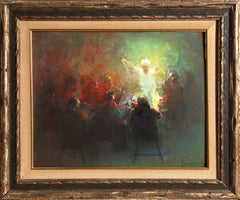
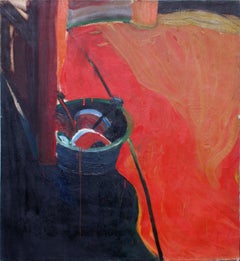
The Road Up

The Road Up

By Marina Stern

Located in Los Angeles, CA

This work is part of our exhibition Marina Stern Luminary, the first retrospective of the artist since 2007. Previously exhibited 1) Marina Stern Nocturnes, Forum Gallery, New York, NY, September 9 to 24, 1993, no. 17 (label verso); and 2) Perception and the Cultural Environment – The Paintings of Marina...

Category

1990s Modern Art

Materials

Canvas, Oil

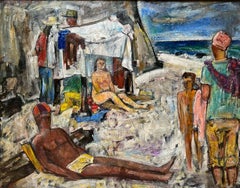
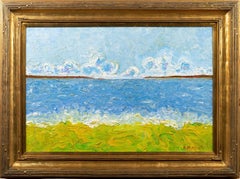
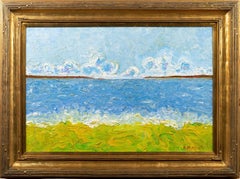
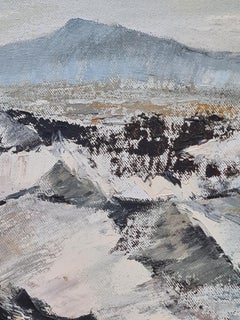
Martha's Vineyard

Martha's Vineyard

By Maurice Becker

Located in Los Angeles, CA

Martha's Vineyard, c. 1951, oil on heavy board, signed upper left, 24 x 30 inches, signed, titled and dated verso, presented in a period frame Maurice Becker was a Russian-born Amer...

Category

Mid-20th Century Modern Art

Materials

Oil, Board

Molly /// Antique Victorian Etching Portrait Figurative British Children Child

Molly /// Antique Victorian Etching Portrait Figurative British Children Child

By Sidney Tushingham

Located in Saint Augustine, FL

Artist: Sidney Tushingham (English, 1884-1968) Title: "Molly" *Signed by Tushingham in pencil lower right. It is also monogram signed in the plate (printed signature) upper right Cir...

Category

1920s Modern Art

Materials

Laid Paper, Drypoint, Etching, Intaglio

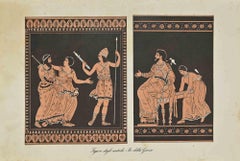
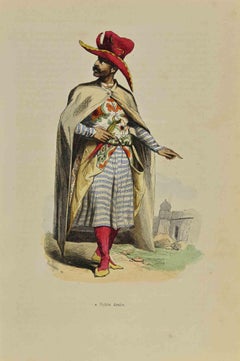
Ancient Greek Kings  - Lithograph - 1862

Ancient Greek Kings - Lithograph - 1862

Located in Roma, IT

Lithograph on paper realized in 1862. Hand colored. The artwork belongs to the Suite Uses and customs of all the peoples of the universe: " History of the government, of the laws, o...

Category

1860s Modern Art

Materials

Lithograph

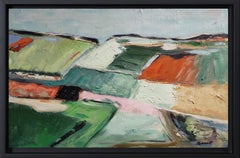
Landscape - Drawing - 1964

Landscape - Drawing - 1964

Located in Roma, IT

Landscape is a drawing realized by an italian Artist in 1964. Tempera on paper. Hamd signed and dated on the lower margin Good conditions with slight foxing.

Category

1960s Modern Art

Materials

Paper, Tempera

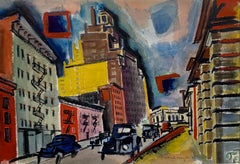
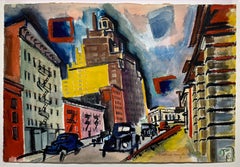
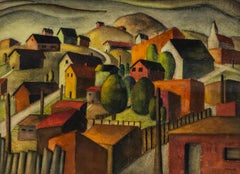
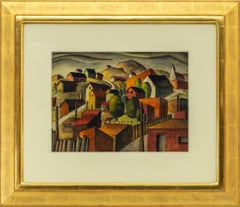
Christopher Street (abstract Greenwich Village cityscape)

Christopher Street (abstract Greenwich Village cityscape)

By De Hirsch Margules

Located in Wilton Manors, FL

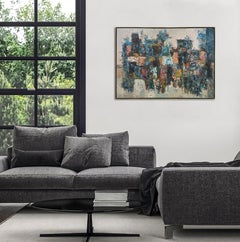
De Hirsh Margules (1899-1965). Christopher Street, 1939. Watercolor on Arches wove paper. Signed and dated in pencil by artist lower margin. Sheet measures 15.5 x 20 inches. Window in matting measures 15 x 19 inches. Framed measurement: 23 x 30 inched. Bears fragment of original label affixed on verso. Incredibly vibrant and saturated color with no fading or toning of sheet. Provenance: Babcock Galleries, NYC Exhibited: The American Federation of Arts Traveling Exhibition. From the facade of The Waverly at Christopher is depicted One Christopher Street, the 16-story Art Deco residential building erected in 1931. It is not a casual coincidence that the structure appears in this cityscape: 1 Christopher Street is the subject. The original intention of this project was to transform the neighborhood, bring a bit of affluence and make a bid to rival the Upper West Side. Margules, a sensitive aesthete, understood how a massive piece of architecture such as One changes a neighborhood. Sound, scale and focal points are forever altered. A pedestrian's sense of depth and distance becomes pronounced. All of these factors contribute to the intent behind this image. Tall buildings disrupt the human scale, change the skyline and carve up space. In this piece, negative space conforms to the man-made geometries. Clouds become gems fixed in settings. De Hirsh Margules (1899–1965) was a Romanian-American "abstract realist" painter who crossed paths with many major American artistic and intellectual figures of the first half of the 20th century. Elaine de Kooning said that he was "[w]idely recognized as one of the most gifted and erudite watercolorists in the country". The New York Times critic Howard Devree stated in 1938 that "Margules uses color in a breath-taking manner. A keen observer, he eliminates scrupulously without distortion of his material." Devree later called Margules "one of our most daring experimentalists in the medium" Margules was also a well-known participant in the bohemian culture of New York City's Greenwich Village, where he was widely known as the "Baron" of Greenwich Village.[1] The New York Times described him as "one of Greenwich Village's best-known personalities" and "one of the best known and most buoyant characters about Greenwich Village. Early Life De Hirsh Margules was born in 1899 in the Romanian city of Iași (also known as Iasse, Jassy, or Jasse). When Margules was 10 weeks old, his family immigrated to New York City. Both of his parents were active in the Yiddish theater, His father was Yekutiel "Edward" Margules, a "renowned Jewish actor-impresario and founder of the Yiddish stage." Margules' mother, Rosa, thirty-nine years younger than his father, was an actress in the Yiddish theater and later in vaudeville. Although Margules appeared as a child actor with the Adler Family[11] and Bertha Kalich, his sister, Annette Margules, somewhat dubiously continued in family theater and vaudeville tradition, creating the blackface role of the lightly-clad Tondelayo (a part later played on film Hedy Lamarr) in Earl Carroll's 1924 Broadway exoticist hit, White Cargo. Annette herself faced stereotyping as an exotic flower: writing about her publicist Charles Bouchert stated that "Romania produces a stormy, temperamental type of woman---a type admirably fitted to portray emotion." His brother Samuel became a noted magician who appeared under the name "Rami-Sami." Samuel later became a lawyer, representing magician Horace Goldin, among others. A family portrait including a young De Hirsh, a portrait of Rosa and Annette together, and individual photos of Rosa and Edward can be found on the Museum of the City of New York website. At around age 9 or 10, Margules took art classes with the Boys Club on East Tenth Street, and his first taste of exhibition was at a student art show presented by the club. By age 11, he had won a city-wide prize (a box camera) at a children's art show presented by the department store Wanamakers. As a young teenager, Margules was already displaying a characteristic kindness and loyalty. Upon hearing that two friends (one of them was author Alexander King), were in trouble for breaking a school microscope, the nearly broke Margules gave them five dollars to repair the microscope . Margules had to approach a wealthy man that Margules had once saved on the subway from a heart attack. Margules didn't reveal the source of the five dollars to King until twenty-five years later. In his late teens, Margules studied for a couple of months in Pittsburgh with Edwin Randby, a follower of Western painter Frederic Remington. Thereafter he pursued a two-year course of studies in architecture, design and decoration at the New York Evening School of Art and Design, while working as a clerk during the day at Stern's Department Store. He was encouraged in these artistic pursuits by his neighbor, the painter Benno Greenstein (who later went by the name of Benjamin Benno). Artistic career In 1922, Margules began work as a police reporter for the City News Association of New York .Margules then considered himself something of an expert on art, and the painter Myron Lechay is said to have responded to some unsolicited analysis of his work with the remark "Since you seem to know so much about it, why don't you paint yourself?" This led to study with Lechay and a flurry of painting. Margules' first show was in 1922 at Jane Heap's Little Review Gallery. Thereafter Margules began to participate in shows with a group including Stuart Davis, Jan Matulka, Buckminster Fuller (exhibiting depictions of his "Dymaxion house") in a gallery run by art-lover and restaurateur Romany Marie on the floor above her cafe. Jane Heap, left, with Mina Loy and Ezra Pound During the 1920s, Margules traveled outside of the country a number of times. In 1922, with the intent of reaching Bali, he took a job as a "'wiper on a tramp steamer where [he] played nursemaid to the engine." He reached Rotterdam before he turned back. He would return to Rotterdam shortly thereafter. In 1927, Margules took a lengthy leave of absence from his day job as a police reporter in order to travel to Paris, where he "set up a studio in Montmartre's Place du Tertre, on the top floor of an almost deserted hotel, a shabby establishment, lacking both heat and running water." He studied at the Louvre and traveled to paint landscapes in provincial France and North Africa. Margules also joined the "Noctambulist" movement and experimented with painting and showing his artwork in low light.Jonathan Cott wrote that: the painter De Hirsch Margulies sat on the quays of the Seine and painted pictures in the dark. In fact, the first exhibition of these paintings, which could be seen only in a darkened room, took place in [ Walter Lowenfels'] Paris apartment. Elaine de Kooning remarked that studying the works of the Noctambulists confirmed Margules' "direction toward the use of primary colors for perverse effects of heavy shadow." It was also in Paris that Margules initially conceived his idea of "Time Painting", where a painting is divided into sectors, each representing a different time of day, with color choices meant to evoke that time of day. In Paris, his social circle included Lowenfels, photographer Berenice Abbott, publisher Jane Heap, composer George Anthiel, sculptor Thelma Wood, painter André Favory, writer Norman Douglas, writer and editor George Davis, composer and writer Max Ewing, and writer Michael Fraenkel. Upon his return to New York in 1929, Margules attended an exhibition of John Marin's paintings. While at the exhibition, he "launched into an eloquent explanation of Marin to two nearby women", and was overheard by an impressed Alfred Stieglitz. The famous photographer and art promoter invited Margules to dine with his wife, the artist Georgia O'Keeffe, and his assistant, painter Emil Zoler. Stieglitz thereafter became a friend and mentor to Margules, becoming for him "what Socrates was to his friends." Alfred Stieglitz Stieglitz introduced Margules to John Marin, who quickly became the most important painterly influence upon Margules. Elaine de Kooning later noted that Margules was "indebted to Marin and through Marin to Cézanne for his initial conceptual approach - for his constructions of scenes with no negative elements, for skies that loom with the impact of mountains." Margules himself said that Marin was his "father and ... academy." The admiration was by no means unreciprocated: Marin said that Margules was "an art lover with abounding faith and sincerity, with much intelligence and quick seeing." Stieglitz also introduced Margules to many other artistic and intellectual figures in New York. With the encouragement of Alfred Stieglitz, Margules in 1936 opened a two-room gallery at 43 West 8th Street called "Another Place." Over the following two years there were fourteen solo exhibitions by Margules and others, and the gallery was well-respected by the press. It was in this gallery that the painter James Lechay, Myron's brother, exhibited his first painting. In 1936, Margules first saw recognition by major art museums when both the Museum of Modern Art and the Museum of Fine Arts, Boston purchased his works. In 1942, Margules gave up working as a police reporter, and apparently dedicated himself thereafter solely to an artistic vocation. "The Baron of Greenwich Village"[edit] Margules made his mark not only as an artist, but also as an outsized personality known throughout Greenwich Village and beyond. To local residents, Margules was known as the "Baron", after Baron Maurice de Hirsch, a prominent German Jewish philanthropist. Margules was easily recognizable by the beret he routinely wore over his long hair. Writer Charles Norman said that he "dressed with a flair for sloppiness." He was said to "know everybody" in Greenwich Village, to the extent that when the novelist and poet Maxwell Bodenheim was murdered, Margules was the first one the police sought to identify the body. Margules' letters show him interacting with art world figures such as Sacha Kolin, John Marin and Alfred Stieglitz, as well as with prominent figures outside the art world such as polymath Buckminster Fuller and writer Henry Miller. Most of his friends and acquaintances found Margules a generous and voluble man, given to broadly emotionally expressive gestures and acts of kindness and loyalty. In 1929, he exhibited an example of this loyalty and fellow-feeling when he appeared in court to fight what the wrongful commitment of his friend, writer and sculptor Alfred Dreyfuss, who appeared to have been a victim of an illicit attempt to block an inheritance. The Greenwich Village chronicler Charles Norman described the bone-crushing hugs that Margules would routinely bestow on his friends and acquaintances, and speaks of the "persuasive theatricality" that Margules seemed to have inherited from his actor parents. Norman also wrote about Margules' routine acts of kindness, taking in homeless artists, constantly feeding his friends and providing the salvatory loan where needed. Norman also notes that Margules was blessed with a loud and good voice, and was apt to sing an operatic air without provocation. The writer and television personality Alexander King said I think the outstanding characteristics of my friend's personality are affirmation, emphasis, and overemphasis. He chooses to express himself predominantly in superlatives and the gestures which accompany his utterances are sometimes dangerous to life and limb. Of the bystanders, I mean. King also spoke with affectionate amusement about Margules' pride in his cooking, speaking of how "if he should ever invite you to dinner, he may serve you a hamburger with onions, in his kitchen-living room, with such an air of gastronomic protocol, such mysterious hints and ogliing innuendoes, as if César Ritz and Brillat-Savarin had sneaked out, only a moment before, with his secret recipe in their pockets." Margules was such a memorable New York personality that comic book writer Alvin Schwartz imagined him at the Sixth Avenue Cafeteria in a risible yet poignant debate with Clark Kent about whether Superman had the ability to stop Hitler. Margules' entrenchment in the Greenwich Village milieu can be seen in a photograph from Fred McDarrah's "Beat Generation Album" of a January 13, 1961 writers' and poets' meeting to discuss "The Funeral of the Beat Generation", in Robert Cordier [fr]'s railroad flat at 85 Christopher Street. Among the people in the same photograph are Shel Silverstein...

Category

1930s Modern Art

Materials

Watercolor, Rag Paper

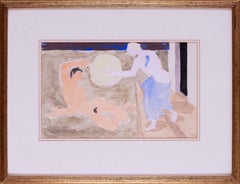
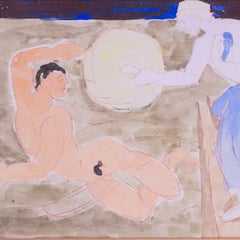
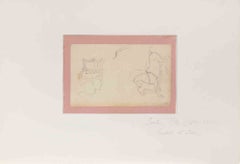
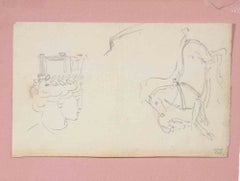
Duncan Grant original 1954 watercolour 'Hero and Leander', signed with initials

Duncan Grant original 1954 watercolour 'Hero and Leander', signed with initials

By Duncan Grant

Located in Petworth, West Sussex

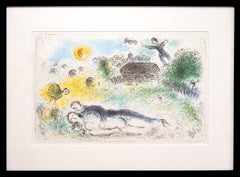
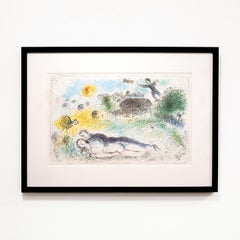
Duncan Grant (British, 1885 – 1978) Hero and Leander, 1954 Watercolour and gouache with crayon Signed with initials and dated ‘DG. / 54’ (lower right) 8.3/4 x 13.7/8 in. (22.3 x 35.3 cm.) Provenance: Paul Roche...

Category

20th Century Modern Art

Materials

Paper, Crayon, Watercolor, Gouache

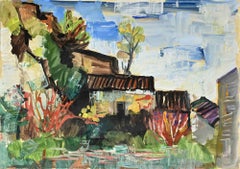
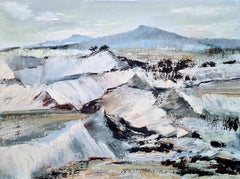
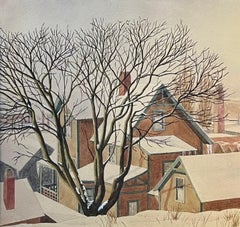
Spring Snowfall Seattle

Spring Snowfall Seattle

By Zama Vanessa Helder

Located in Los Angeles, CA

Spring Snowfall Seattle, 1937, watercolor on paper mounted on panel, signed lower right, 16 ½ x 17 ½ inches (image) 17 x 22 ½ inches (panel), ), title, measurements and Helder’s addr...

Category

1930s Modern Art

Materials

Watercolor, Illustration Board

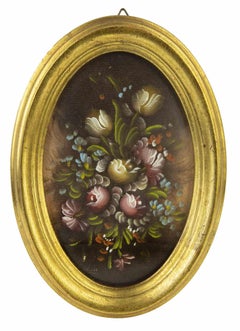
Still Life  - Oil on Canvas - Late 19th century

Still Life - Oil on Canvas - Late 19th century

Located in Roma, IT

Still Life is an artwork realized by an unknown artist in the late 19th Century. Oil on Canvas Mounted on Board. Original wooden frame. 18 x 13 cm. Good conditions

Category

Late 19th Century Modern Art

Materials

Oil, Canvas, Board

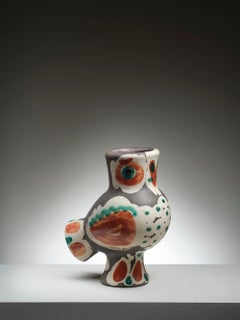
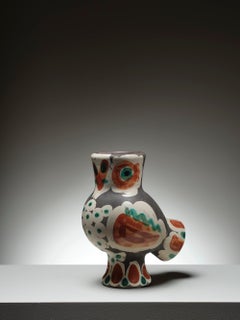
Chouette (A.R.542)
Chouette (A.R.542)

Chouette (A.R.542)

By Pablo Picasso

Located in PARIS, FR

• Picasso began working with ceramics in 1946 at the Madoura workshop in Vallauris, marking the beginning of an important and highly productive chapter in his career. What initially ...

Category

1960s Modern Art

Materials

Ceramic

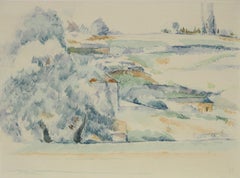
Trees and houses - Lithograph, 1971

Trees and houses - Lithograph, 1971

By Paul Cézanne

Located in Paris, IDF

Paul Cezanne Trees and houses, 1971 Lithograph and stencil (Jacomet workshop) Unsigned Numbered / 225 On paper applied on Arches vellum 53.5 x 41.5 cm (c. 21 x 16.5 in) INFORMATION...

Category

1970s Modern Art
Materials

Lithograph, Stencil

"Sade Adu" by Express Newspapers

"Sade Adu" by Express Newspapers

Located in London, GB

"Sade Ade" by Express Newspapers Nigerian-born British singer and songwriter Sade (Helen Folasade). Unframed Paper Size: 24"x 20'' (inches) Printed 2022 Silver Gelatin Fibre Print

Category

1980s Modern Art

Materials

Black and White

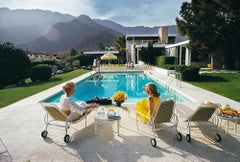
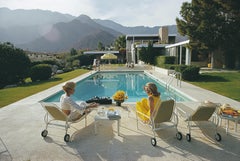
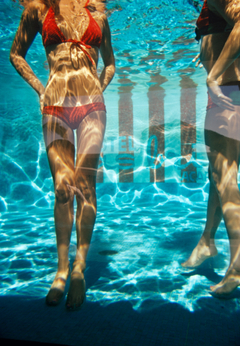
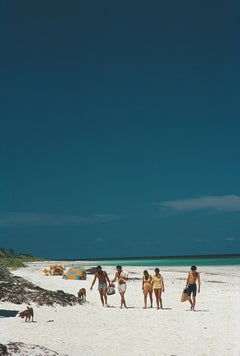
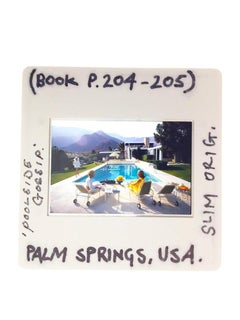
Slim Aarons Estate Edition - Harbour Isle Beach

Slim Aarons Estate Edition - Harbour Isle Beach

By Slim Aarons

Located in London, GB

Holidaymakers on the beach at Harbour Isle in the Bahamas, March 1973. Gorgeous print measuring 60 x 40" inches / ca 152.4 x 101.6 cm’s paper size. Estate Stamped Collection Edi...

Category

1970s Modern Art
Materials

Archival Pigment

Modern art for sale on 1stDibs.
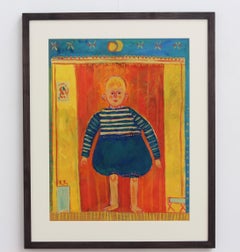
Find a wide variety of authentic Modern art available for sale on 1stDibs. Works in this style were very popular during the 21st Century and Contemporary, but contemporary artists have continued to produce works inspired by this movement. If you’re looking to add art created in this style to introduce contrast in an otherwise neutral space in your home, the works available on 1stDibs include elements of blue, red, orange, purple and other colors. Many Pop art paintings were created by popular artists on 1stDibs, including Kevin Westenberg, Stuart Möller, Destro, and Christel Haag. Frequently made by artists working with Paint, and Paper and other materials, all of these pieces for sale are unique and have attracted attention over the years. Not every interior allows for large Modern art, so small editions measuring 0.4 inches across are also available. Prices for art made by famous or emerging artists can differ depending on medium, time period and other attributes. On 1stDibs, the price for these items starts at $33 and tops out at $390,000, while the average work sells for $1,912.