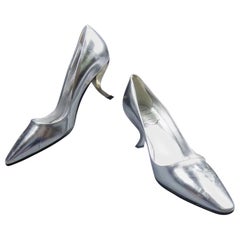
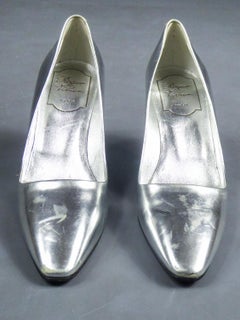
There may be no designer with as wide a breadth of references as the fashion and footwear icon Manolo Blahnik, whose stated sources of inspiration for the creation of his sublime shoes include — but are not limited to — Diana Vreeland, ancient Greece, 21st-century architecture, Spanish cinema and Piet Mondrian.
It’s a fittingly robust list for someone who has spent a lifetime in the self-described “pursuit of beauty.”
Born in 1942 in Spain’s Canary Islands, Blahnik had an early exposure to shoemaking: During World War II, his designer-shoe-loving mother enlisted a local cobbler to teach her to make her own footwear from available materials. The young Blahnik was intrigued.
After briefly studying law in Switzerland with the intention of becoming a diplomat, Blahnik moved to Paris, where he took a job in a vintage clothing shop while studying art at École des Beaux-Arts as well as set design at the art school of the Louvre. It wasn’t until years later, however, that he would realize his calling as a shoe designer. In the late 1960s, Blahnik relocated to London, where he worked for both the Sunday Times and Vogue. In the early 1970s, the renowned American Vogue editor Diana Vreeland saw his sketches and urged him to pursue footwear.
After a debut collection for celebrated fashion designer Ossie Clark — featuring models that Blahnik had gotten to know through his work in the fashion industry, among them Twiggy — received acclaim, he created footwear for illustrious dressmaker Jean Muir and apprenticed with professional shoemakers in London to perfect his craft. By 1973 he had bought out the shoe boutique Zapata and made it his own. Bloomingdale’s introduced him to the American market with a collection a few years later.
Vintage Manolo Blahnik shoes are famous for their theatricality, as the designer is well known for the whimsical, fantastical elements he brings to footwear, often in an explosive palette. “I have always approached color in a bold way, from all angles and variations,” he once said. “Always searching for the poetry of an impossible color.” Tack on teetering height as a trademark that took shape from early on.
“Those poor girls couldn’t walk properly, but people loved it,” the designer recalled of his early models. “Sir Cecil Beaton said to me, ‘Is this a new way of walking?’” To take it from pop culture, it indeed might have been: People are still talking about the night that Bianca Jagger dazzled, horseback, at Studio 54 in a Halston dress and Blahnik shoes on her 30th birthday, and, decades later, the footwear icon was rendered a household name during the long-running television series Sex and the City.
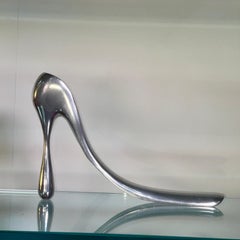
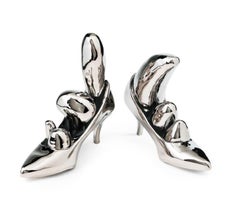
Today, Manolo Blahnik remains a virtual synonym for luxury shoes. Find a range of his footwear and handbags on 1stDibs.
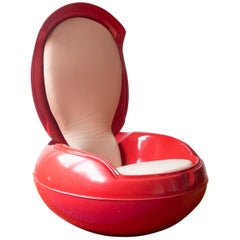
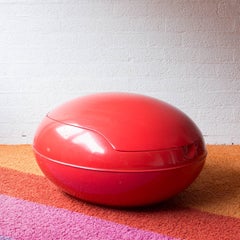
Postmodern design was a short-lived movement that manifested itself chiefly in Italy and the United States in the early 1980s. The characteristics of vintage postmodern furniture and other postmodern objects and decor for the home included loud-patterned, usually plastic surfaces; strange proportions, vibrant colors and weird angles; and a vague-at-best relationship between form and function.
ORIGINS OF POSTMODERN FURNITURE DESIGN
- Emerges during the 1960s; popularity explodes during the ’80s
- A reaction to prevailing conventions of modernism by mainly American architects
- Architect Robert Venturi critiques modern architecture in his Complexity and Contradiction in Architecture (1966)
- Theorist Charles Jencks, who championed architecture filled with allusions and cultural references, writes The Language of Post-Modern Architecture (1977)
- Italian design collective the Memphis Group, also known as Memphis Milano, meets for the first time (1980)
- Memphis collective debuts more than 50 objects and furnishings at Salone del Milano (1981)
- Interest in style declines, minimalism gains steam
CHARACTERISTICS OF POSTMODERN FURNITURE DESIGN
- Dizzying graphic patterns and an emphasis on loud, off-the-wall colors
- Use of plastic and laminates, glass, metal and marble; lacquered and painted wood
- Unconventional proportions and abundant ornamentation
- Playful nods to Art Deco and Pop art
POSTMODERN FURNITURE DESIGNERS TO KNOW
VINTAGE POSTMODERN FURNITURE ON 1STDIBS
Critics derided postmodern design as a grandstanding bid for attention and nothing of consequence. Decades later, the fact that postmodernism still has the power to provoke thoughts, along with other reactions, proves they were not entirely correct.
Postmodern design began as an architectural critique. Starting in the 1960s, a small cadre of mainly American architects began to argue that modernism, once high-minded and even noble in its goals, had become stale, stagnant and blandly corporate. Later, in Milan, a cohort of creators led by Ettore Sottsass and Alessandro Mendini — a onetime mentor to Sottsass and a key figure in the Italian Radical movement — brought the discussion to bear on design.
Sottsass, an industrial designer, philosopher and provocateur, gathered a core group of young designers into a collective in 1980 they called Memphis. Members of the Memphis Group, which would come to include Martine Bedin, Michael Graves, Marco Zanini, Shiro Kuramata, Michele de Lucchi and Matteo Thun, saw design as a means of communication, and they wanted it to shout. That it did: The first Memphis collection appeared in 1981 in Milan and broke all the modernist taboos, embracing irony, kitsch, wild ornamentation and bad taste.
Memphis works remain icons of postmodernism: the Sottsass Casablanca bookcase, with its leopard-print plastic veneer; de Lucchi’s First chair, which has been described as having the look of an electronics component; Martine Bedin’s Super lamp: a pull-toy puppy on a power-cord leash. Even though it preceded the Memphis Group’s formal launch, Sottsass’s iconic Ultrafragola mirror — in its conspicuously curved plastic shell with radical pops of pink neon — proves striking in any space and embodies many of the collective’s postmodern ideals.
After the initial Memphis show caused an uproar, the postmodern movement within furniture and interior design quickly took off in America. (Memphis fell out of fashion when the Reagan era gave way to cool 1990’s minimalism.) The architect Robert Venturi had by then already begun a series of plywood chairs for Knoll Inc., with beefy, exaggerated silhouettes of traditional styles such as Queen Anne and Chippendale. In 1982, the new firm Swid Powell enlisted a group of top American architects, including Frank Gehry, Richard Meier, Stanley Tigerman and Venturi to create postmodern tableware in silver, ceramic and glass.
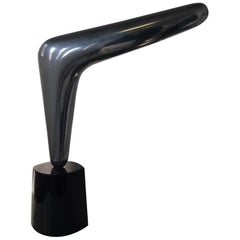
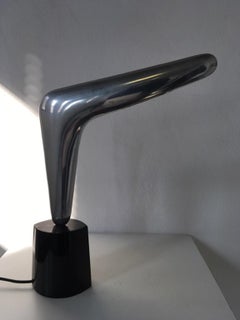
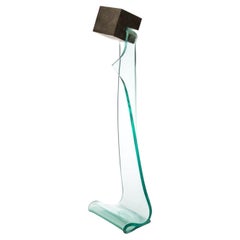
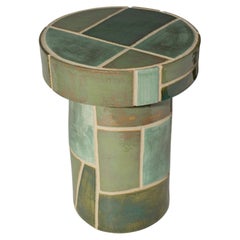
On 1stDibs, the vintage postmodern furniture collection includes chairs, coffee tables, sofas, decorative objects, table lamps and more.
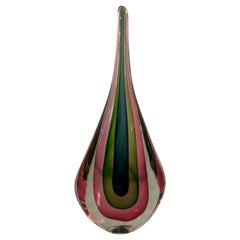
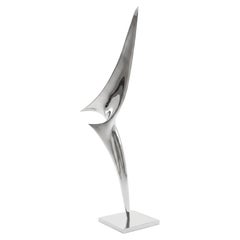
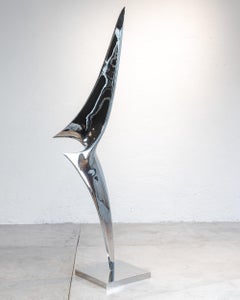
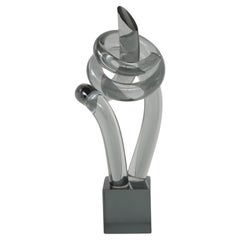
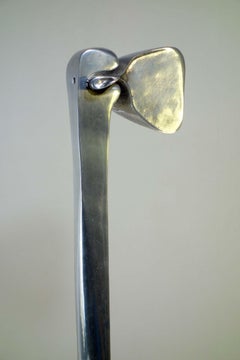
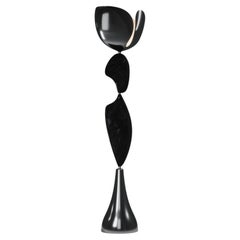
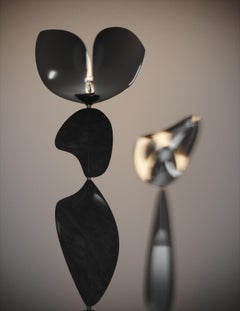
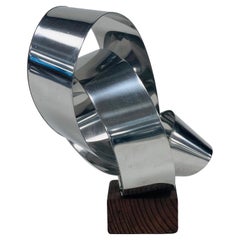
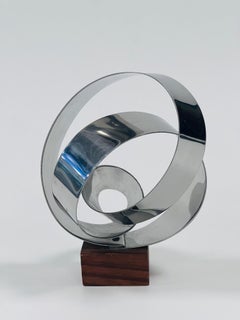
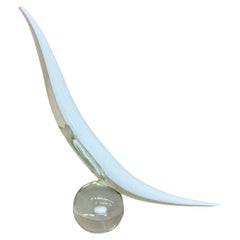
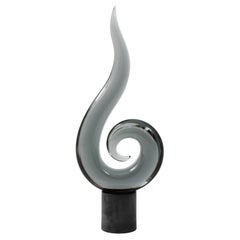
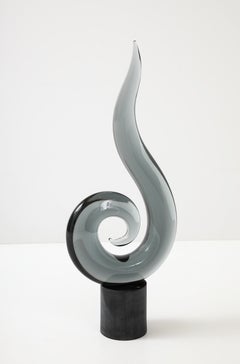
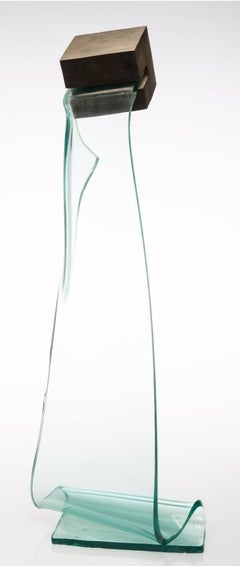
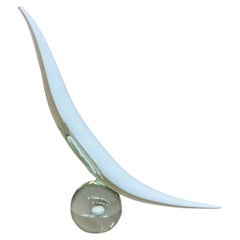
Abstract sculpture has evolved over time with artists making a variety of striking statements in stone, bronze, ceramic and other materials. In the collection of abstract sculptures on 1stDibs, you are sure to find a piece that is perfect for your space.
When exploring how to arrange furniture and decor, consider color, texture and what kind of energy it should evoke. Abstract sculpture can elevate any home through its many decorative possibilities.
Auguste Rodin is often called the father of modern sculpture for his pioneering naturalistic forms and figures that vividly express emotion. His work in the 19th and early 20th centuries broke with artistic conventions and inspired modernism, leading to a new period of avant-garde abstraction.
Pablo Picasso and Georges Braque were among the first artists to push abstract sculpture into the mainstream. They helped define the Cubism movement, which focused on deconstructing the world abstractly. Other 20th-century artistic movements, including Italian Futurism, Dadaism, Neo-Dadaism, Surrealism, Abstract Expressionism and Minimalism, all contributed to the advancement of abstract sculpture. Italian Futurism, for example, celebrated movement, dynamics and technology in abstract sculpture. These movements continue to inform abstract sculpture today.
With abstract art — sculpture, painting or a grouping of prints — a work can complement a living room, dining room or other space, or it can act as a bold focal point.
Browse a range of modern abstract sculptures, postmodern abstract sculptures and other sculptures on 1stDibs.