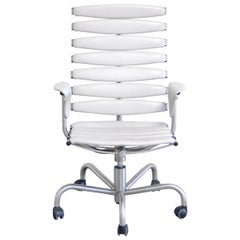
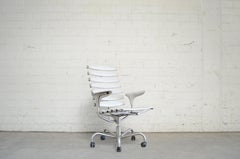
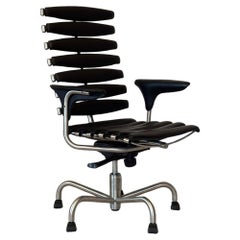
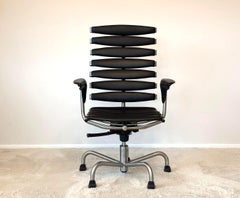
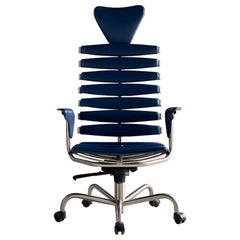
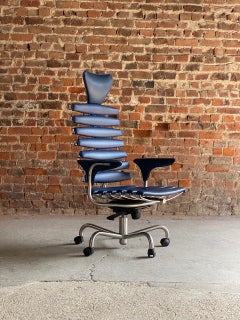
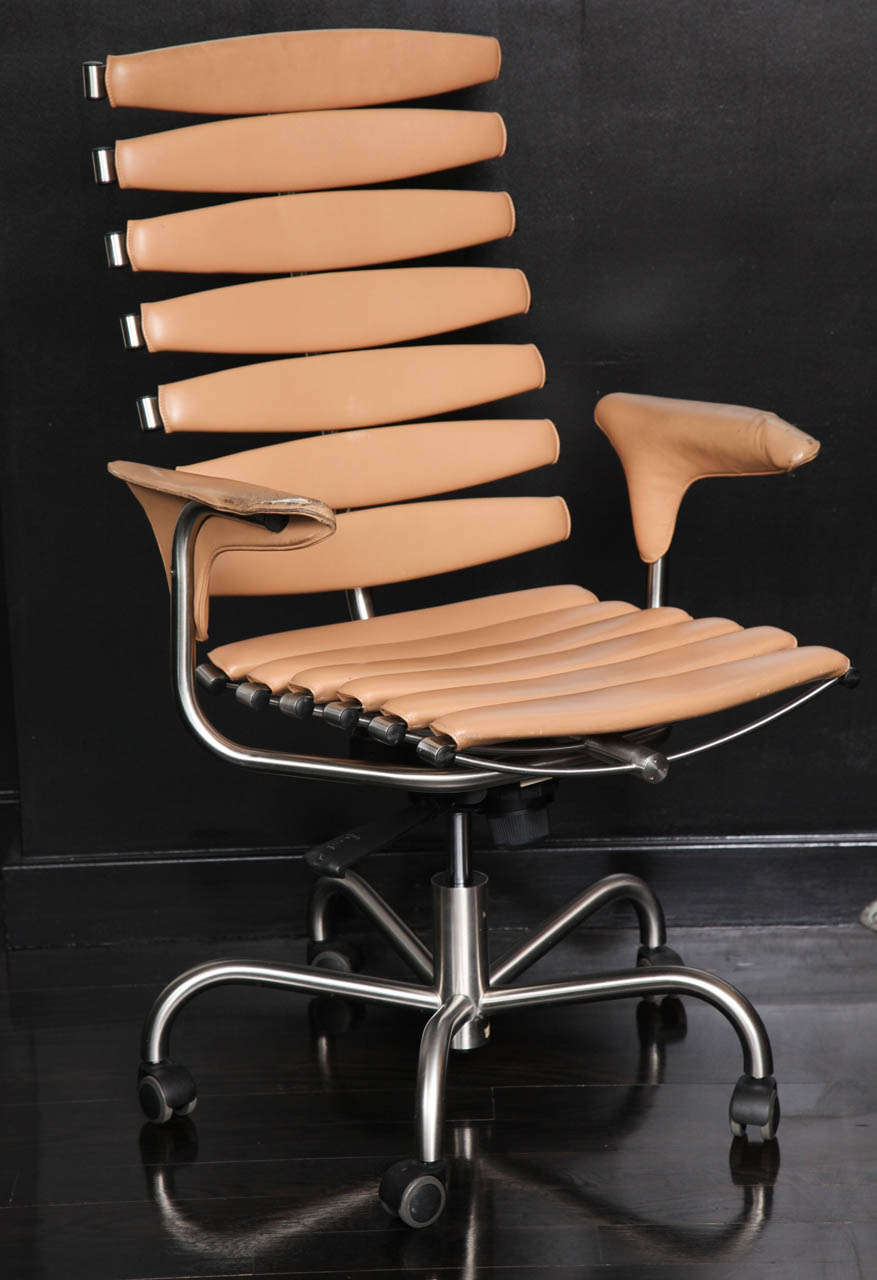
A de Sede piece lends a strong personality to the room it occupies. One of the world’s most respected furniture design houses, de Sede’s quality Swiss craftsmanship has its foundation in a long history of making expertly designed saddles. Founded in 1965 to build on a successful family-run saddler’s workshop in Klingnau, Switzerland, de Sede now is a leading manufacturer of leather goods and furniture, including sofas, chairs and beds.
At the core of de Sede’s philosophy is a reverence for the complexity and beauty of handcrafted furniture in an age when mass-produced objects are the norm. Over the years, the atelier has built a name for itself in its modular furniture pieces, which are made using the highest quality leather upholstery. The sleek, elegant pieces incorporate functionality with beauty. Amongst their best-selling designs is the DS-600 introduced in 1972. Also known as the Non Stop sofa, it is a sensually curved, snaking modular sofa whose individual pieces can be zipped together to create multiple variations and arcs.
De Sede has collaborated with some of the world's finest design minds, enhancing the prestige and individuality of their products. Designers like Santiago Calatrava, Antonella Scarpitta, Stephan Hürlemann, Gordon Guillaumier and Philippe Malouin have all created pieces with the atelier. Ubald Klug’s 1974 DS-1025, also known as the Terrazza sofa, is an enduring favorite with its cascading levels of leather. In 2017, de Sede expanded its product line to include high-quality leather handbags, which are as thoughtfully designed and beautifully crafted as its furniture. De Sede AG is now part of the Volare Group AG and continues to handcraft its fine furniture and other goods from its factory in Klingnau.
Find authentic de Sede seating, tables and decorative objects today on 1stDibs.
The late 19th and early 20th centuries saw sweeping social change and major scientific advances — both of which contributed to a new aesthetic: modernism. Rejecting the rigidity of Victorian artistic conventions, modernists sought a new means of expression. References to the natural world and ornate classical embellishments gave way to the sleek simplicity of the Machine Age. Architect Philip Johnson characterized the hallmarks of modernism as “machine-like simplicity, smoothness or surface [and] avoidance of ornament.”
Early practitioners of modernist design include the De Stijl (“The Style”) group, founded in the Netherlands in 1917, and the Bauhaus School, founded two years later in Germany.
Followers of both groups produced sleek, spare designs — many of which became icons of daily life in the 20th century. The modernists rejected both natural and historical references and relied primarily on industrial materials such as metal, glass, plywood, and, later, plastics. While Bauhaus principals Marcel Breuer and Ludwig Mies van der Rohe created furniture from mass-produced, chrome-plated steel, American visionaries like Charles and Ray Eames worked in materials as novel as molded plywood and fiberglass. Today, Breuer’s Wassily chair, Mies van der Rohe’s Barcelona chair — crafted with his romantic partner, designer Lilly Reich — and the Eames lounge chair are emblems of progressive design and vintage originals are prized cornerstones of collections.
It’s difficult to overstate the influence that modernism continues to wield over designers and architects — and equally difficult to overstate how revolutionary it was when it first appeared a century ago. But because modernist furniture designs are so simple, they can blend in seamlessly with just about any type of décor. Don’t overlook them.
An essential part of every office or home workstation, office chairs and desk chairs are critically important to your comfort and getting the job done.
Desk chairs have evolved over time. While writing the Declaration of Independence, Thomas Jefferson pined for a wider range of motion and introduced some improvements to his English-style Windsor chair, inventing the swivel chair along the way. So the next time you roll, recline or swivel at your vintage desk, remember: The third president of the United States had a lot to do with that functionality.
Changes in the availability of resources have also led to innovations in desk chair design. After World War II, for example, optimistic American designers made use of wartime materials in their efforts to create practical domestic goods.
Mid-century modernism is the name given to the broad postwar time period that prioritized thoughtful design. Journalist Cara Greenberg, who coined the term “mid-century modernism,” cites “ergonomic wisdom” as part of the reason for the longevity of the era’s furnishings, and when it comes to sitting in a desk chair for hours at a time, what could be more important than ergonomic support?
As mid-century modernism was marked by resourcefulness and boundless creativity — and produced designers who, in most cases, prioritized comfort and support — it follows that all mid-century chairs are not the same. Nowhere is this perhaps more evident than at Herman Miller. The legendary Michigan furniture manufacturer got its start in the office, with design director George Nelson enlisting the likes of Charles and Ray Eames to produce desk chairs and lounge chairs that are still celebrated today. Elsewhere at the time, the numerous pieces Florence Knoll created for Knoll’s office furniture line were envisioned as design solutions for the changing needs of residential and office spaces.
If you’re working remotely and streamlined seating isn’t your thing, don’t be afraid of making a statement with your office chair. Introduce a touch of drama to your video calls by way of 19th-century desk accessories and the alluring forms we typically associate with antique desk chairs designed in the Empire and Regency styles. For a minimalist touch, a spare, utilitarian Industrial-style office chair can work in any space but will fit in particularly well amid the exposed brick and steel architecture that characterizes a loft apartment.
An inspiring home office cleverly mixes materials and styles to create a welcoming place of productivity and comfort, and if you’re gathering with colleagues at your company HQ, an array of wood, leather and metal office chairs can help integrate disparate textures in a conference room or any other collaborative space. On 1stDibs, explore a diverse collection of office and desk chairs today.