No other business of its kind did more than the Herman Miller Furniture Company to introduce modern design into American homes. Working with legendary designers such as Charles and Ray Eames, George Nelson and Alexander Girard, the Zeeland, Michigan-based firm fostered some of the boldest expressions of what we now call mid-century modern style. In doing so, Herman Miller produced some of the most beautiful, iconic and, one can even say, noblest chairs, sofas, tables and other furniture ever.
Founded in 1923, Herman Miller was originally known for grand historicist bedroom suites: heavily ornamented wood furniture that appealed to a high-minded, wealthier clientele. The company — named for its chief financial backer — began to suffer in the early 1930s as the Great Depression hit, and D.J. De Pree, the company’s CEO, feared bankruptcy. In 1932, aid came in the form of Gilbert Rohde, a self-taught furniture designer who had traveled widely in Europe, absorbing details of the Art Deco movement and other modernist influences. After persuading De Pree that the growing middle class required smaller, lighter household furnishings, Rohde set a new course for Herman Miller, creating sleek chairs, tables and cabinetry that were the essence of the Streamline Moderne style.
Rohde died suddenly in 1944. The following year, De Pree turned to George Nelson, an architect who had written widely about modern furniture design. Under Nelson’s leadership, Herman Miller would embrace new technologies and materials and audacious biomorphic forms.
Some of the pieces the company produced are now emblems of 20th century American design, including the Eames lounge chair and ottoman and Nelson’s Marshmallow sofa and Coconut chair. Such instantly recognizable furnishings have become timeless — staples of a modernist décor; striking, offbeat notes in traditional environments.
Find a range of vintage Herman Miller office chairs, desks, coffee tables and other furniture on 1stDibs.
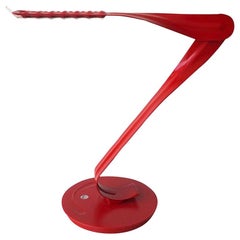
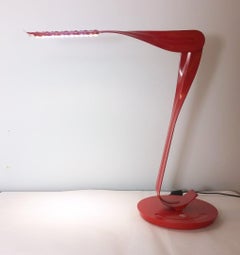
Well-crafted antique and vintage table lamps do more than provide light; the right fixture-and-table combination can add a focal point or creative element to any interior.
Proper table lamps have long been used for lighting our most intimate spaces. Perfect for lighting your nightstand or reading nook, table lamps play an integral role in styling an inviting room. In the years before electricity, lamps used oil. Today, a rewired 19th-century vintage lamp can still provide a touch of elegance for a study.
After industrial milestones such as mass production took hold in the Victorian era, various design movements sought to bring craftsmanship and innovation back to this indispensable household item. Lighting designers affiliated with Art Deco, which originated in the glamorous roaring ’20s, sought to celebrate modern life by fusing modern metals with dark woods and dazzling colors in the fixtures of the era. The geometric shapes and gilded details of vintage Art Deco table lamps provide an air of luxury and sophistication that never goes out of style.
After launching in 1934, Anglepoise lamps soon became a favorite among modernist architects and designers, who interpreted the fixture as “a machine for lighting,” just as Le Corbusier had reimagined the house as “a machine for living in.” The popular task light owed to a collaboration between a vehicle-suspension engineer by the name of George Carwardine and a West Midlands springs manufacturer, Herbert Terry & Sons.
Some mid-century modern table lamps, particularly those created by the likes of Joe Colombo and the legendary lighting artisans at Fontana Arte, bear all the provocative hallmarks associated with Space Age design. Sculptural and versatile, the Louis Poulsen table lamps of that period were revolutionary for their time and still seem innovative today.
If you are looking for something more contemporary, industrial table lamps are demonstrative of a newly chic style that isn’t afraid to pay homage to the past. They look particularly at home in any rustic loft space amid exposed brick and steel beams.
Before you buy a desk lamp or table lamp for your living room, consider your lighting needs. The Snoopy lamp, designed in 1967, or any other “banker’s lamp” (shorthand for the Emeralite desk lamps patented by H.G. McFaddin and Company), provides light at a downward angle that is perfect for writing, while the Fontana table lamp and the beloved Grasshopper lamp by Greta Magnusson-Grossman each yield a soft and even glow. Some table lamps require lampshades to be bought separately.
Whether it’s a classic antique Tiffany table lamp, a Murano glass table lamp or even a bold avant-garde fixture custom-made by a contemporary design firm, the right table lamp can completely transform a room. Find the right one for you on 1stDibs.