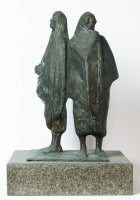
Francisco Zúñiga Figurative Sculptures

Costa Rican, 1912-1998

Known as one of the most important Expressionist artists to emerge from Latin America, Francisco Zúñiga is remembered for his monumental sculptures, figurative paintings and prints, nude drawings and portraits of Central America’s rural indigenous women.

Born in San José, Costa Rica, in 1912, Zúñiga’s exposure to artistic sculpture began at the age of 13, when he worked with his father, Manuel Maria Zúñiga, carving religious figures for local churches. Spurred by a growing interest in art, Zúñiga attended San José’s School of Fine Arts, where he became influenced by classical, renaissance figurative art. After winning several local awards for his prodigious talent, Zúñiga left San José for Mexico City in 1936.

In Mexico City, he attended La Esmeralda, the painting and sculpture school of the National Institute of Fine Arts. There, Zúñiga studied under sculptor Oliverio Martinez and painter Manuel Rodriguez Lozano.

In 1938, Zúñiga joined the faculty at La Esmeralda, where he taught sculpture and painting until 1970. Meanwhile, during the early 1940s, Zúñiga’s works began to attract the attention of art critics in the United States as well as important collectors. In 1941, the Arts Club of Chicago included him as part of their “Thirteen Mexican Artists” group show. The following year, Alfred Barr, director of the Museum of Modern Art in New York, purchased one of his stone sculptures for MoMA’s permanent collection. Then, in 1943, New York’s Metropolitan Museum of Art acquired two of Zúñiga’s drawings. 

Throughout most of his career, Zúñiga limited his subject matter to indigenous peasant women. However, he experimented with working with a variety of materials for his sculptures — bronze, alabaster, plaster, marble and modeling clay — and sought new media to create his art. (He made his first lithograph at age 60.)

Zúñiga won countless accolades in his lifetime. He won international awards for 35 of his public sculptures along with other works, and in 1992, he won Mexico’s highest cultural award, the Premio Nacional de Calidad.

Even after his death in 1998, Zúñiga’s legacy lives on. His sculptures, drawings, paintings and prints are found in museums around the world, including MoMA and the Met in New York, the Museum of Modern Art in Mexico City, the Fogg Museum at Harvard University, the Hirshhorn Museum and Sculpture Garden in Washington, D.C., the Middleheim Museum in Antwerp, Belgium and the Open-Air Museum in Hakone, Japan.

On 1stDibs, discover a range of Francisco Zúñiga prints, drawings and paintings.

to
3
1
Overall Width
to
Overall Height
to
4
2
1
3
2
1
1
1
1
1
1
1
3
3
39
125
118
100
84
4
Artist: Francisco Zúñiga
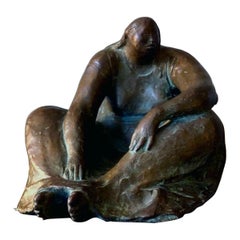
Francisco Zuniga Bronze Sculpture, 1965, "Juchiteca Sentada"
By Francisco Zúñiga
Located in Phoenix, AZ
Francisco Zuniga bronze sculpture. Seated female. Edition: 5. #467 in the Zuniga catalog raisonne. Titled: "Juchiteca Sentada". Measures: 8 7/8" H x 10 1/4" L x 10 5/8" W (not including the 1 ½" wood plinth). Signed Zuniga and numbered 111/V. Created 1965. A Letter of Authenticity issued by the Zuniga foundation (and son Ariel Zuniga...
Category

1960s Francisco Zúñiga Figurative Sculptures

Materials

Bronze

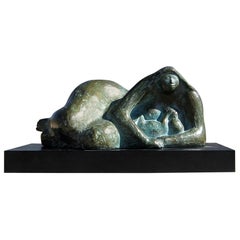
Francisco Zuniga Bronze Sculpture, 1964, Reclining Mother with Shawl
By Francisco Zúñiga
Located in Phoenix, AZ
Zuniga bronze, edition: 3. #472 catalog raisonne: "Madre Reclinada con Rebozo". Measures: 5 3/4" H x 12" L x 8" W not including the wood plinth. Signed Zuniga and dated 1964. "Letter of Authenticity", issued by the Zuniga foundation (and son Ariel Zuniga...
Category

Mid-20th Century Modern Francisco Zúñiga Figurative Sculptures

Materials

Bronze

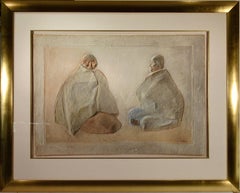
Dos Mujeres Mayas (Two Mayan Women)
By Francisco Zúñiga
Located in San Francisco, CA
This artwork titled "Dos Mujeres Mayas (Two Mayan Women)") 1983 is an original Mixograph cast paper bas relief by Costa Rican/Mexican artist Francisco...
Category

Late 20th Century Realist Francisco Zúñiga Figurative Sculptures

Materials

Other Medium

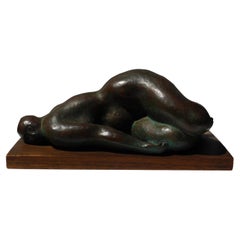
Francisco Zuniga Bronze Sculpture, 1964, "Desnudo Acostada"
By Francisco Zúñiga
Located in Phoenix, AZ
Francisco Zuniga bronze sculpture, Nude Lying Down. Edition: 3. #377 in the Zuniga catalog raisonne. Titled: "Desnudo Acostado". Measures: 6 7/8" H x 18" L x 19" W not including the...
Category

1960s Francisco Zúñiga Figurative Sculptures

Materials

Bronze

Related Items
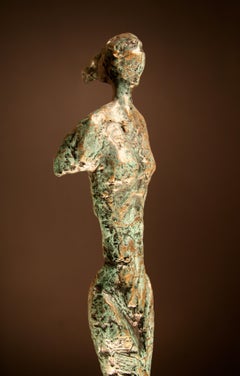
Bronze Sculpture “Arise”
By Frank Arnold
Located in Fresno, CA
Frank Arnold is thought by many to be one of the foremost abstract figurative painters and sculptors of our time. He is a living master whose work is considered to be both personal a...
Category

2010s Abstract Francisco Zúñiga Figurative Sculptures

Materials

Bronze

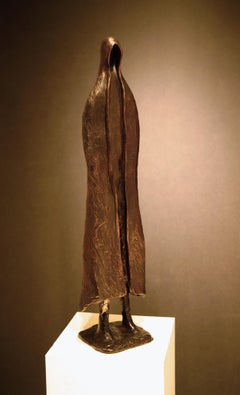
Bronze Sculpture “Understander”
By Frank Arnold
Located in Fresno, CA
Frank Arnold is thought by many to be one of the foremost abstract figurative painters and sculptors of our time. He is a living master whose work is considered to be both personal a...
Category

2010s Abstract Francisco Zúñiga Figurative Sculptures

Materials

Bronze

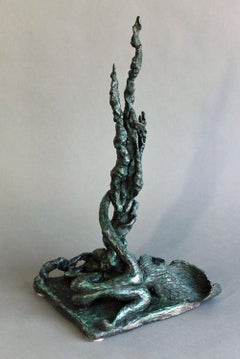
Woman Lying Down & Growing with Tree bronze sculpture by Yulla Lipchitz
Located in Hudson, NY
Organic, abstract bronze sculpture by Yulla Lipchitz of a woman lying down with a tree. About this artist: Yulla Lipchitz, née Halberstadt, was born on April 21, 1911 in Berlin, Ge...
Category

1970s Modern Francisco Zúñiga Figurative Sculptures

Materials

Bronze

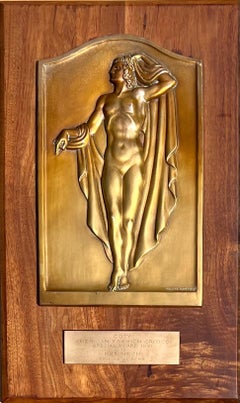
1961 Coty Award Plaque Kenneth Hairdresser Jacqueline Onassis Bronze Fashion
Located in New York, NY
1961 Coty Award Plaque Kenneth Hairdresser Jacqueline Onassis Bronze Fashion Bronze on wood. The wood plaque measures 12 3/4" by 20 3/4 inches. The bronze plaque itself is 13 3/4 x 8 3/4 inches and the the bronze inscription, which reads "COTY, American Fashion Critics Special Award 1961 to KENNETH of LILY DACHE...
Category

1960s American Modern Francisco Zúñiga Figurative Sculptures

Materials

Bronze

"Herself", Frederick Hart, Acrylic Female Sculpture, 17x16x6 in., 176/350, white
By Frederick Hart
Located in Dallas, TX
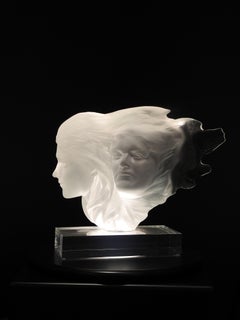
"Herself" by Frederick Hart is an acrylic figurative sculpture of a woman's face numbered 176/350. Hart began to equate light and spirit, the medium itself conveying the meaning, bey...
Category

1980s Realist Francisco Zúñiga Figurative Sculptures

Materials

Resin, Acrylic Polymer

David Hostetler Polished Bronze Female Form Bust Feminine Shiny Gold Egyptian
By David Hostetler
Located in Nantucket, MA
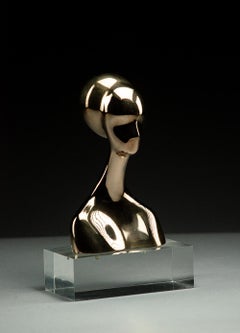
This polished bronze bust is sealed with Glasurit- a car finish that is baked on. It prevents the sculpture from tarnishing or yellowing. All you need to do is dust with a soft cloth. This bust is from a full figure wood sculpture...
Category

1970s Modern Francisco Zúñiga Figurative Sculptures

Materials

Bronze

Pair of Prancing Horses, two bronzes signed and numbered by Arno Breker
Located in PARIS, FR
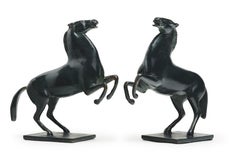
An official artist of the Nazi regime, trained in Montparnasse in the 1930s, Arno Breker continued to sculpt after the fall of the Third Reich, producing large-scale public commissions in Germany and portraits of prominent figures. The two small bronzes presented here, dated around 1978, are part of a long tradition of prancing horses dating back to antiquity. The asymmetrical treatment of the two front legs and the inclination of the head make these two copies of the same artwork a highly decorative pair. 1. Arno Breker, a prolific sculptor, from the Bohemia of Montparnasse to the commissions from the Third Reich ... and from the Federal Republic of Germany The son of a stone carver, Arno Breker studied fine art and anatomy in his native Elberfeld. At the age of 20, he entered the Düsseldorf Academy of Art. He moved to Paris in 1926, where he continued his training in the studio of Maillol, who dubbed him "the German Michelangelo of the twentieth century". He shared a studio with Alexandre Calder and frequented Jean Cocteau, Foujita, Brancusi, Pablo Picasso and other artists of the bohemian Paris of the time. It was also in Paris in 1933 that he met Demetra Messala, the daughter of a Greek diplomat who posed for Maillol and Picasso, whom he married in 1937. Having won the Prussian Prix de Rome in 1932, he left Paris to stay at the Villa Massimo, the German Academy in Rome. Returning to Germany in 1934, his style evolved towards a more marked imitation of ancient sculpture. He created two monumental statues for Berlin's Olympic Stadium, before being appointed professor at the Berlin College of Fine Arts in 1937. He came to the attention of the Reich Propaganda Ministry, which awarded him several commissions and provided him with three large studios in which Breker produced many monumental sculptures to the glory of the regime. On June 23, 1940, Breker accompanied Adolf Hitler during a visit to Paris. During the Occupation, his political connections enabled him to intervene on behalf of many artists pursued by the Nazis: for example, he protected Pablo Picasso (then a Communist) from Kommandantur officers. Most of Arno Breker's work was destroyed in Berlin at the end of the war in 1945 by bombing and intentional destruction perpetrated by soldiers of the victorious powers. After the fall of the Nazi regime, however, Arno Breker was never prosecuted. He opened a new studio in Düsseldorf, where he sculpted until his death in 1991. He then carried out several public commissions in Germany (Bayreuth, Wuppertal), as well as portraits of numerous personalities, including King Mohammed V of Morocco, Léopold Sedar Senghor (commissioned by the Académie Française in 1978) and the two chancellors of the Federal Republic of Germany, Konrad Adenauer and Ludwig Erhard. The Arno Breker Museum in Nörvenich is now exhibiting some of his artworks. 2. Related artworks: from the Wild Horses of the Quirinal to the Horses of Marly The prancing horse is a major iconographic theme, found in a series of sculptures from Antiquity, the Renaissance and the Classical Age. Various photos from Arno Breker's studio in Berlin confirm the predominant place of equine representations in his work (alongside male nude statues), and confirm that this reduced version created in 1978 is part of the artist's preferred repertoire. Prancing horses are generally associated with a male figure in a group that, through a reference drawn from Antiquity, symbolizes man's domination over nature. In this respect, it is very interesting to compare our small bronzes with the horse forming part of a large sculpture by Arno Breker (made in 1936 and probably destroyed in 1945) depicting Alexander taming Bucephalus. This statue is itself directly inspired by one of the best-known works of 18th-century French sculpture...
Category

1970s Art Deco Francisco Zúñiga Figurative Sculptures

Materials

Bronze

Hercules and the Erymanthian Boar
By Nathaniel Choate
Located in Fresno, CA
Ashford Fine Art is the exclusive source for this limited edition bronze, entitled Hercules and the Erymanthian Boar, by the distinguished American sculptor, painter, and designer, ...
Category

1920s Old Masters Francisco Zúñiga Figurative Sculptures

Materials

Bronze

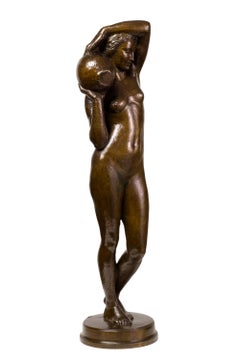
La Source (The Stream)
Located in New York, NY
A superb smaller version of a large scale commission work that stands in Bordeaux at the Hotel Fruges! Lovely patina - a lighter but rich and warm brown tone that is rare to see in ...
Category

1920s Modern Francisco Zúñiga Figurative Sculptures

Materials

Bronze

La Source (The Stream)
$48,000
H 28.5 in W 7.5 in D 7.5 in
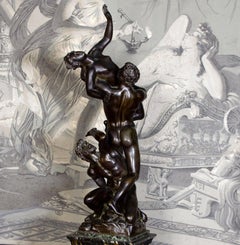
The Rape of Sabine Iconic Bronze Sculpture 1930
Located in Rome, IT
Fine Group of Sculptures in Bronze after Jean de Boulogne (Giambologna) The torturously twisting Rape of the Sabine Women is one of the finest and most technically difficult sculpt...
Category

1920s Mannerist Francisco Zúñiga Figurative Sculptures

Materials

Bronze

The Rape of Sabine Iconic Bronze Sculpture 1930
$6,687 Sale Price
30% Off
H 35.44 in W 8.27 in D 8.27 in
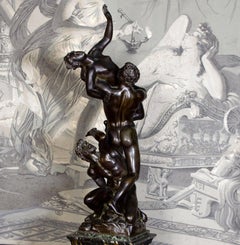
The Rape of Sabine Iconic Bronze Sculpture 1930
Located in Rome, IT
Fine Group of Sculptures in Bronze after Jean de Boulogne (Giambologna) The torturously twisting Rape of the Sabine Women is one of the finest and most technically difficult sculpt...
Category

1920s Mannerist Francisco Zúñiga Figurative Sculptures

Materials

Bronze

The Rape of Sabine Iconic Bronze Sculpture 1930
$7,642 Sale Price
20% Off
H 35.44 in W 8.27 in D 8.27 in
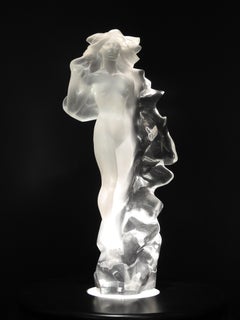
"Veil of Light", Frederick Hart, Acrylic Sculpture, 22x12x6 in., 310/350, white
By Frederick Hart
Located in Dallas, TX
"Veil of Light" Dimensions: 22" x 12" x 6" Medium: Clear Acrylic Resin Edition of 350 Created in 1987, the work “Veil of Light” is characterized by an other-worldly appearance. Payi...
Category

1980s Realist Francisco Zúñiga Figurative Sculptures

Materials

Resin, Acrylic Polymer

Previously Available Items
Untitled (Two Women)
By Francisco Zúñiga
Located in Palm Desert, CA
Signed and dated on base Provenance: Private Collection, CA
Category

1980s Francisco Zúñiga Figurative Sculptures

Materials

Bronze

Francisco Zúñiga figurative sculptures for sale on 1stDibs.

Find a wide variety of authentic Francisco Zúñiga figurative sculptures available for sale on 1stDibs. Not every interior allows for large Francisco Zúñiga figurative sculptures, so small editions measuring 42 inches across are available. Customers who are interested in this artist might also find the work of Pierre Jules Mêne, Andrzej Szymczyk, and SOPHIE MARTIN. Francisco Zúñiga figurative sculptures prices can differ depending upon medium, time period and other attributes. On 1stDibs, the price for these items starts at $6,500 and tops out at $6,500, while the average work can sell for $6,500.

Still Thinking About These?

All Recently Viewed