Items Similar to Japanese Antique Low Table 1860s-1920s / Sofa Table Wabi Sabi
Want more images or videos?
Request additional images or videos from the seller
1 of 21
Japanese Antique Low Table 1860s-1920s / Sofa Table Wabi Sabi
$3,343.80
£2,498.55
€2,800
CA$4,612.28
A$5,052.61
CHF 2,659.49
MX$60,304.17
NOK 33,901.83
SEK 30,991.38
DKK 21,333.81
About the Item
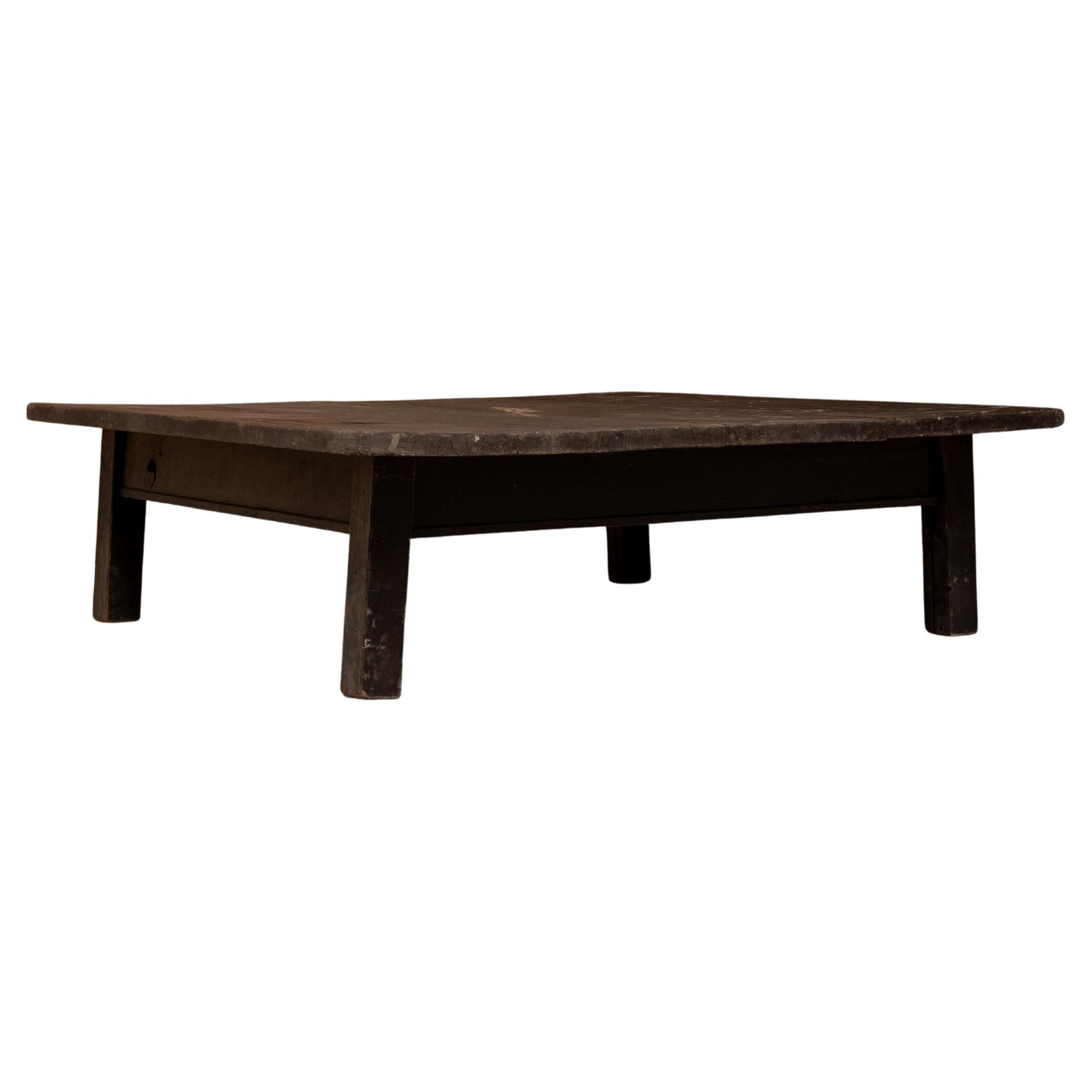
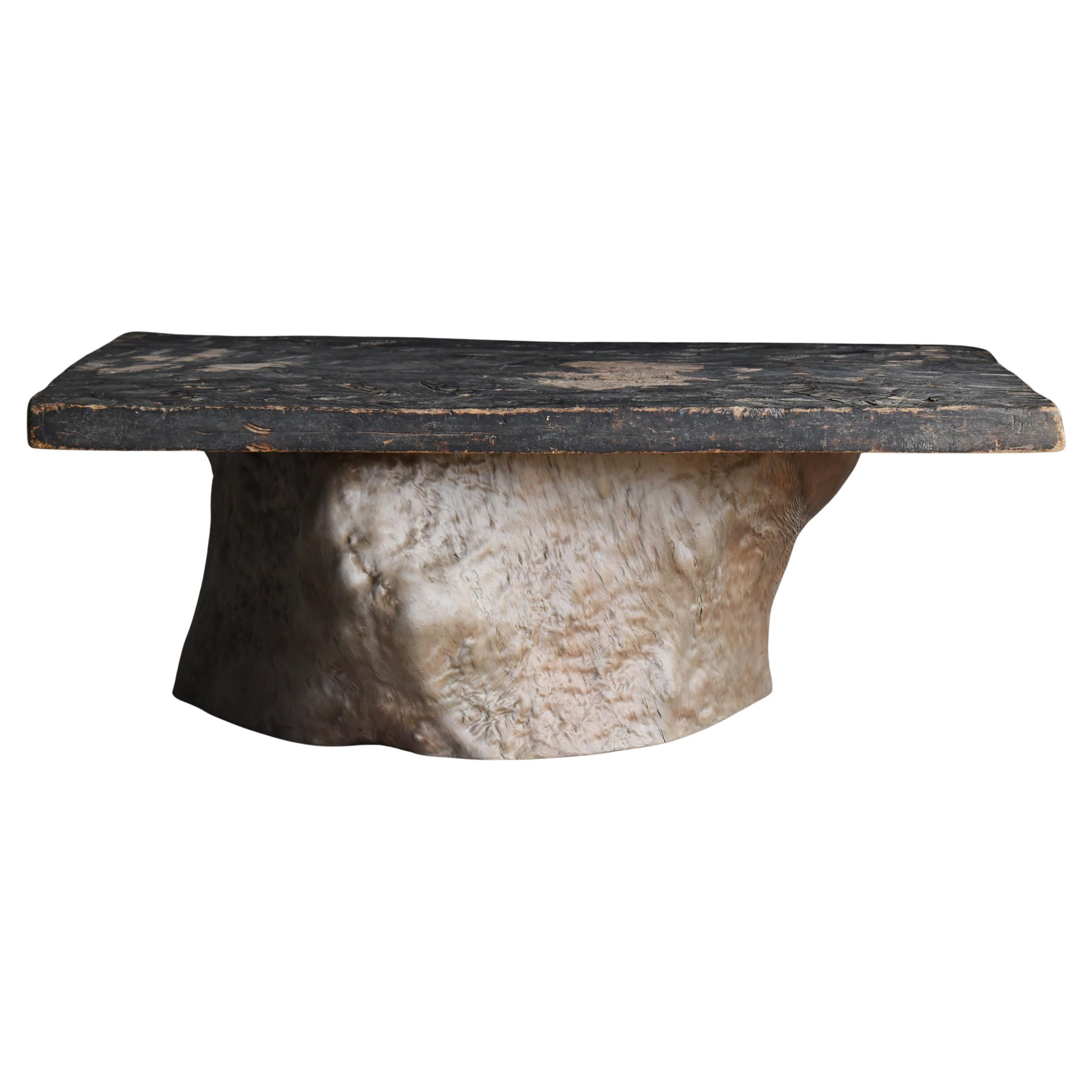
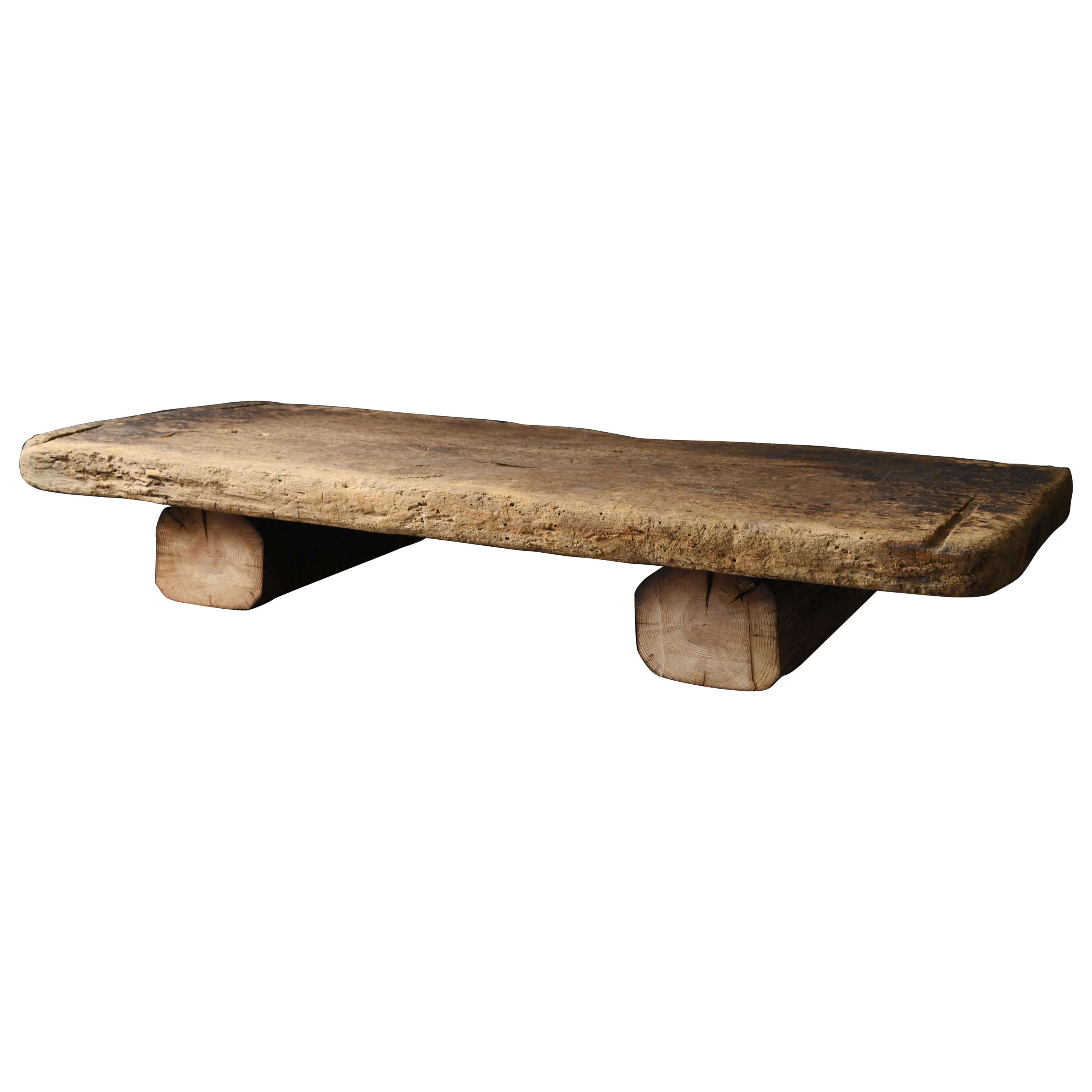
This sculptural low table is composed of two antique Japanese utilitarian objects, created during the late Meiji to early Taishō period, approximately (1868 to 1920).
The tabletop is formed from solid cedar wood, while the base is a traditional Japanese mortar carved from a single block of zelkova.
Each element carries its own material character and temporal depth, yet together they form a restrained and intentional composition defined by balance, weight, and quiet tension.
The cedar board was originally used as a working surface in daily life, supporting the preparation of mochi and other grains.
The zelkova mortar functioned as a fundamental tool for processing food, closely tied to repetitive bodily movement, seasonal rituals, and communal labor.
Neither element was created for decorative purposes.
They emerged out of necessity, shaped by function, touch, and time.
Through decades of use and exposure to natural conditions, the surfaces have absorbed layers of history.
Marks left by hands, pressure, impact, humidity, and drying cycles have accumulated into a deeply muted patina.
The cedar surface, in particular, reveals an appearance reminiscent of primordial abstraction.
It is not a designed image, but a surface drawn slowly by time itself.
Notably, the tabletop presents distinct expressions on its front and reverse sides.
Each surface carries its own depth and visual resonance, allowing the work to be experienced differently depending on orientation and installation.
When combined, the board and mortar transcend their original roles.
The relationship between the horizontal plane and the vertical mass evokes both architectural clarity and primitive presence.
This piece exists simultaneously as furniture and as an installation object, one that becomes complete only through its placement in space.
Rather than serving as visual ornament, it introduces silence, gravity, and spatial pause.
The work embodies the spirit of wabi sabi, the Japanese aesthetic that embraces imperfection, impermanence, and authenticity.
Its beauty does not assert itself.
Instead, it invites contemplation, allowing material honesty and proportion to speak quietly.
It stands in clear contrast to excess, decoration, and overt refinement.
Surviving examples of utilitarian objects that retain such expressive presence, while achieving sculptural coherence, are extremely rare.
This piece occupies a liminal space between folk object, sculpture, and architectural form, and should be understood as a singular work.
The tabletop is also offered independently.
A separate listing is available for those who wish to acquire the cedar board on its own, allowing for alternative interpretations and installations.
Dimensions
W1100 × D600 × H510 mm
Historically, Japanese culture has emphasized the creation of tools from familiar natural materials, using them repeatedly, repairing them, and passing them down through generations.
The traces left behind are not embellishments, but records of lived time and human gesture.
In a contemporary world driven by speed, consumption, and disposability, this work offers a quiet counterpoint.
It speaks of endurance, reuse, and the dignity of materials shaped by necessity.
Guided by this philosophy, we curate Japanese antiques that possess a silent strength, timeless presence, and deep resonance within space.
- Similar to:Axel Vervoordt (Designer)
- Dimensions:Height: 20.08 in (51 cm)Width: 43.31 in (110 cm)Depth: 23.63 in (60 cm)
- Style:Meiji (Of the Period)
- Materials and Techniques:
- Place of Origin:
- Period:
- Date of Manufacture:1860s-1920s
- Condition:Wear consistent with age and use. Minor losses.
- Seller Location:Sammu-shi, JP
- Reference Number:1stDibs: LU5487248074372
About the Seller
5.0
Platinum Seller
Premium sellers with a 4.7+ rating and 24-hour response times
Established in 2015
1stDibs seller since 2020
1,699 sales on 1stDibs
Typical response time: 6 hours
- ShippingRetrieving quote...Shipping from: Sammushi, Japan
- Return Policy
More From This Seller
View AllJapanese Antique Drawer 1860s-1920s / Sideboard Wabi Sabi
Located in Sammu-shi, Chiba
This is a very old drawer storage chest made in Japan.
It dates back to the Meiji era (1860s–1920s) and is crafted from Japanese cedar wood.
The metal fittings are made of iron.
In ...
Category
Early 20th Century Japanese Meiji Commodes and Chests of Drawers
Materials
Iron

Japanese Antique Drawer 1860s-1920s / Sideboard Wabi Sabi
Located in Sammu-shi, Chiba
This is a very old drawer storage chest made in Japan.
It dates back to the Meiji era (1860s–1920s) and is crafted from Japanese cedar wood.
The metal fittings are made of iron.
The...
Category
Early 20th Century Japanese Meiji Commodes and Chests of Drawers
Materials
Iron
Japanese Antique Drawer 1860s-1920s / Sideboard Wabi Sabi
Located in Sammu-shi, Chiba
This is a very old drawer storage chest made in Japan.
It dates back to the Meiji era (1860s–1920s) and is crafted from Japanese cedar wood.
The metal fittings are made of iron.
The...
Category
Early 20th Century Japanese Meiji Commodes and Chests of Drawers
Materials
Iron
Japanese Antique Drawer 1860s-1920s / Tansu Wabi Sabi
Located in Sammu-shi, Chiba
This is an antique Japanese drawer chest from the Meiji period (1860s–1920s).
Crafted from paulownia wood (kiri) with iron fittings, it embodies the essence of Japanese simplicity an...
Category
Early 20th Century Japanese Meiji Commodes and Chests of Drawers
Materials
Wood
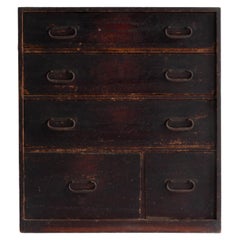
Japanese Antique Drawer 1860s-1920s / Sideboard Wabi Sabi
Located in Sammu-shi, Chiba
This is a very old drawer storage chest made in Japan.
It dates back to the Meiji era (1860s–1920s) and is crafted from Japanese cedar wood.
The metal fittings are made of iron.
The...
Category
Early 20th Century Japanese Meiji Commodes and Chests of Drawers
Materials
Iron
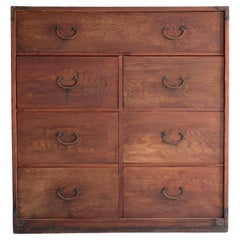
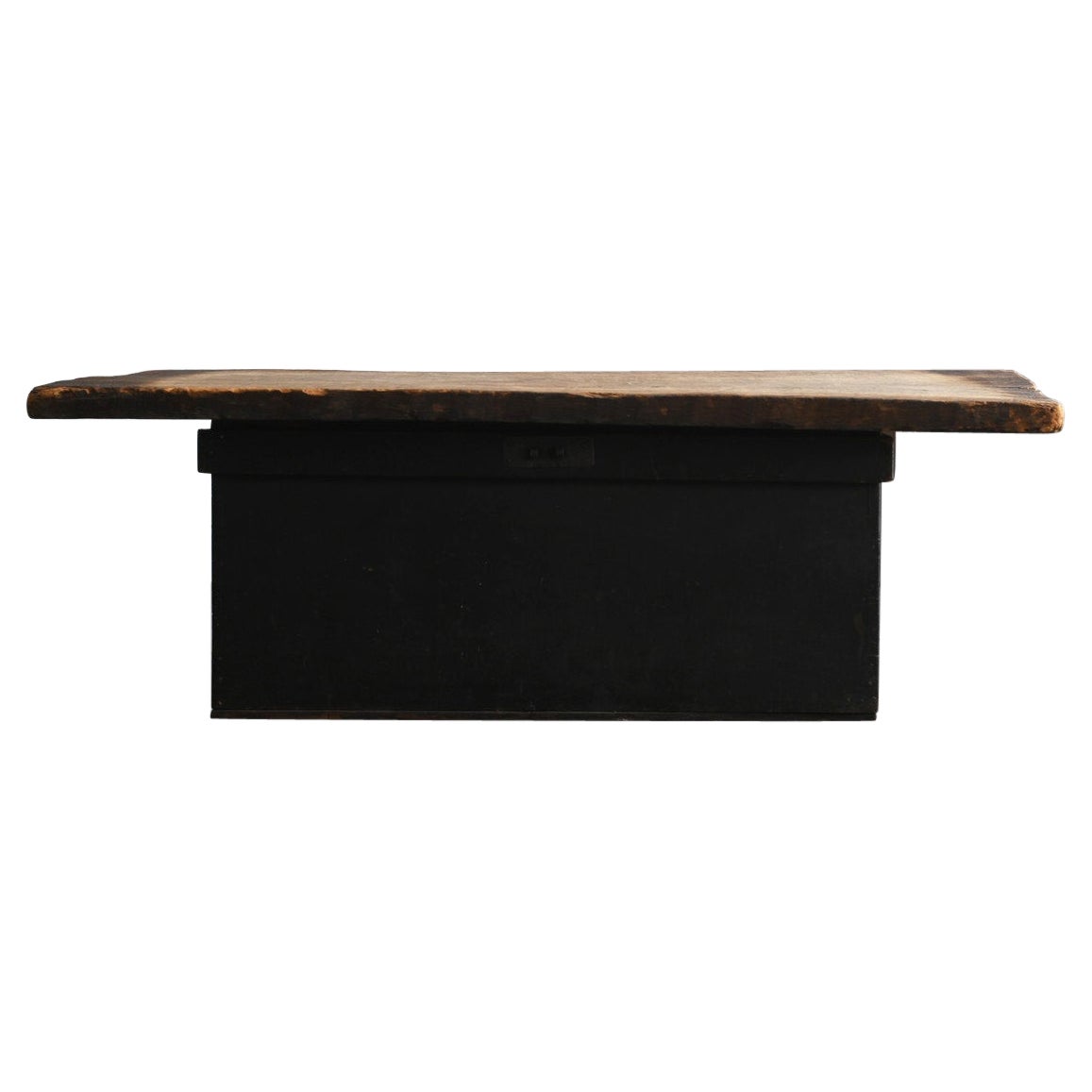
Japanese antique wooden low table/1868-1920/Wabi-sabi coffee table
Located in Sammu-shi, Chiba
This item is a stately Wabisabi wooden low table with a wooden box from the end of the Edo period to the Meiji period (1800-1912) in Japan as the table base, combined with an old oak...
Category
Antique Late 19th Century Japanese Meiji Sofa Tables
Materials
Oak
You May Also Like
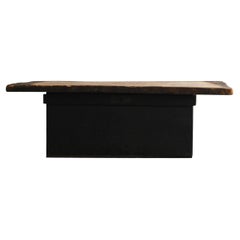
Japanese Low Table, Wabi-sabi, 1920s, Japan
Located in Tokyo, Tokyo
The antique low table, that was crafted from old Japanese wood.
The top panel has been roughly shaved and showcases various marks and scratches that tell a story of its history.
It...
Category
Early 20th Century Japanese Sofa Tables
Materials
Wood
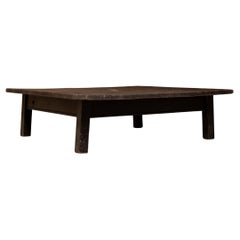
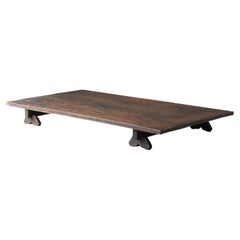
Japanese Antique Large Low Table 1860s-1920s / Sofa Table Dining Table Wabisabi
Located in Chōsei District Nagara, JP
This is a large, old low table made in Japan, dating from the Meiji to Taishō period (1860s–1920s). It is a fine example that strongly reflects the woodworking techniques and aesthet...
Category
Early 20th Century Japanese Taisho Sofa Tables
Materials
Wood, Cedar
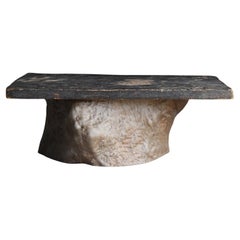
Japanese Antique Low Table 1860s-1900s / Side Table Sofa Table Wabisabi
By Axel Vervoordt
Located in Chōsei District Nagara, JP
This is an old Japanese low table in a primitive style, made simply by placing an aged wooden board atop a natural tree stump.
Despite its minimal structure, it exudes an overwhelmin...
Category
Early 20th Century Japanese Primitive Sofa Tables
Materials
Wood
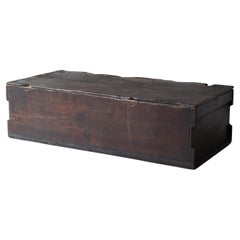
Japanese Antique Sofa Table or Storage Box 1860s-1920s / Side Table Wabisabi
Located in Chōsei District Nagara, JP
This is an old Japanese storage chest that also functions as a low table.
It was crafted during the Meiji to Taisho periods (1860s–1920s) and made from traditional Japanese cedar (su...
Category
Early 20th Century Japanese Meiji Sofa Tables
Materials
Tin
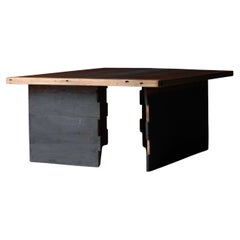
Japanese Antique Low Table / Sofa Table Coffee Table / 1868-1912s Wabi-Sabi
Located in Iwate-gun Shizukuishi-cho, Iwate Prefecture
This is a low table that combines old Japanese trees.
The detailed tree species of the upper board is unknown, but it is considered to be katsura wood, and the color has become dark...
Category
Antique Late 19th Century Japanese Meiji Sofa Tables
Materials
Wood, Cedar
Japanese Antique Primitive Side Table 1860s-1900s / Coffee Table Wabi Sabi
By Axel Vervoordt
Located in Chōsei District Nagara, JP
This is an old Japanese side table in a primitive style, dating back to the Meiji period (1860s–1900s).
Originally used in a farmhouse, the piece still exudes a commanding presence e...
Category
Early 20th Century Japanese Primitive Side Tables
Materials
Wood
