Romantic Figurines and Sculptures
to
1
1
1
1
1
1
1
1
67
47
28
27
15
14
10
4
4
3
2
2
1
1
1
1
Style: Romantic
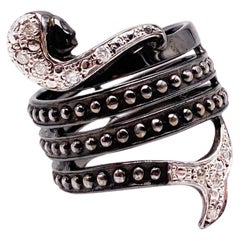
Mauboussin White Diamonds Mermaid Ring
By Mauboussin
Located in Rome, IT
Maboussin Spiral Ring "My Little Mermaid of Love" made of Silver and White Diamonds.
Ring size: 6 USA (12 IT / 52 FR)
Length: 2.7 cm (1,06 in)
Original certificate of authenticity an...
Category
2010s Italian Romantic Figurines and Sculptures
Materials
Diamond, White Diamond, Rhodium, Silver
Related Items
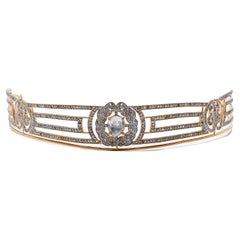
Bridal Tiara, Diamond & Sapphire, New
Located in Northampton, MA
This diamond and white sapphire bridal tiara was hand-crafted by a skilled artisan in India from gold-over-silver (vermeil). This gorgeous, elegant tiara is perfectly proportioned an...
Category
2010s Romantic Figurines and Sculptures
Materials
Diamond, Sapphire, Gold Plate, Silver

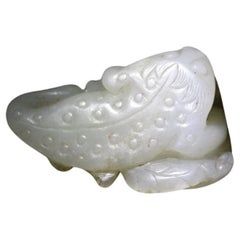
White Jade Three-Legged Toad with Leaves and Fruit
Located in San Diego, CA
A pale, greyish-white jade three-legged toad is depicted in a crouching position on leaves and fruits. The toad has bulging eyes, finely-detailed eyebrow hair, a small nose, and a wi...
Category
Mid-19th Century Chinese Antique Romantic Figurines and Sculptures
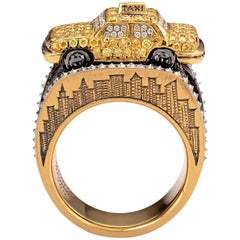
Wendy Brandes Signed Maneater Collection Ring: New York City Taxi and Passenger
Located in New York, NY
23 grams of 18K yellow, & white gold, satin finish.
92 yellow diamonds, totaling 0.59 carats.
92 white diamonds, totaling 0.46 carats.
130 black diamonds, totaling 1.04 carats.
2 sma...
Category
2010s American Romantic Figurines and Sculptures
Materials
Diamond, White Diamond, Ruby, Yellow Diamond, Black Diamond, 18k Gold, R...
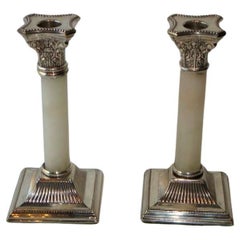
Rare Pair of Important New York Estate English Silver White Jade Candlesticks
Located in New York, NY
The Following Item we are Offering is a Lovely Museum Quality Large and very elaborately openwork carved in an Exceptional even White Stone. Beautifully carved as a standing figure o...
Category
20th Century Romantic Figurines and Sculptures
Materials
Jade, Silver
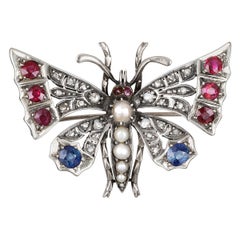
Victorian Silver-Gilt Diamond, Sapphire, Ruby and Pearl Butterfly Brooch
Located in Darien, CT
Silver Gilt Victorian butterfly brooch. Crafted with beautiful gem-set wings and body. Colorful and delightful, the butterfly brooch is set...
Category
1890s British Antique Romantic Figurines and Sculptures
Materials
Diamond, Pearl, Ruby, Sapphire, Gold, Silver
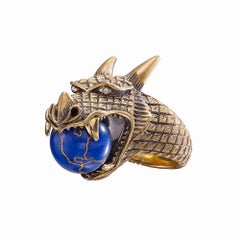
Wendy Brandes Year of the Dragon 18K Ring With Spinning Lapis Lazuli Globe
Located in New York, NY
This one-of-a-kind ring was inspired by Empress Wu, a 7th century ruler of China. She was the only female ruler of China to refer to herself as “Emperor” during her reign — historians changed it to “Empress” later. She was labeled a “Dragon Lady...
Category
2010s American Romantic Figurines and Sculptures
Materials
Diamond, White Diamond, Lapis Lazuli, 18k Gold, Yellow Gold, Rhodium
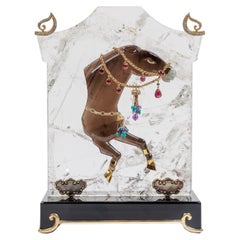
Mellerio Paris, a French Gold, Diamonds, Silver, and Smoky Quartz Carved Horse
Located in Long Island City, NY
Mellerio Paris, A French Gold, Diamonds, Silver-Gilt, Rock-Crystal, Jade, Mother-Of-Pearl and Smoky Quartz, Carved Horse Sculpture, Jeweled Mounted Object.
An extremely rare and unique, one of a kind French gold, diamonds, Silver-gilt, rock-crystal, jade, obsidian, mother-of-pearl, and smoky quartz carved jeweled sculpture "CHEVAUX DE LEGENDE", "A Legendary Horse" by Mellerio, Paris, circa 1991.
Sitting on black obsidian base, the solid rock-crystal slab is finely applied with a carved smoky -quartz and jade horse with a harness mounted in 18k gold, brilliant -cut diamonds, rubies, turquoise, and amethyst chains and pendants. The top columns adorned with 18k gold and brilliant cut diamond pendants, the bottom with gold and mother of pearl plaques. The obsidian base with a plaque engraved: CHEVAUX DE LEGENDE" / N° 05 / MELLERIO DITS MELLER / PARIS / 5003 D
The piece is in excellent condition and comes with a custom made wood case made for transport. It's very elegant and has French hallmarks throughout. A truly magnificent piece.
Measures 10.5" high x 8.5" wide x 4" deep
Founded in France in 1613 by the descendants of Italian immigrants from the Vigezzo Valley in the north of Italy, Mellerio is one of the oldest jewellery houses in Europe. The family business soon attracted the attention of the Royal Court and Marie Antoinette herself reportedly purchased a precious bracelet featuring 7 cameos surrounded by rubies in 1780. Later on, in the 19th century, Mellerio became the official supplier of the French Royal family and the Court of Netherland.
Mellerio creates many jewellery items, all set with rare gems such as peridots, amethysts, aquamarines, citrines and topaz, applying for a patent, the flexible stem, a very supple and light jewellery mechanism. Mellerio remains also well known for their spectacular series of Art Nouveau jewels, created at the beginning of the 20th century, as well as for the creation of trophies rewarding some of the greatest footfall and tennis players of history. In 1993, the jewellery house launched their first watch collection.
Today, Mellerio has stores in Paris, Japan and Hong Kong.
July 14, 1789: this date is known throughout the world as the beginning of the French Revolution. According to a ledger belonging to House of Mellerio, this was also the day that the jeweler sold a golden key to the Comte de Coutance for 10 livres. This ledger, as well as inventories dating as far back as 1768, are the jeweler’s oldest archives. These archives have continued to grow over the years, as the House, established on rue de la Paix in Paris, still lives on today, still in the hands of the same family from Craveggia, in the North of Italy.
The tumultuous history of the Mellerio family in France probably goes as far back as the Italian wars of the Renaissance, but the first official document proving their commercial activity in Paris dates back to 1613. This document is the famous royal warrant awarded by Marie de Medici to a number of Italian families established along the rue des Lombards, including the Mellerios, allowing them to sell “small jewelery items”, therefore granting them a small exception to the traditional monopoly enjoyed by Parisian jewelers. At that time, powerful corporations regulated the operations and customs of Parisian business, but thanks to this exceptional warrant, the Mellerios managed to escape the confines of this framework. Today, this wax-sealed document is kept at the city hall of Craveggia.
From 1613 to the Revolution, the Mellerios lived between France and Italy. The corporations tried many times to put an end to their trade privileges, but all in vain, as a dynasty of sovereigns renewed the warrant. Always marrying and often retiring in Craveggia, the Mellerios continued to maintain their jewelry business in Paris. At first, they did this without a shop. Wearing backpacks (wooden boxes divided into small compartments where jewels were kept), they would tour town fairs around Paris and royal castles.
This is how Jean-Baptiste Mellerio (1765-1850) is said to have sold a bracelet set with rubies and Antique cameos to Marie-Antoinette, which still exists today. Many elements seem to prove the veracity of this anecdote. The queen was particularly fond of cameos, which cover the entire background of her famous jewelry cabinet, and ruby was her favorite stone after diamond. The famous bracelet, reacquired a few years ago by the House of Mellerio, is indeed an 18th century jewel, set with antique cameos representing the profiles of Roman emperors. Two branches of the family were operating in Paris during this time, under the reign of Louis XVI: that of Jean-François (1746-1828), the paternal ancestor of the current Mellerios, and that of Jean-Baptiste (1765-1850).
The French Revolution forced them to return to Italy. However, both Jean-Baptiste and François Mellerio (1772-1843), who was the son of Jean-François, were eventually able to return to Paris after the founding of the Consulate. Jean-Baptiste opened a shop at the Iron Crown of rue Vivienne, and François opened his at the Palais des Tuileries, rue du Coq Saint-Honoré. His well-organized order books give an idea of his high-ranking clientele during the “Old Regime”, among which were the Comte and Comtesse Octave de Segur, the Marquise (later Duchess) de Tourzel, former governess of the royal children, and her daughter, the Comtesse de Bearn, the Craufurds -who organized the flight to Varennes, the Duc and Duchess de Gramont, the Comtesse de Boigne, and Madame de Souza, Talleyrand’s mistress.
We also see the names of the imperial family: Empress Josephine, the Queen of Holland, Princess Elisa, Caroline and Pauline. At that time, the House of Mellerio specialized, among other things, in the trade of antique cameos, a newly fashionable genre of jewel that captured the imagination of all the princesses and noble women of the time.
The years of the Restauration and July Monarchy were among the most glorious. The Bourbons were back on the throne, and the clientele of the House of Mellerio had regained its former wealth. Mellerio supplied Louis-Philippe, Duke of Orléans, as well as his mother, wife and sister, with sumptuous jewels, including a set of emeralds made piece by piece, while the Duke of Bourbon, last prince of the House of Condé, offered diamonds to his mistress, the scheming Baronne de Feucheres, and Monsieur de LaFayette also bought cameos for one of his granddaughters. For the first time, Mellerio ventured into the world of arts in 1815, when Carlotta Grisi, a famous dancer who created Giselle, as well as an actress named Rachel, bought jewels at the Mellerio store on rue de la Paix.
1848 marked a new turning point. France once again became a Republic. François Mellerio handed the company over to his son, Jean, and the latter decided to travel to Spain to build a new clientele. He later became one of the jewelers of the royal family, and met Eugénie de Montijo, who remained a faithful client when she became empress of the French people. The Imperial years were lavish. During the Second Empire, Paris was a pageant of crinoline dresses designed by Worth, while jewels by Mellerio, Worth’s neighbour on the rue de la Paix, adorned the noble women of the Tuileries court.
The Empress bought pearls. Mathilde Bonaparte...
Category
20th Century French Romantic Figurines and Sculptures
Materials
Amethyst, Diamond, Jade, Quartz, Rock Crystal, Ruby, Turquoise, Gold, Si...
$138,700
H 10.5 in D 4 in L 8.5 in
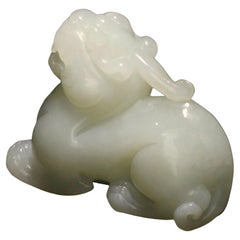
White Jade Mythical Beast – Crouching Unicorn
Located in San Diego, CA
A captivating white jade carving of a mythical unicorn beast, depicted in a crouching stance with its head raised, exuding an aura of strength and mysticism. The creature’s bulging e...
Category
20th Century Chinese Romantic Figurines and Sculptures
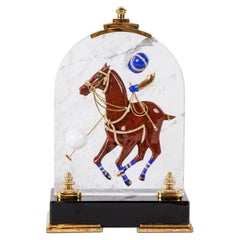
Mellerio Paris, French Gold, Diamonds, Silver, Lapis, and Obsidian Polo Player
Located in Long Island City, NY
Mellerio Paris, A French Gold, Diamonds, Silver-Gilt, Rock Crystal, Enamel, Emerald, Lapis Lazuli, Agate, Emerald, and Obsidian Polo Player, Carved Horse Sculpture, Jeweled Mounted Object.
An extremely rare and unique, one of a kind French Carved Horse Sculpture, Jeweled Mounted Object sculpture "CHEVAUX DE LEGENDE", "A Legendary Horse" by Mellerio, Paris, circa 1999.
Sitting on black obsidian base, the solid rock-crystal slab is finely applied with a carved obdisian hardstone horse and polo player, mounted in 18k gold, brilliant -cut diamonds, emaralds, enamel, lapis lazuli, and agate, .The obsidian base with a plaque engraved: CHEVAUX DE LEGENDE" / MELLERIO DITS MELLER PARIS / 5003 DIV
The piece is in excellent condition and comes with a custom made wood case made for transport. It's very elegant and has French hallmarks throughout. A truly magnificent piece.
Measures 12" high x 8" wide x 4" deep
Founded in France in 1613 by the descendants of Italian immigrants from the Vigezzo Valley in the north of Italy, Mellerio is one of the oldest jewellery houses in Europe. The family business soon attracted the attention of the Royal Court and Marie Antoinette herself reportedly purchased a precious bracelet featuring 7 cameos surrounded by rubies in 1780. Later on, in the 19th century, Mellerio became the official supplier of the French Royal family and the Court of Netherland.
Mellerio creates many jewellery items, all set with rare gems such as peridots, amethysts, aquamarines, citrines and topaz, applying for a patent, the flexible stem, a very supple and light jewellery mechanism. Mellerio remains also well known for their spectacular series of Art Nouveau jewels, created at the beginning of the 20th century, as well as for the creation of trophies rewarding some of the greatest footfall and tennis players of history. In 1993, the jewellery house launched their first watch collection.
Today, Mellerio has stores in Paris, Japan and Hong Kong.
July 14, 1789: this date is known throughout the world as the beginning of the French Revolution. According to a ledger belonging to House of Mellerio, this was also the day that the jeweler sold a golden key to the Comte de Coutance for 10 livres. This ledger, as well as inventories dating as far back as 1768, are the jeweler’s oldest archives. These archives have continued to grow over the years, as the House, established on rue de la Paix in Paris, still lives on today, still in the hands of the same family from Craveggia, in the North of Italy.
The tumultuous history of the Mellerio family in France probably goes as far back as the Italian wars of the Renaissance, but the first official document proving their commercial activity in Paris dates back to 1613. This document is the famous royal warrant awarded by Marie de Medici to a number of Italian families established along the rue des Lombards, including the Mellerios, allowing them to sell “small jewelery items”, therefore granting them a small exception to the traditional monopoly enjoyed by Parisian jewelers. At that time, powerful corporations regulated the operations and customs of Parisian business, but thanks to this exceptional warrant, the Mellerios managed to escape the confines of this framework. Today, this wax-sealed document is kept at the city hall of Craveggia.
From 1613 to the Revolution, the Mellerios lived between France and Italy. The corporations tried many times to put an end to their trade privileges, but all in vain, as a dynasty of sovereigns renewed the warrant. Always marrying and often retiring in Craveggia, the Mellerios continued to maintain their jewelry business in Paris. At first, they did this without a shop. Wearing backpacks (wooden boxes divided into small compartments where jewels were kept), they would tour town fairs around Paris and royal castles.
This is how Jean-Baptiste Mellerio (1765-1850) is said to have sold a bracelet set with rubies and Antique cameos to Marie-Antoinette, which still exists today. Many elements seem to prove the veracity of this anecdote. The queen was particularly fond of cameos, which cover the entire background of her famous jewelry cabinet, and ruby was her favorite stone after diamond. The famous bracelet, reacquired a few years ago by the House of Mellerio, is indeed an 18th century jewel, set with antique cameos representing the profiles of Roman emperors. Two branches of the family were operating in Paris during this time, under the reign of Louis XVI: that of Jean-François (1746-1828), the paternal ancestor of the current Mellerios, and that of Jean-Baptiste (1765-1850).
The French Revolution forced them to return to Italy. However, both Jean-Baptiste and François Mellerio (1772-1843), who was the son of Jean-François, were eventually able to return to Paris after the founding of the Consulate. Jean-Baptiste opened a shop at the Iron Crown of rue Vivienne, and François opened his at the Palais des Tuileries, rue du Coq Saint-Honoré. His well-organized order books give an idea of his high-ranking clientele during the “Old Regime”, among which were the Comte and Comtesse Octave de Segur, the Marquise (later Duchess) de Tourzel, former governess of the royal children, and her daughter, the Comtesse de Bearn, the Craufurds -who organized the flight to Varennes, the Duc and Duchess de Gramont, the Comtesse de Boigne, and Madame de Souza, Talleyrand’s mistress.
We also see the names of the imperial family: Empress Josephine, the Queen of Holland, Princess Elisa, Caroline and Pauline. At that time, the House of Mellerio specialized, among other things, in the trade of antique cameos, a newly fashionable genre of jewel that captured the imagination of all the princesses and noble women of the time.
The years of the Restauration and July Monarchy were among the most glorious. The Bourbons were back on the throne, and the clientele of the House of Mellerio had regained its former wealth. Mellerio supplied Louis-Philippe, Duke of Orléans, as well as his mother, wife and sister, with sumptuous jewels, including a set of emeralds made piece by piece, while the Duke of Bourbon, last prince of the House of Condé, offered diamonds to his mistress, the scheming Baronne de Feucheres, and Monsieur de LaFayette also bought cameos for one of his granddaughters. For the first time, Mellerio ventured into the world of arts in 1815, when Carlotta Grisi, a famous dancer who created Giselle, as well as an actress named Rachel, bought jewels at the Mellerio store on rue de la Paix.
1848 marked a new turning point. France once again became a Republic. François Mellerio handed the company over to his son, Jean, and the latter decided to travel to Spain to build a new clientele. He later became one of the jewelers of the royal family, and met Eugénie de Montijo, who remained a faithful client when she became empress of the French people. The Imperial years were lavish. During the Second Empire, Paris was a pageant of crinoline dresses designed by Worth, while jewels by Mellerio, Worth’s neighbour on the rue de la Paix, adorned the noble women of the Tuileries court.
The Empress bought pearls. Mathilde Bonaparte...
Category
20th Century French Romantic Figurines and Sculptures
Materials
Agate, Diamond, Emerald, Rock Crystal, Gold, Silver
$138,700
H 12 in W 8 in D 4 in
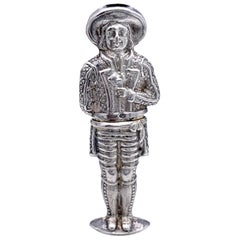
Antique Silver Needlecase Man Frockcoat Gaiters Playing Cards Ace of Diamonds
Located in Munich, Bavaria
Charming silver Biedermeier needle case in the shape of a man wearing a hat, frockcoat and gaiters. He is hiding his right hand, holding a playing card showing a diamond ace, behind...
Category
1820s German Antique Romantic Figurines and Sculptures
Materials
Silver
$900
W 0.71 in L 2.25 in
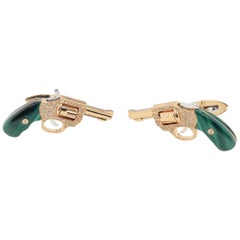
18K Gold Cufflinks with Diamonds and Malachite or Black Wood or White Shell
Located in Hong Kong, HK
It's one of a kind Cufflinks. All parts are moving like a real gun. Enjoy the unique and special piece. In 18K Rose Gold engraved with F color Diamonds and Malachite natural healing ...
Category
21st Century and Contemporary Hong Kong Romantic Figurines and Sculptures
Materials
Diamond, Malachite, 18k Gold, Rose Gold
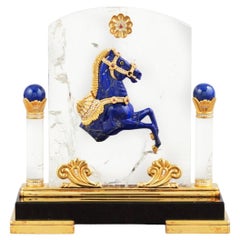
Mellerio Paris, a French Gold, Diamond, Silver-Gilt, Rock-Crystal, & Lapis Horse
Located in Long Island City, NY
Mellerio Paris, A French Gold, Diamond, Silver-Gilt, Rock-Crystal, Obsidian & Lapis Horse
An extremely rare and unique, one of a kind French gold, diamonds, Silver-gilt rock-crystal, obsidian and lapis lazuli jeweled sculpture "Bucéphale, Chevaux de légende", "Bucephalus, A Legendary Horse" by Mellerio, Paris, circa 1998.
Sitting on black obsidian base, the solid rock crystal slab is finely applied with a lapis lazuli half-horse with harness mounted in 18k gold and brilliant cut diamonds, between two crystal and lapis lazuli columns adorned with gold and diamonds, insert with 7 ruby cabochons and 1 emerald cabochon, the obsidian base with a plaque engraved: CHEVAUX DE LEGENDE / MELLERIO DITS MELLER / PARIS / 5029 DIV
Bucephalus (c355-326 BC) is among the most famous horses in history, and it was said that this he could not be tamed. The young Alexander the Great, of course, tamed him – and went on to ride his beloved equine companion for many years and into many battles.
The piece is in excellent condition and comes with a custom made wood case made for transport. It's very elegant and has French hallmarks throughout. A truly magnificent piece.
Measures 10" high x 9" wide x 4" deep
Founded in France in 1613 by the descendants of Italian immigrants from the Vigezzo Valley in the north of Italy, Mellerio is one of the oldest jewellery houses in Europe. The family business soon attracted the attention of the Royal Court and Marie Antoinette herself reportedly purchased a precious bracelet featuring 7 cameos surrounded by rubies in 1780. Later on, in the 19th century, Mellerio became the official supplier of the French Royal family and the Court of Netherland.
Mellerio creates many jewellery items, all set with rare gems such as peridots, amethysts, aquamarines, citrines and topaz, applying for a patent, the flexible stem, a very supple and light jewellery mechanism. Mellerio remains also well known for their spectacular series of Art Nouveau jewels, created at the beginning of the 20th century, as well as for the creation of trophies rewarding some of the greatest footfall and tennis players of history. In 1993, the jewellery house launched their first watch collection.
Today, Mellerio has stores in Paris, Japan and Hong Kong.
July 14, 1789: this date is known throughout the world as the beginning of the French Revolution. According to a ledger belonging to House of Mellerio, this was also the day that the jeweler sold a golden key to the Comte de Coutance for 10 livres. This ledger, as well as inventories dating as far back as 1768, are the jeweler’s oldest archives. These archives have continued to grow over the years, as the House, established on rue de la Paix in Paris, still lives on today, still in the hands of the same family from Craveggia, in the North of Italy.
The tumultuous history of the Mellerio family in France probably goes as far back as the Italian wars of the Renaissance, but the first official document proving their commercial activity in Paris dates back to 1613. This document is the famous royal warrant awarded by Marie de Medici to a number of Italian families established along the rue des Lombards, including the Mellerios, allowing them to sell “small jewelery items”, therefore granting them a small exception to the traditional monopoly enjoyed by Parisian jewelers. At that time, powerful corporations regulated the operations and customs of Parisian business, but thanks to this exceptional warrant, the Mellerios managed to escape the confines of this framework. Today, this wax-sealed document is kept at the city hall of Craveggia.
From 1613 to the Revolution, the Mellerios lived between France and Italy. The corporations tried many times to put an end to their trade privileges, but all in vain, as a dynasty of sovereigns renewed the warrant. Always marrying and often retiring in Craveggia, the Mellerios continued to maintain their jewelry business in Paris. At first, they did this without a shop. Wearing backpacks (wooden boxes divided into small compartments where jewels were kept), they would tour town fairs around Paris and royal castles.
This is how Jean-Baptiste Mellerio (1765-1850) is said to have sold a bracelet set with rubies and Antique cameos to Marie-Antoinette, which still exists today. Many elements seem to prove the veracity of this anecdote. The queen was particularly fond of cameos, which cover the entire background of her famous jewelry cabinet, and ruby was her favorite stone after diamond. The famous bracelet, reacquired a few years ago by the House of Mellerio, is indeed an 18th century jewel, set with antique cameos representing the profiles of Roman emperors. Two branches of the family were operating in Paris during this time, under the reign of Louis XVI: that of Jean-François (1746-1828), the paternal ancestor of the current Mellerios, and that of Jean-Baptiste (1765-1850).
The French Revolution forced them to return to Italy. However, both Jean-Baptiste and François Mellerio (1772-1843), who was the son of Jean-François, were eventually able to return to Paris after the founding of the Consulate. Jean-Baptiste opened a shop at the Iron Crown of rue Vivienne, and François opened his at the Palais des Tuileries, rue du Coq Saint-Honoré. His well-organized order books give an idea of his high-ranking clientele during the “Old Regime”, among which were the Comte and Comtesse Octave de Segur, the Marquise (later Duchess) de Tourzel, former governess of the royal children, and her daughter, the Comtesse de Bearn, the Craufurds -who organized the flight to Varennes, the Duc and Duchess de Gramont, the Comtesse de Boigne, and Madame de Souza, Talleyrand’s mistress.
We also see the names of the imperial family: Empress Josephine, the Queen of Holland, Princess Elisa, Caroline and Pauline. At that time, the House of Mellerio specialized, among other things, in the trade of antique cameos, a newly fashionable genre of jewel that captured the imagination of all the princesses and noble women of the time.
The years of the Restauration and July Monarchy were among the most glorious. The Bourbons were back on the throne, and the clientele of the House of Mellerio had regained its former wealth. Mellerio supplied Louis-Philippe, Duke of Orléans, as well as his mother, wife and sister, with sumptuous jewels, including a set of emeralds made piece by piece, while the Duke of Bourbon, last prince of the House of Condé, offered diamonds to his mistress, the scheming Baronne de Feucheres, and Monsieur de LaFayette also bought cameos for one of his granddaughters. For the first time, Mellerio ventured into the world of arts in 1815, when Carlotta Grisi, a famous dancer who created Giselle, as well as an actress named Rachel, bought jewels at the Mellerio store on rue de la Paix.
1848 marked a new turning point. France once again became a Republic. François Mellerio handed the company over to his son, Jean, and the latter decided to travel to Spain to build a new clientele. He later became one of the jewelers of the royal family, and met Eugénie de Montijo, who remained a faithful client when she became empress of the French people. The Imperial years were lavish. During the Second Empire, Paris was a pageant of crinoline dresses designed by Worth, while jewels by Mellerio, Worth’s neighbour on the rue de la Paix, adorned the noble women of the Tuileries court.
The Empress bought pearls. Mathilde Bonaparte...
Category
21st Century and Contemporary French Romantic Figurines and Sculptures
Materials
Diamond, Lapis Lazuli, Rock Crystal, Gold, Silver
$138,700
H 10 in W 9 in L 4 in
Previously Available Items
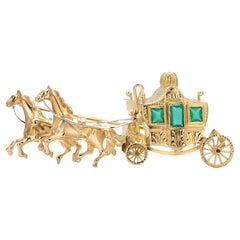
Eighteen Karat Yellow Gold Horse Drawn Carriage Brooch Three Green faceted Gems
Located in New York, NY
Vintage horse drawn carriage brooch
An Italian 18 karat yellow gold brooch depiction a horse drawn carriage with three green faceted gem windows
Stamp...
Category
Mid-20th Century Italian Romantic Figurines and Sculptures
Materials
Aventurine, Gold, 18k Gold, Yellow Gold
H 2.5 in W 1.25 in D 0.5 in Dm 1.25 in L 2.5 in