Manhattan

to
25,042
166,119
989,641
711,761
92,093
64,055
38,523
23,422
17,249
12,514
8,241
6,263
5,223
5,129
4,396
4,232
4,204
3,905
3,756
2,726
2,706
1,832
1,331
1,153
1,098
932
833
708
694
398
375
301
191
187
184
158
154
146
116
70
70
53
49
44
42
42
37
36
36
29
15
10
10
9
7
7
7
5
5
5
3
3
2
2
1
5,608
3,580
2,528
2,493
1,931
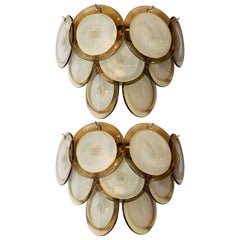
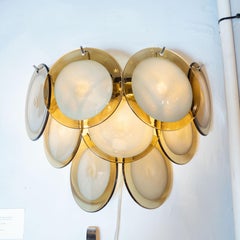
Custom Pair of Gaston Plaster Sconces
Located in New York, NY
Custom pair of Gaston plaster sconces. Please note that the sconces takes E-12 candelabra bulbs, 40 watts. These sconces can be ...
Category

21st Century and Contemporary American Mid-Century Modern Manhattan

Materials

Plaster

Vintage 10k Yellow Gold 3.37ct Sapphire and Diamond Halo Ring
Located in New York, NY
Beautiful vintage ring featuring an oval, deep royal-blue sapphire surrounded by a halo of sparkling round diamonds. The sapphire shows rich color and lively brilliance, while the di...
Category

20th Century Manhattan

Materials

Diamond, Sapphire, 10k Gold, Yellow Gold

Very Rare Vintage 1944 Omega Chronometer Watch US Navy Issued
By Omega
Located in New York, NY
Rare Vintage 1944 Omega Chronometer Watch US Navy Issued What is amazing about this watch is that it is in perfect working condition and also looks a...
Category

Mid-19th Century Swiss Aesthetic Movement Antique Manhattan

Japanese Export Carved Dragon Chair
Located in New York, NY
Eye catching highly carved sculptural dragon armchair. Japanese dragon motif carried throughout arms and chair with fantastic detailed hand carvings. Victorian era cabriole legs fini...
Category

19th Century Japanese Japonisme Antique Manhattan

Materials

Wood

Antique 18th Century English George III Period Sterling Silver Goblet, 1783
Located in New York, NY
Very fine quality George III period sterling silver wine goblet London, 1783. Exceptional engraving on this piece, elegant garlands of acanthus leaf and roses held by quatrefoil rose...
Category

18th Century English George III Antique Manhattan

Materials

Sterling Silver

Maison Dominique “Clemenceau” Armchairs, France 1930's
By Andre Domin & Marcel Genevriere for Maison Dominique
Located in New York, NY
Designed by Maison Dominique as part of their commission for the French warship Clemenceau, those chairs predate the Prouvé design language by a couple of decades and are rarer, made...
Category

Early 20th Century French Art Deco Manhattan

Materials

Steel

Alex Soldier Diamond Gold Star Pendant Necklace One of a Kind
By Alex Soldier
Located in New York, NY
Alex Soldier's Star of David narrates a story of life. The ornament consists of several details, each denoting special symbols attributed to Jewish culture. The surface is decorated ...
Category

2010s American Contemporary Manhattan

Materials

Diamond, White Diamond, Gold, 18k Gold, White Gold, Mixed Metal

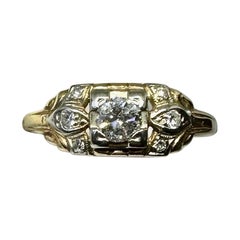
Fine Art Deco Period .95TCW Diamond Platinum Ring
Located in New York, NY
Dazzling Art Deco period platinum and diamond engagement ring .60 carat central stone surrounded by 10 diamonds for a harmonius, beautiful effect, TCW .95 carat. Lovely setting wit...
Category

Early 20th Century Unknown Art Deco Manhattan

Materials

Diamond, Platinum

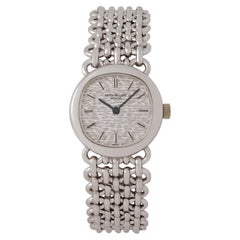
Patek Philippe Twenty-4 18K Rose Gold Diamond Women's Watch Ref. 4910/11R
By Patek Philippe
Located in New York, NY
Elegant and iconic Patek Philippe Twenty4 wristwatch, reference **4910 11R**, crafted in solid 18K rose gold. The rectangular chocolate brown dial features applied Roman numerals at ...
Category

18th Century Antique Manhattan

Materials

Diamond, 18k Gold

Fine Antique Edwardian Diamond Opal 14K Gold Reticulated Bangle Bracelet
Located in New York, NY
Romantic antique Edwardian diamond, cabochon opal 14K gold reticulated bangle bracelet early 20th Century The elegant, complex floral and foliate motif, features sixteen round caboch...
Category

Early 20th Century American Edwardian Manhattan

Materials

Diamond, Opal, 14k Gold, Yellow Gold

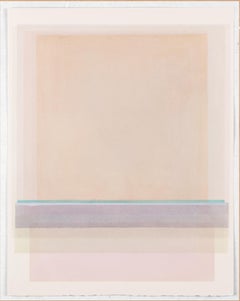
Mid 1960s abstraction color field silkscreen signed/N Framed famed Indian artist
By Natvar Bhavsar
Located in New York, NY
Natvar Bhavsar Untitled mid 1960s abstraction, 1967 Silkscreen Pencil signed, dated and numbered 10/30 by Natvar Bhavsar on the front Frame included: Elegantly framed in a museum qua...
Category

1960s Color-Field Manhattan

Materials

Screen

Vacheron Constantin Quai de l'Ile Titanium Mens Watch 85050/000T-49241
By Vacheron Constantin
Located in New York, NY
Pre-owned in excellent condition. Comes with a Vacheron Passport. 2008 dated. Unworn Band. No original box. Recently serviced. The movement is calibrated and keeps time well. 🕰️ Va...
Category

21st Century and Contemporary Swiss Manhattan

Materials

Titanium

Tacchini Pastille Pouf/Ottoman by Studiopepe in Stock
By Studiopepe, Tacchini
Located in New York, NY
The soft, enveloping forms of the Pastilles ottoman evoke the sweetness of childhood memories, transforming design into a cosy embrace that blends tradition and modernity with balanc...
Category

2010s Italian Manhattan

Materials

Fabric

Intertwining Vines, 2025
By Marilla Palmer
Located in New York, NY
Marilla Palmer Intertwining Vines, 2025 watercolor, embroidery, pressed flowers, Durabright prints on Arches paper 30 x 22 in. (pal265) Marilla Palmer lives and works in Brooklyn, N...
Category

2010s Contemporary Manhattan

Materials

Paper, Sequins, Watercolor

Claude Boeltz 24kt Gold Plated Exploded Bronze V-Shape Sconces w/ Rock Crystals
By Claude Victor Boeltz
Located in New York, NY
This stunning and sophisticated pair of modernist sconces were realized by the celebrated French artist Claude Boeltz. They feature graphic organic forms- recalling both oceanic and ...
Category

20th Century French Modern Manhattan

Materials

Rock Crystal, Gold, Bronze

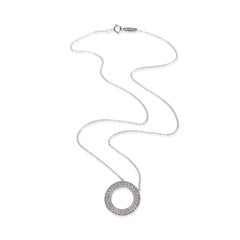
Tiffany & Co. Rose Gold Diamond Tiffany T T1 Ring
By Tiffany & Co.
Located in New York, NY
Tiffany & Co. Rose Gold Diamond Tiffany T T1 Ring PRIMARY DETAILS SKU: 149188 Listing Title: Tiffany & Co. Rose Gold Diamond Tiffany T T1 Ring Condition Description: Tiffany...
Category

21st Century and Contemporary Manhattan

Materials

Rose Gold

Antique 17th Century Flemish Mythological Tapestry, with the Courtship of Apollo
Located in New York, NY
An antique 17th century Flemish mythological tapestry, size 9'1 H x 12'8 W, envisioning The Courtship of Apollo, with the Greek deity Apollo at left with his lyre and laurel garland,...
Category

17th Century Belgian Antique Manhattan

Materials

Wool, Silk

Oscar de la Renta Runway Necklace Flowers Black Enamel Haute Couture Monumental
By Oscar De La Renta
Located in New York, NY
THIS IS AN EXTRAORDINARY ORIGINAL OSCAR DE LA RENTA HAUTE COUTURE RUNWAY NECKLACE OF SUPERB QUALITY STYLE AND IMPACT! THE NECKLACE HAS A DRAMATIC THREE DIMENSIONAL FLOWER MOTIF DES...
Category

20th Century American Contemporary Manhattan

Materials

Gilt Metal, Enamel

Vintage Light Pink Voyage Cotton Floral-Trimmed Cardigan Size US S
By VOYAGE London by Louise and Tiziano Mazelli
Located in New York, NY
Vintage light pink textured cotton cardigan by Voyage. Dainty floral and velvet trim throughout. Crew neck. Hook-and-eye closures at front. 32" bust, 14.5" shoulder width, 20" length...
Category

Late 20th Century English Manhattan

Caucasian Kuba Small Antique Prayer Rug
Located in New York, NY
Late 19th Century Antique Caucasian Kuba Prayer Rug Measures: 3'9'' x 4'10''.
Category

Late 19th Century Caucasian Rustic Antique Manhattan

Materials

Wool

Blue Ceylon Sapphire Ring 30 Carats GIA Diamond Cocktail Design by Ella Gafter
By Ella Gafter
Located in New York, NY
The blue Ceylon sapphire and diamond ring features a magnificent oval faceted 30 carat blue Ceylon sapphire of intense and crystalline “blu Madonna” color. (In reference to the marve...
Category

21st Century and Contemporary Italian Artist Manhattan
Materials

Blue Sapphire, Diamond, White Diamond, Sapphire, 18k Gold, White Gold

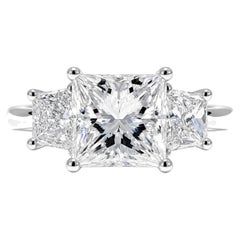
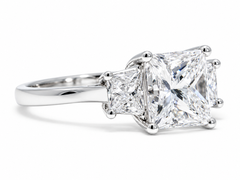
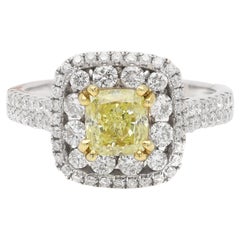
2.28 Carat GIA Certified Radiant Cut Diamond Engagement Ring
Located in New York, NY
Finely crafted in platinum featuring a Radiant cut Diamond weighing 2.28 carats, E color, VS2 clarity, GIA#12330903. Size 5, resizable
Category

21st Century and Contemporary Manhattan
Materials

Diamond, Platinum

Retro 6 Carat Citrine Ring 14 Karat Gold Antique
Located in New York, NY
This is an absolutely magnificent antique Retro - Art Deco 6 Carat Citrine Ring in a dramatic 14 Karat Yellow Gold setting of great beauty. The ...
Category

20th Century Unknown Retro Manhattan
Materials

Citrine, Gold, Yellow Gold, 14k Gold

14K Solid Yellow Gold Pear Cut Diamond Solitaire Engagement Ring Gift for Women
By VR Jewels
Located in New York, NY
This elegant ring is crafted in 14K solid yellow gold, featuring a pear-cut diamond weighing 0.3 carats, securely held in a four prong solitaire setting. The sleek band highlights th...
Category

21st Century and Contemporary American Modern Manhattan
Materials

Diamond, Gold, 14k Gold, Yellow Gold

Custom Italian Printed Pop Art Black Blue Butterfly Lacquer Wood Chest/Sideboard
By Cosulich Interiors & Antiques
Located in New York, NY
A custom fun Conceptual Pop Art lacquer chest, entirely hand-crafted in Italy and completely bespoke in sizes, finishes, colors, and functions, part of a bespoke collection created a...
Category

2010s Italian Modern Manhattan
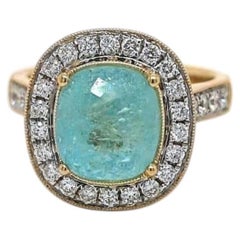
Materials

Glass, Wood, Lacquer, Paint

Prong Set Moissanite Gold Plated Eternity Band Ring for Her Gift Silver Jeewlry
Located in New York, NY
Prong Set Moissanite Gold Plated Eternity Band Ring sterling silver. You shall need these eternity band ring to make a statement with your look. These Moissanite eternity band ring c...
Category

21st Century and Contemporary American Art Deco Manhattan
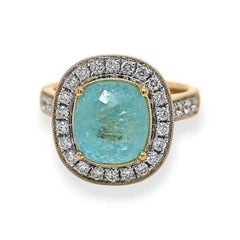
Materials

Other, Gold Plate, Silver, Sterling Silver

Pink40 Rock Crystal Bubble Lamps By Phoenix
Located in New York, NY
A tall pair of pink rock crystal quartz bubble lamps with polished brass frames. Created by Phoenix Gallery, NYC. Each lamp installed two sockets. To the top of the rock crystal 25.7...
Category

21st Century and Contemporary Manhattan
Materials

Rock Crystal

Street art Pop art figurative animal hand painted acrylic on panel contemporary
By Bustart
Located in New York, NY
Hand painted and stencilled on panel In 1999 BustArt began his artistic career with classic Graffiti. Until 2005, he became familiar with the whole spectrum of Graffiti and reached...
Category

2010s Pop Art Manhattan
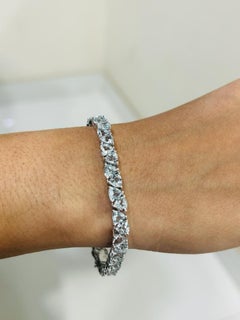
Materials

Spray Paint, Acrylic, Wood Panel

Hunt Slonem "Spotted" Bunny
By Hunt Slonem
Located in Boston, MA
Artist: Slonem, Hunt Title: Spotted Date: 2025 Medium: Oil on wood Unframed Dimensions: 10" x 8" Framed Dimensions: 16" x 14" Signature: Signed by Artist on Verso Edition: Un...
Category

2010s Contemporary Manhattan
Materials

Oil

Bochic “Orient” Vintage Retro Ruby & Diamond Ring Set In 18K Gold & Silver
By Bochic
Located in New York, NY
Bochic “Orient” Vintage Retro Ruby & Diamond Ring Set In 18K Gold & Silver Natural Slice Cut Ruby - 1.50 Carat Gray natural Diamonds - 1.24 Carat This Ring is from the "Orient"...
Category

21st Century and Contemporary Thai Anglo-Indian Manhattan
Materials

Diamond, Ruby, 18k Gold, Gold Plate, Silver

The Paris Review No. 87 Spring 1983
Located in Brooklyn, NY
The Paris Review No. 87 Spring 1983 Stories by James Baker Hall, Joyce Carol Oates, and Paul West. Poems by Stanislaw Baranczak, Czeslaw Milosz, and C. K. Williams. Feature include Timothy Tung "Literary Happenings: China: An Interview with Dong Leshan, Part Two." Artwork reproductions after Jean Michel Basquiat...
Category

1980s Vintage Manhattan

Materials

Paper

Full Eternity Moissanite Band in 925 Silver Stackable Ring for Women Gift
Located in New York, NY
Moissanite Band Ring in sterling silver. You shall need these eternity band ring to make a statement with your look. These Moissanite eternity band ring create a sparkling, luxurious...
Category

21st Century and Contemporary American Contemporary Manhattan

Materials

Other, Silver, Sterling Silver

Inlaid Teak Octagonal Side Table, India
Located in New York, NY
A small inlaid side table in octagonal shape, handcrafted in India out of seasoned teak wood and responsibly sourced animal bone inlay. Inla...
Category

2010s Indian Anglo-Indian Manhattan

Materials

Bone, Teak

1940’s French Gilt Bronze Chandelier
Located in New York, NY
A circa 1940’s French gilt bronze chandelier with 12 lights
Category

Mid-20th Century French Neoclassical Manhattan

Materials

Bronze

Antique French Tapestry Handwoven French Tapestry Aubusson Verdure Tapestry
Located in New York, NY
Exceptional rare large antique French Tapestry handmade human animals "Mille Fleurs" Tapestry 6'8" x 8' (7' x 8') 203cm x 244cm Circa 1910 " An exce...
Category

1910s French Vintage Manhattan

Materials

Wool

Galerie Shabab Collection Early 20th Century Handmade Persian Malayer Accent Rug
Located in New York, NY
An antique Persian Malayer accent rug handmade during the early 20th century. Measures: 4' 3" x 6' 0"
Category

Early 20th Century Persian Rustic Manhattan

Materials

Wool

Zhikai Zhou Waterscape Original Oil On Canvas "Jiangnan V"
Located in New York, NY
Title: Jiangnan V Medium: Oil on canvas Size: 12.25 x 16 inches Frame: Framing options available! Condition: The painting appears to be in excellent condition. Note: This paint...
Category

21st Century and Contemporary Manhattan

Materials

Canvas, Oil

Bochic “Capri” Sapphire, Emerald & Pearl Earrings In 18K Gold & Silver
By Bochic
Located in New York, NY
Bochic “Capri” Sapphire, Emerald & Pearl Earrings In 18K Gold & Silver Blue Sapphire natural cabochons from Sri Lanka 8 Carats Pink Sapphire natural oval cur from Sri Lanka 2.50 Ca...
Category

21st Century and Contemporary Thai Baroque Manhattan

Materials

Emerald, Pearl, Sapphire, Blue Sapphire, Pink Sapphire, 18k Gold, Gold P...

Hester Bateman English Georgian Neoclassical Tea Caddy with Spoon, 1784
By Hester Bateman
Located in New York, NY
George III sterling silver tea caddy with spoon. Made by Hester Bateman in London in 1784. Oval bowl with straight sides. Cover hinged and domed with vasiform finial. On front, brigh...
Category

1780s British Neoclassical Antique Manhattan

Materials

Sterling Silver

Tiffany & Co. 18K Yellow Gold Byscayne Bracelet
By Tiffany & Co.
Located in New York, NY
This vintage Tiffany & Co. bracelet is a striking example of the house’s bold hardstone designs. Crafted in 18K yellow gold, it features a series of cushion-shaped panels, each set w...
Category

20th Century American Modern Manhattan

Materials

18k Gold, Yellow Gold

Medusa Snake Coral Necklace Antique Etruscan Victorian 14 Karat Gold Neoclassic
Located in New York, NY
This is a Museum Quality Antique Etruscan Revival Victorian Carved Coral Necklace depicting Medusa with a Crown of Snakes with two pear shape coral drop pendants. The Coral Medusa is set in 14-18 Karat Gold with extraordinary Etruscan Revival beaded cannetille surmounts on the coral drops and a barrel clasp connecting the fine Etruscan gold chain...
Category

19th Century Unknown Etruscan Revival Antique Manhattan

Materials

Coral, 14k Gold, Gold, Yellow Gold

Mass Card for Andy Warhol's Funeral issued at St. Patrick's Cathedral Limited
By (after) Andy Warhol
Located in New York, NY
This is a rare, two-sided mass card from Andy Warhol's memorial mass, which was held on April 1, 1987 at St. Patrick's Cathedral in New York. The front of the card depicts Warhol's 1...
Category

1980s Pop Art Manhattan
Materials

Lithograph, Offset

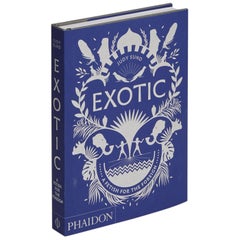
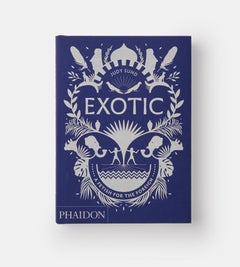
Mickalene Thomas
By Phaidon
Located in New York, NY
Over the past two decades, Mickalene Thomas's critically acclaimed and extensive body of work has spanned painting, collage, photography, video, and the immersive installations that ...
Category

2010s Chinese Other Manhattan
Materials

Paper

Mickalene Thomas
Mickalene Thomas
$125 / item
Luxle 0.40 Cttw Heart-Shaped Natural Diamond Hoop Earrings in 14K Gold
Located in New York, NY
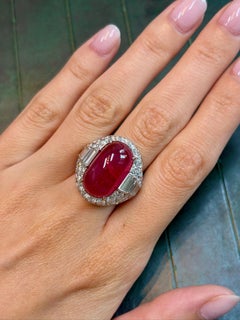
These enchanting 14K yellow gold hoop earrings feature a captivating heart-shaped pendant adorned with sparkling diamonds. At the center of the heart, a collection of round diamonds,...
Category

2010s Contemporary Manhattan
Materials

Diamond, 14k Gold, Yellow Gold

The Sphere of Reason
By Mark Kostabi
Located in New York, NY
Oil on canvas Signed and dated, l.l. This painting is offered by ClampArt, located in New York City. Price includes framing. About the artist: Artist and Composer Mark Kostabi was b...
Category

1990s Contemporary Manhattan
Materials

Canvas, Oil

Unique portrait of Roy Lichtenstein, Authenticated by the Andy Warhol Foundation
By Andy Warhol
Located in New York, NY
Andy Warhol Portrait of Roy Lichtenstein, 1975 Polaroid dye-diffusion print Authenticated by the Andy Warhol Foundation for the Visual Arts, bears the Foundation stamp verso Frame included: Framed in white wood frame with UV plexiglass; with die-cut window in the back to show official Warhol Foundation authentication stamp and text Measurements: 9 9/16 x 8 9/16 x 9/16 inches (frame) 3 1/2 x 2 3/4 inches (window) 4.16 x 3.15 inches (Artwork) Authenticated and stamped by the Estate of Andy Warhol/Warhol Foundation for the Visual Arts An impressive piece of Pop Art history! A must-have for fans and collectors of both Andy Warhol and Roy Lichtenstein: This is a unique, authenticated color Polaroid taken by one Pop Art legend, Andy Warhol, of his most formidable contemporary and, in many respects, rival, Roy Lichtenstein. One of only a few portraits Andy Warhol took of Roy Lichtenstein, during one tense photo shoot. Both iconic artists, colleagues and, perhaps lesser known to the public, rivals, would be represented at the time by the renowned Leo Castelli Gallery. The truth is - they were really more rivals than friends. (the rivalry intensified when Warhol, who was working with Walt Disney, discovered that Lichtenstein painted Mickey Mouse before he did!!) Leo Castelli was committed to Roy Lichtenstein, and, it's easy to forget today, wasn't that interested in Warhol as he considered Lichtenstein the greater talent and he could relate better with Roy on a personal level. However, Ivan Karp, who worked at Castelli, was very interested in Warhol, as were some powerful European dealers, as well as many wealthy and influential American and European collectors. That was the start of Warhol's bypassing the traditional gallery model - so that dealers like Castelli could re-discover him after everybody else had. Warhol is known to have taken hundreds of self-portrait polaroid photographs - shoe boxes full - and he took many dozens of images of celebrities like Blondie and Farrah Fawcett. But only a small number of photographic portraits of fellow Pop Art legend Roy Lichtenstein -- each unique,- are known to have appeared on the market over the past half a century - all from the same photo session. This is one of them. There is another Polaroid - from this same (and only) sitting, in the permanent collection of the Getty Museum in California. There really weren't any other collaborations between these two titans, making the resulting portrait from this photo session extraordinary. It is fascinating to study Roy Lichtenstein's face and demeanor in this photograph, in the context of the great sense of competition, but perhaps even greater, albeit uneasy respect, these two larger than life Pop art titans had for each other: Like Leo Castelli, Roy Lichtenstein was Jewish of European descent; whereas Warhol was Catholic and quintessentially American, though also of European (Polish) descent. They were never going to be good friends, but this portrait, perhaps even arranged by Leo Castelli, represents an uneasy acknowledgement there would be room at the top for both of them. Floated, framed with die cut back revealing authentication details, and ready to hang. Measurements: 9 9/16 x 8 9/16 x 9/16 inches (frame) 3 1/2 x 2 3/4 inches (window) 4.16 x 3.15 inches (sheet) Authenticated by the Estate of Andy Warhol/The Andy Warhol Foundation for the Visual Arts. Estate Stamped: Stamped with the Andy Warhol Estate, Warhol Foundation for the Visual Arts stamp, numbered "B 512536P", with the Estate of Andy Warhol stamp and inscribed UP on the reverse. Bears the Warhol Foundation unique inventory number. Roy Lichtenstein Biography Roy Lichtenstein was one of the most influential and innovative artists of the second half of the twentieth century. He is preeminently identified with Pop Art, a movement he helped originate, and his first fully achieved paintings were based on imagery from comic strips and advertisements and rendered in a style mimicking the crude printing processes of newspaper reproduction. These paintings reinvigorated the American art scene and altered the history of modern art. Lichtenstein’s success was matched by his focus and energy, and after his initial triumph in the early 1960s, he went on to create an oeuvre of more than 5,000 paintings, prints, drawings, sculptures, murals and other objects celebrated for their wit and invention. Roy Fox Lichtenstein was born on October 27, 1923, in New York City, the first of two children born to Milton and Beatrice Werner Lichtenstein. Milton Lichtenstein (1893–1946) was a successful real estate broker, and Beatrice Lichtenstein (1896–1991), a homemaker, had trained as a pianist, and she exposed Roy and his sister Rénee to museums, concerts and other aspects of New York culture. Roy showed artistic and musical ability early on: he drew, painted and sculpted as a teenager, and spent many hours in the American Museum of Natural History and the Museum of Modern Art. He played piano and clarinet, and developed an enduring love of jazz, frequenting the nightspots in Midtown to hear it. Lichtenstein attended the Franklin School for Boys, a private junior high and high school, and was graduated in 1940. That summer he studied painting and drawing from the model at the Art Students League of New York with Reginald Marsh. In September he entered Ohio State University (OSU) in Columbus in the College of Education. His early artistic idols were Rembrandt, Daumier and Picasso, and he often said that Guernica (1937; Museo Reina Sofía, Madrid), then on long-term loan to the Museum of Modern Art, was his favorite painting. Even as an undergraduate, Lichtenstein objected to the notion that one set of lines (one person’s drawings) “was considered brilliant, and somebody’s else’s, that may have looked better to you, was considered nothing by almost everyone.”i Lichtenstein’s questioning of accepted canons of taste was encouraged by Hoyt L. Sherman, a teacher whom he maintained was the person who showed him how to see and whose perception-based approach to art shaped his own. In February 1943, Lichtenstein was drafted, and he was sent to Europe in 1945. As part of the infantry, he saw action in France, Belgium and Germany. He made sketches throughout his time in Europe and, after peace was declared there, he intended to study at the Sorbonne. Lichtenstein arrived in Paris in October 1945 and enrolled in classes in French language and civilization, but soon learned that his father was gravely ill. He returned to New York in January 1946, a few weeks before Milton Lichtenstein died. In the spring of that year, Lichtenstein went back to OSU to complete his BFA and in the fall he was invited to join the faculty as an instructor. In June 1949, he married Isabel Wilson Sarisky (1921–80), who worked in a cooperative art gallery in Cleveland where Lichtenstein had exhibited his work. While he was teaching, Lichtenstein worked on his master’s degree, which he received in 1949. During his second stint at OSU, Lichtenstein became closer to Sherman, and began teaching his method on how to organize and unify a composition. Lichtenstein remained appreciative of Sherman’s impact on him. He gave his first son the middle name of “Hoyt,” and in 1994 he donated funds to endow the Hoyt L. Sherman Studio Art Center at OSU. In the late 1940s and early 1950s, Lichtenstein began working in series and his iconography was drawn from printed images. His first sustained theme, intimate paintings and prints in the vein of Paul Klee that poked lyrical fun at medieval knights, castles and maidens, may well have been inspired by a book about the Bayeux Tapestry. Lichtenstein then took an ironic look at nineteenth-century American genre paintings he saw in history books, creating Cubist interpretations of cowboys and Indians spiked with a faux-primitive whimsy. As with his most celebrated Pop paintings of the 1960s, Lichtenstein gravitated toward what he would characterize as the “dumbest” or “worst” visual item he could find and then went on to alter or improve it. In the 1960s, commercial art was considered beneath contempt by the art world; in the early 1950s, with the rise of Abstract Expressionism, nineteenth-century American narrative and genre paintings were at the nadir of their reputation among critics and collectors. Paraphrasing, particularly the paraphrasing of despised images, became a paramount feature of Lichtenstein’s art. Well before finding his signature mode of expression in 1961, Lichtenstein called attention to the artifice of conventions and taste that permeated art and society. What others dismissed as trivial fascinated him as classic and idealized—in his words, “a purely American mythological subject matter.”ii Lichtenstein’s teaching contract at OSU was not renewed for the 1951–52 academic year, and in the autumn of 1951 he and Isabel moved to Cleveland. Isabel Lichtenstein became an interior decorator specializing in modern design, with a clientele drawn from wealthy Cleveland families. Whereas her career blossomed, Lichtenstein did not continue to teach at the university level. He had a series of part-time jobs, including industrial draftsman, furniture designer, window dresser and rendering mechanical dials for an electrical instrument company. In response to these experiences, he introduced quirkily rendered motors, valves and other mechanical elements into his paintings and prints. In 1954, the Lichtensteins’ first son, David, was born; two years later, their second child, Mitchell, followed. Despite the relative lack of interest in his work in Cleveland, Lichtenstein did place his work with New York dealers, which always mattered immensely to him. He had his first solo show at the Carlebach Gallery in New York in 1951, followed by representation with the John Heller Gallery from 1952 to 1957. To reclaim his academic career and get closer to New York, Lichtenstein accepted a position as an assistant professor at the State University of New York at Oswego, in the northern reaches of the state. He was hired to teach industrial design, beginning in September 1957. Oswego turned out to be more geographically and aesthetically isolated than Cleveland ever was, but the move was propitious, for both his art and his career. Lichtenstein broke away from representation to a fully abstract style, applying broad swaths of pigment to the canvas by dragging the paint across its surface with a rag wrapped around his arm. At the same time, Lichtenstein was embedding comic-book characters figures such as Mickey Mouse and Donald Duck in brushy, expressionistic backgrounds. None of the proto-cartoon paintings from this period survive, but several pencil and pastel studies from that time, which he kept, document his intentions. Finally, when he was in Oswego, Lichtenstein met Reginald Neal, the new head of the art department at Douglass College, the women’s college of Rutgers University, in New Brunswick, New Jersey. The school was strengthening and expanding its studio art program, and when Neal needed to add a faculty member to his department, Lichtenstein was invited to apply for the job. Lichtenstein was offered the position of assistant professor, and he began teaching at Douglass in September 1960. At Douglass, Lichtenstein was thrown into a maelstrom of artistic ferment. With New York museums and galleries an hour away, and colleagues Geoffrey Hendricks and Robert Watts at Douglass and Allan Kaprow and George Segal at Rutgers, the environment could not help but galvanize him. In June 1961, Lichtenstein returned to the idea he had fooled around with in Oswego, which was to combine cartoon characters from comic books with abstract backgrounds. But, as Lichtenstein said, “[I]t occurred to me to do it by mimicking the cartoon style without the paint texture, calligraphic line, modulation—all the things involved in expressionism.”iii Most famously, Lichtenstein appropriated the Benday dots, the minute mechanical patterning used in commercial engraving, to convey texture and gradations of color—a stylistic language synonymous with his subject matter. The dots became a trademark device forever identified with Lichtenstein and Pop Art. Lichtenstein may not have calibrated the depth of his breakthrough immediately but he did realize that the flat affect and deadpan presentation of the comic-strip panel blown up and reorganized in the Sherman-inflected way “was just so much more compelling”iv than the gestural abstraction he had been practicing. Among the first extant paintings in this new mode—based on comic strips and illustrations from advertisements—were Popeye and Look Mickey, which were swiftly followed by The Engagement Ring, Girl with Ball and Step-on Can with Leg. Kaprow recognized the energy and radicalism of these canvases and arranged for Lichtenstein to show them to Ivan Karp, director of the Leo Castelli Gallery. Castelli was New York’s leading dealer in contemporary art, and he had staged landmark exhibitions of Jasper Johns and Robert Rauschenberg in 1958 and Frank Stella in 1960. Karp was immediately attracted to Lichtenstein’s paintings, but Castelli was slower to make a decision, partly on account of the paintings’ plebeian roots in commercial art, but also because, unknown to Lichtenstein, two other artists had recently come to his attention—Andy Warhol and James Rosenquist—and Castelli was only ready for one of them. After some deliberation, Castelli chose to represent Lichtenstein, and the first exhibition of the comic-book paintings was held at the gallery from February 10 to March 3, 1962. The show sold out and made Lichtenstein notorious. By the time of Lichtenstein’s second solo exhibition at Castelli in September 1963, his work had been showcased in museums and galleries around the country. He was usually grouped with Johns, Rauschenberg, Warhol, Rosenquist, Segal, Jim Dine, Claes Oldenburg, Robert Indiana and Tom Wesselmann. Taken together, their work was viewed as a slap in the face to Abstract Expressionism and, indeed, the Pop artists shifted attention away from many members of the New York School. With the advent of critical and commercial success, Lichtenstein made significant changes in his life and continued to investigate new possibilities in his art. After separating from his wife, he moved from New Jersey to Manhattan in 1963; in 1964, he resigned from his teaching position at Douglass to concentrate exclusively on his work. The artist also ventured beyond comic book subjects, essaying paintings based on oils by Cézanne, Mondrian and Picasso, as well as still lifes and landscapes. Lichtenstein became a prolific printmaker and expanded into sculpture, which he had not attempted since the mid-1950s, and in both two- and three-dimensional pieces, he employed a host of industrial or “non-art” materials, and designed mass-produced editioned objects that were less expensive than traditional paintings and sculpture. Participating in one such project—the American Supermarket show in 1964 at the Paul Bianchini Gallery, for which he designed a shopping bag—Lichtenstein met Dorothy Herzka (b. 1939), a gallery employee, whom he married in 1968. The late 1960s also saw Lichtenstein’s first museum surveys: in 1967 the Pasadena Art Museum initiated a traveling retrospective, in 1968 the Stedelijk Musem in Amsterdam presented his first European retrospective, and in 1969 he had his first New York retrospective, at the Solomon R. Guggenheim Museum. Wanting to grow, Lichtenstein turned away from the comic book subjects that had brought him prominence. In the late 1960s his work became less narrative and more abstract, as he continued to meditate on the nature of the art enterprise itself. He began to explore and deconstruct the notion of brushstrokes—the building blocks of Western painting. Brushstrokes are conventionally conceived as vehicles of expression, but Lichtenstein made them into a subject. Modern artists have typically maintained that the subject of a painting is painting itself. Lichtenstein took this idea one imaginative step further: a compositional element could serve as the subject matter of a work and make that bromide ring true. The search for new forms and sources was even more emphatic after 1970, when Roy and Dorothy Lichtenstein bought property in Southampton, New York, and made it their primary residence. During the fertile decade of the 1970s, Lichtenstein probed an aspect of perception that had steadily preoccupied him: how easily the unreal is validated as the real because viewers have accepted so many visual conceptions that they don’t analyze what they see. In the Mirror series, he dealt with light and shadow upon glass, and in the Entablature series, he considered the same phenomena by abstracting such Beaux-Art architectural elements as cornices, dentils, capitals and columns. Similarly, Lichtenstein created pioneering painted bronze sculpture that subverted the medium’s conventional three-dimensionality and permanence. The bronze forms were as flat and thin as possible, more related to line than volume, and they portrayed the most fugitive sensations—curls of steam, rays of light and reflections on glass. The steam, the reflections and the shadow were signs for themselves that would immediately be recognized as such by any viewer. Another entire panoply of works produced during the 1970s were complex encounters with Cubism, Futurism, Purism, Surrealism and Expressionism. Lichtenstein expanded his palette beyond red, blue, yellow, black, white and green, and invented and combined forms. He was not merely isolating found images, but juxtaposing, overlapping, fragmenting and recomposing them. In the words of art historian Jack Cowart, Lichtenstein’s virtuosic compositions were “a rich dialogue of forms—all intuitively modified and released from their nominal sources.”v In the early 1980s, which coincided with re-establishing a studio in New York City, Lichtenstein was also at the apex of a busy mural career. In the 1960s and 1970s, he had completed four murals; between 1983 and 1990, he created five. He also completed major commissions for public sculptures in Miami Beach, Columbus, Minneapolis, Paris, Barcelona and Singapore. Lichtenstein created three major series in the 1990s, each emblematic of his ongoing interest in solving pictorial problems. The Interiors, mural-sized canvases inspired by a miniscule advertisement in an Italian telephone...
Category

1970s Pop Art Manhattan

Materials

Polaroid

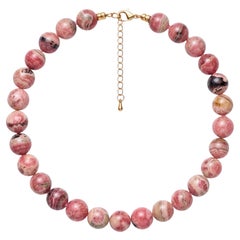
Vintage Baltic Egg Yolk Amber Beaded Strand Necklace 37 Inches
Located in New York, NY
Beautiful vintage strand necklace featuring rich Baltic egg yolk amber beads. The beads display warm, natural tones and subtle marbling character...
Category

20th Century Manhattan
Materials

Amber

Jewelry Box Purple Charoite Gemstone
Located in New York, NY
A very beautiful, substantial and rare natural purple charoite gemstone mineral jewelry box, circa late-20th century. Charoite is rare gemstone mineral. A beautiful organic pattern g...
Category

Late 20th Century Modern Manhattan
Materials

Stone, Chrome

Jewelry Box Purple Charoite Gemstone
$2,880 Sale Price
20% Off
Philip & Kelvin LaVerne Chan Coffee Table 1960
By Philip and Kelvin LaVerne
Located in New York, NY
From the Historical Civilization Series depicting the past civilizations of China, Greece, and Egypt, Chan is among the most recognized motifs in the artistry of Philip and Kelvin La...
Category

1960s American Mid-Century Modern Vintage Manhattan
Materials

Bronze, Enamel, Pewter

Grande Biedermeier Secrétaire
Located in New York, NY
A perfect example of the wealthy, elegant Biedermeier period, this impressive, secretary is veneered in flame mahogany and birch intarsia, with bone escutcheons, secret compartments,...
Category

1810s Scandinavian Biedermeier Antique Manhattan
Bochic “Orient” Ruby & Vintage Mint Jade Earrings Set 18K In Gold & Silver
By Bochic
Located in New York, NY
Bochic “Orient” Ruby & Vintage Mint Jade Earrings Set 18K In Gold & Silver Natural Red Rubies - 4.00 carat Vintage Mint Jade carved Drops The earrings from the "Orient" travelin...
Category

21st Century and Contemporary Thai Baroque Manhattan

Materials

Jade, Ruby, Gold, 18k Gold, Gold Plate, Silver

Victorian Style Sterling Silver Grape Shears
By Israel Freeman & Son Ltd. 1
Located in New York, NY
Pair of sterling silver, Victorian style grape shears, Sheffield, England, 1938. "Fox and Grapes" motif on each handle. One of the cutting "blades" has ...
Category

1930s English Victorian Vintage Manhattan

Materials

Sterling Silver

Stunning Malachite and Brass Vase
Located in New York, NY
Pure luxury and uniqueness in this Malachite and Brass combination Vase. Malachite is a precious stone which is usually found in small quantities and is formed over thousands of year...
Category

Late 18th Century Indian Classical Roman Antique Manhattan

Materials

Malachite, Brass

Pear Cut Green Emerald and Diamond Tennis Statement Necklace 18K White Gold
By Spectrum Jewels
Located in Diera, Dubai
Pear Cut Green Emerald and Diamond Tennis Statement Necklace 18K White Gold This stunning necklace is designed with a graceful sequence of pear-cut simulated emeralds, each set betwe...
Category

21st Century and Contemporary American Modern Manhattan

Materials

Emerald, Diamond, White Gold, 18k Gold, Gold

Early 20th Century Chinese Tibetan Saddle Cover ( 2'3" x 4' - 69 x 122 )
Located in New York, NY
Early 20th Century Chinese Tibetan Saddle Cover ( 2'3" x 4' - 69 x 122 )
Category

1910s Chinese Tibetan Vintage Manhattan

Materials

Wool

Vintage Gold-Plated Diamond Head Pocket Gas Lighter By S. T. Dupont, Paris
By S.T. Dupont
Located in New York, NY
Vintage Gold-Plated Diamond Head Pocket Gas Lighter By S. T. Dupont, Paris S.T. Dupont Vintage Diamond Head Gold 20µ Ligne 1 Small Gas Lighter A beautiful ...
Category

20th Century French Artist Manhattan

Materials

Gold Plate

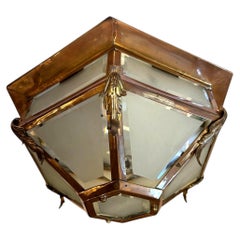
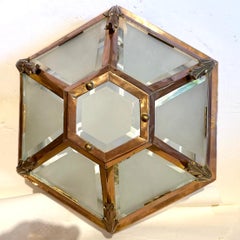
1900 Large Leaded Glass Caldwell Lantern
By Edward F. Caldwell & Co.
Located in New York, NY
1900 Caldwell unusual design leaded glass large lantern with 6 interior lights. Has ribbons and flowers design, also has canopy and additional chain. newly rewired (UL)
Category

Early 1900s American Neoclassical Antique Manhattan

Materials

Bronze

Dejun Wang Landscape Original Oil Painting "Spring Series III"
Located in New York, NY
Title: Spring Series III Medium: Oil on canvas Size: 16 x 12 inches Frame: Framing options available! Condition: The painting appears to be in excellent condition. Note: This p...
Category

21st Century and Contemporary Contemporary Manhattan

Materials

Canvas, Oil

Rare 1987 Patek Philippe Nautilus Wristwatch in Yellow Gold, Ref. 4700/104
By Patek Philippe
Located in New York, NY
This 1987 Patek Philippe Nautilus is a stunning and sophisticated ladies’ watch crafted from 18k yellow gold. Adorned with factory-set diamonds and rubies, and powered by a Quartz mo...
Category

Late 20th Century Swiss Contemporary Manhattan

Materials

Ruby, 18k Gold, Yellow Gold

Mid-20th Century Turkish Anatolian Gallery Carpet
Located in New York, NY
A vintage Turkish Anatolian gallery carpet handmade during the Mid-20th century. Measures: 6' 9" x 11' 4"
Category

Mid-20th Century Turkish Tribal Manhattan

Materials

Wool

Still Thinking About These?

All Recently Viewed