Want more images or videos?
Request additional images or videos from the seller
1 of 10
Leo RussellAbstract Expressionist collage painting1954
1954
Price:$650
$800List Price
About the Item
- Creator:Leo Russell (1917 - 1985, American)
- Creation Year:1954
- Dimensions:Height: 13 in (33.02 cm)Width: 10.5 in (26.67 cm)
- Medium:
- Movement & Style:
- Period:
- Condition:
- Gallery Location:Wilton Manors, FL
- Reference Number:1stDibs: LU245210188162
About the Seller
4.9
Platinum Seller
Premium sellers with a 4.7+ rating and 24-hour response times
Established in 2007
1stDibs seller since 2015
444 sales on 1stDibs
Typical response time: 4 hours
Authenticity Guarantee
In the unlikely event there’s an issue with an item’s authenticity, contact us within 1 year for a full refund. DetailsMoney-Back Guarantee
If your item is not as described, is damaged in transit, or does not arrive, contact us within 7 days for a full refund. Details24-Hour Cancellation
You have a 24-hour grace period in which to reconsider your purchase, with no questions asked.Vetted Professional Sellers
Our world-class sellers must adhere to strict standards for service and quality, maintaining the integrity of our listings.Price-Match Guarantee
If you find that a seller listed the same item for a lower price elsewhere, we’ll match it.Trusted Global Delivery
Our best-in-class carrier network provides specialized shipping options worldwide, including custom delivery.You May Also Like
Untitled
By Michael Goldberg
Located in Austin, TX
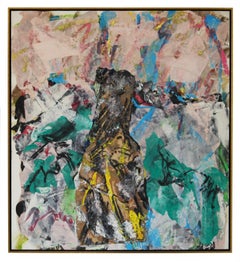
Waterline Fine Art, Austin, TX is pleased to present the following work:
Oil, pastel, and paper collage on canvas. Signed and dated verso.
52.75 x 47.75 in.
54 x 49 in. (framed)
Gilded floater frame.
Provenance
Compass Rose, Chicago
Born Sylvan Irwin Goldberg in 1924 and raised in the Bronx, Michael Goldberg was an important figure in American Abstract Expressionism, who began taking art classes at the Art Students League in 1938. A gifted student, Goldberg finished high school at the age of 14 and enrolled in City College. He soon found New York’s jazz scene to be a more compelling environment, and he began skipping classes in favor of the Harlem jazz clubs near campus. Goldberg’s love of jazz would become a lifelong passion and a key component to his approach to composition in his paintings.
From 1940 to 1942, like many of the leading artists of the New York School, Goldberg studied with Hans Hofmann. In 1943, he put his pursuit of painting on hold and enlisted in the U.S. Army. Serving in North Africa, Burma, and India, Goldberg received a Purple Heart and a Bronze Star before being discharged in 1946. After his service, he traveled and worked in Venezuela before returning to the United States, settling back in New York and resuming studies with Hofmann and at the Art Students League.
Living downtown and frequenting the Cedar Bar, Goldberg befriended many of the artists of the New York School. In 1951, his work was included in the groundbreaking Ninth Street Show, co-organized by Leo Castelli, Conrad Marca-Relli, and the Eighth Street Club, and featuring the work of - among others - Hofmann, Jackson Pollock, Willem de Kooning, and Franz Kline. In 1953, the Tibor de Nagy...
Category
1980s Abstract Expressionist Abstract Paintings
Materials
Canvas, Pastel, Mixed Media, Oil, Handmade Paper
Leaves I
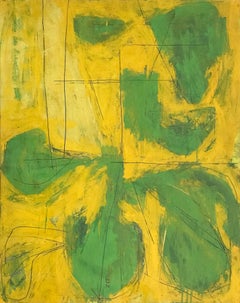
By Fritz Bultman
Located in New Orleans, LA
Floated on archival white mat with wood frame.
Fritz Bultman set himself apart from other Abstract Expressionists with his meticulously organized abstract compositions, use of sculp...
Category
1950s Abstract Expressionist Abstract Paintings
Materials
Oil, Paper
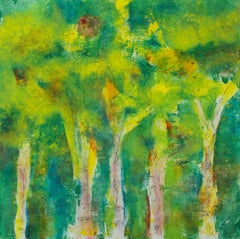
It's Springtime Somewhere in the World
Located in Austin, TX
"It's Springtime Somewhere In the World" is an abstract painting by Rebecca Sobin executed in oil, cold wax medium, and pastel powder, and rice paper on a cradled wood panel; measuri...
Category
21st Century and Contemporary Abstract Expressionist Abstract Paintings
Materials
Wax, Oil, Wood Panel, Rice Paper, Graphite
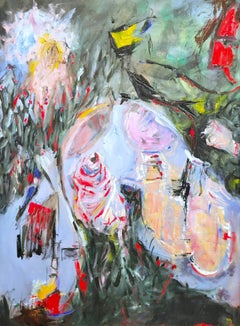
Night Swim /// Contemporary Abstract Expressionist Oil Painting Female Artist
By Margaux Halloran
Located in Saint Augustine, FL
Artist: Margaux Halloran (American, 1999-)
Title: "Night Swim"
*Monogram signed by Halloran in gold pen lower right
Year: 2021
Medium: Original Oil Painting on Canvas paper
Framing: ...
Category
2010s Abstract Expressionist Abstract Paintings
Materials
Canvas, Paint, Paper, Oil
$750
H 27.13 in W 20.88 in
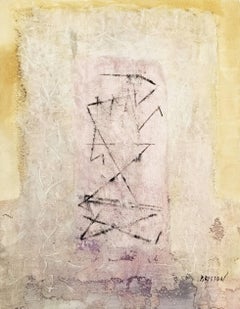
Figure Sur Rouge (Figure on Red) /// Contemporary French Painting Minimalism Art
By Pierre Marie Brisson
Located in Saint Augustine, FL
Artist: Pierre Marie Brisson (French, 1955-)
Title: "Figure Sur Rouge (Figure on Red)"
*Signed by Brisson lower right. It is also signed and dated on verso
Year: 1983
Medium: Origina...
Category
1980s Abstract Expressionist Abstract Paintings
Materials
Paint, Oil, Handmade Paper, Rag Paper, Mixed Media
$1,200 Sale Price
70% Off
H 25.75 in W 20.13 in
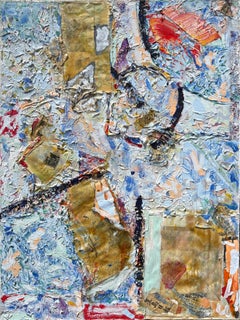
"Flow" by Rehfeld - Mixed Media Impasto Abstract Expression in Pastel Blue Tones
By Steven H. Rehfeld
Located in Carmel, CA
Steven H. Rehfeld (American, born 1954)
"Flow" 2022
Oil Paint, Mixed Media, Varnish, Glue, Paper, Newsprint, Canvas, Stretcher Bars
The artist signed the back of the painting.
In "F...
Category
21st Century and Contemporary Abstract Expressionist Abstract Paintings
Materials
Canvas, Mixed Media, Oil, Resin, Paper, Stretcher Bars
$20,000
H 49 in W 37 in D 1.5 in
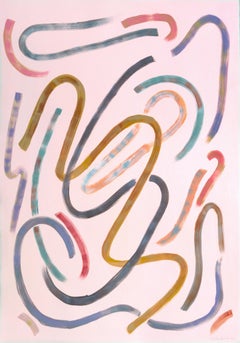
Abstract Gestures Painting, Lively Movements on Pastel Pink, Acrylic on Paper
By Natalia Roman
Located in Barcelona, ES
"Lively Movements on Pastel Pink" is an abstract painting by Spanish artist Natalia Roman. It is a beautiful series of rhythmic brushstrokes combined with subtle tones and unique sha...
Category
2010s Abstract Expressionist Abstract Paintings
Materials
Oil, Paper
$540
H 39.38 in W 27.56 in
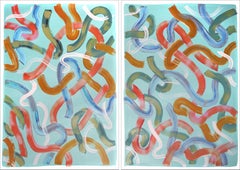
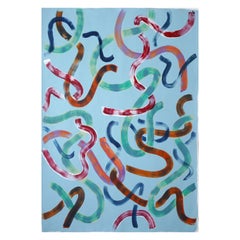
Vivid Looping Lines on Turquoise, Red, Green & Ocre Brushstrokes Diptych, Urban
By Natalia Roman
Located in Barcelona, ES
"Vivid Looping Lines on Turquoise" is an abstract painting diptych by Spanish artist Natalia Roman. It is a beautiful series of rhythmic brushstrokes combined with subtle tones and u...
Category
2010s Abstract Expressionist Abstract Paintings
Materials
Oil, Acrylic, Paper
Loose Strokes on Sky Blue, Abstract Gestures Patterns, Acrylic Painting on Paper
Located in Barcelona, ES
"Loose Strokes on Sky Blue" is an abstract painting by Spanish artist Natalia Roman. It is a beautiful series of rhythmic brushstrokes combined with subtle tones and unique shapes th...
Category
2010s Abstract Expressionist Abstract Paintings
Materials
Oil, Acrylic, India Ink, Paper
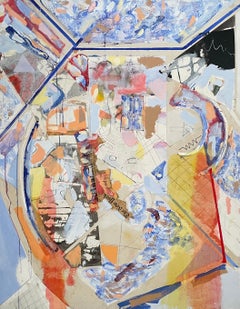
"The New York" - Textured Mixed Media Colorful Blue Abstract Expressionist
By Steven H. Rehfeld
Located in Carmel, CA
Steven H. Rehfeld (American, born 1954)
"The New York" 2002
Oil Paint, Pencil, Newsprint, Mixed Media, Canvas, Stretcher Bars
The artist signed the back of the painting.
In this stu...
Category
Early 2000s Abstract Expressionist Abstract Paintings
Materials
Canvas, Mixed Media, Oil, Newsprint, Pencil, Stretcher Bars
$18,000
H 50 in W 40 in D 1.5 in
More From This Seller
View AllPersian Morning II (Abstract expressionist mid-century Indiana artist painting)
Located in Wilton Manors, FL
Mary Ann Robertson (1923-1911).
Persian Morning II, 1964.
Oil and paper on canvas.
25 x 36 1/2 inches. overall frame size 37 1/2 x 26 inches.
notes: Nashville, IN woman artist....
Category
Mid-20th Century Abstract Expressionist Abstract Paintings
Materials
Oil, Handmade Paper
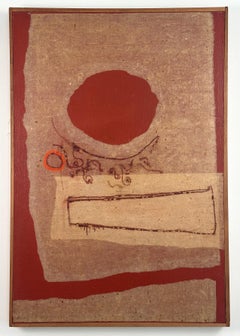
Plant-like
By James Brooks
Located in Wilton Manors, FL
James Brooks (1906-1992). Plantlike, c.1945. Oil on canvas measures 18 x 24 inches; 24 x 30 inches in a painted wood frame of the period. Signed "J. David Brooks" lower right, Signed...
Category
1940s Abstract Expressionist Abstract Paintings
Materials
Cotton Canvas, Oil
$12,000 Sale Price
20% Off
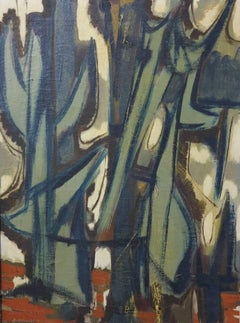
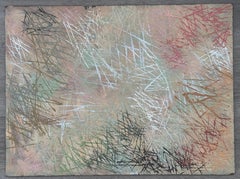
Etude III (abstract expressionist painting)
By Fredric Karoly
Located in Wilton Manors, FL
Fredric Karoly (1898-1987). Etude III, 1950. Oil on masonite panel measures 18 x 24 inches. Unframed. Signed, titled, dated on reverse. Good condition with minor paint loss at edges.
Biography:
An abstract painter, Karoly was born in Hungary and studied painting in Paris, architectural eingineering in Berlin, and emigrated to the U.S. in 1926. He began a successful career as a fashion and fabric designer. In 1948 he was working as a fashion director for Simplicity Patters, when he had a solo exhibition of of his oil paintings, wire montages, dry-pen drawings and abstract photography.
Solo Exhibitions:
Hugo Gallery (Alexandre Iolas) New York 1948; Gallery Mai. Paris 1949; New Gallery (Eugene Thaw) New York 1950; Museu de Arte, Sao Paulo, Brazil 1951; Miami Museum of Modern Art, Miami, Florida 1959; Loft Gallery, New York City, 1966.Group Exhibitions:
Hugo Gallery, New York 1947; Salon des Realities Nouvelles, Paris 1949-1953; Whitney Museum of American Art, New York (Annual) 1951-1953, 1963; Biennale of Sao Paulo, Brazil, 1951; International Independent Exhibition, Tokyo, 1951; Martha Jackson Gallery, New York, 1959; The Butler Institute of Art, Youngstown, Ohio, 1960; Stuttman Gallery, New York, 1960; The Art Institute of Chicago (Annual), 1960; International Watercolor Exhibition, Brookyln Museum, 1961; Westchester Art Museum, White Plains, NY, 1963; Whitney Museum, Annual, NY 1963; Cleveland Art Festival, Park Synagogue, Cleveland, 1963; Whitney Museum, Sculpture Annual, NY, 1964.Works in Institutional Collections:
Museu de Arte, San Paulo, Brazil; Museu de Bellas Artes, Buenos Aires, Argentina; New York University, New York; Washington University, St. Louis, Missouri; Finch College, NY; Barnard College, NY; Metropolitan Museum, Whitney Museum and Guggenheim Museum, New York; Museum of Fine Arts, St. Petersburg, FL.
Awards: National Council Arts Awards, 1968.
Frederic Karoly died on December 15, 1987 at the Inter-Continental Hotel in Manhattan, where he had made his home for many years.
Fredric Karoly was born in Budapest in 1893. According to Karoly’s own vitae, his exhibition history began in New York in 1947, when at the age of 54 he took part in a four-person group show at Hugo Gallery. His involvement with visual art however was apparently life long. In a brief introduction to his solo show at Galerie Mai in Paris in June of 1949, Jen Luc de Rudder, reports that Karoly began painting at the age of 12 in Budapest.
After several years of studying, then working in London, Paris and Berlin, Karoly emigrated to the United States in 1925 or 1926 (he probably first came to the US on a work visa in 1925). In New York, Karoly worked in women’s fashion as a designer.
In 1948 Karoly worked in a manner than was clearly influenced by the work of such European surrealists as Max Ernst, creating spiked automatic bi-chromatic paintings. His style progressed into a progressively more biomorphic vein, similar to explorations by Theodore Stamos, Daphnis, Milton Avery and Mark Rothko around the same period. He was supported with patronage during this period by Mrs. Mimi Baliff, who apparently supported the “Industrial Design Workshop” that she helped open to feature Karoly’s designs in 1948.
By the early 1950’s (1951) Karoly started experimenting with the drip and splatter process as well. Drip paintings dominated his process until the late 50’s-early 60’s, when linear compositional elements began to reemerge. By the late 50’s multi-layered drip grid motifs asserted a masque of spatial organization over looser washed fields and splatters of paint that Karoly worked off of. This development was consistent with concurrent explorations into the grid by artist Agnes Martin and others.
By the mid-50’s Karoly’s style began another transition into a more surface concerned “Color Field” style of painting. There are elements still reminding one of Abstract Expressionist concerns as such painters as Clifford Still. But the works that began to emerge from Karoly’s studio in 1958 presaged the Morris Lewis fan motifs and Friedl Dzubas’s epic and romantic color spewing expanses of canvas.
In 1959 Karoly began experiments using washes of turpentine diluted oil paint directly onto raw linen, and all of these subsequently suffered the consequences of oil oxidation and acidity upon the surfaces. However, many of Karoly’s washes in color field happily occurred on lightly prepared primed canvas surfaces as well.
By 1960 Karoly began reintroducing imagistic references to his visual content. There were also various references to Japanese and Zen influences. He experimented with a variety of processes that included mixed media and marbleized surfaces achieved by the intermixture of oil and water mediums. A calligraphic element also enter Karoly’s work in the early 60’s. Then in 1961 glued and assembled objects begin to show up in Karoly’s work in earnest. The influence of early POP artists, particularly Jasper Johns, and Robert Rauschenberg, become apparent. From 1961-63, a series of the assemblage works transition from canvas to the sculptural to pieces obviously intended for full scale installation. Many of these pieces were among the most fragile of his works primarily due to their reliance upon the of gluing of objects such as plastic or paper cups on flexible surfaces of stretched linen or canvas.
In the mid-60’s Karoly apparently produced a number of photo-silk screened series of Picasso, De Kooning and other significant artists of his generation. These were executed in a style somewhere between Rauschenberg’s and Roy Lichtenstein’s, primarily because of their reliance upon half tones and Ben-Day dot effects. Then Karoly began a series of paintings conflating his drip and grid styles with super imposed and painted over string. In the late 60’s Karoly embarked upon a series of multi-paneled stretched linen constructions often with slits and fiber optic back-lit elements that were prescient of the work of Dan Flavin and others. It was this body of work that was shown at Hofstra University’s Emily Lowe Gallery, and it was these works that suffered perhaps the most irreparable damage from a steam/water infiltration in a space where they were being stored.
The late professional start that Karoly had into the art world was balanced by his long life span and early immersion into the design issues of modernism as it emerged in turn of the century Europe and later evolved in America. He was clearly an artist who subscribed to the ethos of the new in abstraction and was obviously impressionable and in some instances prescient with regard to various trends in abstraction.
Several noteworthy and influential collectors and institutions during his 40 years of professional engagement acquired his work. The Whitney Museum of American Art had and may still own a large Karoly canvas from 1960, but this is doubtful as the artist failed to list it on the vitae he filed with MoMA in 1965. His work was recognized and honored by the Whitney with its inclusion in four of their annual survey shows (1951,1953, 1963 and 1964).
The artist’s surrealist influenced paintings from 1948-1950 were the focus of a solo exhibition held of his work by the Museo de Art in Sao Paulo and eight years later a ten year survey of his work was the focus of a solo show at the Miami Museum of Modern art. The Sao Paulo Museum in Brazil, and the Museo de Bellas Artes in Buenos Aires, Argentina each acquired Karoly paintings for their collections in the 1950’s.
One of Karoly’s surrealist pieces was apparently purchased by Christian Zervos, Picasso’s designated chronicler, who apparently also wrote a piece on Karoly in Cahiers D’Art in 1949. A 60’s piece of Karoly art that is in the New York University’s permanent collection is included in the MoMA Library’s catalog...
Category
Mid-20th Century Abstract Expressionist Abstract Paintings
Materials
Oil, Masonite
$2,000 Sale Price
20% Off
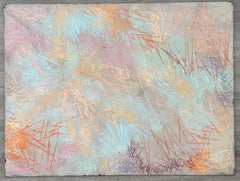
Etude (abstract expressionist painting)
By Fredric Karoly
Located in Wilton Manors, FL
Fredric Karoly (1898-1987). Etude, 1950. Oil on masonite panel measures 18 x 24 inches. Unframed. Signed, titled, dated on reverse. Good condition with minor paint loss at edges.
Biography:
An abstract painter, Karoly was born in Hungary and studied painting in Paris, architectural eingineering in Berlin, and emigrated to the U.S. in 1926. He began a successful career as a fashion and fabric designer. In 1948 he was working as a fashion director for Simplicity Patters, when he had a solo exhibition of of his oil paintings, wire montages, dry-pen drawings and abstract photography.
Solo Exhibitions:
Hugo Gallery (Alexandre Iolas) New York 1948; Gallery Mai. Paris 1949; New Gallery (Eugene Thaw) New York 1950; Museu de Arte, Sao Paulo, Brazil 1951; Miami Museum of Modern Art, Miami, Florida 1959; Loft Gallery, New York City, 1966.Group Exhibitions:
Hugo Gallery, New York 1947; Salon des Realities Nouvelles, Paris 1949-1953; Whitney Museum of American Art, New York (Annual) 1951-1953, 1963; Biennale of Sao Paulo, Brazil, 1951; International Independent Exhibition, Tokyo, 1951; Martha Jackson Gallery, New York, 1959; The Butler Institute of Art, Youngstown, Ohio, 1960; Stuttman Gallery, New York, 1960; The Art Institute of Chicago (Annual), 1960; International Watercolor Exhibition, Brookyln Museum, 1961; Westchester Art Museum, White Plains, NY, 1963; Whitney Museum, Annual, NY 1963; Cleveland Art Festival, Park Synagogue, Cleveland, 1963; Whitney Museum, Sculpture Annual, NY, 1964.Works in Institutional Collections:
Museu de Arte, San Paulo, Brazil; Museu de Bellas Artes, Buenos Aires, Argentina; New York University, New York; Washington University, St. Louis, Missouri; Finch College, NY; Barnard College, NY; Metropolitan Museum, Whitney Museum and Guggenheim Museum, New York; Museum of Fine Arts, St. Petersburg, FL.
Awards: National Council Arts Awards, 1968.
Frederic Karoly died on December 15, 1987 at the Inter-Continental Hotel in Manhattan, where he had made his home for many years.
Fredric Karoly was born in Budapest in 1893. According to Karoly’s own vitae, his exhibition history began in New York in 1947, when at the age of 54 he took part in a four-person group show at Hugo Gallery. His involvement with visual art however was apparently life long. In a brief introduction to his solo show at Galerie Mai in Paris in June of 1949, Jen Luc de Rudder, reports that Karoly began painting at the age of 12 in Budapest.
After several years of studying, then working in London, Paris and Berlin, Karoly emigrated to the United States in 1925 or 1926 (he probably first came to the US on a work visa in 1925). In New York, Karoly worked in women’s fashion as a designer.
In 1948 Karoly worked in a manner than was clearly influenced by the work of such European surrealists as Max Ernst, creating spiked automatic bi-chromatic paintings. His style progressed into a progressively more biomorphic vein, similar to explorations by Theodore Stamos, Daphnis, Milton Avery and Mark Rothko around the same period. He was supported with patronage during this period by Mrs. Mimi Baliff, who apparently supported the “Industrial Design Workshop” that she helped open to feature Karoly’s designs in 1948.
By the early 1950’s (1951) Karoly started experimenting with the drip and splatter process as well. Drip paintings dominated his process until the late 50’s-early 60’s, when linear compositional elements began to reemerge. By the late 50’s multi-layered drip grid motifs asserted a masque of spatial organization over looser washed fields and splatters of paint that Karoly worked off of. This development was consistent with concurrent explorations into the grid by artist Agnes Martin and others.
By the mid-50’s Karoly’s style began another transition into a more surface concerned “Color Field” style of painting. There are elements still reminding one of Abstract Expressionist concerns as such painters as Clifford Still. But the works that began to emerge from Karoly’s studio in 1958 presaged the Morris Lewis fan motifs and Friedl Dzubas’s epic and romantic color spewing expanses of canvas.
In 1959 Karoly began experiments using washes of turpentine diluted oil paint directly onto raw linen, and all of these subsequently suffered the consequences of oil oxidation and acidity upon the surfaces. However, many of Karoly’s washes in color field happily occurred on lightly prepared primed canvas surfaces as well.
By 1960 Karoly began reintroducing imagistic references to his visual content. There were also various references to Japanese and Zen influences. He experimented with a variety of processes that included mixed media and marbleized surfaces achieved by the intermixture of oil and water mediums. A calligraphic element also enter Karoly’s work in the early 60’s. Then in 1961 glued and assembled objects begin to show up in Karoly’s work in earnest. The influence of early POP artists, particularly Jasper Johns, and Robert Rauschenberg, become apparent. From 1961-63, a series of the assemblage works transition from canvas to the sculptural to pieces obviously intended for full scale installation. Many of these pieces were among the most fragile of his works primarily due to their reliance upon the of gluing of objects such as plastic or paper cups on flexible surfaces of stretched linen or canvas.
In the mid-60’s Karoly apparently produced a number of photo-silk screened series of Picasso, De Kooning and other significant artists of his generation. These were executed in a style somewhere between Rauschenberg’s and Roy Lichtenstein’s, primarily because of their reliance upon half tones and Ben-Day dot effects. Then Karoly began a series of paintings conflating his drip and grid styles with super imposed and painted over string. In the late 60’s Karoly embarked upon a series of multi-paneled stretched linen constructions often with slits and fiber optic back-lit elements that were prescient of the work of Dan Flavin and others. It was this body of work that was shown at Hofstra University’s Emily Lowe Gallery, and it was these works that suffered perhaps the most irreparable damage from a steam/water infiltration in a space where they were being stored.
The late professional start that Karoly had into the art world was balanced by his long life span and early immersion into the design issues of modernism as it emerged in turn of the century Europe and later evolved in America. He was clearly an artist who subscribed to the ethos of the new in abstraction and was obviously impressionable and in some instances prescient with regard to various trends in abstraction.
Several noteworthy and influential collectors and institutions during his 40 years of professional engagement acquired his work. The Whitney Museum of American Art had and may still own a large Karoly canvas from 1960, but this is doubtful as the artist failed to list it on the vitae he filed with MoMA in 1965. His work was recognized and honored by the Whitney with its inclusion in four of their annual survey shows (1951,1953, 1963 and 1964).
The artist’s surrealist influenced paintings from 1948-1950 were the focus of a solo exhibition held of his work by the Museo de Art in Sao Paulo and eight years later a ten year survey of his work was the focus of a solo show at the Miami Museum of Modern art. The Sao Paulo Museum in Brazil, and the Museo de Bellas Artes in Buenos Aires, Argentina each acquired Karoly paintings for their collections in the 1950’s.
One of Karoly’s surrealist pieces was apparently purchased by Christian Zervos, Picasso’s designated chronicler, who apparently also wrote a piece on Karoly in Cahiers D’Art in 1949. A 60’s piece of Karoly art that is in the New York University’s permanent collection is included in the MoMA Library’s catalog...
Category
Mid-20th Century Abstract Expressionist Abstract Paintings
Materials
Masonite, Oil
$2,000 Sale Price
20% Off
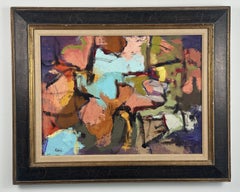
Untitled (abstract expressionist mid-century modern painting)
By Joseph Fiore
Located in Wilton Manors, FL
Joseph Fiore (1928-2005) Untitled, ca. 1955. Oil on canvas, 18 x 24 inches.
Measuring 24 x 30 inches in custom modernist frame. Signed lower left. Excellent condition.
Joseph Albe...
Category
Mid-20th Century Abstract Expressionist Abstract Paintings
Materials
Canvas, Oil
$3,000 Sale Price
25% Off
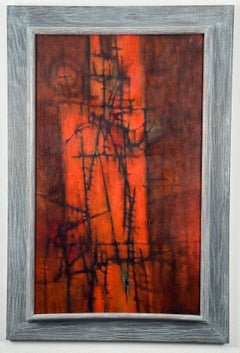
Untitled (Abstract Expressionist Painting)
By Jesse Redwin Bardin
Located in Wilton Manors, FL
Jesse Redwin Bardin (1923-1997). Untitled, ca. 1960.
Oil on canvas, 18 x 31 inches; 21.5 x 36.5 inches framed. Signed lower right.
Provenance: Private collection, Philadelphia; F...
Category
Mid-20th Century Abstract Expressionist Abstract Paintings
Materials
Canvas, Oil
Still Thinking About These?
All Recently ViewedMore Ways To Browse
Jonah Whale
Jonah And The Whale
Abstract Art Diptych
Color Field Abstract
Acrylic Nature Painting
Graffiti Artist
Happy Art
San Francisco Artists
Large Original Art
Large Abstract Painting Of Mountains
Happy Paintings
Abstract Expressionist Ink
Action Painting
Abstract Circles
Midcentury Modern Art Geometric Painting
The New York Collection For Stockholm
Contemporary Minimalist Art
Richter Gerhard