Items Similar to Cubism - Pochoir
Want more images or videos?
Request additional images or videos from the seller
1 of 10
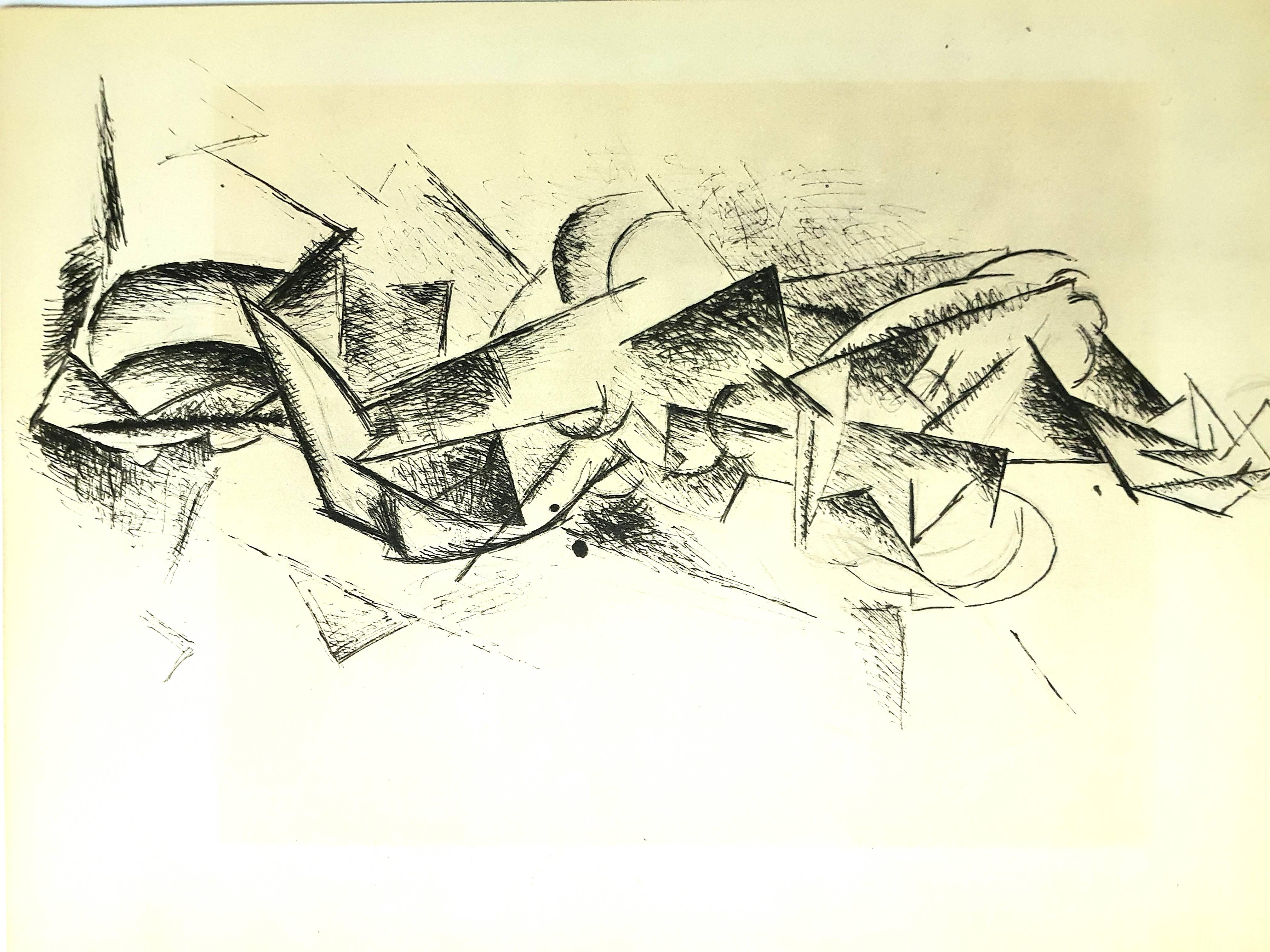
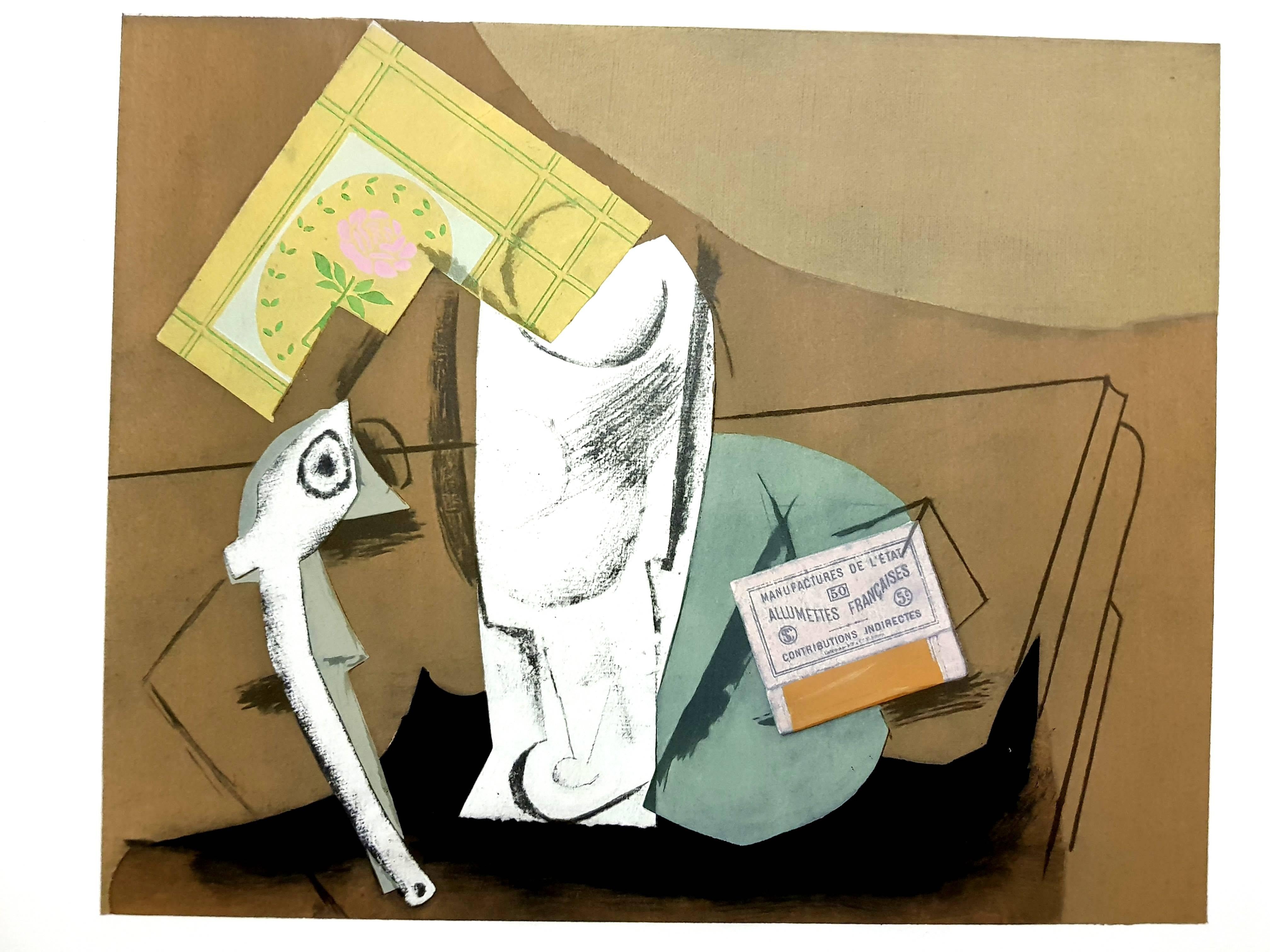
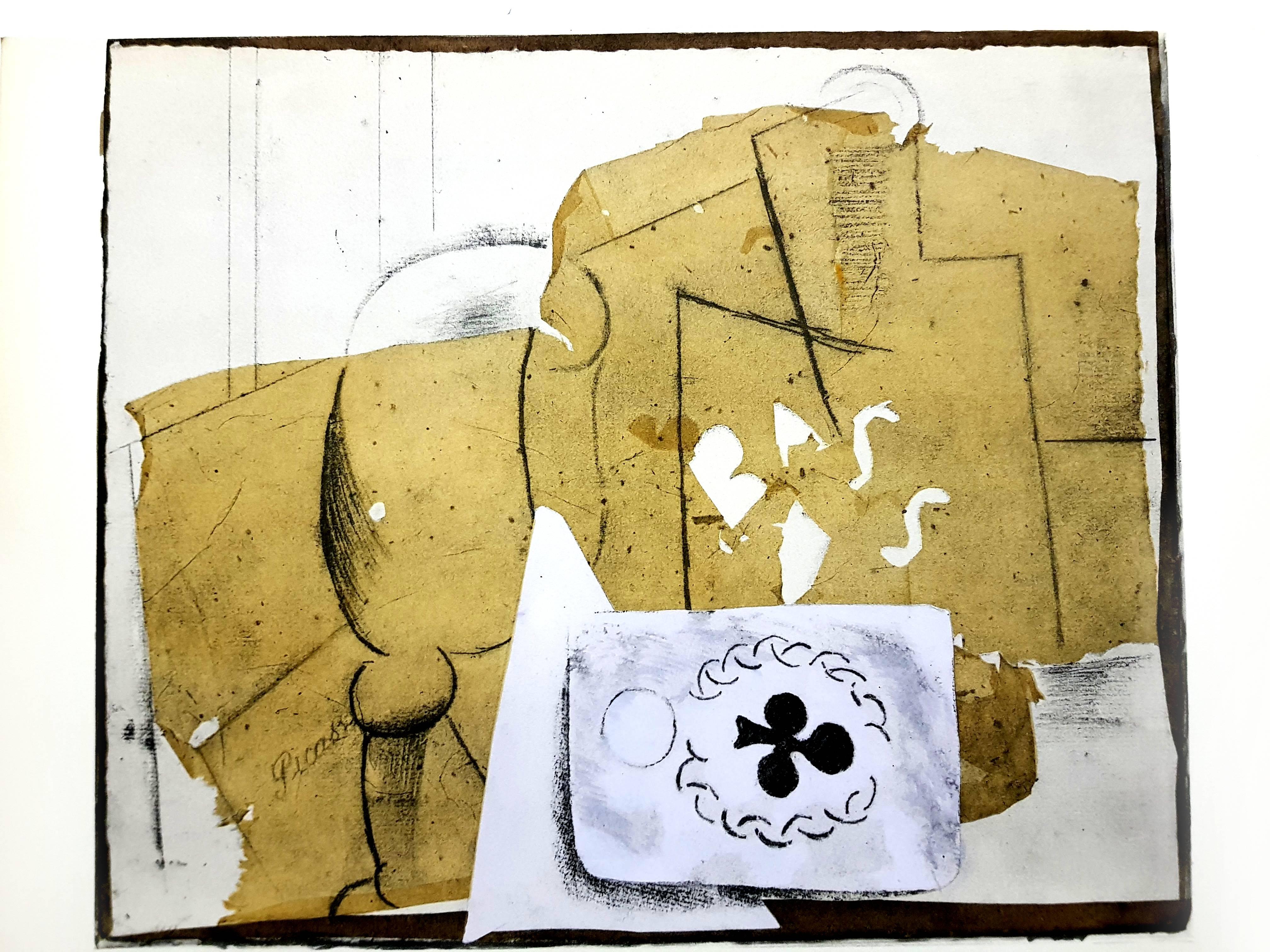
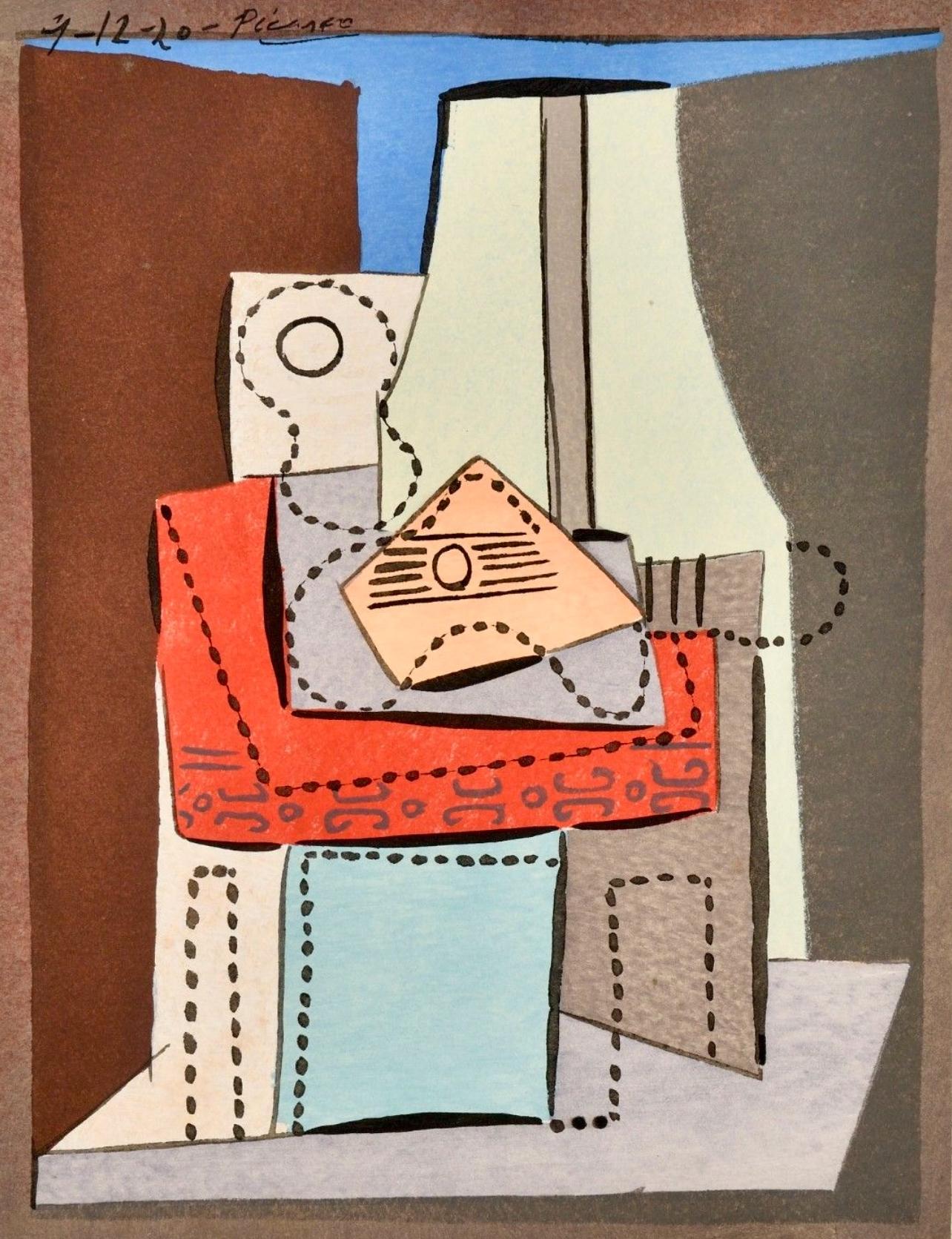
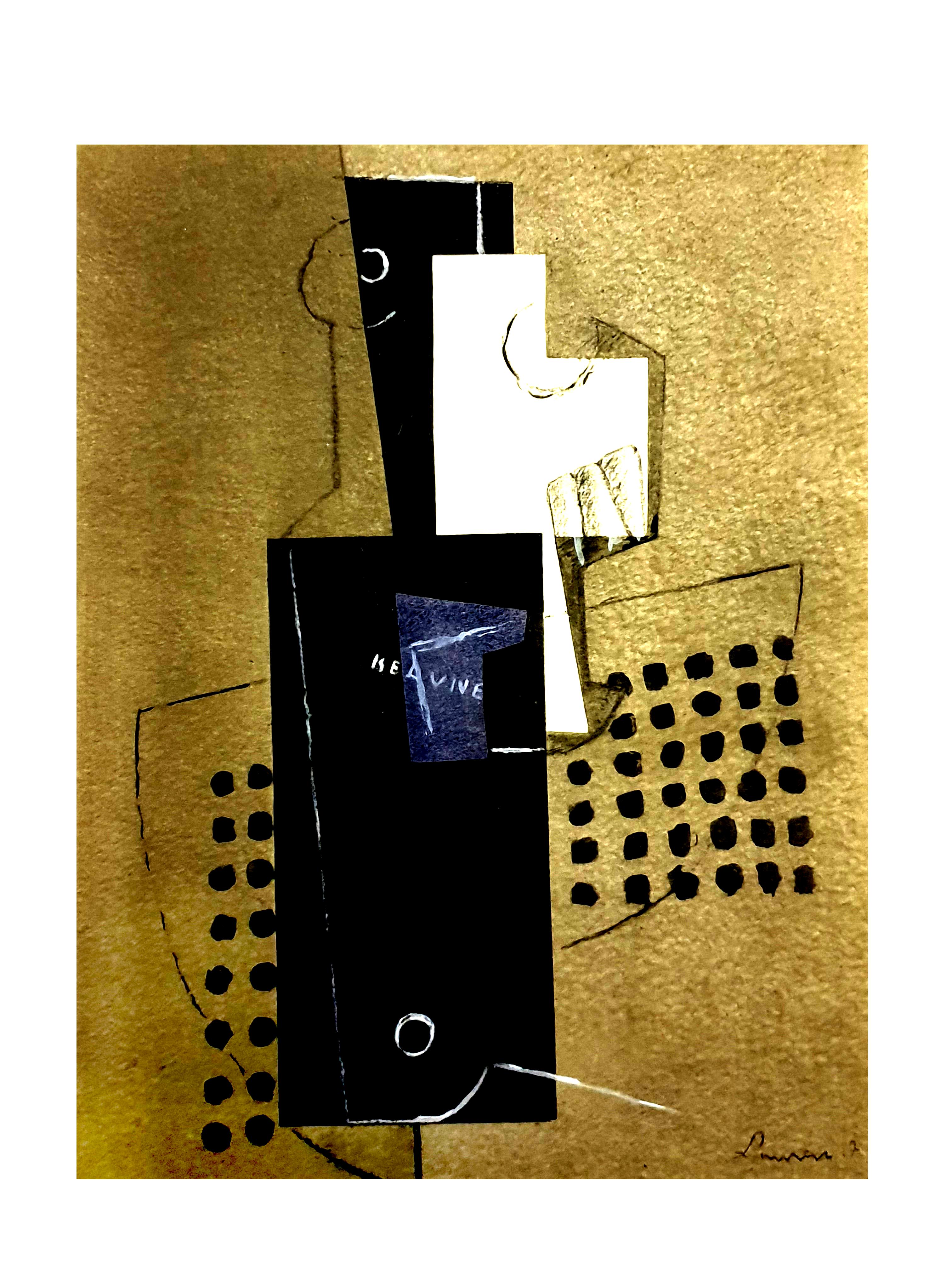
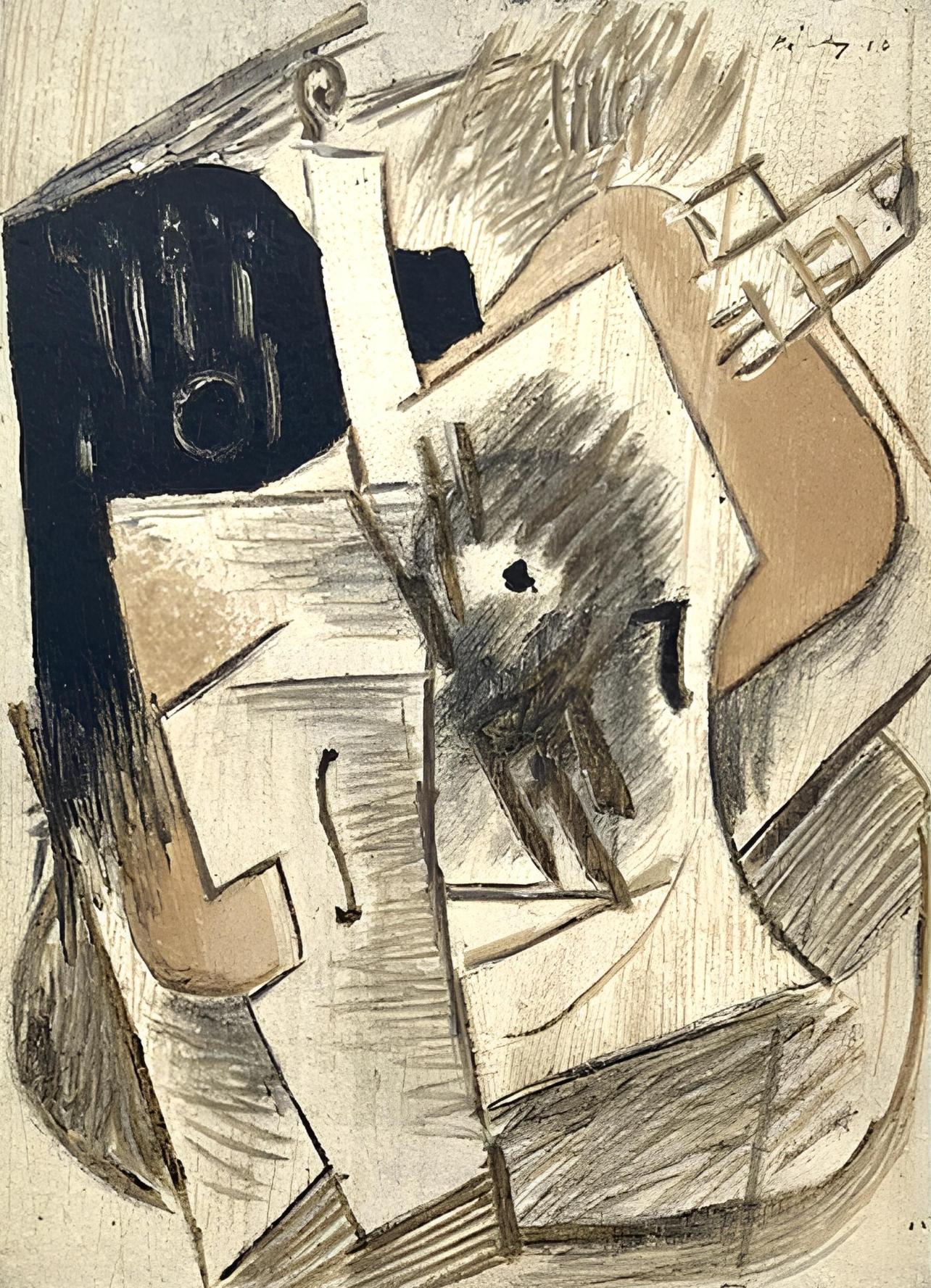
(after) Pablo PicassoCubism - Pochoir1962
1962
$3,347.37
£2,498.23
€2,800
CA$4,617.45
A$5,050.73
CHF 2,659.35
MX$60,300.61
NOK 33,893.78
SEK 31,004.72
DKK 21,331.39
About the Item
After Pablo Picasso - Cubism - Pochoir
Dimensions: 48.5 x 36 cm
1962
Edition of 260
Daniel Jacomet, LEDA, Editions d'Art
Pablo Picasso
Picasso is not just a man and his work. Picasso is always a legend, indeed almost a myth. In the public view he has long since been the personification of genius in modern art. Picasso is an idol, one of those rare creatures who act as crucibles in which the diverse and often chaotic phenomena of culture are focussed, who seem to body forth the artistic life of their age in one person. The same thing happens in politics, science, sport. And it happens in art.
Early life
Born in Malaga, Spain, in October of 1881, he was the first child born in the family. His father worked as an artist, and was also a professor at the school of fine arts; he also worked as a curator for the museum in Malaga. Pablo Picasso studied under his father for one year, then went to the Academy of Arts for one year, prior to moving to Paris. In 1901 he went to Paris, which he found as the ideal place to practice new styles, and experiment with a variety of art forms. It was during these initial visits, which he began his work in surrealism and cubism style, which he was the founder of, and created many distinct pieces which were influenced by these art forms.
Updates in style
During his stay in Paris, Pablo Picasso was constantly updating his style; he did work from the blue period, the rose period, African influenced style, to cubism, surrealism, and realism. Not only did he master these styles, he was a pioneer in each of these movements, and influenced the styles to follow throughout the 20th century, from the initial works he created. In addition to the styles he introduced to the art world, he also worked through the many different styles which appeared, while working in Paris. Not only did he continually improve his style, and the works he created, he is well known because of the fact that he had the ability to create in any style which was prominent during the time.
Russian ballet
In 1917, Pablo Picasso joined the Russian Ballet, which toured in Rome; during this time he met Olga Khoklova, who was a ballerina; the couple eventually wed in 1918, upon returning to Paris. The couple eventually separated in 1935; Olga came from nobility, and an upper class lifestyle, while Pablo Picasso led a bohemian lifestyle, which conflicted. Although the couple separated, they remained officially married, until Olga's death, in 1954. In addition to works he created of Olga, many of his later pieces also took a centralized focus on his two other love interests, Marie Theresa Walter and Dora Maar. Pablo Picasso remarried Jacqueline Roque in 1961; the couple remained married until his death 12 years later, in 1973.
Work as a pacifist
Pablo Picasso was a pacifist, and large scale paintings he created, showcased this cry for peace, and change during the time. A 1937 piece he created, after the German bombing of Guernica, was one such influential piece of the time. Not only did this become his most famous piece of art work, but the piece which showed the brutality of war, and death, also made him a prominent political figure of the time. To sell his work, and the message he believed in, art, politics, and eccentricity, were among his main selling points.
Conflicting with social views
Many things Pablo Picasso did during the 1950s, conflicted with the general public. Viciousness towards his children, exaggerated virility towards women, and joining the Communist party, were some of the many scandals which he was involved in during his lifetime. Although most of the things he did were viewed negatively by a minority of the general public, admirers of Pablo Picasso turned a blind eye, and still accepted him as a prominent figure in their society. Following the end of WWII, Pablo Picasso turned back towards his classic style of work, and he created the "Dove of Peace." Even though he became a member of the Communist party, and supported Stalin and his political views and rule, Pablo Picasso could do no wrong. In the eyes of his admirers and supporters, he was still a prominent figure, and one which they would follow, regardless of what wrongs he did. He was not only an influence because of the works he created, but he was also an influential figure in the political realm.
Influence outside of art
Although Pablo Picasso is mainly known for his influence to the art world, he was an extremely prominent figure during his time, and to the 20th century in general. He spread his influences to the art world, but also to many aspects of the cultural realm of life as well. He played several roles in film, where he always portrayed himself; he also followed a bohemian lifestyle, and seemed to take liberties as he chose, even during the later stages of his life. He even died in style, while hosting a dinner party in his home.
Collection of work
Pablo Picasso is recognized as the world's most prolific painter. His career spanned over a 78 year period, in which he created: 13,500 paintings, 100,000 prints and engravings, and 34,000 illustrations which were used in books. He also produced 300 sculptures and ceramic pieces during this expansive career. It is also estimated that over 350 pieces which he created during his career, have been stolen; this is a figure that is far higher than any other artist throughout history.
Sale of his works
Pablo Picasso has also sold more pieces, and his works have brought in higher profit margins, than any other artist of his time. His pieces rank among the most expensive art works to be created; with a price tag of $104 million, Garson a la Pipe, was sold in 2004.
Although he had a conflicting lifestyle, Pablo Picasso was admired by many, and was one of the most influential figures of his time. Not only during his life, but also after his death, he is still one of the most well known artists, and political figures, of his time. With thousands of pieces to his name, and art works which have been seen by millions, around the world, he has been a great influence to society, he has influenced the art world, and he introduced many new styles of art, which helped shape modern art, and modern styles artists follow today.
- Creator:(after) Pablo Picasso (1881 - 1973, Spanish)
- Creation Year:1962
- Dimensions:Height: 19.1 in (48.5 cm)Width: 14.18 in (36 cm)Depth: 0.04 in (1 mm)
- Medium:
- Movement & Style:
- Period:
- Condition:
- Gallery Location:Collonge Bellerive, Geneve, CH
- Reference Number:1stDibs: LU16122852143
(after) Pablo Picasso
Pablo Picasso (1881 – 1973) was a Spanish painter, sculptor, printmaker, ceramicist, stage designer, poet and playwright who is regarded as one of the most influential artists of the 20th century. He is known for co-founding the Cubist movement, the invention of constructed sculpture, the co-invention of collage, and for the wide variety of styles that he helped develop and explore. Exceptionally prolific throughout the course of his long life, Picasso achieved universal renown and immense fortune for his revolutionary artistic accomplishments, and became one of the best-known figures in 20th-century art. The total number of artworks he produced has been estimated at around 50,000.
About the Seller
4.9
Gold Seller
Premium sellers maintaining a 4.3+ rating and 24-hour response times
Established in 2015
1stDibs seller since 2015
972 sales on 1stDibs
Typical response time: 1 hour
- ShippingRetrieving quote...Shipping from: Collonge Bellerive, Geneve, Switzerland
- Return Policy
More From This Seller
View AllAfter Pablo Picasso - Cubism - Pochoir
By (after) Pablo Picasso
Located in Collonge Bellerive, Geneve, CH
After Pablo Picasso - Cubism - Pochoir
Dimensions: 48.5 x 36 cm
1962
Edition of 260
Daniel Jacomet, LEDA, Editions d'Art
Pablo Picasso
Picasso is not just a man and his work. Picas...
Category
1960s Modern Figurative Prints
Materials
Lithograph
After Pablo Picasso - Cubist Still Life - Pochoir
By (after) Pablo Picasso
Located in Collonge Bellerive, Geneve, CH
After Pablo Picasso - Cubist Still Life - Pochoir
Dimensions: 48.5 x 36 cm
1962
Edition of 260
Daniel Jacomet, LEDA, Editions d'Art
Pablo Picasso
Picasso is not just a man and his ...
Category
1960s Modern Figurative Prints
Materials
Lithograph
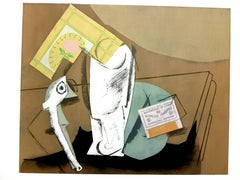
After Pablo Picasso - Cubist Still Life - Pochoir
By (after) Pablo Picasso
Located in Collonge Bellerive, Geneve, CH
After Pablo Picasso - Cubist Still Life - Pochoir
Dimensions: 48.5 x 36 cm
1962
Edition of 260
Daniel Jacomet, LEDA, Editions d'Art
Pablo Picasso
Picasso is not just a man and his ...
Category
1960s Modern Figurative Prints
Materials
Lithograph
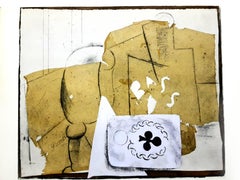
after Henri Laurens - Cubism - Pochoir
By Georges Braque
Located in Collonge Bellerive, Geneve, CH
after Henri Laurens - Cubism - Pochoir
Published in the deluxe art review, XXe Siecle
1956
Dimensions: 32 x 24 cm
Publisher: G. di San Lazzaro.
Unsigned and unumbered as issued
Category
1950s Modern Figurative Prints
Materials
Stencil
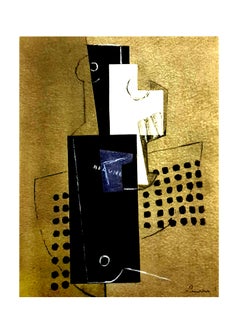
Woman - Pochoir
By (after) Pablo Picasso
Located in Collonge Bellerive, Geneve, CH
After Pablo Picasso - Woman - Pochoir
Dimensions: 48.5 x 36 cm
1962
Signed in the plate
Edition of 260
Daniel Jacomet, LEDA, Editions d'Art
Pablo Picasso
Picasso is not just a man ...
Category
1960s Modern Figurative Prints
Materials
Archival Paper, Pigment
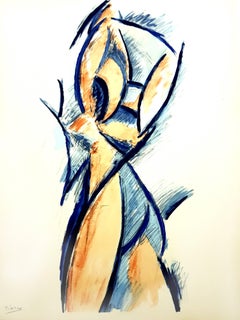
The Human Comedy - Lithograph
By (after) Pablo Picasso
Located in Collonge Bellerive, Geneve, CH
after Pablo Picasso - The Human Comedy - Lithograph
Signed and dated in the plate
Dimensions: 32 x 24 cm
This artwork is a lithograph in colors on wov...
Category
1950s Modern Portrait Prints
Materials
Lithograph
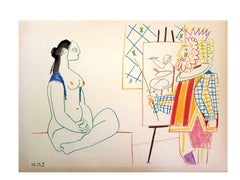
You May Also Like
Pablo Picasso, Seated Woman in an Armchair, from Oeuvres 1920-1926 (after)
By Pablo Picasso
Located in Southampton, NY
This exquisite lithograph and pochoir after Pablo Picasso (1881–1973), titled Femme Assise dans un Fauteuil (Seated Woman in an Armchair), from the album, Picasso, Oeuvres 1920-1926, 1926, originates from the 1926 edition published and printed by Editions des Cahiers d'Art, Paris, under the direction of Christian Zervos, Editeur, Paris, December 10, 1926. Femme Assise dans un Fauteuil (Seated Woman in an Armchair) captures Picasso’s evolving exploration of form, movement, and emotion during the mid-1920s—a pivotal period in which he redefined the relationship between classical representation and modern abstraction. With its bold contouring, stylized anatomy, and rhythmic color balance, the composition embodies the harmony between structural precision and sensual fluidity that characterized Picasso’s work in this era.
Executed as a lithograph and pochoir on velin paper, this work measures 11 x 8.75 inches. Signed in the plate and unnumbered as issued. The edition exemplifies the refined craftsmanship of Editions des Cahiers d'Art and the technical excellence of Parisian printmaking in the interwar period.
Artwork Details:
Artist: After Pablo Picasso (1881–1973)
Title: Femme Assise dans un Fauteuil (Seated Woman in an Armchair), from the album, Picasso, Oeuvres 1920-1926, 1926
Medium: Lithograph and pochoir on velin paper
Dimensions: 11 x 8.75 inches (27.94 x 22.23 cm)
Inscription: Signed in the plate and unnumbered as issued
Date: 1926
Publisher: Editions des Cahiers d'Art, Paris, under the direction of Christian Zervos, Editeur, Paris
Printer: Ducros & Colas, Paris
Catalogue raisonne references: Cramer, Patrick. Pablo Picasso, The Illustrated Books: Catalogue Raisonne. Patrick Cramer, 1983, illustration 15; Bloch, Georges. Pablo Picasso: Catalogue of the Printed Graphic Work 1904–1967. Kornfeld & Klipstein, 1968, illustration 56
Condition: Well preserved, consistent with age and medium
Provenance: From the album, Picasso, Oeuvres 1920-1926, published and printed by Editions des Cahiers d'Art, Paris, under the direction of Christian Zervos, Editeur, Paris, 1926
Notes:
Excerpted from the album (translated from French), This volume was completed to be printed by the Ducros & Colas printing house, 7, rue Croulebarbe in Paris, for the Editions des Cahiers d'Art, on December 10th MCMXXVI, DCC numbered examples, VI on Japon Imperial with an etching by Picasso, numbered from I to VI, L examples on paper by papier de Hollande, Van Gelder, with an etching by Picasso, numbered from VII to LVI, DCXL examples on velin, numbered from LVII to DCC, plus II examples intended for legal deposit.
About the Publication:
The album Picasso, Oeuvres 1920-1926 was issued in 1926 by Editions des Cahiers d'Art under the direction of Christian Zervos, one of the most influential editors, critics, and publishers of 20th-century modernism. Conceived as both a visual and intellectual tribute to Pablo Picasso’s mastery during a crucial transitional period, the volume presents a series of lithographs and pochoirs that chronicle his stylistic evolution from synthetic Cubism toward a renewed engagement with the human figure. Published in conjunction with the legendary Cahiers d'Art journal, the edition reflects Zervos’s vision of uniting scholarship, craftsmanship, and artistic authenticity in the modern book arts. Each composition was executed by the master printers Ducros & Colas and colored using the pochoir technique, faithfully translating the tonal subtleties and compositional balance of Picasso’s original drawings and gouaches. Completed on December 10, 1926, the edition comprised DCC examples—VI on Japon Imperial, L on Hollande Van Gelder, and DCXL on velin paper, plus II copies reserved for legal deposit—each numbered and printed to exacting standards. The volume stands as one of the earliest major Cahiers d'Art collaborations with Picasso, preceding the monumental Catalogue Raisonne des Oeuvres de Picasso that Zervos would later dedicate his life to producing. Today, Picasso, Oeuvres 1920-1926 remains a cornerstone of interwar art publishing, representing the confluence of avant-garde innovation, technical excellence, and intellectual rigor that defined the Parisian art world of the 1920s.
About the Artist:
Pablo Picasso (1881–1973) was a Spanish painter, sculptor, printmaker, and ceramicist whose extraordinary vision revolutionized modern art and defined the visual language of the 20th century. A child prodigy from Malaga, Spain, Picasso's career spanned more than seven decades and encompassed an astonishing range of styles and innovations—from the melancholic Blue and romantic Rose periods to his pioneering invention of Cubism with Georges Braque, which shattered conventional notions of perspective and form. Influenced by the bold expressiveness of El Greco, the structure of Cezanne, and the vitality of African and Iberian sculpture, Picasso became a central figure of the Paris avant-garde, working in creative dialogue with contemporaries such as Henri Matisse, Alexander Calder, Alberto Giacometti, Salvador Dali, Joan Miro, Wassily Kandinsky, Marcel Duchamp, and Man Ray. His insatiable experimentation extended across painting, drawing, printmaking, ceramics, and sculpture, forever expanding the boundaries of artistic expression. A master of reinvention, Picasso profoundly shaped generations of artists who followed—from Andy Warhol, Roy Lichtenstein, David Hockney, and Jean-Michel Basquiat to Jeff Koons and Banksy—cementing his status as a timeless cultural icon whose works remain among the most sought after worldwide. His landmark painting Les Femmes d'Alger (Version O) achieved a record-breaking sale of 179,365,000 USD at Christie's, New York, on May 11, 2015, affirming Picasso's enduring legacy as one of the most influential and valuable artists in history.
Pablo Picasso Femme Assise dans un Fauteuil (Seated Woman in an Armchair), Picasso Oeuvres 1920-1926, Picasso Zervos Cahiers d'Art, Picasso pochoir...
Category
1920s Cubist Still-life Prints
Materials
Lithograph, Stencil
$2,396 Sale Price
20% Off
Free Shipping
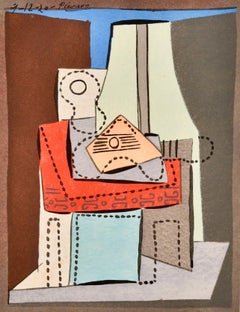
Picasso, Composition (Cramer 88), Dans l'Atelier de Picasso (after)
By Pablo Picasso
Located in Southampton, NY
Lithograph on vélin d'Arches à la forme savoir paper. Unsigned and unnumbered, as issued. Good condition. Notes: From the volume, Dans l'Atelier de Picasso, 1957. Published by Fernan...
Category
1950s Modern Landscape Prints
Materials
Lithograph
$10,396 Sale Price
20% Off
Free Shipping
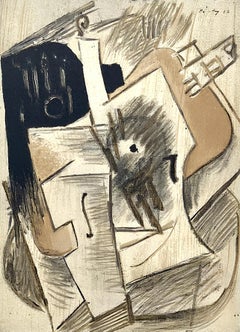
LE PEINTRE A LA PALETTE (BLOCH 1153)
By Pablo Picasso
Located in Aventura, FL
Linocut on Arches wove paper. Hand signed and numbered by the artist in pencil. Image size 25 x 20.75 inches. Sheet size 29.6 x 24.5 inches. Frame size approx 34.5 x 29.5 inches. Pri...
Category
1960s Cubist Animal Prints
Materials
Paper, Linocut
$31,600 Sale Price
46% Off
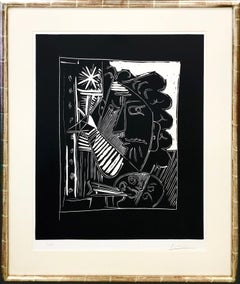
Picasso, Le peintre et son modèle (Cramer 128; Bloch 1848) (after)
By Pablo Picasso
Located in Southampton, NY
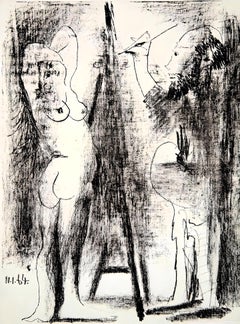
Lithograph on Arches paper. Inscription: Unsigned and unnumbered, as issued. Good condition; unframed. Notes: Published by Atelier Mourlot, Paris, 1964.
PABLO PICASSO (1881-1973) Spanish painter and sculptor is one of the most recognized figures of twentieth century art. During his artistic career, which lasted more than 75 years, he created thousands of works using all kinds of mediums. He changed art more profoundly than any other artist of his time. First famous for pioneering cubism, Picasso continued to develop his art with a pace...
Category
1960s Cubist Figurative Prints
Materials
Lithograph
$1,036 Sale Price
20% Off
Free Shipping
Picasso, Intérieur, Dix Reproductions (after)
By Pablo Picasso
Located in Southampton, NY
Lithograph on vélin d'Arches paper. Unsigned and unnumbered, as issued. Good Condition; never framed or matted. Notes: From the folio, Dix Reproductions, 1933. Published by Editions ...
Category
1930s Modern Landscape Prints
Materials
Lithograph
Pablo Picasso, The Three Musicians, from Chroniques du Jour, 1930 (after)
By Pablo Picasso
Located in Southampton, NY
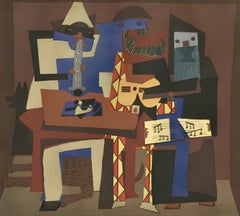
This exquisite lithograph and pochoir after Pablo Picasso (1881–1973), titled Les Trois Musiciens (The Three Musicians), from the album, Pablo Picasso, 1930, originates from the 1930 edition published by Editions des Chroniques du Jour, Paris, and printed by L'Atelier Desjobert, Paris, 1930. Les Trois Musiciens (The Three Musicians) captures Picasso’s Cubist mastery at its height, translating one of his most celebrated compositions into the refined medium of lithograph and pochoir. The scene depicts three abstracted figures—a harlequin, a monk, and a pierrot—arranged in a complex geometric harmony that embodies both the structure and rhythm of modernity. Through vivid color and precise pochoir layering, Picasso’s interplay of form, shadow, and light transforms the musicians into a symphony of shape and sound, reflecting the artist’s enduring fascination with the relationship between visual art and music.
Executed as a lithograph and pochoir on velin paper, this work measures 9.09 x 11.38 inches. Unsigned and unnumbered as issued. The edition exemplifies the refined craftsmanship of Editions des Chroniques du Jour and the technical excellence of L'Atelier Desjobert, one of the premier Parisian workshops specializing in pochoir and fine art lithography.
Artwork Details:
Artist: After Pablo Picasso (1881–1973)
Title: Les Trois Musiciens (The Three Musicians), from the album, Pablo Picasso, 1930
Medium: Lithograph and pochoir on velin paper
Dimensions: 9.09 x 11.38 inches (23.1 x 28.9 cm)
Inscription: Unsigned and unnumbered as issued
Date: 1930
Publisher: Editions des Chroniques du Jour, Paris
Printer: L'Atelier Desjobert, Paris
Catalogue raisonne references: Cramer, Patrick. Pablo Picasso, The Illustrated Books: Catalogue Raisonne. Patrick Cramer, 1983, illustration 18; Bloch, Georges. Pablo Picasso: Catalogue of the Printed Graphic Work 1904–1967. Kornfeld & Klipstein, 1968, illustration 98; Reusse, Gerhard. Pablo Picasso: The Illustrated Books, Catalogue Raisonne. Verlag Gerd Hatje, 1983, illustration 31
Condition: Well preserved, consistent with age and medium
Provenance: From the album, Pablo Picasso, published by Editions des Chroniques du Jour, Paris, and printed by L'Atelier Desjobert, Paris, 1930
Notes:
Excerpted from the album, This volume has been printed in MCC numbered examples, of which DL (LI to DC) constitute the edition in French and DCL (DCI to MCCL). The edition in English has been printed on behalf of E. Weyhe, 794 Lexington Avenue, New York (DCI to MC) and of A. Zwemmer, 78 Charing Cross Road, London, W. C.2. (MCI to MCCL). There have also been printed L examples on Arches paper with a lithograph by Picasso (I to L) distributed between the two editions, and some press examples.
About the Publication:
The album Pablo Picasso, published in 1930 by Editions des Chroniques du Jour, Paris, under the direction of Christian Zervos, stands among the earliest major printed tributes to the artist’s emerging international acclaim. Conceived as part of the publisher’s broader initiative to document and celebrate the modernist vanguard, the volume presented a series of lithographs and pochoirs interpreting Picasso’s drawings, watercolors, and gouaches from the preceding decade. Executed at the esteemed Atelier Desjobert, the edition combined the lithographic precision of line with the pochoir method’s hand-applied color, producing images of exceptional tonal depth and fidelity. Issued in both French and English, with distribution in Paris, New York, and London through E. Weyhe and A. Zwemmer, the album was limited to MCC copies, including a special suite of L examples on Arches paper containing an original lithograph by Picasso. The publication represented a vital collaboration between artist, publisher, and printer—uniting the intellectual rigor of Zervos’s art criticism with the material beauty of fine French printmaking. Today, Pablo Picasso, 1930 is recognized as a landmark in 20th-century art publishing, reflecting both the refinement of interwar Parisian craftsmanship and the international reach of Picasso’s genius.
About the Artist:
Pablo Picasso (1881–1973) was a Spanish painter, sculptor, printmaker, and ceramicist whose extraordinary vision revolutionized modern art and defined the visual language of the 20th century. A child prodigy from Malaga, Spain, Picasso's career spanned more than seven decades and encompassed an astonishing range of styles and innovations—from the melancholic Blue and romantic Rose periods to his pioneering invention of Cubism with Georges Braque, which shattered conventional notions of perspective and form. Influenced by the bold expressiveness of El Greco, the structure of Cezanne, and the vitality of African and Iberian sculpture, Picasso became a central figure of the Paris avant-garde, working in creative dialogue with contemporaries such as Henri Matisse, Alexander Calder, Alberto Giacometti, Salvador Dali, Joan Miro, Wassily Kandinsky, Marcel Duchamp, and Man Ray. His insatiable experimentation extended across painting, drawing, printmaking, ceramics, and sculpture, forever expanding the boundaries of artistic expression. A master of reinvention, Picasso profoundly shaped generations of artists who followed—from Andy Warhol, Roy Lichtenstein, David Hockney, and Jean-Michel Basquiat to Jeff Koons and Banksy—cementing his status as a timeless cultural icon whose works remain among the most sought after worldwide. His landmark painting Les Femmes d'Alger (Version O) achieved a record-breaking sale of 179,365,000 USD at Christie's, New York, on May 11, 2015, affirming Picasso's enduring legacy as one of the most influential and valuable artists in history.
Pablo Picasso Les Trois Musiciens (The Three Musicians), Picasso 1930, Picasso Desjobert, Picasso pochoir...
Category
1930s Cubist Figurative Prints
Materials
Lithograph, Stencil
$2,396 Sale Price
20% Off
Free Shipping
More Ways To Browse
Salvador Dali Pig
Salvador Dali Shakespeare
Salvador Dali Woman With A Whip
Sascha Schneider
Sean Caulfield
Sebastien Leclerc
Shabbat Shalom
Shag Agle
Shalom Moskowitz Shalom Of Safed
Shepard Fairey Oil
Spoleto Poster
Stag Salvador Dali
Suffering Moses
Sufi Art
Tadashige Ono
Takahashi Shotei Prints
Takashi Murakami Doraemon
Takashi Murakami Panda With Cubs