1 of 8

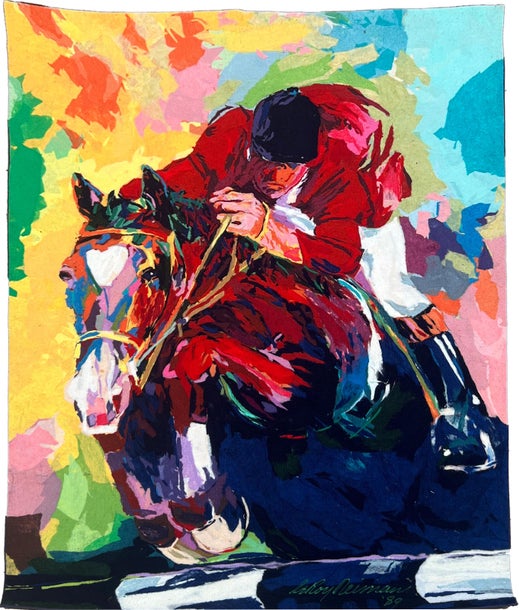
LeRoy Neiman
LeRoy NEIMAN Harlequin Bergamo Large Color Serigraph Original Hand Signed Art

1983

$2,995List Price

You May Also Like

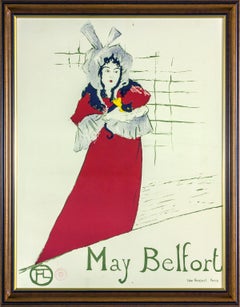
"May Belfort" 1974 Albi Museum-authorized limited edition poster
By Henri de Toulouse-Lautrec
Located in Boca Raton, FL
"May Belfort" 1974 reproduction of an 1895 poster by Henri Toulouse-Lautrec produced under the auspices of the Lautrec Museum in Albi, France. Authenticated with museum seal authoriz...
Category

1890s Post-Impressionist Portrait Prints

Materials

Lithograph

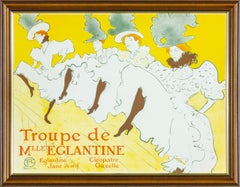
"Troupe de M'lle Eglantine" 1974 Albi Museum authorized limited edition poster
By Henri de Toulouse-Lautrec
Located in Boca Raton, FL
"Troupe de M'lle Eglantine" 1974 reproduction of an 1896 poster by Henri Toulouse-Lautrec produced under the auspices of the Lautrec Museum in Albi, France. Authenticated with museum...
Category

1890s Post-Impressionist Portrait Prints

Materials

Lithograph

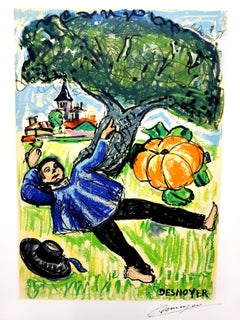
François Desnoyer - Free Child - Handsigned Original Lithograph
By François Desnoyer
Located in Collonge Bellerive, Geneve, CH
François Desnoyer - Free Child Original Lithograph Handsigned Dimensions: 38 x 28 cm François Desnoyer was a French visual artist who was born in ...
Category

1950s Post-Impressionist Portrait Prints

Materials

Lithograph

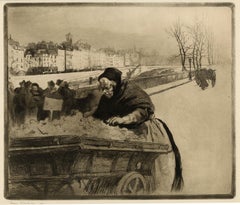
La Marchande des Quatres-Saisons
By Edgar Chahine
Located in Middletown, NY
Etching with drypoint on cream wove paper, 11 3/4 x 13 3/4 inches (297 x 347 mm), full margins. Signed in pencil and numbered 32/40, lower margin. Minor mat tone and several small lo...
Category

Early 20th Century Post-Impressionist Portrait Prints

Materials

Handmade Paper, Rag Paper, Drypoint, Etching
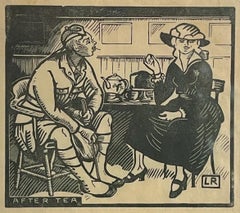
After Tea by Ludovic-Rodo Pissarro - Wood engraving
By Ludovic-Rodo Pissarro
Located in London, GB
After Tea by Ludovic-Rodo Pissarro (1878-1952) Wood engraving 12 x 13.2 cm (4 ³/₄ x 5 ¹/₄ inches) Initialled and titled in the plate Executed circa 1917 Artist biography Ludovic-Rod...
Category

1910s Post-Impressionist Figurative Prints

Materials

Woodcut

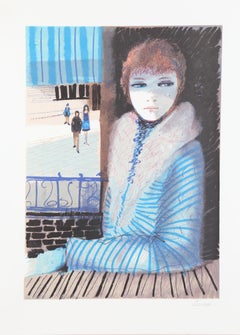
Girl in Blue, Modern Portrait Lithograph by Charles Levier
By Charles Levier
Located in Long Island City, NY
Girl in Blue Charles Levier, French (1920–2003) Date: circa 1970 Lithograph, signed in pencil l.r. Edition of 250 Image Size: 24 x 17 inches Size: 30 x 22 in. (76.2 x 55.88 cm)
Category

1970s Fauvist Figurative Prints

Materials

Lithograph

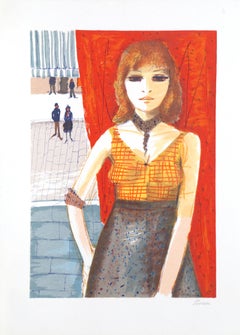
Red Head, Modern Portrait Lithograph by Charles Levier
By Charles Levier
Located in Long Island City, NY
Red Head Charles Levier, French (1920–2003) Date: circa 1970 Lithograph, signed and numbered in pencil Edition of 250 Image Size: 24 x 16 inches Size: 30 x 22 in. (76.2 x 55.88 cm)
Category

1970s Fauvist Figurative Prints

Materials

Lithograph

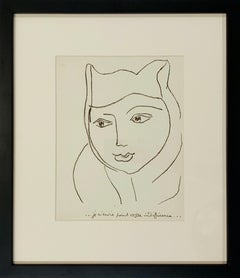
Untitled from Les Lettres Portugaises
By Henri Matisse
Located in Washington, DC
Artist: Henri Matisse Medium: lithograph Portfolio: Untitled from Les Lettres Portugaises Year: 1946 Edition: 250 Framed Size: 16 3/4" x 14 1/2" Reference: Duthuit 15 Signed: Unsigned
Category

1940s Fauvist Portrait Prints

Materials

Lithograph

Untitled from Les Lettres Portugaises
$1,495
Free Shipping
H 16.75 in W 14.5 in
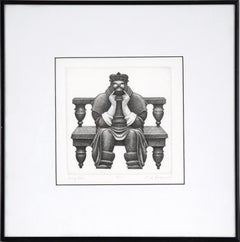
"King Pin" Pointillist Lithograph in Ink on Paper
Located in Soquel, CA
"King Pin" Pointillist Lithograph in Ink on Paper Detailed lithograph of a king on a bench by E.B. Rothewell (American, 1926-2011). A stylized portrait of a king, seated on a large bench. He is looking upwards, with a somewhat dejected expression, hands near his mouth. This piece is completely made from small dots (stippling) giving the subject the feel of a fantasy illustration...
Category

Late 20th Century Pointillist Figurative Prints

Materials

Paper, Ink, Lithograph

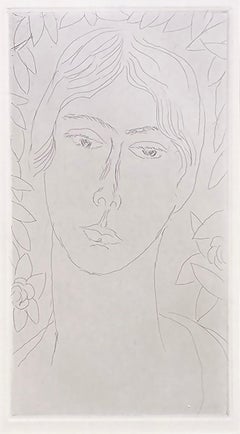
"Mlle Landsberg" (grade planche, pl. 16)
By Henri Matisse
Located in Missouri, MO
"Mlle Landsberg" (grade planche, pl. 16), 1914 Henri Matisse (French, 1869-1954) Signed and Numbered Lower Right Edition 12/15 Image size: 7 7/8 x 4 5/16 inches Sheet size: 17 11/16 x 12 1/2 inches With frame: 19 1/2 x 14 1/2 inches Henri Matisse came from a family who were of Flemish origin and lived near the Belgian border. At eight o'clock on the evening of December 31, 1869, he was born in his grandparents' home in the town of Le Cateau in the cheerless far north of France. His father was a self-made seed merchant who was a mixture of determination and tightly coiled tension. Henri had no clear idea of what he wanted to do with his life. He was a twenty-year-old law clerk convalescing from appendicitis when he first began to paint, using a box of colors given to him by his mother. Little more than a year later, in 1890, he had abandoned law and was studying art in Paris. The classes consisted of drawing from plaster casts and nude models and of copying paintings in the Louvre. He soon rebelled against the school's conservative atmosphere; he replaced the dark tones of his earliest works with brighter colors that reflected his awareness of Impressionism. Matisse was also a violinist; he took an odd pride in the notion that if his painting eye failed, he could support his family by fiddling on the streets of Paris. Henri found a girlfriend while studying art, and he fathered a daughter, Marguerite, by her in 1894. In 1898 he married another woman, Amelie Parayre. She adopted the beloved Marguerite; they eventually had two sons, Jean, a sculptor and Pierre who became an eminent art dealer. Relations between Matisse and his wife were often strained. He often dallied with other women, and they finally separated in 1939 over a model who had been hired as a companion for Mme. Matisse. She was Madame Lydia, and after Mme. Matisse left, she remained with Matisse until he died. Matisse spent the summer of 1905 working with Andre Derain in the small Mediterranean seaport of Collioure. They began using bright and dissonant colors. When they and their colleagues exhibited together, they caused a sensation. The critics and the public considered their paintings to be so crude and so roughly crafted that the group became known as Les Fauves (the wild beasts). By 1907, Matisse moved on from the concerns of Fauvism and turned his attention to studies of the human figure. He had begun to sculpt a few years earlier. In 1910, when he saw an exhibition of Islamic art, he was fascinated with the multiple patterned areas and adapted the decorative universe of the miniatures to his interiors. As a continuation of his interest in the "exotic", Matisse made extended trips to Morocco in 1912 and 1913. At the end of 1917, Matisse moved to Nice; he would spend part of each year there for the remainder of his life. A meticulous dandy, he wore a light tweed jacket amd a tie when he painted. He never used a palette, but instead squeezed his colors on to plain white kitchen dishes...
Category

1910s Fauvist Figurative Prints

Materials

Drypoint, Etching

Still Thinking About These?

All Recently Viewed