Want more images or videos?
Request additional images or videos from the seller
1 of 5
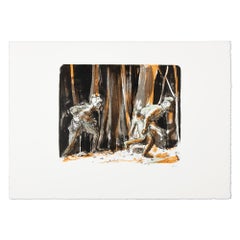
Claire TabouretClaire Tabouret, The Siblings - Ultra Contemporary Art, Signed Print2020
2020
$5,976.10List Price
About the Item
- Creator:Claire Tabouret (1981, French)
- Creation Year:2020
- Dimensions:Height: 16 in (40.64 cm)Width: 18.5 in (46.99 cm)
- Medium:
- Movement & Style:
- Period:
- Condition:
- Gallery Location:Hamburg, DE
- Reference Number:1stDibs: LU704313290472

About the Seller
4.9
Vetted Professional Seller
Every seller passes strict standards for authenticity and reliability
Established in 2017
1stDibs seller since 2017
184 sales on 1stDibs
Typical response time: 1 to 2 days
Authenticity Guarantee
In the unlikely event there’s an issue with an item’s authenticity, contact us within 1 year for a full refund. DetailsMoney-Back Guarantee
If your item is not as described, is damaged in transit, or does not arrive, contact us within 7 days for a full refund. Details24-Hour Cancellation
You have a 24-hour grace period in which to reconsider your purchase, with no questions asked.Vetted Professional Sellers
Our world-class sellers must adhere to strict standards for service and quality, maintaining the integrity of our listings.Price-Match Guarantee
If you find that a seller listed the same item for a lower price elsewhere, we’ll match it.Trusted Global Delivery
Our best-in-class carrier network provides specialized shipping options worldwide, including custom delivery.You May Also Like
Mondrian with Vermeer, Conceptual Art Lithograph with Screenprint by George Deem
By George Deem
Located in Long Island City, NY
Artist: George Deem, American (1932 - 2008)
Title: Mondrian with Vemeer
Year: 1978
Medium: Lithograph with Screenprint, signed and numbered in pencil
Edition: 300, AP 40
Image Size: ...
Category
1970s Conceptual Figurative Prints
Materials
Lithograph, Screen

Still Life with Hans Maler Pop Art Serigraph Hand Signed
By Josef Levi
Located in Surfside, FL
On deckle edged watermarked Arches French paper. hand signed in pencil, dated and numbered. the edition size is 175.
there are three states of the same image image each with increasing detail and color. This is just for the one in the photo.
Josef Alan Levi (1938) is an American artist whose works range over a number of different styles, but which are unified by certain themes consistently present among them. Josef Levi began his artistic career in the 1960s and early '70s, producing highly abstract and very modernist pieces: these employing exotic materials such as light fixtures and metallic parts. By 1975, Levy had transitioned to painting and drawing still lifes. At first these were, traditionally, of mundane subjects. Later, he would depict images from art history, including figures originally created by the Old Masters. Around 1980, he made another important shift, this time toward creating highly precise, though subtly altered reproductions of pairs of female faces which were originally produced by other artists. It is perhaps this work for which he is most well known. Since around 2000, Josef Levi has changed the style of his work yet again: now he works entirely with computers, using digital techniques to abstract greatly from art history, and also from other sources.
Levi's works of art in the collections of the Museum of Modern Art, NYC, the National Gallery of Art, and the Albright-Knox Museum, among many others. Levi's art has been featured on the cover of Harper's Magazine twice, once in June 1987, and once in May 1997.
Josef Levi received a Bachelor of Arts degree in 1959 from the University of Connecticut, where he majored in fine arts and minored in literature. From 1959 to 1960, he served to a first lieutenant in the U.S. Army, and from 1960 through 1967 he was in the U.S. Army Reserves.
In 1966, he received the Purchase Award from the University of Illinois in 1966, and he was featured in New Talent U.S.A. by Art in America. He was an artist in residence at Appalachian State University in 1969, taught at Farleigh Dickenson University in 1971 and was a visiting professor of art at Pennsylvania State University in 1977. From 1975 to 2007, Levi resided in New York City. He now lives in an apartment in Rome, where he is able to paint with natural light as he was unable in New York.
From 1959 to 1960, Josef took some courses of Howard McParlin Davis and Meyer Schapiro at Columbia University which initiated him into the techniques of reproducing the works of the Old Masters. His first works, created in the 1960s, were wood and stone sculptures of women. His first mature works were abstract pieces, constructed of electric lights and steel.
In 1970, Levi's materials included fluorescent light bulbs, Rust-Oleum and perforated metal in addition to paint and canvas.
By 1980, Josef Levi's art had transformed into a very specific form: a combination of reproductions of female faces which were originally depicted by other artists. The faces which he reproduces may be derived from either portraits or from small portions of much larger works; they are taken from paintings of the Old Masters, Japanese ukiyo-e, and 20th-century art. Artists from whom he has borrowed include: Vermeer, Rembrandt, Piero della Francesca, Botero, Matisse, Utamaro, Correggio, Da Vinci, Picasso, Chuck Close, Max Beckmann, Pisanello, Lichtenstein. The creation of these works is informed by Levi's knowledge and study of art history.
Josef Levi's paintings from this period are drawn, then painted on fine linen canvas on wooden stretchers. The canvas is coated with twenty-five layers of gesso in order to produce a smooth surface on which to work. The drawing phase takes at least one month. Levi seals the drawing with acrylic varnish, and then he may apply layers of transparent acrylic in order to approximate the look of old paintings. After the last paint is applied, another layer of acrylic varnish is sprayed on to protect the work.
Most of the figures in his contemporary pieces are not paired with any others.
SELECTED COLLECTIONS
MUSEUM OF MODERN ART, NEW YORK, NY
ALBRIGHT- KNOX GALLERY, BUFFALO, NY
ALDRICH MUSEUM OF CONTEMPORARY ART, RIDGEFIELD, CT
NATIONAL GALLERY OF ART, WASHINGTON, DC
BROOKLYN MUSEUM OF ART, BROOKLYN, NY
SMITHSONIAN NATIONAL MUSEUM OF AMERICAN HISTORY, WASHINGTON, DC
CORCORAN GALLERY, WASHINGTON, DC
UNIVERSITY OF NOTRE DAME ART...
Category
1970s Pop Art Figurative Prints
Materials
Lithograph, Screen
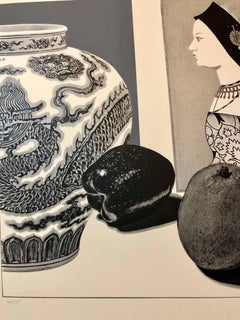
Still Life with Hans Maler Pop Art Serigraph Hand Signed
By Josef Levi
Located in Surfside, FL
On deckle edged watermarked Arches French paper. hand signed in pencil, dated and numbered. the edition size is 175.
there are three states of the same image image each with increasing detail and color. This is just for the one in the photo.
Josef Alan Levi (1938) is an American artist whose works range over a number of different styles, but which are unified by certain themes consistently present among them. Josef Levi began his artistic career in the 1960s and early '70s, producing highly abstract and very modernist pieces: these employing exotic materials such as light fixtures and metallic parts. By 1975, Levy had transitioned to painting and drawing still lifes. At first these were, traditionally, of mundane subjects. Later, he would depict images from art history, including figures originally created by the Old Masters. Around 1980, he made another important shift, this time toward creating highly precise, though subtly altered reproductions of pairs of female faces which were originally produced by other artists. It is perhaps this work for which he is most well known. Since around 2000, Josef Levi has changed the style of his work yet again: now he works entirely with computers, using digital techniques to abstract greatly from art history, and also from other sources.
Levi's works of art in the collections of the Museum of Modern Art, NYC, the National Gallery of Art, and the Albright-Knox Museum, among many others. Levi's art has been featured on the cover of Harper's Magazine twice, once in June 1987, and once in May 1997.
Josef Levi received a Bachelor of Arts degree in 1959 from the University of Connecticut, where he majored in fine arts and minored in literature. From 1959 to 1960, he served to a first lieutenant in the U.S. Army, and from 1960 through 1967 he was in the U.S. Army Reserves.
In 1966, he received the Purchase Award from the University of Illinois in 1966, and he was featured in New Talent U.S.A. by Art in America. He was an artist in residence at Appalachian State University in 1969, taught at Farleigh Dickenson University in 1971 and was a visiting professor of art at Pennsylvania State University in 1977. From 1975 to 2007, Levi resided in New York City. He now lives in an apartment in Rome, where he is able to paint with natural light as he was unable in New York.
From 1959 to 1960, Josef took some courses of Howard McParlin Davis and Meyer Schapiro at Columbia University which initiated him into the techniques of reproducing the works of the Old Masters. His first works, created in the 1960s, were wood and stone sculptures of women. His first mature works were abstract pieces, constructed of electric lights and steel.
In 1970, Levi's materials included fluorescent light bulbs, Rust-Oleum and perforated metal in addition to paint and canvas.
By 1980, Josef Levi's art had transformed into a very specific form: a combination of reproductions of female faces which were originally depicted by other artists. The faces which he reproduces may be derived from either portraits or from small portions of much larger works; they are taken from paintings of the Old Masters, Japanese ukiyo-e, and 20th-century art. Artists from whom he has borrowed include: Vermeer, Rembrandt, Piero della Francesca, Botero, Matisse, Utamaro, Correggio, Da Vinci, Picasso, Chuck Close, Max Beckmann, Pisanello, Lichtenstein. The creation of these works is informed by Levi's knowledge and study of art history.
Josef Levi's paintings from this period are drawn, then painted on fine linen canvas on wooden stretchers. The canvas is coated with twenty-five layers of gesso in order to produce a smooth surface on which to work. The drawing phase takes at least one month. Levi seals the drawing with acrylic varnish, and then he may apply layers of transparent acrylic in order to approximate the look of old paintings. After the last paint is applied, another layer of acrylic varnish is sprayed on to protect the work.
Most of the figures in his contemporary pieces are not paired with any others.
SELECTED COLLECTIONS
MUSEUM OF MODERN ART, NEW YORK, NY
ALBRIGHT- KNOX GALLERY, BUFFALO, NY
ALDRICH MUSEUM OF CONTEMPORARY ART, RIDGEFIELD, CT
NATIONAL GALLERY OF ART, WASHINGTON, DC
BROOKLYN MUSEUM OF ART, BROOKLYN, NY
SMITHSONIAN NATIONAL MUSEUM OF AMERICAN HISTORY, WASHINGTON, DC
CORCORAN GALLERY, WASHINGTON, DC
UNIVERSITY OF NOTRE DAME ART...
Category
1970s Pop Art Figurative Prints
Materials
Lithograph, Screen
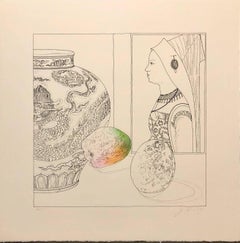
Still Life with German Master Pop Art Serigraph Hand Signed
By Josef Levi
Located in Surfside, FL
On deckle edged watermarked Arches French paper with publishers embossed blindstamp. hand signed in pencil, dated and numbered. the edition size is 175.
there are three states of the same image image each with increasing detail and color.
This auction is just for the one shown in the photos.
Josef Alan Levi (1938) is an American artist whose works range over a number of different styles, but which are unified by certain themes consistently present among them. Josef Levi began his artistic career in the 1960s and early '70s, producing highly abstract and very modernist pieces: these employing exotic materials such as light fixtures and metallic parts. By 1975, Levy had transitioned to painting and drawing still lifes. At first these were, traditionally, of mundane subjects. Later, he would depict images from art history, including figures originally created by the Old Masters. Around 1980, he made another important shift, this time toward creating highly precise, though subtly altered reproductions of pairs of female faces which were originally produced by other artists. It is perhaps this work for which he is most well known. Since around 2000, Josef Levi has changed the style of his work yet again: now he works entirely with computers, using digital techniques to abstract greatly from art history, and also from other sources.
Levi's works of art in the collections of the Museum of Modern Art, NYC, the National Gallery of Art, and the Albright-Knox Museum, among many others. Levi's art has been featured on the cover of Harper's Magazine twice, once in June 1987, and once in May 1997.
Josef Levi received a Bachelor of Arts degree in 1959 from the University of Connecticut, where he majored in fine arts and minored in literature. From 1959 to 1960, he served to a first lieutenant in the U.S. Army, and from 1960 through 1967 he was in the U.S. Army Reserves.
In 1966, he received the Purchase Award from the University of Illinois in 1966, and he was featured in New Talent U.S.A. by Art in America. He was an artist in residence at Appalachian State University in 1969, taught at Farleigh Dickenson University in 1971 and was a visiting professor of art at Pennsylvania State University in 1977. From 1975 to 2007, Levi resided in New York City. He now lives in an apartment in Rome, where he is able to paint with natural light as he was unable in New York.
From 1959 to 1960, Josef took some courses of Howard McParlin Davis and Meyer Schapiro at Columbia University which initiated him into the techniques of reproducing the works of the Old Masters. His first works, created in the 1960s, were wood and stone sculptures of women. His first mature works were abstract pieces, constructed of electric lights and steel.
In 1970, Levi's materials included fluorescent light bulbs, Rust-Oleum and perforated metal in addition to paint and canvas.
By 1980, Josef Levi's art had transformed into a very specific form: a combination of reproductions of female faces which were originally depicted by other artists. The faces which he reproduces may be derived from either portraits or from small portions of much larger works; they are taken from paintings of the Old Masters, Japanese ukiyo-e, and 20th-century art. Artists from whom he has borrowed include: Vermeer, Rembrandt, Piero della Francesca, Botero, Matisse, Utamaro, Correggio, Da Vinci, Picasso, Chuck Close, Max Beckmann, Pisanello, Lichtenstein. The creation of these works is informed by Levi's knowledge and study of art history.
Josef Levi's paintings from this period are drawn, then painted on fine linen canvas on wooden stretchers. The canvas is coated with twenty-five layers of gesso in order to produce a smooth surface on which to work. The drawing phase takes at least one month. Levi seals the drawing with acrylic varnish, and then he may apply layers of transparent acrylic in order to approximate the look of old paintings. After the last paint is applied, another layer of acrylic varnish is sprayed on to protect the work.
Most of the figures in his contemporary pieces are not paired with any others.
SELECTED COLLECTIONS
MUSEUM OF MODERN ART, NEW YORK, NY
ALBRIGHT- KNOX GALLERY, BUFFALO, NY
ALDRICH MUSEUM OF CONTEMPORARY ART, RIDGEFIELD, CT
NATIONAL GALLERY OF ART, WASHINGTON, DC
BROOKLYN MUSEUM OF ART, BROOKLYN, NY
SMITHSONIAN NATIONAL MUSEUM OF AMERICAN HISTORY, WASHINGTON, DC
CORCORAN GALLERY, WASHINGTON, DC
UNIVERSITY OF NOTRE DAME ART...
Category
1970s Pop Art Figurative Prints
Materials
Lithograph, Screen
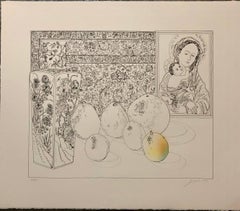
Still Life with Hans Maler Pop Art Serigraph Hand Signed
By Josef Levi
Located in Surfside, FL
On deckle edged watermarked Arches French paper. hand signed in pencil, dated and numbered. the edition size is 175.
there are three states of the same image image each with increasing detail and color. This is just for the one in the photo.
Josef Alan Levi (1938) is an American artist whose works range over a number of different styles, but which are unified by certain themes consistently present among them. Josef Levi began his artistic career in the 1960s and early '70s, producing highly abstract and very modernist pieces: these employing exotic materials such as light fixtures and metallic parts. By 1975, Levy had transitioned to painting and drawing still lifes. At first these were, traditionally, of mundane subjects. Later, he would depict images from art history, including figures originally created by the Old Masters. Around 1980, he made another important shift, this time toward creating highly precise, though subtly altered reproductions of pairs of female faces which were originally produced by other artists. It is perhaps this work for which he is most well known. Since around 2000, Josef Levi has changed the style of his work yet again: now he works entirely with computers, using digital techniques to abstract greatly from art history, and also from other sources.
Levi's works of art in the collections of the Museum of Modern Art, NYC, the National Gallery of Art, and the Albright-Knox Museum, among many others. Levi's art has been featured on the cover of Harper's Magazine twice, once in June 1987, and once in May 1997.
Josef Levi received a Bachelor of Arts degree in 1959 from the University of Connecticut, where he majored in fine arts and minored in literature. From 1959 to 1960, he served to a first lieutenant in the U.S. Army, and from 1960 through 1967 he was in the U.S. Army Reserves.
In 1966, he received the Purchase Award from the University of Illinois in 1966, and he was featured in New Talent U.S.A. by Art in America. He was an artist in residence at Appalachian State University in 1969, taught at Farleigh Dickenson University in 1971 and was a visiting professor of art at Pennsylvania State University in 1977. From 1975 to 2007, Levi resided in New York City. He now lives in an apartment in Rome, where he is able to paint with natural light as he was unable in New York.
From 1959 to 1960, Josef took some courses of Howard McParlin Davis and Meyer Schapiro at Columbia University which initiated him into the techniques of reproducing the works of the Old Masters. His first works, created in the 1960s, were wood and stone sculptures of women. His first mature works were abstract pieces, constructed of electric lights and steel.
In 1970, Levi's materials included fluorescent light bulbs, Rust-Oleum and perforated metal in addition to paint and canvas.
By 1980, Josef Levi's art had transformed into a very specific form: a combination of reproductions of female faces which were originally depicted by other artists. The faces which he reproduces may be derived from either portraits or from small portions of much larger works; they are taken from paintings of the Old Masters, Japanese ukiyo-e, and 20th-century art. Artists from whom he has borrowed include: Vermeer, Rembrandt, Piero della Francesca, Botero, Matisse, Utamaro, Correggio, Da Vinci, Picasso, Chuck Close, Max Beckmann, Pisanello, Lichtenstein. The creation of these works is informed by Levi's knowledge and study of art history.
Josef Levi's paintings from this period are drawn, then painted on fine linen canvas on wooden stretchers. The canvas is coated with twenty-five layers of gesso in order to produce a smooth surface on which to work. The drawing phase takes at least one month. Levi seals the drawing with acrylic varnish, and then he may apply layers of transparent acrylic in order to approximate the look of old paintings. After the last paint is applied, another layer of acrylic varnish is sprayed on to protect the work.
Most of the figures in his contemporary pieces are not paired with any others.
SELECTED COLLECTIONS
MUSEUM OF MODERN ART, NEW YORK, NY
ALBRIGHT- KNOX GALLERY, BUFFALO, NY
ALDRICH MUSEUM OF CONTEMPORARY ART, RIDGEFIELD, CT
NATIONAL GALLERY OF ART, WASHINGTON, DC
BROOKLYN MUSEUM OF ART, BROOKLYN, NY
SMITHSONIAN NATIONAL MUSEUM OF AMERICAN HISTORY, WASHINGTON, DC
CORCORAN GALLERY, WASHINGTON, DC
UNIVERSITY OF NOTRE DAME ART...
Category
1970s Pop Art Figurative Prints
Materials
Lithograph, Screen
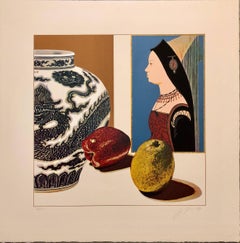
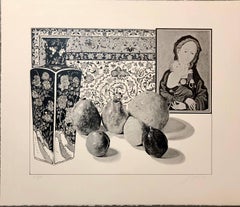
Still Life with German Master Pop Art Serigraph Hand Signed
By Josef Levi
Located in Surfside, FL
On deckle edged watermarked Arches French paper with publishers embossed blindstamp. hand signed in pencil, dated and numbered. the edition size is 175.
there are three states of the same image image each with increasing detail and color.
This auction is just for the one shown in the photos.
Josef Alan Levi (1938) is an American artist whose works range over a number of different styles, but which are unified by certain themes consistently present among them. Josef Levi began his artistic career in the 1960s and early '70s, producing highly abstract and very modernist pieces: these employing exotic materials such as light fixtures and metallic parts. By 1975, Levy had transitioned to painting and drawing still lifes. At first these were, traditionally, of mundane subjects. Later, he would depict images from art history, including figures originally created by the Old Masters. Around 1980, he made another important shift, this time toward creating highly precise, though subtly altered reproductions of pairs of female faces which were originally produced by other artists. It is perhaps this work for which he is most well known. Since around 2000, Josef Levi has changed the style of his work yet again: now he works entirely with computers, using digital techniques to abstract greatly from art history, and also from other sources.
Levi's works of art in the collections of the Museum of Modern Art, NYC, the National Gallery of Art, and the Albright-Knox Museum, among many others. Levi's art has been featured on the cover of Harper's Magazine twice, once in June 1987, and once in May 1997.
Josef Levi received a Bachelor of Arts degree in 1959 from the University of Connecticut, where he majored in fine arts and minored in literature. From 1959 to 1960, he served to a first lieutenant in the U.S. Army, and from 1960 through 1967 he was in the U.S. Army Reserves.
In 1966, he received the Purchase Award from the University of Illinois in 1966, and he was featured in New Talent U.S.A. by Art in America. He was an artist in residence at Appalachian State University in 1969, taught at Farleigh Dickenson University in 1971 and was a visiting professor of art at Pennsylvania State University in 1977. From 1975 to 2007, Levi resided in New York City. He now lives in an apartment in Rome, where he is able to paint with natural light as he was unable in New York.
From 1959 to 1960, Josef took some courses of Howard McParlin Davis and Meyer Schapiro at Columbia University which initiated him into the techniques of reproducing the works of the Old Masters. His first works, created in the 1960s, were wood and stone sculptures of women. His first mature works were abstract pieces, constructed of electric lights and steel.
In 1970, Levi's materials included fluorescent light bulbs, Rust-Oleum and perforated metal in addition to paint and canvas.
By 1980, Josef Levi's art had transformed into a very specific form: a combination of reproductions of female faces which were originally depicted by other artists. The faces which he reproduces may be derived from either portraits or from small portions of much larger works; they are taken from paintings of the Old Masters, Japanese ukiyo-e, and 20th-century art. Artists from whom he has borrowed include: Vermeer, Rembrandt, Piero della Francesca, Botero, Matisse, Utamaro, Correggio, Da Vinci, Picasso, Chuck Close, Max Beckmann, Pisanello, Lichtenstein. The creation of these works is informed by Levi's knowledge and study of art history.
Josef Levi's paintings from this period are drawn, then painted on fine linen canvas on wooden stretchers. The canvas is coated with twenty-five layers of gesso in order to produce a smooth surface on which to work. The drawing phase takes at least one month. Levi seals the drawing with acrylic varnish, and then he may apply layers of transparent acrylic in order to approximate the look of old paintings. After the last paint is applied, another layer of acrylic varnish is sprayed on to protect the work.
Most of the figures in his contemporary pieces are not paired with any others.
SELECTED COLLECTIONS
MUSEUM OF MODERN ART, NEW YORK, NY
ALBRIGHT- KNOX GALLERY, BUFFALO, NY
ALDRICH MUSEUM OF CONTEMPORARY ART, RIDGEFIELD, CT
NATIONAL GALLERY OF ART, WASHINGTON, DC
BROOKLYN MUSEUM OF ART, BROOKLYN, NY
SMITHSONIAN NATIONAL MUSEUM OF AMERICAN HISTORY, WASHINGTON, DC
CORCORAN GALLERY, WASHINGTON, DC
UNIVERSITY OF NOTRE DAME ART...
Category
1970s Pop Art Figurative Prints
Materials
Lithograph, Screen
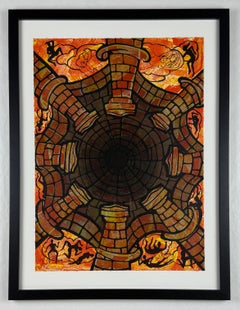
"Dome" Cuban art signed framed original limited edition serigraph 24x18in
By Luis Miguel Valdes
Located in Miami, FL
Luis Miguel Valdes (Cuba, 1949)
"Dome", 2021
screenprint on heavy-weight paper
Limited edition of 10
hand signed in pencil
artwork: 21 x 15 in.
frame: 24 x 18 in.
Ref: 1G-2021-01
Category
2010s Contemporary Figurative Prints
Materials
Paper, Screen
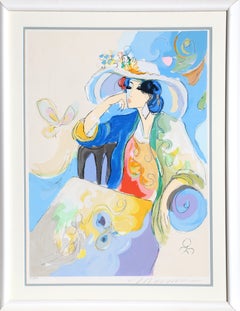
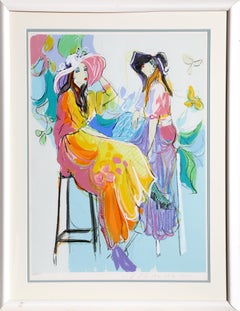
Marie, Contemporary Screenprint by Isaac Maimon
By Isaac Maimon
Located in Long Island City, NY
Marie by Isaac Maimon, Israeli/French (1951)
Date: circa 1994
Screenprint, signed and numbered in pencil
Edition of 201/ 275
Image Size: 28 x 20.5 inches
Size: 31.5 in. x 23.5 in. (8...
Category
1990s Contemporary Figurative Prints
Materials
Screen
Les Coquettes II, Pop Art Screenprint by Isaac Maimon
By Isaac Maimon
Located in Long Island City, NY
Les Coquettes II by Isaac Maimon, Israeli/French (1951)
Date: 1994
Screenprint, signed and numbered in pencil
Edition of 202/275
Image Size: 27 x 20 inches
Size: 31.5 in. x 23.5 in. ...
Category
1990s Contemporary Figurative Prints
Materials
Screen
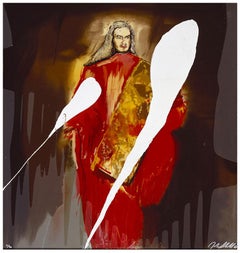
Julian Schnabel, Portraits, Xavier Mascaro
By Julian Schnabel
Located in New York, NY
XAVIER MASCARO
Year: 1998
Medium: 25-color silkscreen with poured resin
Size: 38 x 36 inches (97 x 91 cm)
Edition: 90
Price: $4900
Suite of 3 Also ava...
Category
1990s Contemporary Figurative Prints
Materials
Screen
More From This Seller
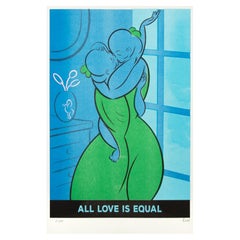
View AllKoak, All Love Is Equal - Signed Print, 2019, Contemporary Art
Located in Hamburg, DE
Koak (US American, b. 1981)
All Love Is Equal, 2019
Medium: Five color risograph print
Dimensions: 43 x 28 cm (17 x 11 in)
Edition of 200: Hand numbered and signed
Condition: Mint
Category
21st Century and Contemporary Contemporary Figurative Prints
Materials
Digital, Screen
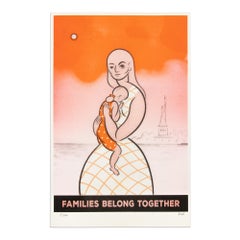
Koak, Families Belong Together - Signed Print, 2019, Contemporary Art
Located in Hamburg, DE
Koak (US American, b. 1981)
Families Belong Together, 2019
Medium: Five color risograph print
Dimensions: 43 x 28 cm (17 x 11 in)
Edition of 200: Hand-numbered and signed
Condition: ...
Category
21st Century and Contemporary Contemporary Figurative Prints
Materials
Digital, Screen
Koak, Female Comes In Many Forms - Signed Print, 2019, Contemporary Art
Located in Hamburg, DE
Koak (US American, b. 1981)
Female Comes In Many Forms, 2019
Medium: Five color risograph print
Dimensions: 43 x 28 cm (17 x 11 in)
Edition of 200: Hand numbered and signed
Condition...
Category
21st Century and Contemporary Contemporary Figurative Prints
Materials
Digital, Screen

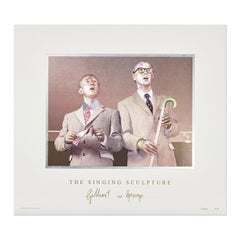
Gilbert & George, The Singing Sculpture 1969-91 - British Art, Signed Print
By Gilbert & George
Located in Hamburg, DE
Gilbert & George (British, b. 1942 and 1943)
The Singing Sculpture 1969-91, 1993
Medium: Relief print in colors, on aluminium foil (Dufex) flush-mounted to museum board, with screenp...
Category
20th Century Contemporary Figurative Prints
Materials
Screen
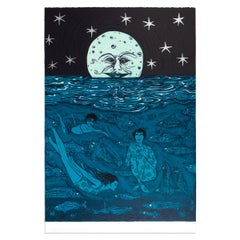
Marcel Dzama - Midnights Moon Light // Signed Fine Art Print
By Marcel Dzama
Located in Hamburg, DE
Marcel Dzama (Canadian, b. 1974)
Midnights Moon Light, 2023
Medium: Lithograph on Velin d’ Arches paper
Dimensions: 100 × 68 cm (39 2/5 × 26 4/5 in)
Edition of 70 + 7 AP: Hand-signed...
Category
21st Century and Contemporary Contemporary Figurative Prints
Materials
Lithograph
Daniel Richter, Propaganda II - Lithograph, Signed Print, Contemporary Art
By Daniel Richter
Located in Hamburg, DE
Daniel Richter (German, born in 1962)
Propaganda II, 2001
Medium: Lithograph in colours, on paper
Dimensions: 42 × 59 cm (16 1/2 × 23 1/5 in)
Signature: Hand-signed und dated “DR01“
...
Category
21st Century and Contemporary Contemporary Figurative Prints
Materials
Lithograph