1780s Landscape Prints
to
17
25
6
2
Overall Width
to
Overall Height
to
4
1
15
4
3
1,014
2,155
10,005
4,003
116
116
718
512
594
1,138
1,468
1,656
1,324
630
660
32
1
18
10
8
5
4
4
3
3
2
2
2
2
1
1
1
1
1
1
1
32
4
4
2
2
3
13
24
2
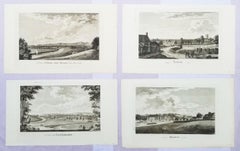
Period: 1780s
Set of Four Engravings from Nash's "History of Worcestershire" /// Landscape Art
Located in Saint Augustine, FL
Artist: Treadway Russell Nash (English, 1724-1811)
Title: "A View of Stourbridge", "A View of Upton upon Severn, from Ryal Hill", "Bewdley", and "Tenbury"
Portfolio: Collections for the History of Worcestershire
Year: 1781-1782 (First edition)
Medium: Set of Four Original Engravings on watermarked laid paper
Limited edition: Unknown
Printer: John Nichols, London, UK
Publisher: T. Payne and Son, J. Robson, B. White, Leigh and Sotheby, London, UK; Fletcher, Oxford, UK; and Lewis, Worcester, UK
Reference: Upcott III, page 1330
Sheet size (each): approx. 10" x 16.5"
Image size (each): approx. 6.88" x 11.75"
Condition: A few light handling creases. Have been professionally stored away for decades. They are all strong impressions in excellent condition
Notes:
Provenance: private collection - Aspen, CO. All four works were engraved by English artist Thomas Sanders (Active: Mid-Late 18th Century) after drawings by himself. Comes from Nash's two volume "Collections for the History of Worcestershire", (1781-1782) (First edition), which consists of 75 engravings. Each work is printed from one copper plate in one color: black. There was a (Second edition) "with Additions" bound in with Volume II of this portfolio published by John White in 1799. And, both the First and Second editions of "Collections for the History of Worcestershire" are based off Thomas Sanders' 1779-1781 "Perspective Views of the Market Towns within the County of Worcester". Both "A View of Stourbridge" and "A View of Upton upon Severn, from Ryal Hill" have unidentified fleur-de-lis watermarks in the center of their sheets. "Bewdley" has an unidentified watermark in the center of its sheet resembling "XV" and "Tenbury" has no watermark.
Biography:
Treadway Russell Nash (24 June 1724 – 26 January 1811) was an English clergyman, now known as an early historian of Worcestershire and the author of Collections for the History of Worcestershire, an important source document for Worcestershire county histories. He was a fellow of the Society of Antiquaries of London.
Treadway Russell Nash was born on 24 June 1724 born at Clerkenleap, in Kempsey, Worcestershire. His family were from Ombersley. They had lands there and at Claines, and had later bought lands in the Reformation around St Peter's, Droitwich. He was related to James Nash and John Nash, both MPs for Worcester. His father Richard, a grandson of Sir Rowland Berkeley, died in 1740, and Richard's eldest son in 1757. As a result, Treadway Russell Nash inherited the Russells' Strensham estates from his brother, as well as the Nash estates, and took both names.
He was educated from the age of twelve at King's School, Worcester, and became a scholar at Worcester College, Oxford aged fifteen. In March 1749, he accompanied his brother on a trip to the continent, to aid Richard's health. They visited Paris for about six weeks, before spending the summer "on the banks of the Loire". They then visited "Bourdeaux, Thoulouse, Montpelier, Marseilles, Leghorn, Florence, Rome, Naples, Bologna, Venice, Padua, Verona, Milan, Lyons, and again Paris"; such expeditions are often known as the Grand Tour.
On his return in late summer 1751, Nash took up a post as Vicar of Eynsham through his friend and future brother-in-law, John Martin. He also had an income as a tutor at Oxford. He took his Doctor of Divinity degree and left Oxford, having "gone out grand compounder", following the death of his brother. He also left his benefice at Eynsham in 1757. While at Oxford he had proposed a road from there to Witney (now the A40 and B4022), and also stood for Parliament. Nash married Margaret Martin...
Category
Old Masters 1780s Landscape Prints
Materials
Laid Paper, Engraving
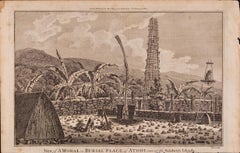
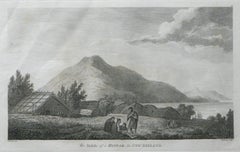
A View of Kauai, Hawaii Discovered by Captain Cook: Original 18th C. Engraving
By John Webber
Located in Alamo, CA
"View of A Morai or Burial Place of Atooi, One of the Sandwich Islands (Kauai, Hawaii)" is an original 18th century engraving from a drawing by John Webber (1751-1793), who was the a...
Category
1780s Landscape Prints
Materials
Engraving
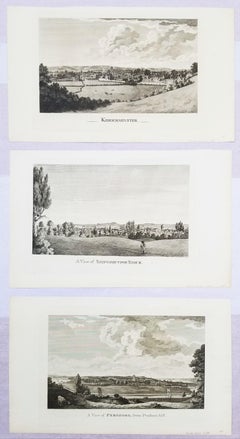
Set of Three Engravings from Nash's "History of Worcestershire" /// Landscapes
Located in Saint Augustine, FL
Artist: Treadway Russell Nash (English, 1724-1811)
Title: "A View of Pershore, from Pensham hill", "A View of Shipston upon Stour", and "Kidderminster"
Portfolio: Collections for the History of Worcestershire
Year: 1781-1782 (First edition)
Medium: Set of Three Original Engravings on watermarked laid paper
Limited edition: Unknown
Printer: John Nichols, London, UK
Publisher: T. Payne and Son, J. Robson, B. White, Leigh and Sotheby, London, UK; Fletcher, Oxford, UK; and Lewis, Worcester, UK
Reference: Upcott III, page 1330
Sheet size (each): approx. 10.13" x 16.75"
Image size (each): approx. 7" x 11.88"
Condition: A few light handling creases. Have been professionally stored away for decades. They are all strong impressions in excellent condition
Notes:
Provenance: private collection - Aspen, CO. All three works were engraved by English artist Thomas Sanders (Active: Mid-Late 18th Century) after drawings by himself. Comes from Nash's two volume "Collections for the History of Worcestershire", (1781-1782) (First edition), which consists of 75 engravings. Each work is printed from one copper plate in one color: black. There was a (Second edition) "with Additions" bound in with Volume II of this portfolio published by John White in (1799). And both the First and Second editions of "Collections for the History of Worcestershire" are based off Thomas Sanders' 1779-1781 "Perspective Views of the Market Towns within the County of Worcester". All three, "A View of Pershore, from Pensham hill", "A View of Shipston upon Stour", and "Kidderminster" have an unidentified watermark in the center of their sheets resembling "XV".
Biography:
Treadway Russell Nash (24 June 1724 – 26 January 1811) was an English clergyman, now known as an early historian of Worcestershire and the author of Collections for the History of Worcestershire, an important source document for Worcestershire county histories. He was a fellow of the Society of Antiquaries of London.
Treadway Russell Nash was born on 24 June 1724 born at Clerkenleap, in Kempsey, Worcestershire. His family were from Ombersley. They had lands there and at Claines, and had later bought lands in the Reformation around St Peter's, Droitwich. He was related to James Nash and John Nash, both MPs for Worcester. His father Richard, a grandson of Sir Rowland Berkeley, died in 1740, and Richard's eldest son in 1757. As a result, Treadway Russell Nash inherited the Russells' Strensham estates from his brother, as well as the Nash estates, and took both names.
He was educated from the age of twelve at King's School, Worcester, and became a scholar at Worcester College, Oxford aged fifteen. In March 1749, he accompanied his brother on a trip to the continent, to aid Richard's health. They visited Paris for about six weeks, before spending the summer "on the banks of the Loire". They then visited "Bourdeaux, Thoulouse, Montpelier, Marseilles, Leghorn, Florence, Rome, Naples, Bologna, Venice, Padua, Verona, Milan, Lyons, and again Paris"; such expeditions are often known as the Grand Tour.
On his return in late summer 1751, Nash took up a post as Vicar of Eynsham through his friend and future brother-in-law, John Martin. He also had an income as a tutor at Oxford. He took his Doctor of Divinity degree and left Oxford, having "gone out grand compounder", following the death of his brother. He also left his benefice at Eynsham in 1757. While at Oxford he had proposed a road from there to Witney (now the A40 and B4022), and also stood for Parliament. Nash married Margaret Martin...
Category
Old Masters 1780s Landscape Prints
Materials
Engraving, Laid Paper
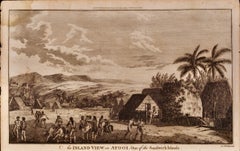
A View of Kauai, Hawaii as Seen by Captain Cook: An Original 18th C. Engraving
By John Webber
Located in Alamo, CA
"An Inland View in Atooi, One of the Sandwich Islands (Kauai, Hawaii)" is an original 18th century engraving from a drawing by John Webber (1751-1793), who was the artist who accompa...
Category
1780s Landscape Prints
Materials
Engraving
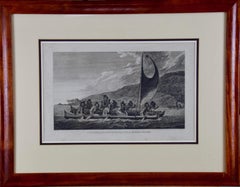
Sandwich Islands Canoe (Hawaii): Framed 18th C. Engraving Captain Cook's Journal
By John Webber
Located in Alamo, CA
"A Canoe of the Sandwich Islands, the Rowers Masked" is an engraving created by Charles Grignion, from a drawing by John Webber (1752-1793), who was the artist on Captain James Cook's 3rd and final voyage of discovery. It is Plate 65 in the atlas of "A Voyage to the Pacific Ocean Undertaken by the Command of His Majesty, for Making Discoveries in the Northern Hemisphere", the official British Admiralty sanctioned journal published upon completion of the voyage in London in 1784 by Strahan & Cadell.
This famous image of ten Hawaiian rowers transporting a priest who is carrying a feather-covered image of Kukailimoku, the Hawaiian god of war. The priests and paddlers are all wearing gourd masks in their double-hulled canoe with an upright lateen woven sail. Each hull was shaped from a single large Koa log harvested from island rainforests, where they were carved before being transported to the coast.
This engraving is presented in a Koa wood frame and a white mat. There are occasional faint spots, but the print is otherwise in very good condition. Koa is the same wood as was used to make the canoe. Koa wood is legendary in Hawaii. Not only is this amazing wood native to Hawaii, but it is known for the deep rich colors and varied grain pattern. Koa has an honored heritage in Hawaii and is highly revered and sacred. The word “koa” means “warrior” in Hawaiian. The warriors of King Kamehameha the Great, created canoes and weapons from a wood plentiful on the Big Island of Hawaii. This wood became synonymous with the warriors themselves, and it became known as koa. The frame measures 20.75" high, 26.75" wide and 0.88" deep.
There are three other engravings listed from the official journal of Captain Cook's 3rd voyage available that are presented in identical Koa wood frames and mat (LU117324682022, LU117324684052, LU117324684062). They would make a wonderful grouping for a display of 2, 3 or 4 prints. A discount is available for a grouping depending on the number of items included.
Hawaii was discovered by Captain Cook (1728-1779) during this voyage. Hawaii was originally called The Sandwich Islands in honor of The Earl of Sandwich...
Category
1780s Landscape Prints
Materials
Engraving
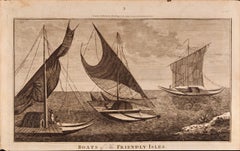
Boats of the Friendly Isles, Tonga: Original 18th C. Engraving from Captain Cook
Located in Alamo, CA
"Boats of the Friendly Isles" is an original 18th century engraving from a drawing by William Hodges (1744-1797), who was the artist who accompanies Captain Cook on his second voyage...
Category
1780s Landscape Prints
Materials
Engraving
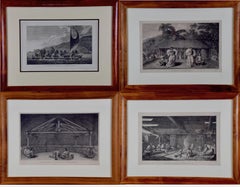
Four Koa Wood Framed 18th C. Engravings from Captain Cook's 3rd Voyage Journal
By John Webber
Located in Alamo, CA
A grouping of four framed engravings of Hawaii, Tahiti, Tonga and Vancouver Island from the atlas of the official British Admiralty sanctioned journal of Captain Cook's 3rd Voyage entitled "A Voyage to the Pacific Ocean Undertaken by the Command of His Majesty, for Making Discoveries in the Northern Hemisphere", published upon completion of the voyage in London in 1784 by Strahan & Cadell. These engravings were made from drawings by John Webber (1752-1793), who was the artist on Captain James Cook's 3rd and final voyage of discovery. The set of engravings includes: "A Canoe of the Sandwich Islands, the Rowers Masked", Plate 65 in the atlas; "A Dance in Otaheite" (Tahiti), Plate 28; "King of the Friendly Islands" (Tonga), plate 20; "Inside of a House in Nootka Sound" (Canada), plate 42.
These engravings are professionally framed in Koa wood, the same wood as was used to make the canoes of the ancient Hawaiians. Koa wood is legendary in Hawaii. Not only is this amazing wood native to Hawaii, but it is known for the deep rich colors and varied grain pattern. Koa has an honored heritage in Hawaii and is highly revered and sacred. The word “koa” means “warrior” in Hawaiian. The warriors of King Kamehameha the Great, created canoes and weapons from a wood plentiful on the Big Island of Hawaii. This wood became synonymous with the warriors themselves, and it became known as koa.
These four engravings would make a wonderful grouping for a display of 2, 3 or 4 prints. They may be purchased separately or in groups on 1stDibs. Their listing Reference #'s are: LU117324682432, LU117324682022, LU117324684052 and LU117324684062. A discount is available for a grouping depending on the number of items included.
Hawaii was discovered by Captain Cook (1728-1779) during this voyage. Hawaii was originally called The Sandwich Islands in honor of The Earl of Sandwich...
Category
Other Art Style 1780s Landscape Prints
Materials
Engraving

$7,660 Sale Price
20% Off
Reception for Captain Cook, Tonga: Original 18th C. Engraving, Cook's 3rd Voyage
By John Webber
Located in Alamo, CA
"The Reception of Capt. Cook in Hapaee" is an original 18th century engraving from a drawing by John Webber (1751-1793), who was the artist who accompanied Captain Cook on his third ...
Category
1780s Landscape Prints
Materials
Engraving

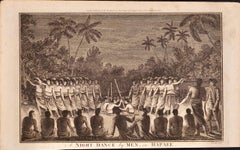
A Night Dance by Men in Tonga: An Original 18th C. Engraving, Cook's 3rd Voyage
By John Webber
Located in Alamo, CA
"A Night Dance by Men in Hapaee" is an original 18th century engraving from a drawing by John Webber (1751-1793), who was the artist who accompanied Captain Cook on his third voyage ...
Category
1780s Landscape Prints
Materials
Engraving
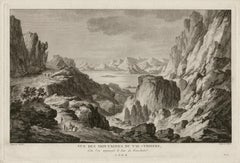
'Vue des Montagnes du Val-Travers, Neuchatel, Switzerland, engraving, 1780
Located in Melbourne, Victoria
'Vue des Montagnes du Val-Travers, d'ou aperçoit le Lac de Neuchatel'
French copper-line engraving by Duparc after Claude Louis Chatelet (1753-1794).
From 'Th...
Category
Naturalistic 1780s Landscape Prints
Materials
Engraving
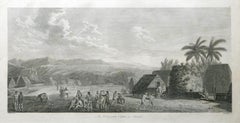
An Inland View; in Atooi ( Hawaii ) 1784 Captain Cook engraving by John Webber
By John Webber
Located in Paonia, CO
An Inland View in Atooi ( Hawaii ) is from the 1784 First Edition Atlas Accompanying Capt. James Cook and King; Third and Final Voyage of Captain James Cook. This engraving depicts ...
Category
Realist 1780s Landscape Prints
Materials
Engraving
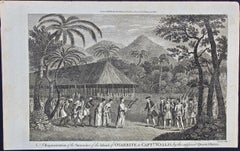
Surrender of Tahiti to Captain Wallis: An Original 18th C. Engraving
By John Webber
Located in Alamo, CA
"A Representation of the Surrender of the Island of Otaheite to Capt.n Wallis, by the Supposed Queen of Oberea" is an original 18th century engraving created by Sparrow, from a drawi...
Category
1780s Landscape Prints
Materials
Engraving
$200 Sale Price
20% Off
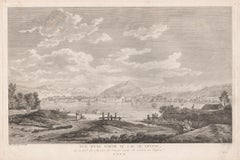
Vue d'une partie du Lac de Geneve, Switzerland, engraving, circa 1780
Located in Melbourne, Victoria
French copper-line engraving depicting the Lake of Geneva, Switzerland.
From 'The Scenery and Science of Switzerland illustrated', by Antoine Baron de Zurlauben (1720-1795) & Jean B...
Category
Naturalistic 1780s Landscape Prints
Materials
Engraving
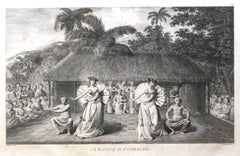
A Dance in Otaheite (Tahiti) 1784 James Cook Final Voyage by John Webber
By John Webber
Located in Paonia, CO
A Dance in Otaheite ( Tahiti ) is from the 1784 First Edition Atlas Accompanying Capt. James Cook and King; Third and Final Voyage of Captain James Cook. John Webber (1752-1793) who...
Category
Realist 1780s Landscape Prints
Materials
Engraving
Vue d'un Village près de la Ville de Berne, Switzerland, engraving, 1780
Located in Melbourne, Victoria
'Vue d'un Village près de la Ville de Berne'
French copper-line engraving by Masquelier after Claude Louis Chatelet (1753-1794).
From 'The Scenery and Science of Switzerland illust...
Category
Naturalistic 1780s Landscape Prints
Materials
Engraving

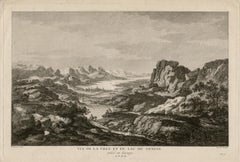
Vue de la Ville et du Lac de Geneve, Switzerland, copper-line engraving, c1780
Located in Melbourne, Victoria
French copper-line engraving depicting the Town and Lake of Geneva, Switzerland.
Claude-Louis Chatelet was a distinguished French painter, draftsman an...
Category
Naturalistic 1780s Landscape Prints
Materials
Engraving
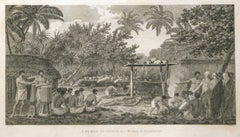
A Human Sacrifice, in a Morai, in Otaheite (Tahiti) 1784 James Cook Final Voyage
By John Webber
Located in Paonia, CO
A Human Sacrifice in a Morai in Otaheite (Tahiti) 1784 by John Webber is from the First Edition Atlas Accompanying Capt. James Cook and King; Third and Final Voyage of Captain...
Category
Realist 1780s Landscape Prints
Materials
Engraving
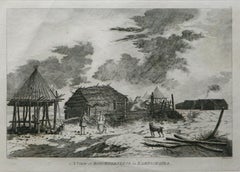
A View at Bolcheretzko (Russia) 1784 Captains Cook Final Voyage by John Webber
By John Webber
Located in Paonia, CO
A View at Bolcheretzko (Russia) is from the 1784 First Edition Atlas Accompanying Capt. James Cook and King; Third and Final Voyage of Captain James Cook.John Webber (1752-1793) was ...
Category
Realist 1780s Landscape Prints
Materials
Engraving
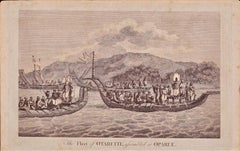
The Fleet of Tahiti displayed for Captain Cook: An Original 18th C. Engraving
Located in Alamo, CA
"The Fleet of Otaheite, Assembled at Oparee" is an original 18th century engraving from a drawing by William Hodges (1744-1797), who was the artist who accompanies Captain Cook on hi...
Category
1780s Landscape Prints
Materials
Engraving
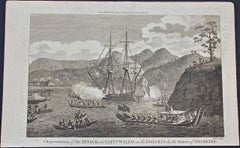
Attack on Captain Wallis When He Discovered Tahiti: Original 18th C. Engraving
Located in Alamo, CA
"A Representation of the Attack on Captain Wallis in the Dolphin by the Natives of Otaheite (Tahiti)" is an engraving created by the artist Sparrow based on an engraving in John Hawk...
Category
1780s Landscape Prints
Materials
Engraving
$220 Sale Price
20% Off
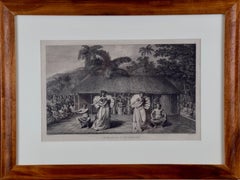
"A Dance in Otaheite" (Tahiti), Engraving from Captain Cook's 3rd Voyage
By John Webber
Located in Alamo, CA
"A Dance in Otaheite" (Tahiti) is an engraving created by William Sharp (1749-1824), from a drawing by John Webber (1752-1793), who was the artist on Captain James Cook's 3rd and final voyage of discovery. It is a plate in the atlas of "A Voyage to the Pacific Ocean Undertaken by the Command of His Majesty, for Making Discoveries in the Northern Hemisphere", the official British Admirality sanctioned journal published upon completion of the voyage in London in 1784 by Strahan & Cadell.
Two women and two men wearing ceremonial costumes, performing a dance outdoors standing on a mat. Three men are playing the drums in the background, in front of a thatched roof building. An audience of men are sitting on both sides of the stage. By the time Webber arrived in Tahiti, 'south sea' imagery had become familiar. Webber gave concentrated attention to dance. He had the opportunity to distinguish the Tahitian dance from the more formalized dancing of Tonga. Whereas they seem to have called to mind the more formal dances of antiquity, the Tahitian dancing aroused memories of peasant and folk dancing.
This engraving is professionally framed in Koa wood. Koa wood is legendary in Hawaii. Not only is this amazing wood native to Hawaii, but it is known for the deep rich colors and varied grain pattern. Koa has an honored heritage in Hawaii and is highly revered and sacred. The word “koa” means “warrior” in Hawaiian. The warriors of King Kamehameha the Great, created canoes and weapons from a wood plentiful on the Big Island of Hawaii. This wood became synonymous with the warriors themselves, and it became known as koa.
The print is in excellent condition.
There are three other engravings listed from the official journal of Captain Cook's 3rd voyage available that are presented in identical Koa wood frames and double mats (LU117324682432, LU117324684052, LU117324684062). They would make a wonderful grouping for a display of 2, 3 or 4 prints. A discount is available for a grouping depending on the number of items included.
Hawaii was discovered by Captain Cook during this voyage. Hawaii was originally called The Sandwich Islands in honor of The Earl of Sandwich...
Category
Realist 1780s Landscape Prints
Materials
Engraving
$1,900 Sale Price
20% Off
Family in Dusky Bay, New Zealand: Original 18th C. Engraving from Captain Cook
Located in Alamo, CA
"A Family in Dusk Bay, New Zealand" is an original 18th century engraving from a drawing by William Hodges (1744-1797), who was the artist who accompanies Captain Cook on his second ...
Category
1780s Landscape Prints
Materials
Engraving

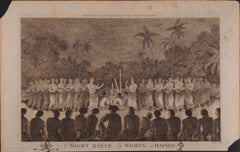
A Night Dance by Women in Tonga: Original 18th C. Engraving, Cook's 3rd Voyage
By John Webber
Located in Alamo, CA
"A Night Dance by Women in Hapaee" is an original 18th century engraving from a drawing by John Webber (1751-1793), who was the artist who accompanied Captain Cook on his third voyag...
Category
1780s Landscape Prints
Materials
Engraving
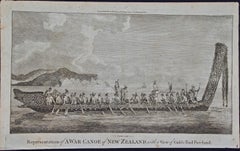
New Zealand War Canoe: Original 18th C. Engraving from Captain Cook's 1st Voyage
Located in Alamo, CA
"War Canoe of New Zealand, with a View of the Gable End Foreland" is an engraving created by Thomas Prattent, from a drawing by Sydney Parkinson, who was the artist on Captain James ...
Category
1780s Landscape Prints
Materials
Engraving
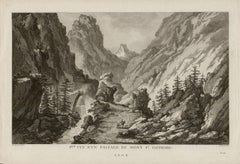
1.ere Vue d'un passage du Mont St Gothard, Switzerland, engraving, 1780
Located in Melbourne, Victoria
'1.ere Vue d'un passage du Mont St Gothard'
French copper-line engraving by Nee after Claude Louis Chatelet (1753-1794).
From 'The Scenery and Science of Switzerland illustrated', ...
Category
Naturalistic 1780s Landscape Prints
Materials
Engraving
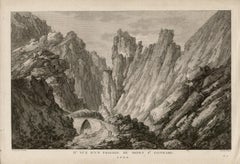
II. e Vue d'un passage du Mont St Gothard, Switzerland, engraving, 1780
Located in Melbourne, Victoria
'II.e Vue d'un passage du Mont St Gothard'
French copper-line engraving by Duparc after Claude Louis Chatelet (1753-1794).
From 'The Scenery and Science of Switzerland illustrated'...
Category
Naturalistic 1780s Landscape Prints
Materials
Engraving
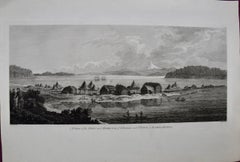
Kamtschatka, Russia: Engraving by J. Webber from Capt. Cook's 3rd Voyage Journal
By John Webber
Located in Alamo, CA
"A View of the Town and Harbour of St Peter and St Paul, in Kamtschatka" is an engraving created by Charles Grignion, from a drawing by John Webber (1752-1793), who was the artist on...
Category
1780s Landscape Prints
Materials
Engraving
The Inside of a Hippah in New Zealand from Captain Cooks Travels
By John Webber
Located in Paonia, CO
The Inside of a Hippah in New Zealand is from the 1784 First Edition Atlas Accompanying Capt. James Cook and King; Third and Final Voyage of Captain James Cook John...
Category
Realist 1780s Landscape Prints
Materials
Engraving
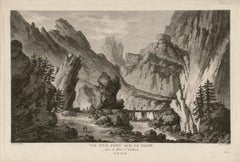
Vue d'un pont sur le Tesin dans le Mont St Gothard, Switzerland, engraving, 1780
Located in Melbourne, Victoria
'Vue d'un pont sur le Tesin, dans le Mont St Gothard'
French copper-line engraving by Maillet after Claude Louis Chatelet (1753-1794).
From 'The Scenery and Science of Switzerland ...
Category
Naturalistic 1780s Landscape Prints
Materials
Engraving
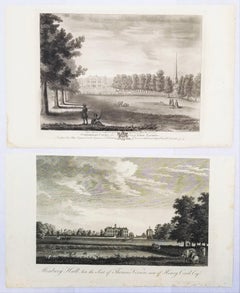
Set of Two Engravings from Nash's "History of Worcestershire" /// Landscapes Art
Located in Saint Augustine, FL
Artist: Treadway Russell Nash (English, 1724-1811)
Title: "Henbury Hall, late the Seat of Thomas Vernon, now of Henry Cecil Esq." and "Ombersley Court, the Seat of Lord Sandys"
Portfolio: Collections for the History of Worcestershire
Year: 1781-1782 (First edition)
Medium: Set of Two Original Engravings and Etching with Aquatint on watermarked laid paper
Limited edition: Unknown
Printer: John Nichols, London, UK
Publisher: T. Payne and Son, J. Robson, B. White, Leigh and Sotheby, London, UK; Fletcher, Oxford, UK; and Lewis, Worcester, UK
Reference: Upcott III, page 1330
Sheet size (each): approx. 10.13" x 16.88"
Image size (each): approx. 8.13" x 12.63"
Condition: "Henbury Hall, late the Seat of Thomas Vernon, now of Henry Cecil Esq." has scattered light foxmarks in margins. The top edge is unevenly trimmed and a small taped tear to lower right corner. "Ombersley Court, the Seat of Lord Sandys" has light toning to sheet and some faint discoloration in right margin. A small light water stain to lower left corner. Have been professionally stored away for decades. They are both otherwise strong impressions in good condition
Notes:
Provenance: private collection - Aspen, CO. "Henbury Hall, late the Seat of Thomas Vernon, now of Henry Cecil Esq." was likely engraved by English artist James Ross (1745-1821) after a drawing by himself. "Ombersley Court, the Seat of Lord Sandys" was engraved by English artist Valentine Green (1739-1813) and English artist Francis Jukes (1745-1812) after a drawing by an unknown, likely English artist. The first work is an engraving; the second work is an etching with aquatint. Comes from Nash's two volume "Collections for the History of Worcestershire", (1781-1782) (First edition), which consists of 75 engravings. Each work is printed from copper plates in one color: black. There was a (Second edition) "with Additions" bound in with Volume II of this portfolio published by John White in (1799). And both the First and Second editions of "Collections for the History of Worcestershire" are based off Thomas Sanders' 1779-1781 "Perspective Views of the Market Towns within the County of Worcester". "Ombersley Court, the Seat of Lord Sandys" has an unidentified watermark in the center of its sheet. "Henbury Hall" is actually incorrectly misnamed; its correct name is "Hanbury Hall".
"PLATES, Drawn and engraved by J. Ross, unless otherwise expressed." - "A Bibliographical Account of the Principal Works Relating to English Topography", (1818) - William Upcott.
Biography:
Treadway Russell Nash (24 June 1724 – 26 January 1811) was an English clergyman, now known as an early historian of Worcestershire and the author of Collections for the History of Worcestershire, an important source document for Worcestershire county histories. He was a fellow of the Society of Antiquaries of London.
Treadway Russell Nash was born on 24 June 1724 born at Clerkenleap, in Kempsey, Worcestershire. His family were from Ombersley. They had lands there and at Claines, and had later bought lands in the Reformation around St Peter's, Droitwich. He was related to James Nash and John Nash, both MPs for Worcester. His father Richard, a grandson of Sir Rowland Berkeley, died in 1740, and Richard's eldest son in 1757. As a result, Treadway Russell Nash inherited the Russells' Strensham estates from his brother, as well as the Nash estates, and took both names.
He was educated from the age of twelve at King's School, Worcester, and became a scholar at Worcester College, Oxford aged fifteen. In March 1749, he accompanied his brother on a trip to the continent, to aid Richard's health. They visited Paris for about six weeks, before spending the summer "on the banks of the Loire". They then visited "Bourdeaux, Thoulouse, Montpelier, Marseilles, Leghorn, Florence, Rome, Naples, Bologna, Venice, Padua, Verona, Milan, Lyons, and again Paris"; such expeditions are often known as the Grand Tour.
On his return in late summer 1751, Nash took up a post as Vicar of Eynsham through his friend and future brother-in-law, John Martin. He also had an income as a tutor at Oxford. He took his Doctor of Divinity degree and left Oxford, having "gone out grand compounder", following the death of his brother. He also left his benefice at Eynsham in 1757. While at Oxford he had proposed a road from there to Witney (now the A40 and B4022), and also stood for Parliament. Nash married Margaret Martin...
Category
Old Masters 1780s Landscape Prints
Materials
Laid Paper, Engraving, Intaglio, Etching, Aquatint
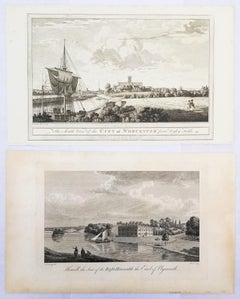
Set of Two Engravings from Nash's "History of Worcestershire" /// Landscapes Art
Located in Saint Augustine, FL
Artist: Treadway Russell Nash (English, 1724-1811)
Title: "The South View of the City of Worcester, from Digley Fields" and "Hewell, the Seat of the Right Honorable the Earl of Plymouth"
Portfolio: Collections for the History of Worcestershire
Year: 1781-1782 (First edition)
Medium: Set of Two Original Engravings on watermarked laid paper
Limited edition: Unknown
Printer: John Nichols, London, UK
Publisher: T. Payne and Son, J. Robson, B. White, Leigh and Sotheby, London, UK; Fletcher, Oxford, UK; and Lewis, Worcester, UK
Reference: Upcott III, page 1330
Sheet size (each): approx. 10.25" x 16.63"
Image size (each): approx. 7" x 12"
Condition: "The South View of the City of Worcester, from Digley Fields" has some minor foxmarks in margins. "Hewell, the Seat of the Right Honorable the Earl of Plymouth" has toning and uneven discoloration to its sheet. Have been professionally stored away for decades. They are both otherwise strong impressions, the first in excellent condition, and the second in good condition
Notes:
Provenance: private collection - Aspen, CO. "The South View of the City of Worcester, from Digley Fields" was engraved by English artist Thomas Sanders (Active: Mid-Late 18th Century) after a drawing by himself. "Hewell, the Seat of the Right Honorable the Earl of Plymouth" was engraved by English artist Michael Angelo Rooker (1743-1801) after a watercolor painting by English artist Paul Sandby (1731-1809). Comes from Nash's two volume "Collections for the History of Worcestershire", (1781-1782) (First edition), which consists of 75 engravings. Each work is printed from one copper plate in one color: black. There was a (Second edition) "with Additions" bound in with Volume II of this portfolio published by John White in (1799). And both the First and Second editions of "Collections for the History of Worcestershire" are based off Thomas Sanders' 1779-1781 "Perspective Views of the Market Towns within the County of Worcester". "The South View of the City of Worcester, from Digley Fields" has an unidentified watermark in the center of its sheet resembling "XV".
Biography:
Treadway Russell Nash (24 June 1724 – 26 January 1811) was an English clergyman, now known as an early historian of Worcestershire and the author of Collections for the History of Worcestershire, an important source document for Worcestershire county histories. He was a fellow of the Society of Antiquaries of London.
Treadway Russell Nash was born on 24 June 1724 born at Clerkenleap, in Kempsey, Worcestershire. His family were from Ombersley. They had lands there and at Claines, and had later bought lands in the Reformation around St Peter's, Droitwich. He was related to James Nash and John Nash, both MPs for Worcester. His father Richard, a grandson of Sir Rowland Berkeley, died in 1740, and Richard's eldest son in 1757. As a result, Treadway Russell Nash inherited the Russells' Strensham estates from his brother, as well as the Nash estates, and took both names.
He was educated from the age of twelve at King's School, Worcester, and became a scholar at Worcester College, Oxford aged fifteen. In March 1749, he accompanied his brother on a trip to the continent, to aid Richard's health. They visited Paris for about six weeks, before spending the summer "on the banks of the Loire". They then visited "Bourdeaux, Thoulouse, Montpelier, Marseilles, Leghorn, Florence, Rome, Naples, Bologna, Venice, Padua, Verona, Milan, Lyons, and again Paris"; such expeditions are often known as the Grand Tour.
On his return in late summer 1751, Nash took up a post as Vicar of Eynsham through his friend and future brother-in-law, John Martin. He also had an income as a tutor at Oxford. He took his Doctor of Divinity degree and left Oxford, having "gone out grand compounder", following the death of his brother. He also left his benefice at Eynsham in 1757. While at Oxford he had proposed a road from there to Witney (now the A40 and B4022), and also stood for Parliament. Nash married Margaret Martin...
Category
Old Masters 1780s Landscape Prints
Materials
Laid Paper, Engraving, Intaglio
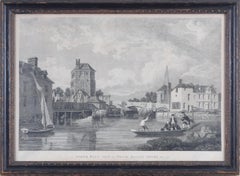
Folly Bridge and Friar Bacon's Study, Oxford engraving from the Oxford Almanack
Located in London, GB
To see our other views of Oxford and Cambridge, scroll down to "More from this Seller" and below it click on "See all from this Seller" - or send us a message if you cannot find the ...
Category
1780s Landscape Prints
Materials
Engraving
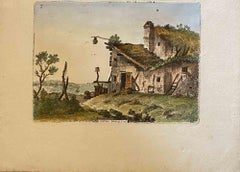
The Seascape With Chalet - Etching by Sara Green - 1783
Located in Roma, IT
The Seascape With Chalet is an Etching realised by Sara Green in the 1783.
Signed on the plate.
Good condition.
Included a Passepartout: 30 x 40 cm
The ...
Category
Modern 1780s Landscape Prints
Materials
Etching
$250 Sale Price
25% Off