Impressionist Art

29,055 Results
IMPRESSIONIST STYLE

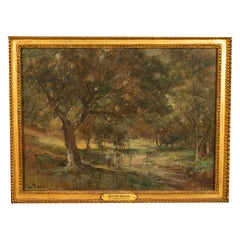
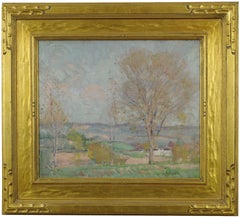
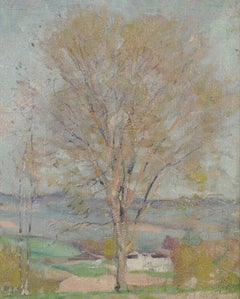
Emerging in 19th-century France, Impressionist art embraced loose brushwork and plein-air painting to respond to the movement of daily life. Although the pioneers of the Impressionist movement — Claude Monet, Edgar Degas, Paul Cézanne, Berthe Morisot, Camille Pissarro, and Pierre-Auguste Renoir — are now household names, their work was a radical break with an art scene led and shaped by academic traditions for around two centuries. These academies had oversight of a curriculum that emphasized formal drawing, painting and sculpting techniques and historical themes.

The French Impressionists were influenced by a group of artists known as the Barbizon School, who painted what they witnessed in nature. The rejection of pieces by these artists and the later Impressionists from the salons culminated in a watershed 1874 exhibition in Paris that was staged outside of the juried systems. After a work of Monet’s was derided by a critic as an unfinished “impression,” the term was taken as a celebration of their shared interest in capturing fleeting moments as subject matter, whether the shifting weather on rural landscapes or the frenzy of an urban crowd. Rather than the exacting realism of the academic tradition, Impressionist paintings, sculptures, prints and drawings represented how an artist saw a world in motion.

Many Impressionist painters were inspired by the perspectives in imported Japanese prints alongside these shifts in European painting — Édouard Manet drew on ukiyo-e woodblock prints and depicted Japanese design in his Portrait of Émile Zola, for example. American artists such as Mary Cassatt and William Merritt Chase, who studied abroad, were impacted by the work of the French artists, and by the late 19th century American Impressionism had its own distinct aesthetics with painters responding to the rapid modernization of cities through quickly created works that were vivid with color and light.

Find a collection of authentic Impressionist art on 1stDibs.

to
2,449
10,745
6,808
5,717
3,374
3,041
Overall Width
to
Overall Height
to
10
1,019
11,023
17,675
321
306
482
404
401
613
664
635
684
507
7
119,747
64,574
57,779
14,543
9,939
6,937
6,641
4,305
3,290
2,513
2,245
2,008
587
9,541
7,024
5,925
4,851
4,124
3,020
2,367
2,073
1,983
1,969
1,750
1,709
1,572
1,154
1,107
1,063
986
976
958
897
16,391
9,757

Use search to find more

805
658
403
268
205

Use search to find more

Style: Impressionist
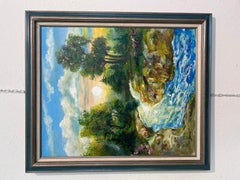
"Summer Greens" Landscape Oil Painting

"Summer Greens" Landscape Oil Painting

By Molly Doe Wensberg

Located in Westport, CT

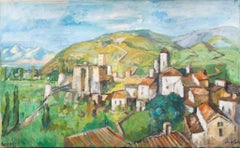
This traditional landscape painting by Molly Doe Wensberg features a cool palette, and captures a scene of lush green, rolling hills under a pale sky. It is very mildly abstracted, w...

Category

2010s Impressionist Art

Materials

Canvas, Oil

1940s Floral Still Life  -- A Breath of Spring

1940s Floral Still Life -- A Breath of Spring

Located in Soquel, CA

Beautiful 1940s pastel still life of apple blossoms in pink monkey vase by Eugenie May Pack Stiffler (American, 1870-1959). Signed lower left corner; title lower right edge. Present...

Category

1940s Impressionist Art

Materials

Paper, Pastel

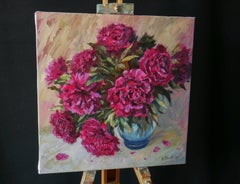
The Bouquet Of Peonies

The Bouquet Of Peonies

By Nikolay Dmitriev

Located in Zofingen, AG

A bouquet of purple peonies will never leave you indifferent, the artwork will give you a sense of harmony and lyrical mood, the picture will become a wonderful gift. In addition, th...

Category

2010s Impressionist Art

Materials

Canvas, Oil

Antique French Painting Charming Village Scene Study of Trees and Stone Cottages

Antique French Painting Charming Village Scene Study of Trees and Stone Cottages

Located in Cirencester, Gloucestershire

Charming Village Scene French, early 20th century watercolor on artist paper, framed in antique gilt frame framed: 14.5 x 12 inches artist paper : 9 x 6.5 inches Provenance: private ...

Category

Mid-20th Century Impressionist Art

Materials

Watercolor

French Impressionist Signed Oil Sheep & Dog in Windswept Fields, framed

French Impressionist Signed Oil Sheep & Dog in Windswept Fields, framed

Located in Cirencester, Gloucestershire

The Sheep Dog French, mid 20th century signed oil painting on canvas, framed framed: 21 x 31 inches canvas: 20 x 30 inches provenance: private collection, France condition: overall...

Category

Mid-20th Century Impressionist Art

Materials

Oil

French Colorist Modernist Reclining Nude Red Sofa Interior Oil Painting

French Colorist Modernist Reclining Nude Red Sofa Interior Oil Painting

Located in Cirencester, Gloucestershire

Title French Colorist Modernist Reclining Nude Red Sofa Interior Oil Painting Key Details Artist: French School, circa 1970s Title: Reclining Nude Model on a Red Sofa within an Inter...

Category

Mid-20th Century Impressionist Art

Materials

Oil

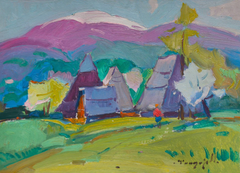
April Light Landscape Impressionism Original Oil Painting

April Light Landscape Impressionism Original Oil Painting

Located in Granada Hills, CA

Artist: Alexander Shandor Title: April Light Medium: Oil on Hardboard Year: 2019 Style: Impressionism Dimensions: 13.5 x 18.5" x 0.3" inch (35 x 47x 1cm) Presentation: Unframed, Ty...

Category

2010s Impressionist Art

Materials

Canvas, Oil

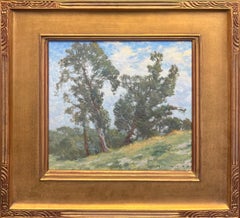
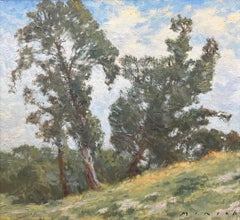
Reaching into the Sky

Reaching into the Sky

By Stephen Mirich

Located in Pasadena, CA

Provenance Acquired by the gallery directly from the artist. Signed "Mirich" on lower right. UNFRAMED: 12" x 12" FRAMED: 19" x 19" x 1" Exhibitions Los Angeles Country Club, May 2...

Category

21st Century and Contemporary Impressionist Art

Materials

Oil, Panel

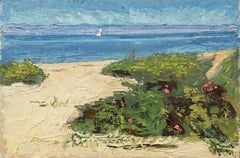
"Trumans Beach, East Marion 06.06.2022" contemporary impressionist seascape, oil

"Trumans Beach, East Marion 06.06.2022" contemporary impressionist seascape, oil

By Nelson H. White

Located in Sag Harbor, NY

"Trumans Beach, East Marion 06.06.2022" is an almost-abstract palette knife landscape painting of a beach and beach shrubs. Off in the distance is a little white triangle of paint to emulate a sailboat...

Category

21st Century and Contemporary Impressionist Art

Materials

Canvas, Oil, Panel

20th Century French Oil Painting Late Summer Beach

20th Century French Oil Painting Late Summer Beach

Located in Cirencester, Gloucestershire

Late Summer Beach French School, mid-late 20th century unsigned oil painting on canvas textured paper (reverse side is smooth, the painted side looks and feels as canvas), unframed o...

Category

Late 20th Century Impressionist Art

Materials

Canvas, Oil

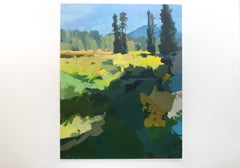
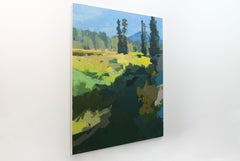
"A Propensity for Growth" Abstracted Landscape Oil Painting

"A Propensity for Growth" Abstracted Landscape Oil Painting

By Bri Custer

Located in Westport, CT

This original abstracted landscape statement oil painting by artist Bri Custer features a blue palette with vibrant yellow and green accents throughout. The artist applies thick, loo...

Category

2010s Impressionist Art

Materials

Canvas, Oil

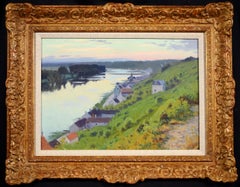
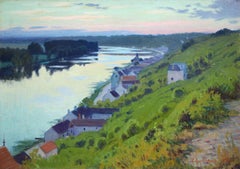
La Seine a Herblay - Impressionist Landscape Oil Painting by Charles Guilloux

La Seine a Herblay - Impressionist Landscape Oil Painting by Charles Guilloux

By Charles-Victor Guilloux

Located in Marlow, Buckinghamshire

Signed and dated oil on canvas riverscape by French impressionist painter Charles-Victor Guilloux. The work depicts a view of the houses of the commune Heblay-sur-Seine lining the ba...

Category

Early 1900s Impressionist Art

Materials

Canvas, Oil

1900's French Impressionist Oil Painting Portrait of Elderly Lady in Mirror

1900's French Impressionist Oil Painting Portrait of Elderly Lady in Mirror

Located in Cirencester, Gloucestershire

Portrait of an Elderly Lady, mirror behind French Impressionist artist, late 19th/ early 20th century extensively inscribed verso with details oil on canvas canvas: 22 x 18.5 inches ...

Category

Late 19th Century Impressionist Art

Materials

Oil, Canvas

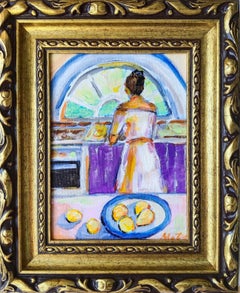
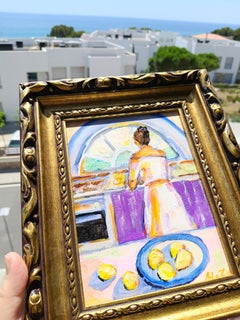
"In the Kitchen."
"In the Kitchen."

"In the Kitchen."

By Liudmila Shabazova

Located in Zofingen, AG

Miniature painting is like a little pearl in a collection of paintings. It was created specifically so that you can decorate your room and harmoniously place it in combination with p...

Category

2010s Impressionist Art

Materials

Canvas, Lacquer, Acrylic, Board

Swans in the Park, Hans Volcker, Pyrzyce, Poland 1865 – 1944 Wiesbaden, Germany

Swans in the Park, Hans Volcker, Pyrzyce, Poland 1865 – 1944 Wiesbaden, Germany

Located in Knokke, BE

Swans in the Park Volcker Hans Pyrzyce, Poland 1865 – 1944 Wiesbaden, Germany German Painter Signature: Signed bottom left and dated 98 Medium: Oil on canvas Dimensions: Image size 72 x 111,50 cm, frame size 84 x 120 cm Biography: Volcker Hans was born on October 12, 1865 in Pyrzyce, Poland. Hans was the son of a pastor, orphaned at a young age and raised by his grandfather. Hans Volcker was a painter of landscapes, seascapes, still lives and portraits. He also painted in watercolour and fresco techniques. In 1885, Volcker was a student of famed Norwegian realist painter Hans Fredrik Gude (1825 – 1903) at the Berlin Academy. His teacher encouraged him to travel to Scandinavia. During his study trips, he made landscape paintings of Scandinavian mountain and lakes, that brought him later great recognition. In 1891, he led his own plein air painting school. The most famous pupils were german sculptor and painter Margarethe Haeffner (1884 – 1977) and the painter Oskar Moll (1875 – 1947). With his Berlin friend painter Walter Leistikow (1865 – 1908), who was also a pupil of Gude, he shared an admiration for Max Liebermann (1847 – 1935). His acquaintance with Liebermann’s paintings furthered his stylistic development to an Impressionism. In 1894 he lived in Munich and moved to Wiesbaden in 1899, where he was active as a contemporary artist and as a member of the Art Societies, presenting Max Liebermann, Fritz Overbeck or Lovis Corinth, among others. Today, particular importance is attached to the “Dutch Secession” exhibition, featuring paintings by Vincent van Gogh and Jan Toorop. In 1912, the society showed paintings by Alexei Jawlensky...

Category

Late 19th Century Impressionist Art

Materials

Canvas, Oil

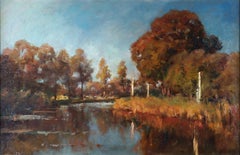
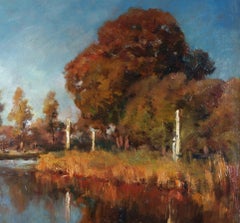
"October Vines" Colorful Impressionistic Autumn Landscape Oil Painting Framed

"October Vines" Colorful Impressionistic Autumn Landscape Oil Painting Framed

By David Chapple

Located in New York, NY

A wonderful impressionist pastoral landscape with beautiful color tones throughout. David Chapple has portrayed this piece in a most intimate, yet energetic way, and has packed much ...

Category

21st Century and Contemporary Impressionist Art

Materials

Canvas, Oil, Board

Late Summer River Landscape / - Realistic Impression -

Late Summer River Landscape / - Realistic Impression -

By Jan Hillebrand Wijsmüller

Located in Berlin, DE

Jan Hillebrand Wijsmuller (1855 Amsterdam - 1925 ibid.), Late Summer River Landscape, oil on canvas, relined, 34 x 56 cm (inside measurement), 43 x 64 cm (frame), signed J[an] H[illebrand] Wijsmuller at lower right. - in good condition, the frame with isolated bumped spots - Realistic Impression - About the artwork The panoramic landscape format shows a river landscape, with the course of the river, which curves to the right, leading the eye into the depths of the picture and tempting it to continue the landscape in the imagination beyond the visible area. At the same time, however, the fact that the landscape is not visible through the bend in the river focuses our gaze on the entirety of the landscape depicted, without prompting us to focus on distant details. Accordingly, the brushstroke is not designed to render details with realistic precision. In the front left area of the river there is even a completely free brushwork, trained by Impressionism, which nevertheless remains committed to representational and convincingly suggests the movement of the water. Regardless of the distance of the observer, the entire picture is painted with the same broad brushstroke, so that the landscape is given as an impression. And yet this impression is not ephemeral, as in the case of French Impressionism, to put it exaggeratedly, but reveals to us the essence of the landscape in all its richness. This is why the Dutch variant of Impressionism is always also a realism, although the pictures appear less progressive, but still contain a dimension of landscape painting that is lost with progress. In the impression, the reality of the landscape is revealed, and this happens as we experience the landscape in the visual impression. Wijsmuller does not depict houses or people in order to allow the experience of the landscape to fully unfold. The experience is determined first and foremost by the river, which does not flow into the picture from our point of view, but towards us. Where the river begins to bend, the water is churned by a rapids. Toward us, the riverbed widens and the water comes to rest, covering the entire width of the foreground like a mirror. The stillness of the water corresponds to the evening mood of the late summer landscape, in which the warm tones of the evening light blend with the yellow and brown tones of the plants. A gentle, almost idyllic reality, carried by the brushstroke, yet animated by a liveliness that is also made visible by the brushstroke. The broad, dynamically placed brushstrokes evoke the movement of the treetops and animate even the immobile reeds, while the trunks on the right bank, executed in virtuoso white strokes that seem like markings, make the sunlight shine. On the other bank, a carpet of light also spreads out, its energetic effect again expressed in the brushstroke. The dynamic of the landscape is further enhanced by the complementary color contrasts between the greens, yellows, and browns on the one hand and the blue of the all-encompassing sky on the other. A contrast that is intensified by the reflection in the water. The evening coming to rest of the landscape is thus at the same time an all-encompassing contrasting and yet in itself harmonious movement. This reality becomes accessible to us as an experience in the impression of the landscape. About the artist Jan Hillebrand Wijsmuller entered the Royal Academy of Arts in Amsterdam in 1876 and studied under the innovative Professor August Allebé, who was famous for the Amsterdam Impressionism, also known as the Allebé School. In 1877, Wijsmuller transferred to the Hague Academy of Art, and thus to the Hague School, and then completed his studies at the Brussels Academy of Art. Returning to the Netherlands, Wijsmuller opened his own studio in Amsterdam. In 1883 he won the prestigious Young Artist Award, donated by Willink van Collen, which made Wijsmuller a well-known and sought-after artist. Wijsmuller was a member of the Societät Arti et Amicitiae Amsterdam and the Pulchri Studio in The Hague. Wijsmuller belongs to the second generation of the Hague School. While Vincent van Gogh described the protagonists of the first generation to his brother Theo as "the great gray people," the second generation, and Wijsmuller in particular, used a much more colorful palette. His oeuvre makes him a major player in Dutch Impressionism...

Category

1890s Impressionist Art

Materials

Canvas

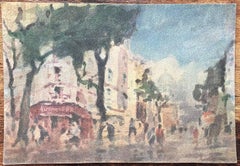
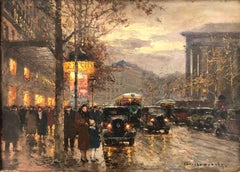
Boulevard de la Madeleine

Boulevard de la Madeleine

By Édouard Leon Cortès

Located in Greenville, DE

Excellent example of Cortès Paris scene. Provenance: Galerie Haussmann, Paris.Herbert Arnot, Inc., New York, New York (May 29, 1964).Country Store Gallery, Austin, Texas (February 2...

Category

Early 20th Century Impressionist Art

Materials

Canvas, Oil

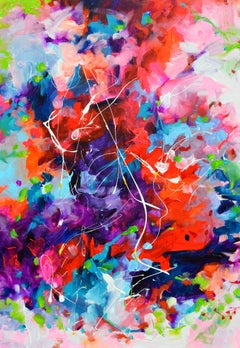
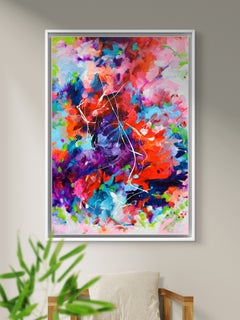
Abstract Fantasy, Painting in Acrylic and Oil on Canvas

Abstract Fantasy, Painting in Acrylic and Oil on Canvas

Located in Zofingen, AG

In creating this tapestry of emotion and color, I poured my soul onto the canvas with every stroke. This piece embodies my passion for abstract and impressionism, spiced with a dash ...

Category

2010s Impressionist Art

Materials

Canvas, Oil, Acrylic

Autumn Park Impressionism Original Oil Painting, Ready to Hang

Autumn Park Impressionism Original Oil Painting, Ready to Hang

Located in Granada Hills, CA

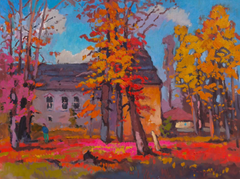
Artist: Alexander Shandor Title: Autumn Park Medium: Oil on Canvas Year: 2024 Style: Impressionism Dimensions: 17.5" x 23.5" x 1" inch (44 x 60 x 2cm) Presentation: Unframed, Galler...

Category

2010s Impressionist Art

Materials

Canvas, Oil

Full Moon Landscape Original oil Painting, Ready to Hang

Full Moon Landscape Original oil Painting, Ready to Hang

Located in Granada Hills, CA

Artist: Garry Nalbandyan Title: Full Moon Medium: Oil on Canvas Year: 2026 Style: Impressionism Dimensions: 11" x 17.5" x 0.8" inch (28 x 44x 2cm) Presentation: Unframed, Gallery Wra...

Category

2010s Impressionist Art

Materials

Canvas, Oil

Antique American Impressionist Luminist Landscape Painting River Ridge Virginia

Antique American Impressionist Luminist Landscape Painting River Ridge Virginia

By Lucien Whiting Powell

Located in Portland, OR

Antique American Impressionist/Luminist watercolor and gouache painting by Lucien Whiting Powell (1846–1930), of a Virginian wooded landscape, circa 1890. The very fine painting by P...

Category

1890s Impressionist Art

Materials

Watercolor, Gouache, Paper

Giverny Landscape, Karl Albert Buehr, c. 1912, American Impressionism, Expatriot

Giverny Landscape, Karl Albert Buehr, c. 1912, American Impressionism, Expatriot

By Karl Albert Buehr

Located in Fairlawn, OH

Karl Albert Beuhr (1866-1952) Giverny Landscape Oil on relined canvas, c. 1912 Signed lower right: K A Buehr Condition: Canvas relined for support Image size: 13 1/4 x 15 3/8 inches Frame size: 19 5/8 x 21 7/8 inches Provenance: Gift of the artist to his wife, Mary Hess Beuhr The artist's niece, daughter of Will Hess Buehr David Saltzman Robert Henry Adams Thomas French Fine Art Mr. and Mrs. Thomas Horner, Canton, Ohio Exhibited: Canton Museum of Art, Impressionism: An American View, 1983, label on verso Karl Albert Buehr at Robert Henry Adams Fine Art, Chicago Exhibition dates The exhibition was held in 1994 at Robert Henry Adams Fine Art, 715 North Franklin Street, Chicago. Surviving provenance records describe it as the gallery’s first exhibition at its North Franklin Street location. Works documented as included include Woman on a Patio, Rocky Inlet (France), and apparently other paintings and studies acquired through David Saltzman from the family of Buehr’s wife, Mary Hess Buehr. The 1994 Karl Albert Buehr exhibition at Robert Henry Adams Fine Art represented an important act of historical recovery. Although Buehr enjoyed considerable recognition during his lifetime—as an exhibiting painter, prizewinner, and influential teacher at the School of the Art Institute of Chicago—his reputation had become less visible in the decades following his death. By bringing together paintings and works on paper that had descended through the artist’s family, the Adams exhibition helped restore Buehr to his proper position among the leading exponents of American Impressionism and the most important Chicago-trained painters working in France before the First World War. Giverny was crucial to Buehr’s mature development. American painters had been drawn to the Norman village since the late 1880s, attracted both by Monet’s presence and by the region’s gardens, river valleys, cultivated fields, and distinctive northern light. Buehr did not simply imitate Monet. His figure compositions remained grounded in the academic training he received in Chicago and Paris, but he enlivened that structure with broken brushwork, heightened complementary color, and an increasingly luminous palette. His characteristic compositions place elegantly dressed young women on terraces, beside windows, or within flowering gardens. These figures are neither conventional society portraits nor anonymous decorative accessories. They occupy a carefully balanced space between individual presence and pictorial harmony. Faces and gestures are often quietly observed, while dresses, parasols, flowers, foliage, and shifting sunlight become vehicles for color. Lavender shadows, rose and coral fabrics, emerald foliage, and brilliant passages of yellow or blue transform the garden into a chromatic environment surrounding the sitter. Works associated with the Adams exhibition illuminate the breadth of Buehr’s French production. The pastel Woman on a Patio, circa 1915, demonstrates his ability to translate Impressionist color into the immediacy of a dry medium. Pastel allowed him to place one hue directly beside another without losing intensity. The resulting surface possesses a soft atmospheric unity while retaining the energy of individual strokes. The work’s history—gifted by Buehr to Mary Hess Buehr and subsequently descending through her family—also gives it a particularly intimate character. Rocky Inlet (France) presents another aspect of Buehr’s practice. In place of the cultivated garden and poised female figure, the artist confronts a rugged coastal landscape. Yet his essential concern remains light acting upon color. Rock, water, and vegetation are constructed through abbreviated touches rather than continuous modeling. The small scale suggests direct observation, possibly an outdoor study made during Buehr’s travels in Normandy. Its provenance likewise begins with Mary Hess Buehr and passes through the family before reaching David Saltzman and Robert Henry Adams Fine Art. This family provenance was central to the significance of the 1994 exhibition. The works had not merely circulated anonymously through the market; many retained a direct association with the artist’s household. Such a group could include informal studies, experimental compositions, and personal gifts that Buehr elected to keep rather than send to public exhibitions. Together they offered a more private and exploratory view of his career. Karl Albert Buehr (1866–1952): France and the Giverny Years Karl Albert Buehr—whose surname is sometimes misspelled “Beuhr”—was a German-born American painter and influential teacher associated with the second generation of American Impressionists working at Giverny. Although his artistic identity was rooted in Chicago, the years he spent in France transformed his palette, subject matter, and approach to painting. Born on February 14, 1866, in Feuerbach, near Stuttgart, Buehr immigrated with his family to Chicago, probably in 1881. After working briefly for a commercial lithographer, he enrolled at the School of the Art Institute of Chicago in 1888. He studied with John H. Vanderpoel and graduated with honors in 1894, after which the school invited him to teach. He also served in the Illinois cavalry during the Spanish-American War and married Mary Guion Hess, one of his students and an accomplished artist in her own right. Early study in Europe Buehr’s European education unfolded in several stages. Around 1900 he settled in Paris and studied at the Académie Julian, principally under the French painter Raphaël Collin. Collin was known for idealized female figures placed in luminous outdoor settings, a combination of academic draftsmanship and Impressionist light that anticipated Buehr’s mature work. Buehr reportedly received a gold medal at the Académie in 1901. His early European paintings included portraits, landscapes, and scenes of rural labor. Visits to Holland exposed him to the restrained tonalism of the Hague School, while his travels in Italy—particularly Taormina, Sicily, during 1906 and 1907—encouraged a brighter response to Mediterranean sunlight. He also studied in London, where his contacts with Frank Brangwyn and the decorative currents of British painting strengthened his interest in broad design, rhythmic composition, and large arrangements of figures. A decisive factor in this extended European residence was the patronage of Chicago philanthropist Lydia Coonley Ward. From approximately 1906 until 1913, Ward provided Buehr with a monthly stipend, enabling the artist, his wife, and their children to remain abroad and pursue their work without the immediate pressures of the American market. Buehr at Giverny Buehr entered the Anglo-American artistic community at Giverny around 1909, probably through his friendship with Henry Salem Hubbell, another American figure painter supported by Lydia Coonley Ward. From approximately 1909 through 1912, Buehr generally spent winters in Paris and the warmer months at Giverny. In 1912 and the summer of 1913, the family reportedly lived at Sainte-Geneviève-lès-Gasny, close to Giverny. By this date Giverny was no longer merely the village in which Claude Monet lived. It had become an international artists’ colony, particularly attractive to American painters who admired Impressionist color but wished to retain firm drawing and carefully organized figure compositions. Buehr’s associates included Frederick Carl Frieseke, Richard Edward Miller, Guy Rose, Lawton Parker, Louis Ritman, Edmund Greacen, Karl Anderson, and Theodore Earl Butler. Buehr was especially close to the circle of Frieseke and Miller. These artists specialized in decorative paintings of fashionably dressed women reading, sewing, taking tea, or resting in sunlit gardens. Their figures were surrounded by flowers, patterned fabrics, parasols, and flickering passages of colored light. Buehr adopted this repertoire, but his paintings usually retained a stronger structural organization and a more assertive contrast between complementary colors. During his first months at Giverny, Buehr worked on a large decorative panel of dancing figures. The composition received an honorable mention at the Paris Salon of 1910, an important professional recognition. That summer, however, he increasingly turned toward intimate garden scenes and outdoor figure studies. The influence of Richard Miller can be detected in the decorative arrangement of the figures, while Frieseke’s example encouraged Buehr s use of brilliant sunlight, patterned surfaces, and saturated hues. Relationship with Claude Monet Claude Monet was Buehr’s artistic hero, but the extent of their personal relationship should not be overstated. Buehr’s children played with the children of Theodore Butler, Monet’s son-in-law, and they visited the Monet household. Buehr’s daughter Kathleen later recalled that Monet was gracious to the children. Nevertheless, the best available scholarship suggests that no close personal association between Buehr and Monet has been documented. Monet’s importance to Buehr was therefore primarily artistic. At Giverny, Buehr learned to regard colored light as a central subject rather than merely a means of describing objects. Shadows became violet, blue, or green; white dresses reflected the surrounding garden; and faces and arms were modeled through small strokes of warm and cool color. The enclosed garden also became a kind of outdoor studio in which human figures, flowers, fabrics, and sunlight could be orchestrated into a unified decorative design. The Giverny style Buehr became best known for paintings of young women seated or standing in gardens, often accompanied by colorful parasols. Works such as Springtime in Giverny, Under the Parasol, and related pictures of women reading or conversing exemplify his mature style. Although inspired by French Impressionism, these paintings are not spontaneous transcriptions of fleeting visual experience in the strict Monet tradition. They are carefully staged figure compositions. Buehr himself explained that the outdoor figure painter should concentrate upon the ensemble—grouping, arrangement, and color—rather than laboriously describing every feature. This principle helps distinguish his Giverny paintings...

Category

1910s Impressionist Art

Materials

Oil

Impressionist art for sale on 1stDibs.
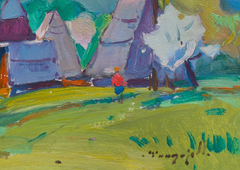
Find a wide variety of authentic Impressionist art available for sale on 1stDibs. Works in this style were very popular during the 21st Century and Contemporary, but contemporary artists have continued to produce works inspired by this movement. If you’re looking to add art created in this style to introduce contrast in an otherwise neutral space in your home, the works available on 1stDibs include elements of blue and other colors. Many Pop art Paintings/style/impressionist/?creator=richard-szkutnik>paintings were created by popular artists on 1stDibs, including Vahe Yeremyan, Richard Szkutnik, Iryna Kastsova, and Mitchell Funk. Frequently made by artists working with Oil Paint, and Paint and other materials, all of these pieces for sale are unique and have attracted attention over the years. Not every interior allows for large Impressionist art, so small editions measuring 8 inches across are also available. Prices for art made by famous or emerging artists can differ depending on medium, time period and other attributes. On 1stDibs, the price for these items starts at $225 and tops out at $7,200, while the average work sells for $1,423.