Bon Art Table Lamp
Located in Bradenton, FL
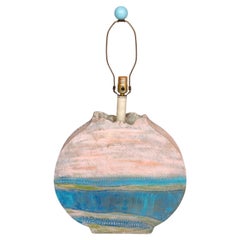
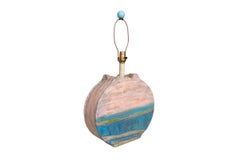
A coastal style plaster table lamp made by Bon Art. A robin's egg blue ball finial tops the harp
Category
Vintage 1980s American Table Lamps
Materials
Plaster
Bon Art Table Lamp
Located in Bradenton, FL
A coastal style plaster table lamp made by Bon Art. A robin's egg blue ball finial tops the harp
Plaster
$1,440Sale Price / set|20% Off
H 34 in Dm 9 in
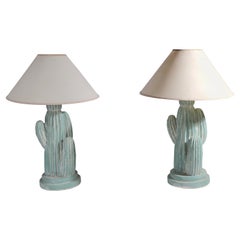
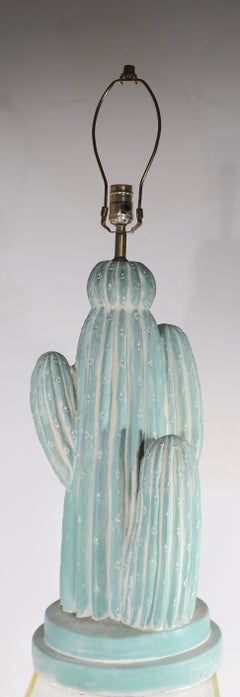
Pr. Mid Century Cast Plaster Cactus Table Lamps by Bon Art
Located in New York, NY
Tres chic pair of cast plaster cactus table lamps, in very fine original condition. Both lamps are
Plaster
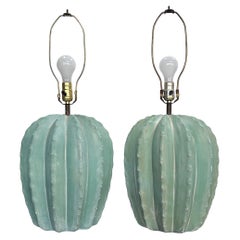
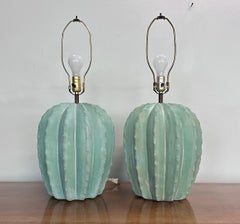
Post Modern Pair of Bon Art Cactus Plaster Table Lamps Southwestern Style
Located in Philadelphia, PA
Pair of plaster cactus table lamps by Bon Art, these lamps will lend an eclectic air to any project.
Plaster
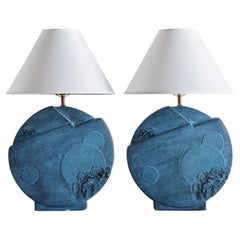
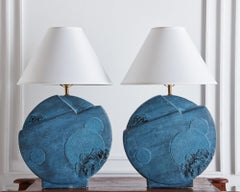
Pair of Blue Architectural Plaster Lamps by Bon Art, 1989
Located in Chicago, IL
A pair plaster table lamp featuring a circular base with an abstract architectural raised design
Plaster
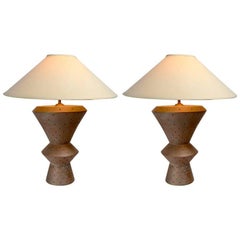
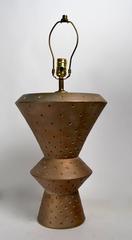
Pair of Architectural Scale Plaster Lamps Marked Bon Art, 1991
Located in New York, NY
Stylish pair of plaster lamps of architectural form, marked "Bon Art 1991". The original conical
Plaster
Postmodern design was a short-lived movement that manifested itself chiefly in Italy and the United States in the early 1980s. The characteristics of vintage postmodern furniture and other postmodern objects and decor for the home included loud-patterned, usually plastic surfaces; strange proportions, vibrant colors and weird angles; and a vague-at-best relationship between form and function.
ORIGINS OF POSTMODERN FURNITURE DESIGN
CHARACTERISTICS OF POSTMODERN FURNITURE DESIGN
POSTMODERN FURNITURE DESIGNERS TO KNOW
VINTAGE POSTMODERN FURNITURE ON 1STDIBS
Critics derided postmodern design as a grandstanding bid for attention and nothing of consequence. Decades later, the fact that postmodernism still has the power to provoke thoughts, along with other reactions, proves they were not entirely correct.
Postmodern design began as an architectural critique. Starting in the 1960s, a small cadre of mainly American architects began to argue that modernism, once high-minded and even noble in its goals, had become stale, stagnant and blandly corporate. Later, in Milan, a cohort of creators led by Ettore Sottsass and Alessandro Mendini — a onetime mentor to Sottsass and a key figure in the Italian Radical movement — brought the discussion to bear on design.
Sottsass, an industrial designer, philosopher and provocateur, gathered a core group of young designers into a collective in 1980 they called Memphis. Members of the Memphis Group, which would come to include Martine Bedin, Michael Graves, Marco Zanini, Shiro Kuramata, Michele de Lucchi and Matteo Thun, saw design as a means of communication, and they wanted it to shout. That it did: The first Memphis collection appeared in 1981 in Milan and broke all the modernist taboos, embracing irony, kitsch, wild ornamentation and bad taste.
Memphis works remain icons of postmodernism: the Sottsass Casablanca bookcase, with its leopard-print plastic veneer; de Lucchi’s First chair, which has been described as having the look of an electronics component; Martine Bedin’s Super lamp: a pull-toy puppy on a power-cord leash. Even though it preceded the Memphis Group’s formal launch, Sottsass’s iconic Ultrafragola mirror — in its conspicuously curved plastic shell with radical pops of pink neon — proves striking in any space and embodies many of the collective’s postmodern ideals.
After the initial Memphis show caused an uproar, the postmodern movement within furniture and interior design quickly took off in America. (Memphis fell out of fashion when the Reagan era gave way to cool 1990’s minimalism.) The architect Robert Venturi had by then already begun a series of plywood chairs for Knoll Inc., with beefy, exaggerated silhouettes of traditional styles such as Queen Anne and Chippendale. In 1982, the new firm Swid Powell enlisted a group of top American architects, including Frank Gehry, Richard Meier, Stanley Tigerman and Venturi to create postmodern tableware in silver, ceramic and glass.
On 1stDibs, the vintage postmodern furniture collection includes chairs, coffee tables, sofas, decorative objects, table lamps and more.
Well-crafted antique and vintage table lamps do more than provide light; the right fixture-and-table combination can add a focal point or creative element to any interior.
Proper table lamps have long been used for lighting our most intimate spaces. Perfect for lighting your nightstand or reading nook, table lamps play an integral role in styling an inviting room. In the years before electricity, lamps used oil. Today, a rewired 19th-century vintage lamp can still provide a touch of elegance for a study.
After industrial milestones such as mass production took hold in the Victorian era, various design movements sought to bring craftsmanship and innovation back to this indispensable household item. Lighting designers affiliated with Art Deco, which originated in the glamorous roaring ’20s, sought to celebrate modern life by fusing modern metals with dark woods and dazzling colors in the fixtures of the era. The geometric shapes and gilded details of vintage Art Deco table lamps provide an air of luxury and sophistication that never goes out of style.
After launching in 1934, Anglepoise lamps soon became a favorite among modernist architects and designers, who interpreted the fixture as “a machine for lighting,” just as Le Corbusier had reimagined the house as “a machine for living in.” The popular task light owed to a collaboration between a vehicle-suspension engineer by the name of George Carwardine and a West Midlands springs manufacturer, Herbert Terry & Sons.
Some mid-century modern table lamps, particularly those created by the likes of Joe Colombo and the legendary lighting artisans at Fontana Arte, bear all the provocative hallmarks associated with Space Age design. Sculptural and versatile, the Louis Poulsen table lamps of that period were revolutionary for their time and still seem innovative today.
If you are looking for something more contemporary, industrial table lamps are demonstrative of a newly chic style that isn’t afraid to pay homage to the past. They look particularly at home in any rustic loft space amid exposed brick and steel beams.
Before you buy a desk lamp or table lamp for your living room, consider your lighting needs. The Snoopy lamp, designed in 1967, or any other “banker’s lamp” (shorthand for the Emeralite desk lamps patented by H.G. McFaddin and Company), provides light at a downward angle that is perfect for writing, while the Fontana table lamp and the beloved Grasshopper lamp by Greta Magnusson-Grossman each yield a soft and even glow. Some table lamps require lampshades to be bought separately.
Whether it’s a classic antique Tiffany table lamp, a Murano glass table lamp or even a bold avant-garde fixture custom-made by a contemporary design firm, the right table lamp can completely transform a room. Find the right one for you on 1stDibs.