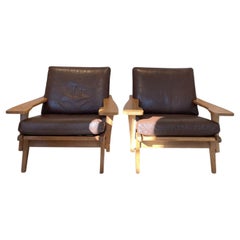
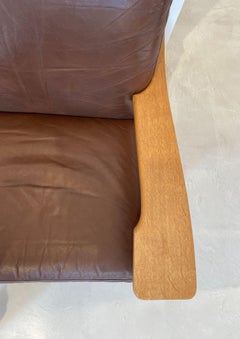
Paire de fauteuils
By Hans J. Wegner
Located in Paris, FR
Stunning pair of Hans Wegner armchairs in leather and wood
Category
20th Century European Modern Armchairs
Materials
Leather, Wood
Paire de fauteuils
By Hans J. Wegner
Located in Paris, FR
Stunning pair of Hans Wegner armchairs in leather and wood
Leather, Wood
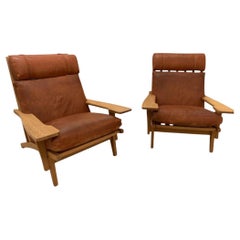
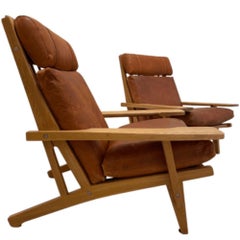
Fauteuils Lounge Getama Getama Lounge Armchairs
By Hans J. Wegner
Located in Paris, FR
95 x 103 x 86 cm Original leather
Leather, Wood, Oak
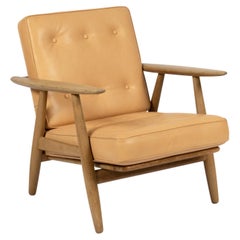
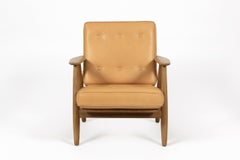
Unavailable
H 30.71 in W 26.78 in D 29.53 in
Fauteuil “Cigare” modèle GE–240 de Hans J. Wegner pour Getama
By Hans J. Wegner
Located in Bruxelles, BE
Fauteuil en chêne au design danois de 1955 par Hans J. Wegner. Assise et dossier recouverts de
Leather, Oak
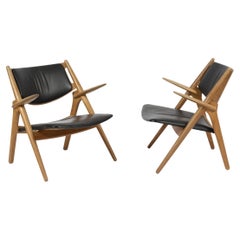
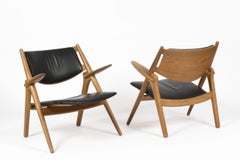
Unavailable
H 29.14 in W 24.81 in D 24.81 in
Paire de fauteuils “Ch28” Par Hans J. Wegner Pour Carl Hansen & Søn
By Hans J. Wegner
Located in Bruxelles, BE
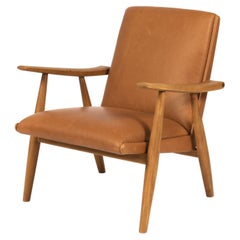
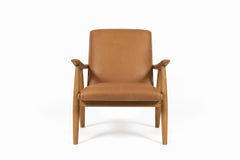
Fauteuils modèle “CH28” conçus par Hans J. Wegner en 1951 pour Carl Hansen & Søn, Danemark. En
Leather, Oak
Unavailable
H 31.11 in W 26.38 in D 26.38 in
Fauteuil en cuir cognac de Hans J. Wegner Pour Johannes Hansen, 1950
By Hans J. Wegner
Located in Bruxelles, BE
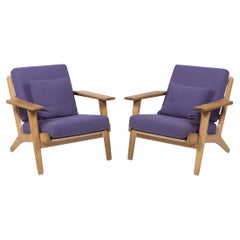
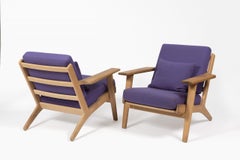
Fauteuil en hêtre huilé, recouvert de cuir couleur cognac, par Hanz J. Wegner pour Johannes Hansen
Leather, Beech
Unavailable
H 28.75 in W 29.53 in D 31.5 in
Paire De Fauteuils Violets “Ge 290” Par Hans J. Wegner Pour GETAMA, Danemark
By Hans J. Wegner
Located in Bruxelles, BE
Modèle GE 290, dessiné par Hans J. Wegner pour la maison de fabrique danoise Getama dans les années
Oak
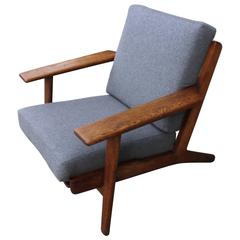

Hans Wegner GE-290 Fauteuil Lounge Armchair with New Upholstery
By Hans J. Wegner
Located in Hudson, NY
Solid oak armchair, model GE-290, designed by Hans Wegner and made in Denmark. In good vintage
Oak
Best known for his chairs and other seating pieces — though a master of many furniture types like sofas and tables — Hans Wegner was a prolific designer whose elegant, often ebullient, forms and devotion to the finest methods in joinery made "Danish Modern" a popular byword for stylish, well-made furniture in the mid-20th century.
Wegner considered himself a carpenter first and a furniture designer second. Like his peers Arne Jacobsen and Finn Juhl, Wegner believed that striking aesthetics in furniture were based on a foundation of practicality: a chair must be comfortable and sturdy before it is chic.
In keeping with that tenet, several of Hans Wegner’s best chair designs have their roots in traditional seating forms. The Peacock chair (designed in 1947) is a throne-like adaptation of the Windsor chair; pieces from the China chair series (begun in 1944) as well as the 1949 Wishbone chair, with its distinctive Y-shaped back splat, are derived from 17th-century Ming seating pieces, as is the upholstered Ox chair (1960). Wegner’s comfy Papa Bear chair (1951) is an almost surreally re-scaled English wingback chair.
Wegner’s most representative piece, the Round chair (1949), gained a footnote in political history when it was used on the TV stage of the first Kennedy-Nixon debate of 1960. That chair, along with Wegner’s more bravura designs — for example, the 1963 Shell chair, with its curved surfboard-shaped seat — bring a quietly sculptural presence to a room.
Wegner was a designer who revered his primary material — wood — and it shows. His wood gathers patina and character with age; every Hans Wegner piece testifies to the life it has led.
Find vintage Hans Wegner lounge chairs, armchairs, daybeds and other furniture for sale on 1stDibs.
Armchairs have run the gamut from prestige to ease and everything in between, and everyone has an antique or vintage armchair that they love.
Long before industrial mass production democratized seating, armchairs conveyed status and power.
In ancient Egypt, the commoners took stools, while in early Greece, ceremonial chairs of carved marble were designated for nobility. But the high-backed early thrones of yore, elevated and ornate, were merely grandiose iterations of today’s armchairs.
Modern-day armchairs, built with functionality and comfort in mind, are now central to tasks throughout your home. Formal dining armchairs support your guests at a table for a cheery feast, a good drafting chair with a deep seat is parked in front of an easel where you create art and, elsewhere, an ergonomic wonder of sorts positions you at the desk for your 9 to 5.
When placed under just the right lamp where you can lounge comfortably, both elbows resting on the padded supports on each side of you, an upholstered armchair — or a rattan armchair for your light-suffused sunroom — can be the sanctuary where you’ll read for hours.
If you’re in the mood for company, your velvet chesterfield armchair is a place to relax and be part of the conversation that swirls around you. Maybe the dialogue is about the beloved Papa Bear chair, a mid-century modern masterpiece from Danish carpenter and furniture maker Hans Wegner, and the wingback’s strong association with the concept of cozying up by the fireplace, which we can trace back to its origins in 1600s-era England, when the seat’s distinctive arm protrusions protected the sitter from the heat of the period’s large fireplaces.
If the fireside armchair chat involves spirited comparisons, your companions will likely probe the merits of antique and vintage armchairs such as Queen Anne armchairs, Victorian armchairs or even Louis XVI armchairs, as well as the pros and cons of restoration versus conservation.
Everyone seems to have a favorite armchair and most people will be all too willing to talk about their beloved design. Whether that’s the unique Favela chair by Brazilian sibling furniture designers Fernando and Humberto Campana, who repurposed everyday objects to provocative effect; or Marcel Breuer’s futuristic tubular metal Wassily lounge chair; the functionality-first LC series from Charlotte Perriand, Le Corbusier and Pierre Jeanneret; or the Eames lounge chair of the mid-1950s created by Charles and Ray Eames, there is an iconic armchair for everyone and every purpose. Find yours on 1stDibs right now.
You know the designs, now get the stories about how they came to be.
If anyone is brave, humble and adept enough to recolor these mid-century masterpieces, it’s Ilse Crawford. Here, she gives us the details on her five earthy paint choices and tells us how she feels about design collaborations.
To celebrate the Wishbone’s 70th anniversary, Carl Hansen & Søn’s third-generation CEO, Knud Erik Hansen, shares some of the secrets behind the beloved chair.
In an innovative display, the Designmuseum Danmark is permanently exhibiting the 20th century's most iconic seats.