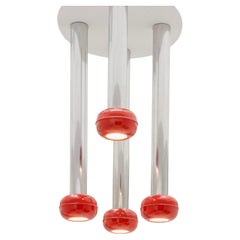
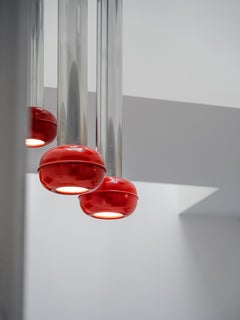
"Manifesto"
By Ettore Sottsass
Located in Paris, FR
Designed by Ettore Sottsass for the Milanese editor Stilnovo in the 1970s, the "Manifesto" ceiling
Category
Vintage 1970s Chandeliers and Pendants
Materials
Metal, Aluminum
"Manifesto"
By Ettore Sottsass
Located in Paris, FR
Designed by Ettore Sottsass for the Milanese editor Stilnovo in the 1970s, the "Manifesto" ceiling
Metal, Aluminum
$8,805
H 31.5 in Dm 10.04 in
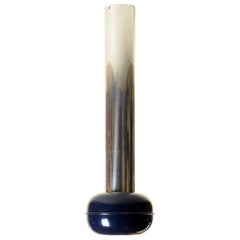
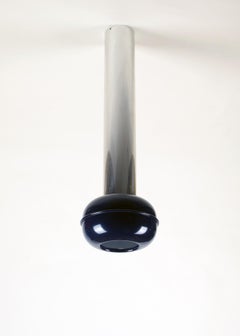
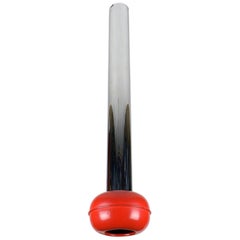
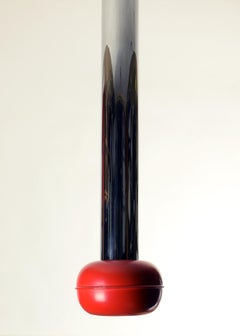
Ettore Sottsass for Stilnovo, 'Manifesto' Ceiling Lamp, 1970, Short Blue Version
By Ettore Sottsass, Stilnovo
Located in London, GB
Ettore Sottsass, Austria/Italy (designer) Stilnovo, Italy (manufacturer) 'Manifesto' ceiling lamp
Metal, Chrome
$10,160
H 46.66 in Dm 10.04 in
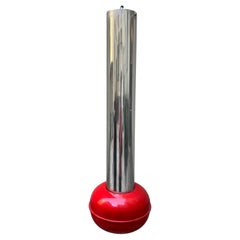
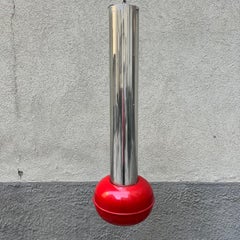
Ettore Sottsass for Stilnovo, 'Manifesto' Ceiling Lamp 1970, Longest Red Version
By Stilnovo, Ettore Sottsass
Located in London, GB
Ettore Sottsass, Austria/Italy (designer) Stilnovo, Italy (manufacturer) 'Manifesto' ceiling lamp
Metal, Chrome
"Manifesto" lamp - Ettore Sottsass for Stilnovo - Italy - 1970s
By Ettore Sottsass
Located in Milano, IT
suo fascino visivo, il Manifesto è anche testimonianza dell'ingegneria innovativa di Sottsass. La
Metal, Steel, Chrome
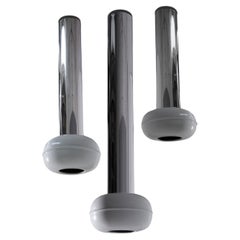
Sold
H 43.31 in Dm 9.45 in
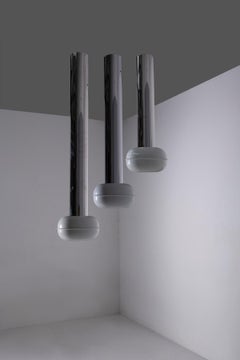
Three vintage 'Manifesto' Ettore Sottsass for STILNOVO pendant lamps, Published
By Stilnovo, Ettore Sottsass
Located in Milano, IT
innovation knows no bounds. The 'Manifesto' pendants embody the essence of Sottsass's design philosophy—bold
Aluminum
Sold
H 27.56 in W 3.94 in D 14.97 in
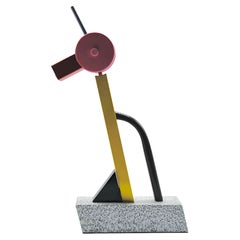
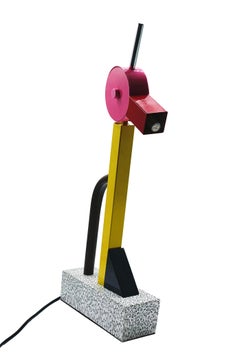
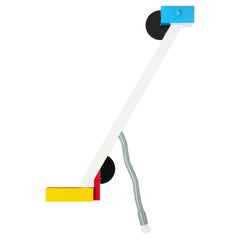
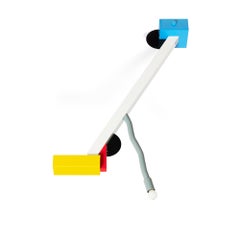
Ettore Sottsass for Memphis Milano "Tahiti" Table Lamp, Italy 1981
By Memphis Milano, Ettore Sottsass
Located in Naples, IT
plastica laminata, la Tahiti non è solo un oggetto funzionale, ma un vero e proprio manifesto del design
Metal
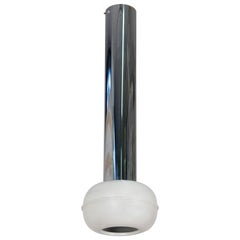
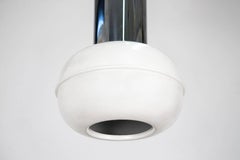
Ettore Sottsass "Manifesto" Suspension Lamp for Stilnovo, 1970
By Ettore Sottsass, Stilnovo
Located in Milano, Lombardia
"Manifesto" suspension lamp designed by Ettore Sottsass for Stilnovo in 1970. Polished aluminium
Aluminum
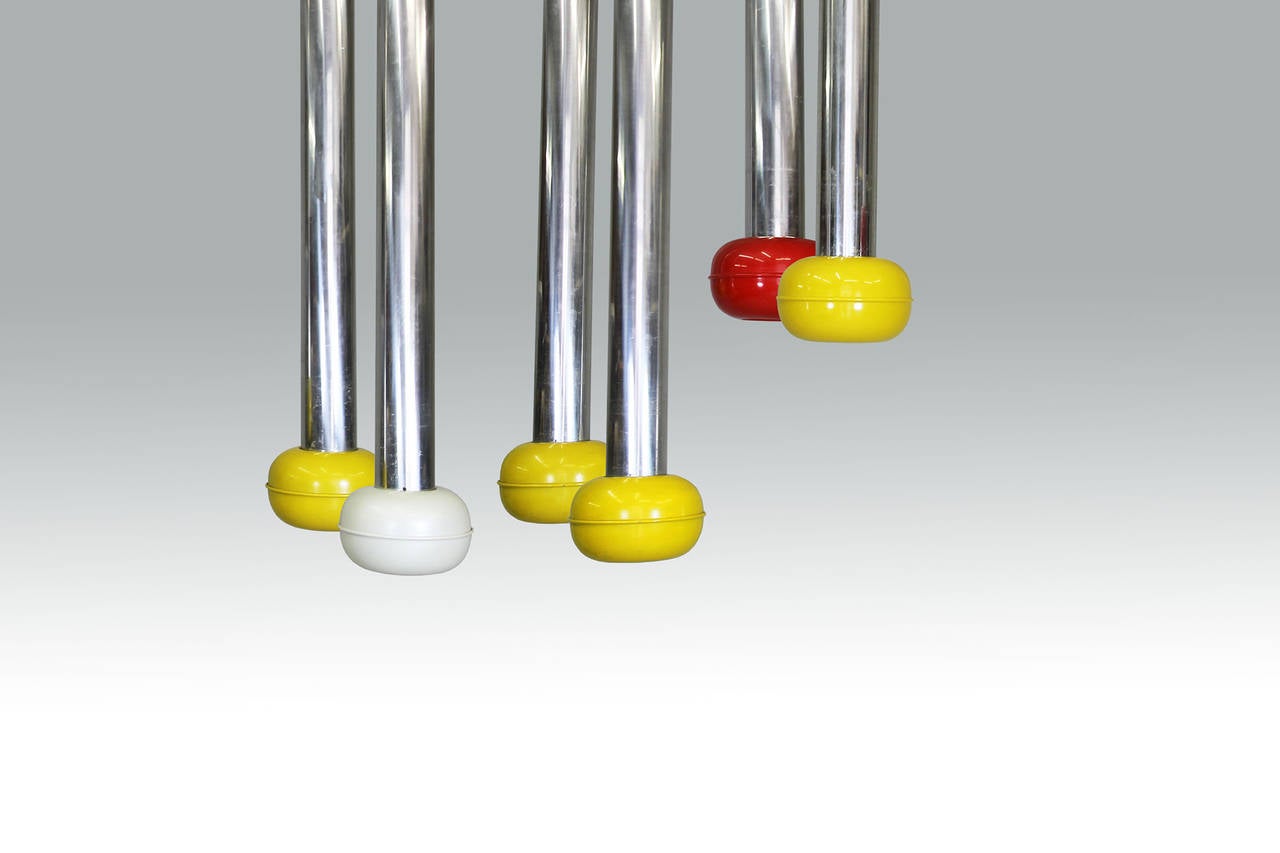
Ceiling Lamp "1906 Manifesto" by Ettore Sottsass, Stilnovo, Italy, 1970
By Stilnovo, Ettore Sottsass
Located in Berlin, DE
Ceiling lamp "1906 Manifesto" by Ettore Sottsass, Stilnovo, Italy, 1970.
Chrome
Sold
H 9.06 in W 6.7 in D 2.76 in
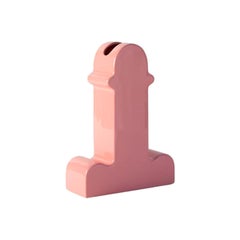
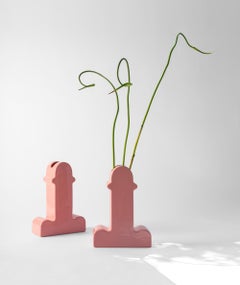
20th Century Pink Glazed Ceramic Flower Vase model "Shiva" by Ettore Sottsass.
By Ettore Sottsass
Located in Barcelona, ES
years. A clear manifesto conceived by Ettore Sottsass for the nascent project back in 1973, one of its
Ceramic
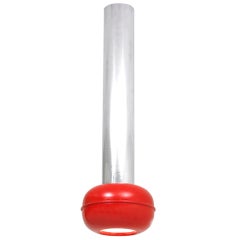

Ceiling Light 1906 Manifesto By Ettore Sottsass, 1970
By Ettore Sottsass
Located in Paris, FR
, 1973, p.56 ��� 1000 Lights Vol. 2, C. & P. Fiell, Ed. Taschen, 2005, p.222 ��� Ettore Sottsass, A
$82,000 / set
H 26.78 in W 35.44 in D 61.03 in
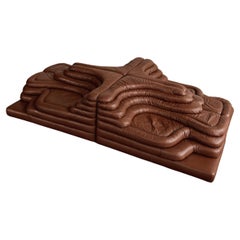
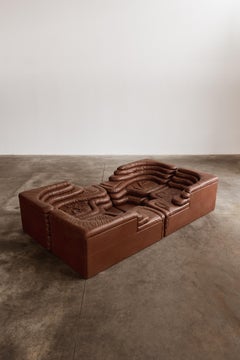
Ubald Klug DS-1025 "Terrazza" Sofa for De Sede, Brown Leather, 1974, Set of 4
By Ubald Klug, De Sede
Located in Lonigo, Veneto
Ubald Klug DS-1025 "Terrazza" sofas for De Sede, brown leather, Switzerland, 1974, set of four. Ubald Klug designed this rare modular DS-1025 "Terrazza" sofa as a real living landsc...
Leather
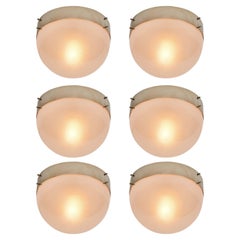
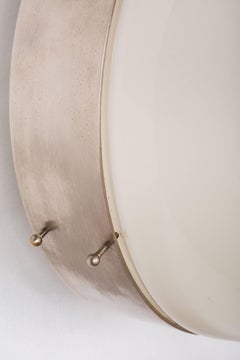
1960s Sergio Mazza 'Demi Clio' Wall or Ceiling Lamp for Artemide
By Sergio Mazza, Artemide
Located in Glendale, CA
1960s Sergio Mazza 'Demi Clio' wall or ceiling lamp for Artemide. Executed in nickeled brass and opaline glass, Italy, circa 1960s. Clean and architectural, these hardwired lamps emi...
Nickel, Brass
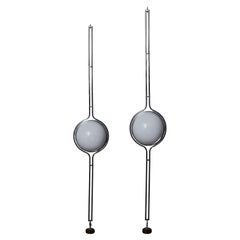
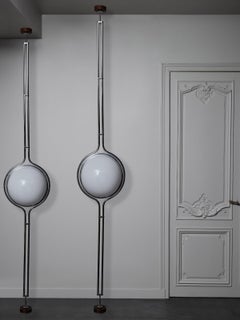
Pair of Delord & Garrault Floor to Ceiling Lamps
By Garrault-Delord
Located in Saint-Ouen, IDF
Pair of rare "Sol au plafond" (floor to ceiling) lamps, made of different section of metal tubes holding an enlightnen plexi globe. Adjustable height both at the top and bottom thank...
Metal, Chrome
$4,500 / set
H 12.75 in W 3.75 in D 3.5 in
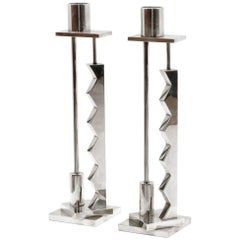
Pair of Ettore Sottsass Silver Candlesticks for Swid Powell and Reed and Barton
By Ettore Sottsass, Reed & Barton, Swid Powell
Located in Kansas City, MO
Striking pair of silver plated candlesticks designed by Ettore Sottsass and made by Swid Powell in collaboration with Reed and Barton, 1980s.
Silver
$1,922 / item
H 24.6 in W 24.6 in D 7.9 in
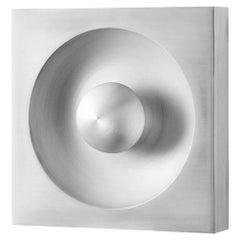
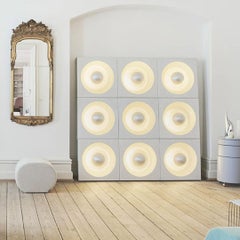
Verner Panton 'Spiegel' Wall or Ceiling Lamp in Brushed Aluminum for Verpan
By Verpan, Verner Panton
Located in Glendale, CA
Verner Panton 'Spiegel' wall or ceiling lamp in brushed aluminum for Verpan Verner Panton was one of Denmark's most legendary modern furniture and interior designers. His innovative...
Aluminum
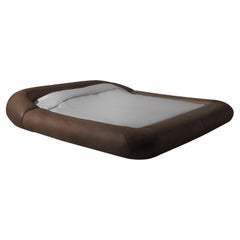
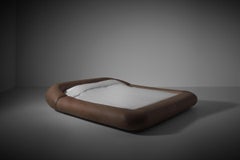
Gae Aulenti bed mod. ‘Tennis’ for Gavina, Italy 1972
By Gae Aulenti, Gavina
Located in Rotterdam, ZH
Large king size bed by Gae Aulenti mod. ‘Tennis’ for Gavina, Italy 1972. Unique and iconic bed from the ‘Tennis‘ series referring to the round shapes and the typical stitching patter...
Leather, Wood
$16,690Sale Price / item|20% Off
H 77.17 in W 74.81 in D 15.75 in
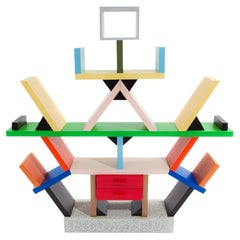
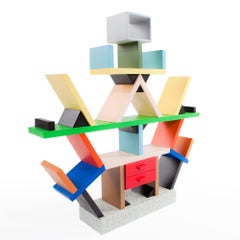
'Carlton' Room Divider and Bookcase by Ettore Sottsass for Memphis Milano, Italy
By Memphis Milano, Ettore Sottsass
Located in London, GB
Probably the most iconic of all Ettore Sottsass' designs, the colourful Carlton is half room divider, half bookcase and full size sculptural marvel. Designed in 1981, the Carlton for...
Laminate, Wood
$2,380 / item
H 42.52 in W 31.5 in D 7.88 in
Quisisiana Ceiling Lamp by Ettore Sottsass for Memphis Collection
By Ettore Sottsass
Located in La Morra, Cuneo
Painted metal ceiling lamp. Quisisiana (from the Latin quid est sana, which means “what is healthy”) is the melodious name chosen by Sottsass for this lamp that assembles interconnec...
Metal
An architect, industrial designer, philosopher and provocateur, Ettore Sottsass led a revolution in the aesthetics and technology of modern design in the late 20th century. He was a wild man of the Radical Design movement that swept Italy in the late 1960s and ’70s, rejecting rationalism and modernism in favor of ever-more outrageous imaginings in lighting and furniture such as mirrors, lamps, chairs and tables.
Sottsass was the oldest member of the Memphis Group — a design collective, formed in Milan in 1980, whose irreverent, spirited members included Alessandro Mendini, Michele de Lucchi, Michael Graves and Shiro Kuramata. All had grown disillusioned by the staid, black-and-brown “corporatized” modernism that had become endemic in the 1970s. Memphis (the name stemmed from the title of a Bob Dylan song) countered with bold, brash, colorful, yet quirkily minimal designs for furniture, glassware, ceramics and metalwork.
The Memphis Group mocked high-status by building furniture with inexpensive materials such as plastic laminates, decorated to resemble exotic finishes such as animal skins. Their work was both functional and — as intended — shocking.
Even as it preceded the Memphis Group's formal launch, Sottsass's iconic Ultrafragola mirror — in its conspicuously curved plastic shell and radical pops of pink neon — embodies many of the collective's postmodern ideals.
Sottsass created innovative furnishings for the likes of Artemide, Knoll, Zanotta and Poltronova, where he reigned as artistic director for nearly two decades beginning in 1958. His most-recognized designs appeared in the first Memphis collection, issued in 1981 — notably the multihued, angular Carlton room divider and Casablanca bookcase. As pieces on 1stDibs demonstrate, however, Sottsass is at his most inspired and expressive in smaller, secondary furnishings such as lamps and chandeliers, and in table pieces and glassware that have playful and sculptural qualities.
Sottsass left the Memphis Group in 1985 in order to concentrate on the growth of Sottsass Associati, a design and architecture consultancy he cofounded in 1980.
It was as an artist that Sottsass was celebrated in his life, in exhibitions at the Los Angeles County Museum of Art, in 2006, and the Philadelphia Museum of Art a year later. Even then Sottsass’s work prompted critical debate. And for a man whose greatest pleasure was in astonishing, delighting and ruffling feathers, perhaps there was no greater accolade. That the work remains so revolutionary and bold — that it breaks with convention so sharply it will never be considered mainstream — is a testament to his genius.
Find Ettore Sottsass lighting, decorative objects and furniture for sale on 1stDibs.
Chandeliers — simple in form, inspired by candelabras and originally made of wood or iron — first made an appearance in early churches. For those wealthy enough to afford them for their homes in the medieval period, a chandelier's suspended lights likely exuded imminent danger, as lit candles served as the light source for fixtures of the era. Things have thankfully changed since then, and antique chandeliers and pendant lights are popular in many interiors today.
While gas lighting during the late 18th century represented an upgrade for chandeliers — and gas lamps would long inspire Danish architect and pioneering modernist lighting designer Poul Henningsen — it would eventually be replaced with the familiar electric lighting of today.
The key difference between a pendant light and a chandelier is that a pendant incorporates only a single bulb into its design. Don’t mistake this for simplicity, however. An Art Deco–styled homage to Sputnik from Murano glass artisans Giovanni Dalla Fina, with handcrafted decorative elements supported by a chrome frame, is just one stunning example of the elaborate engineering that can be incorporated into every component of a chandelier. (Note: there is more than one lighting fixture that shares its name with the iconic mid-century-era satellite — see Gino Sarfatti’s design too.)
Chandeliers have evolved over time, but their classic elegance has remained unchanged.
Not only will the right chandelier prove impressive in a given room, but it can also offer a certain sense of practicality. These fixtures can easily illuminate an entire space, while their elevated position prevents them from creating glare or straining one’s eyes.
Certain materials, like glass, can complement naturally lit settings without stealing the show. Brass, on the other hand, can introduce an alluring, warm glow. While LEDs have earned a bad reputation for their perceived harsh bluish lights and a loss of brightness over their life span, the right design choices can help harness their lighting potential and create the perfect mood. A careful approach to lighting can transform your room into a peaceful and cozy nook, ideal for napping, reading or working.
For midsize spaces, a wall light or sconce can pull the room together and get the lighting job done. Perforated steel rings underneath five bands of handspun aluminum support a rich diffusion of light within Alvar Aalto's Beehive pendant light, but if you’re looking to brighten a more modest room, perhaps a minimalist solution is what you’re after. The mid-century modern furniture designer Charlotte Perriand devised her CP-1 wall lamps in the 1960s, in which a repositioning of sheet-metal plates can redirect light as needed.
The versatility and variability of these lighting staples mean that, when it comes to finding something like the perfect chandelier, you’ll never be left hanging. From the natural world-inspired designs of the Art Nouveau era to the classic beauty of Paul Ferrante's fixtures, there is a style for every room.
With designs for pendant lights and chandeliers across eras, colors and materials, you’ll never run out of options to explore on 1stDibs — shop a collection today that includes antique Art Deco chandeliers, Stilnovo chandeliers, Baccarat chandeliers and more.