Robert Keith Furniture For Sale on 1stDibs
Choose from an assortment of styles, material and more in our collection of robert keith furniture on 1stDibs. Frequently made of
metal,
wood and
paper, every piece of robert keith furniture was constructed with great care. There are 32 variations of the antique or vintage item from our selection of robert keith furniture you’re looking for, while we also have 10 modern editions of this piece to choose from as well. Your living room may not be complete without a choice in our collection of robert keith furniture — find older editions for sale from the 19th Century and newer versions made as recently as the 21st Century. An object in our assortment of robert keith furniture, designed in the
modern,
mid-century modern or
Art Deco style, is generally a popular piece of furniture. A well-made option in this array of robert keith furniture has long been a part of the offerings for many furniture designers and manufacturers, but those produced by
Laddie John Dill,
Rudi Stern and
Let There Be Neon are consistently popular.
How Much is a Robert Keith Furniture?
Prices for a piece of robert keith furniture start at $95 and top out at $39,577 with the average selling for $3,705.
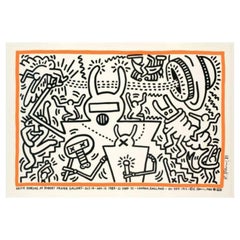
Keith Haring for sale on 1stDibs
Keith Haring began experimenting with his bold, graphic lines and cartoon-inspired figures on the walls of New York City subway stations in the early 1980s. He called them his “laboratory,” places to develop a radical new aesthetic based on an ideology of creating truly democratic public art.
Haring’s paintings, prints and murals address the universal themes of death, love and sex, as well as contemporary issues he experienced personally, like the crack-cocaine and AIDS epidemics. They derive much of their impact from the powerful contrast between these serious subjects and the joyful, vibrant pictographic language he uses to express them, full of dancing figures, babies, barking dogs, hearts and rhythmic lines, as well as references to pop culture.
To make his art even more accessible, in 1986, Haring opened the Pop Shop in Soho. In a foreshadowing of today’s intermingling of art and fashion, the shop sold merchandise and novelty items featuring imagery by Haring and contemporaries like Kenny Scharf and Jean-Michel Basquiat. While his works sometimes included text, for the most part, he chose to communicate through drawing.
“Drawing is still basically the same as it has been since prehistoric times,” Haring once declared. “It lives through magic.”
Find Keith Haring art on 1stDibs today.
A Close Look at Modern Furniture
The late 19th and early 20th centuries saw sweeping social change and major scientific advances — both of which contributed to a new aesthetic: modernism. Rejecting the rigidity of Victorian artistic conventions, modernists sought a new means of expression. References to the natural world and ornate classical embellishments gave way to the sleek simplicity of the Machine Age. Architect Philip Johnson characterized the hallmarks of modernism as “machine-like simplicity, smoothness or surface [and] avoidance of ornament.”
Early practitioners of modernist design include the De Stijl (“The Style”) group, founded in the Netherlands in 1917, and the Bauhaus School, founded two years later in Germany.
Followers of both groups produced sleek, spare designs — many of which became icons of daily life in the 20th century. The modernists rejected both natural and historical references and relied primarily on industrial materials such as metal, glass, plywood, and, later, plastics. While Bauhaus principals Marcel Breuer and Ludwig Mies van der Rohe created furniture from mass-produced, chrome-plated steel, American visionaries like Charles and Ray Eames worked in materials as novel as molded plywood and fiberglass. Today, Breuer’s Wassily chair, Mies van der Rohe’s Barcelona chair — crafted with his romantic partner, designer Lilly Reich — and the Eames lounge chair are emblems of progressive design and vintage originals are prized cornerstones of collections.
It’s difficult to overstate the influence that modernism continues to wield over designers and architects — and equally difficult to overstate how revolutionary it was when it first appeared a century ago. But because modernist furniture designs are so simple, they can blend in seamlessly with just about any type of décor. Don’t overlook them.
Finding the Right Posters for You
Add a welcome personal touch to your space and tie your distinctive interior scheme together by introducing antique and vintage posters to any and every room of your home.
In the late 19th century, following the advent of text-heavy posters printed from woodblocks for use in taverns and shop windows, hand-drawn poster art had become commonplace in regions such as France, England and the United States. Well-known illustrators were commissioned to produce decorative posters to advertise political campaigns, theatrical events, books, household goods and other items. Early poster artists used a printmaking technique called lithography, which sees drawings or paintings created on a stone (or metal) surface with an oil-based substance, such as a greasy crayon or tusche (an oily wash). The image is eventually affixed to the surface by means of a chemical reaction, and ink adheres to certain sections of the surface while non–image areas are made to repel the ink.
If you wanted a color lithograph in the early days, the number of stones prepared had to match the number of colors you commissioned for the poster. French painter Jules Chéret, widely known as the father of the modern poster, designed some of history's most popular lithographic posters that featured color. Today, Chéret’s art is highly collectible, along with original works by Czech painter and decorative artist Alphonse Mucha, whose posters advertising theatrical productions helped define Art Nouveau.
Over time, poster artists transitioned to more advanced techniques. Using silkscreens, woodblocks and photolithography, painters and illustrators printed larger quantities at a faster rate.
If you’ve finally tracked down that vintage movie poster, mid-century modern promotional travel poster or other work and you’re looking to find out if it is valuable, distinguishing between an original poster and a reproduction can be complicated. A professional appraiser can work with you on factors such as rarity, assessing the physical condition of your poster and authenticating your piece. For now, take care of your new acquisition because conserving posters is essential in helping them retain their value. A practical conservation method is to have the work mounted on archival, acid-free paper and thin artist’s canvas, then enclosing it in a sturdy frame. (And here is a primer on how to hang wall art, be it arranged gallery-style or otherwise.)
On 1stDibs, find all kinds of posters for your home today.