
Tiffany Lamp Chicago

Recent Sales

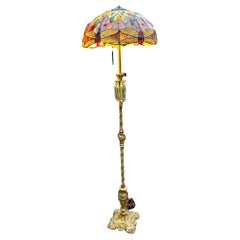
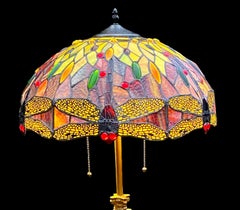
Antique Chicago Shade Company Floor Lamp Tiffany Style Shade
Located in New Orleans, LA
An antique 1920’s Chicago shade company, burnished gold Floor lamp with a first quality Tiffany
Category

Vintage 1920s American Art Deco Floor Lamps

Materials

Metal

Get Updated with New Arrivals
Save "Tiffany Lamp Chicago", and we’ll notify you when there are new listings in this category.

Tiffany Lamp Chicago For Sale on 1stDibs

Choose from an assortment of styles, material and more with respect to the tiffany lamp chicago you’re looking for at 1stDibs. Frequently made of metal, glass and brass, every tiffany lamp chicago was constructed with great care. Find 6 options for an antique or vintage tiffany lamp chicago now, or shop our selection of 4 modern versions for a more contemporary example of this long-cherished piece. Your living room may not be complete without a tiffany lamp chicago — find older editions for sale from the 20th Century and newer versions made as recently as the 21st Century. A tiffany lamp chicago made by Art Nouveau designers — as well as those associated with modern — is very popular. Georgis & Mirgorodsky, Louis Comfort Tiffany and Quezal each produced at least one beautiful tiffany lamp chicago that is worth considering.

How Much is a Tiffany Lamp Chicago?

A tiffany lamp chicago can differ in price owing to various characteristics — the average selling price 1stDibs is $18,324, while the lowest priced sells for $1,600 and the highest can go for as much as $68,000.

A Close Look at Art-deco Furniture

Art Deco furniture is characterized by its celebration of modern life. More than its emphasis on natural wood grains and focus on traditional craftsmanship, vintage Art Deco dining chairs, tables, desks, cabinets and other furniture — which typically refers to pieces produced during the 1920s and 1930s — is an ode to the glamour of the “Roaring Twenties.” 

ORIGINS OF ART DECO FURNITURE DESIGN

CHARACTERISTICS OF ART DECO FURNITURE DESIGN

  • Bold geometric lines and forms, floral motifs
  • Use of expensive materials such as shagreen or marble as well as exotic woods such as mahogany, ebony and zebra wood
  • Metal accents, shimmering mirrored finishes
  • Embellishments made from exotic animal hides, inlays of mother-of-pearl or ivory

ART DECO FURNITURE DESIGNERS TO KNOW

VINTAGE ART DECO FURNITURE ON 1STDIBS

Few design styles are as universally recognized and appreciated as Art Deco. The term alone conjures visions of the Roaring Twenties, Machine Age metropolises, vast ocean liners, sleek typography and Prohibition-era hedonism. The iconic movement made an indelible mark on all fields of design throughout the 1920s and ’30s, celebrating society’s growing industrialization with refined elegance and stunning craftsmanship.

Widely known designers associated with the Art Deco style include Émile-Jacques Ruhlmann, Eileen Gray, Maurice Dufrêne, Paul Follot and Jules Leleu.

The term Art Deco derives from the name of a large decorative arts exhibition held in Paris in 1925. “Art Deco design” is often used broadly, to describe the work of creators in associated or ancillary styles. This is particularly true of American Art Deco, which is also called Streamline Moderne or Machine Age design. (Streamline Moderne, sometimes known as Art Moderne, was a phenomenon largely of the 1930s, post–Art Nouveau.)

Art Deco textile designers employed dazzling floral motifs and vivid colors, and while Art Deco furniture makers respected the dark woods and modern metals with which they worked, they frequently incorporated decorative embellishments such as exotic animal hides as well as veneers in their seating, case pieces, living room sets and bedroom furniture.

From mother-of-pearl inlaid vitrines to chrome aviator chairs, bold and inventive works in the Art Deco style include chaise longues (also known as chaise lounges) and curved armchairs. Today, the style is still favored by interior designers looking to infuse a home with an air of luxury and sophistication.

The vintage Art Deco furniture for sale on 1stDibs includes dressers, coffee tables, decorative objects and more.

Finding the Right Floor-lamps for You

The modern floor lamp is an evolution of torchères — tall floor candelabras that originated in France as a revolutionary development in lighting homes toward the end of the 17th century. Owing to the advent of electricity and the introduction of new materials as a part of lighting design, floor lamps have taken on new forms and configurations over the years. 

In the early 1920s, Art Deco lighting artisans worked with dark woods and modern metals, introducing unique designs that still inspire the look of modern floor lamps developed by contemporary firms such as Luxxu

Popular mid-century floor lamps include everything from the enchanting fixtures by the Italian lighting artisans at Stilnovo to the distinctly functional Grasshopper floor lamp created by Scandinavian design pioneer Greta Magnusson-Grossman to the Paracarro floor lamp by the Venetian master glass workers at Mazzega. Among the more celebrated names in mid-century lighting design are Milanese innovators Achille and Pier Giacomo Castiglioni, who, along with their eldest brother, Livio, worked for their own firm as architects and designers. While Livio departed the practice in 1952, Achille and Pier Giacomo would go on to design the Arco floor lamp, the Toio floor lamp and more for legendary lighting brands such as FLOS

Today’s upscale interiors frequently integrate the otherworldly custom lighting solutions created by a wealth of contemporary firms and designers such as Spain’s Masquespacio, whose Wink floor lamps integrate gold as well as fabric fringes. 

Visual artists and industrial designers have a penchant for floor lamps, possibly because they’re so often a clever marriage of design and the functions of lighting. A good floor lamp can change the mood of any room while adding a touch of elegance to your entire space. Find yours now on 1stDibs.
Questions About Tiffany Lamp Chicago
  • 1stDibs ExpertAugust 8, 2024
    Yes, Tiffany lamps and Tiffany jewelry are related. Tiffany & Co. was established in Connecticut in 1837 by Charles Lewis Tiffany and John B. Young. Charles had launched the company’s famed catalogue, the Blue Book, and, with it, the firm’s signature robin’s-egg blue in 1845. In 1853, Tiffany and Young shifted their focus to fine jewelry. At the start of the Gilded Age, in 1870, Tiffany & Co. opened its flagship store at 15 Union Square West in Manhattan. While Tiffany & Co. gained renown all over the world for its designs for silver tableware, ceremonial silver and other objects, its jewelry was also a highly sought-after indicator of status and taste. Upon Charles’s death in 1902, his son Louis Comfort Tiffany took over artistic direction for the brand. Earlier, in 1885, Louis had founded the Tiffany Glass Company, a glassmaking firm, that began producing the lamps commercially in 1895. It evolved into Tiffany Studios in 1902. Louis brought his decorative eye inspired by nature to the Tiffany stained-glass lamps as well as organic jewelry designs. Explore a large collection of Tiffany lamps and Tiffany & Co. jewelry on 1stDibs.
  • 1stDibs ExpertMarch 22, 2022
    To tell if a Tiffany lamp is real, flip it over to reveal the base and pull up the cap. If you see a dull gray ring, you likely have an authentic lamp. Real Tiffany pieces feature a lead ring. Replicas usually use brass, zinc, painted metal, wood or plastic instead of lead. Find a variety of expertly vetted Tiffany lamps on 1stDibs.
  • 1stDibs ExpertFebruary 22, 2021
    A Tiffany lamp costs between $4,000 to $1 million, on average. The most expensive Tiffany lamp sold at auction for $2.8 million. These lamps are so expensive because they are handmade and not mass produced.
  • 1stDibs ExpertFebruary 22, 2021
    A genuine Tiffany lamp is quite expensive. It can cost anywhere between $4,000 to well over $1 million depending on how big it is and what year it was made.
  • 1stDibs ExpertSeptember 23, 2024
    To identify a Tiffany table lamp, first take a close look at the base. Some pieces will bear a stamp or label that says, "Tiffany Studios," and newer lamps may also feature a serial number. By comparing the number and markings to information and images shared by trusted online resources, you can begin the identification process. If your lamp isn't marked, the base construction can provide more clues about the maker. Tiffany lamps usually feature bronze bases that feel weighty. Older models typically have a gray metal ring on their bottoms as well. In addition to examining the base, try turning the lamp on for a while and then touching the stained glass shade. Tiffany lamps tend to stay cool due to the thickness of the glass, so if yours feels hot, it may be the work of a different manufacturer. When in doubt, use the identification services of a certified appraiser or knowledgeable antique dealer. Shop a collection of Tiffany lamps on 1stDibs.
  • 1stDibs ExpertAugust 29, 2024
    To tell if a Tiffany lamp is valuable, first examine its features carefully. Its age, base, glass pattern, glass quality and overall condition will all play a role in determining its value. After you have a feel for the characteristics of your piece, you can investigate what similar lamps have sold for in the past at auctions and on online platforms. Another way to learn the value of your lamp is to have a certified appraiser or knowledgeable antique dealer evaluate it. On 1stDibs, explore a range of Tiffany lamps.
  • 1stDibs ExpertAugust 14, 2024
    No, Tiffany Studios no longer makes lamps. On the secondhand market, antique Tiffany Studios table lamps and other decorative glass objects are the most recognizable and prized of the manufactory’s works. 

    The hand-crafted kerosene and early electric lighting fixtures created at Tiffany Studios now rank among the most coveted decorative objects in the world. Tiffany designs of any kind are emblematic of taste and craftsmanship, and Tiffany glass refers to far more than stained-glass windows and decorative glass objects. The iconic multimedia studio’s offerings include stained-glass floor lamps, chandeliers and enameled metal vases

    The name Tiffany generally prompts thoughts of two things: splendid gifts in robin’s-egg blue boxes and exquisite stained glass. In 1837, Charles Lewis Tiffany co-founded the former — Tiffany & Co., one of America’s most prominent purveyors of luxury goods — while his son, Louis Comfort Tiffany, is responsible for exemplars of the latter.

    Louis Comfort Tiffany was undoubtedly the most influential and accomplished American decorative artist in the decades that spanned the late 19th and early 20th centuries. And while the lion’s share of credit for Tiffany Studios table lamps and other fixtures has gone to Louis, it was actually Clara Driscoll (1861–1944), an Ohio native and head of the Women’s Glass Cutting Department for 17 years, who was the genius behind the Tiffany lamps that are most avidly sought by today’s collectors.

    Find antique Tiffany Studios lamps on 1stDibs.
  • 1stDibs ExpertFebruary 22, 2021
    1stDibs sells a variety of high-quality Tiffany-style lamps at various price points. Some are from the mid-century modern movement and others are from the Art Deco period.