Items Similar to Art Deco Pan-Am DC3 Wooden Airplane Desk Model, Midcentury
Want more images or videos?
Request additional images or videos from the seller
1 of 16
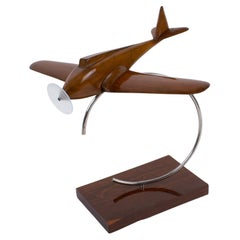
Art Deco Pan-Am DC3 Wooden Airplane Desk Model, Midcentury
About the Item
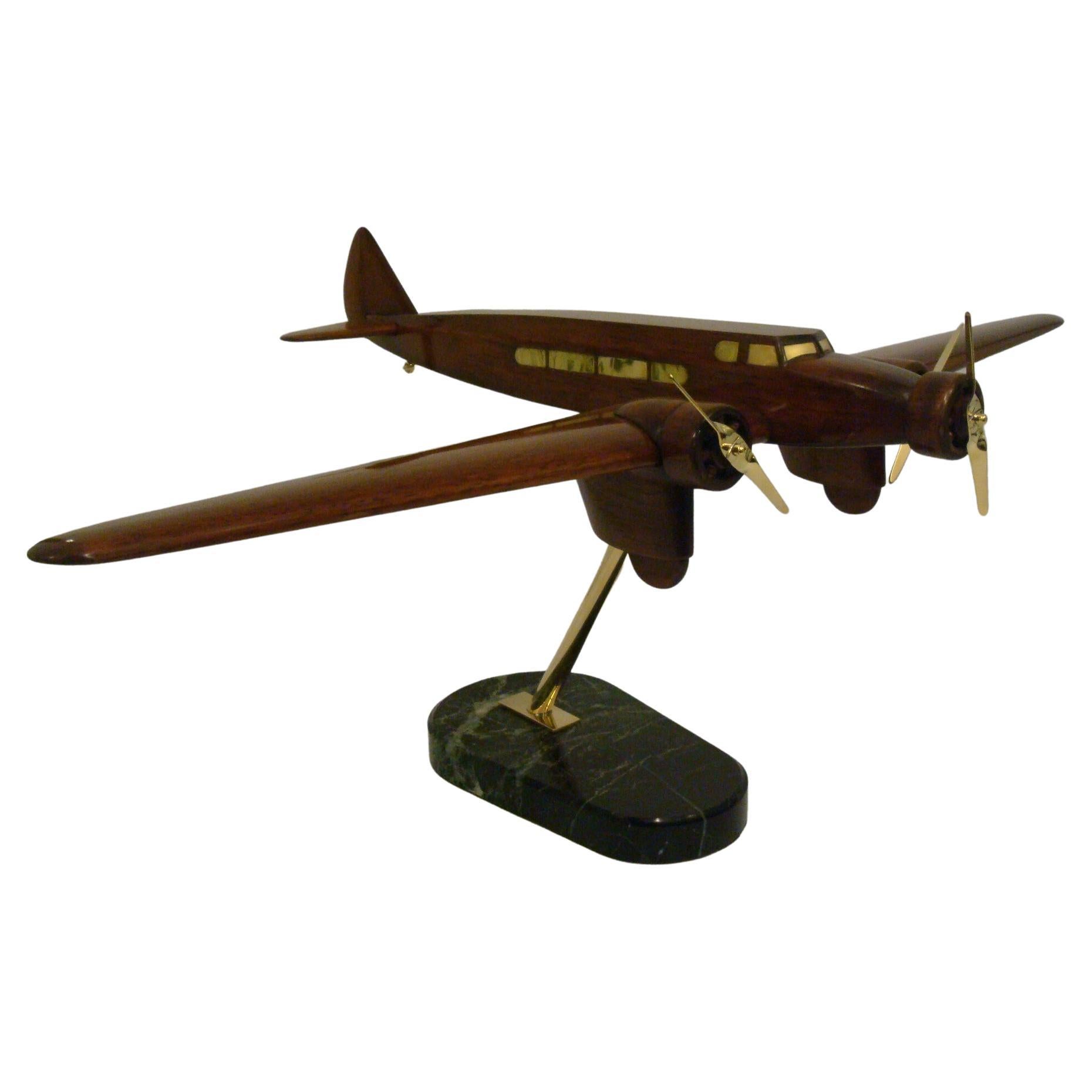
Art Deco / midcentury large DC3 desk aviation model.
Pan-Am wooden airplane model.
It was in an office of the company in South America.
Very good restored conditions. Slight age wear.
History
Pan American Airways began the first transatlantic passenger service on this day in 1939. Pan American World Airways, as it was to be known, commonly known as Pan Am, was the principal United States international air carrier from the late 1920s until its collapse on December 4, 1991. Founded in 1927 as a scheduled air mail and passenger service operating between Key West, Florida, and Havana, Cuba, the airline became a major company credited with many innovations that shaped the international airline industry, including the widespread use of jet aircraft, jumbo jets, and computerized reservation systems.
The history of Pan American Airways is inextricably linked to the expansive vision and singular effort of one man – Juan Trippe. An avid flying enthusiast and pilot, Trippe, only 28 years old when he founded the airline, lined up wealthy investors and powerful government officials from his personal acquaintances in the high-society of the 1920s. However, Pan Am’s first flight was an inauspicious start to its epic saga.
In 1927, facing a Post Office deadline for the commencement of mail carriage, Pan Am had no working equipment for its sole airmail contract between Key West and Havana. Fortunately for Pan Am, a pilot with his Fairchild seaplane arrived at Key West and was willing to carry the mail to Cuba for the start up operation. It is fitting that Pan Am’s first flight would be over water, since the airline would Pioneer overseas routes throughout its history.
Pan Am’s fortunes took a turn for the better in the fall of 1927. Through the heavy lobbying efforts of Juan Trippe, Pan Am was selected by the United States government to be its “chosen instrument” for overseas operations. Pan Am would enjoy a near monopoly on international routes. Added to Pan Am’s Cuba route were lines serving Mexico, Central America, the Dominican Republic, Haiti and Puerto Rico. Most of these destinations were port cities, which could be reached only by landing on water. Therefore Pan Am made good use of its “flying boats,” the Sikorsky S-38 and S-40. Flights were eventually expanded to serve much of South America as well.
EnlargePan Am’s fleet of Clippers allowed the airline to conquer the Pacific in the mid-1930s. The flying boats would later be put to military use in WWII.
Just a few years later, Pan Am launched its effort to cross the world’s largest oceans. Survey flights across the Pacific were conducted with the Sikorsky S-42 in 1935, but passenger service required bigger and better aircraft. Accompanied by much fanfare, the Martin M-130 was introduced in 1936, followed by the Boeing 314 in 1939. Known as Pan Am Clippers, these mammoth flying boats flew from San Francisco harbor skipping across the Pacific with stops at Hawaii, Midway Island, Wake Island, Guam, the Philippines and then Hong Kong. Advance teams had prepared the stopover islands by blasting coral to make safe coves for sea landings and constructing luxury hotels for Pan Am’s discerning, rich clientele. Next on the Pan Am list for conquest was the world’s other major ocean – the Atlantic. The Boeing 314 entered European service in 1939 flying from New York to Lisbon and Marseille by way of the Azores.
World War II slowed passenger service but not Pan Am operations. Pan Am flew over ninety million miles on behalf of the war effort. Pan Am’s international route system would benefit greatly by the wartime construction of airfields at locations around the world. These airports were converted to passenger use after the war’s conclusion. The era of the flying boat was over, but the era of the jet was about to begin.
Pan Am was the first U.S. airline to begin commercial jet service when they began flying Boeing 707s in 1958.
The post-war years saw huge growth in tourist travel. Pan Am met demand by being the first to introduce the newest planes. In the early 1950s, Pan Am added to its fleet Classic airliners like the Lockheed Constellation and Boeing Stratocruiser. But Pan Am forced the entire industry to take a giant leap ahead when it was the first airline to begin passenger jet service. At a time when there was little enthusiasm for the jet airliner, Pan Am’s Juan Trippe managed to play Boeing and Douglas Aircraft off each to convince both to produce jets for an unknown market. Pan Am added both the Boeing 707 and the Douglas DC-8 to its fleet. In 1958, Pan Am inaugurated jet service with flights from New York to Paris. Flying time was cut in half. Comfort and smoothness of flight were increased immeasurably. To remain competitive, the other airlines found it necessary to enter the jet age whether they wanted to or not.
In the 1960s, Juan Trippe saw need for a high-capacity, long haul aircraft to keep pace with the forecasted increase in air travel. The plane was the Boeing 747. Introduced in 1969, the 747 arrived at an unfortunate moment for Pan Am. A sharp downturn in air travel caused major financial difficulties for the airline. The purchase of the 747 fleet was a major cause of Pan Am’s steady decline over the next two decades.
To make matters worse, the governmental favors enjoyed by Pan Am for years gave way to increased hostility against the airline for its monopolistic ways. International routes were granted to Pan Am’s rival airlines, while Pan Am was barred from starting its own domestic operations. When deregulation allowed Pan Am to enter the domestic market, it jumped at the opportunity by acquiring National Airlines in 1980. But the integration of the two airlines’ routes and equipment was less than seamless. Debt continued to mount. Just to stay in the air, Pan Am was forced to liquidate assets. Most shocking was the sale in 1985 of its entire Pacific Ocean network to United Airlines. Soon thereafter, Pan Am sold its New York – London route. In 1991, Pan Am was forced to declare Chapter 11 bankruptcy. After a few months of flying in a joint venture with Delta, Pan Am went under in December of 1991.
- Creator:Pan American Airways (Maker)
- Dimensions:Height: 22.45 in (57 cm)Width: 31.11 in (79 cm)Depth: 20.08 in (51 cm)
- Style:Mid-Century Modern (Of the Period)
- Materials and Techniques:
- Place of Origin:
- Period:
- Date of Manufacture:1930-1940
- Condition:Refinished. Wear consistent with age and use. It has been repolished on the parts you can see the wood.
- Seller Location:Buenos Aires, AR
- Reference Number:1stDibs: LU2027315623532
About the Seller
4.9
Vetted Seller
These experienced sellers undergo a comprehensive evaluation by our team of in-house experts.
Established in 2002
1stDibs seller since 2016
285 sales on 1stDibs
Typical response time: <1 hour
- ShippingRetrieving quote...Ships From: Buenos Aires, Argentina
- Return PolicyThis item cannot be returned.
More From This SellerView All
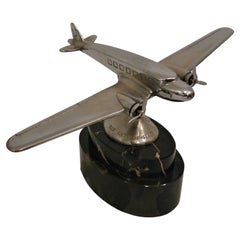
- Art Deco Dewoitine Wooden Counters Desk Model Airplane 1930s FrenchLocated in Buenos Aires, OlivosArt Deco Dewoitine Wooden Counters Desk Model Airplane 1930s French. The Dewoitine was a Art Deco 1930s French eight-passenger airliner built by Dewoitine. The Airplane was an all-metal cantilever low-wing monoplane. The pilot and co-pilot were seated side by side in a cabin located forward of the wing leading edge. A radio operator station was located behind the pilots, and it had a passenger cabin for eight passengers. The landing gear had trouser-type fairings on the main gear legs. The aircraft first flew on 11 July 1933 powered by three Hispano-Suiza 9V radial engines...Category
Mid-20th Century French Art Deco Aviation Objects
MaterialsMarble, Brass
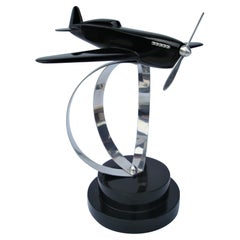
- Art Deco French Caudron, Renault Desk Airplane Model, Late 1930´sLocated in Buenos Aires, OlivosFrench Caudron - Renault Desk Airplane Model. Late 1930´s. Made of Lacquered Wood and Polished Aluminium The C.710 were a series of light fighter aircraft developed by Caudron-Re...Category
Mid-20th Century French Art Deco Aviation Objects
MaterialsAluminum
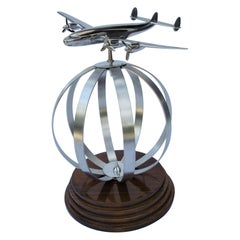
- Aviation Lockheed Super Constellation Vintage Desk Airplane Model, circa 1940sLocated in Buenos Aires, OlivosAviation Lockheed Constellation vintage aluminium desk top display airplane model. The model has movement, you can change the position of the airplane...Category
Mid-20th Century American Mid-Century Modern Aviation Objects
MaterialsAluminum
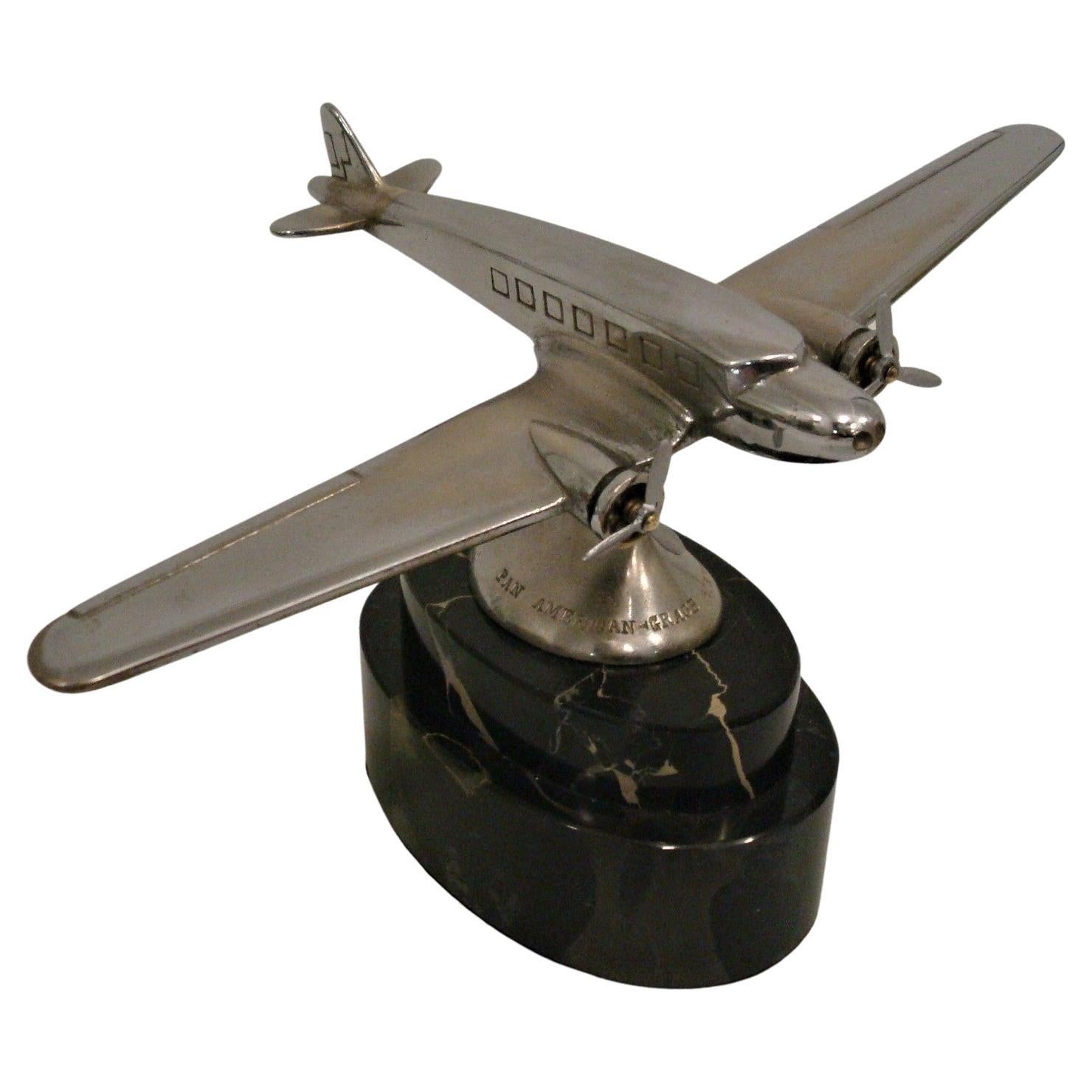
- Pan American - Grace Airways Airplane Model Advertising Paperweight. c1930´sBy Pan American AirwaysLocated in Buenos Aires, OlivosPan American - Grace Airways Airplane Model Advertising Paperweight. circa 1930´s. Pan American-Grace Airways, also known as Panagra, and dubbed "The World's Friendliest Airline" w...Category
Mid-20th Century American Mid-Century Modern Aviation Objects
MaterialsMarble, Brass
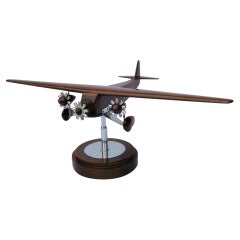
- Art Deco Ford Trimotor Desk Airplane Wooden Model, ca. 1925Located in Buenos Aires, OlivosArt Deco Ford Tri-motor desk airplane wooden model - ca. 1925. Fantastic desk / counter airplane, made of polished wood and polished aluminium. Fully Restored and ready to display. Some History: The Ford Trimotor...Category
Vintage 1920s American Art Deco Aviation Objects
MaterialsAluminum
- Art Deco Brass Airplane desk Model, U.K. 1930´sLocated in Buenos Aires, OlivosArt Deco Brass Airplane desk Model, 1930´s. Lovely Aviation Desk model, made in United Kingdom 1930´s. Excellent restored conditions. The airplane can be...Category
Mid-20th Century British Art Deco Aviation Objects
MaterialsBrass

You May Also Like
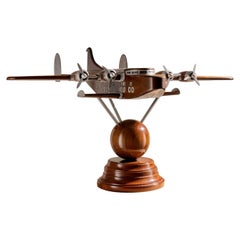
- Art Deco Model of a Boeing 314 Clipper Airplane Circa 1938Located in London, GBA superb Art Deco Model of a Boeing 314 Clipper Aeroplane Circa 1938. The Boeing Clipper was a long range Flying Boat made by the Boeing Aircraft Company i...Category
Vintage 1930s American Aviation Objects
MaterialsWood
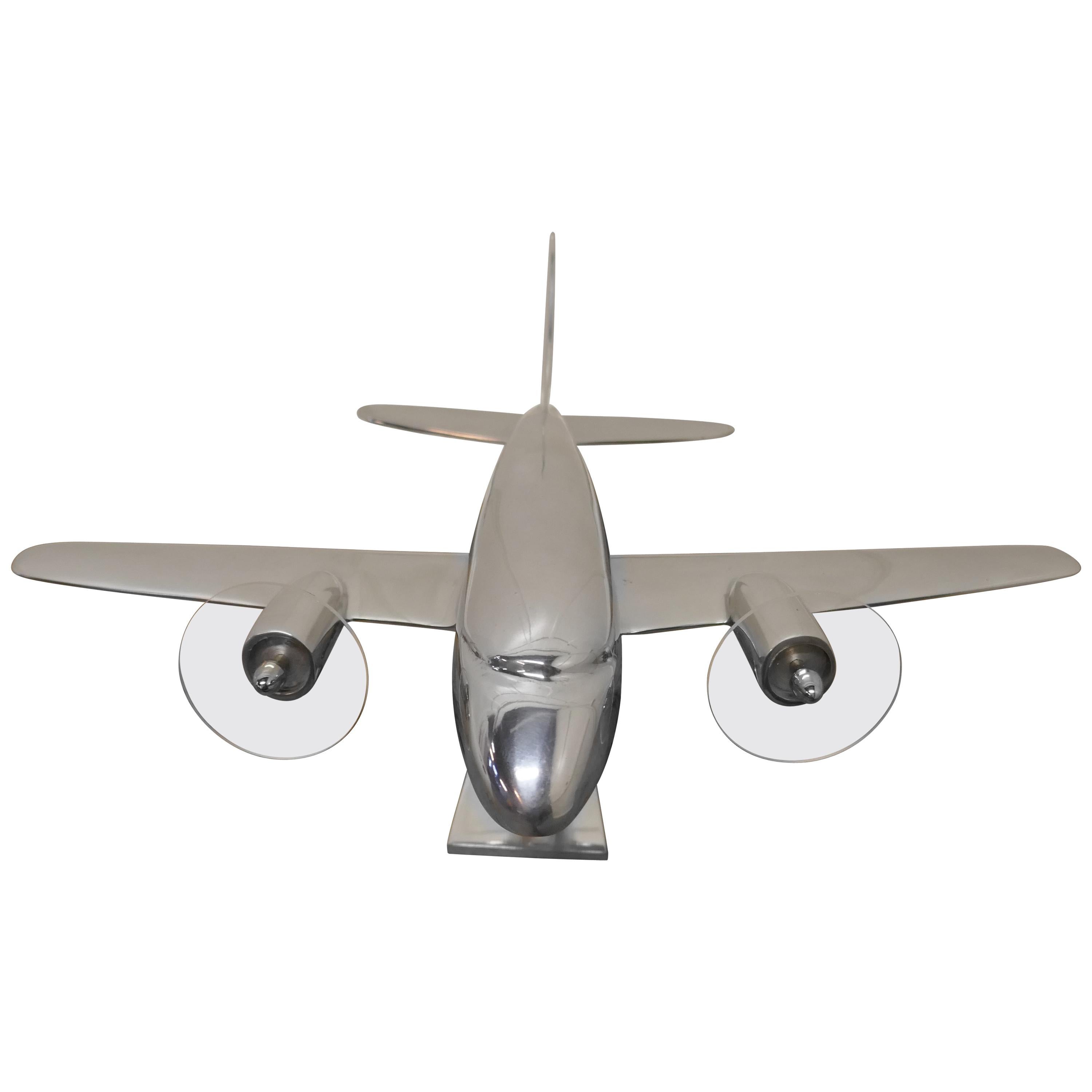
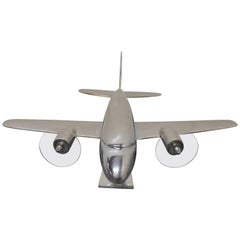
- Large French Chrome Desktop Model of Douglas DC3Located in Chillerton, Isle of WightLarge French chrome desktop model of Douglas DC3 A super piece and a great desk ornament for the desk that has everything else This model was displayed b...Category
Mid-20th Century Mid-Century Modern Aviation Objects
MaterialsAluminum
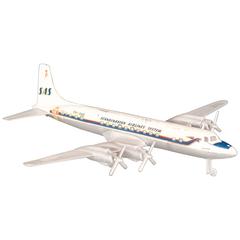
- Vintage Douglas DC 7 C Airplane ModelLocated in Vienna, ATMade by Tekno in the 1960s. Steel construction painted. Used but still in very good condition.Category
Vintage 1960s Danish Models and Miniatures
MaterialsSteel
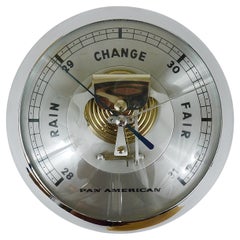
- Vintage Pan Am Pan American World Airways Advertising Wall Barometer, 1960sBy Pan American AirwaysLocated in Vienna, ATA round and large mid-century wall-mounted barometer / weather station from the airline PAA Pan American World Airways. Dated around the 1960s. A high-quality product, made in Western Germany...Category
Mid-20th Century German Mid-Century Modern Scientific Instruments
MaterialsMetal, Chrome
- Art Deco Wooden Airplane Aviation Model, France 1930sLocated in Atlanta, GAStylish Art Deco wooden airplane model mounted on a geometric wood and metal display. This Art Deco model airplane is in solid wood with a lovely warm patina. It has one large Lucite...Category
Vintage 1930s French Art Deco Aviation Objects
MaterialsMetal, Copper
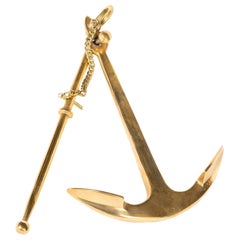
- Brass Desk Top Model of a Kedge Admiralty AnchorLocated in London, GBA brass desk top model of a Kedge admiralty anchor. Well modeled with Shank, stock, crown, flukes, shackle and keep pin.Category
Mid-20th Century English Industrial Nautical Objects
MaterialsBrass
Recently Viewed
View AllMore Ways To Browse
Vintage Wooden Model
American 1920s Art Deco
Wooden Cross
Wooden Crosses
Large Panal
Model Military
European Mid Century Port
Models Plane
Vintage Collectibles Wanted
Art Deco Collectable Objects
Used Model Planes
Vintage Florida Keys
United States Government
Vintage Wood Saw
Vintage Wood Saws Saws
Vintage Wood Saws
Vintage Wood Planer
Vintage Wood Planers