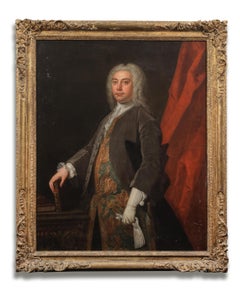
Items Similar to Portrait of an artistic Gentleman, c. 1720s
Want more images or videos?
Request additional images or videos from the seller
1 of 9
John VanderbankPortrait of an artistic Gentleman, c. 1720s1720s
1720s
$19,436.21
£14,250
€16,559.77
CA$26,782.12
A$29,218.59
CHF 15,471.07
MX$350,121.94
NOK 197,032.63
SEK 180,171.72
DKK 123,649.28
About the Item
John Vanderbank (London 1694 - London 1739)
Portrait of an artistic Gentleman, c. 1720s
Three-quarter-length, wearing a turban
Oil on canvas
125.5 x 101.7 cm.; (within frame) 145.6 x 121.2 cm.
Provenance:
The Milbanke baronets of Halnaby Hall, Croft-on-Tees;
By descent to Sir John Charles Peniston Milbanke, 11th Bt. (1902-1947);
By whom sold, Christie’s, London, The Property of Sir John Milbanke, Bart., 7 December 1928, lot 120;
Where acquired by Fisher;
Anonymous sale, Sotheby’s, London, 13 July 1994, lot 34;
Where acquired, Marylebone & General Fine Art Limited;
Christie’s, London, 10 November 1995, lot 76A;
Where acquired by Edward Haughey, Baron Ballyedmond (1944-2014), Corby Castle, Cumbria;
By whose executors sold, Sotheby’s, London, 19 November 2025, lot 15;
Where acquired by Haveron Fine Art.
Archival:
Witt Library, Courtauld Institute of Art (no. 281162)
Heinz Archive and Library, National Portrait Gallery, 1725-50, John Vanderbank (1694-1739): Dated Paintings (1) (Box)
A fine three-quarter-length example of Vanderbank’s productive 1720s period, the sitter is likely an individual of artistic standing, since he wears a turban (or morning cap) of a kind used by Vanderbank primarily for artist, architect and literary subjects. Examples include his portraits of George Lambert, John Michael Rysbrack, John Harvey, John Gay, and James Thompson. He is draped around the middle with loose orange silk, and wears a black jacket fitted with buttons, whose glinting highlights suggest cut-steel embellishment (a fashionable Georgian imitation of diamonds). The handling is typical of Vanderbank’s method of colouring, with colori cangiante seen best in the radiant flesh tones, achieved with the cool blue-grey shading of the exposed ground beneath.
Traditional identifications of the sitter have included William Kent, who became a student of Vanderbank’s academy in 1720, its year of opening. A passing likeness ‒ particularly the cleft chin ‒ does recall Bartholomew Dandridge’s portraits of Kent, the smaller version being in the National Portrait Gallery, London (NPG 1557). However, facial similarities might just as easily be drawn with Dandridge’s Portrait of a Painter (possibly his self-portrait) (Fitzwilliam, Acc. no. 658), or Vanderbank's portrait of George Lambert. Moreover, the present example lacks any identifying architectural features or symbology, which one might expect of a portrait of Kent.
The portrait was previously in the collection of the Milbanke baronets of Halnaby Hall (demolished in 1952), the impressive 17th-century estate where Lord Byron disastrously honeymooned in 1815. Although little documentary evidence survives of the collection, it is possible that the present work belonged to those Milbankes depicted in Stubbs’ most impressive conversation piece, likely made for the marriage of the Milbanke and Melbourne families.
John Vanderbank (London 1694 - London 1739):
Vanderbank was born in London to the prosperous tapestry-weaver John Vanderbank (the Elder) of Soho, London’s most prominent tapestry weaver. Proprietor of the Soho Tapestry Manufactory and Yeoman Arras-maker to the Great Wardrobe, Vanderbank Senior supplied tapestries to the Royal Household from his Covent Garden premises, and was succeeded in the post by his son Moses in 1727. Vanderbank Junior first studied drawing and composition under his father, before taking lessons from Jonathan Richardson. In 1711 he entered Kneller’s new academy in Great Queen Street, Covent Garden, adjacent to his father’s tapestry workshop, where he remained until 1720. He afterwards established his own academy in St Martin’s Lane alongside Louis Chéron, with an emphasis on drawing from life. The academy successfully rivalled James Thornhill’s, although it closed in 1724 following a series of financial difficulties, further to Chéron’s old age. Vanderbank’s academy was highly influential on the younger generation of artists, whose attendees at the life drawing classes included Hogarth, Highmore, Kent, and Faber.
The prominence of Vanderbank’s academy granted the artist beneficial notoriety, and a broad professional network. For example, both Kent and the architect James Gibbs ‒ Vanderbank’s peer at the Kneller Academy ‒ were employed by the Duke of Chandos, immediately before Vanderbank was commissioned to paint his full-length. John Faber, another pupil of his academy, often engraved Vanderbank portraits. A period of great productivity continued throughout the 1720s, with commissions including King George I, Queen Caroline, and Isaac Newton. From the mid-1730s, Vanderbank often employed the drapery painter Joseph van Aken, also used by Hudson and Ramsay (presumably to keep up with demand). However, his success was somewhat undone by gross financial mismanagement, and extravagant living. He evidently kept a coach and horses and a country house for his mistress. In 1724, he fled to France to avoid imprisonment by his creditors, and upon his return some years later was seized and imprisoned in the Fleet Prison Mansions. Upon his mother’s death, Moses Vanderbank inherited (and sold) his shares in the Soho Tapestry Manufactory to settle his brother’s debts. Vanderbank afterwards took up residence in Lord Carteret’s house on Holles Street, and died of tuberculosis in 1739. Vanderbank had married the actress Ann Hardaker in 1723, although the couple had no children.
- Creator:John Vanderbank (1694 - 1739, British)
- Creation Year:1720s
- Dimensions:Height: 57.33 in (145.6 cm)Width: 47.72 in (121.2 cm)
- Medium:
- Movement & Style:
- Period:1720-1729
- Condition:
- Gallery Location:Henley-on-Thames, GB
- Reference Number:1stDibs: LU2820217345772
John Vanderbank
John Vanderbank (9 September 1694 – 23 December 1739) was an English painter who enjoyed a high reputation during the last decade of King George I's reign and remained in high fashion in the first decade of King George II's reign. George Vertue's opinion was that only intemperance and extravagance prevented Vanderbank from being the greatest portraitist of his generation, his lifestyle bringing him into repeated financial difficulties and leading to an early death at the age of only 45. John Vanderbank first studied composition and painting under his father and then the painter Jonathan Richardson, before becoming one of Sir Godfrey Kneller's earliest pupils in 1711 at his art academy in Great Queen Street, neighbouring his father's tapestry workshop. After Sir James Thornhill took over from Kneller in 1718, Vanderbank continued his studies there for two years before founding an academy of his own in 1720.
About the Seller
No Reviews Yet
Vetted Professional Seller
Every seller passes strict standards for authenticity and reliability
Established in 2024
1stDibs seller since 2024
- ShippingRetrieving quote...Shipping from: Henley-on-Thames, United Kingdom
- Return Policy
More From This Seller
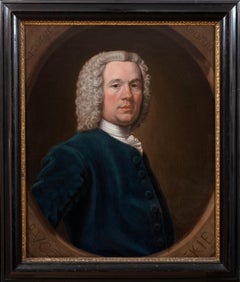
View AllPortrait of George Gordon, 7th Laird of Buckie (1707-1756)
By John Alexander
Located in Henley-on-Thames, England
John Alexander (Scottish, 1686-1766)
Portrait of George Gordon, 7th Laird of Buckie (Scottish, 1707-1756), c. 1743
Oil on canvas
In a carved ebonised frame, with gilded inner slight...
Category
1740s Old Masters Portrait Paintings
Materials
Oil
$8,183 Sale Price
20% Off
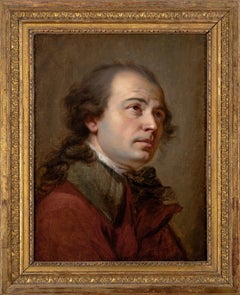
Portrait tête d’expression portrait study of a gentleman
Located in Henley-on-Thames, England
French Academic School, 18th century
Portrait tête d’expression study of a gentleman, c. 1780-90
Oil on canvas
46.1 x 35 cm.; (within frame) 57.5 x 46.6. cm.
Provenance:
Private Co...
Category
1780s French School Portrait Paintings
Materials
Oil
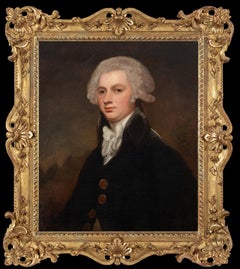
Portrait of a Gentleman, traditionally identified as Edward Addison, Esq., 1780s
By George Romney
Located in Henley-on-Thames, England
George Romney (1734-1802)
Portrait of a Gentleman, traditionally identified as Edward Addison, Esq., c.1780s
Oil on canvas
In a period carved and gilded swept frame
76.3 x 63.2 cm.; ...
Category
1780s Old Masters Portrait Paintings
Materials
Oil
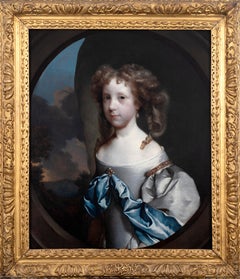
Portrait of a girl, possibly Dorothy Bigg (née Wither) (1661-1717), c. 1674
By Gerard Soest
Located in Henley-on-Thames, England
Gerard Soest (c. 1600-1681)
Portrait of a girl, possibly Dorothy Bigg (née Wither) (1661-1717), c. 1674
Half-length, wearing natural pearl and gemstone jewellery
Oil on canvas
In...
Category
1670s Old Masters Portrait Paintings
Materials
Oil
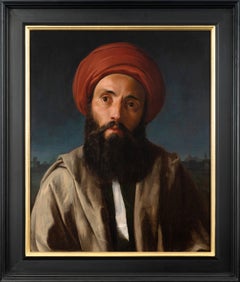
Portrait of an Arab, with pyramids beyond
Located in Henley-on-Thames, England
Central European School, second half 19th century
Portrait of an Arab, with pyramids beyond
Oil on canvas
66.3 x 55.2 cm.; (within frame) 86.9 x 69.9 cm.
Unsigned
Provenance:
Privat...
Category
Mid-19th Century Portrait Paintings
Materials
Oil
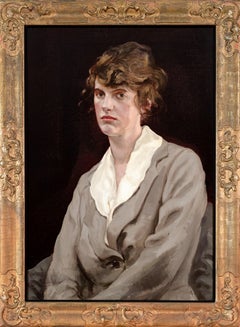
Portrait of the artist’s cousin, Gladys Coombs (1899-1963), c. 1920-25
Located in Henley-on-Thames, England
John George Hookham (1899-1972)
Portrait of the artist’s cousin, Gladys Coombs (1899-1963), c. 1920-25
With a figure study verso
Oil on canvas
In an attractive, stylised ‘Lely’ type ...
Category
1920s Post-Impressionist Portrait Paintings
Materials
Oil
$4,637 Sale Price
49% Off
You May Also Like
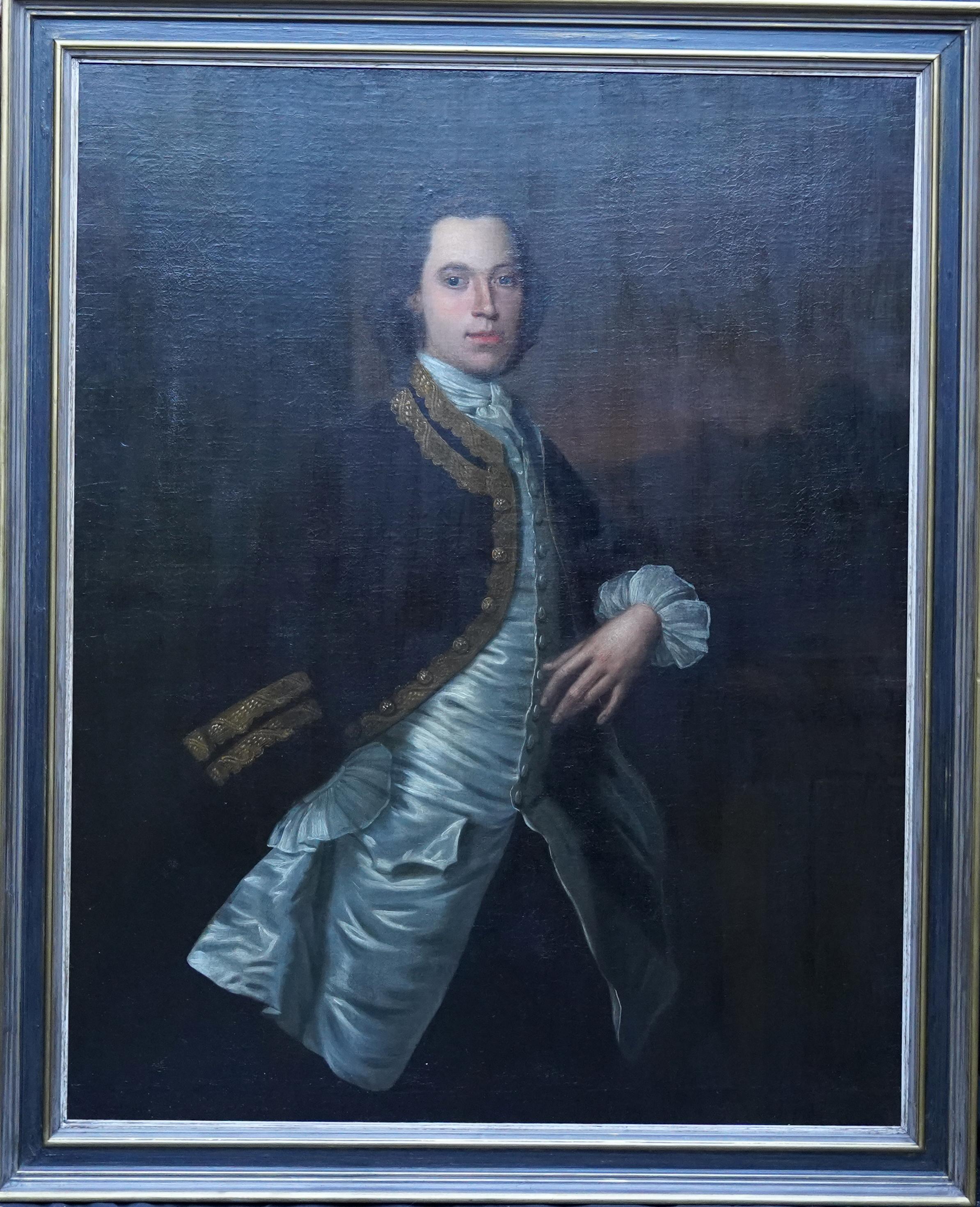
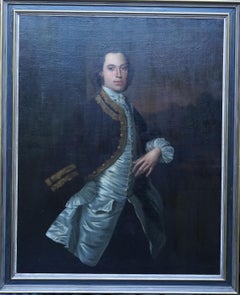
Portrait of a Gentleman - British Old Master c1750 art oil painting
By Thomas Hudson
Located in Hagley, England
This superb British 18th century Old Master portrait oil painting is attributed to Thomas Hudson. Painted circa 1750 it is a three-quarter length standing portrait of a gentleman in ...
Category
1750s Old Masters Portrait Paintings
Materials
Oil
$6,546 Sale Price
20% Off
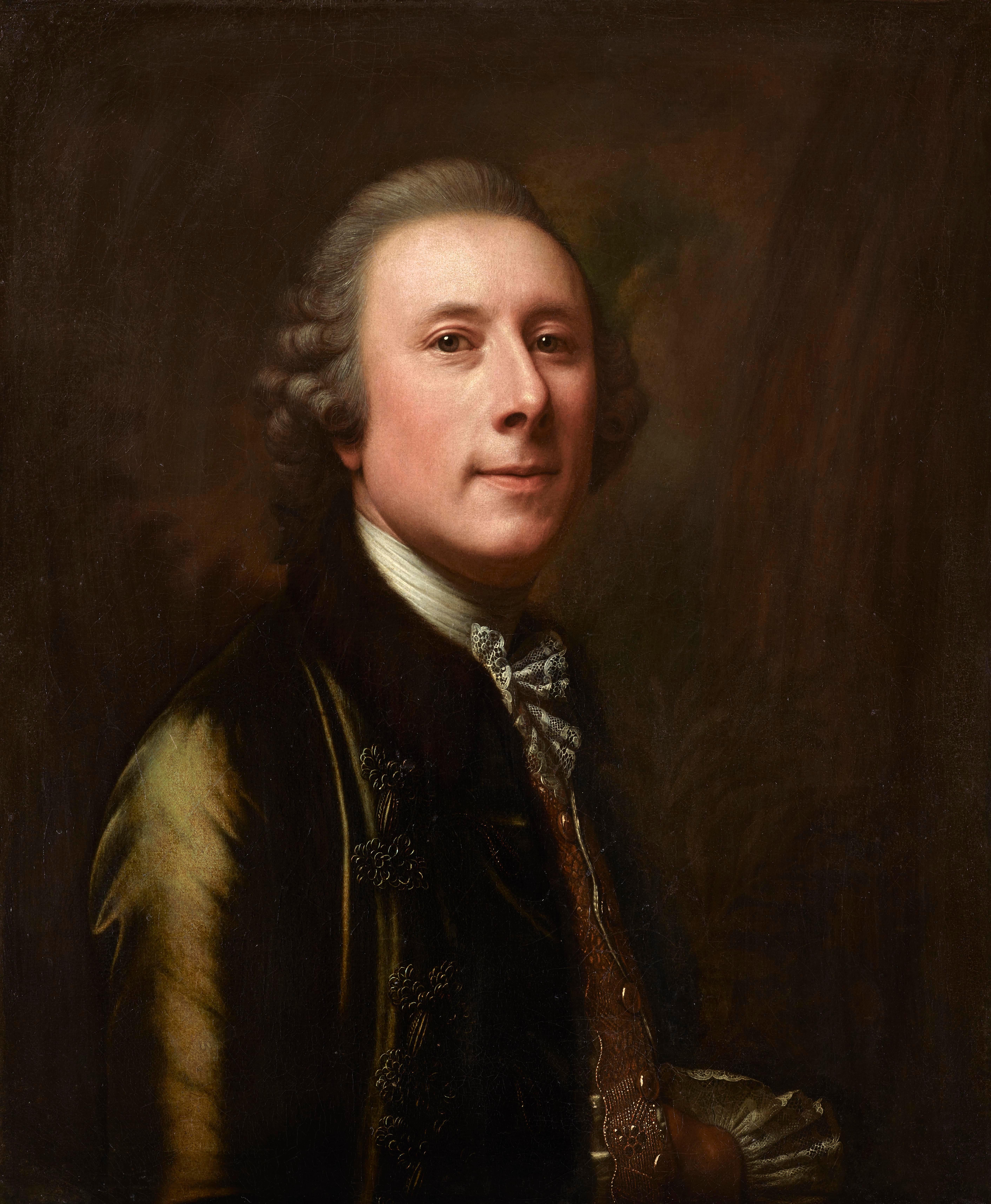
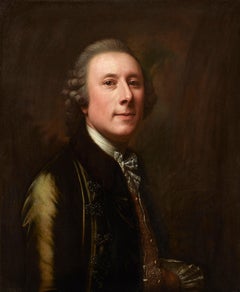
Portrait of a Gentleman, 18th Century Oil Painting
By Anton von Maron
Located in London, GB
Oil on canvas
Image size: 20 x 24 inches (51 x 61 cm)
Period gilt frame
This is a half-length portrait of a gentleman wearing a emerald coat and intricately designed waistcoat, dat...
Category
1760s Portrait Paintings
Materials
Canvas, Oil
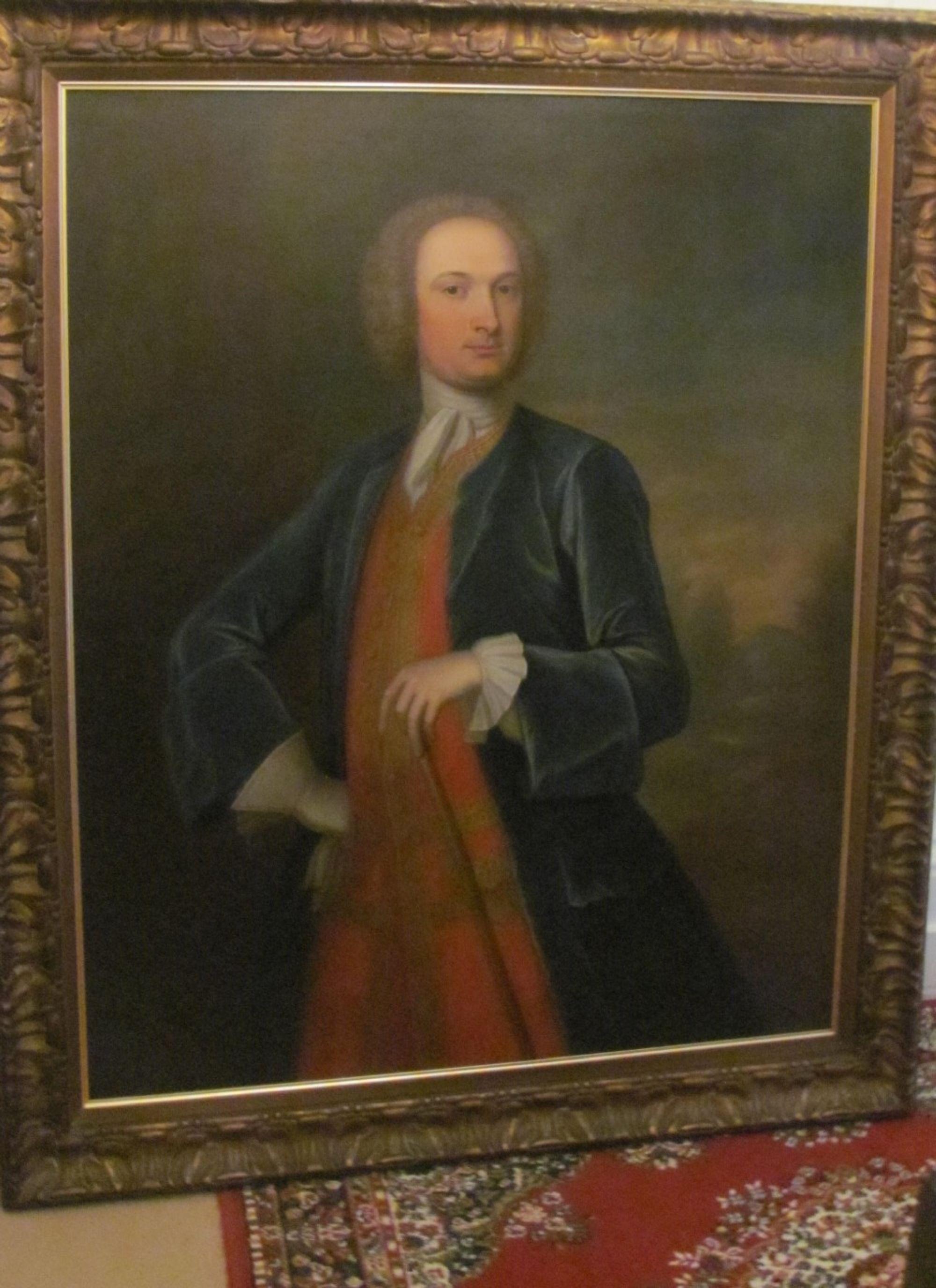
large 18th century portrait gentleman oil on canvas
Located in York, GB
A fine, imposing 18th century portrait of an unknown aristocrat,housed in a gilt frame
The artist is also unidentified but certainly a talented hand, in the circle of one of the fine old masters of the period. Unsigned
The size overall is 148 x 121 cm whilst the painting is 128 x 101 cm
In overall good condition the frame at the bottom has bowed slightly
The painting has been checked whilst being cleaned and has not been affected in any way .
SHIPPING
Free delivery to mainland uk ,worldwide shipping available please email for quote
Delivery usually within 14 working days, insured
please provide telephone/email details for courier.
All taxes/customs etc to be paid for by purchaser.
RETURNS (The Consumer Contracts Regulations) Whilst we are sure that you will be extremely happy with your purchase,
if for any reason you are not, then you are entitled to return the item to us for a refund.
For all purchases made
you are entitled to return the item(s) for a period of up to 14 days
following receipt by you or a representative indicated by you.
Please contact us to confirm that you are returning the item(s)
and the reason for doing so.
Upon receipt of the item(s) we will refund the purchase price via your original payment method...
Category
18th Century Old Masters Portrait Paintings
Materials
Oil
$7,501 Sale Price
44% Off
Free Shipping
Old Master Portrait of a Gentleman - British 18th century oil painting
By Michael Dahl
Located in Hagley, England
This stunning 18th century Old Master portrait oil painting is attributed to Swedish born, England based artist Michael Dahl. Painted circa 1690 it is a sumptuous half length portrai...
Category
17th Century Old Masters Portrait Paintings
Materials
Oil
$10,365 Sale Price
20% Off
Portrait of Monsieur Aubert, a ceremonial portrait by Nicolas de Largillière
By Nicolas de Largillière
Located in PARIS, FR
Provenance :
Arnold S. Kirkeby (1901-1962)
Donated by Arnold S. Kirkeby to the Los Angeles County Museum of Art in 1955, where it remained until its sale at Sotheby's, New York on January 10, 1991, lot 82.
Christie's, London, July 7, 2010, lot 186, where it was purchased after the sale by the executors of the will of the late Edmund de Rothschild (1916-2009) for display at Exbury House
The Trustees of Exbury House
Literature :
R. Brown, Bulletin of the Art Division, Los Angeles County Museum, VIII, 1957, pp.8-9, no. 4;
S. Schaefer and P. Husco, European Paintings and Sculpture in the Los Angeles County Museum of Art (Los Angeles, 1987), p. 53 (illustrated and dated c. 1735)
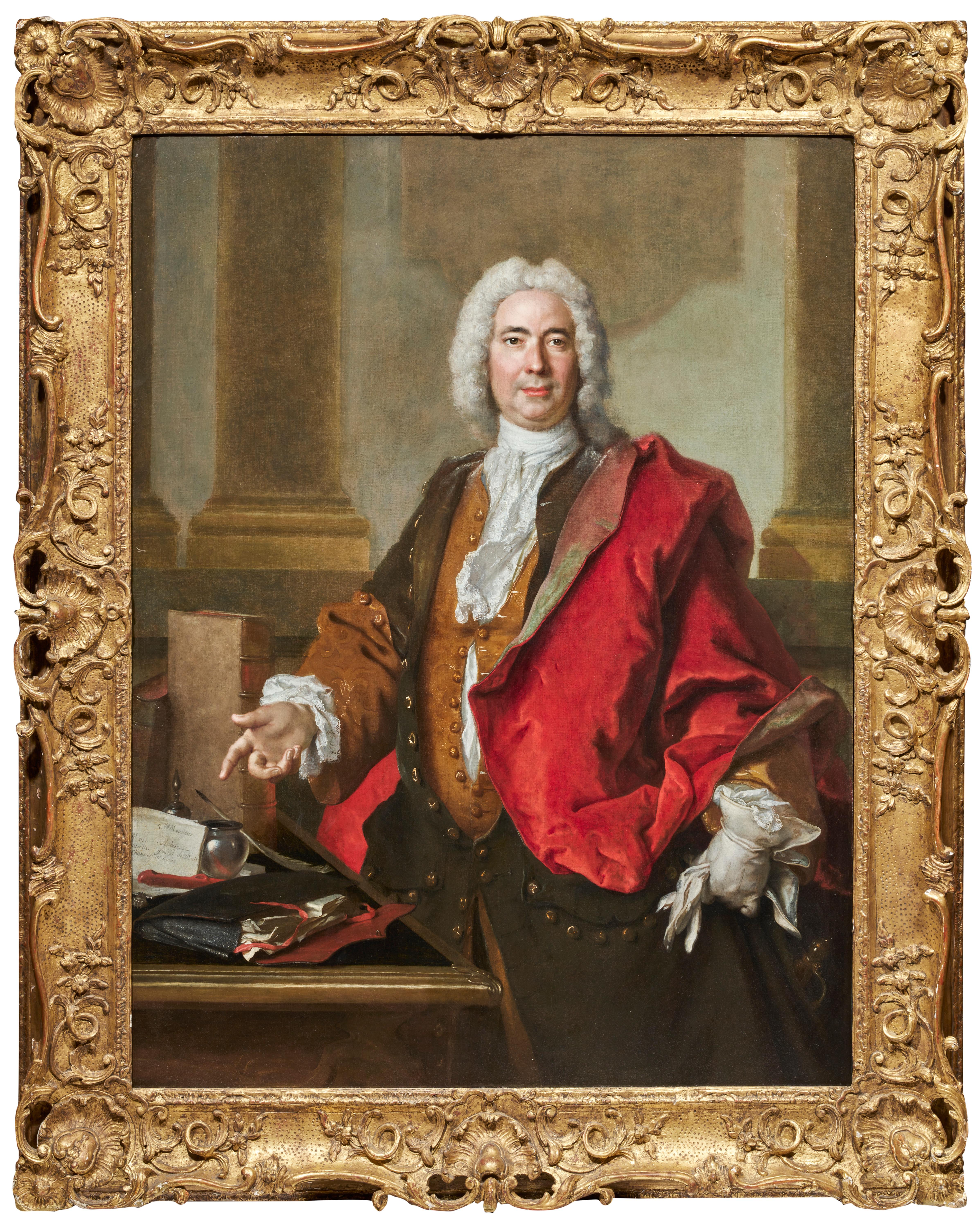
This sumptuous ceremonial portrait, executed around 1725-1730, depicts Monsieur Aubert, the French General Comptroller of Bridges and Roadways, as we learn from a letter on the desk beside our model. The virtuoso treatment of the fabrics, the authoritative yet confident pose, the vigorous treatment of the two hands, are representative of Largillière's talent, here at the peak of his art as portraitist.
The portrait also has a rather extraordinary provenance: donated by Arnold S. Kirkeby, an American hotel magnate and real estate developer, it was exhibited during almost forty years in the collections of the Los Angeles County Museum, before being acquired in 2010 by the executors of Edmund de Rothschild's will to adorn his former home Exbury House (Hampshire), where it remained until its sale in 2022.
1. Nicolas de Largillière, a great European portraitist
Nicolas de Largillière (or Largillierre), one of Europe's premier painters of portraits, history paintings, and still lifes during the late seventeenth century and the first four decades of the eighteenth, was born in Paris in 1656. He was the son of a hatmaker and merchant who moved with his family to Antwerp in 1659. As a boy of nine, he traveled for the first time to London in the company of an associate of his father. After returning to Antwerp more than a year later, his artistic gifts were recognized and his father apprenticed him to Antoni Goubau (1616-1698), a painter genre scenes and landscapes. Something of a prodigy, he was admitted to the painters' Guild of Saint Luke when he was only seventeen. In 1675 he made a second trip to London, where he was employed at Windsor Castle and worked as a restorer under the direction of Italian painter and decorator Antonio Verrio (c. 1639-1707), who brought him to the attention of King Charles II (r. 1660-1685).
At this time Largillière painted several still life paintings in the manner of the Dutch and Flemish masters. Thereafter he practiced this branch of painting with consummate skill, a talent that allowed him to make brilliant use of flowers, fruit, and animals in some of his most ambitious portraits and contemporary history pictures.
In 1679 Largillière settled in Paris, where he specialized in baroque portraiture in the grand manner of Peter Paul Rubens (1577-1640), Anthony van Dyck (1599-1641), and Peter Lely (1618-1680). The Flemish battle painter Adam Frans van der Meulen (1631 or 1632-1690) introduced him to Charles Le Brun (1619-1690) who, as First Painter to King Louis XIV (r. 1643-1715) and director of the Académie royale de peinture et de sculpture, was the predominant figure in France's official art establishment. Upon his acceptance as a candidate for admission to the Académie, he agreed to execute as his diploma picture a large portrait of Le Brun (completed 1686, Paris, Musée du Louvre, eight photo in the gallery) seated in his studio surrounded by the accoutrements of his art and an oil study for the ceiling of Galerie des Glaces at Versailles.
In 1686, Largillière made a final trip to England, where he painted portraits of the newly crowned king, James II (r. 1685-1688) (Greenwich, National Maritime Museum) and his consort Mary of Modena...
Category
1720s Old Masters Portrait Paintings
Materials
Oil
Portrait of Ralph William Grey
By Bartholomew Dandridge
Located in London, GB
Provenance
By descent through the sitter's family to
The Collection of R. W. Vivian-Neal of Poundisford Park, Somerset, from whom acquired by
With Lane Fine Art, UK, where purchased by the present owners in 1996
Literature
'Poundisford Park, Somerset' in Country Life, 22 December 1934, ill.
A.W. and C.M. Vivian-Neal, Poundisford Park, Somerset: A catalogue of pictures and furniture, Taunton 1939, cat. nos. 11 and 13
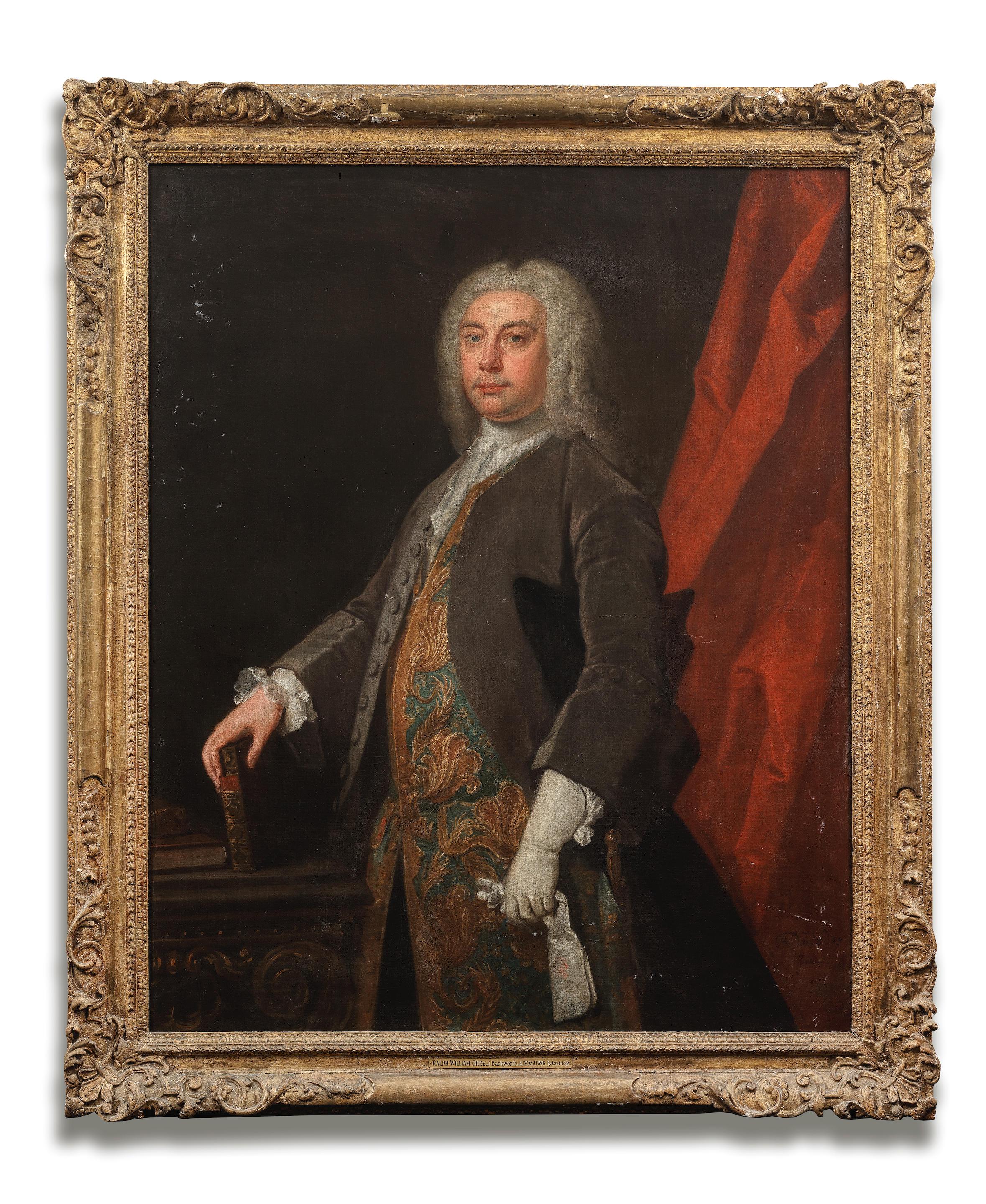
This is a three-quarter-length portrait of Ralph William Grey in a mole-coloured velvet coat and a long waistcoat of green satin, heavily embroidered in gold. Under his left right hand is a black chapeau bras. He has white doe-skin gauntlet gloves.
Son of William and Ann Grey of Backworth: born 19 December 1707. He married Mary the daughter of William Rawstorne of Newall in 1741 and died 5 November 1786. He was educated at Eaton and Trinity College, Oxford.
Within a year of his birth Mrs Grey died and, according to the Country Life article 'From that time forward all Mr Grey's faculties were concentrated on the well-being of his son. The possession of an heir gave zest to his efforts to build up the family fortune: he was successful in most of his ventures. Years later his interest in life was centred in the home of his daughter-in-law and grandchildren'.
Grey's right hand is depicted in the present portrait resting on Locke's Essays and the Country Life article also records that there are constant references to John Locke...
Category
Mid-18th Century English School Portrait Paintings
Materials
Oil