1930s Art

5,925 Results
to
715
3,360
1,265
922
530
348
Overall Width
to
Overall Height
to
7,846
22,088
168,029
238,052
2,166
2,357
4,751
6,468
5,983
16,037
21,475
26,976
19,474
14,240
5,628
2,454
460
404
255
111
109
108
73
9
9
5
2
2
3,950
1,793
1,639
1,169
1,122
712
467
454
429
336
335
296
294
291
286
236
227
220
208
184
3,397
2,994

Use search to find more

261
155
139
88
59

Use search to find more

Period: 1930s
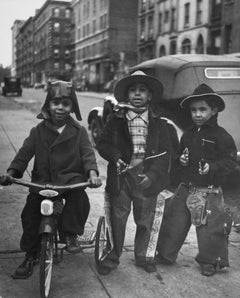
Harlem (Three Cowboys)

Harlem (Three Cowboys)

By John Albok

Located in Denton, TX

John Albok Harlem (Three Cowboys), 1938 Vintage gelatin silver print, 9 1/2 x 7 1/2 in. Titled in pencil on mount margin. Signed and dated by John Albok in pencil, artist stamp in bl...

Category

Modern 1930s Art

Materials

Silver Gelatin

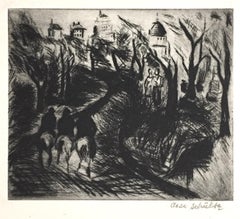
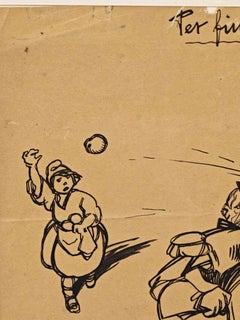
A. Schultz, Riders in Central Park (New York City)

A. Schultz, Riders in Central Park (New York City)

Located in New York, NY

Such an innovative image on the classic 'Riders in the Park' theme! Further, the use of drypoint and the rather direct -- even aggressive -- drawing style, bring it into the German E...

Category

American Modern 1930s Art

Materials

Drypoint

Art Deco Serigraph entitled Dancers by Erté

Art Deco Serigraph entitled Dancers by Erté

By Erté

Located in New York, NY

This striking serigraph by Erté (Romain de Tirtoff) exemplifies the elegance and fluidity of the Art Deco style. Known for his iconic depictions of movement and couture, Erté capture...

Category

Art Deco 1930s Art

Materials

Black and White

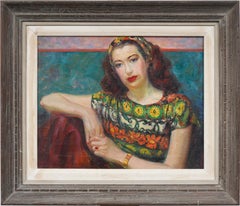
Impressionist:, School of Pierre Bonnard, signed oil 1950's

Impressionist:, School of Pierre Bonnard, signed oil 1950's

Located in Frome, Somerset

A fine large oil, school of Pierre Bonnard. circa 1950's. oil on canvas 55cmx75cm The original wood and textured gesso frame 72cmx92cm Titled 'On the Window Sill'. Indistinctly sign...

Category

Impressionist 1930s Art

Materials

Oil

L'Ete (Summer), Surrealist Pochoir Print by Joan Miro

L'Ete (Summer), Surrealist Pochoir Print by Joan Miro

By Joan Miró

Located in Long Island City, NY

Artist: Joan Miro, Spanish (1893 - 1983) Title: L'Ete (Summer) from Verve (Vol. 1, No. 3) Year: 1938 Medium: Color Pochoir on Wove Paper, signed, titled and dated in the plate, verso...

Category

Surrealist 1930s Art

Materials

Stencil

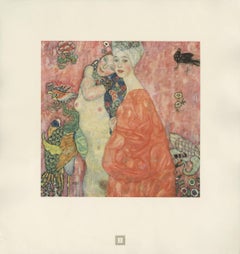
Max Eisler Eine Nachlese folio "Girlfriends II" collotype print

Max Eisler Eine Nachlese folio "Girlfriends II" collotype print

By (after) Gustav Klimt

Located in Palm Beach, FL

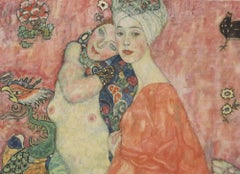
After Gustav Klimt, Max Eisler #1, Die Freundinnen II; multi-color collotype after 1916/17 painting in oil on canvas which was destroyed by fire in May 1945 at Immendorf Castle Lower Austria. Eisler’s choice to begin his 1931 portfolio of works by Klimt with Girlfriends II was both bold and prescient. Just 14 years later, the painting was tragically destroyed in a fire. With such a loss, this rare and exquisite image is all the more valuable by virtue of having been made in color. In works from his late period, Klimt continued his fascination with exploring female dynamics and their various forms of love. Girlfriends II is a fine example of how space, color and ornament play a noticeable role in the evolution of his symbolic language. Wide swaths of space in the background as well as the two female forms create the structure. Klimt’s strong brushstrokes show a painterly quality and a new move toward abstraction which feels very far away from his earlier work. Nor should Klimt’s economy of line be overlooked. His draughtsmanship is what infuses the female bodies with movement, emotion and a profundity of life. Both women confront the viewer’s gaze unselfconsciously, as if they are modern-day Viennese women stepping out of a Klimtesque ukiyo-e print. Characteristic of this late period, Klimt uses ornament...

Category

Vienna Secession 1930s Art

Materials

Paper

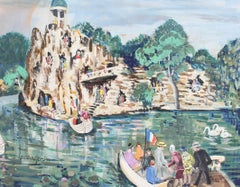
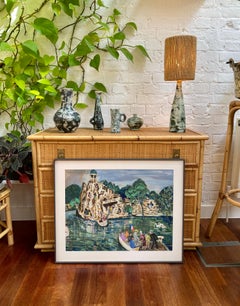
Parc des Buttes-Chaumont Gouache, Post-Impressionist, Framed, 1930s

Parc des Buttes-Chaumont Gouache, Post-Impressionist, Framed, 1930s

By Lucien Génin

Located in London, GB

'Parc des Buttes-Chaumont' in Paris, gouache on art paper, by Lucien Génin (circa 1930s). A charming depiction of well turned out Parisians enjoying a day at the park. Boaters, strollers and swans all co-mingle around the peaceful lake. The reflection of the rocky bluff in the water is superbly treated by Génin. It's a cheerful and uplifting image of days-gone-by in 1930s Paris. The park takes its name from the 'bare hill' (chauve-mont) that once occupied the site. It became a place where gypsum was mined, and where the limestone was quarried to be used in buildings in Paris and the United States. Worse, though, it was a site that also became a dumping ground. Luckily, during the 19th-century renovation of Paris under Napoleon III, chauve-mont was chosen as a place for a large park, as part of the emperor's fascination with endowing Paris with green spaces. The artificial lake created at that time wraps around a hilly central island. The lake attracts waterfowl and other birds and is stocked with fish. The 19th-century planners cleaned up the site and added tons of soil to fill the pits left by a limestone mining operation. Then dynamite was used to "sculpt" the site into the craggy shapes seen today, including the 50-metre-high central hill with cliffs, an interior grotto, pinnacles, and arches. Up on top, overlooking the rest of the park - and depicted in this artwork - is a small, round belvedere, based on the Roman Temple of Vesta in Italy. From that spot you can see a lovely view of Montmartre and the white cupolas of the Sacre-Coeur. The painting is in very good condition. It has been newly framed and glazed with museum-quality glass (anti-reflective and UV protection) to preserve this significant artwork for decades to come. Dimensions with frame: H 62 cm / 24.4" W 76 cm / 29.9" Dimensions without frame: H 48.5 cm / 19.1" W 63 cm / 24.8" About the Artist: After the devastation of the First World War, Lucien Génin (1894 - 1953) left his provincial home in the autumn of 1919 to find his fortune among the lively Parisians in the heart of Montmartre. Génin befriended the painters Frank Will, Gen Paul, Émile Boyer, Marcel Leprin...

Category

Post-Impressionist 1930s Art

Materials

Paper, Gouache

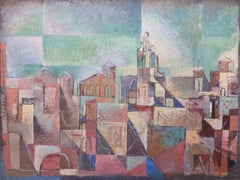
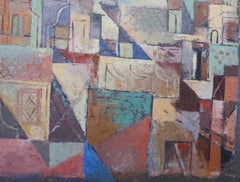
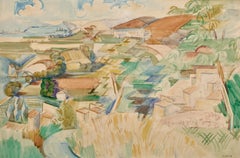
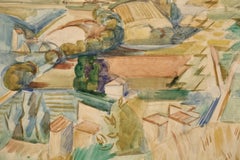
Italian City (Cubist cityscape)

Italian City (Cubist cityscape)

Located in Wilton Manors, FL

Karl Drerup (1904-2000). Italian City, c.1930. Oil on masonite panel, 24 x 32 inches; 34 x 42 in custom frame. Signed lower right. Minor conservation to loss in margins. Price on request Biography: Born in Borghorst, Germany in 1904, Karl Drerup earned a Master’s Degree in graphic arts working under Hans Meid...

Category

Cubist 1930s Art

Materials

Oil, Panel

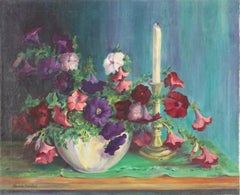
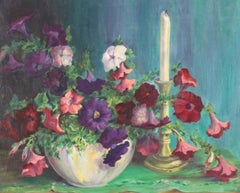
1930s Vibrant Floral Still Life with Petunias and Candle Stick

1930s Vibrant Floral Still Life with Petunias and Candle Stick

Located in Soquel, CA

Wonderfully vibrant floral still life of petunias in bowl with brass candle stick by Jennie Thatcher Crawford (American, 1890 - 1958), circa 1930. Signed lower left corner. Condition: good; missing paint professionally repaired and inpainted. Unframed. Image size: 24.25"H x 30"W. Born in St Louis, MO on Jan. 25, 1890. Crawford studied at the St Louis School of Fine Arts from 1907-20. Moved to Los Angeles, California 1921. She was active as a lecturer and demonstrator until 1958. Her specialty was floral still lifes. Jennie Crawford, a painter of floral still lifes, was born in St. Louis, Missouri and studied at the ST. Louis School of Fine Arts from 1907 to 1920. She moved to Los Angeles, California in 1921, becoming a Resident of El Monte in 1931. She was a member of Women Painters of the West and exhibited at Palos Verdes Art...

Category

American Impressionist 1930s Art

Materials

Linen, Oil

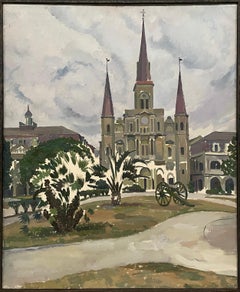
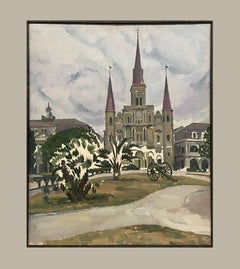
A Large 1930s Modern Painting of Jackson Square, New Orleans, St. Lous Cathedral

A Large 1930s Modern Painting of Jackson Square, New Orleans, St. Lous Cathedral

By Walter Burt Adams

Located in Chicago, IL

A Large, Striking 1930s Modern Painting of the Historic St. Louis Cathedral in Jackson Square, New Orleans by Notable Chicago Artist, Walter Burt Adams (Am. 1903-1990). A painterly view of the historic landmark and park located in the heart of the French Quarter of New Orleans, Louisiana. Completed circa 1938 during one of the artist's painting trips to New Orleans, and most likely painted in the quiet hours after dawn before any pedestrians or sight-seers walk the typically bustling city square. Artwork size: 36 x 30 inches, oil on canvas (framed size: 36 1/2 x 30 1/2 inches). Unsigned. Provenance: Estate of the artist. Walter Burt Adams was a dedicated painter of the American Scene and a singular personality among his peers in the Chicago Modern Art community. His no-nonsense manner, devotion to his craft and sardonic sense of humor characterize a man whose paintings capture life in and around Chicago between the early 1920s and the late 1970s. Born in Kenosha, Wisconsin just after the turn of the last century, Walter Burt Adams spent his childhood in Fargo, North Dakota and began his artistic education there through a correspondence cartooning class as a boy. After finishing high school in Fargo, Adams moved to Chicago in 1922 in order to enroll at the school of the Art Institute of Chicago. Adams’ instruction at the school with artists such as George Oberteuffer, Frederick V. Poole, Charles Wilimovsky...

Category

American Modern 1930s Art

Materials

Canvas, Oil

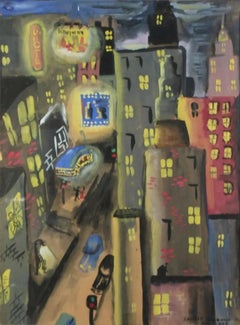
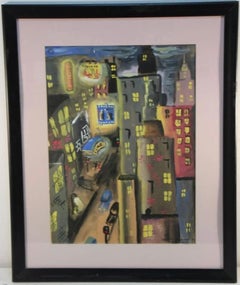
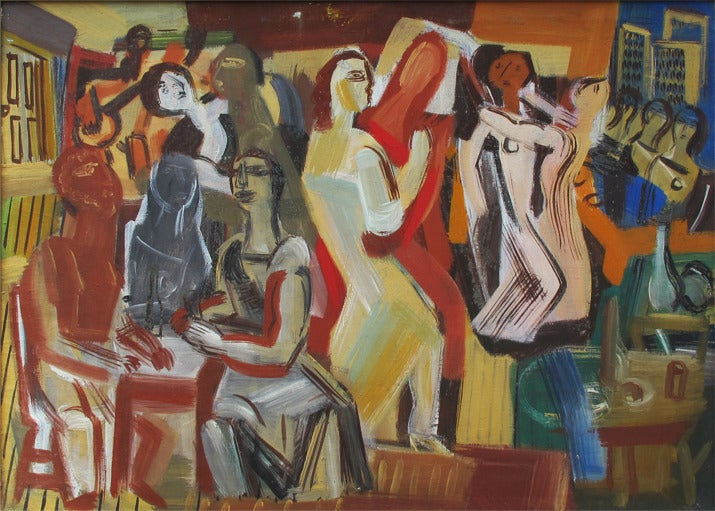
"Manhattan Night Life"

"Manhattan Night Life"

By Vaclav Vytlacil

Located in Lambertville, NJ

Jim’s of Lambertville is proud to offer this artwork by: Vaclav Vytlacil (1892-1984) He was born to Czechoslovakian parents in 1892 in New York City. Living in Chicago as a youth, he took classes at the School of the Art Institute of Chicago, returning to New York when he was 20. From 1913 to 1916, he enjoyed a scholarship from the Art Students League, and worked with John C. Johansen (a portraitist whose expressive style resembled that of John Singer Sargent), and Anders Zorn. He accepted a teaching position at the Minneapolis School of Art in 1916, remaining there until 1921. This enabled him to travel to Europe to study Cézanne’s paintings and works of the Old Masters. He traveled to Paris, Prague, Dresden, Berlin, and Munich seeking the works of Titian, Cranach, Rembrandt, Veronese, and Holbein, which gave him new perspective. Vytlacil studied at the Royal Academy of Art in Munich, settling there in 1921. Fellow students were Ernest Thurn and Worth Ryder, who introduced him to famous abstractionist Hans Hofmann. He worked with Hofmann from about 1922 to 1926, as a student and teaching assistant. During the summer of 1928, after returning to the United States, Vytlacil gave lectures at the University of California, Berkeley, on modern European art. Soon thereafter, he became a member of the Art Students League faculty. After one year, he returned to Europe and successfully persuaded Hofmann to teach at the League as well. He spent about six years in Europe, studying the works of Matisse, Picasso, and Dufy. In 1935, he returned to New York and became a co-founder of the American Abstract Artists group in 1936. He later had teaching posts at Queens College in New York; the College of Arts and Crafts in Oakland, California; Black Mountain College in North Carolina; and the Art Students League. His paintings exhibit a clear inclination toward modernism. His still lives and interiors from the 1920s indicate an understanding of the art of Cézanne. In the 1930s, his works displayed two very different kinds of art at the same time. His cityscapes and landscapes combine Cubist-inspired spatial concerns with an expressionistic approach to line and color. Vytlacil also used old wood, metal, cork, and string in constructions, influenced by his friend and former student, Rupert Turnbull. He eventually ceased creating constructions as he considered them too limiting. The spatial challenges of painting were still his preference. During the 1940s and 1950s, his works indicated a sense of spontaneity not felt in his earlier work. He married Elizabeth Foster in Florence, Italy, in 1927 and they lived and worked in Positano, Italy for extended periods of time. Later on, they divided their time between homes in Sparkill, New York and Chilmark, Massachusetts, where Vyt, as he was affectionately called, taught at the Martha's Vineyard Art...

Category

Abstract Expressionist 1930s Art

Materials

Canvas, Oil

Industrial Mural Study, Veterans Memorial Building, Santa Barbara WPA American

Industrial Mural Study, Veterans Memorial Building, Santa Barbara WPA American

Located in New York, NY

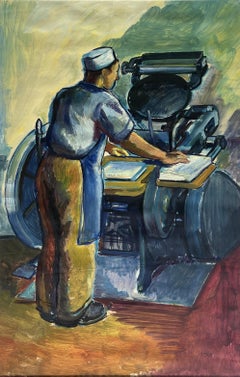
Industrial Mural Study, Veterans Memorial Building, Santa Barbara WPA American Joseph Edward Knowles (1907-1980) "Study for Industry Mural, Veterans Memorial Building, Santa Barbara, CA" 19 1/2 x 50 1/2 inches Oil on board, c. 1930s. Estate stamp verso Framed: 27 x 60 inches The completed mural is currently hanging on the wall, part of the building actually, at the Veterans Memorial Building in Santa Barbara. A photo of the work insitu is included in the attached photos. BIO Joseph Edward Knowles was born in Kendall, Montana, on June 15, 1907. He grew up in San Diego, California. At age twenty, two years before the beginning of the Great Depression, he moved north to another town on the coast of California---Santa Barbara. There he began studying fine art at the Santa Barbara School of the Arts* (1927-1930), under the supervision of Frank Morley Fletcher, previously director of the Edinburgh College of Art. Fletcher, who was trained in portraiture, landscape painting, and woodblock* printing, was a great influence on young Knowles. It was there that Knowles learned the art of color woodblock printmaking, a medium in which he showed great skill. Not long after completing his studies with Fletcher, Knowles began teaching art. For a period of thirty years, from 1930 to1960, he taught at the Cate School in Carpinteria, California. In 1934-1935, Knowles traveled throughout Europe, further developing his artistic skills in England, France, and Italy. Upon his return, he continued to teach art at various schools and institutions: Cate School, Crane Country School, extension classes at the University of California at Santa Barbara (UCSB), and at the Santa Barbara Museum of Art (SBMA). Knowles also served as an art education consultant for the County of Santa Barbara. In addition, he was founding co-director and president of the Santa Barbara Fine Arts Institute (1969-1972), which later developed a specialization in photography and became the Brooks Institute of Photography. Knowles died at his home in Santa Barbara on September 8, 1980. Much of Knowles' watercolor work is associated with what has been termed the "California School*," a loose grouping of artists throughout the state that included such figures as Millard Sheets, Phil Dike, Dong Kingman, George Post, and the Santa Barbara painters Dan Lutz and Standish Backus, Jr. The California School artists, including Knowles, were known for their fresh, direct, spontaneous style of watercolor painting. Knowles and other members of the school found inspiration in nature and the built environment alike, emphasizing elements of design in their exuberant, boldly stated, colorful scenes from everyday life. While painting in a representational* manner, Knowles generally avoided photographic realism, preferring subjective interpretation of his subjects. In this, as well as in his experimental approach and vigorous brushwork, he displayed a strongly modern sensibility. Knowles often used the wet-on-wet watercolor technique as he painted seascapes and landscapes, mostly along the California coast. He also employed dry-brush* techniques in many of his paintings, often leaving some of the white of the watercolor paper exposed. Some of the latter depict trees and other forms in a broken and airy manner that recalls Cezanne. Knowles' colored woodblock prints are more reserved and exact in their draftsmanship than his paintings. Spare, clean, lyrical lines are drawn to illustrate floral motifs and boat scenes with a touch of asymmetry conjuring Japanese woodblock prints. His murals from the post-World War II period are considerably more modern in their approach and show an emphasis on design and color. PROFESSIONAL ORGANIZATIONS California Watercolor Society (1940 - 1955) Santa Barbara Art Association (Vice President - 1952) ONE-MAN EXHIBITIONS Golden Gate International Exposition (GGIE) - San Francisco, California San Diego Fine Arts Gallery (SDMA) - San Diego, California Santa Barbara Museum of Art (SBMA) - Santa Barbara, California Cowie Galleries - Los Angeles, California Gallery de Silva - Santa Barbara, California Bradley Galleries - Santa Barbara, California MURALS Westmont College - Ellen Porter Hall Mural - Santa Barbara, California Safeway Grocery (now Vons Grocery on West Victoria Street) - Exterior Tile Mosaic - Santa Barbara, California Santa Barbara Bank & Trust - Interior Mosaic Panels, Santa Barbara, California Santa Barbara Girls Club - Interior Mosaic Mural - Santa Barbara, California Ernest Righetti High School - Mosaic Mural - Santa Maria, California Shell Oil Company - Mosaic Panel - California Beckman Instruments, Corporate Headquarters - Mosaic - Fullerton, California STAINED GLASS WINDOWS, WALLS and PANELS Katherine Thayer Cate Memorial Chapel - Cate School, Carpinteria, California William S. Porter Memorial Chapel - Cottage Hospital, Santa Barbara, California La Rinconada Building - Santa Barbara, California ILLUSTRATIONS "California's Wonderful Corner: True Stories for Children from the History of the Santa Barbara Region," by Walter A. Tompkins (1962 & 1975) China Designs: Two sets of dinnerware for Winfield China...

Category

American Realist 1930s Art

Materials

Oil, Board

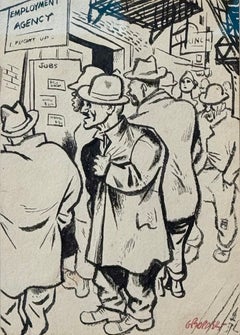
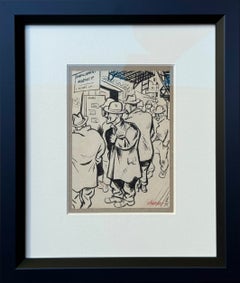
The Vera Stretz Murder Trial

The Vera Stretz Murder Trial

By William Sharp

Located in Fairlawn, OH

The Vera Stretz Murder Trial Lithograph, 1936 Signed in pencil lower right (see photo) Initialed W.S. in the image lower right (see photo) Dated in the image lower right (see photo) ...

Category

American Realist 1930s Art

Materials

Lithograph

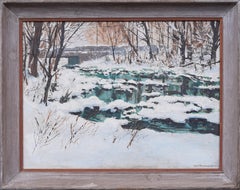
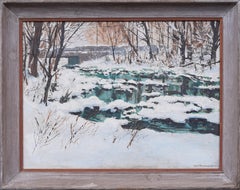
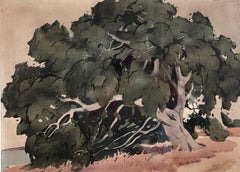
OLD TREE
OLD TREE

OLD TREE

By James Fitzgerald

Located in Portland, ME

Fitzgerald, James (1899-1971) OLD TREE. Cat Raisonne 1223. Watercolor on paper, c. 1930. Signed, lower left. 19 x 25 1/2 inches, framed to 27 5/8 x 33 1/4 inches. Provenance: Estate ...

Category

1930s Art

Materials

Watercolor

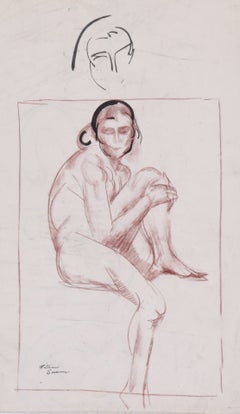
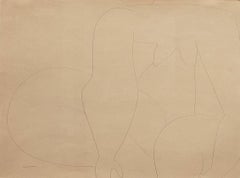
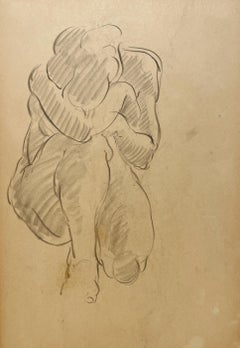
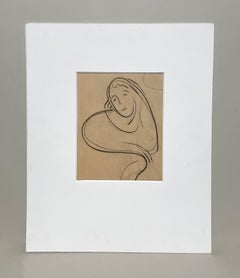
"Female Nude" Louise Nevelson, Modernist, Elegant Flowing Forms, Sweeping Line

"Female Nude" Louise Nevelson, Modernist, Elegant Flowing Forms, Sweeping Line

By Louise Nevelson

Located in New York, NY

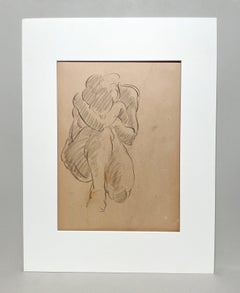
Louise Nevelson Female Nude, circa 1935 Pencil on paper 9 15/16 x 13 7/16 inches Provenance The artist Estate of the artist Bobbie Greenfield Gallery, Santa Monica, California Priva...

Category

American Modern 1930s Art

Materials

Paper, Pencil

'Art Deco Greta Garbo' Giant Oversize print

'Art Deco Greta Garbo' Giant Oversize print

Located in London, GB

'Art Deco Greta Garbo' Greta Garbo in 'Mata Hari,' 1931. (Photo: Clarence Sinclair Bull) Beautiful mint condition Giant Archival Pigment print measuring a very large 60 x 40 inches / 152 x 101 cm's Edge Prints...

Category

Modern 1930s Art

Materials

Black and White, Archival Pigment

Woman and dogs in summer - 1930s

Woman and dogs in summer - 1930s

By Heinz Pollmann

Located in Cologne, DE

Germany, Summer 1936 – Photograph by Heinz Pollmann In this idyllic lakeside moment, captured by Heinz Pollmann in the summer of 1936, a young woman lies on the sand beside a sleek p...

Category

Modern 1930s Art

Materials

Black and White

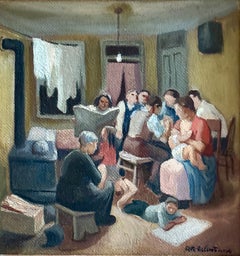
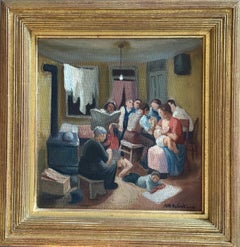
"Idle Hours" WPA Mid 20th Century American Scene Social Realism Modernism Ashcan

"Idle Hours" WPA Mid 20th Century American Scene Social Realism Modernism Ashcan

By Daniel Ralph Celentano

Located in New York, NY

"Idle Hours" WPA Mid 20th Century American Scene Social Realism Modernism Ashcan Daniel Celentano (1902–1980) Idle Hours (Study for a larger oil) Oil on masonite, c. 1930s 10 1/2 x ...

Category

American Realist 1930s Art

Materials

Oil, Masonite

Piazzetta, Venice
Piazzetta, Venice

Piazzetta, Venice

By Jan C. Vondrous

Located in Myrtle Beach, SC

Jan Charles Vondrous, 'Piazzetta, Venice', color etching, 1930. Signed, dated, and titled in pencil. Signed and dated in the plate, lower right. A fine impression, on cream, laid pap...

Category

Impressionist 1930s Art

Materials

Etching

1939 Cheret 'Exposition de l'Affiche en couleurs de Cheret a nos jours' Art Book

1939 Cheret 'Exposition de l'Affiche en couleurs de Cheret a nos jours' Art Book

Located in Brooklyn, NY

Exposition de l’Affiche en Couleurs de Chéret à Nos Jours (July-August 1939), published by the Conservatoire National des Arts et Métiers, is a catalog from the renowned exhibition t...

Category

Art Nouveau 1930s Art

Materials

Lithograph

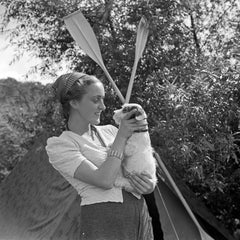
Woman and dog in summer - 1930s

Woman and dog in summer - 1930s

By Heinz Pollmann

Located in Cologne, DE

Germany, Summer 1936 – Photograph by Heinz Pollmann In this warm and intimate outdoor portrait by Heinz Pollmann, a young woman stands in front of a canvas tent, cradling her Fox Ter...

Category

Modern 1930s Art

Materials

Black and White

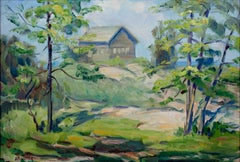
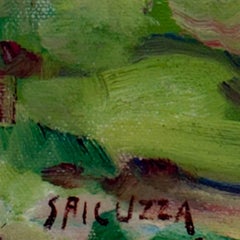
"Cabin on Lake Michigan Shore, " Oil on Board signed by Francesco Spicuzza

"Cabin on Lake Michigan Shore, " Oil on Board signed by Francesco Spicuzza

By Francesco Spicuzza

Located in Milwaukee, WI

"Cabin on Lake Michigan Shore" is an original oil painting on board by Francesco Spicuzza. The artist signed the piece in the lower left. It depicts a small cabin on the lakeshore surrounded by bright vegetation. 14" x 20" art 22 3/4" x 29" frame Francesco J. Spicuzza, born in Sicily on July 23, 1883, came to America at the age of 8. He supported himself as a fruit peddler until a newspaperman gave him $4 a week to go to school. He attended classes at the Milwaukee Art Students League, where he studied under Alexander Mueller. There he learned to paint in the then-fashionable "Munich School" technique, with detailed realism in heavy browns and grayed-out hues. Spicuzza completed eight grades in four years, and then in 1911, three businessmen advanced him enough money to allow him to study in New York under artist and teacher John Carlson. It was during this time that Spicuzza changed his style of painting, developing an impressionistic use of color, form and atmospheric renditions. After a period of grinding poverty, one of Spicuzza's pictures won a major New York competition. It was the first of 60 wins, both in the U.S. and Paris. He became a fashionable painter, and many of the leading collections have his work. Spicuzza's typical works were beach scenes, still life, landscapes and portraits done in pastels, oils, ink, charcoal and watercolors. Much of his work traced the history of Milwaukee in the early 1900s. He was probably best known for his scenes of women and children splashing in the waves...

Category

1930s Art

Materials

Oil, Board

Gathering Vraic on a Jersey Shore.

Gathering Vraic on a Jersey Shore.

By Edmund Blampied

Located in Plano, TX

Gathering Vraic on a Jersey Shore. c. 1937. Ink and watercolor on 'Castle Linen Tolli & Harvey LD London' countermarked paper. 7 1/8 x 13 1/2 (sheet 12 1/2 x 16 1/4). Good condition, apart from small professionally repaired paper losses at the corners, from previous hinges. Dedicated 'To my friend Harold James Bailey E.B.' and annotated 'To wish you a glad glow of happiness for Christmas and the New Year'. From the collection of the famous Blampied scholar and collector, Harold J. Bailey, who wrote an article, 'Edmund Blampied: Artist and Philosopher' in the Print Collector's Quarterly 24 (1937). Housed in a 15 1/2 x 21 1/2-inch Whistler style gold wood frame. In the left rear section is a Martello or Conway tower, built as a fortiffiction. A Jersey Round Tower Coastal towers stand all along the coast of the island. The British built 22 round towers, one similar square tower, and eight Martello towers towards the end of the 18th Century and in the early to mid-19th Century, but now only 24 remain, including seven of the Martellos. Vraic is a seaweed found in the Channel Islands. The main use of vraic is for spreading over potato fields during the winter. It is then ploughed into the soil before the potatoes are planted in late winter and spring. Vraic was traditionally gathered by horse and cart in Grouville Bay and St Ouen's Bay, and in smaller quantities at Le Hocq and Havre des Pas. The practice continues using...

Category

Modern 1930s Art

Materials

Ink, Watercolor

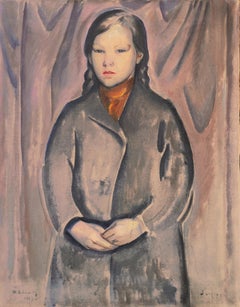
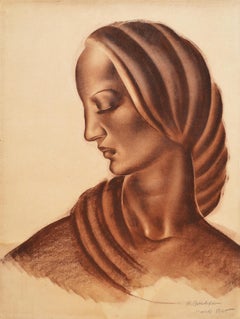
Portrait of a Lady, Charcoal Drawing, 20th Century Russian

Portrait of a Lady, Charcoal Drawing, 20th Century Russian

Located in London, GB

Charcoal , signed lower right and dated 'Paris 1935' Image size: 25 x 19 inches (63.5 x 48 cm) Original oak frame An accomplished example of Russian art from the mid 20th century. ...

Category

Art Deco 1930s Art

Materials

Charcoal, Paper

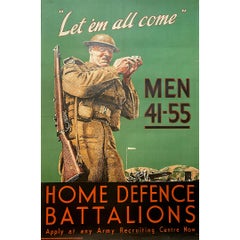
1939 Original poster - Home Defence Battalions - WWII

1939 Original poster - Home Defence Battalions - WWII

Located in PARIS, FR

A splendid, historic poster! It was 1939 when this poster was made. All the major British soldiers had gone abroad to fight, and there were no soldiers left to defend the country. So the country called on all those too old for the army and teenagers aged 14 and over to join the home front. The Home Service Battalions were a force of the British Army during the First and Second World Wars, intended for national defense and other tasks. Those who joined these battalions were exempt from service outside the UK. War - United Kingdom - 39-45 Men 41...

Category

1930s Art

Materials

Linen, Paper, Lithograph

20th Century French Impressionist town scene

20th Century French Impressionist town scene

Located in Woodbury, CT

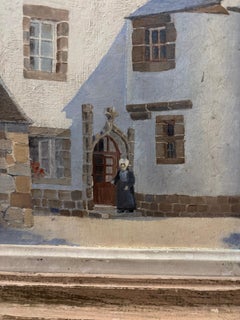
This charming composition by Harold Fletcher Trew captures the quiet dignity of an old European street, rendered with his characteristic clarity of line and subtle tonal palette. A t...

Category

Impressionist 1930s Art

Materials

Oil, Board

North on West Street (West Side Highway NYC Cityscape)

North on West Street (West Side Highway NYC Cityscape)

By De Hirsch Margules

Located in Wilton Manors, FL

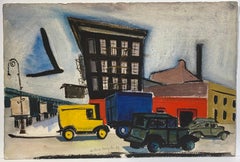
De Hirsh Margules (1899-1965). North on West Street , 1939. Watercolor on Arches wove paper. Signed and dated in pencil by artist lower margin. Sheet measures 15 x 22 inches. Framed measurement: 27 x 34 inched. Incredibly vibrant and saturated color with no fading or toning of sheet. Provenance: Babcock Galleries, NYC De Hirsh Margules (1899–1965) was a Romanian-American "abstract realist" painter who crossed paths with many major American artistic and intellectual figures of the first half of the 20th century. Elaine de Kooning said that he was "[w]idely recognized as one of the most gifted and erudite watercolorists in the country". The New York Times critic Howard Devree stated in 1938 that "Margules uses color in a breath-taking manner. A keen observer, he eliminates scrupulously without distortion of his material." Devree later called Margules "one of our most daring experimentalists in the medium" Margules was also a well-known participant in the bohemian culture of New York City's Greenwich Village, where he was widely known as the "Baron" of Greenwich Village.[1] The New York Times described him as "one of Greenwich Village's best-known personalities" and "one of the best known and most buoyant characters about Greenwich Village. Early Life De Hirsh Margules was born in 1899 in the Romanian city of Iași (also known as Iasse, Jassy, or Jasse). When Margules was 10 weeks old, his family immigrated to New York City. Both of his parents were active in the Yiddish theater, His father was Yekutiel "Edward" Margules, a "renowned Jewish actor-impresario and founder of the Yiddish stage." Margules' mother, Rosa, thirty-nine years younger than his father, was an actress in the Yiddish theater and later in vaudeville. Although Margules appeared as a child actor with the Adler Family[11] and Bertha Kalich, his sister, Annette Margules, somewhat dubiously continued in family theater and vaudeville tradition, creating the blackface role of the lightly-clad Tondelayo (a part later played on film Hedy Lamarr) in Earl Carroll's 1924 Broadway exoticist hit, White Cargo. Annette herself faced stereotyping as an exotic flower: writing about her publicist Charles Bouchert stated that "Romania produces a stormy, temperamental type of woman---a type admirably fitted to portray emotion." His brother Samuel became a noted magician who appeared under the name "Rami-Sami." Samuel later became a lawyer, representing magician Horace Goldin, among others. A family portrait including a young De Hirsh, a portrait of Rosa and Annette together, and individual photos of Rosa and Edward can be found on the Museum of the City of New York website. At around age 9 or 10, Margules took art classes with the Boys Club on East Tenth Street, and his first taste of exhibition was at a student art show presented by the club. By age 11, he had won a city-wide prize (a box camera) at a children's art show presented by the department store Wanamakers. As a young teenager, Margules was already displaying a characteristic kindness and loyalty. Upon hearing that two friends (one of them was author Alexander King), were in trouble for breaking a school microscope, the nearly broke Margules gave them five dollars to repair the microscope . Margules had to approach a wealthy man that Margules had once saved on the subway from a heart attack. Margules didn't reveal the source of the five dollars to King until twenty-five years later. In his late teens, Margules studied for a couple of months in Pittsburgh with Edwin Randby, a follower of Western painter Frederic Remington. Thereafter he pursued a two-year course of studies in architecture, design and decoration at the New York Evening School of Art and Design, while working as a clerk during the day at Stern's Department Store. He was encouraged in these artistic pursuits by his neighbor, the painter Benno Greenstein (who later went by the name of Benjamin Benno). Artistic career In 1922, Margules began work as a police reporter for the City News Association of New York .Margules then considered himself something of an expert on art, and the painter Myron Lechay is said to have responded to some unsolicited analysis of his work with the remark "Since you seem to know so much about it, why don't you paint yourself?" This led to study with Lechay and a flurry of painting. Margules' first show was in 1922 at Jane Heap's Little Review Gallery. Thereafter Margules began to participate in shows with a group including Stuart Davis, Jan Matulka, Buckminster Fuller (exhibiting depictions of his "Dymaxion house") in a gallery run by art-lover and restaurateur Romany Marie on the floor above her cafe. Jane Heap, left, with Mina Loy and Ezra Pound During the 1920s, Margules traveled outside of the country a number of times. In 1922, with the intent of reaching Bali, he took a job as a "'wiper on a tramp steamer where [he] played nursemaid to the engine." He reached Rotterdam before he turned back. He would return to Rotterdam shortly thereafter. In 1927, Margules took a lengthy leave of absence from his day job as a police reporter in order to travel to Paris, where he "set up a studio in Montmartre's Place du Tertre, on the top floor of an almost deserted hotel, a shabby establishment, lacking both heat and running water." He studied at the Louvre and traveled to paint landscapes in provincial France and North Africa. Margules also joined the "Noctambulist" movement and experimented with painting and showing his artwork in low light.Jonathan Cott wrote that: the painter De Hirsch Margulies sat on the quays of the Seine and painted pictures in the dark. In fact, the first exhibition of these paintings, which could be seen only in a darkened room, took place in [ Walter Lowenfels'] Paris apartment. Elaine de Kooning remarked that studying the works of the Noctambulists confirmed Margules' "direction toward the use of primary colors for perverse effects of heavy shadow." It was also in Paris that Margules initially conceived his idea of "Time Painting", where a painting is divided into sectors, each representing a different time of day, with color choices meant to evoke that time of day. In Paris, his social circle included Lowenfels, photographer Berenice Abbott, publisher Jane Heap, composer George Anthiel, sculptor Thelma Wood, painter André Favory, writer Norman Douglas, writer and editor George Davis, composer and writer Max Ewing, and writer Michael Fraenkel. Upon his return to New York in 1929, Margules attended an exhibition of John Marin's paintings. While at the exhibition, he "launched into an eloquent explanation of Marin to two nearby women", and was overheard by an impressed Alfred Stieglitz. The famous photographer and art promoter invited Margules to dine with his wife, the artist Georgia O'Keeffe, and his assistant, painter Emil Zoler. Stieglitz thereafter became a friend and mentor to Margules, becoming for him "what Socrates was to his friends." Alfred Stieglitz Stieglitz introduced Margules to John Marin, who quickly became the most important painterly influence upon Margules. Elaine de Kooning later noted that Margules was "indebted to Marin and through Marin to Cézanne for his initial conceptual approach - for his constructions of scenes with no negative elements, for skies that loom with the impact of mountains." Margules himself said that Marin was his "father and ... academy." The admiration was by no means unreciprocated: Marin said that Margules was "an art lover with abounding faith and sincerity, with much intelligence and quick seeing." Stieglitz also introduced Margules to many other artistic and intellectual figures in New York. With the encouragement of Alfred Stieglitz, Margules in 1936 opened a two-room gallery at 43 West 8th Street called "Another Place." Over the following two years there were fourteen solo exhibitions by Margules and others, and the gallery was well-respected by the press. It was in this gallery that the painter James Lechay, Myron's brother, exhibited his first painting. In 1936, Margules first saw recognition by major art museums when both the Museum of Modern Art and the Museum of Fine Arts, Boston purchased his works. In 1942, Margules gave up working as a police reporter, and apparently dedicated himself thereafter solely to an artistic vocation. "The Baron of Greenwich Village"[edit] Margules made his mark not only as an artist, but also as an outsized personality known throughout Greenwich Village and beyond. To local residents, Margules was known as the "Baron", after Baron Maurice de Hirsch, a prominent German Jewish philanthropist. Margules was easily recognizable by the beret he routinely wore over his long hair. Writer Charles Norman said that he "dressed with a flair for sloppiness." He was said to "know everybody" in Greenwich Village, to the extent that when the novelist and poet Maxwell Bodenheim was murdered, Margules was the first one the police sought to identify the body. Margules' letters show him interacting with art world figures such as Sacha Kolin, John Marin and Alfred Stieglitz, as well as with prominent figures outside the art world such as polymath Buckminster Fuller and writer Henry Miller. Most of his friends and acquaintances found Margules a generous and voluble man, given to broadly emotionally expressive gestures and acts of kindness and loyalty. In 1929, he exhibited an example of this loyalty and fellow-feeling when he appeared in court to fight what the wrongful commitment of his friend, writer and sculptor Alfred Dreyfuss, who appeared to have been a victim of an illicit attempt to block an inheritance. The Greenwich Village chronicler Charles Norman described the bone-crushing hugs that Margules would routinely bestow on his friends and acquaintances, and speaks of the "persuasive theatricality" that Margules seemed to have inherited from his actor parents. Norman also wrote about Margules' routine acts of kindness, taking in homeless artists, constantly feeding his friends and providing the salvatory loan where needed. Norman also notes that Margules was blessed with a loud and good voice, and was apt to sing an operatic air without provocation. The writer and television personality Alexander King said I think the outstanding characteristics of my friend's personality are affirmation, emphasis, and overemphasis. He chooses to express himself predominantly in superlatives and the gestures which accompany his utterances are sometimes dangerous to life and limb. Of the bystanders, I mean. King also spoke with affectionate amusement about Margules' pride in his cooking, speaking of how "if he should ever invite you to dinner, he may serve you a hamburger with onions, in his kitchen-living room, with such an air of gastronomic protocol, such mysterious hints and ogliing innuendoes, as if César Ritz and Brillat-Savarin had sneaked out, only a moment before, with his secret recipe in their pockets." Margules was such a memorable New York personality that comic book writer Alvin Schwartz imagined him at the Sixth Avenue Cafeteria in a risible yet poignant debate with Clark Kent about whether Superman had the ability to stop Hitler. Margules' entrenchment in the Greenwich Village milieu can be seen in a photograph from Fred McDarrah's "Beat Generation Album" of a January 13, 1961 writers' and poets' meeting to discuss "The Funeral of the Beat Generation", in Robert Cordier [fr]'s railroad flat at 85 Christopher Street. Among the people in the same photograph are Shel Silverstein...

Category

American Modern 1930s Art

Materials

Watercolor, Rag Paper

"Original set illustration from "Gone With The Wind" Tyrus Wong, Hollywood, Film

"Original set illustration from "Gone With The Wind" Tyrus Wong, Hollywood, Film

Located in New York, NY

Tyrus Wong Original set illustration from "Gone With The Wind", 1939 Signed lower right Oil on panel 6 x 8 3/4 inches Tyrus Wong’s life embodies a remarkable journey of perseverance, talent, and artistic achievement. Born in China, he immigrated to the United States at the age of nine after being separated from his mother, whom he would never see again. Reunited with his father in Sacramento, Wong later relocated to Los Angeles, where the two lived in modest circumstances within a boarding house in Chinatown. His father nurtured his artistic abilities by encouraging him to practice Chinese calligraphy and helping him secure small painting jobs in the neighborhood. Recognizing his exceptional talent, one of Wong’s teachers recommended him for a summer scholarship at the Otis Art Institute. He became the youngest recipient of the award and later earned a full scholarship, offsetting tuition costs through work performed on campus. After completing his studies in 1930, Wong supported himself through a variety of artistic jobs, including creating advertisements and working at the popular Dragon’s Den restaurant in Chinatown. During the Great Depression, he found employment through the Federal Art Project, producing paintings for government-sponsored programs. His career took a pivotal turn when he joined Walt Disney Studios. There, his atmospheric pastel studies for Bambi impressed Walt Disney and helped shape the film’s distinctive visual style. Wong’s contributions to the film’s backgrounds were instrumental to its success, earning him posthumous recognition as a Disney Legend in 2001. Following labor disputes at Disney, he left the studio before Bambi was released and continued his career at Warner Bros. and Republic Studios, creating concept art for films including Rebel Without a Cause, Around the World in 80 Days, Sands of Iwo Jima, and The Wild Bunch. He retired from the film industry in 1968. Alongside his Hollywood career, Wong remained deeply involved in Southern California’s art community. He exhibited regularly in galleries and museums and participated in artist-run initiatives such as Eleven Associated, a cooperative gallery active during the early 1950s. Best known for his watercolor paintings and ceramics, Wong developed a unique artistic language that blended traditional Chinese brush techniques with modern American aesthetics. Influenced by his teacher Stanton Macdonald-Wright, he combined expressive calligraphic brushwork with depictions of nature and movement. His artistic versatility extended beyond fine art into commercial design, where he created popular Christmas card imagery and dinnerware patterns for Winfield Pottery...
Category

Academic 1930s Art

Materials

Oil, Panel