Want more images or videos?
Request additional images or videos from the seller
1 of 7
UnknownChicken and Hens - Original Lithograph - Late 19th Century1890s
1890s
Price:$358.99
About the Item
- Creation Year:1890s
- Dimensions:Height: 9.53 in (24.2 cm)Width: 11.82 in (30 cm)Depth: 0.08 in (2 mm)
- Medium:
- Period:
- Condition:Insurance may be requested by customers as additional service, contact us for more information.
- Gallery Location:Roma, IT
- Reference Number:Seller: M-1068991stDibs: LU65036345452
About the Seller
4.9
Platinum Seller
Premium sellers with a 4.7+ rating and 24-hour response times
1stDibs seller since 2017
7,851 sales on 1stDibs
Typical response time: 1 hour
Authenticity Guarantee
In the unlikely event there’s an issue with an item’s authenticity, contact us within 1 year for a full refund. DetailsMoney-Back Guarantee
If your item is not as described, is damaged in transit, or does not arrive, contact us within 7 days for a full refund. Details24-Hour Cancellation
You have a 24-hour grace period in which to reconsider your purchase, with no questions asked.Vetted Professional Sellers
Our world-class sellers must adhere to strict standards for service and quality, maintaining the integrity of our listings.Price-Match Guarantee
If you find that a seller listed the same item for a lower price elsewhere, we’ll match it.Trusted Global Delivery
Our best-in-class carrier network provides specialized shipping options worldwide, including custom delivery.You May Also Like
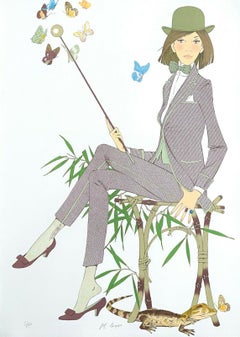
The Crocodile, Philippe Henri Noyer
By Philippe Henri Noyer
Located in Fairfield, CT
Artist: Philippe Noyer (1917-1985)
Title: The Crocodile
Year: circa 1969
Medium: Lithograph on Arches paper
Edition: 111/220, plus proofs
Size: 29.75 x 22 inches
Condition: Good
Insc...
Category
1960s Impressionist Animal Prints
Materials
Lithograph
$1,276 Sale Price
20% Off
H 29.75 in W 22 in
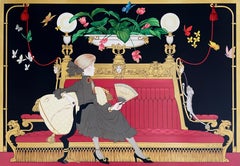
Femme a L'Eventail, Philippe Henri Noyer
By Philippe Henri Noyer
Located in Fairfield, CT
Artist: Philippe Noyer (1917-1985)
Title: Femme a L'Eventail
Year: circa 1969
Medium: Lithograph on Arches paper
Edition: 25/50 E.A., 375, plus proofs
Size: 29 x 41.75 inches
Conditi...
Category
1960s Impressionist Animal Prints
Materials
Lithograph
$1,276 Sale Price
20% Off
H 29 in W 41.75 in
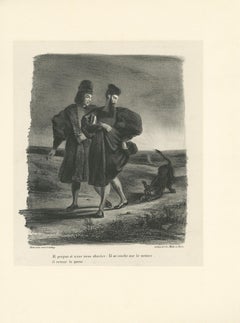
Faust, Méphistophélès et le Barbet / Faust, Méphistophélès and the Water Spaniel
By Eugène Delacroix
Located in Middletown, NY
Lithograph on Chine appliqué, 9 1/4 x 8 1/8 inches (235 x 206 mm), full margins. First state (of 4). Extremely minor uniform age tone, otherwise in good condition. A superb, richly-inked impression.
[Delteil 61.1]
______
At an early age Delacroix became a lover of music and literature and had been drawing from the time he entered school. He expected painting would be a hobby, but on the death of his father he found he had to make his own way in life. In 1817 he entered the studio of Pierre-Narcisse Guerin; amongst his fellow pupils was Gericault. His first exhibited work was Dante and Virgil...
Category
Early 19th Century Barbizon School Figurative Prints
Materials
Handmade Paper, Lithograph
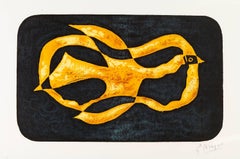
After Georges Braque - Antiborée - Lithograph
Located in Collonge Bellerive, Geneve, CH
Lithograph after Georges Braque.
Signed in the plate
Edition of 150
Dimensions: 76 x 117 cm
Bibliography:
« Les Métamorphoses de Braque» of Heger de Loewenfeld and Raphaël de Cuttoli , Editions FAC, Paris, 1989.
In 1961 Georges Braque decided with his laidary friend Heger de Loewenfeld to pick up certain of his works to in order to create artworks, this beautiful litograph is one of them.
Héméra in the Mythology:
In Greek mythology Hemera was the personification of day and one of the Greek primordial deities. She is the goddess of the daytime and, according to Hesiod, the daughter of Erebus and Nyx (the goddess of night). Hemera is remarked upon in Cicero's De Natura Deorum, where it is logically determined that Dies (Hemera) must be a god, if Uranus is a god. The poet Bacchylides states that Nyx and Chronos are the parents, but Hyginus in his preface to the Fabulae mentions Chaos as the mother/father and Nyx as her sister.
She was the female counterpart of her brother and consort, Aether (Light), but neither of them figured actively in myth or cult. Hyginus lists their children as Uranus, Gaia, and Thalassa (the primordial sea goddess), while Hesiod only lists Thalassa as their child.
The father of Cubism
Three Cubist that distinguishes art historian periods were initiated and developed by Georges Braque: The Cubist Cézanne (1907-1909), Executive (1909-1912) and synthetic (1912-1922).
Post-Impressionist and fawn, Braque no longer adheres to the contingency of a decorative way or the other. Cézanne’s paintings exhibited at the Grand Palais during the retrospective of 1907 are a revelation: Cézanne sought and invented a pictorial language. In his footsteps, Braque went to the South with the reasons of the Master. He returned with Estaque landscapes and surprising Ciotat it keeps Cezanne geometric model and retains the “passages” continuity from one surface to another to create the sensation of “turning around” of the object represented. But he wants to go after the consequences of the vision of Cezanne. In his paintings Houses in L’Estaque (1908) it simplifies the volumes of houses, neglects detail by removing doors and windows: the plastic rhythm that builds the table. Large Nude , a masterpiece of the period, can be considered the first work of Cézanne cubism .
Systematizing and deepening Braque discoveries open the door analytical cubism. In 1909, his painting became more cerebral than sensual. The pattern is recreated in the two-dimensionality of the canvas, leaving aside any illusionistic perspective. In Still Life with Violin, objects are analyzed facets according to their characteristic elements, each facet referring to a particular view of the object. There are so many facets of points selected view: Table reflects the knowledge of the object and the ubiquity of the eye. Moreover, Braque is looking for the essence of the objects in the world rather than their contingency, which explains the absence of light source and use of muted colors (gray, ocher), contingent aspects of the object . But formal logic has stepped facets, erased any anecdote to the object and ultimately led to his painting a hermetic more marked on the edge of abstraction (see the series of Castle Roche-Guyon ).
Braque, anxious to keep the concrete and refusing at all costs that the logic of Cubism takes the paintings to abstract, reintroduced signs of reality in his paintings in 1912 marks the beginning of Synthetic Cubism. Historians speak of “signs of real” rather than reality because what interests Braque, this is not to put reality into a table, but to create a painting which, by its language, refers to the real. To do this, he invented two major techniques XX th century inclusions and contributions. The inclusions consist of painting objects that have no real depth, materials (wallpaper in Nature morte aux playing cards faux wood is a pictorial inclusion) or letters (calligraphic inclusion in Portuguese ), made first brush and a few months later stencil. Contributions are defined in contrast with the collage on canvas of foreign materials: glued or sand paper, sawdust, etc.. Regarding the collages, Braque used for the first time in September 1912 a piece of adhesive paper imitating faux wood Compote...
Category
1950s Cubist Animal Prints
Materials
Lithograph
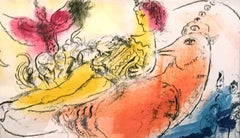
Marc Chagall The Accordionist
By Marc Chagall
Located in Washington, DC
Artist: Marc Chagall
Title: The Accordionist (Derriere le Miroir 99-100)
Portfolio: Derriere le Miroir
Medium: Original Lithograph
Date: 1957
Edition: 2500...
Category
1950s Animal Prints
Materials
Lithograph
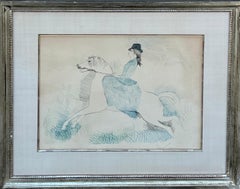
Lithograph Lady Rider Woman on a Horse Marie Laurencin French Post Impressionist
By Marie Laurencin
Located in Surfside, FL
Marie Laurencin (French, 1883-1956)
Lithograph of a colored pencil drawing depicting a woman wearing a hat and riding horseback side saddle,
Edition "37/115" to lower left and hand signed "Laurencin" in pencil to lower right, with a cloth mat and housed in a silvered wood frame.
Dimensions: Image, 12" H x 16" W; frame, 19.75" H x 23.5" W x 1.5" D.
Marie Laurencin (1883 – 1956) was a French painter and printmaker. She became an important figure in the Parisian avant-garde as a member of the Cubists associated with the Section d'Or.
Laurencin was born in Paris, where she was raised by her mother and lived much of her life. At 18, she studied porcelain painting in Sèvres. She then returned to Paris and continued her art education at the Académie Humbert, where she changed her focus to oil painting.
During the early years of the 20th century, Laurencin was an important figure in the Parisian avant-garde. A member of both the circle of Pablo Picasso, and Cubists associated with the Section d'Or, such as Jean Metzinger, Albert Gleizes, Robert Delaunay, Henri le Fauconnier and Francis Picabia, exhibiting with them at the Salon des Indépendants (1910-1911) and the Salon d'Automne (1911-1912), and Galeries Dalmau (1912) at the first Cubist exhibition in Spain. She became romantically involved with the poet Guillaume Apollinaire, and has often been identified as his muse. In addition, Laurencin had important connections to the salon of the American expatriate and lesbian writer Natalie Clifford Barney. She had relationships with men and women, and her art reflected her life, her "balletic wraiths" and "sidesaddle Amazons" providing the art world with her brand of "queer femme with a Gallic twist."
Laurencin's oeuvre include painting, watercolor paintings, drawing, and prints. She is known as one of the few female Cubist painters, with Sonia Delaunay, Marie Vorobieff, and Franciska Clausen...
Category
Mid-20th Century Post-Impressionist Animal Prints
Materials
Lithograph
$1,800
H 19.75 in W 23.5 in
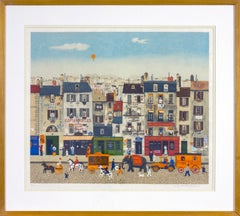
"Magic Circus" framed lithograph by Michel Delacroix hand signed and numbered
By Michel Delacroix
Located in Boca Raton, FL
"Magic Circus" lithograph by Michel Delacroix. Hand-signed MIchel Delacroix. Hand-numbered XX/C. Depicts a circus, complete with elephant and horses, traveling through a French city...
Category
20th Century Other Art Style Animal Prints
Materials
Lithograph
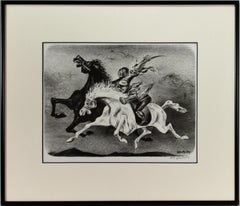
Horsemen
By William Gropper
Located in San Francisco, CA
This artwork titled "The Horsemen" 1935, is an original lithograph on paper by noted American artist William Gropper, 1897-1977. It is hand signed in pencil by the artist. The artwork (image) size is 9.5 x 12.75 inches, framed size is 17.5 x 20.40 inches. Published by Associated American Artists, New York, printed by George Miller. Referenced and pictured in the artist catalogue raisonne by Steinberg, page 246 and Windisch and Cole, plate #602. Custom framed in a black metal frame, with off white matting. It is in excellent condition, the frame have very minor scratches.
An example of this particular artwork is held at the Metropolitan Museum of Art, New York. and at the Portland Museum, Portland.
About the artist:
William Gropper was born in New York City's Lower East Side in 1897. He was the first of six children to parents who earned small wages working in sweatshops. At the age of fourteen, Gropper left school to help support his family. While carrying bolts of cloth for his deliveries, Gropper began to draw on scraps of paper, sidewalks, and walls. A passerby saw some of these drawings and invited Gropper to attend a life-drawing class at the Ferrer School. He studied there for three years from 1912 to 1915, attending classes taught by Robert Henri and George Bellows. From 1915 to 1918 Gropper attended the New York School of Fine and Applied Art part-time on scholarship. Gropper also won a scholarship to the National Academy of Design, but remained as a student for only a short time; the rigid and systematic institution conflicted with Gropper's belief in the personal nature of art.
At the New York School of Fine and Applied Art, Gropper earned several prizes. One of these prizes was for his cartoons, which led him to be hired by the New York Tribune in 1917 to sketch for their features. A few years later through freelance work, his cartoons and drawings appeared in other newspapers and magazines, such as The Liberator, The New Masses, The New York Post, The New Yorker and Vanity Fair.
By the late 1920s Gropper was an established cartoonist and draughtsman. He sympathized with the labor movement and was a champion of peace and personal liberty. Gropper began to paint seriously, but privately, on these themes in 1921. Gropper's first exhibition of monotypes was held in 1921 at the Washington Square Book Shop in New York. At this time, he also began to do illustrations for books. Gropper took his first sketching trip in 1924 to the West with Morris Pass.
By 1930 Gropper began to receive recognition as a fine artist. In 1934, he received two mural commissions from the Schenley Corporation in New York City. In 1935, he was commissioned to paint a mural for the Hotel Taft in New York City. In 1936, Gropper received several public mural commissions: one was for the Freeport, Long Island Post Office, which was completed in 1938 and followed by another mural for the Northwestern Postal Station, Detroit, Michigan.
In his first gallery exhibition in 1936 at ACA Galleries, Gropper's work was so well received by critics, collectors, and artists that the following year he had two one-man exhibitions at ACA Galleries. In 1937, Gropper traveled west on a Guggenheim Fellowship and visited the Dust Bowl and the Hoover and Grand Coulee Dams, sketching studies for a series of paintings and a mural he painted for the Department of the Interior in Washington, DC. That same year he had paintings purchased by both the Metropolitan Museum of Art and the Museum of Modern Art.
Gropper exhibited at the 1939 New York World's Fair, Whitney Museum of American Art (1924-55), Art Institute of Chicago (1935-49), Carnegie International (1937-50), Pennsylvania Academy of the Fine Arts (1939-48), and National Academy of Design (1945-48). He was a founder of the Artists Equity Association and member of the National Institute of Arts and Letters.
From 1940 to 1945 William Gropper was preoccupied with anti-Nazi cartoons...
Category
Mid-20th Century American Realist Figurative Prints
Materials
Lithograph
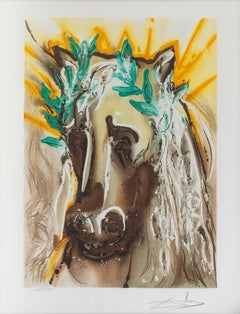
Le Cheval du Printemps, Signed Surrealist Lithograph by Salvador Dali
By Salvador Dalí
Located in Long Island City, NY
A close portrait of a horse wearing a laurel crown with the rays of the sun emanating from behind its head. The horse theme was frequently used by Dali throughout his career. The hor...
Category
1970s Surrealist Animal Prints
Materials
Lithograph
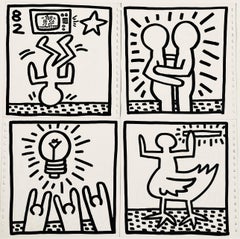
Keith Haring Tony Shafrazi 1982 (set of 4 printed works)
By (after) Keith Haring
Located in NEW YORK, NY
Keith Haring Tony Shafrazi 1982: set of 4 printed works:
A set of four double-sided lithographic inserts from the seminal, spiral bound 1982 Keith Haring Tony...
Category
1980s Pop Art Figurative Prints
Materials
Lithograph, Offset
More From This Seller
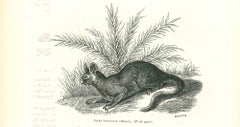
View AllThe Rabbit - Lithograph by Paul Gervais - 1854
By Paul Gervais
Located in Roma, IT
The Rabbit is a lithograph on ivory-colored paper, realized by Paul Gervais (1816-1879). The artwork is from The Series of "Les Trois Règnes de la Nature", and was published in 1854....
Category
1850s Modern Figurative Prints
Materials
Lithograph
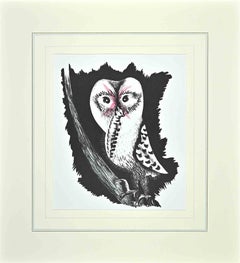
Owl - Original Lithograph By Jean Lurçat - 1948
By Jean Lurçat
Located in Roma, IT
Owl is an original artwork realized by the french artist Jean Lurçat (1892 Bruyeres - 1966 St.-Paul-de-Vence).
Lithograph print, belongs to the suite "Géographie Animale", publis...
Category
1940s Modern Figurative Prints
Materials
Lithograph
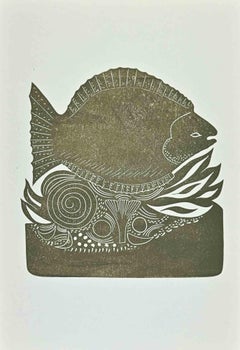
Fish - Original Lithograph By Jean Lurçat - Mid-20th Century
By Jean Lurçat
Located in Roma, IT
Fish is an original artwork realized by the french artist Jean Lurçat (1892 Bruyeres - 1966 St.-Paul-de-Vence)
Lithograph print, mid-20th century.
Very good conditions. Not sign...
Category
Mid-20th Century Modern Figurative Prints
Materials
Lithograph
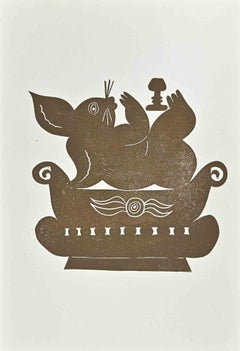
The Rabbit in Vase - Lithograph By Jean Lurçat - Mid-20th Century
By Jean Lurçat
Located in Roma, IT
The Rabbit in Vase is an original artwork realized by the french artist Jean Lurçat (1892 Bruyeres - 1966 St.-Paul-de-Vence)
Lithograph print, mid-20th century.
Very good condit...
Category
Mid-20th Century Modern Figurative Prints
Materials
Lithograph
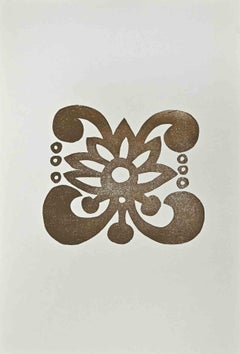
The Butterfly Flower - Lithograph By Jean Lurçat - Mid-20th Century
By Jean Lurçat
Located in Roma, IT
The Butterfly Flower is an original artwork realized by the french artist Jean Lurçat (1892 Bruyeres - 1966 St.-Paul-de-Vence)
Lithograph print, mid-20th century.
Good conditions...
Category
Mid-20th Century Modern Figurative Prints
Materials
Lithograph
The Wolves - Lithograph by Paul Gervais - 1854
By Paul Gervais
Located in Roma, IT
The Wolves is a lithograph on ivory-colored paper, realized by Paul Gervais (1816-1879). The artwork is from The Series of "Les Trois Règnes de la Nature", and was published in 1854....
Category
1850s Modern Figurative Prints
Materials
Lithograph
Still Thinking About These?
All Recently ViewedMore Ways To Browse
Meyer Antique Prints
Kristjana Williams
La Chouette
Leroy Neiman Tiger
Minami Keiko
Paco Pomet
Pat Passlof
Radovan Kraguly
Rodrigue Blue Dog Remarqued
Rodrigue Equal Justice
Sidney Z Lucas
Stork Artist
Warhol Pussy
America Martin Cat And Bird
Andy Warhol Cow Wallpaper
Andy Warhol Sam
Audubon Bien Edition
Audubon Octavo 1st Edition