Items Similar to Quicksilver Royal Mail and The Blenheim
Want more images or videos?
Request additional images or videos from the seller
1 of 5
Quicksilver Royal Mail and The BlenheimEarly 19th Century
Early 19th Century
$1,292.30
£950
€1,108.92
CA$1,803.23
A$1,952.37
CHF 1,037.99
MX$23,546.93
NOK 13,053.25
SEK 12,169.35
DKK 8,282.26
About the Item
James Pollard 1792-1867, was an English painter and watercolourist. Pollard was born in North London he was the son of a painter and publisher. He exhibited at the Royal Academy, Suffolk Street Galleries and the British Institution, he established himself as a painter of coaching , fox hunting, shooting, fishing and horse racing scenes, some of which he worked with Frederick Herring senior. His fame for his coaching scenes grew from his observation of coaches passing through his residential area, he lived in North London in Islington, where the coaches would stop for refreshments and carry on to pass through to Birmingham and areas to the North, this was a regular occurrence on the Highgate Road. In 1821 Pollard was commissioned by the Kings Print seller to paint a Coaching Inn signboard showing a mail coach with horses and passengers. This was displayed in a shop window which led to a great deal of commissions for many of the same and it launched his career to further the sale of affordable prints of Coaching scenes and all the other subjects, and then, as now were very popular in the 19th Century with the middle and lower classes. These prints, 2 in the lot here, are hand coloured with watercolour the prints are early to mid 19th Century, they are framed in later oak frames. The 2 prints are Quicksilver Royal Mail and The Blenheim leaving the Star Hotel Oxford. The condition of the prints are commensurate with their age and could be reframed but we have left them as they are having been on our home wall for the last 45 years.
- Creation Year:Early 19th Century
- Dimensions:Height: 9.75 in (24.77 cm)Width: 16.25 in (41.28 cm)Depth: 1 in (2.54 cm)
- Medium:
- After:James Pollard (1792 - 1867, British)
- Period:
- Condition:
- Gallery Location:Douglas, GB
- Reference Number:Seller: No.4001stDibs: LU2373215925452
About the Seller
5.0
Vetted Professional Seller
Every seller passes strict standards for authenticity and reliability
1stDibs seller since 2023
19 sales on 1stDibs
Typical response time: 7 hours
- ShippingRetrieving quote...Shipping from: East Grinstead, United Kingdom
- Return Policy
More From This Seller
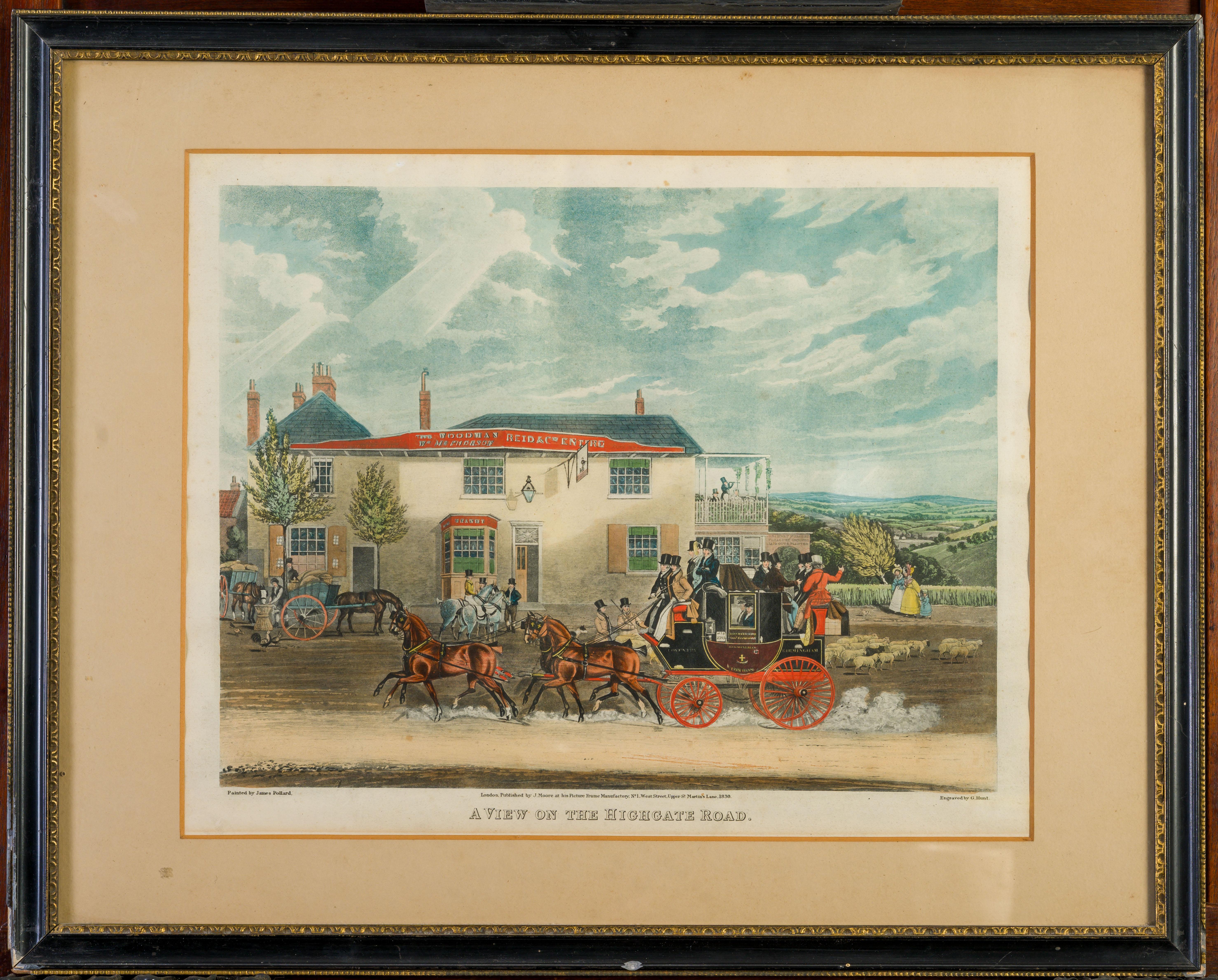
View AllA View on the Highgate Road and The Birmingham Tally Ho Coach
Located in Douglas, Isle of Man
James Pollard 1892-1867, was an English painter, watercolourist and engraver whose artistic talents were the depiction of coaching, hunting, fishing and horse racing scenes. He is fa...
Category
Mid-19th Century Landscape Prints
Materials
Paper, Printer's Ink, Watercolor
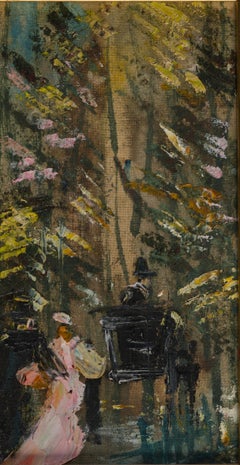
A lady and a Hansom cab
Located in Douglas, Isle of Man
French post impressionist school, this painting which is oil on canvas laid on board is in the French style of the post impressionist era. It depicts a lady and a hansom cab a very t...
Category
Mid-20th Century Figurative Paintings
Materials
Canvas, Oil, Board
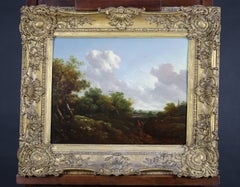
Windsor Great Park
Located in Douglas, Isle of Man
James Stark 1794-1859, was an English landscape painter, exhibited at the Royal Academy, the British Institution, and the Norwich School of Artists. Stark studied under John Crome, ...
Category
Mid-19th Century Landscape Paintings
Materials
Oil, Panel
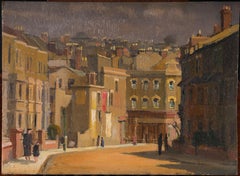
Urban cityscape
Located in Douglas, Isle of Man
This urban landscape is certainly a British city possibly Bristol, the artist is believed to be John William Ashton, known as Will Ashton. The painting dates from around 1900, before WW1, there is a pillar box for post to the rear of the picture which displays certainly a British town or city and in our opinion almost certainly Bristol, England. This is a very small but well executed paining in oil by an accomplished artist, the painting itself measures 4.5 x 6.5 inches and has been mounted in a new and suitable frame by our professional framer who's decision to mount the picture as shown was clearly an admiral choice. I have enclosed a biography of Will Ashton. This painting is unsigned.
Sir John William Ashton, OBE, ROI (20 September 1881 – 1 September 1963) was a prolific Australian Impressionist artist and director of the Art Gallery of New South Wales from 1937 to 1943.
Early life
Ashton was born in Clifton, York, England, the only son of artist James Ashton, and his wife Mary Elizabeth Ashton. His father immigrated to Australia, arriving at Adelaide, South Australia in January 1884 and founding a school of painting in "unpretentious but commodious" premises on The Parade, Norwood in 1885. His wife and son arrived at a later date, but generally given as in 1884.
Ashton attended Prince Alfred College, where his father was art teacher, from 1889 to 1897. Neither academically nor athletically inclined. On leaving school, he received further training from his father; Hans Heysen was a fellow student.
He left for London in 1900, where he studied at the Olsson-Talmage studios, then in 1902 at the Académie Julian in Paris for a year. Ashton had several paintings accepted by the Royal Academy of Arts, London, and the Salon de la Société des Artistes Français, around which time he adopted the name "Will Ashton" to avoid confusion with his father or Julian Ashton (no relation). In 1905 he returned to Adelaide, where his "Boulevard Montparnasse, Paris" was hailed as a masterpiece, and purchased by the Art Gallery of South Australia. After holding exhibitions in Sydney, Melbourne, Perth and Adelaide, in 1908, he won the Wynne Prize for landscapes.
In the years 1912–1914 he painted in Britain, Europe, and Egypt. He returned to Australia for a year, but was back in London with his family 1915–1917. He made other trips in company with Lionel Lindsay...
Category
Early 20th Century Landscape Paintings
Materials
Oil, Board
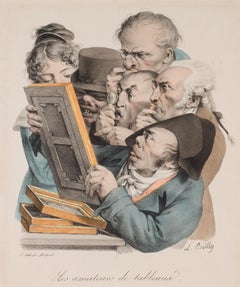
The Art Connoisseurs
Located in Douglas, Isle of Man
Louis - Leopold Boilly 1761 - 1845, was a French painter and draughtsman of portraits and genre subjects. His career spanned one of the most important eras of the French Revolution a...
Category
Early 19th Century Figurative Prints
Materials
Paper, Printer's Ink, Lithograph
Unknown location .
By Hercules Brabazon Brabazon
Located in Douglas, Isle of Man
Hercules Brabazon Brabazon 1821-1906, was an English watercolour painter. He was born Hercules Brabazon Sharpe his father was Hercules Sharpe and his father in-law was Sir Anthony Br...
Category
Late 19th Century Landscape Drawings and Watercolors
Materials
Paper, Watercolor, Gouache
You May Also Like
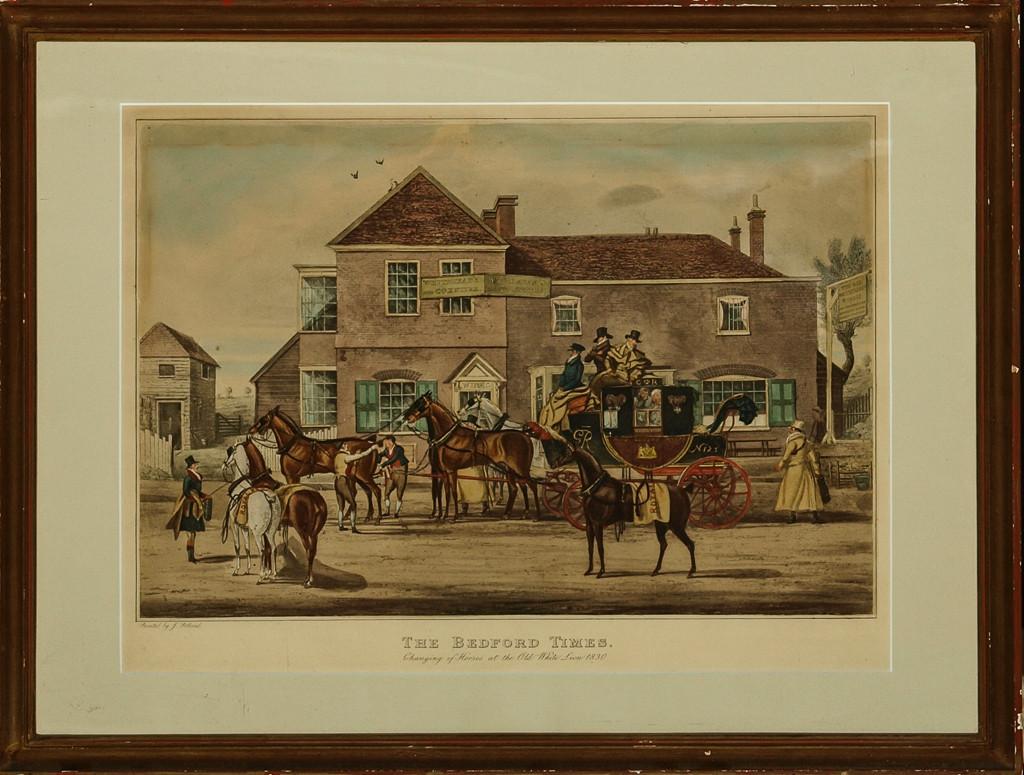
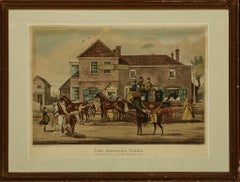
"The Bedford Times" by James Pollard
Located in Bristol, CT
Classic coaching colour plate painted by James Pollard (1792-1867) titled 'The Bedford Times' 'Changing of Horses at the Old White Lion 1830'
Print Sz: 11 1/4"H x 16 1/2"W
Frame Sz...
Category
1830s Prints and Multiples
Materials
Lithograph
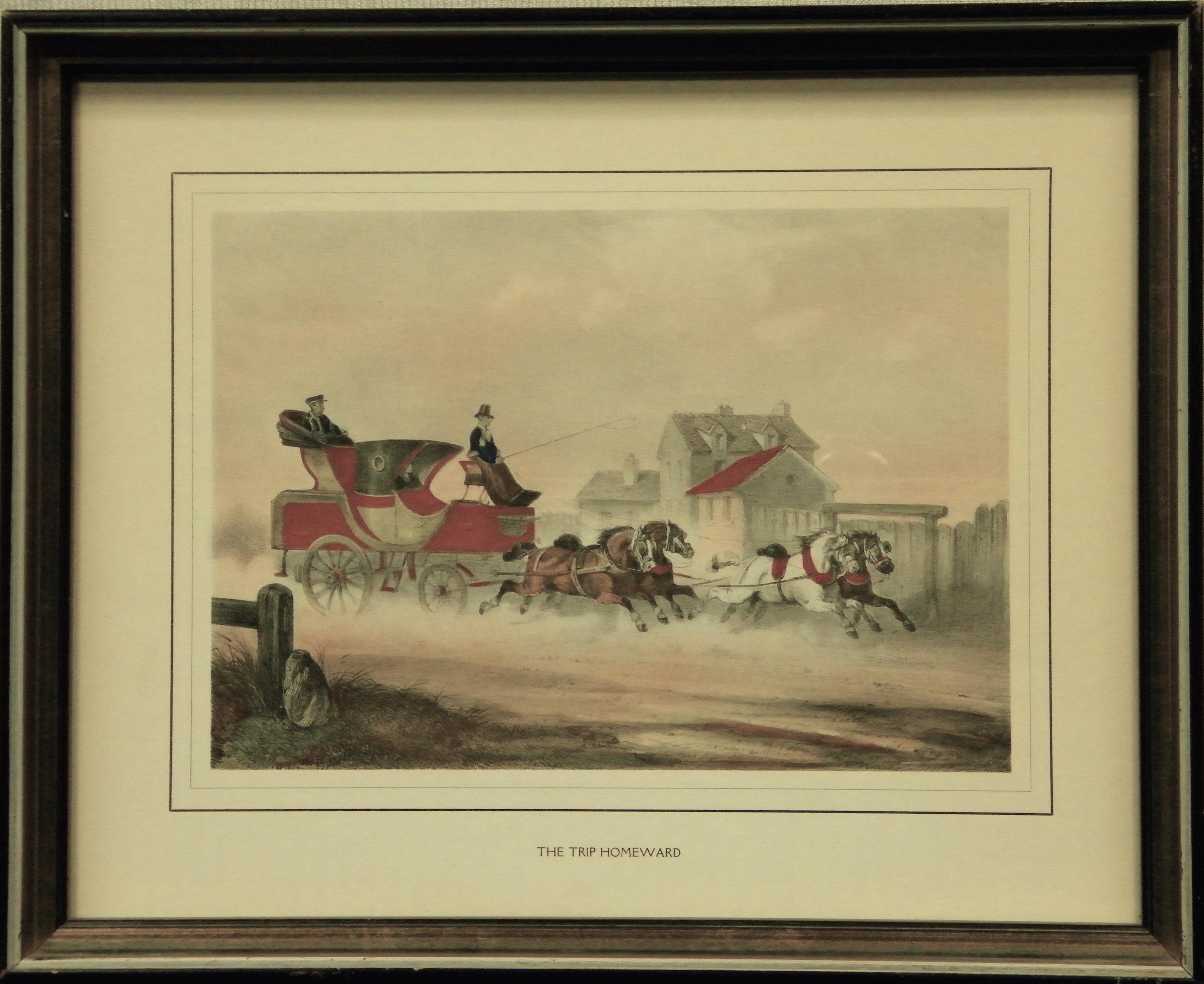
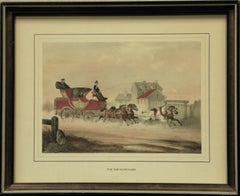
"The Trip Homeward"
Located in Bristol, CT
Classic colour print 'The Trip Homeward' depicting a four horse drawn carriage at full speed
Image Sz: 11 1/2"H x 14 1/2"W
Art Sz: 14"H x 17"W
Category
20th Century Prints and Multiples
Materials
Lithograph
06: Baroque
Located in Columbia, MO
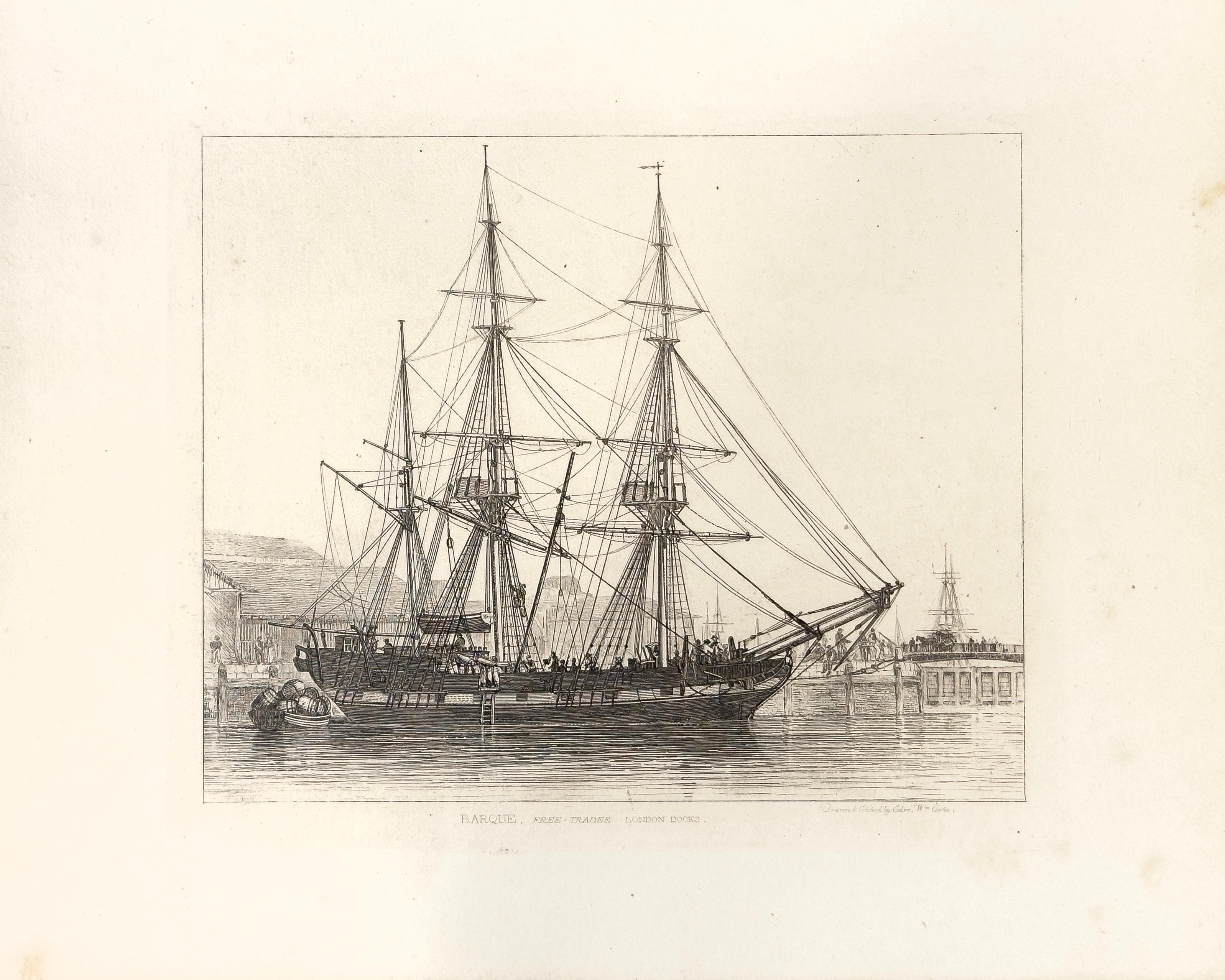
Edward William Cooke was born in Pentonville. His father, George Cooke, and uncle William Bernard Cooke were also well-known line engravers. Growing up in an environment of artists,...
Category
1820s Landscape Prints
Materials
Etching
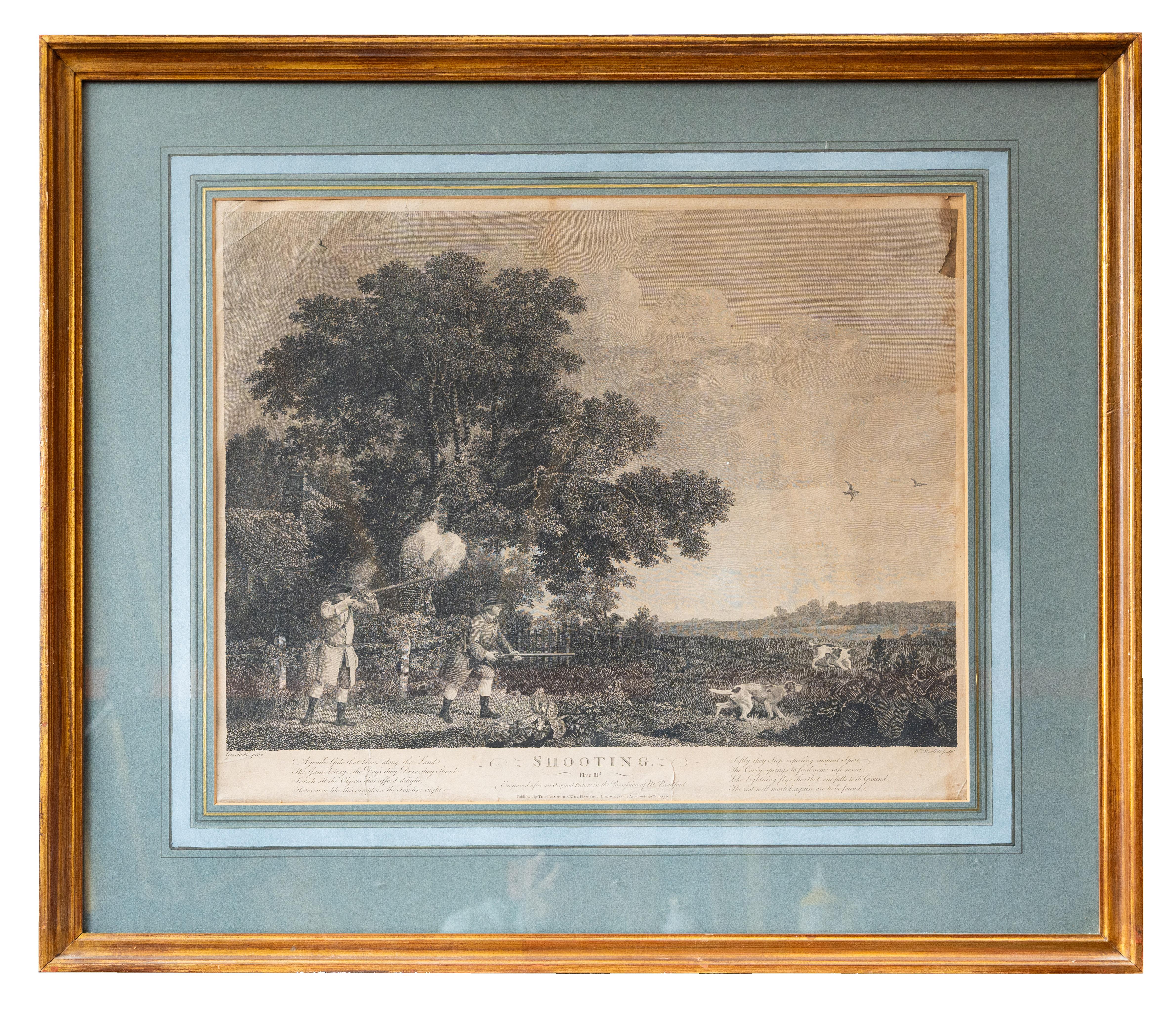
"Shooting" after George Townley Stubbs
Located in GB
William Woollett (1735–1785)
William Woollett was one of the most accomplished British engravers of the 18th century, renowned for his technical precision and his ability to translate the subtleties of painting into the language of print. Born in Maidstone, Kent, Woollett trained under John Tinney in London and quickly established himself as a master of landscape and historical engraving.
He became particularly celebrated for his engravings after works by artists such as Richard Wilson, Claude Lorrain, and Benjamin West — notably The Death of General Wolfe (after West), which became one of the most famous British prints of its age. Woollett’s exceptional skill in combining line engraving with etching allowed him to reproduce painterly effects of light, texture, and atmosphere with remarkable delicacy.
Elected an Associate Engraver of the Royal Academy in 1775, Woollett elevated the status of printmaking to that of a fine art. His works, characterized by technical brilliance and tonal richness, remain benchmarks of 18th-century British engraving.
George Stubbs (1724–1806)
George Stubbs is regarded as one of Britain’s greatest animal painters, celebrated for his scientific observation, anatomical accuracy, and artistic sensitivity. Born in Liverpool, he studied anatomy independently, dissecting horses to understand their musculature and structure — research that culminated in his celebrated publication The Anatomy of the Horse (1766).
Stubbs’s paintings...
Category
Late 18th Century Academic Figurative Prints
Materials
Engraving
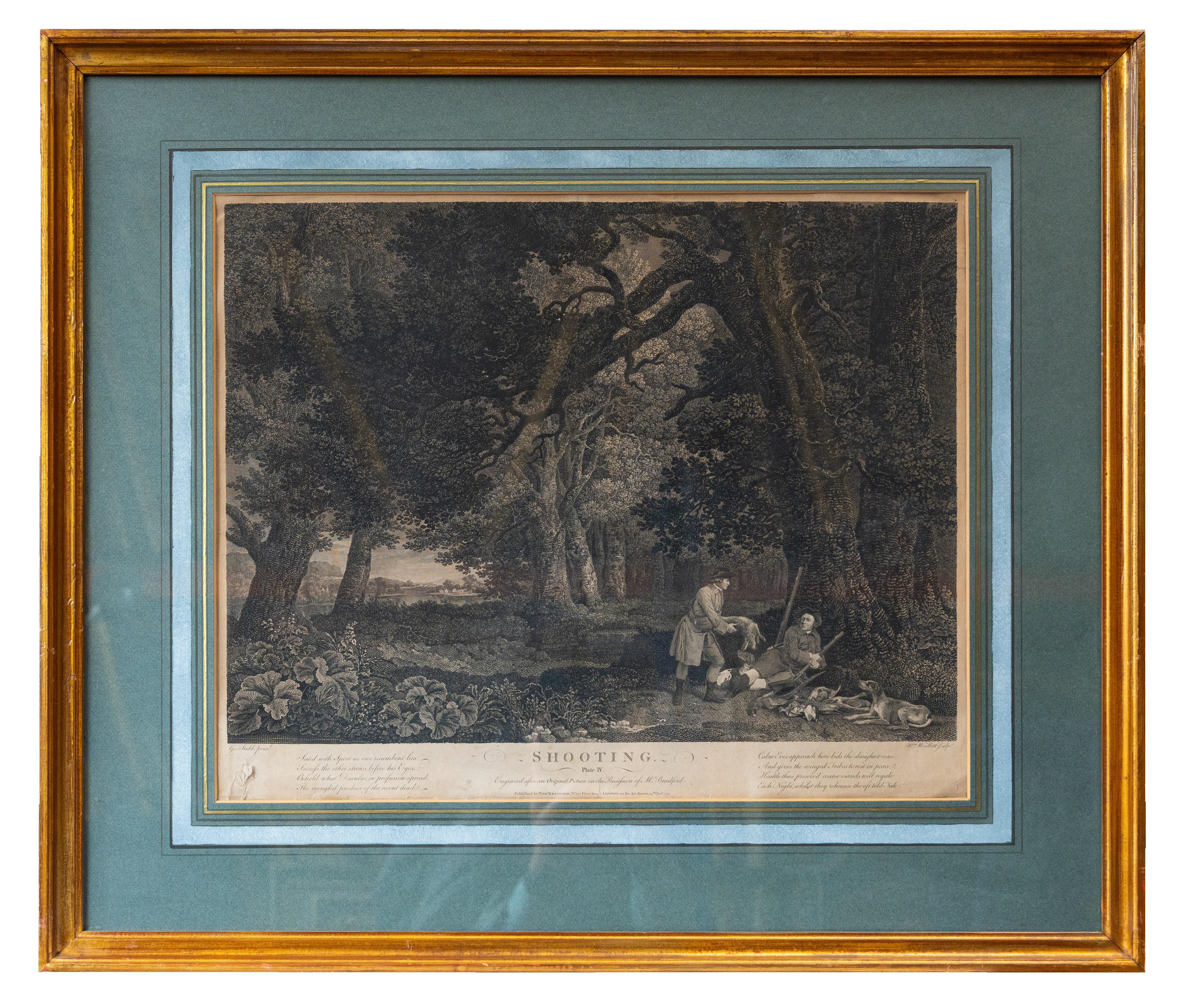
"Shooting" after George Stubbs
By William Woollett
Located in GB
William Woollett (1735–1785)
William Woollett was one of the most accomplished British engravers of the 18th century, renowned for his precision and his ability to capture the paint...
Category
Late 18th Century Figurative Prints
Materials
Engraving
The Canongate - Original Lithograph - 1822
Located in Roma, IT
The Canongate is an original artwork realized in 1822.
Original B/W Lithograph on Ivory Paper.
Inscripted on the lower central margin in Capital Letters: The Canongate durng the p...
Category
Mid-19th Century Modern Figurative Prints
Materials
Lithograph