Bird Landscape Prints
to
94
230
89
92
37
18
Overall Width
to
Overall Height
to
106
90
21
16
14
11
10
6
4
3
3
2
1
38
34
19
11
11
43
110
200
113
1
1
4
2
16
24
32
40
29
9
37
215
214
34
8,288
6,823
3,354
2,607
2,334
1,837
1,663
1,506
1,377
1,215
1,045
1,025
988
867
848
835
721
579
528
523
201
89
84
43
39
33
177
277
168
Art Subject: Bird
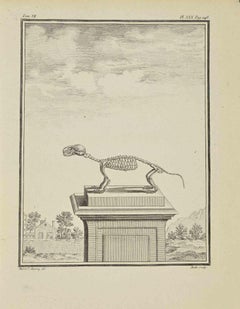
Skeleton - Etching by Jean Gullaume Moitte - 1771
Located in Roma, IT
Skeleton is an etching realized by Jean Gullaume Moitte in 1771.
It belongs to the suite "Histoire naturelle, générale et particulière avec la description du Cabinet du Roi".
Artis...
Category
18th Century Modern Figurative Prints
Materials
Etching
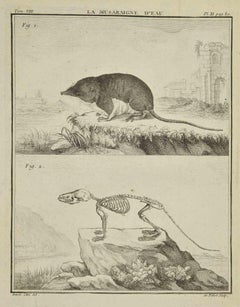
La Nusaraigne d'Eau - Etching by A-J De Fehrt - 1771
Located in Roma, IT
La Nusaraigne d'Eau is an etching realized in 1771 by A-J De Fehrt.
Signed in plate.
The artwork Belongs to the suite "Histoire naturelle, générale et particulière avec la descript...
Category
18th Century Modern Figurative Prints
Materials
Etching
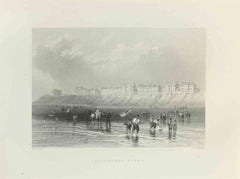
Blackpool Sands - Etching by J.C.Armytage - Early-20th Century
Located in Roma, IT
Blackpool Sands is an etching realized in the Early-20th Century by J.C.Armytage.
Signed in plate.
The artwork is realized in a well-balanced composition.
Category
Early 20th Century Modern Figurative Prints
Materials
Etching
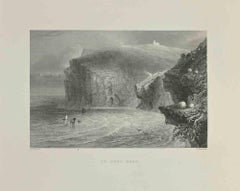
St.Bees Head - Etching by J.C.Armytage - 1845
Located in Roma, IT
St.Bees Head is an etching realized in 1845 by W.Mosemann.
Signed in plate.
The artwork is realized in a well-balanced composition.
Category
1840s Modern Figurative Prints
Materials
Etching
19th century color lithograph birds landscape nature grass sky water figure
Located in Milwaukee, WI
"Shooting on the Prairie" is an original hand-colored lithograph by Currier & Ives. It depicts a hunter shooting at fowl in an open field.
8 1/2" x 12 1/2" art
20 1/4" x 23 3/4" frame
Nathaniel Currier was a tall introspective man with a melancholy nature. He could captivate people with his piercing stare or charm them with his sparkling blue eyes. Nathaniel was born in Roxbury, Massachusetts on March 27th, 1813, the second of four children. His parents, Nathaniel and Hannah Currier, were distant cousins who lived a humble yet spartan life. When Nathaniel was eight years old, tragedy struck. Nathaniel’s father unexpectedly passed away leaving Nathaniel and his eleven-year-old brother Lorenzo to provide for the family. In addition to their mother, Nathaniel and Lorenzo had to care for six-year-old sister Elizabeth and two-year-old brother Charles. Nathaniel worked a series of odd jobs to support the family, and at fifteen, he started what would become a life-long career when he apprenticed in the Boston lithography shop of William and John Pendleton.
A Bavarian gentleman named Alois Senefelder invented lithography just 30 years prior to young Nat Currier’s apprenticeship. While under the employ of the brothers Pendleton, Nat was taught the art of lithography by the firm’s chief printer, a French national named Dubois, who brought the lithography trade to America.
Lithography involves grinding a piece of limestone flat and smooth then drawing in mirror image on the stone with a special grease pencil. After the image is completed, the stone is etched with a solution of aqua fortis leaving the greased areas in slight relief. Water is then used to wet the stone and greased-ink is rolled onto the raised areas. Since grease and water do not mix, the greased-ink is repelled by the moisture on the stone and clings to the original grease pencil lines. The stone is then placed in a press and used as a printing block to impart black on white images to paper.
In 1833, now twenty-years old and an accomplished lithographer, Nat Currier left Boston and moved to Philadelphia to do contract work for M.E.D. Brown, a noted engraver and printer. With the promise of good money, Currier hired on to help Brown prepare lithographic stones of scientific images for the American Journal of Sciences and Arts. When Nat completed the contract work in 1834, he traveled to New York City to work once again for his mentor John Pendleton, who was now operating his own shop located at 137 Broadway. Soon after the reunion, Pendleton expressed an interest in returning to Boston and offered to sell his print shop to Currier. Young Nat did not have the financial resources to buy the shop, but being the resourceful type he found another local printer by the name of Stodart. Together they bought Pendleton’s business.
The firm ‘Currier & Stodart’ specialized in "job" printing. They produced many different types of printed items, most notably music manuscripts for local publishers. By 1835, Stodart was frustrated that the business was not making enough money and he ended the partnership, taking his investment with him. With little more than some lithographic stones, and a talent for his trade, twenty-two year old Nat Currier set up shop in a temporary office at 1 Wall Street in New York City. He named his new enterprise ‘N. Currier, Lithographer’
Nathaniel continued as a job printer and duplicated everything from music sheets to architectural plans. He experimented with portraits, disaster scenes and memorial prints, and any thing that he could sell to the public from tables in front of his shop. During 1835 he produced a disaster print Ruins of the Planter's Hotel, New Orleans, which fell at two O’clock on the Morning of the 15th of May 1835, burying 50 persons, 40 of whom Escaped with their Lives. The public had a thirst for newsworthy events, and newspapers of the day did not include pictures. By producing this print, Nat gave the public a new way to “see” the news. The print sold reasonably well, an important fact that was not lost on Currier.
Nat met and married Eliza Farnsworth in 1840. He also produced a print that same year titled Awful Conflagration of the Steamboat Lexington in Long Island Sound on Monday Evening, January 18, 1840, by which melancholy occurrence over One Hundred Persons Perished. This print sold out very quickly, and Currier was approached by an enterprising publication who contracted him to print a single sheet addition of their paper, the New York Sun. This single page paper is presumed to be the first illustrated newspaper ever published.
The success of the Lexington print launched his career nationally and put him in a position to finally lift his family up. In 1841, Nat and Eliza had their first child, a son they named Edward West Currier. That same year Nat hired his twenty-one year old brother Charles and taught him the lithography trade, he also hired his artistically inclined brother Lorenzo to travel out west and make sketches of the new frontier as material for future prints. Charles worked for the firm on and off over the years, and invented a new type of lithographic crayon which he patented and named the Crayola. Lorenzo continued selling sketches to Nat for the next few years.
In 1843, Nat and Eliza had a daughter, Eliza West Currier, but tragedy struck in early 1847 when their young daughter died from a prolonged illness. Nat and Eliza were grief stricken, and Eliza, driven by despair, gave up on life and passed away just four months after her daughter’s death.
The subject of Nat Currier’s artwork changed following the death of his wife and daughter, and he produced many memorial prints and sentimental prints during the late 1840s. The memorial prints generally depicted grief stricken families posed by gravestones (the stones were left blank so the purchasers could fill in the names of the dearly departed). The sentimental prints usually depicted idealized portraits of women and children, titled with popular Christian names of the day.
Late in 1847, Nat Currier married Lura Ormsbee, a friend of the family. Lura was a self-sufficient woman, and she immediately set out to help Nat raise six-year-old Edward and get their house in order. In 1849, Lura delivered a son, Walter Black Currier, but fate dealt them a blow when young Walter died one year later. While Nat and Lura were grieving the loss of their new son, word came from San Francisco that Nat’s brother Lorenzo had also passed away from a brief illness. Nat sank deeper into his natural quiet melancholy. Friends stopped by to console the couple, and Lura began to set an extra place at their table for these unexpected guests. She continued this tradition throughout their lives.
In 1852, Charles introduced a friend, James Merritt Ives, to Nat and suggested he hire him as a bookkeeper. Jim Ives was a native New Yorker born in 1824 and raised on the grounds of Bellevue Hospital where his father was employed as superintendent. Jim was a self-trained artist and professional bookkeeper. He was also a plump and jovial man, presenting the exact opposite image of his new boss.
Jim Ives met Charles Currier through Caroline Clark, the object of Jim’s affection. Caroline’s sister Elizabeth was married to Charles, and Caroline was a close friend of the Currier family. Jim eventually proposed marriage to Caroline and solicited an introduction to Nat Currier, through Charles, in hopes of securing a more stable income to support his future wife.
Ives quickly set out to improve and modernize his new employer’s bookkeeping methods. He reorganized the firm’s sizable inventory, and used his artistic skills to streamline the firm’s production methods. By 1857, Nathaniel had become so dependent on Jims’ skills and initiative that he offered him a full partnership in the firm and appointed him general manager. The two men chose the name ‘Currier & Ives’ for the new partnership, and became close friends.
Currier & Ives produced their prints in a building at 33 Spruce Street where they occupied the third, fourth and fifth floors. The third floor was devoted to the hand operated printing presses that were built by Nat's cousin, Cyrus Currier, at his shop Cyrus Currier & Sons in Newark, NJ. The fourth floor found the artists, lithographers and the stone grinders at work. The fifth floor housed the coloring department, and was one of the earliest production lines in the country. The colorists were generally immigrant girls, mostly German, who came to America with some formal artistic training. Each colorist was responsible for adding a single color to a print. As a colorist finished applying their color, the print was passed down the line to the next colorist to add their color. The colorists worked from a master print displayed above their table, which showed where the proper colors were to be placed. At the end of the table was a touch up artist who checked the prints for quality, touching-in areas that may have been missed as it passed down the line. During the Civil War, demand for prints became so great that coloring stencils were developed to speed up production.
Although most Currier & Ives prints were colored in house, some were sent out to contract artists. The rate Currier & Ives paid these artists for coloring work was one dollar per one hundred small folios (a penny a print) and one dollar per one dozen large folios. Currier & Ives also offered uncolored prints to dealers, with instructions (included on the price list) on how to 'prepare the prints for coloring.' In addition, schools could order uncolored prints from the firm’s catalogue to use in their painting classes.
Nathaniel Currier and James Merritt Ives attracted a wide circle of friends during their years in business. Some of their more famous acquaintances included Horace Greeley, Phineas T. Barnum, and the outspoken abolitionists Rev. Henry Ward, and John Greenleaf Whittier (the latter being a cousin of Mr. Currier).
Nat Currier and Jim Ives described their business as "Publishers of Cheap and Popular Pictures" and produced many categories of prints. These included Disaster Scenes, Sentimental Images, Sports, Humor, Hunting Scenes, Politics, Religion, City and Rural Scenes, Trains, Ships, Fire Fighters, Famous Race Horses, Historical Portraits, and just about any other topic that satisfied the general public's taste. In all, the firm produced in excess of 7500 different titles, totaling over one million prints produced from 1835 to 1907.
Nat Currier retired in 1880, and signed over his share of the firm to his son Edward. Nat died eight years later at his summer home 'Lion’s Gate' in Amesbury, Massachusetts. Jim Ives remained active in the firm until his death in 1895, when his share of the firm passed to his eldest son, Chauncey.
In 1902, faced will failing health from the ravages of Tuberculosis, Edward Currier sold his share of the firm to Chauncey Ives...
Category
1870s Other Art Style Animal Prints
Materials
Lithograph
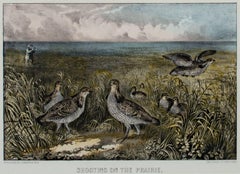
Letter A- Etching by Luigi Vanvitelli - 18th Century
Located in Roma, IT
Letter A is an Etching realized by Luigi Vanvitelli in 18th century.
The etching belongs to the print suite “Antiquities of Herculaneum Exposed” (ori...
Category
Late 18th Century Old Masters Figurative Prints
Materials
Etching
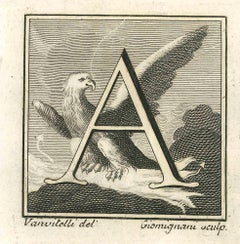
Letter of the Alphabet A - Etching by Luigi Vanvitelli - 18th Century
Located in Roma, IT
Letter of the Alphabet A, from the series "Antiquities of Herculaneum", is an etching on paper realized by Luigi Vanvitelli in the 18th century.
Good conditions.
The etching belon...
Category
Late 18th Century Old Masters Figurative Prints
Materials
Etching
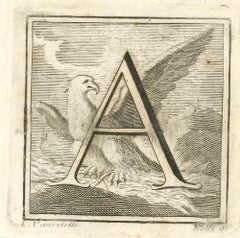
Letter of the Alphabet A - Etching by Luigi Vanvitelli - 18th Century
Located in Roma, IT
Letter of the Alphabet A, from the series "Antiquities of Herculaneum", is an etching on paper realized by Luigi Vanvitelli in the 18th century.
Good conditions.
The etching belon...
Category
Late 18th Century Old Masters Figurative Prints
Materials
Etching
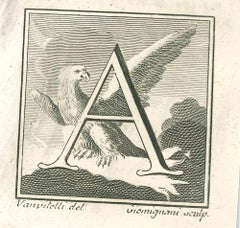
Landscape With Animals - Etching by Luigi Aloja - 18th Century
Located in Roma, IT
Landscape With Animals is an Etching realized by Luigi Aloja (1783-1837).
The etching belongs to the print suite “Antiquities of Herculaneum ...
Category
Late 18th Century Old Masters Figurative Prints
Materials
Etching
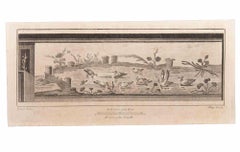
Landscape With Animals - Etching by Luigi Aloja - 18th Century
Located in Roma, IT
Landscape With Animals is an Etching realized by Luigi Aloja (1783-1837).
The etching belongs to the print suite “Antiquities of Herculaneum E...
Category
Late 18th Century Old Masters Figurative Prints
Materials
Etching
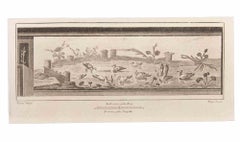
Sparrows On Boughs, Roman Fresco - Etching by Raffaele Barone - 18th Century
Located in Roma, IT
Sparrows On Boughs, Roman Fresco from "Antiquities of Herculaneum" is an etching on paper realized by Raffaele Barone in the 18th Century.
Signed on the plate.
Good conditions.
Th...
Category
Late 18th Century Old Masters Figurative Prints
Materials
Etching
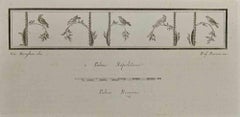
La Gardeuse D'Oies - Etching by Ch. Bourgeat After Constant Troyon - 1900
Located in Roma, IT
La Gardeuse D'Oies is an original print in etching technique on ivory paper, realized by by Ch. Bourgeat, engraver and sculptor, after Constant Troyon (French Painter; 1810-1865) .
Very good conditions.
This etching realized by Constant Troyon and Bourgeat shows the sculptor's signature on the bottom right and the painter's signature on the bottom left. The title of the work is shown on the lower center.
Image Container: 35 x 32 cm
On the bck of the artwork, news about different artists.
Constant Troyon (French Painter; 1810-1865): He was a French painter, belonging to the Barbizon School. Son of the decorator Jean-Marie-Dominique (1780-1817) and of a worker, Jeanne Pracht, he made his first painting studies with Denis-Desiré Riocreux, curator of the Sèvres museum, and with Camille Roqueplan...
Category
19th Century Figurative Prints
Materials
Etching
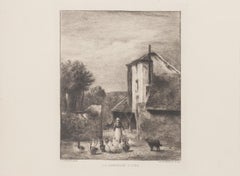
Fishing - Etching on Cardboard by Giovanni Omiccioli - 1971
Located in Roma, IT
Fishing is a beautiful etching on cardboard, realized in 1971 by the Italian artist Giovanni Omiccioli (Rome, 1901-1975).
Hand-signed in pencil on the lower right and dated. Number...
Category
1970s Figurative Prints
Materials
Paper, Etching
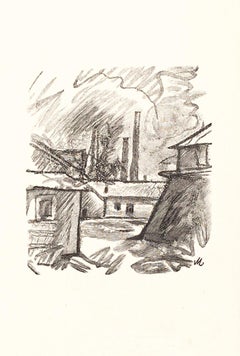
City - Original Zincography by Mino Maccari - 1970s
By Mino Maccari
Located in Roma, IT
City is an original zincography artwork realized by Mino Maccari.
Included a white Passepartout: 49 x 34
The state of preservation is very good.
The artwork represents a landscape...
Category
1970s Figurative Prints
Materials
Engraving
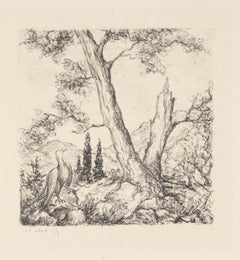
Eagle and Tree - Etching - 1960s
Located in Roma, IT
Nude is an original etching realized by an Anonymous artist in the 1960s.
Sheet dimension: 32.5 x 25 cm
Very good conditions.
The artwork represents a nude woman skillfully expre...
Category
1960s Figurative Prints
Materials
Etching, Aquatint
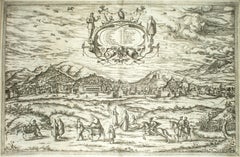
Granada, Map from "Civitates Orbis Terrarum" - by F.Hogenberg - 1575
Located in Roma, IT
"Granada", from the collection "Civitates Orbis Terrarum", Cologne, T. Graminaeus, 1575.
Very nice B/W Aquatint, representing a View of Granada, from the East, which was perhaps t...
Category
16th Century Figurative Prints
Materials
Etching, Aquatint
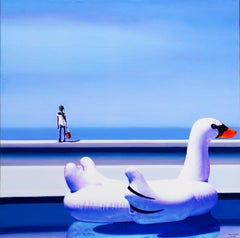
Belgian Contemporary Art by Hugo Pondz - Une Belle Journée
By Hugo Pondz
Located in Paris, IDF
C-Print on Argentic paper
Others sizes are available upon simple request
Shipping of the artwork will be done in a tube or flat in a crate with or without American box frame. Additional fees will be requested for this type of frame + shipping
Hugo Pondz...
Category
2010s American Realist Landscape Prints
Materials
Paper, C Print
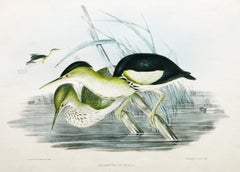
Ardetta Pusilla (Minute Bittern) Artist: Gould, John
By John Gould
Located in Paonia, CO
Ardetta Pusilla (Minute Bittern) is a hand colored lithograph by John Gould and Henry C. Richter. From the Birds of Australia 1849-1883...
Category
19th Century Animal Prints
Materials
Lithograph
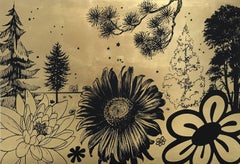
Rosy Fingered Dawn
Located in Boston, MA
Artist: Paul, Morrison
Title: Rosy Fingered Dawn
Date: 2013
Medium: Screenprint with gold leaf underlay on 410gsm Somerset Satin Paper
Unframed Dimensions: 31.843" x 39.375"
F...
Category
21st Century and Contemporary Contemporary Landscape Prints
Materials
Screen
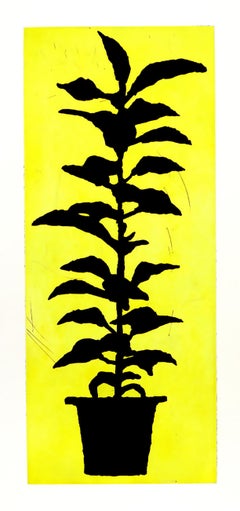
Donald Baechler Potted Plant 2005 (Donald Baechler Prints)
Located in NEW YORK, NY
Donald Baechler, Potted Plant, 2005
A fun, whimsical, and highly decorative signed limited edition Baechler piece that works well in any setting.
Medium: Aquatint and drypoint on ...
Category
Early 2000s Pop Art Figurative Prints
Materials
Drypoint, Aquatint

$1,800 Sale Price
20% Off
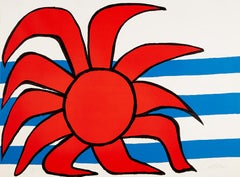
Sun and Sea
Located in Miami, FL
Alexander Calder
Sun and Sea
1972
Lithograph
22 3/4 x 30 5/8 in.
Edition of 150
Pencil signed and numbered
Alexander Calder is one of the most celebrated artists of the 20th century...
Category
1970s Modern Landscape Prints
Materials
Lithograph
North West Pan I
By Zack Seckler
Located in New York, NY
Archival pigment print
Signed and numbered, verso
26.7 x 40 inches
(Edition of 10)
40 x 60 inches
(Edition of 5)
53.3 x 80 inches
(Edition of 3)
This artwork is offered by Clamp...
Category
2010s Contemporary Landscape Photography
Materials
Archival Pigment
"Bahamas 0113" Landscape Photography 18" x 24" Edition of 20 by Ben Cope
By Ben Cope
Located in Culver City, CA
"Bahamas 0113" Landscape Photography 18" x 24" Edition of 20 by Ben Cope
Unframed - ships rolled in a tube
Ben Cope is a Los Angeles based portrait artist with a BFA in ceramic s...
Category
21st Century and Contemporary Contemporary Landscape Photography
Materials
Archival Pigment
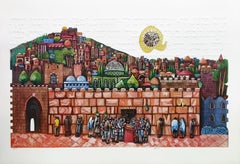
BAR MITZVAH AT THE WESTERN WALL (JUDAICA ART)
By Amram Ebgi
Located in Aventura, FL
Lithograph with foil stamping and embossing on paper. Hand signed and numbered by the artist. From the edition of 200.
Artwork is in excellent condition. Certificate of authenticit...
Category
Late 20th Century Contemporary Figurative Prints
Materials
Foil
$100 Sale Price
50% Off
Fred Deux - Grey Surrealism III - Signed Original Etching
By Fred Deux
Located in Collonge Bellerive, Geneve, CH
Fred Deux - Grey III - Signed Original Etching
Signed and Numbered
Edition of 100
Dimensions: 24 x 14 cm
Fred Deux
Fred Deux, illustrator, oral poet, writer, and, under the pseudonym Jean Douassot, author of a cult book, La Gana, was a singular artist who cannot be categorised in terms of art fashions and trends. This autodidact, born in the basement of a large house in Boulogne-Billancourt to a working-class family, constantly had to overcome, as he would say. “He had to overcome”: overcome the basement walls to access the life which called him and burnt inside him. Overcome the barriers between the arts, moving from drawing to the written word, and from the page to the tape recorder, in the face of which he recounted stories to himself in a sort of endless reverie, constantly exploring the unknown in him. Overcoming and being overcome: gradually immersing himself in drawing, so that it was life itself which overcame him and surrendered to him.
Timeline
1924
Born in Boulogne-Billancourt, Paris. The Deux family lived in the basement of a building close to the Seine that was often flooded. These living conditions formed the biographical core around in which the artist would develop his work as a future writer and artist.
1942
Deux worked in a factory as an electrician and night guard.
1943
Deux becomes part of the FTP group to resist against the factory. And then joined the Maquis du Doubs.
1945
At the liberation, Deux joined the Moroccan Goumier, and took part of the campaigns of Vosges, Alsace and Germany.
1947
Returned to France. Installation in Marseille. Worked in an important library that belonged to the family of his wife.
1948
Discovered Breton, Bataille, Cendrars, Peret, Sade... and founded the sub-group of Surrealists in Marseille and formed a link with the literary magazine of Marseille, Cahiers du Sud
Encounters the works of Paul Klee.
He begins creating his first stains with paint for bicycle and impressions (fabric and ink). At the same time, he begins to take notes for what would become "Les Rats", first version of "La Gana".
1951
Meets Cecile Reims...
Category
1970s Surrealist Still-life Prints
Materials
Etching
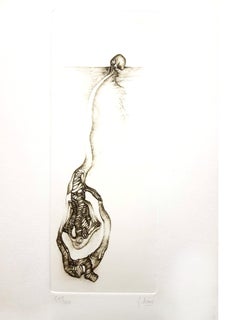
Longing for Your Return with Screenprint by Emma Reynolds
Located in Deddington, GB
Longing for your return by Emma Reynolds [2022]
A celebration of the developing season as the swallows arrive.
Additional Information:
limited_edition
Screenprint
Edition number ...
Category
2010s Abstract Animal Prints
Materials
Screen
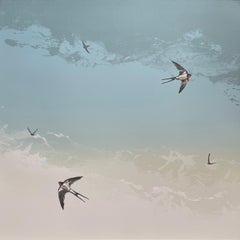
Whale Whisperer, Limited edition, animal print, seascape, still-life, affordable
Located in Deddington, GB
limited_edition
Original Silkscreen Print
Edition number 50
Image size: H:20 cm x W:28 cm
Complete Size of Unframed Work: H:40.5 cm x W:30.5 cm x D:0.2cm
Sold Unframed
Please note th...
Category
21st Century and Contemporary Contemporary Landscape Prints
Materials
Screen
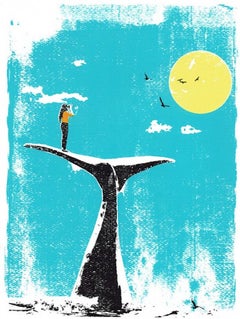
Fog Bound
Located in Missouri, MO
Fog Bound
Tod Lindenmuth (American, 1885-1976)
Woodblock Print
14 x 11 inches
26 x 20.25 inches with frame
Signed Lower Right
Titled Lower Left
A founder of the Provincetown Art Association and one of the original Provincetown Printers, Tod Lindenmuth was a semi-abstract painter and graphic artist who did much to promote modernist styles. Although he was much influenced by Abstract Expressionism, his subject matter was realistic enough to be recognizable. He did linoleum cuts and was one of the first to work with that medium, and towards the end of his life, he experimented with collage. In the 1930s, he had commissions for the Public Works of Art Project and the Works Progress Administration.
Lindenmuth was born in Allentown, Pennsylvania. He studied with Robert Henri at the New York School of Art in Manhattan, and in Provincetown with E. Ambrose Webster and George Elmer Browne.
He first exhibited in Provincetown in 1915, and between 1917 and 1928 served on the jury for the Provincetown Art Association's 'First Modernistic Exhibition". He exhibited regularly with the Society of Independent Artists in New York.
He married artist and illustrator Elizabeth Boardman Warren...
Category
Mid-20th Century American Modern Figurative Prints
Materials
Color
$3,000
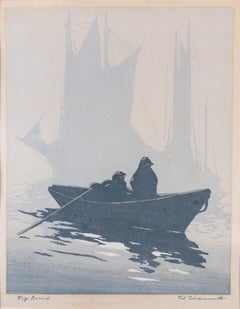
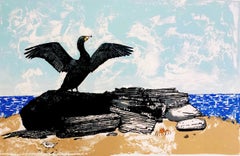
The Cormorant, Tim Southall, Handmade print, contemporary print for sale
By Tim Southall
Located in Deddington, GB
The Cormorant by Tim Southall
Limited Edition Silkscreen Print and hand signed by the artist
Silkscreen Print on Paper
Image Size: 40 cm x 60 cm
Sheet Si...
Category
21st Century and Contemporary Contemporary Landscape Prints
Materials
Paper, Screen
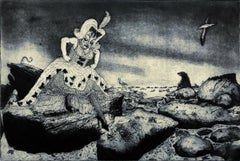
Drag Queen on the Rocks, Tim Southall, Handmade print, Figurative Art for Sale
Located in Deddington, GB
Drag Queen on the Rocks By Tim Southall [2021]
limited_edition and hand signed by the artist
etching
Edition number 75
Image size: H:20 cm x W:30 cm
Complete Size of Unframed Work: H:0.01 cm x W:32 cm x D:42cm
Sold Unframed
Please note that insitu images are purely an indication of how a piece may look
Drag Queen on the Rocks is an allegorical print by Tim Southall. It depicts a drag queen focusing all her charisma, uniqueness, nerve and talent on negotiating a very rocky and uneven landscape. The title alone suggests that it might be all over for the Drag Queen: she is in difficulty and likely to fail; in tatters, ruined, and perhaps beyond repair. But never underestimate a drag queen. The fact that she has the nerve to wear stiletto heels while rock climbing...
Category
21st Century and Contemporary Folk Art Figurative Prints
Materials
Paper, Etching
Reflection
By Rob Barnes
Located in Deddington, GB
Reflection by Rob Barnes [2021]
limited_edition
Linocut
Edition number 50
Image size: H:33 cm x W:44 cm
Complete Size of Unframed Work: H:49 cm x W:61 cm x D:0.2cm
Sold Unframed
Ple...
Category
21st Century and Contemporary Contemporary Landscape Prints
Materials
Linocut
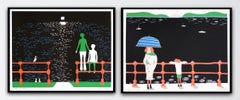
Luna and Lake Walk
By Simon Tozer
Located in Deddington, GB
Overall size: H72 x W86
Lake Walk
Simon Tozer
Screenprint
This artwork is edition of 30.
Size: H:36 cm x W:43 cm
Luna
Simon Tozer
Screenprint
This artwork is edition of 25.
Size:...
Category
21st Century and Contemporary Contemporary Figurative Prints
Materials
Paper, Screen
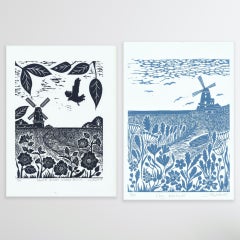
Windmill Diptych, Joanna Padfield, Limited Edition Prints, Landscape, Affordable
Located in Deddington, GB
Windmill Diptych by Joanna Padfield
Consists of
Norfolk Broads Marsh Harrier
Cley Windmill
Each piece is individually £65
Each piece is individually H29.7cm x W21cm x D0.2cm
Mini...
Category
21st Century and Contemporary Impressionist Landscape Prints
Materials
Paper, Linocut
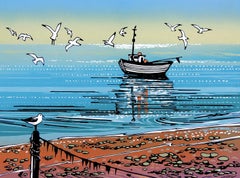
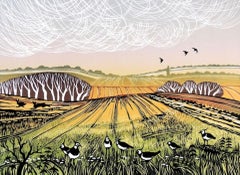
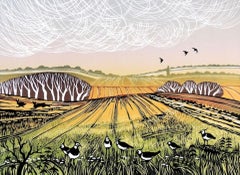
A Fine Day For Lapwings, Rob Barnes, Limited Edition Print, Landscape Artwork
By Rob Barnes
Located in Deddington, GB
A Fine Day For Lapwings by Rob Barnes [2021]
limited edition
Linocut
Edition of 50 in edition
Image size: H:30 cm x W:44 cm
Complete Size of Unframed Work: H:49 cm x W:61 cm x D:...
Category
21st Century and Contemporary Impressionist Landscape Prints
Materials
Paper, Linocut
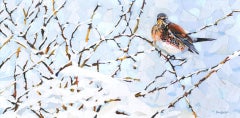
Winter Fieldfare, Paul Bartlett, Limited Edition Print, Affordable Art, Bird Art
Located in Deddington, GB
Paul Bartlett is a highly acclaimed artist who has won many awards for his original depictions of nature which inform and educate the viewer on conservation issues.
Winter Fieldfare...
Category
21st Century and Contemporary Naturalistic Animal Prints
Materials
Paper
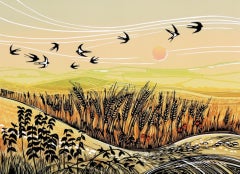
Flight Over The Barley, Rob Barnes, Limited Edition Print, Birds Field Artwork
By Rob Barnes
Located in Deddington, GB
Flight Over Barley [2021]
limited edition
Linocut
Edition of 50 in edition
Image size: H:30 cm x W:44 cm
Complete Size of Unframed Work: H:49 cm x W:61 cm x D:0.02cm
Sold Unfram...
Category
2010s Impressionist Animal Prints
Materials
Paper, Linocut
A Fine Day For Lapwings, Rob Barnes, Limited Edition Print, Bird Landscape Art
By Rob Barnes
Located in Deddington, GB
A Fine Day for Lapwings [2021]
limited edition
Linocut
Edition of 50 in edition
Image size: H:30 cm x W:44 cm
Complete Size of Unframed Work: H:49 cm x W:61 cm x D:0.02cm
Sold U...
Category
21st Century and Contemporary Impressionist Landscape Prints
Materials
Paper, Linocut
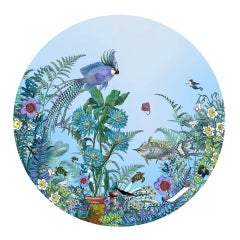
Kristjana Williams, Fugl Ne Fiskur - Circular Sea-Born, Seascape Art, Animal Art
Located in Deddington, GB
Kristjana Williams
Fugl Ne Fiskur – Circular Sea-Born
Limited Edition Print
Giclee print on Paper
Edition of 275
Size: H 80cm x W 80cm
Sold Unframed...
Category
21st Century and Contemporary Contemporary Animal Prints
Materials
Paper, Giclée
Sunrise. 1984. Paper, linocut, 25x34 cm
Located in Riga, LV
Sunrise. 1984. Paper, linocut, 25x34 cm
imprint size 14x25,5 cm total page size 25x34cm
Dainis Rozkalns (1928 - 2018)
Artist, graphic artist, illustrator of folklore and fiction pu...
Category
1980s Folk Art Animal Prints
Materials
Paper, Linocut
$186 Sale Price
20% Off
The poor man. 1982. Paper, linocut, 25x34 cm
Located in Riga, LV
The poor man. 1982. Paper, linocut, 25x34 cm
imprint size 13,5x27 cm total page size 25x34cm
Dainis Rozkalns (1928 - 2018)
Artist, graphic artist, illustrat...
Category
1980s Folk Art Animal Prints
Materials
Paper, Linocut
$186 Sale Price
20% Off
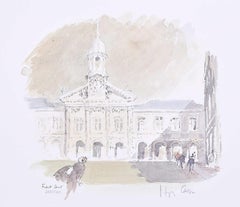
Hugh Casson Emmanuel College Cambridge Front Court limited edition print
By Hugh Casson
Located in London, GB
To see our other views of Oxford and Cambridge, scroll down to "More from this Seller" and below it click on "See all from this seller" - or send us a message if you cannot find the view you want.
Hugh Casson (1910 - 1999)
Emmanuel College Cambridge...
Category
1990s Modern Landscape Prints
Materials
Color, Lithograph
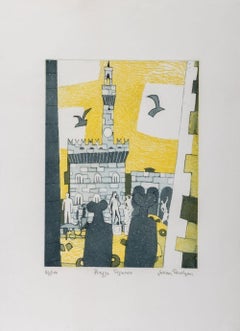
"Piazza Signoria"
Located in Astoria, NY
Julian Trevelyan (English, 1910-1988), "Piazza Signoria", Etching and Aquatint, signed in pencil lower right, titled lower center, and numbered "64 /100" lower left, inscribed and st...
Category
Late 20th Century Contemporary Landscape Prints
Materials
Paper, Etching, Aquatint
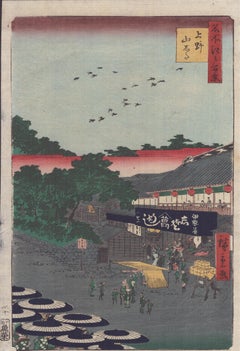
Hiroshige (1797-1858) - Ueno Yamashita
Located in BRUCE, ACT
Artist: Utagawa Hiroshige (Hiroshige Ando 1797-1858)
Title: No.12 Ueno Yamashita
Series: One Hundred Famous Views of Edo (名所江戸百景)
Size: O-ban 大判
Age: 1858
Category
1850s Landscape Prints
Materials
Woodcut
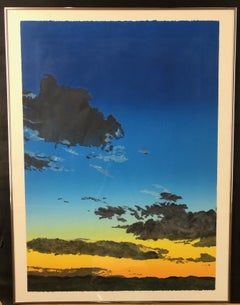
$3,710 Sale Price
30% Off
Sunset Clouds by John Hogan framed monotype Desert Sky blue, black, orange
Located in Santa Fe, NM
Sunset Clouds by John Hogan framed monotype Desert Sky blue, black, orange
John Hogan A graduate of Northeast Louisiana State University with a bachelo...
Category
1990s Contemporary Landscape Prints
Materials
Monoprint
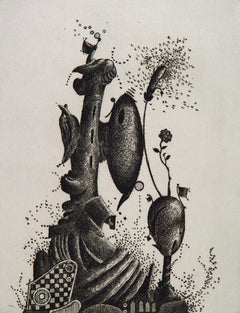
Whistle
By Valton Tyler
Located in Dallas, TX
In The New York Times Arts in America column, Edward M. Gomez writes of Valton Tyler, "visionary seems the right word for describing his vivid, unusual and technically refined painti...
Category
1970s Surrealist Still-life Prints
Materials
Rag Paper, Etching
Price Upon Request
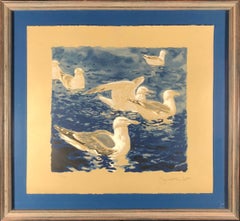
Herring Gulls
By Jamie Wyeth
Located in Missouri, MO
Jamie Wyeth
"Herring Gulls" 1978
Color Lithograph
Signed Lower Right
Numbered Lower Left 149/300
Born in 1946, James Browning Wyeth came of age when the meaning of patriotism was clouded by the traumas of the Vietnam War and the scandals of Watergate. Working in an era of turmoil and questioning of governmental authority, he did art that encompassed both marching off to war and marching in protest.
One of James's early masterworks, Draft Age (1965) depicts a childhood friend as a defiant Vietnam-era teenager resplendent in dark sunglasses and black leather jacket in a suitably insouciant pose.
Two years later Wyeth painstakingly composed a haunting, posthumous Portrait of President John F. Kennedy (1967) that seems to catch the martyred Chief Executive in a moment of agonized indecision. As Wyeth Center curator Lauren Raye Smith points out, Wyeth "did not deify the slain president, [but] on the contrary made him seem almost too human."
Based on hours of study and sketching of JFK's brothers Robert and Edward -
documented by insightful studies in the exhibition - the final, pensive portrait seemed too realistic to family members and friends. "His brother Robert," writes Smith in the exhibition catalogue, "reportedly felt uneasy about this depiction, and said it reminded him of the President during the Bay of Pigs invasion."
In spite of these misgivings, James's JFK likeness has been reproduced frequently and is one of the highlights of this show. The poignancy, appeal and perceptiveness of this portrait, painted when the youngest Wyeth was 21 years old, makes one wish he would do more portraits of important public figures.
James himself feels he is at his best painting people he knows well, as exemplified by his vibrant Portrait of Jean Kennedy Smith (1972), which captures the vitality of the slain President's handsome sister.
He did paint a portrait of Jimmy Carter for the January 1977 man-of-the-year cover of Time magazine, showing the casually dressed President-elect as a straightforward character posed under a flag-draped water tower next to the family peanut plant in Plains, Ga. James recalls that Carter had one Secret Service agent guarding him as he posed outdoors, a far cry from the protection our Chief Executives require today.
As a participating artist in the "Eyewitness to Space" program organized by the National Aeronautics and Space Administration in collaboration with the National Gallery of Art in the late 1960s, Wyeth deftly recorded in a series of watercolors his eyewitness observations of dramatic spacecraft launchings and more mundane scenes associated with the space program.
Commissioned by Harper's Magazine to cover the 1974 congressional hearings and trials of Watergate figures, James Wyeth executed a series of perceptive and now evocative sketches that recall those dark chapters in our history. Memorable images include a scowling John Ehrlichman, a hollow-eyed Bob Haldeman, an owlish Charles Colson, a focused Congressman Peter Rodino, a grim visaged Father/ Congressman Robert Drinan, and vignettes of the press and various courtroom activities. An 11-by-14-inch pencil sketch of the unflappable Judge John Sirica is especially well done. These "images are powerful as historical records," observes Smith, "and as lyrically journalistic impressions of events that changed the nation forever."
Wyeth's sketch of early-morning crowds lined up outside the Supreme Court
building hoping to hear the Watergate case, with the ubiquitous TV cameramen looking on, is reminiscent of recent scenes as the high court grappled with the Bush-Gore contest.
The Wyeth family penchant for whimsy and enigmatic images is evident in Islanders (1990), showing two of James's friends, wearing goofy hats, sitting on the porch of a small Monhegan Island (Me.) cottage draped with a large American flag. Mixing the serious symbolism of Old Glory with the irreverent appearance of the two men, James has created a puzzling but interesting composition.
Painting White House...
Category
1970s American Modern Animal Prints
Materials
Lithograph, Paper
Price Upon Request