Jugendstil Prints and Multiples

to
5
7
2
1
4
Overall Width
to
Overall Height
to
20,343
20,005
10,662
5,994
5,224
2,712
1,627
1,611
1,214
933
893
514
393
160
2
2
1
1
2
11
1
1
3
2
1
3
9
5
8
5
5
5
3
3
3
2
2
2
1
1
1
1
1
1
1
1
1
1
8
4
3
1
1
1
10
4
Style: Jugendstil
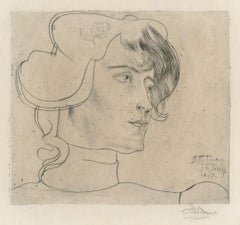
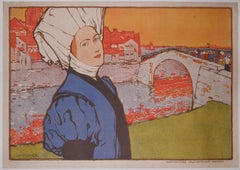
Woman's Head (Vrouwekop), Marguerite Adolphine Helfrich

Woman's Head (Vrouwekop), Marguerite Adolphine Helfrich

By Jan Toorop

Located in Fairlawn, OH

Woman's Head (Vrouwekop), Marguerite Adolphine Helfrich Drypoint, 1897 Signed lower right in pencil: J Toorop; by later hand Toorop's model for this print was Marguerite Adolphine H...

Category

1890s Jugendstil Prints and Multiples

Materials

Drypoint

Troubadour, from The Mastersingers of Nuremberg

Troubadour, from The Mastersingers of Nuremberg

Located in Middletown, NY

Stipple point etching on tissue-thin handmade Japon paper, 7 5/8 x 5 inches (193 x 126 mm), full margins. Signed, titled, dated, inscribed and numbered 10/25 in pencil, lower margin....

Category

Early 20th Century Jugendstil Prints and Multiples

Materials

Handmade Paper, Etching

Poster for the Saxon Trade and Art Exhibition, Dresden 1896

Poster for the Saxon Trade and Art Exhibition, Dresden 1896

Located in Fairlawn, OH

Poster for the Saxon Trade and Art Exhibition, Dresden 1896 Color lithograph poster mounted on heavy linen, 1896 Signed in the stone lower left corner (see photo) Proof before additi...

Category

1890s Jugendstil Prints and Multiples

Materials

Lithograph

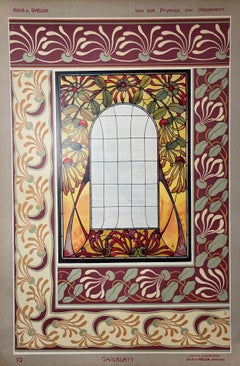
Von Der Pflanze Zum Ornament

Von Der Pflanze Zum Ornament

Located in Wilton, CT

30 plates of floral designs from the Jugendstil period

Category

Early 1900s Jugendstil Prints and Multiples

Materials

Lithograph

Related Items
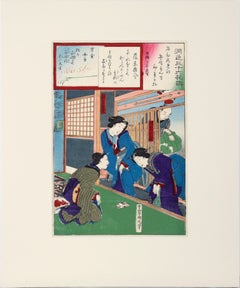
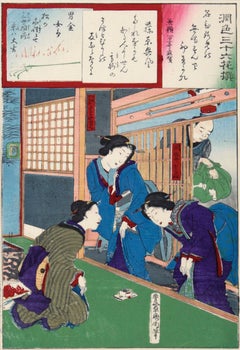
"Enshoku Sanju-roku Kasen" (Thirty-six Enchanting Flowers) Woodblock on paper

"Enshoku Sanju-roku Kasen" (Thirty-six Enchanting Flowers) Woodblock on paper

By Toyohara Kunichika

Located in Soquel, CA

"Enshoku Sanju-roku Kasen" (Thirty-six Enchanting Flowers) Woodblock on paper Elegant woodblock print by Toyohara Kunuchika (Japanese, 1835-1900). Three women are in talking with each other inside, while a man waits outside holding a bag of some kind. The colors in this piece are rich and saturated, primarily blues, greens, and purple. Mat size: 16"H x 20"W Paper size: 14.75"H x 9.88"W Born in 1835, Toyohara Kunichika grew up in the Kyobashi district of Edo in the midst of merchants and artisans. In 1848, at age 13, he was accepted as an apprentice into the studio of Utagawa Kunisada I...

Category

1880s Jugendstil Prints and Multiples

Materials

Ink, Rice Paper, Woodcut

Marc Chagall - Inspiration - Original Lithograph from "Chagall Lithographe" v. 2

Marc Chagall - Inspiration - Original Lithograph from "Chagall Lithographe" v. 2

By Marc Chagall

Located in Collonge Bellerive, Geneve, CH

Marc Chagall Original Lithograph from Chagall Lithographe 1957-1962. VOLUME II. 1963 Dimensions: 32 x 24 cm From the unsigned edition of 10000 copies without margins Reference: Mourlot 398 Condition : Excellent Marc Chagall (born in 1887) Marc Chagall was born in Belarus in 1887 and developed an early interest in art. After studying painting, in 1907 he left Russia for Paris, where he lived in an artist colony on the city’s outskirts. Fusing his own personal, dreamlike imagery with hints of the fauvism and cubism popular in France at the time, Chagall created his most lasting work—including I and the Village (1911)—some of which would be featured in the Salon des Indépendants exhibitions. After returning to Vitebsk for a visit in 1914, the outbreak of WWI trapped Chagall in Russia. He returned to France in 1923 but was forced to flee the country and Nazi persecution during WWII. Finding asylum in the U.S., Chagall became involved in set and costume design before returning to France in 1948. In his later years, he experimented with new art forms and was commissioned to produce numerous large-scale works. Chagall died in St.-Paul-de-Vence in 1985. The Village Marc Chagall was born in a small Hassidic community on the outskirts of Vitebsk, Belarus, on July 7, 1887. His father was a fishmonger, and his mother ran a small sundries shop in the village. As a child, Chagall attended the Jewish elementary school, where he studied Hebrew and the Bible, before later attending the Russian public school. He began to learn the fundamentals of drawing during this time, but perhaps more importantly, he absorbed the world around him, storing away the imagery and themes that would feature largely in most of his later work. At age 19 Chagall enrolled at a private, all-Jewish art school and began his formal education in painting, studying briefly with portrait artist Yehuda Pen. However, he left the school after several months, moving to St. Petersburg in 1907 to study at the Imperial Society for the Protection of Fine Arts. The following year, he enrolled at the Svanseva School, studying with set designer Léon Bakst, whose work had been featured in Sergei Diaghilev's Ballets Russes. This early experience would prove important to Chagall’s later career as well. Despite this formal instruction, and the widespread popularity of realism in Russia at the time, Chagall was already establishing his own personal style, which featured a more dreamlike unreality and the people, places and imagery that were close to his heart. Some examples from this period are his Window Vitebsk (1908) and My Fianceé with Black Gloves (1909), which pictured Bella Rosenfeld, to whom he had recently become engaged. The Beehive Despite his romance with Bella, in 1911 an allowance from Russian parliament member and art patron Maxim Binaver enabled Chagall to move to Paris, France. After settling briefly in the Montparnasse neighborhood, Chagall moved further afield to an artist colony known as La Ruche (“The Beehive”), where he began to work side by side with abstract painters such as Amedeo Modigliani and Fernand Léger as well as the avant-garde poet Guillaume Apollinaire. At their urging, and under the influence of the wildly popular fauvism and cubism, Chagall lightened his palette and pushed his style ever further from reality. I and the Village (1911) and Homage to Apollinaire (1912) are among his early Parisian works, widely considered to be his most successful and representative period. Though his work stood stylistically apart from his cubist contemporaries, from 1912 to 1914 Chagall exhibited several paintings at the annual Salon des Indépendants exhibition, where works by the likes of Juan Gris, Marcel Duchamp and Robert Delaunay were causing a stir in the Paris art world. Chagall’s popularity began to spread beyond La Ruche, and in May 1914 he traveled to Berlin to help organize his first solo exhibition, at Der Sturm Gallery. Chagall remained in the city until the highly acclaimed show opened that June. He then returned to Vitebsk, unaware of the fateful events to come. War, Peace and Revolution In August 1914 the outbreak of World War I precluded Chagall’s plans to return to Paris. The conflict did little to stem the flow of his creative output, however, instead merely giving him direct access to the childhood scenes so essential to his work, as seen in paintings such as Jew in Green (1914) and Over Vitebsk (1914). His paintings from this period also occasionally featured images of the war’s impact on the region, as with Wounded Soldier (1914) and Marching (1915). But despite the hardships of life during wartime, this would also prove to be a joyful period for Chagall. In July 1915 he married Bella, and she gave birth to a daughter, Ida, the following year. Their appearance in works such as Birthday (1915), Bella and Ida by the Window (1917) and several of his “Lovers” paintings give a glimpse of the island of domestic bliss that was Chagall’s amidst the chaos. To avoid military service and stay with his new family, Chagall took a position as a clerk in the Ministry of War Economy in St. Petersburg. While there he began work on his autobiography and also immersed himself in the local art scene, befriending novelist Boris Pasternak, among others. He also exhibited his work in the city and soon gained considerable recognition. That notoriety would prove important in the aftermath of the 1917 Russian Revolution when he was appointed as the Commissar of Fine Arts in Vitebsk. In his new post, Chagall undertook various projects in the region, including the 1919 founding of the Academy of the Arts. Despite these endeavors, differences among his colleagues eventually disillusioned Chagall. In 1920 he relinquished his position and moved his family to Moscow, the post-revolution capital of Russia. In Moscow, Chagall was soon commissioned to create sets and costumes for various productions at the Moscow State Yiddish Theater...
Category

1960s Jugendstil Prints and Multiples

Materials

Lithograph

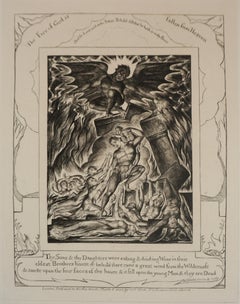
Illustrations From The Book of Job - "The Fire of God is Fallen From Heaven"

Illustrations From The Book of Job - "The Fire of God is Fallen From Heaven"

By William Blake

Located in Soquel, CA

"Illustrations of the Book of Job" Engraving "The Fire of God is Fallen From Heaven...And the Lord said unto Satan Behold All that he hath is in thy Power" Engraving, third printing...

Category

1870s Jugendstil Prints and Multiples

Materials

Handmade Paper, Engraving

Silk Robe, Art Nouveau Offset Lithograph by Louis Icart

Silk Robe, Art Nouveau Offset Lithograph by Louis Icart

By Louis Icart

Located in Long Island City, NY

Louis Icart, French (1888 - 1950) - Silk Robe, Medium: Offset Lithograph on paper, signed in plate, Image Size: 17.5 x 21.5 inches, Size: 19 x 22.5 in. (48.26 x 57.15 cm), Descrip...

Category

Early 20th Century Jugendstil Prints and Multiples

Materials

Lithograph, Offset

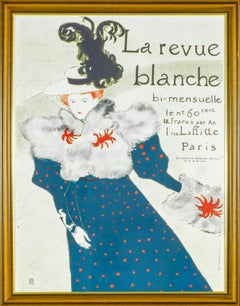
Divan Japonais

Divan Japonais

By Henri de Toulouse-Lautrec

Located in New York, NY

Color lithograph. Printed by Ancourt, Paris. The Divan Japonais was a small café-concert at 75 rue des Martyrs, Paris, where Yvette Guilbert began her career. This is Toulouse-Lautr...

Category

1890s Jugendstil Prints and Multiples

Materials

Color, Lithograph

Couple Under a Tree
Couple Under a Tree

Couple Under a Tree

By Elyse Ashe Lord

Located in New York, NY

Elyse Ashe Lord (1900-1971), Couple Under a Tree, c. 1930, color etching, soft ground, drypoint; signed lower right in pencil and numbered by the artist lower left. In very good condition, the full sheet, 11 3/4 x 12 1/4, the sheet 17 x 16 inches. A fine impression, with strong colors and plate tone. Printed on a light laid ivory Japan...

Category

1930s Jugendstil Prints and Multiples

Materials

Drypoint, Etching

Marc Chagall - Original Lithograph

Marc ChagallMarc Chagall - Original Lithograph, 1963

$1,471

H 9.45 in W 12.6 in D 0.04 in

Marc Chagall - Original Lithograph

By Marc Chagall

Located in Collonge Bellerive, Geneve, CH

Marc Chagall Original Lithograph 1963 Dimensions: 32 x 24 cm Reference: Chagall Lithographe 1957-1962. VOLUME II. Condition : Excellent Marc Chagall (born in 1887) Marc Chagall was born in Belarus in 1887 and developed an early interest in art. After studying painting, in 1907 he left Russia for Paris, where he lived in an artist colony on the city’s outskirts. Fusing his own personal, dreamlike imagery with hints of the fauvism and cubism popular in France at the time, Chagall created his most lasting work—including I and the Village (1911)—some of which would be featured in the Salon des Indépendants exhibitions. After returning to Vitebsk for a visit in 1914, the outbreak of WWI trapped Chagall in Russia. He returned to France in 1923 but was forced to flee the country and Nazi persecution during WWII. Finding asylum in the U.S., Chagall became involved in set and costume design before returning to France in 1948. In his later years, he experimented with new art forms and was commissioned to produce numerous large-scale works. Chagall died in St.-Paul-de-Vence in 1985. The Village Marc Chagall was born in a small Hassidic community on the outskirts of Vitebsk, Belarus, on July 7, 1887. His father was a fishmonger, and his mother ran a small sundries shop in the village. As a child, Chagall attended the Jewish elementary school, where he studied Hebrew and the Bible, before later attending the Russian public school. He began to learn the fundamentals of drawing during this time, but perhaps more importantly, he absorbed the world around him, storing away the imagery and themes that would feature largely in most of his later work. At age 19 Chagall enrolled at a private, all-Jewish art school and began his formal education in painting, studying briefly with portrait artist Yehuda Pen. However, he left the school after several months, moving to St. Petersburg in 1907 to study at the Imperial Society for the Protection of Fine Arts. The following year, he enrolled at the Svanseva School, studying with set designer Léon Bakst, whose work had been featured in Sergei Diaghilev's Ballets Russes. This early experience would prove important to Chagall’s later career as well. Despite this formal instruction, and the widespread popularity of realism in Russia at the time, Chagall was already establishing his own personal style, which featured a more dreamlike unreality and the people, places and imagery that were close to his heart. Some examples from this period are his Window Vitebsk (1908) and My Fianceé with Black Gloves (1909), which pictured Bella Rosenfeld, to whom he had recently become engaged. The Beehive Despite his romance with Bella, in 1911 an allowance from Russian parliament member and art patron Maxim Binaver enabled Chagall to move to Paris, France. After settling briefly in the Montparnasse neighborhood, Chagall moved further afield to an artist colony known as La Ruche (“The Beehive”), where he began to work side by side with abstract painters such as Amedeo Modigliani and Fernand Léger as well as the avant-garde poet Guillaume Apollinaire. At their urging, and under the influence of the wildly popular fauvism and cubism, Chagall lightened his palette and pushed his style ever further from reality. I and the Village (1911) and Homage to Apollinaire (1912) are among his early Parisian works, widely considered to be his most successful and representative period. Though his work stood stylistically apart from his cubist contemporaries, from 1912 to 1914 Chagall exhibited several paintings at the annual Salon des Indépendants exhibition, where works by the likes of Juan Gris, Marcel Duchamp and Robert Delaunay were causing a stir in the Paris art world. Chagall’s popularity began to spread beyond La Ruche, and in May 1914 he traveled to Berlin to help organize his first solo exhibition, at Der Sturm Gallery. Chagall remained in the city until the highly acclaimed show opened that June. He then returned to Vitebsk, unaware of the fateful events to come. War, Peace and Revolution In August 1914 the outbreak of World War I precluded Chagall’s plans to return to Paris. The conflict did little to stem the flow of his creative output, however, instead merely giving him direct access to the childhood scenes so essential to his work, as seen in paintings such as Jew in Green (1914) and Over Vitebsk (1914). His paintings from this period also occasionally featured images of the war’s impact on the region, as with Wounded Soldier (1914) and Marching (1915). But despite the hardships of life during wartime, this would also prove to be a joyful period for Chagall. In July 1915 he married Bella, and she gave birth to a daughter, Ida, the following year. Their appearance in works such as Birthday (1915), Bella and Ida by the Window (1917) and several of his “Lovers” paintings give a glimpse of the island of domestic bliss that was Chagall’s amidst the chaos. To avoid military service and stay with his new family, Chagall took a position as a clerk in the Ministry of War Economy in St. Petersburg. While there he began work on his autobiography and also immersed himself in the local art scene, befriending novelist Boris Pasternak, among others. He also exhibited his work in the city and soon gained considerable recognition. That notoriety would prove important in the aftermath of the 1917 Russian Revolution when he was appointed as the Commissar of Fine Arts in Vitebsk. In his new post, Chagall undertook various projects in the region, including the 1919 founding of the Academy of the Arts. Despite these endeavors, differences among his colleagues eventually disillusioned Chagall. In 1920 he relinquished his position and moved his family to Moscow, the post-revolution capital of Russia. In Moscow, Chagall was soon commissioned to create sets and costumes for various productions at the Moscow State Yiddish Theater...

Category

1960s Jugendstil Prints and Multiples

Materials

Lithograph

Lait pur de la Vingeanne (Pure Milk from Vingeanne), Lithographic poster.

Lait pur de la Vingeanne (Pure Milk from Vingeanne), Lithographic poster.

By Théophile Alexandre Steinlen

Located in La Canada Flintridge, CA

It is framed with black moulding all around. Era: Late 19th to early 20th century, often categorized under the Art Nouveau movement. The poster litho size is 36"x24", print informat...

Category

Early 1900s Jugendstil Prints and Multiples

Materials

Lithograph

Ancient Roman Architecture: Original Framed 18th C. Etching by G. Piranesi

Ancient Roman Architecture: Original Framed 18th C. Etching by G. Piranesi

By Giovanni Battista Piranesi

Located in Alamo, CA

"Veduta del Sepolcro della Famiglia Plauzia per la Strada Che Conduce da Roma a Tivoli vicino a Ponte Lugano" from "Le Antichità Romane" (Roman Antiquities), one of the most famous works by Piranesi. "Antichita" illustrates the tombs along the Appian Way...

Category

Early 18th Century Jugendstil Prints and Multiples

Materials

Etching, Engraving, Drypoint

Previously Available Items
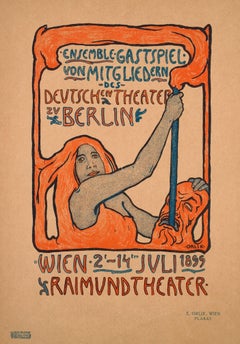
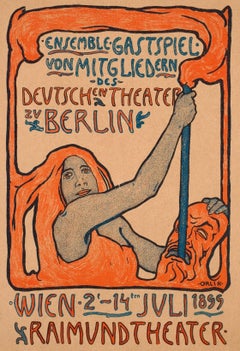
Performance by members of the Deutsches Theater zu Berlin / - Ornamental Flow -

Performance by members of the Deutsches Theater zu Berlin / - Ornamental Flow -

By Emil Orlik

Located in Berlin, DE

Emil Orlik (1870 Prague - 1932 Berlin), Ensemble guest performance by members of the Deutsches Theater zu Berlin, 1899. Color lithograph on wove paper, 20 cm x 13.3 cm (image), 29.5 ...

Category

1890s Jugendstil Prints and Multiples

Materials

Paper

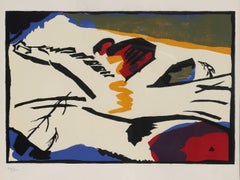
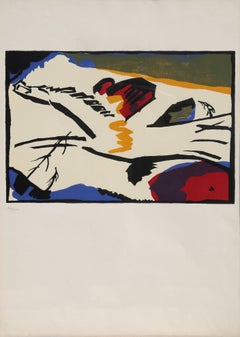
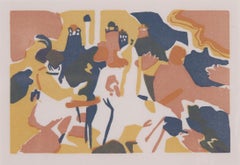
Lyrisches
Lyrisches

Lyrisches

By (after) Wassily Kandinsky

Located in Long Island City, NY

Artist: Wassily Kandinsky, After, Russian (1866 - 1944) Title: Lyrisches Year of Original: 1911 Printed: circa 1960 Medium: Lithograph on BFK Rives, numbered in pencil Edition: 106/...

Category

1920s Jugendstil Prints and Multiples

Materials

Lithograph

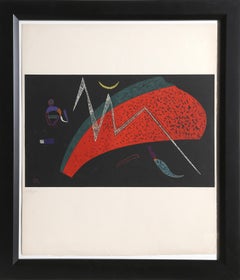
Watermelon
Watermelon

Watermelon

By (after) Wassily Kandinsky

Located in Long Island City, NY

Artist: after Wassily Kandinsky, Russian (1866 - 1944) Title: Watermelon Year: 1939 Printed: circa 1965 Medium: Lithograph on Arches, numbered in pencil Edition: 277/300 Image Size:...

Category

Mid-20th Century Jugendstil Prints and Multiples

Materials

Lithograph

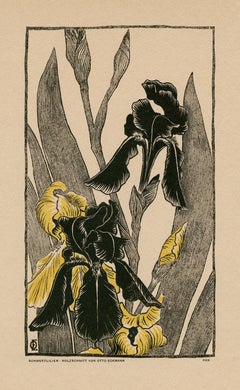
Irises (Schwertlilien)

Irises (Schwertlilien)

By Otto Eckmann

Located in Myrtle Beach, SC

An original arts and crafts color woodcut published in 'Pan', vol. 1, no. 3-5, 1896, the leading German magazine of the period devoted to art and literature, of which Eckmann was an ...

Category

1890s Jugendstil Prints and Multiples

Materials

Woodcut

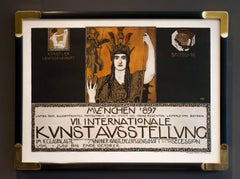
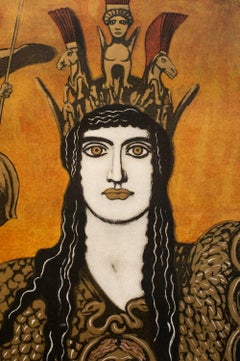
POSTER FOR VII INTNL ART EXHIBITION OF MUNICH ARTISTS ASSOCIATION & SECESSION

POSTER FOR VII INTNL ART EXHIBITION OF MUNICH ARTISTS ASSOCIATION & SECESSION

By Franz von Stuck

Located in Palm Beach, FL

FRANZ VON STUCK, POSTER FOR VII. INTERNATIONALE KUNSTAUSSTELLUNG MÜNCHNER KÜNSTLERGENOSSENSCHAFT UND SECESSION (VII INTERNATIONAL ART EXHIBITION OF THE MUNICH ARTISTS ASSOCIATION AN...

Category

1890s Jugendstil Prints and Multiples

Materials

Lithograph

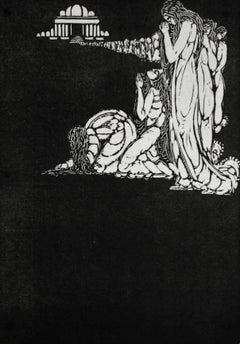
Frauen am Tempel. (Women at the Temple).

Frauen am Tempel. (Women at the Temple).

By Heinrich Ehmsen

Located in Plano, TX

Frauen am Tempel. (Women at the Temple). 1907. Linoleum cut. Lang 20. 13 3/4 x 9 3/4 (sheet 23 1/2 x 18 3/8). Edition size not stated. Lang was unable to obtain an image of this earl...

Category

Early 1900s Jugendstil Prints and Multiples

Materials

Linocut

Jugendstil prints and multiples for sale on 1stDibs.

Find a wide variety of authentic Jugendstil prints and multiples available for sale on 1stDibs. Works in this style were very popular during the 21st Century and Contemporary, but contemporary artists have continued to produce works inspired by this movement. Many Pop art paintings were created by popular artists on 1stDibs, including Rudolf Bauer, Georges Rogier, Heinrich Vogeler, and Ludwig Hohlwein. Frequently made by artists working with Paper, and Lithograph and other materials, all of these pieces for sale are unique and have attracted attention over the years. Not every interior allows for large Jugendstil prints and multiples, so small editions measuring 2.76 inches across are also available. Prices for prints and multiples made by famous or emerging artists can differ depending on medium, time period and other attributes. On 1stDibs, the price for these items starts at $200 and tops out at $4,500, while the average work sells for $1,057.