Pop Art

POP ART STYLE

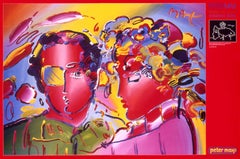
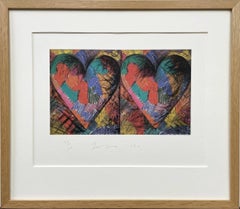
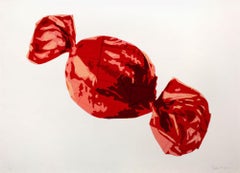
Perhaps one of the most influential contemporary art movements, Pop art emerged in the 1950s. In stark contrast to traditional artistic practice, its practitioners drew on imagery from popular culture — comic books, advertising, product packaging and other commercial media — to create original Pop art paintings, prints and sculptures that celebrated ordinary life in the most literal way.

ORIGINS OF POP ART

CHARACTERISTICS OF POP ART 

  • Bold imagery
  • Bright, vivid colors
  • Straightforward concepts
  • Engagement with popular culture 
  • Incorporation of everyday objects from advertisements, cartoons, comic books and other popular mass media

POP ARTISTS TO KNOW

ORIGINAL POP ART ON 1STDIBS

The Pop art movement started in the United Kingdom as a reaction, both positive and critical, to the period’s consumerism. Its goal was to put popular culture on the same level as so-called high culture.

Richard Hamilton’s 1956 collage Just what is it that makes today’s homes so different, so appealing? is widely believed to have kickstarted this unconventional new style.

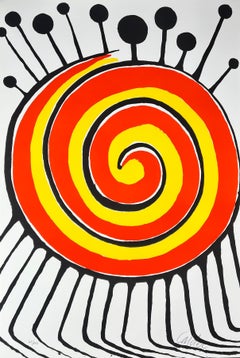
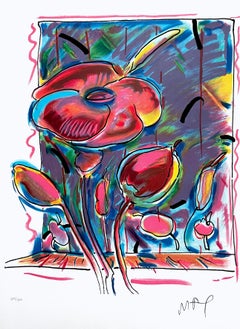
Pop art works are distinguished by their bold imagery, bright colors and seemingly commonplace subject matter. Practitioners sought to challenge the status quo, breaking with the perceived elitism of the previously dominant Abstract Expressionism and making statements about current events. Other key characteristics of Pop art include appropriation of imagery and techniques from popular and commercial culture; use of different media and formats; repetition in imagery and iconography; incorporation of mundane objects from advertisements, cartoons and other popular media; hard edges; and ironic and witty treatment of subject matter.

Although British artists launched the movement, they were soon overshadowed by their American counterparts. Pop art is perhaps most closely identified with American Pop artist Andy Warhol, whose clever appropriation of motifs and images helped to transform the artistic style into a lifestyle. Most of the best-known American artists associated with Pop art started in commercial art (Warhol made whimsical drawings as a hobby during his early years as a commercial illustrator), a background that helped them in merging high and popular culture.

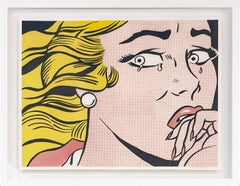
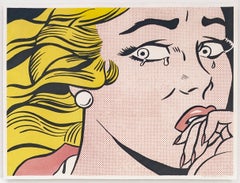
Roy Lichtenstein was another prominent Pop artist that was active in the United States. Much like Warhol, Lichtenstein drew his subjects from print media, particularly comic strips, producing paintings and sculptures characterized by primary colors, bold outlines and halftone dots, elements appropriated from commercial printing. Recontextualizing a lowbrow image by importing it into a fine-art context was a trademark of his style. Neo-Pop artists like Jeff Koons and Takashi Murakami further blurred the line between art and popular culture.

Pop art rose to prominence largely through the work of a handful of men creating works that were unemotional and distanced — in other words, stereotypically masculine. However, there were many important female Pop artists, such as Rosalyn Drexler, whose significant contributions to the movement are recognized today. Best known for her work as a playwright and novelist, Drexler also created paintings and collages embodying Pop art themes and stylistic features.

Read more about the history of Pop art and the style’s famous artists, and browse the collection of original Pop art paintings, prints, photography and other works for sale on 1stDibs.

to
3,004
5,263
1,892
2,743
2,370
2,359
Overall Width
to
Overall Height
to
4
3
6,566
8,054
1
3
12
9
61
780
1,608
1,749
1,885
117,053
64,317
56,429
28,418
14,627
9,619
6,704
6,027
4,184
3,158
2,489
2,395
2,144
605
7,056
3,861
2,560
4,886
2,373
2,188
1,876
1,427
1,318
1,067
938
795
486
480
469
405
370
316
302
279
260
249
243
5,041
3,382
2,870
2,562
2,100
1,105
523
432
426
244
2,522
2,413
10,999
2,462
Style: Pop Art
"Triple Elvis" Denied Andy Warhol Silver Black Pop Art Painting by Charles Lutz

"Triple Elvis" Denied Andy Warhol Silver Black Pop Art Painting by Charles Lutz

By Charles Lutz

Located in Brooklyn, NY

"Triple Elvis" (Denied) Silkscreen Painting by Charles Lutz Silkscreen and silver enamel paint on canvas with Artist's Denied stamp of the Andy Warhol Art Authentication Board. 82 x 72" inches 2010 This important example was shown alongside works by Warhol in a two-person show "Warhol Revisited (Charles Lutz / Andy Warhol)" at UAB Abroms-Engel Institute for the Visual Arts in 2024. Lutz's 2007 ''Warhol Denied'' series gained international attention by calling into question the importance of originality or lack thereof in the work of Andy Warhol. The authentication/denial process of the [[Andy Warhol Art Authentication Board]] was used to create value by submitting recreations of Warhol works for judgment with the full intention for the works to be formally marked "DENIED". The final product of the conceptual project being "officially denied" "Warhol" paintings authored by Lutz. Based on the full-length Elvis Presley paintings by Pop Artist Andy Warhol in 1964, this is likely one of his most iconic images, next to Campbell's Soup Cans and portraits of Jackie Kennedy, Marilyn Monroe, Liz Taylor, and Marlon Brando. This is the rarest of the Elvis works from the series, as Lutz sourced a vintage roll of 1960's primed artist linen which was used for this one Elvis. The silkscreen, like Warhol's embraced imperfections, like the slight double image printing of the Elvis image. Lutz received his BFA in Painting and Art History from Pratt Institute and studied Human Dissection and Anatomy at Columbia University, New York. Lutz's work deals with perceptions and value structures, specifically the idea of the transference of values. Lutz's most recently presented an installation of new sculptures dealing with consumerism at Frank Lloyd Wright's Fallingwater House in 2022. Lutz's 2007 Warhol Denied series received international attention calling into question the importance of originality in a work of art. The valuation process (authentication or denial) of the Andy Warhol Art Authentication Board was used by the artist to create value by submitting recreations of Warhol works for judgment, with the full intention for the works to be formally marked "DENIED" of their authenticity. The final product of this conceptual project is "Officially DENIED" "Warhol" paintings authored by Lutz. Later in 2013, Lutz went on to do one of his largest public installations to date. At the 100th Anniversary of Marcel Duchamp's groundbreaking and controversial Armory Show, Lutz was asked by the curator of Armory Focus: USA and former Director of The Andy Warhol Museum, Eric Shiner to create a site-specific installation representing the US. The installation "Babel" (based on Pieter Bruegel's famous painting) consisted of 1500 cardboard replicas of Warhol's Brillo Box (Stockholm Type) stacked 20 ft tall. All 1500 boxes were then given to the public freely, debasing the Brillo Box as an art commodity by removing its value, in addition to debasing its willing consumers. Elvis was "the greatest cultural force in the Twentieth Century. He introduced the beat to everything, and he changed everything - music, language, clothes, it's a whole new social revolution." Leonard Bernstein in: Exh. Cat., Boston, The Institute of Contemporary Art and traveling, Elvis + Marilyn 2 x Immortal, 1994-97, p. 9. Andy Warhol "quite simply changed how we all see the world around us." Kynaston McShine in: Exh. Cat., New York, Museum of Modern Art (and traveling), Andy Warhol: Retrospective, 1996, p. 13. In the summer of 1963 Elvis Presley was just twenty-eight years old but already a legend of his time. During the preceding seven years - since Heartbreak Hotel became the biggest-selling record of 1956 - he had recorded seventeen number-one singles and seven number-one albums; starred in eleven films, countless national TV appearances, tours, and live performances; earned tens of millions of dollars; and was instantly recognized across the globe. The undisputed King of Rock and Roll, Elvis was the biggest star alive: a cultural phenomenon of mythic proportions apparently no longer confined to the man alone. As the eminent composer Leonard Bernstein put it, Elvis was "the greatest cultural force in the Twentieth Century. He introduced the beat to everything, and he changed everything - music, language, clothes, it's a whole new social revolution." (Exh. Cat., Boston, The Institute of Contemporary Art (and traveling), Elvis + Marilyn 2 x Immortal, 1994, p. 9). In the summer of 1963 Andy Warhol was thirty-four years old and transforming the parameters of visual culture in America. The focus of his signature silkscreen was leveled at subjects he brilliantly perceived as the most important concerns of day to day contemporary life. By appropriating the visual vernacular of consumer culture and multiplying readymade images gleaned from newspapers, magazines and advertising, he turned a mirror onto the contradictions behind quotidian existence. Above all else he was obsessed with themes of celebrity and death, executing intensely multifaceted and complex works in series that continue to resound with universal relevance. His unprecedented practice re-presented how society viewed itself, simultaneously reinforcing and radically undermining the collective psychology of popular culture. He epitomized the tide of change that swept through the 1960s and, as Kynaston McShine has concisely stated, "He quite simply changed how we all see the world around us." (Exh. Cat., New York, Museum of Modern Art (and traveling), Andy Warhol: Retrospective, 1996, p. 13). Thus in the summer of 1963 there could not have been a more perfect alignment of artist and subject than Warhol and Elvis. Perhaps the most famous depiction of the biggest superstar by the original superstar artist, Double Elvis is a historic paradigm of Pop Art from a breath-taking moment in Art History. With devastating immediacy and efficiency, Warhol's canvas seduces our view with a stunning aesthetic and confronts our experience with a sophisticated array of thematic content. Not only is there all of Elvis, man and legend, but we are also presented with the specter of death, staring at us down the barrel of a gun; and the lone cowboy, confronting the great frontier and the American dream. The spray painted silver screen denotes the glamour and glory of cinema, the artificiality of fantasy, and the idea of a mirror that reveals our own reality back to us. At the same time, Warhol's replication of Elvis' image as a double stands as metaphor for the means and effects of mass-media and its inherent potential to manipulate and condition. These thematic strata function in simultaneous concert to deliver a work of phenomenal conceptual brilliance. The portrait of a man, the portrait of a country, and the portrait of a time, Double Elvis is an indisputable icon for our age. The source image was a publicity still for the movie Flaming Star, starring Presley as the character Pacer Burton and directed by Don Siegel in 1960. The film was originally intended as a vehicle for Marlon Brando and produced by David Weisbart, who had made James Dean's Rebel Without a Cause in 1955. It was the first of two Twentieth Century Fox productions Presley was contracted to by his manager Colonel Tom Parker, determined to make the singer a movie star. For the compulsive movie-fan Warhol, the sheer power of Elvis wielding a revolver as the reluctant gunslinger presented the zenith of subject matter: ultimate celebrity invested with the ultimate power to issue death. Warhol's Elvis is physically larger than life and wears the expression that catapulted him into a million hearts: inexplicably and all at once fearful and resolute; vulnerable and predatory; innocent and explicit. It is the look of David Halberstam's observation that "Elvis Presley was an American original, the rebel as mother's boy, alternately sweet and sullen, ready on demand to be either respectable or rebellious." (Exh. Cat., Boston, Op. Cit.). Indeed, amidst Warhol's art there is only one other subject whose character so ethereally defies categorization and who so acutely conflated total fame with the inevitability of mortality. In Warhol's work, only Elvis and Marilyn harness a pictorial magnetism of mythic proportions. With Marilyn Monroe, whom Warhol depicted immediately after her premature death in August 1962, he discovered a memento mori to unite the obsessions driving his career: glamour, beauty, fame, and death. As a star of the silver screen and the definitive international sex symbol, Marilyn epitomized the unattainable essence of superstardom that Warhol craved. Just as there was no question in 1963, there remains still none today that the male equivalent to Marilyn is Elvis. However, despite his famous 1968 adage, "If you want to know all about Andy Warhol, just look at the surface of my paintings" Warhol's fascination held purpose far beyond mere idolization. As Rainer Crone explained in 1970, Warhol was interested in movie stars above all else because they were "people who could justifiably be seen as the nearest thing to representatives of mass culture." (Rainer Crone, Andy Warhol, New York, 1970, p. 22). Warhol was singularly drawn to the idols of Elvis and Marilyn, as he was to Marlon Brando and Liz Taylor, because he implicitly understood the concurrence between the projection of their image and the projection of their brand. Some years after the present work he wrote, "In the early days of film, fans used to idolize a whole star - they would take one star and love everything about that star...So you should always have a product that's not just 'you.' An actress should count up her plays and movies and a model should count up her photographs and a writer should count up his words and an artist should count up his pictures so you always know exactly what you're worth, and you don't get stuck thinking your product is you and your fame, and your aura." (Andy Warhol, The Philosophy of Andy Warhol (From A to B and Back Again), San Diego, New York and London, 1977, p. 86). The film stars of the late 1950s and early 1960s that most obsessed Warhol embodied tectonic shifts in wider cultural and societal values. In 1971 John Coplans argued that Warhol was transfixed by the subject of Elvis, and to a lesser degree by Marlon Brando and James Dean, because they were "authentically creative, and not merely products of Hollywood's fantasy or commercialism. All three had originative lives, and therefore are strong personalities; all three raised - at one level or another - important questions as to the quality of life in America and the nature of its freedoms. Implicit in their attitude is a condemnation of society and its ways; they project an image of the necessity for the individual to search for his own future, not passively, but aggressively, with commitment and passion." (John Coplans, "Andy Warhol and Elvis Presley," Studio International, vol. 181, no. 930, February 1971, pp. 51-52). However, while Warhol unquestionably adored these idols as transformative heralds, the suggestion that his paintings of Elvis...

Category

21st Century and Contemporary Pop Art
Materials

Enamel

Rare Andy Warhol Record Cover Art set of 2

Rare Andy Warhol Record Cover Art set of 2

By Andy Warhol

Located in NEW YORK, NY

Rare 1960s Andy Warhol Record Art: set of 2 works: This set includes two original vintage pressings: 'This Is John Wallowitch' by John Wallowitch and 'The Academy In Peril' by John ...

Category

1960s Pop Art

Materials

Lithograph, Offset

Andy Warhol 'Portrait of Ingrid Bergman' 1983 Pop Art

Andy Warhol 'Portrait of Ingrid Bergman' 1983 Pop Art

By Andy Warhol

Located in Brooklyn, NY

Studio portrait from the 1940s of Ingrid Bergman rendered in Warhol's signature style published by Galerie Borjeson. Known for his bold, repetitive portrait style, Warhol transformed...

Category

1980s Pop Art

Materials

Offset

I'll See You In My Dreams

I'll See You In My Dreams

By David Spiller

Located in Indianapolis, IN

David Spiller (1942-2018) I'll See You In My Dreams (2014) Acrylic and pencil on stitched canvas panels Size: 34 x 35 in (86.4 x 88.9 cm) Frame size: 34.25 x 37.25 in (87 x 94.62 cm...

Category

Late 20th Century Pop Art

Materials

Acrylic, Pencil

Basquiat Gray 1980
Basquiat Gray 1980

Basquiat Gray 1980

By Jean-Michel Basquiat

Located in NEW YORK, NY

Jean-Michel Basquiat (untitled) Gray 1980: Basquiat illustrated & printed this exceptionally rare flyer for his band Gray in 1980. Executed similarly in the manner of his well-documented Anti-Product Cards of the period - Basquiat draws over a found image, then employs his famous William Burroughs style 'cut-up' technique; completing the piece by abstractly scrawling the word, 'Gray' above. Few known to have survived. Not to be passed upon. Literature: Jean-Michel Basquiat 1981: The Studio of the Street', (Deitch, Cortez, Vassell); Seeing Loud: Basquiat and Music (Buchhart, Bessières, Desmarais). Exhibited: Jean-Michel Basquiat 1981: The Studio of the Street: Jeffrey Deitch Gallery, New York, 2006; New York, New Music 1980-86: Museum of the City of New York (2021); Montreal Museum of Fine Arts: Seeing Loud: Basquiat and Music (2022); Basquiat Soundtracks: The Philharmonie de Paris, 2023 (The Paris Philharmonic). Further background as follows: Medium: Color Xerox on paper. 1980. Dimensions: 8.5 x 11 inches. Condition: Good overall vintage condition; scattered soiling marks; minor signs of handling & aging; typewriting on the reverse; minor corner bending in one or more places. Unsigned from an edition of unknown; few known to have survived. Provenance: Obtained directly from a prominent Basquiat Gray...

Category

1980s Pop Art

Materials

Offset, Lithograph

Madcap Muse - Abstract Colorful Mixed Media Contemporary Painting

Madcap Muse - Abstract Colorful Mixed Media Contemporary Painting

By Jonas Fisch

Located in Los Angeles, CA

Swedish artist Jonas Fisch’s imagery is vibrantly buzzing with colorful commentary on society - past and present - morphed into figures, words, and shapes. His heavily layered canvas...

Category

21st Century and Contemporary Pop Art
Materials

Canvas, Oil Pastel, Mixed Media, Acrylic

Cloned Bulldog with pet bottle

Cloned Bulldog with pet bottle

By William Sweetlove

Located in Östermalm, Stockholms län

Original sculpture 6/8 ex. 2011 - 2020. Silver plated bronze. Acquired directly from the artist. Free shipment worldwide. William Sweetlove, born in Ostend, Belgium, in 1949, unites...

Category

2010s Pop Art

Materials

Silver, Bronze

Cloned Bulldog with pet bottle.

Cloned Bulldog with pet bottle.

By William Sweetlove

Located in Östermalm, Stockholms län

Original sculpture 8 ex. Acquired directly from the artist. William Sweetlove, born in Ostend, Belgium, in 1949, unites dadaism with surrealism and pop art in humoristic sculptures...

Category

2010s Pop Art

Materials

Polyurethane

In Arms - Original Colorful Mixed Media Abstract Vibrant Spontaneous Art

In Arms - Original Colorful Mixed Media Abstract Vibrant Spontaneous Art

By Jonas Fisch

Located in Los Angeles, CA

Swedish artist Jonas Fisch’s imagery is vibrantly buzzing with colorful commentary on society - past and present - morphed into figures, words, and shapes. His heavily layered canvas...

Category

21st Century and Contemporary Pop Art
Materials

Canvas, Oil Pastel, Mixed Media, Acrylic, Spray Paint, Board

Noticed by Craig Alan Original Mixed Media Painting

Noticed by Craig Alan Original Mixed Media Painting

By Craig Alan

Located in New York City, NY

MIXED MEDIA PAINTING signed by the artist. Ask us for custom framing options for this piece. This original mixed media painting by Craig Alan belongs to his acclaimed work that blur...

Category

2010s Pop Art

Materials

Mixed Media, Oil, Panel

KAWS Blush Companion (KAWS red blush)

KAWS Blush Companion (KAWS red blush)

By KAWS

Located in NEW YORK, NY

KAWS Red Blush Companion. New and sealed in its original packaging. Published by Medicom Japan in conjunction with the exhibition, KAWS: Where The End Starts at the Modern Art Museum...

Category

21st Century and Contemporary Pop Art
Materials

Resin, Vinyl

Easy Rider - Motorcycle Gang, Screenprint on Canvas, 2007

Easy Rider - Motorcycle Gang, Screenprint on Canvas, 2007

By Russell Young

Located in Palm Desert, CA

A print by Russell Young. "Easy Rider (black+silver)" is a black and silver, contemporary Pop Art screenprint on canvas by UK artist Russell Young. The artwork is edition RY and is p...

Category

21st Century and Contemporary Pop Art

Materials

Canvas, Screen

"Terrace with Almond Blossoms."

"Terrace with Almond Blossoms."

By Evgeniya Brits

Located in Zofingen, AG

The painting "Blooming Almond Tree" is filled with light, warmth, and tranquility. The artist portrays a cozy terrace overlooking a vibrant landscape, where the blooming almond tree ...

Category

2010s Pop Art

Materials

Canvas, Varnish, Acrylic

CHROMA aka Rick Wolfryd COMPANION WITH HEART SERIES 28.5 inches . . .

CHROMA aka Rick Wolfryd COMPANION WITH HEART SERIES 28.5 inches . . .

By CHROMA aka Rick Wolfryd

Located in Cuauhtemoc, Ciudad de México

CHROMA “Companion With Heart” Sculpture — 28.5 Inches Mixed Media, Resin, Glass Beads, Acrylic Mexico City, Contemporary This striking 28.5-inch CHROMA “Companion With Heart” sculpt...

Category

2010s Pop Art

Materials

Glass, Resin, Mixed Media

Acting Tough by BATIK signed limited edition POP ART

Acting Tough by BATIK signed limited edition POP ART

By BATIK

Located in London, GB

Acting Tough by BATIK signed limited edition POP ART print Paper Size Oversize 24 x 20" inches / 61 x 51 cm Signed & numbered by artist on front Archival Pigment print Limited t...

Category

2010s Pop Art

Materials

Color, Archival Pigment

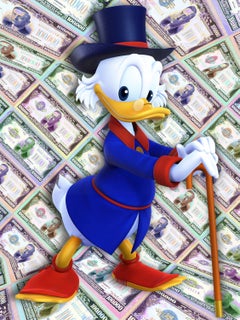
DONALD Dollars - Pop Art Sculptures

DONALD Dollars - Pop Art Sculptures

By Alben

Located in New York, NY

Cheeky references to pop culture and the societal context. Donald Duck is cast in resin with banknotes inside. Grounded in a postmodern vernacular, Alben’s paintings and sculptures ...

Category

2010s Pop Art

Materials

Epoxy Resin, Mixed Media

Portrait of Marylin Monroe, American Pop Artist

Portrait of Marylin Monroe, American Pop Artist

Located in Grand Rapids, MI

James Francis Gill (American, Born 1934) Signed: Gill 7 (Lower, Right) " Marilyn Pose 3 ", 2007 (Titled on Canvas Verso) (Marilyn Monroe) Acrylic over Print on Canvas Housed in...

Category

21st Century and Contemporary Pop Art

Materials

Canvas, Acrylic

KAWS KACHAMUKKU Companion

KAWS KACHAMUKKU Companion

By KAWS

Located in NEW YORK, NY

KAWS Kachamukku 2022: KAWS Kachamukku was born out of a unique collaboration between KAWS and the popular children’s Japanese Sesame Street equivalent...

Category

21st Century and Contemporary Pop Art

Materials

Resin, Vinyl

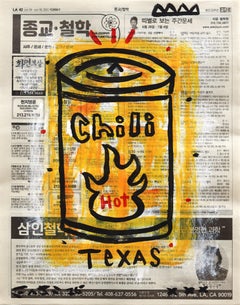
Blue Bottle - Abstract Warhol Still Life Graffiti Pop Art Painting by Gary John

Blue Bottle - Abstract Warhol Still Life Graffiti Pop Art Painting by Gary John

By Gary John

Located in Los Angeles, CA

Gary John's pop-street artworks have a whimsical, yet exciting and bold quality inspired by classic cartoon and comic book characters. Blending pop sensibilities with a roughened fau...

Category

21st Century and Contemporary Pop Art

Materials

Mixed Media, Acrylic, Newsprint

Morning View II

Morning View II

By Jeni Stallings

Located in Atlanta, GA

"Jeni Stallings creates work that often draws from her dreams and personal experiences. She tends to render those moments in a muted, femininity-infused surrealism far from the hard-...

Category

2010s Pop Art

Materials

Wax, Oil, Wood Panel

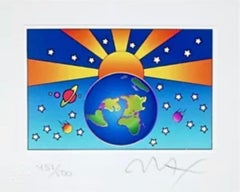
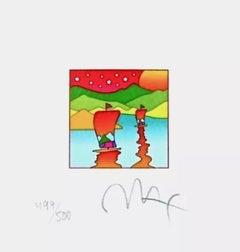
Sailboat with Sun & Moon, Peter Max

Sailboat with Sun & Moon, Peter Max

By Peter Max

Located in Fairfield, CT

Artist: Peter Max (1937) Title: Sailboat with Sun & Moon Year: 2003 Edition: 455/500, plus proofs Medium: Lithograph on Lustro Saxony paper Size: 3.5 x 3 inches Condition: Excell...

Category

Early 2000s Pop Art
Materials

Lithograph

Ohh Baby !  - Oversize Signed limited edition - Pop Art - Kate Moss
Ohh Baby ! - Oversize Signed limited edition - Pop Art - Kate Moss
Located in London, GB

Ohh Baby ! - Oversize Signed limited edition - Pop Art - Kate Moss by the London based contemporary pop art image creator and artist, BATIK. Measures 60 x 40" inches / 152 x 101 ...
Category

2010s Pop Art
Materials

Color, Archival Pigment

Pop Art art for sale on 1stDibs.
Find a wide variety of authentic Pop art available for sale on 1stDibs. Works in this style were very popular during the 21st Century and Contemporary, but contemporary artists have continued to produce works inspired by this movement. If you’re looking to add art created in this style to introduce contrast in an otherwise neutral space in your home, the works available on 1stDibs include elements of blue, orange, red, purple and other colors. Many Pop art paintings were created by popular artists on 1stDibs, including Jack Mitchell, Andy Warhol, Peter Max, and Heidler & Heeps. Frequently made by artists working with Paint, and Paper and other materials, all of these pieces for sale are unique and have attracted attention over the years. Not every interior allows for large Pop Art, so small editions measuring 0.4 inches across are also available.