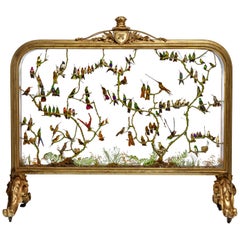
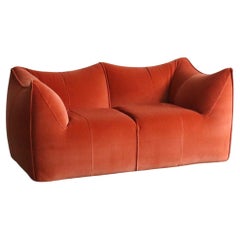
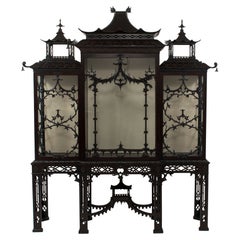
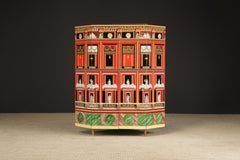
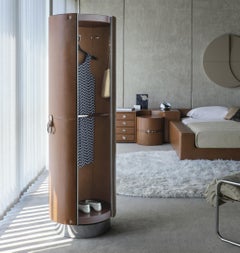
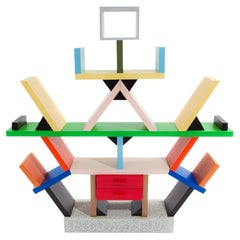
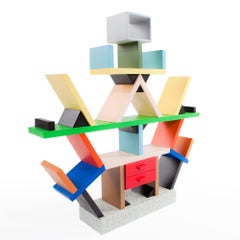
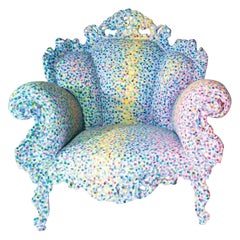
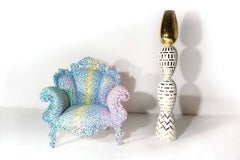
Alessandro Mendini Signed Zabro For Sale on 1stDibs
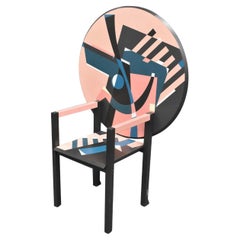
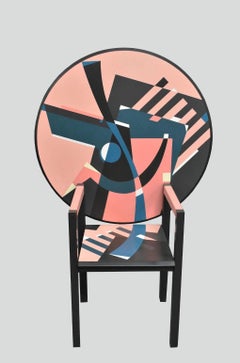
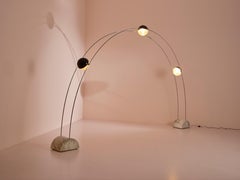
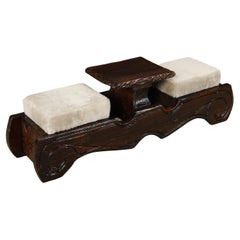
At 1stDibs, there are many versions of the ideal alessandro mendini signed zabro for your home. Each alessandro mendini signed zabro for sale was constructed with extraordinary care, often using
plastic,
plexiglass and
wood. If you’re shopping for a alessandro mendini signed zabro, we have 1 options in-stock, while there are 13 modern editions to choose from as well. Your living room may not be complete without a alessandro mendini signed zabro — find older editions for sale from the 20th Century and newer versions made as recently as the 21st Century. When you’re browsing for the right alessandro mendini signed zabro, those designed in
modern styles are of considerable interest.
Alessandro Mendini,
Zanotta and
Alessandro Guerriero each produced at least one beautiful alessandro mendini signed zabro that is worth considering.
How Much is a Alessandro Mendini Signed Zabro?
The average selling price for a alessandro mendini signed zabro at 1stDibs is $9,952, while they’re typically $1,203 on the low end and $70,300 for the highest priced.
Alessandro Mendini for sale on 1stDibs
Alessandro Mendini was born in Milan in 1931. Through his work as an architect, designer, journalist, theorist and publisher, Mendini helped establish the Italian design sensibility on a global scale with a particular focus on neo-modern, avant-garde design as well as the crossover between art, design and architecture.
Mendini’s influential work spanned the arenas of graphics, furniture, interiors, architecture, stage design, writing and painting. He graduated from the Polytechnic University of Milan in 1959, and he began his career at the studio of artist-designer Marcello Nizzoli. He went on to become the publisher of the popular magazines Casabella (1970–76), Modo and Domus (each 1979–85).
In 1979, Mendini joined Ettore Sottsass and Michele de Lucchi as a partner at Studio Alchimia, a harbinger of the Memphis Group before he cofounded Domus Academy in 1982. In 1989, he and his brother Francesco established their architectural practice, Atelier Mendini, in Milan, where he worked until his death in February 2019. In recognition of his outstanding body of work, Mendini was awarded the Compasso d’Oro twice, in 1979 and 1981. He was also honored by the Architectural League of New York, made Chevalier des Arts et Lettres in France, and, in 2014, he was awarded the European Prize for Architecture.
Mendini’s work is included in the permanent collections of the Metropolitan Museum and the Museum of Modern Art in New York and the Centre Pompidou in Paris, among others.
Find vintage Alessandro Mendini chairs, vases, table lamps and other furniture and decorative objects on 1stDibs.
(Biography provided by STUDIO CADMIUM)
A Close Look at Post-modern Furniture
Postmodern design was a short-lived movement that manifested itself chiefly in Italy and the United States in the early 1980s. The characteristics of vintage postmodern furniture and other postmodern objects and decor for the home included loud-patterned, usually plastic surfaces; strange proportions, vibrant colors and weird angles; and a vague-at-best relationship between form and function.
ORIGINS OF POSTMODERN FURNITURE DESIGN
- Emerges during the 1960s; popularity explodes during the ’80s
- A reaction to prevailing conventions of modernism by mainly American architects
- Architect Robert Venturi critiques modern architecture in his Complexity and Contradiction in Architecture (1966)
- Theorist Charles Jencks, who championed architecture filled with allusions and cultural references, writes The Language of Post-Modern Architecture (1977)
- Italian design collective the Memphis Group, also known as Memphis Milano, meets for the first time (1980)
- Memphis collective debuts more than 50 objects and furnishings at Salone del Milano (1981)
- Interest in style declines, minimalism gains steam
CHARACTERISTICS OF POSTMODERN FURNITURE DESIGN
- Dizzying graphic patterns and an emphasis on loud, off-the-wall colors
- Use of plastic and laminates, glass, metal and marble; lacquered and painted wood
- Unconventional proportions and abundant ornamentation
- Playful nods to Art Deco and Pop art
POSTMODERN FURNITURE DESIGNERS TO KNOW
VINTAGE POSTMODERN FURNITURE ON 1STDIBS
Critics derided postmodern design as a grandstanding bid for attention and nothing of consequence. Decades later, the fact that postmodernism still has the power to provoke thoughts, along with other reactions, proves they were not entirely correct.
Postmodern design began as an architectural critique. Starting in the 1960s, a small cadre of mainly American architects began to argue that modernism, once high-minded and even noble in its goals, had become stale, stagnant and blandly corporate. Later, in Milan, a cohort of creators led by Ettore Sottsass and Alessandro Mendini — a onetime mentor to Sottsass and a key figure in the Italian Radical movement — brought the discussion to bear on design.
Sottsass, an industrial designer, philosopher and provocateur, gathered a core group of young designers into a collective in 1980 they called Memphis. Members of the Memphis Group, which would come to include Martine Bedin, Michael Graves, Marco Zanini, Shiro Kuramata, Michele de Lucchi and Matteo Thun, saw design as a means of communication, and they wanted it to shout. That it did: The first Memphis collection appeared in 1981 in Milan and broke all the modernist taboos, embracing irony, kitsch, wild ornamentation and bad taste.
Memphis works remain icons of postmodernism: the Sottsass Casablanca bookcase, with its leopard-print plastic veneer; de Lucchi’s First chair, which has been described as having the look of an electronics component; Martine Bedin’s Super lamp: a pull-toy puppy on a power-cord leash. Even though it preceded the Memphis Group’s formal launch, Sottsass’s iconic Ultrafragola mirror — in its conspicuously curved plastic shell with radical pops of pink neon — proves striking in any space and embodies many of the collective’s postmodern ideals.
After the initial Memphis show caused an uproar, the postmodern movement within furniture and interior design quickly took off in America. (Memphis fell out of fashion when the Reagan era gave way to cool 1990’s minimalism.) The architect Robert Venturi had by then already begun a series of plywood chairs for Knoll Inc., with beefy, exaggerated silhouettes of traditional styles such as Queen Anne and Chippendale. In 1982, the new firm Swid Powell enlisted a group of top American architects, including Frank Gehry, Richard Meier, Stanley Tigerman and Venturi to create postmodern tableware in silver, ceramic and glass.
On 1stDibs, the vintage postmodern furniture collection includes chairs, coffee tables, sofas, decorative objects, table lamps and more.
Finding the Right Armchairs for You
Armchairs have run the gamut from prestige to ease and everything in between, and everyone has an antique or vintage armchair that they love.
Long before industrial mass production democratized seating, armchairs conveyed status and power.
In ancient Egypt, the commoners took stools, while in early Greece, ceremonial chairs of carved marble were designated for nobility. But the high-backed early thrones of yore, elevated and ornate, were merely grandiose iterations of today’s armchairs.
Modern-day armchairs, built with functionality and comfort in mind, are now central to tasks throughout your home. Formal dining armchairs support your guests at a table for a cheery feast, a good drafting chair with a deep seat is parked in front of an easel where you create art and, elsewhere, an ergonomic wonder of sorts positions you at the desk for your 9 to 5.
When placed under just the right lamp where you can lounge comfortably, both elbows resting on the padded supports on each side of you, an upholstered armchair — or a rattan armchair for your light-suffused sunroom — can be the sanctuary where you’ll read for hours.
If you’re in the mood for company, your velvet chesterfield armchair is a place to relax and be part of the conversation that swirls around you. Maybe the dialogue is about the beloved Papa Bear chair, a mid-century modern masterpiece from Danish carpenter and furniture maker Hans Wegner, and the wingback’s strong association with the concept of cozying up by the fireplace, which we can trace back to its origins in 1600s-era England, when the seat’s distinctive arm protrusions protected the sitter from the heat of the period’s large fireplaces.
If the fireside armchair chat involves spirited comparisons, your companions will likely probe the merits of antique and vintage armchairs such as Queen Anne armchairs, Victorian armchairs or even Louis XVI armchairs, as well as the pros and cons of restoration versus conservation.
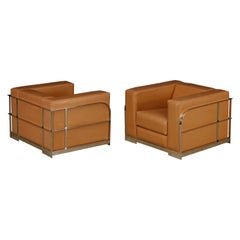
Everyone seems to have a favorite armchair and most people will be all too willing to talk about their beloved design. Whether that’s the unique Favela chair by Brazilian sibling furniture designers Fernando and Humberto Campana, who repurposed everyday objects to provocative effect; or Marcel Breuer’s futuristic tubular metal Wassily lounge chair; the functionality-first LC series from Charlotte Perriand, Le Corbusier and Pierre Jeanneret; or the Eames lounge chair of the mid-1950s created by Charles and Ray Eames, there is an iconic armchair for everyone and every purpose. Find yours on 1stDibs right now.