John Alexander Paintings

American, 1680-1775
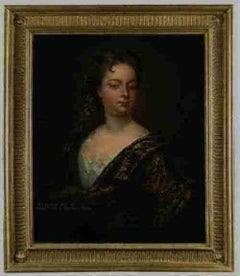
John Alexander was one of the leading Scottish artists of the 18th century. Born to an Aberdeen doctor, he boasted patrilineal descent from George Jamesone, a purported student of Rubens and Van Dyck, and the founder of a Scottish school of portraiture which found its highest expression in Ramsay and Raeburn in the following century. Alexander travelled to Rome in 1711 where he trained under Giuseppe Bartolomeo Chiari. He produced engravings after Raphael’s frescoes in the Vatican Loggia, and worked for the Marquess of Annandale to collect paintings and sculpture; he made drawings of the works, and collected some copies for himself, which he brought back to Scotland in 1720. Whilst in Italy, Alexander received commissions from the Medici in Florence, and the exiled Stuart court in Rome, who included the Lord Chief Justice Coke and the Earl of Mar. Lord Mar had arrived in Italy after the failed Jacobite rising of 1715, and even commissioned Alexander on behalf of the exiled Royal family: Alexander wrote to Mar, ‘You will receive from the post the Parnassus of Raphael […] I pray you anew to excuse my weak beginnings to the King’ (Holloway, p. 86). Alexander married Isobel Innes of Tillyfour in 1723 and their son Cosmo was born the following year. Their younger son Charles was sent abroad to the Scots Benedictine College at Ratisbon, and his daughter married George Chalmers, son to Roderick Chalmers and heir to an impoverished baronetcy. Alexander took a number of aristocratic commissions, which included the 4th Earl and Countess of Kinmore; James Hamilton, 5th Duke of Hamilton; and the 7th Earl of Wemyss. He was based in Edinburgh in his later career, painting figures of early Enlightenment Edinburgh, such as George Drummond, the Lord Provost who had envisaged the grid plan of Edinburgh’s New Town. Alexander was a close friend of the architect James Gibbs, and the engraver and antiquary George Vertue, who described the artist as ‘a merry dispos’d gent, [who] laughs eternally’ (Holloway, p. 85). Alexander was a signatory in 1729 of the charter of Scotland’s first art institution, the Academy of St Luke of Edinburgh.
to
1
1
1
Overall Width
to
Overall Height
to
1
1
1
1
1
1
1
1
1
1
1
2
2
1
1
3
776
740
728
681
2
1
1
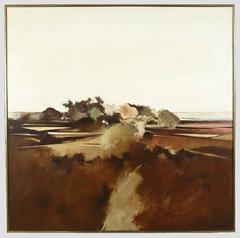
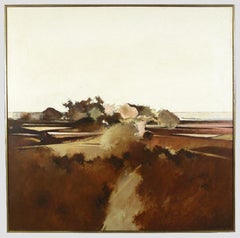
Artist: John Alexander
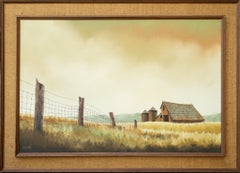
LANDSCAPE
By John Alexander
Located in New York, NY
Fall landscape of field of wheat or long grass. yellow, beige and brown colors. American
Category

Late 20th Century American Realist John Alexander Paintings
Materials

Canvas, Oil

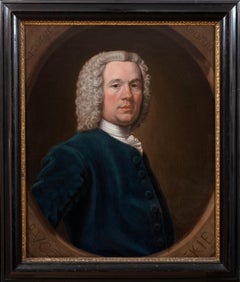
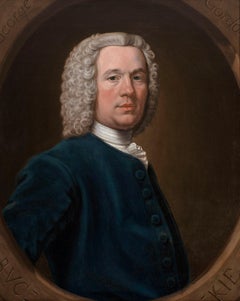
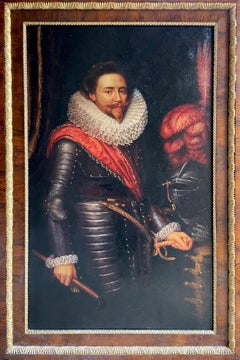
Portrait of George Gordon, 7th Laird of Buckie (1707-1756)
By John Alexander
Located in Henley-on-Thames, England
John Alexander (Scottish, 1686-1766) Portrait of George Gordon, 7th Laird of Buckie (Scottish, 1707-1756), c. 1743 Oil on canvas In a carved ebonised frame, with gilded inner slight...
Category

1740s Old Masters John Alexander Paintings

Materials

Oil

Related Items
Deposition Atala De Roussy-trioson Paint Oil on canvas 19/20th Century French
Located in Riva del Garda, IT
The deposition of Atala Follower of Anne-Louis Girodet de Roussy-Trioson (Montargis, 1767 - Paris, 1824) 19th-20th century Oil on canvas 47 x 65 cm. - Framed 67 x 84 cm The propos...
Category

Late 19th Century Old Masters John Alexander Paintings

Materials

Oil

Saint Michael Archangel Tuscany school 16th Century Paint Oil on canvas Italy
Located in Riva del Garda, IT
Saint Michael the Archangel victorious over the Devil Tuscany - 16th century Oil on canvas 68 x 52 cm. - In frame 97 x 78 cm. Of great character is this interesting St. Michael the...
Category

16th Century Old Masters John Alexander Paintings

Materials

Oil

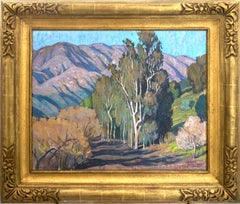
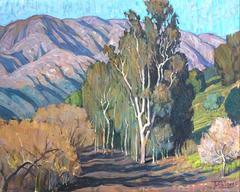
Pathway to the San Gabrielino Trail; Neglected and Protected
By Tim Solliday
Located in Pasadena, CA
Provenance Acquired by the gallery directly from the artist Painted en plein air in the San Gabriel Mountains near the artist's home in the early summer of 2013. Signed "T. Solliday...
Category

2010s American Realist John Alexander Paintings
Materials

Canvas, Oil

Oil Portrait of a Victorian Lady, c. 1850
Located in Chicago, IL
Painted in the 19th century, this exquisite miniature portrait wonderfully exemplifies realism in traditional oil painting. The small artwork is painted in the conventional portraiture style of the Old Masters, and achieves soft realism with fine brushwork and a subdued, neutral palette. The half length portrait depicts a fine Victorian woman dressed in all black with a delicate lace collar and bonnet. She wears a ruby broach...
Category

Mid-19th Century Old Masters John Alexander Paintings

Materials

Oil

Oil Portrait of a Victorian Lady, c. 1850
$1,480
H 13.75 in W 11.5 in D 1.75 in
19th century English Portrait of a Young boy in a Cavalier costume
Located in Woodbury, CT
This elegant English 19th-century portrait of a young boy dressed in a Cavalier costume, painted circa 1860, is a striking example of Victorian portraiture that seamlessly combines h...
Category

1860s Old Masters John Alexander Paintings

Materials

Canvas, Oil

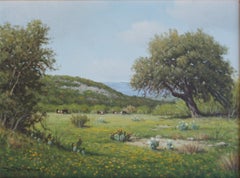
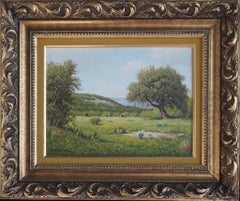
"Texas Hill Country Landscape With Cattle" oil painting of wildflowers, cactus
By Don Warren
Located in Austin, TX
Canvas Size: 12 x 16 in. Frame Size: 20.5 x 24.5 in. Signed, lower left: "Don Warren" A serene, classic, and cheerful scene in the Texas Hill Country by Don Warren. The foreground i...
Category

1970s American Realist John Alexander Paintings
Materials

Canvas, Oil

18th Century portrait oil painting of a lady in an ermine trimmed cloak
By Sir Godfrey Kneller
Located in Nr Broadway, Worcestershire
Circle of Sir Godfrey Kneller Dutch, (1646-1723) Portrait of a Lady in an Ermine Trimmed Cloak Oil on canvas Image size: 26.5 inches x 22.5 inches Size including frame: 33.5 inches x 29.5 inches A well-executed half-length portrait of a lady painted in a feigned oval, circle of Sir Godfrey Kneller. The use of a feigned oval was a device used in portraiture to give a sense of depth and add an intimacy to the painting, drawing your attention to the sitter. The subject, posed without her wig in the undressed fashion of the day, wears a blue ermine trimmed blue cloak over a white silk robe...
Category

18th Century Old Masters John Alexander Paintings
Materials

Canvas, Oil

Antique Italian painter - 18th century figure painting
Located in Varmo, IT
Italian painter (18th century) - Chrono. 90.5 x 106 cm. Antique oil painting on canvas, without frame (not signed). Condition report: Lined canvas. Good state of conservation of t...
Category

Early 18th Century Old Masters John Alexander Paintings
Materials

Canvas, Oil

Antique Italian painter - 18th century figure painting
$4,794 Sale Price
20% Off
H 35.63 in W 41.74 in
Portrait of Mary Hooper née Davie, Blue Dress, Seated in a Parkland, Provenance
By Jonathan Richardson the Elder
Located in London, GB
Portrait of Mary Hooper (née Davie) in a Blue Dress & Seated in a Parkland c. 1715–1725 Jonathan Richardson the Elder (1667–1745) This portrait, presented by Titan Fine Art, is of p...
Category

18th Century Old Masters John Alexander Paintings
Materials

Canvas, Oil

18th century French Old Master Portrait of a woman in oriental costume
Located in Aartselaar, BE
French 18th century old master portrait of a majestic lady dressed "à la Turque" The sitter at the viewer with a kind and enigmatic smile and twinkling eyes. She looks elegant and kind, yet also has an intelligent and determined aura, reflecting the character of someone who is in charge of her own life and destiny. De Silvestre paid great attention to her spectacular outfit, which is striking in its portrayal of the sumptuous fabrics and their decorative richness. She is wearing a luxurious royal blue robe à la...
Category

1740s Old Masters John Alexander Paintings

Materials

Canvas, Oil

Portrait of lady, Mary Hammond in Rich Attire, Jewels, Lace c.1618-22 Historical
By Cornelius Johnson
Located in London, GB
Portrait of Mary Hammond in Sumptuous Attire, Jewels and Lace c.1618-22 Circle of Cornelius Johnson (1593-1661) This portrait of a lady, presented by Titan Fine Art, is an exquisite example of early seventeenth-century portraiture, remarkable both for the lavishness of its subject’s attire and for the distinguished provenance that has accompanied it across four centuries that adds a rich layer of historical significance. It was once part of the notable collection of Sir William Temple, 1st Baronet (1628–1699) at Moor Park, a stately mansion in Hertfordshire. Temple was a diplomat, essayist, philosopher, and the patron of Jonathan Swift. He was a key participate at an important period in English history, helping not only to negotiate the Triple Alliance, but also the marriage between William of Orange and Princess Mary. His collection at Moor Park was well known in its day, reflecting both his cultivated taste in art and literature and his international connections. Its fabulous attire, rendered with almost microscopic attention, is not merely decorative but emblematic of a world in which visual display was a language of power. Its provenance, stretching from the English country house and Enlightenment scholarship to modernist circles, forms a microcosm of cultural exchange across four centuries. Thus, the portrait of Mary Hammond stands as both a masterpiece of early seventeenth-century craftsmanship and a witness to the grand narrative of collecting and connoisseurship—a testament to the enduring fascination of beauty, status, and history intertwined. By tradition the portrait depicts Mary Hammond (born c.1602), who was Sir William Temple’s mother, and the daughter of the royal physician who served James I, Dr John Hammond (c.1555–1617) and whose family owned Chertsey Abbey in Surrey. The woman appears between 18 and 25 years old, and Mary would be about 18–20 when the portrait was painted circa 1620, therefore this matches the apparent age of the sitter and the fashion perfectly. Mary stood at the intersection of learned/courtly and gentry worlds. On 22 June 1627 she married her first cousin (a common practice for consolidating family wealth and influence during that era.) Sir John Temple (1600-1677) at St Michael, Cornhill in the City of London. The couple resided nearby, at Blackfriars. Her marriage to Sir Temple placed her at the heart of the social and political circles that shaped British history. The couple had at least five children, and they became highly significant historical figures: The eldest son, Sir William Temple, 1st Baronet, became a distinguished diplomat, statesman, and essayist, famous for his role in the Triple Alliance and as a patron and mentor to the writer Jonathan Swift – our portrait was in his collection. Their daughter, Martha Temple, later Lady Giffard, was a notable figure in her own right. She became her brother William's first biographer and a respected letter-writer, providing a rare female perspective on the events and high society of the time. Another son, also named Sir John Temple, became Attorney General for Ireland and was involved in the turbulent politics surrounding the English Civil War and the Act of Settlement in Ireland. Mary died in November 1638 after giving birth to twins and was buried at Penshurst, Kent. The family's connection to Penshurst Place is a major point of interest as this historic manor was the seat of the Sidney family, a major aristocratic and literary dynasty. The portrait was in the collection of the Mary’s son, Sir William Temple. From there it descended to his daughter, and then to her nephew, the Reverend Nicholas Bacon of Spixworth Park, Norfolk (his mother was Dorothy Temple who died in 1758). Indeed, by this time, many Temple relics were in the collection at Spixworth including the engagement ring of the illustrious Dorothy Osborne, Lady Temple, wife of Sir William Temple. The portrait thus linked two prominent English families—the Temples and the Bacons—for generations. It is listed in a Spixworth Park inventory of 27 October 1910 by the local collector and art historian, Prince Duleep Singh. He described it with characteristic precision as: “No. 69. Lady Half Length, body and face turned towards the sinister, hazel eyes upwards to the dexter, red hair dressed low and over the ears, a jewelled coronet behind, pearl ear-rings tied with black strings. Dress: black, bodice cut low and square, with lace all round the opening and over shoulders, sleeves with double slashes showing red lining and lace under, falling thin pleated lace collar, black strings tied behind it, a jewel suspended on a black string round the neck, and a double row of agate and silver beads all round to the shoulders. M. In brown veined stone frame. Age 30. Date c.1620. It is called ‘Dutch portrait from Moor Park, mentioned by Nicholas Bacon of Coddenham and Shrubland as a very valuable painting.’ A few years later, when Robert Bacon Longe’s executors sold the contents of Spixworth Park (19–22 May 1912), the portrait appeared as lot 262, described as: “A very valuable half-length portrait on panel, ‘Dutch Lady, with deep lace collar and pearl and amethyst necklace, pendant, and ear-rings, and auburn hair, with coronet’ Early Dutch School 1620.” Following this sale the painting entered the collection of David and Constance Garnett, prominent literary figures of the early twentieth century, before being gifted to Andre Vladimervitch Tchernavin by 1949, and subsequently passed by him to the present owners in 1994. The two great houses associated with the painting, Moor Park and Spixworth Park, further underscore its pedigree. Moor Park, in Hertfordshire, was among the grandest country estates of seventeenth-century England—its gardens famously redesigned by Sir William Temple himself and later influencing landscape design across Europe. Sir William's Temple's secretary was Jonathan Swift, who lived at Moor Park between 1689 and 1699. Swift began to write "A Tale of the Tub" and "The Battle of the Books" at Moor Park. Spixworth Park, near Norwich, was an Elizabethan country house in Spixworth, Norfolk, located just north of the city of Norwich. It was home to successive generations of the Bacon family, one of Norfolk’s most distinguished dynasties (later, the Bacon Longe family), who were considerable land owners (owning Reymerston Hall, Norfolk, Hingham Hall, Norfolk, Dunston Hall, Norfolk, Abbot's Hall, Stowmarket, and Yelverton Hall, Norfolk). Spixworth Hall and the surrounding parkland remained in the Longe family for 257 years until 1952, when it was demolished. Rendered with meticulous precision and sumptuous detail, the painting depicts an elegantly dressed woman—her poise, costume, and jewels all communicating a message of wealth, refinement, and social rank. Every brushstroke conveys an artist deeply attuned to the textures of luxury and the nuances of feminine dignity. The sitter’s attire is nothing short of magnificent. Her bodice and sleeves are fashioned from the finest black silk or satin, the fabric absorbing and reflecting light in equal measure, suggesting both depth and lustre. Around her shoulders lies an opulent lace ruff—a deep, radiating lace collar worked in such intricate detail that it testifies to both the artist’s technical skill and the sitter’s extravagant taste. Lace of this quality, especially Venetian or Flemish bobbin lace, was one of the costliest materials available in early seventeenth-century Europe, its weight worth more than gold, and was a marker of prestige that rivalled jewels in value. The painter has taken great care to delineate every loop and scallop of the lace, achieving an almost tactile realism. Pale skin was also a desired beauty standard, sometimes accentuated with contrasting black ribbons or strings. Her jewels amplify this display of affluence. Matching earrings and a delicate coronet or jewelled hair ornament with a feather adorn her hair, which is styled in the modest yet fashionable manner of the time. These details are far from decorative excess—they serve as visual emblems of social standing, refinement, and lineage. Portraits of this kind were statements of both identity and aspiration, intended to project a family’s prosperity and moral virtue to posterity. The portrait was most likely painted in London around 1618-1622. The low-cut, décolletage-revealing neckline was fashionable in the courts of England and France during the late Elizabethan and Jacobean eras (c. 1590s-1610s), this style did not prevail in the public fashion of the Low Countries at this time. This style of lace ruff — delicate needle lace with geometric openwork — was fashionable from c.1615 to 1622, and the jewelled caul (hair net) and lace edging over a stiffened coif are consistent with high-status English women’s portraiture between 1610–1620. The puffed sleeve slash and the use of pink satin beneath black velvet belong squarely to the late Jacobean...
Category

17th Century Old Masters John Alexander Paintings
Materials

Oil, Panel

Portrait of a Gentleman in a Red Coat and Periwig, c.1715-1725; Godfrey Kneller
By Sir Godfrey Kneller
Located in London, GB
Portrait of a Gentleman in a Red Coat and Periwig, c.1715-1725 Studio of Sir Godfrey Kneller (1646–1723) This portrait of a gentleman, presented by Titan Fine Art, is a fine and wel...
Category

18th Century Old Masters John Alexander Paintings
Materials

Canvas, Oil

Previously Available Items
Foxglove's Journey
By John Alexander
Located in San Francisco, CA
Alexander was born in Beaumont, Texas, in 1945. He received his B.F.A. from Lamar University in Beaumont in 1968 and his M.F.A. from the Southern Methodist University in Dallas in 19...
Category

2010s John Alexander Paintings
Materials

Oil

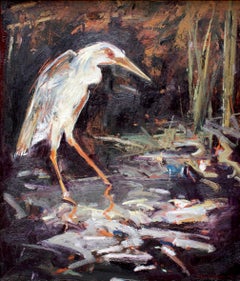
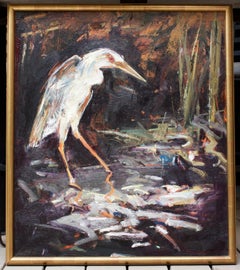
Night Heron Stalker
By John Alexander
Located in Austin, TX
Artist: John Alexander Title: Night Stalker Medium: Oil on Canvas Size: 35" x 30" Framing: Framed Condition: Excellent
Category

Mid-20th Century John Alexander Paintings
Materials

Canvas, Oil

LANDSCAPE 091
By John Alexander
Located in New York, NY
oil painting on canvas framed in brown wood frame depicting an abstracted landscape.
Category

1990s Contemporary John Alexander Paintings
Materials

Canvas, Oil

LANDSCAPE 091
H 44.5 in W 44.5 in

John Alexander paintings for sale on 1stDibs.

Find a wide variety of authentic John Alexander paintings available for sale on 1stDibs. You can also browse by medium to find art by John Alexander in oil paint, paint, canvas and more. Not every interior allows for large John Alexander paintings, so small editions measuring 44 inches across are available. Customers who are interested in this artist might also find the work of Jo Cain, Nicholas Berger, and Stephen Wright. John Alexander paintings prices can differ depending upon medium, time period and other attributes. On 1stDibs, the price for these items starts at $18,000 and tops out at $18,000, while the average work can sell for $18,000.