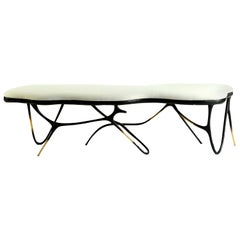
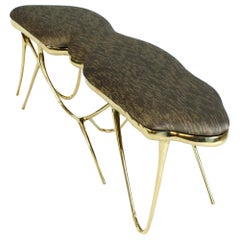
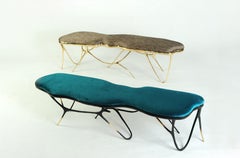
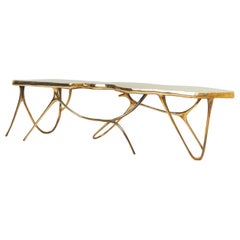
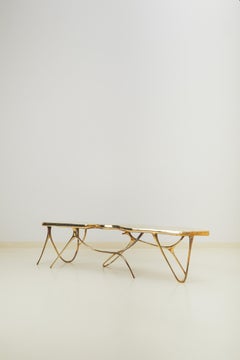
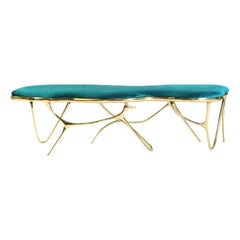
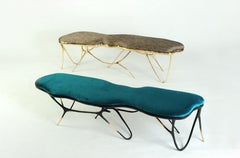
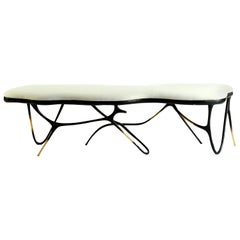
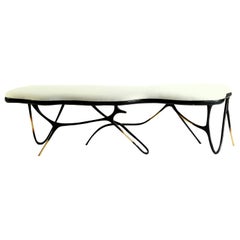
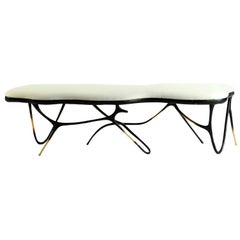
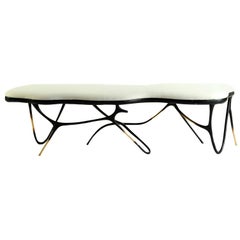
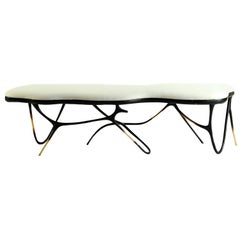
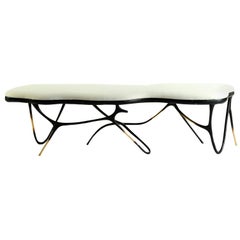
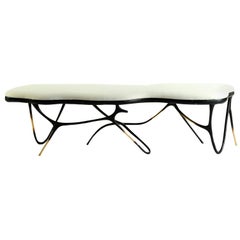
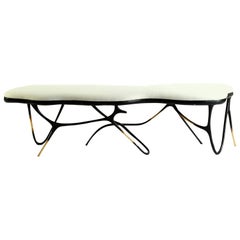
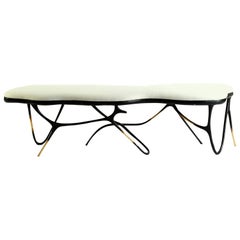
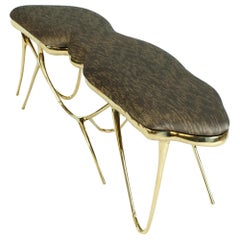
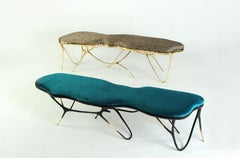
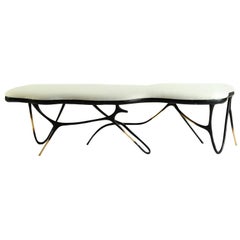
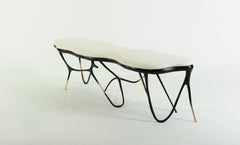
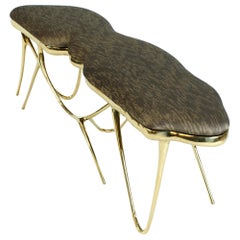
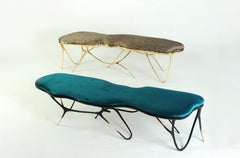
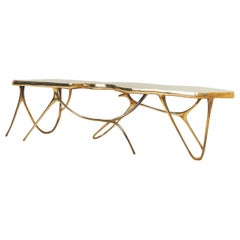
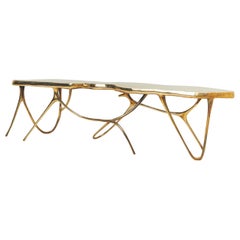
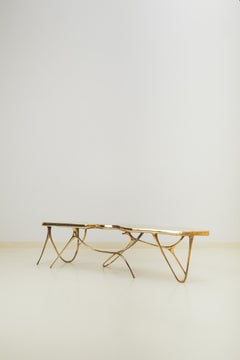
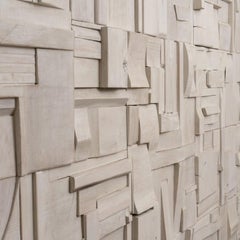
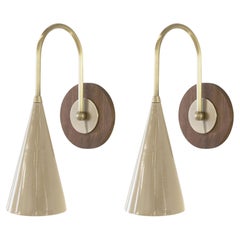
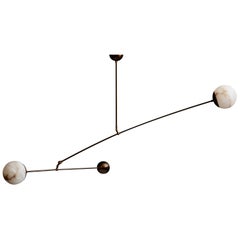
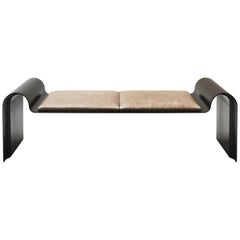
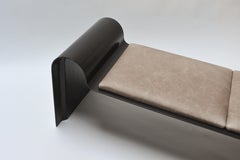
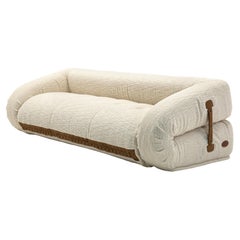
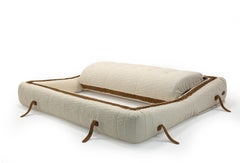
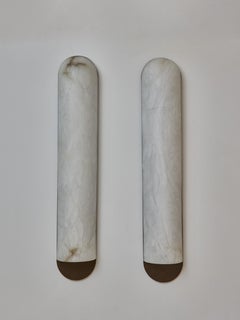
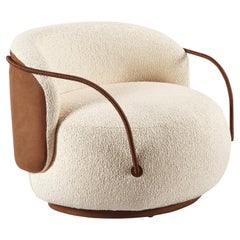
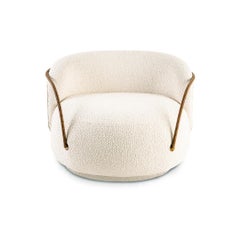
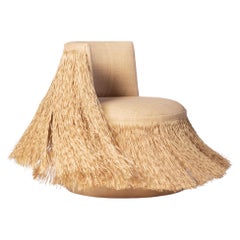
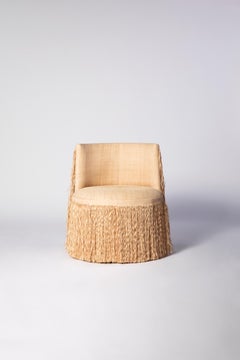
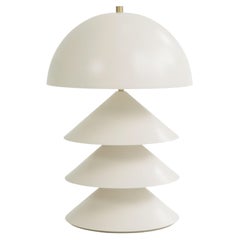
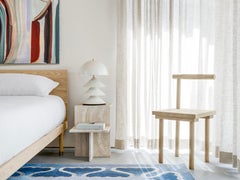
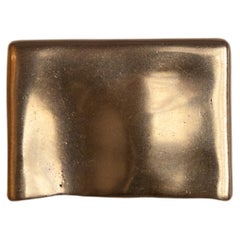
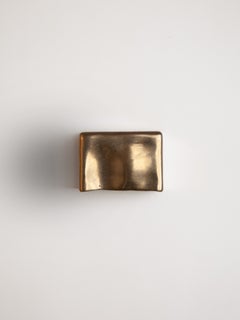
At 1stDibs, there are many versions of the ideal calligraphic sculpted brass bench for your home. Frequently made of
brass and
metal, every calligraphic sculpted brass bench was constructed with great care.
Postmodern design was a short-lived movement that manifested itself chiefly in Italy and the United States in the early 1980s. The characteristics of vintage postmodern furniture and other postmodern objects and decor for the home included loud-patterned, usually plastic surfaces; strange proportions, vibrant colors and weird angles; and a vague-at-best relationship between form and function.
ORIGINS OF POSTMODERN FURNITURE DESIGN
- Emerges during the 1960s; popularity explodes during the ’80s
- A reaction to prevailing conventions of modernism by mainly American architects
- Architect Robert Venturi critiques modern architecture in his Complexity and Contradiction in Architecture (1966)
- Theorist Charles Jencks, who championed architecture filled with allusions and cultural references, writes The Language of Post-Modern Architecture (1977)
- Italian design collective the Memphis Group, also known as Memphis Milano, meets for the first time (1980)
- Memphis collective debuts more than 50 objects and furnishings at Salone del Milano (1981)
- Interest in style declines, minimalism gains steam
CHARACTERISTICS OF POSTMODERN FURNITURE DESIGN
- Dizzying graphic patterns and an emphasis on loud, off-the-wall colors
- Use of plastic and laminates, glass, metal and marble; lacquered and painted wood
- Unconventional proportions and abundant ornamentation
- Playful nods to Art Deco and Pop art
POSTMODERN FURNITURE DESIGNERS TO KNOW
VINTAGE POSTMODERN FURNITURE ON 1STDIBS
Critics derided postmodern design as a grandstanding bid for attention and nothing of consequence. Decades later, the fact that postmodernism still has the power to provoke thoughts, along with other reactions, proves they were not entirely correct.
Postmodern design began as an architectural critique. Starting in the 1960s, a small cadre of mainly American architects began to argue that modernism, once high-minded and even noble in its goals, had become stale, stagnant and blandly corporate. Later, in Milan, a cohort of creators led by Ettore Sottsass and Alessandro Mendini — a onetime mentor to Sottsass and a key figure in the Italian Radical movement — brought the discussion to bear on design.
Sottsass, an industrial designer, philosopher and provocateur, gathered a core group of young designers into a collective in 1980 they called Memphis. Members of the Memphis Group, which would come to include Martine Bedin, Michael Graves, Marco Zanini, Shiro Kuramata, Michele de Lucchi and Matteo Thun, saw design as a means of communication, and they wanted it to shout. That it did: The first Memphis collection appeared in 1981 in Milan and broke all the modernist taboos, embracing irony, kitsch, wild ornamentation and bad taste.
Memphis works remain icons of postmodernism: the Sottsass Casablanca bookcase, with its leopard-print plastic veneer; de Lucchi’s First chair, which has been described as having the look of an electronics component; Martine Bedin’s Super lamp: a pull-toy puppy on a power-cord leash. Even though it preceded the Memphis Group’s formal launch, Sottsass’s iconic Ultrafragola mirror — in its conspicuously curved plastic shell with radical pops of pink neon — proves striking in any space and embodies many of the collective’s postmodern ideals.
After the initial Memphis show caused an uproar, the postmodern movement within furniture and interior design quickly took off in America. (Memphis fell out of fashion when the Reagan era gave way to cool 1990’s minimalism.) The architect Robert Venturi had by then already begun a series of plywood chairs for Knoll Inc., with beefy, exaggerated silhouettes of traditional styles such as Queen Anne and Chippendale. In 1982, the new firm Swid Powell enlisted a group of top American architects, including Frank Gehry, Richard Meier, Stanley Tigerman and Venturi to create postmodern tableware in silver, ceramic and glass.
On 1stDibs, the vintage postmodern furniture collection includes chairs, coffee tables, sofas, decorative objects, table lamps and more.
Whether burnished or lacquered, antique, new and vintage brass furniture can elevate a room.
From traditional spaces that use brass as an accent — by way of brass dining chairs or brass pendant lights — to contemporary rooms that embrace bold brass decor, there are many ways to incorporate the golden-hued metal.
“I find mixed metals to be a very updated approach, as opposed to the old days, when it was all shiny brass of dulled-out silver tones,” says interior designer Drew McGukin. “I especially love working with brass and blackened steel for added warmth and tonality. To me, aged brass is complementary across many design styles and can trend contemporary or traditional when pushed either way.”
He proves his point in a San Francisco entryway, where a Lindsey Adelman light fixture hangs above a limited-edition table and stools by Kelly Wearstler — also an enthusiast of juxtapositions — all providing bronze accents. The walls were hand-painted by artist Caroline Lizarraga and the ombré stair runner is by DMc.
West Coast designer Catherine Kwong chose a sleek brass and lacquered-parchment credenza by Scala Luxury to fit this San Francisco apartment. “The design of this sideboard is reminiscent of work by French modernist Jean Prouvé. The brass font imbues the space with warmth and the round ‘portholes’ provide an arresting geometric element.”
Find antique, new and vintage brass tables, case pieces and other furnishings now on 1stDibs.
Don’t underestimate a good bench — antique and vintage benches are storage pieces, stylish accents and statement-making additional seating.
Today, benches are a great option to maximize seating in your house and outdoor space. The perfect option to create a warm, welcoming atmosphere in foyers and entryways, benches can also transform dining areas, making it possible to host a hungry family with limited space. Whether you’re sprucing up your entertaining with upholstered Empire-style benches or adding more options to a dining room that’s seen a farmhouse makeover, this humble furnishing has only become more versatile over the years. Designers have recognized the demand for a good bench, crafting the convenient seating alternative from a range of materials, including wood, iron and even concrete.
Mid-century modern benches from George Nakashima, Charlotte Perriand and the pared-down Platform bench by George Nelson for Herman Miller are classics of innovation, but maybe you’re looking for an unconventional design approach to your home's seating. Opt for something totally outside the box — an antique pine church-pew bench paired with a vintage wool throw and stationed under the mounted coatrack in your mudroom is a distinctive touch.
For your outdoor oasis, a wrought-iron patio bench is the obvious choice but not the only option. An enclosed back patio would do well to inherit a rattan bench with cushions, but it can be susceptible to weathering and should be covered or moved indoors when not in use.
Whatever your seating arrangement needs are, find vintage, new and antique benches for every space on 1stDibs.