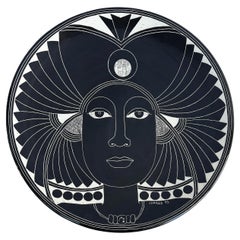
On 1stDibs, you can find the most appropriate piece of cuban pottery for your needs in our varied inventory. In our selection of items, you can find
contemporary examples as well as a
Expressionist version. If you’re looking for an item from our selection of cuban pottery from a specific time period, our collection is diverse and broad-ranging, and you’ll find at least one that dates back to the 20th Century while another version may have been produced as recently as the 21st Century. When looking for the right choice in our collection of cuban pottery for your space, you can search on 1stDibs by color — popular works were created in bold and neutral palettes with elements of
gray,
black,
brown and
white. An object in our assortment of cuban pottery from
Jose Picayo,
Laurence Salzmann,
Barbara Shunyi and
Colin Self — each of whom created distinctive versions of this kind of work — is worth considering. Artworks like these — often created in
silver gelatin print,
paper and
photographic paper — can elevate any room of your home.
The price for an artwork of this kind can differ depending upon size, time period and other attributes — a piece of cuban pottery in our inventory may begin at $350 and can go as high as $10,800, while the average can fetch as much as $1,750.
The late 19th and early 20th centuries saw sweeping social change and major scientific advances — both of which contributed to a new aesthetic: modernism. Rejecting the rigidity of Victorian artistic conventions, modernists sought a new means of expression. References to the natural world and ornate classical embellishments gave way to the sleek simplicity of the Machine Age. Architect Philip Johnson characterized the hallmarks of modernism as “machine-like simplicity, smoothness or surface [and] avoidance of ornament.”
Early practitioners of modernist design include the De Stijl (“The Style”) group, founded in the Netherlands in 1917, and the Bauhaus School, founded two years later in Germany.
Followers of both groups produced sleek, spare designs — many of which became icons of daily life in the 20th century. The modernists rejected both natural and historical references and relied primarily on industrial materials such as metal, glass, plywood, and, later, plastics. While Bauhaus principals Marcel Breuer and Ludwig Mies van der Rohe created furniture from mass-produced, chrome-plated steel, American visionaries like Charles and Ray Eames worked in materials as novel as molded plywood and fiberglass. Today, Breuer’s Wassily chair, Mies van der Rohe’s Barcelona chair — crafted with his romantic partner, designer Lilly Reich — and the Eames lounge chair are emblems of progressive design and vintage originals are prized cornerstones of collections.
It’s difficult to overstate the influence that modernism continues to wield over designers and architects — and equally difficult to overstate how revolutionary it was when it first appeared a century ago. But because modernist furniture designs are so simple, they can blend in seamlessly with just about any type of décor. Don’t overlook them.
Whether you’re adding an eye-catching mid-century modern glazed stoneware bowl to your dining table or grouping a collection of decorative plates by color for the shelving in your living room, decorating and entertaining with antique and vintage ceramics is a great way to introduce provocative pops of colors and textures to a space or family meals.
Ceramics, which includes pottery such as earthenware and stoneware, has had meaningful functional value in civilizations all over the world for thousands of years. When people began to populate permanent settlements during the Neolithic era, which saw the rapid growth of agriculture and farming, clay-based ceramics were fired in underground kilns and played a greater role as important containers for dry goods, water, art objects and more.
Today, if an Art Deco floor vase, adorned in bright polychrome glazed colors with flowers and geometric patterns, isn’t your speed, maybe minimalist ceramics can help you design a room that’s both timeless and of the moment. Mixing and matching can invite conversation and bring spirited contrasts to your outdoor dining area. The natural-world details enameled on an Art Nouveau vase might pair well with the sleek simplicity of a modern serving bowl, for example.
In your kitchen, your cabinets are likely filled with ceramic dinner plates. You’re probably serving daily meals on stoneware dishes or durable sets of porcelain or bone china, while decorative ceramic dishes may be on display in your dining room. Perhaps you’ve anchored a group of smaller pottery pieces on your mantelpiece with some taller vases and vessels, or a console table in your living room is home to an earthenware bowl with a decorative seasonal collection of leaves, greenery and acorns.
Regardless of your tastes, however, it’s possible that ceramics are already in use all over your home and outdoor space. If not, why? Whatever your needs may be, find a wide range of antique and vintage ceramics on 1stDibs.