Joyce Anderson

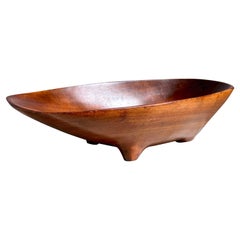
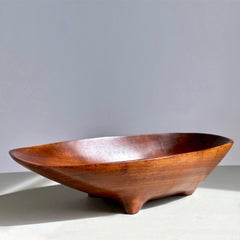
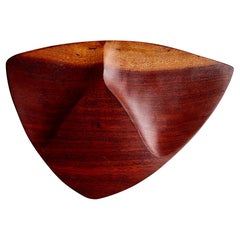
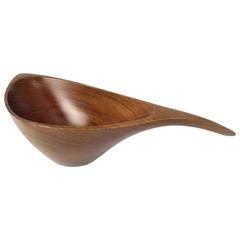
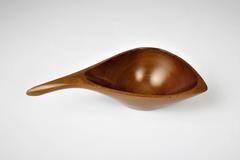
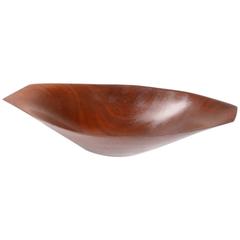
Rare Emil Milan Tri-Footed Long Bowl in Bissilon, Honduras, c. 1964

Rare Emil Milan Tri-Footed Long Bowl in Bissilon, Honduras, c. 1964

By Emil Milan

Located in Brooklyn, NY

as a tribal mask, was one of several conceived by Milan and Joyce Anderson for the 1964 USAID (Agency

Category

Vintage 1960s American Mid-Century Modern Decorative Bowls

Materials

Hardwood

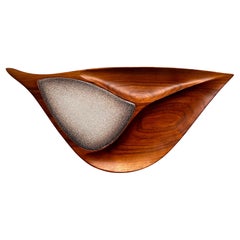
Decorative Freeform Walnut "Art" Vessel by Emil Milan, 1960's

Decorative Freeform Walnut "Art" Vessel by Emil Milan, 1960's

By Emil Milan

Located in Philadelphia, PA

-1960s, his teaching extended to Honduras where he worked with Joyce and Edgar Anderson. Milan's work is

Category

Mid-20th Century American Mid-Century Modern Decorative Bowls

Materials

Walnut

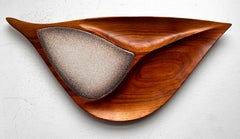
Decorative Freeform Walnut with Ceramic Inlay "Art" Vessel by Emil Milan, 1960's

Decorative Freeform Walnut with Ceramic Inlay "Art" Vessel by Emil Milan, 1960's

By Emil Milan

Located in Philadelphia, PA

mid-1960s, his teaching extended to Honduras where he worked with Joyce and Edgar Anderson. Milan's

Category

Antique Mid-19th Century American Mid-Century Modern Decorative Bowls

Materials

Ceramic, Walnut

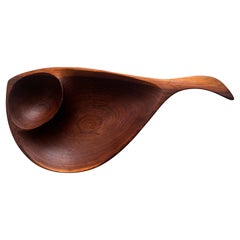
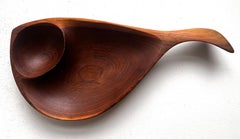
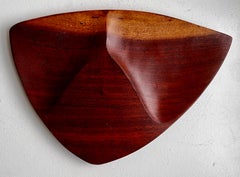
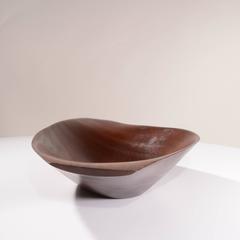
Decorative Freeform Bissilon Wood "Art" Vessel by Emil Milan, 1960's

Decorative Freeform Bissilon Wood "Art" Vessel by Emil Milan, 1960's

By Emil Milan

Located in Philadelphia, PA

1971-1984. In the mid-1960s, his teaching extended to Honduras where he worked with Joyce and Edgar

Category

Mid-20th Century American Mid-Century Modern Decorative Bowls

Materials

Hardwood

Recent Sales

Emil Milan Handmade Decorative Nut Bowl in Lapacho Wood, 1970s

Emil Milan Handmade Decorative Nut Bowl in Lapacho Wood, 1970s

By Emil Milan

Located in New York, NY

woodworkers of the day such as Wharton Esherick, Joyce and Edgar Anderson, Sam Maloof, Bob Stocksdale, and

Category

Vintage 1970s American Mid-Century Modern Decorative Bowls

People Also Browsed

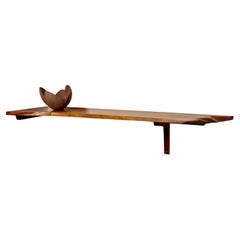
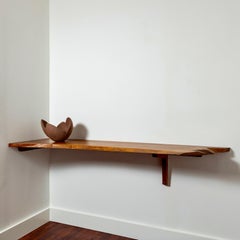
George Nakashima 6 Foot Free Edge Corner Counter Shelf or Console, Signed, 1971

George Nakashima 6 Foot Free Edge Corner Counter Shelf or Console, Signed, 1971

By George Nakashima

Located in Brooklyn, NY

A corner-mounted counter shelf or floating console table by George Nakashima comprising a single slab in American black walnut with two free edges, signed and dated 1971 to the under...

Category

Vintage 1970s American Mid-Century Modern Shelves

Materials

Walnut

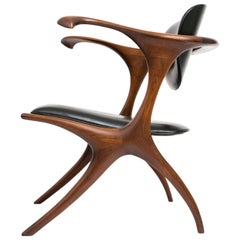
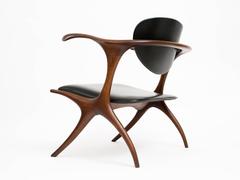
Early and Rare Evert Sodergren Sculptured Chair, c. 1955

Early and Rare Evert Sodergren Sculptured Chair, c. 1955

By Evert Sodergren

Located in Brooklyn, NY

The 'Sculptured' chair was originally designed in 1953 by Pacific Northwest master craftsman and cabinetmaker, Evert Sodergren, and it is the crown jewel of his oeuvre which spanned ...

Category

Vintage 1950s American American Craftsman Armchairs

Materials

Brass

Large Emil Milan Bissilon Wood Bowl

Large Emil Milan Bissilon Wood Bowl

$2,400

H 7 in W 24 in D 11 in

Large Emil Milan Bissilon Wood Bowl

By Emil Milan

Located in Los Angeles, CA

This is a master work by Emil Milan also known as Emilan. Milans work is included in the permanent collection of Smithsonian and museums across the world. This piece is handcrafted o...

Category

Vintage 1960s American Organic Modern Sculptures and Carvings

Materials

Wood

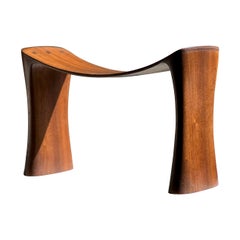
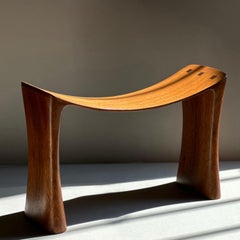
Evert Sodergren African Tribal Stool Modernist Sculpture, Signed

Evert Sodergren African Tribal Stool Modernist Sculpture, Signed

By Evert Sodergren

Located in Brooklyn, NY

A sublime African tribal stool or headrest sculpture by Evert Sodergren, comprising gently carved legs supporting a bent lamination seat punctuated by visible joinery. This design wa...

Category

20th Century American Abstract Sculptures

Materials

Walnut

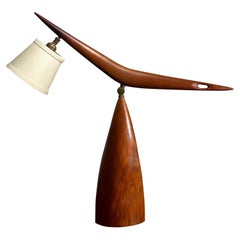
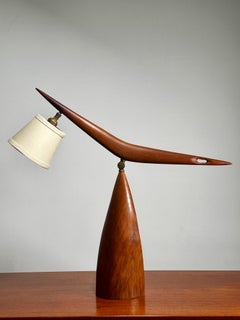
American Studio Articulating Lever and Fulcrum Table Lamp in Walnut, 1960s

American Studio Articulating Lever and Fulcrum Table Lamp in Walnut, 1960s

Located in Brooklyn, NY

American Studio Craft articulating table lamp in a lever and fulcrum form, executed in walnut and with a beige linen shade. The arm, punctuated by a sculptural void, moves on a singl...

Category

Mid-20th Century American Mid-Century Modern Table Lamps

Materials

Metal

Get Updated with New Arrivals
Save "Joyce Anderson", and we’ll notify you when there are new listings in this category.

A Close Look at Mid-century-modern Furniture

Organically shaped, clean-lined and elegantly simple are three terms that well describe vintage mid-century modern furniture. The style, which emerged primarily in the years following World War II, is characterized by pieces that were conceived and made in an energetic, optimistic spirit by creators who believed that good design was an essential part of good living.

ORIGINS OF MID-CENTURY MODERN FURNITURE DESIGN

CHARACTERISTICS OF MID-CENTURY MODERN FURNITURE DESIGN

MID-CENTURY MODERN FURNITURE DESIGNERS TO KNOW

ICONIC MID-CENTURY MODERN FURNITURE DESIGNS

VINTAGE MID-CENTURY MODERN FURNITURE ON 1STDIBS

The mid-century modern era saw leagues of postwar American architects and designers animated by new ideas and new technology. The lean, functionalist International-style architecture of Le Corbusier and Bauhaus eminences Ludwig Mies van der Rohe and Walter Gropius had been promoted in the United States during the 1930s by Philip Johnson and others. New building techniques, such as “post-and-beam” construction, allowed the International-style schemes to be realized on a small scale in open-plan houses with long walls of glass.

Materials developed for wartime use became available for domestic goods and were incorporated into mid-century modern furniture designs. Charles and Ray Eames and Eero Saarinen, who had experimented extensively with molded plywood, eagerly embraced fiberglass for pieces such as the La Chaise and the Womb chair, respectively. 

Architect, writer and designer George Nelson created with his team shades for the Bubble lamp using a new translucent polymer skin and, as design director at Herman Miller, recruited the Eameses, Alexander Girard and others for projects at the legendary Michigan furniture manufacturer

Harry Bertoia and Isamu Noguchi devised chairs and tables built of wire mesh and wire struts. Materials were repurposed too: The Danish-born designer Jens Risom created a line of chairs using surplus parachute straps for webbed seats and backrests.

The Risom lounge chair was among the first pieces of furniture commissioned and produced by celebrated manufacturer Knoll, a chief influencer in the rise of modern design in the United States, thanks to the work of Florence Knoll, the pioneering architect and designer who made the firm a leader in its field. The seating that Knoll created for office spaces — as well as pieces designed by Florence initially for commercial clients — soon became desirable for the home.

As the demand for casual, uncluttered furnishings grew, more mid-century furniture designers caught the spirit.

Classically oriented creators such as Edward Wormley, house designer for Dunbar Inc., offered such pieces as the sinuous Listen to Me chaise; the British expatriate T.H. Robsjohn-Gibbings switched gears, creating items such as the tiered, biomorphic Mesa table. There were Young Turks such as Paul McCobb, who designed holistic groups of sleek, blond wood furniture, and Milo Baughman, who espoused a West Coast aesthetic in minimalist teak dining tables and lushly upholstered chairs and sofas with angular steel frames.

Generations turn over, and mid-century modern remains arguably the most popular style going. As the collection of vintage mid-century modern chairs, dressers, coffee tables and other furniture for the living room, dining room, bedroom and elsewhere on 1stDibs demonstrates, this period saw one of the most delightful and dramatic flowerings of creativity in design history.

Finding the Right Decorative-bowls for You

Vintage, new and antique decorative bowls have been an important part of the home for centuries, although their uses have changed over the years. While functional examples of bowls date back thousands of years, ornamental design on bowls as well as baskets likewise has a rich heritage, from the carved bowls of the Maya to the plaited river-cane baskets of Indigenous people in the Southeast United States.

Decorative objects continue to bring character and art into a space. An outdoor gathering can become a sophisticated garden party with the addition of a few natural-fiber baskets to hold blankets or fruit on a table, as demonstrated in the interior design work by firms such as Alexander Design.

Elsewhere, Richard Haining’s reclaimed wood vases and bowls can express eco-consciousness. Sculptural handmade cast concrete bowls like those made by the Oakland, California–based UMÉ Studio introduce compelling textures to your dining room table.

Minimalist ceramic decorative bowls of varying colors can evoke a feeling of human connectedness through their association with handmade craftsmanship, such as in the rooms envisioned by South African interior designer Kelly Hoppen. And you can elevate any space with ceramic bowls that match the color scheme.

Browse the 1stDibs collection of decorative bowls and explore the endless options available.