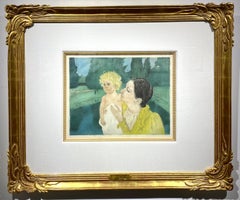
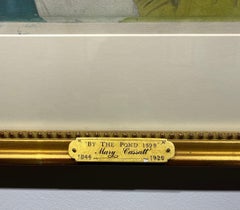
Mary Cassatt "By the Pond"
By Mary Cassatt
Located in Los Angeles, CA
Mary Cassatt 1844 - 1926 "By the Pond" (Breeskin 161; Matthews & Shapiro 21) Drypoint and
Category
1890s Portrait Prints
Materials
Drypoint, Aquatint
Mary Cassatt "By the Pond"
By Mary Cassatt
Located in Los Angeles, CA
Mary Cassatt 1844 - 1926 "By the Pond" (Breeskin 161; Matthews & Shapiro 21) Drypoint and
Drypoint, Aquatint
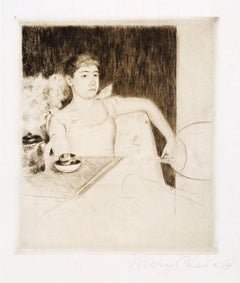
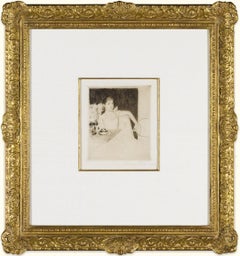
Tea
By Mary Cassatt
Located in San Francisco, CA
-signed in pencil in the margin below the image lower right Mary Cassatt. A superb impression of
Drypoint
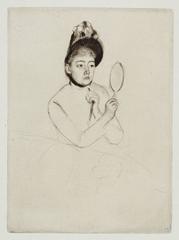
The Bonnet
By Mary Cassatt
Located in San Francisco, CA
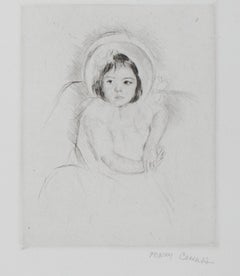
Original drypoint printed in dark umber ink on verdâtre (slightly bluish-green tinted laid paper
Drypoint
Sold
H 25.375 in W 21.75 in
"Margot Wearing a Bonnet (No. 5), " drypoint on laid paper by Mary Cassatt
By Mary Cassatt
Located in Milwaukee, WI
"Margot Wearing a Bonnet (No. 5)" is an original drypoint on laid paper by American modernist Mary
Laid Paper, Drypoint
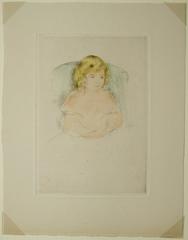
Sara Smiling.
By Mary Cassatt
Located in Plano, TX
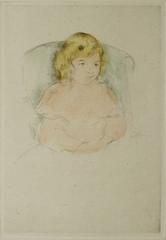
). Posthumous printing with good color on wove paper with full margins. Unsigned. Mary Cassatt is best known
Drypoint, Watercolor
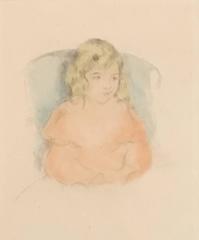
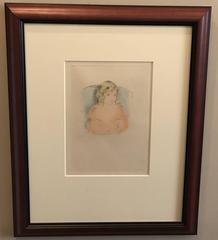
Sara Smiling
By Mary Cassatt
Located in Washington, DC
Artist: Mary Cassatt Medium: Original drypoint etching Title: Sara Smiling Year: c. 1904 Framed
Drypoint, Etching
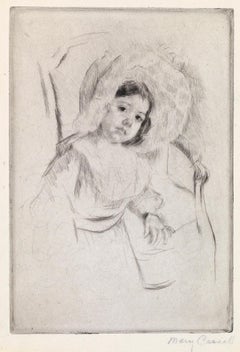
Margot in a Floppy Bonnet Leaning against a Chair
By Mary Cassatt
Located in New York, NY
Superb, richly-inked impression of this extremely scarce drypoint. Printed in black on cream laid
Drypoint
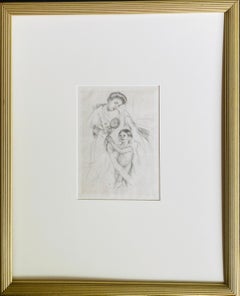
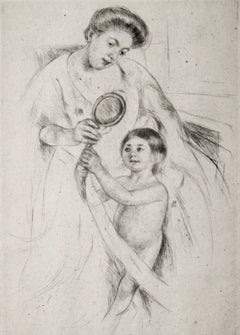
Looking into the Hand Mirror, No.3.
By Mary Cassatt
Located in Plano, TX
.) ---------------------------------------------------------------------------------------------------------- Mary Cassatt is best known for her portrayals of mothers and children. T...
Drypoint
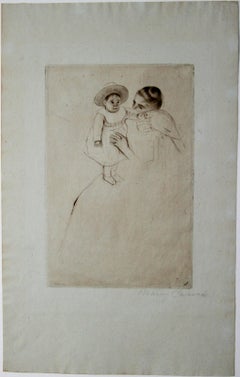

Sold
H 20 in W 16 in D 1 in
Hélène of Septeuil (enfant au perroquet) (child with a parakeet).
By Mary Cassatt
Located in Plano, TX
antique blue-green laid paper with a F and AGL countermark. Signed 'Mary Cassatt' in pencil. Housed in a
Drypoint, Watercolor
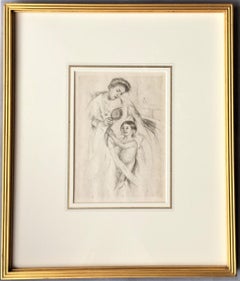
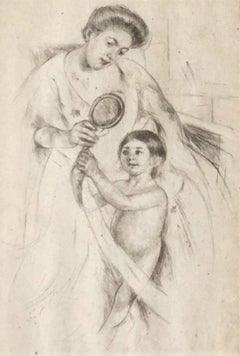
Looking into the Hand Mirror, No.3.
By Mary Cassatt
Located in Plano, TX
. ---------------------------------------------------------------------------------------------------- Mary Cassatt is best known for her portrayals of mothers and children. This is ...
Drypoint
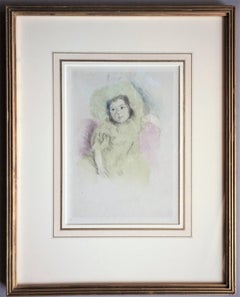

Margot Wearing a Bonnet, No. 1.
By Mary Cassatt
Located in Plano, TX
. --------------------------------------------------------------------------------------------------------- Mary Cassatt is best known for her portrayals of mothers and children. Thi...
Drypoint, Color
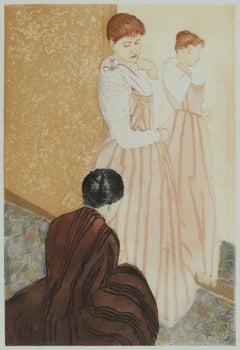

In the Fitting
By Mary Cassatt
Located in Fairlawn, OH
(after) Mary Cassatt In the Fitting Drypoint & aquatint printed in colors, 1991 Signed with the
Aquatint
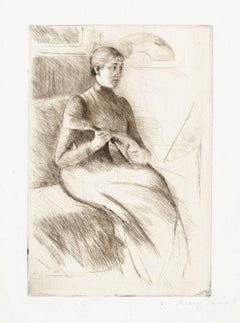
The Mandolin Player
By Mary Cassatt
Located in San Francisco, CA
watermark. Hand-signed in pencil in the margin lower right Mary Cassatt, also bearing the artist’s monogram
Drypoint
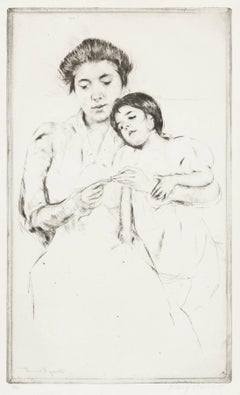
The Crocheting Lesson
By Mary Cassatt
Located in San Francisco, CA
countermark Hand–signed in pencil in the margin lower right Mary Cassatt, also signed in the plate (in
Drypoint
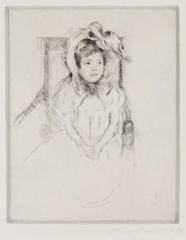
Margo Wearing a Large Bonnet, Seated in an Armchair
By Mary Cassatt
Located in San Francisco, CA
lower right Mary Cassat. A superb impression of the only known state of this extremely rare drypoint
Drypoint
$42,500 / set
H 34.25 in W 24 in D 23 in
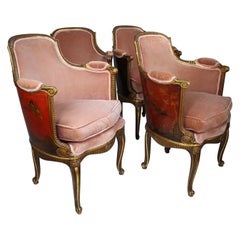
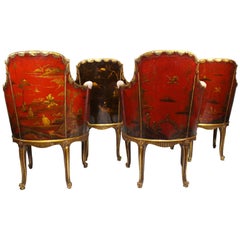
Four Louis XV Style Gilt-Wood Chinoiserie Bergères, Jansen Attr., 1890
By Maison Jansen
Located in Los Angeles, CA
A Fine and Rare Assembled Set of Four French Louis XV Style Gilt-Wood Carved and Japanned-Chinoiserie Lacquer Decorated Bergers Armchairs, attributed to Maison Jansen (House of Janse...
Velvet, Giltwood, Lacquer
$66,417
H 48 in W 58 in
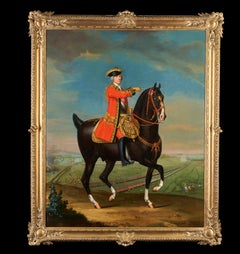
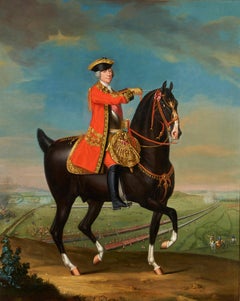
An equestrian portrait of Field Marshal Sir John Ligonier, 1st Earl of Ligonier
By David Morier
Located in Stoke, Hampshire
David Morier (c.1705–1770 London) An equestrian portrait of Field Marshal Sir John Ligonier, 1st Earl of Ligonier (1680–1770) Oil on canvas Canvas size - 40 x 50 in Framed size - 48 ...
Oil
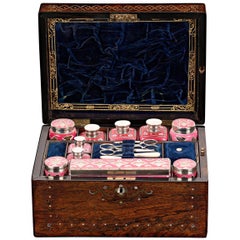
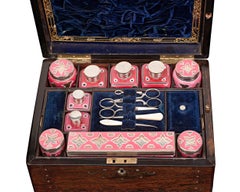
Victorian Nécessaire de Voyage
Located in New Orleans, LA
A work of extraordinary craftsmanship, this exquisite English vanity case is as much an item of luxury as it is of necessity. Known as a nécessaire de voyage, the case features a lux...
Velvet, Glass, Wood

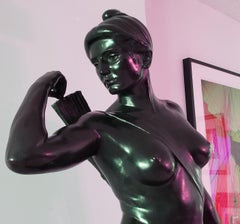
Life-Size Art Deco Diana Bronze
By Hans Harry Liebmann
Located in Miami, FL
This is a rare statement piece that commands that eye. It is of museum quality will be the centerpiece of any space. Masterfully crafted details of the human form are finely rendered...
Bronze
$26,930Sale Price|20% Off
H 50.4 in W 42.52 in
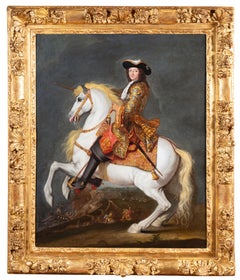
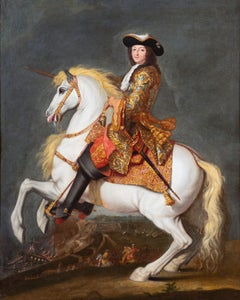
Equestrian portrait of Louis XIV, workshop of René-Antoine Houasse, French 17th
Located in PARIS, FR
Equestrian portrait of Louis XIV, Workshop of René-Antoine Houasse, (Paris, c. 1645 - Paris, 1710) Late 17th century French school, c. 1690 Oil on canvas, h. 100 cm, w. 80 cm Importa...
Canvas, Oil
$65,265Sale Price|21% Off
H 31.89 in W 25.6 in
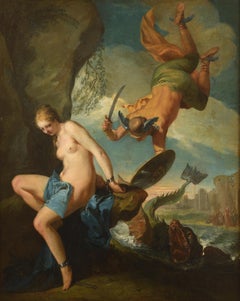
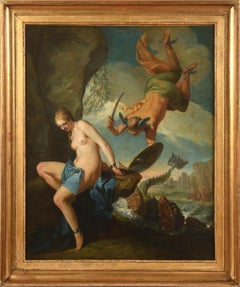
Perseus and Andromeda Oil Painting on Canvas, Old Masters, Circa 1726
Located in Paris, Île-de-France
Carle Vanloo (Nice 1705 – Paris 1765) Perseus and Andromeda Oil on canvas. H. 081; W. 065. Alongside François Boucher (1703-1770) and Charles-Joseph Natoire (1700-1777), Carle Vanlo...
Oil, Canvas
$24,906
H 16.5 in W 18.5 in
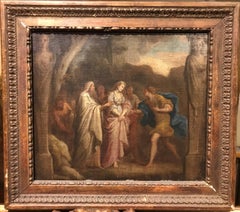
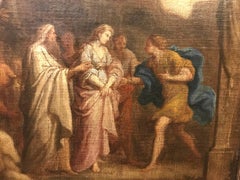
18th Century Neoclassical Oil Painting of the Trojan War: Briseis & Achilles
By James Thornhill
Located in London, GB
James Thornhill (1674-1735) Oil on canvas 12 x 14 inches; 16 ½ x 18 ½ in. Inc. frame The subject matter and inclusion of herms on both sides shows the influence of Louis Laguerre (...
Canvas, Oil
$58,670Sale Price|20% Off
H 4.93 in W 8.67 in D 2.76 in
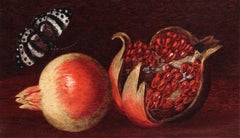
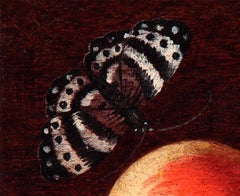
17th Century by Luca Forte Two Pomegranates and a Flying Butterfly Oil on Panel
Located in Milano, Lombardia
Luca Forte (Naples, 1615 ca. - 1670 ca.) Title: Two Pomegranates and a Flying Butterfly Medium: Oil on poplar panel Dimensions: without frame 13 x 22.5 cm - with frame 31 x 40 cm Ant...
Oil, Wood Panel
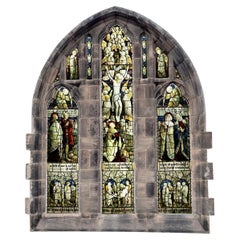
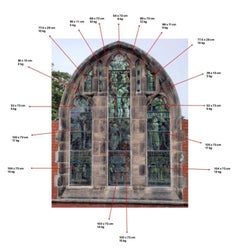
Victorian Religious Antique Stained Glass Window
Located in Wormelow, Herefordshire
A large religious antique stained glass window with its original carved sandstone window frame. Reclaimed from a church in Upton, Wirral. Though unsigned, the window has been attri...
Stained Glass
$66,125
H 52.36 in W 47.63 in
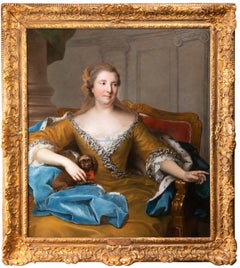
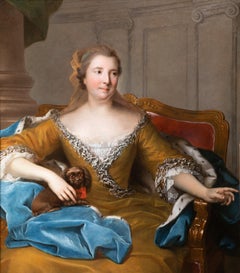
Jean-Marc Nattier (1685 - 1766) - Portrait of Charlotte de Hesse-Rheinfels
By Jean-Marc Nattier
Located in PARIS, FR
Jean-Marc Nattier (Paris, 1685 - 1766) and his workshop Portrait of Charlotte de Hesse-Rheinfels Oil on canvas : h. 44.09 in, w. 38.19 in 18th century carved giltwood framed Fra...
Canvas, Oil
$51,264Sale Price|20% Off
H 35.44 in W 26.97 in D 1.97 in
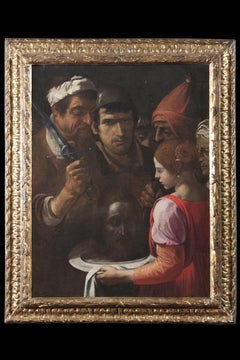
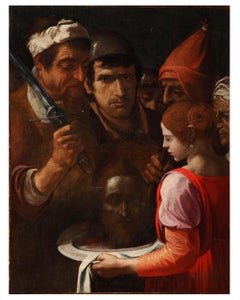
17th Century By Guidotti aka Cavalier Borghese Salomé and the Baptist Oil/canvas
Located in Milano, Lombardia
Cavaliere Paolo Guidotti, also known as il Cavalier Borghese (Lucca, Italy, 1559 - 1629) Title: Salomé and the Baptist Medium: Oil on canvas Dimensions: without frame 90 x 68.5 cm -...
Canvas, Oil
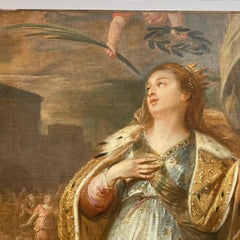
$54,102Sale Price|25% Off
H 44.1 in W 33.86 in
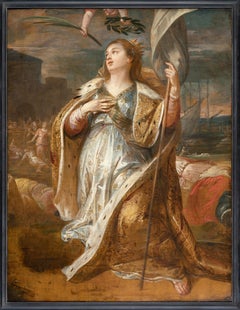
Boeckhorst, Rubens, Saint Ursula, Decorative Old Master, Woman, Baroque, Flemish
By Jan Boeckhorst
Located in Greven, DE
Johann Boeckhorst (Münster 1604 - Antwerp 1668) Saint Ursula Oil on canvas, 112 x 86 cm Provenance: New York, Christe's, 20.3.1981, lot 88 (as Van Diepenbeeck's circle) The presen...
Canvas, Oil
$88,367
H 50 in W 70 in
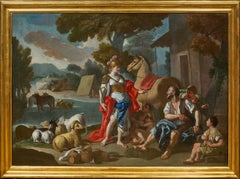
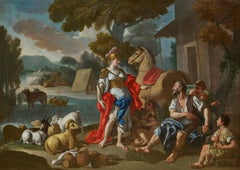
Erminia and the Shepherds, a painting by Francesco de Mura (Napoli 1696 - 1782)
By Francesco de Mura
Located in PARIS, FR
In this masterly painting, Francesco de Mura presents the meeting of Erminia and the shepherds, a famous episode taken from the seventh canto of Torquato Tasso's Jerusalem Delivered....
Canvas, Oil
$3,874
H 11.62 in W 8.67 in
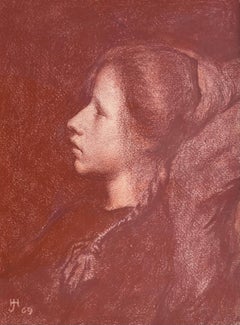
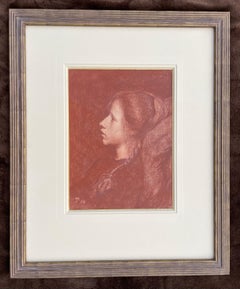
Reverie - Early 20th Century British chalk drawing of a girl by H J Harvey
By Herbert Johnson Harvey
Located in London, GB
HERBERT JOHNSON HARVEY (British 1883-1956) Reverie Signed with monogram and dated l.l.: HJ 09 Red chalks on paper Framed 29.5 by 22 cm., 11 ¾ by 8 ¾ in. (frame size 56 by 45.5 cm....
Chalk, Paper
$112,000
H 44.25 in W 32 in D 3 in
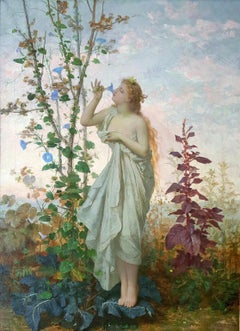
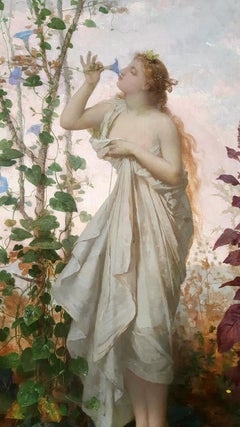
Aurora in white toga smelling a flower. Goddess of Dawn Mythology scene
By Jean Louis Hamon
Located in Miami, FL
Jean Louis Hamon artfully presents the mythological subject: Aurora the Goddess of Dawn. She is dressed in a flowing toga, standing on a large leaf and smelling the sweetness of a fl...
Oil
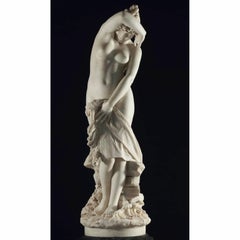
$274,500
H 88.25 in W 21.5 in D 25.75 in
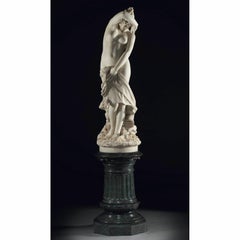
Pietro Bazzanti, Italian 19th Carved Marble Figure Semi-Nude Young Bather Girl
By Pietro Bazzanti
Located in LA, CA
Pietro Bazzanti - Barzanti (Italian, 1825-1895) "After the Bath" - A very Fine and large carved white Carrara marble figure of a semi-nude young maiden standing by the sea-shore. The...
Marble
As one of just two females and the only American member of the original French Impressionist circle, Mary Cassatt stands out for her ability to capture scenes of domestic life in her paintings that her male contemporaries often did not encounter.
Where other Impressionists indulged in sensual or sensational scenes of Parisian women, Cassatt’s unique perspective allowed her to create intimate, true-to-life renderings of her subjects. She pushed the radical art movement further to capture tender, fleeting instants shared by women as mothers, daughters, sisters and friends. Between 1860 and 1865, she studied at the Pennsylvania Academy of the Fine Arts in Philadelphia, and in December 1865, she sailed to Paris to study with the French painters Charles Chaplin and Jean-Léon Gérôme.
In 1868, Cassatt made her debut at the Paris Salon but returned to Philadelphia in 1870 with the onset of the Franco-Prussian war. However, by 1874 she had settled again in Paris, where she would live most of her adult life.
Just three years later, Cassatt met a man who would change the trajectory of her career forever: Edgar Degas. At his invitation, she joined a group that would become known as the Impressionists and, under his influence, developed a love for drawing and works on paper. Inspired by the "new painting," Cassatt abandoned her former academic manner and adopted Impressionism's high-keyed hues and modern subjects.
Best remembered for her intimate portrayals of women, children and the mother-child relationship, Cassatt was a vital contributor to the Impressionist circle. Today, her works can be found in important collections the world over, including the Metropolitan Museum of Art (New York), Smithsonian American Art Museum (Washington D.C.) and Musée d'Orsay (Paris).
Find Mary Cassatt art for sale on 1stDibs.
(Biography provided by M.S. Rau)
Emerging in 19th-century France, Impressionist art embraced loose brushwork and plein-air painting to respond to the movement of daily life. Although the pioneers of the Impressionist movement — Claude Monet, Edgar Degas, Paul Cézanne, Berthe Morisot, Camille Pissarro, and Pierre-Auguste Renoir — are now household names, their work was a radical break with an art scene led and shaped by academic traditions for around two centuries. These academies had oversight of a curriculum that emphasized formal drawing, painting and sculpting techniques and historical themes.
The French Impressionists were influenced by a group of artists known as the Barbizon School, who painted what they witnessed in nature. The rejection of pieces by these artists and the later Impressionists from the salons culminated in a watershed 1874 exhibition in Paris that was staged outside of the juried systems. After a work of Monet’s was derided by a critic as an unfinished “impression,” the term was taken as a celebration of their shared interest in capturing fleeting moments as subject matter, whether the shifting weather on rural landscapes or the frenzy of an urban crowd. Rather than the exacting realism of the academic tradition, Impressionist paintings, sculptures, prints and drawings represented how an artist saw a world in motion.
Many Impressionist painters were inspired by the perspectives in imported Japanese prints alongside these shifts in European painting — Édouard Manet drew on ukiyo-e woodblock prints and depicted Japanese design in his Portrait of Émile Zola, for example. American artists such as Mary Cassatt and William Merritt Chase, who studied abroad, were impacted by the work of the French artists, and by the late 19th century American Impressionism had its own distinct aesthetics with painters responding to the rapid modernization of cities through quickly created works that were vivid with color and light.
Find a collection of authentic Impressionist art on 1stDibs.
Bring energy and an array of welcome colors and textures into your space by decorating with figurative fine-art prints and works on paper.
Figurative art stands in contrast to abstract art, which is more expressive than representational. The oldest-known work of figurative art is a figurative painting — specifically, a rock painting of an animal made over 40,000 years ago in Borneo. This remnant of a remote past has long faded, but its depiction of a cattle-like creature in elegant ocher markings endures.
Since then, figurative art has evolved significantly as it continues to represent the world, including a breadth of works on paper, including printmaking. This includes woodcuts, which are a type of relief print with perennial popularity among collectors. The artist carves into a block and applies ink to the raised surface, which is then pressed onto paper. There are also planographic prints, which use metal plates, stones or other flat surfaces as their base. The artist will often draw on the surface with grease crayon and then apply ink to those markings. Lithographs are a common version of planographic prints.
Figurative art printmaking was especially popular during the height of the Pop art movement, and this kind of work can be seen in artist Andy Warhol’s extensive use of photographic silkscreen printing. Everyday objects, logos and scenes were given a unique twist, whether in the style of a comic strip or in the use of neon colors.
Explore an impressive collection of figurative art prints for sale on 1stDibs and read about how to arrange your wall art.