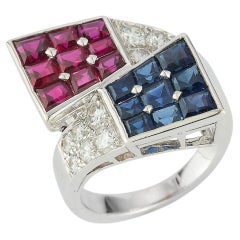
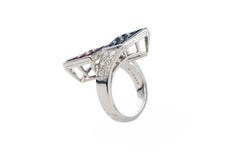
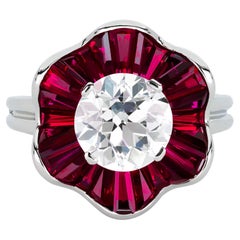
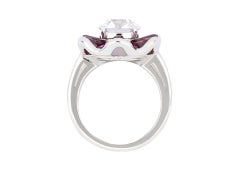
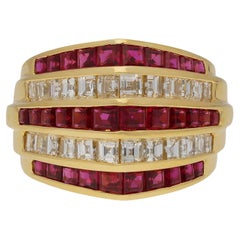
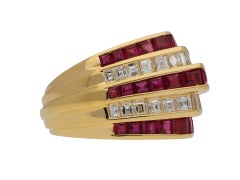
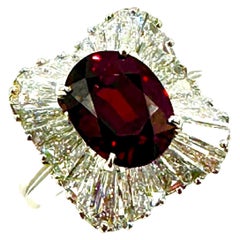
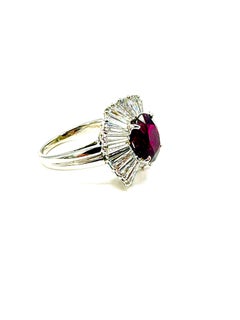
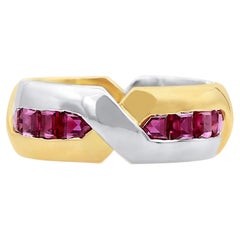
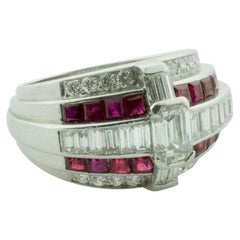
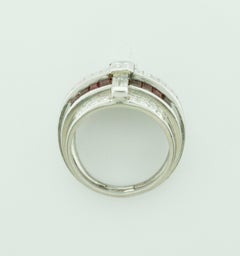
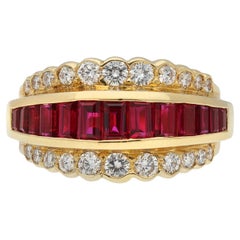
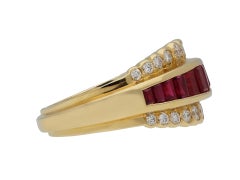
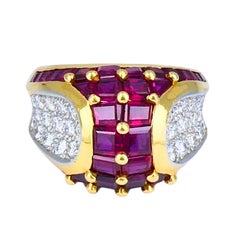
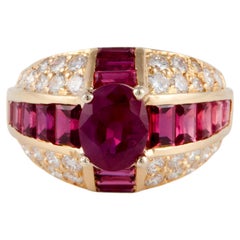
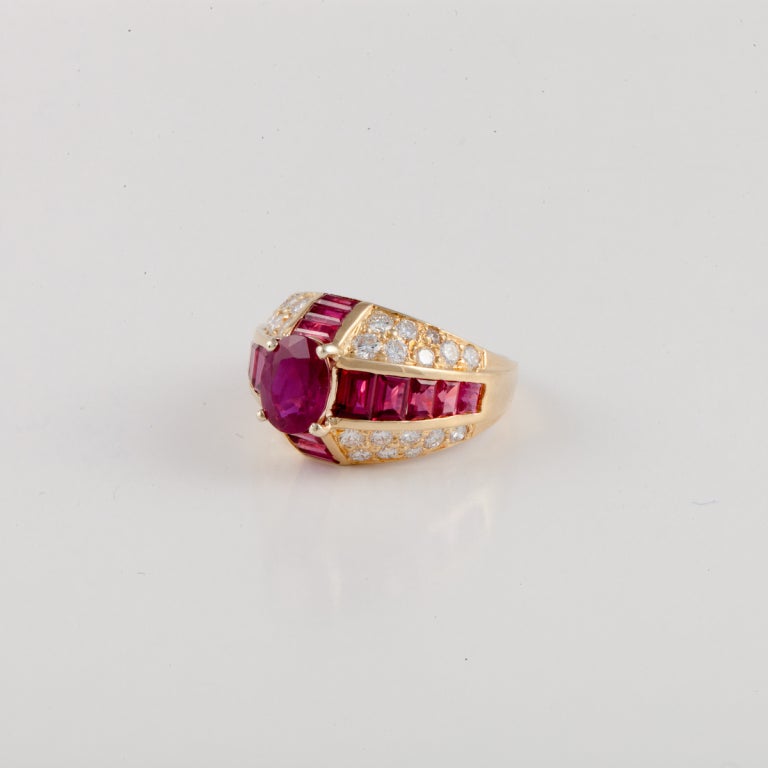
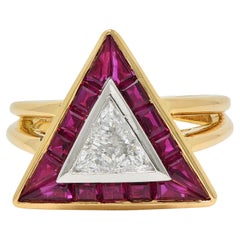
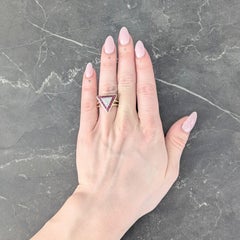
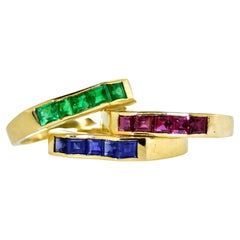
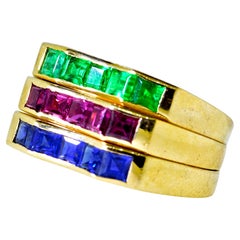
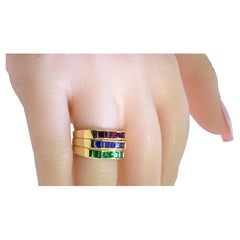
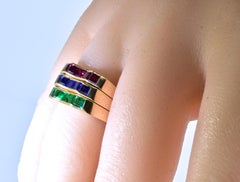
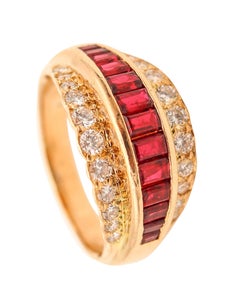
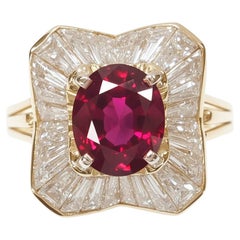
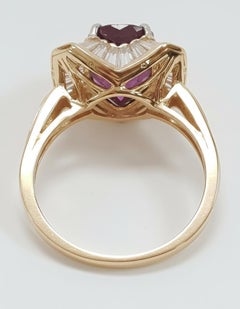
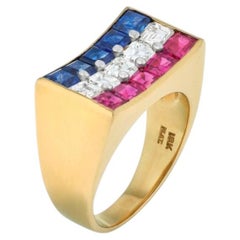
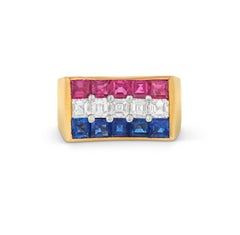
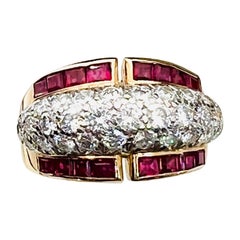
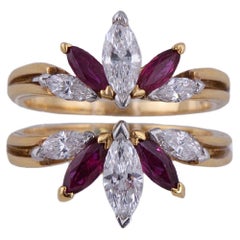
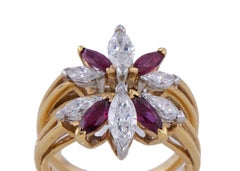
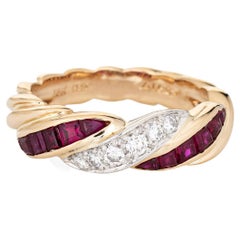
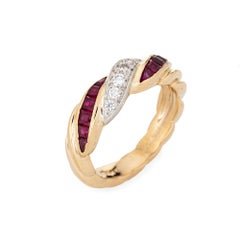
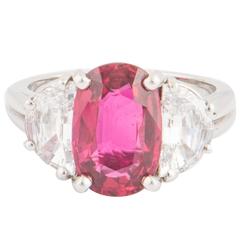
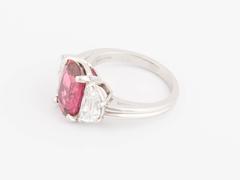
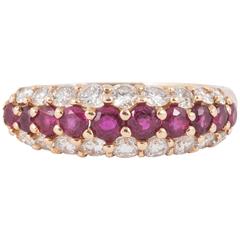
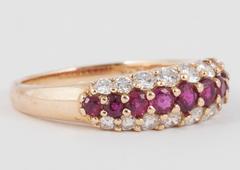
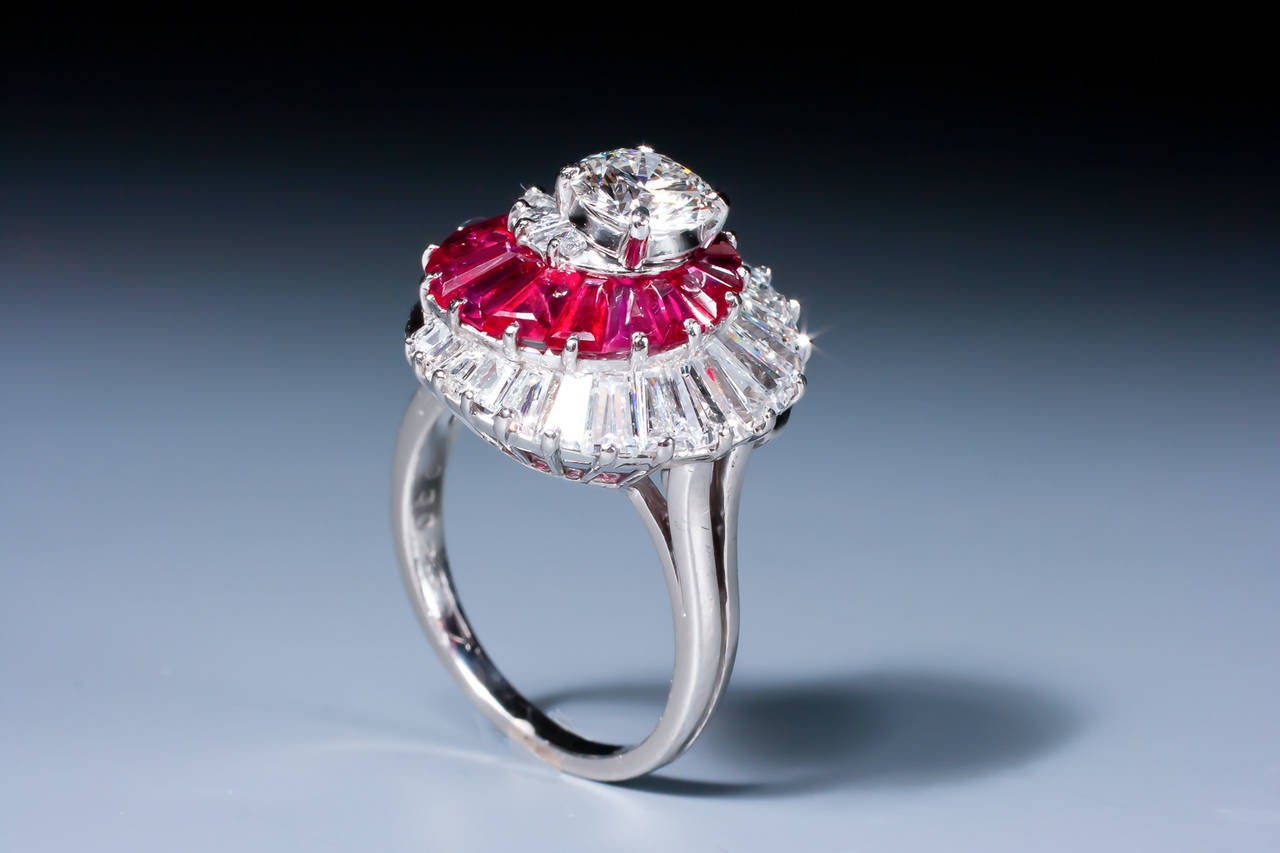
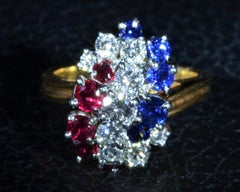
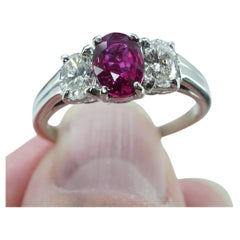
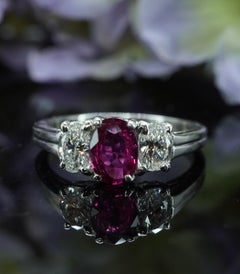
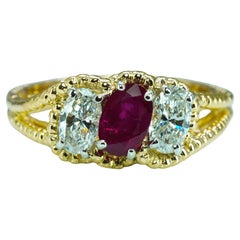
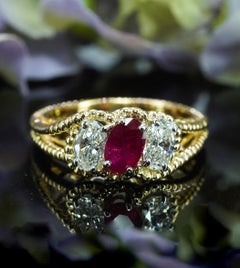
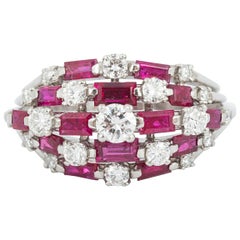
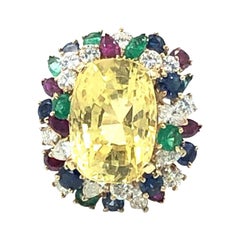
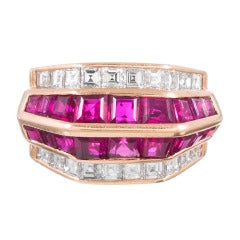
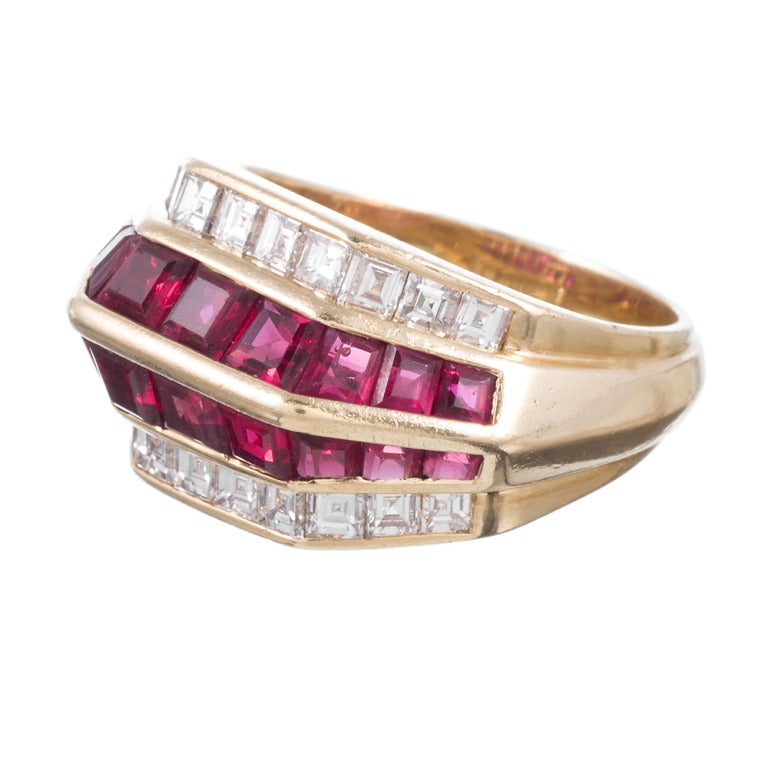
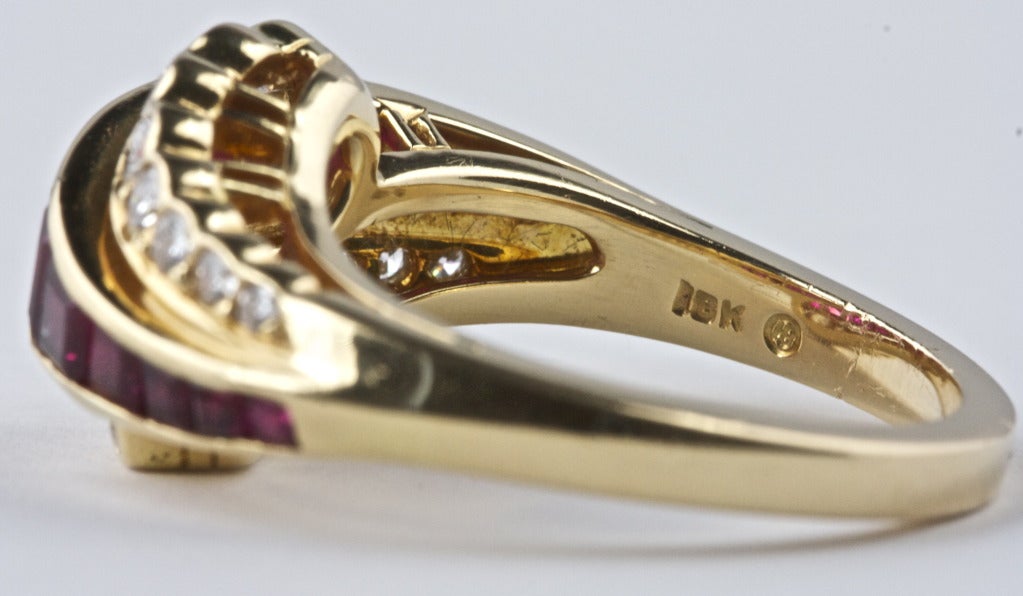
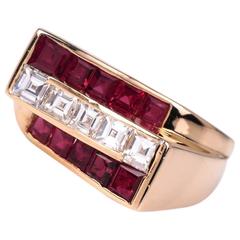
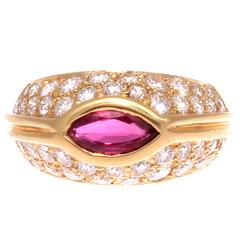
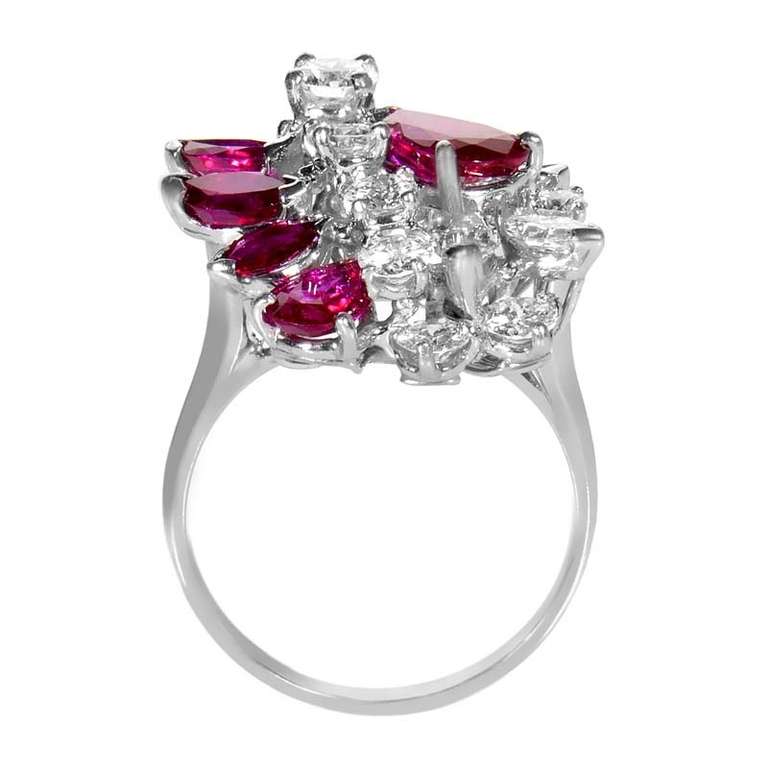
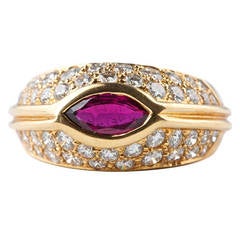
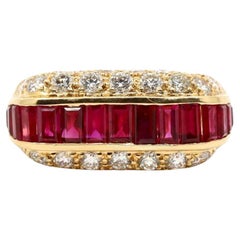
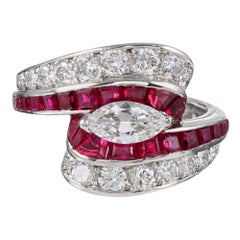
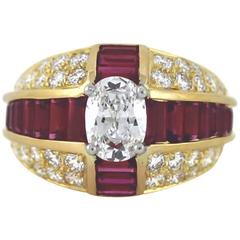
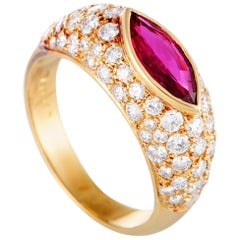
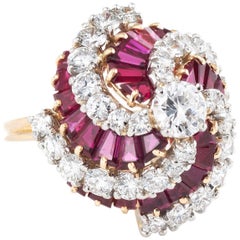
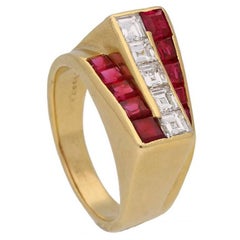
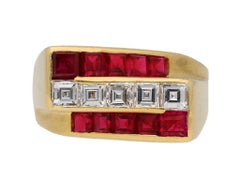
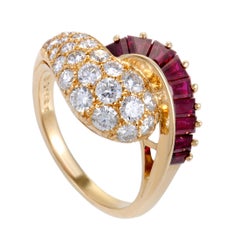
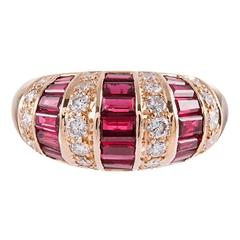
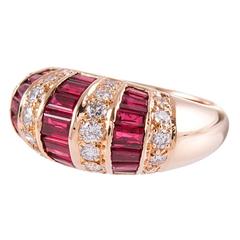
Oscar Heyman Ruby Ring For Sale on 1stDibs
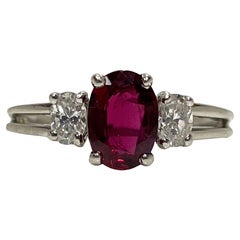
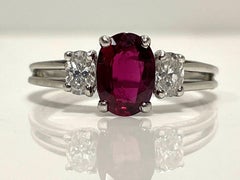
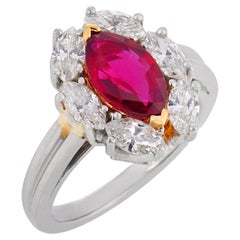
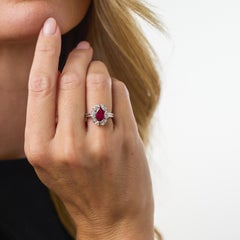
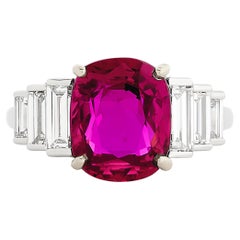
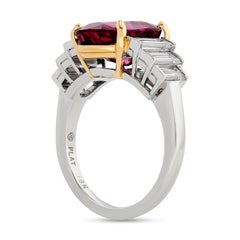
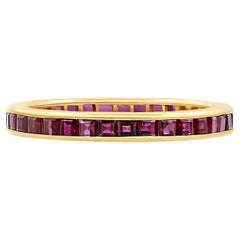
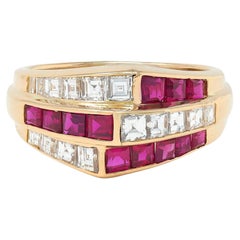
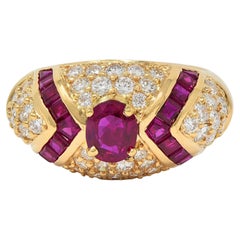
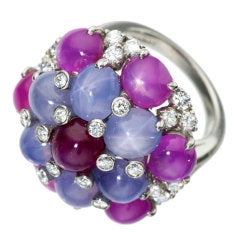
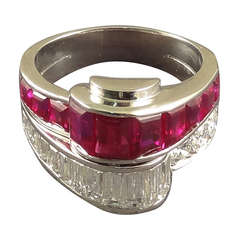
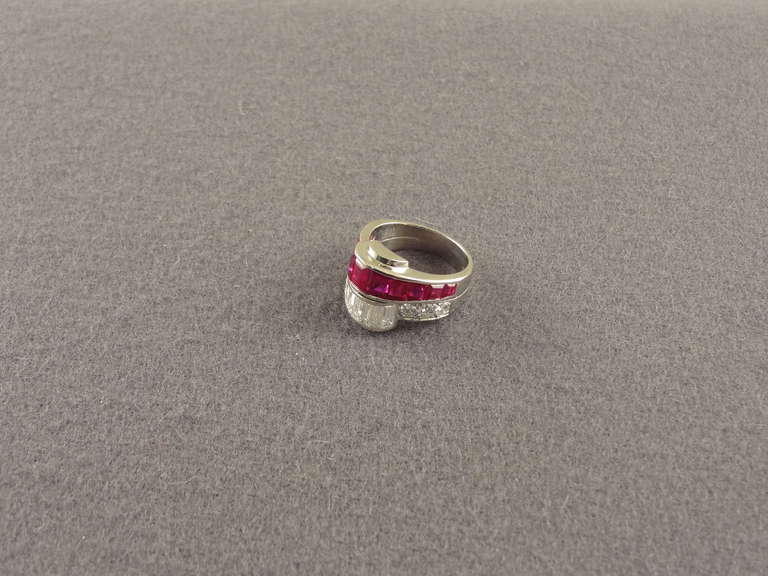
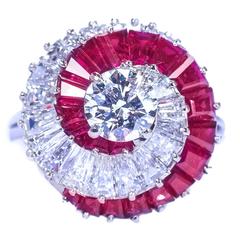
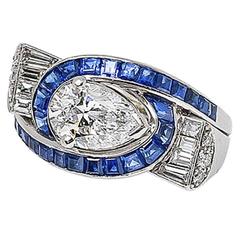
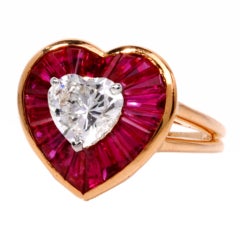
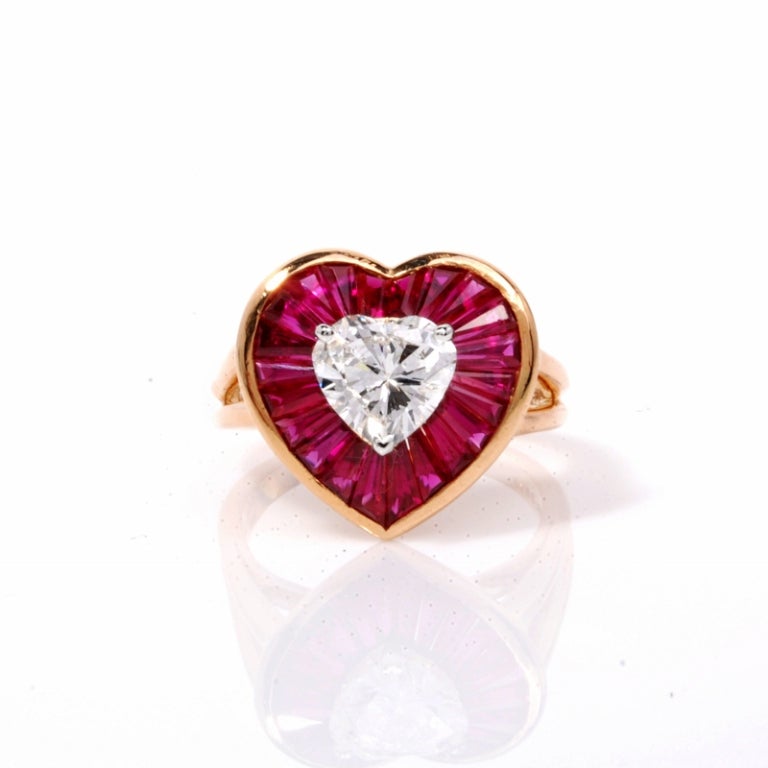
Surely you’ll find the exact oscar heyman ruby ring you’re seeking on 1stDibs — we’ve got a vast assortment for sale. Every item for sale was constructed with extraordinary care, often using
Gold,
18k Gold and
Platinum. In our selection of items, you can find a vintage example as well as a contemporary version. Making the right choice when shopping for a oscar heyman ruby ring may mean carefully reviewing examples of this item dating from different eras — you can find an early iteration of this piece from the 20th Century and a newer version made as recently as the 21st Century, both of which have proven very popular over the years. For this particular accessory, there are many different carat weights to choose from, but
2 Carat and
2.5 Carat versions are of considerable interest. See these pages for a
round cut iteration of this accessory, while there are also
square cut cut and
emerald cut cut versions available here, too. If you’re browsing our inventory for a oscar heyman ruby ring, you’ll find that many are available today for
women, but there are still pieces to choose from for unisex and
men.
How Much is a Oscar Heyman Ruby Ring?
The price for a oscar heyman ruby ring starts at $2,035 and tops out at $365,000 with these rings, on average, selling for $8,000.
Oscar Heyman for sale on 1stDibs
Known as “the jewelers’ jeweler,” Oscar Heyman (1888–1970) designed pieces for Cartier, Tiffany & Co., Van Cleef & Arpels, Harry Winston and Black, Starr & Frost. The family-run Oscar Heyman & Brothers jewelry company was founded by Heyman with his brothers Nathan and Harry in 1912. Jewelers from Latvia, they had trained at their great-uncle’s workshop, which had clients including Russian imperial jeweler Fabergé, before immigrating to the United States in the early 1900s.
After arriving in New York, Oscar worked with Pierre Cartier and Nathan was a tool maker at Western Electric before they came together to open their jewelry business. Highly skilled craftsmen, the Heyman brothers quickly developed a roster of high-profile clients — primarily big-name jewelers — drawn to their work with dazzling stones and meticulous design. In 1917, Black, Starr & Frost commissioned the brothers to design an American flag brooch, which would become a recurring motif in the Oscar Heyman & Brothers portfolio. They also designed the Pansy brooch in the 1930s, another long-popular accessory that was produced exclusively for Tiffany & Co. toward the end of the 20th century. After Heyman designed for four of the five jewelers on view at the 1939 World’s Fair House of Jewels (Cartier, Udall & Ballou, Marcus & Co. and Black, Starr & Frost), the company was given the moniker “the jewelers’ jeweler.”
Heyman & Brothers later designed gem-encrusted medallions that traveled to the moon on Apollo 16, the necklace setting for the 69-carat diamond Richard Burton gave Elizabeth Taylor in 1969 and even a pair of ruby-encrusted Stuart Weitzman stilettos in 2003. Over the years, the company has entranced such clients as Evelyn Lauder, Marjorie Merriweather Post, Billy Porter and Tina Fey with its pieces.
In 2012, the century-old jeweler underwent a rebranding to simplify its name to Oscar Heyman and today is still run by the Heyman family, which manages the whole process from alloying their own metal to cutting and polishing their gemstones to assembling the final product in-house. In 2017, the Museum of Fine Arts, Boston published a monograph authored by Yvonne J. Markowitz and Elizabeth Hamilton that details for a broader audience the history of Oscar Heyman, an unsung company that’s long been behind some of the biggest names in jewelry.
Shop authentic Oscar Heyman rings, brooches and bracelets on 1stDibs.
The Legacy of Ruby in Jewelry Design
This deep red gem is the color of heat and passion — vintage and antique ruby jewelry is perfect for those born in the middle of summer.
Rubies are one of the few gemstones that can give diamonds a run for their money. Just consider the Van Cleef & Arpels “scarf” necklace the Duke of Windsor presented to the Duchess on her 40th birthday, in 1936 — set with diamonds and dripping with rubies, a testament to the deep-red gemstone’s power — or the slippers encrusted with 4,600 rubies that Harry Winston made to commemorate The Wizard of Oz’s golden anniversary. July babies have permission to adorn themselves with this beautiful red stone even when it’s not their birthday.
Rubies are considered precious stones — along with diamonds, sapphires and emeralds — and have a hardness of 9.0 on the Mohs Scale, surpassed only by Moissanite and diamonds. They are composed of corundum, a colorless mineral that is also the basic material of sapphires. In the July birthstone, the red of the gemstone — and the various hues seen in sapphires — are produced by the presence of trace elements. In the case of a ruby, this element is chromium. Rubies range in color from vermilion to a violet red. They are also pleochroic, which means that a stone’s hue can vary depending on the direction of viewing. The most sought-after color is pigeon’s blood: pure red with a hint of blue.
Rubies that are hosted in dolomite marble are the most prized: Because the marble is low in iron, so are the rubies, resulting in a more intense color. Rubies found in basalt, which has a higher iron content, are generally darker and less intense.
When shopping for antique and vintage ruby jewelry, remember that the 4Cs of selecting the perfect diamond — color, clarity, cut and carat — also apply to rubies.
According to the Gemological Institute of America, the color of the July birthstone should be a vibrant to slightly purplish red, and the stone should be clear and inclusion-free. Accordingly, the cut should show off its color and clarity. As for the last criterion, fine rubies more than a carat in weight are rare. Often, large rubies are more expensive than diamonds of comparable weights.
Find a collection of ruby necklaces, ruby rings and other accessories on 1stDibs.
Finding the Right Rings for You
Antique and vintage rings have long held a special place in the hearts of fine jewelry lovers all over the world.
No matter their origin or specific characteristics, rings are timeless, versatile accessories. They’ve carried deep meaning since at least the Middle Ages, when diamond rings symbolized strength and other kinds of rings were worn to signify romantic feelings or to denote an affiliation with a religious order. Rings have also forever been emblematic of eternity.
Over time, rings have frequently taken the form of serpents, which have long been associated with eternal life, health and renewal. Italian luxury jewelry house Bulgari has become famous for its widely loved Serpenti motif, for example, and its Serpenti ring, like the other accessories in the collection, began as an homage to jewelry of the Roman and Hellenistic eras. The serpent is now a popular motif in fine jewelry. Jewelry devotees have long pined for rings adorned with reptiles, thanks to antique Victorian rings — well, specifically, Queen Victoria’s illustrious engagement ring, which took the form of a gold snake set with rubies, diamonds and an emerald (her birthstone). Designs for Victorian-era engagement rings often featured repoussé work and chasing, in which patterns are hammered into the metal.
Engagement rings, which are reliably intimidating to shop for, are still widely recognized as symbols of love and commitment. On 1stDibs, a range of buying guides can be found for those in the market for antique engagement rings, vintage engagement rings or Art Deco engagement rings.
The most collectible antique engagement rings and vintage engagement rings are those from the Victorian, Edwardian and Art Deco eras. Named for the monarchies of the four King Georges, who in succession ruled England starting in 1714 (plus King William’s reign), antique Georgian rings, be they engagement rings or otherwise, are also coveted by collectors. Pearls, along with colored gemstones like garnets, rubies and sapphires, were widely used in Georgian jewelry. The late-1700s paste jewelry was a predecessor to what we now call fashion or costume jewelry.
The Art Nouveau movement (1880–1910) brought with it rings inspired by the natural world. Antique Art Nouveau rings might feature depictions of winged insects and fauna as well as women, who were simultaneously eroticized and romanticized, frequently with long flowing hair. Art Deco jewelry, on the other hand, which originated during the 1920s and ’30s, is by and large “white jewelry.” White metals, primarily platinum, were favored over yellow gold in the design of antique Art Deco rings and other accessories as well as geometric motifs, with women drawn to the era’s dazzling cocktail rings in particular.
Whether you’re hunting down a chunky classic for a Prohibition-themed cocktail party or seeking a clean contemporary design to complement your casual ensemble, find an exquisite collection of antique, new and vintage rings on 1stDibs.