(after) Pierre Auguste Renior Art

to
22
22
19
13
6
3
2
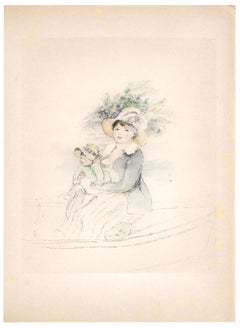
"Mme Renoir et Pierre dans une barque" pochoir

"Mme Renoir et Pierre dans une barque" pochoir

By (after) Pierre Auguste Renior

Located in Henderson, NV

Medium: lithograph with pochoir coloring (after the 1885 watercolor). Printed in 1948 on Johannot paper for the "Seize Aquarelles et Sanguines de Renoir" portfolio and published in P...

Category

1940s Impressionist (after) Pierre Auguste Renior Art
Materials

Lithograph, Stencil

"La moissonneuse" pochoir

"La moissonneuse" pochoir

By (after) Pierre Auguste Renior

Located in Henderson, NV

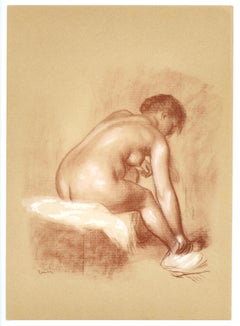
Medium: lithograph with pochoir coloring (after the 1882 drawing in sanguine). Printed in 1948 on Johannot paper for the "Seize Aquarelles et Sanguines de Renoir" portfolio and publi...

Category

1940s Impressionist (after) Pierre Auguste Renior Art
Materials

Lithograph, Stencil

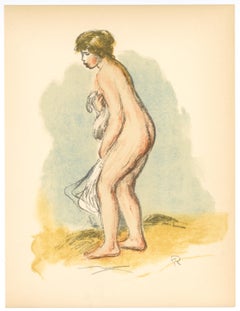
"Baigneuse debout" lithograph

"Baigneuse debout" lithograph

By (after) Pierre Auguste Renior

Located in Henderson, NV

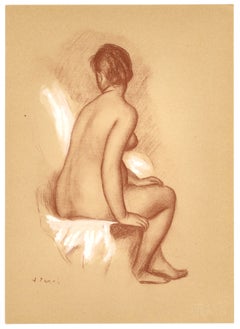
Medium: lithograph (after Renoir). Printed in 1951 at the atelier Mourlot using the same number of stones as the original, in a limited edition of 3000. Sheet size: 12 1/2 x 9 1/2 in...

Category

1950s Impressionist (after) Pierre Auguste Renior Art
Materials

Lithograph

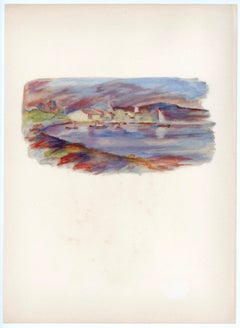
"Les Martigues" pochoir

"Les Martigues" pochoir

By (after) Pierre Auguste Renior

Located in Henderson, NV

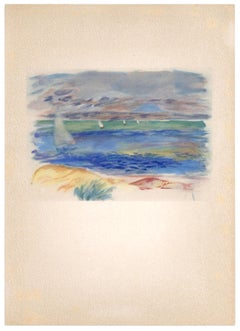
Medium: lithograph with pochoir coloring (after the 1885 watercolor). Printed in 1948 on Johannot paper for the rare "Seize Aquarelles et Sanguines de Renoir" portfolio and published...

Category

1940s Impressionist (after) Pierre Auguste Renior Art
Materials

Lithograph, Stencil

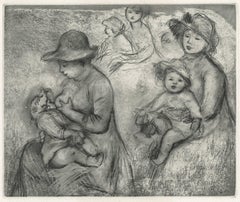
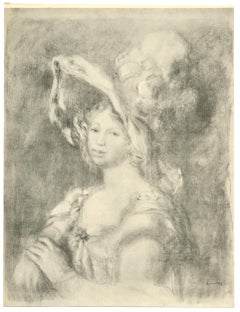
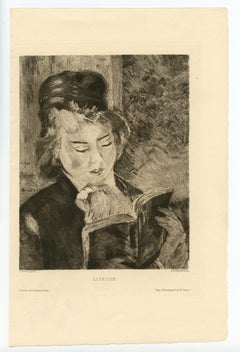
"Liseuse" etching

"Liseuse" etching

By (after) Pierre Auguste Renior

Located in Henderson, NV

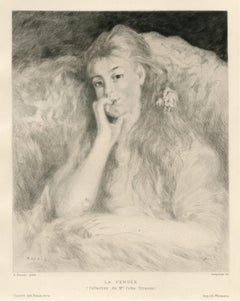
Medium: etching (etched by Jacques-Felix Schnerb after the Renoir painting). Printed in 1908 at the Alfred Porcabeuf atelier and published in Paris by Gazette des Beaux-Arts. Image s...

Category

Early 1900s Impressionist (after) Pierre Auguste Renior Art
Materials

Etching

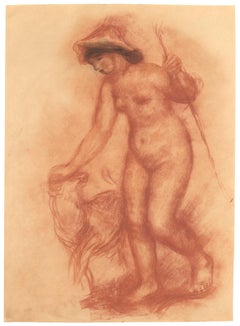
"La pensée" etching

"La pensée" etching

By (after) Pierre Auguste Renior

Located in Henderson, NV

Medium: etching and drypoint (after the painting). This beautiful piece was etched by Emile Lequeux after Renoir, and published in Paris in 1904 by Gazette des Beaux-Arts; and is ref...

Category

Early 1900s Impressionist (after) Pierre Auguste Renior Art
Materials

Etching

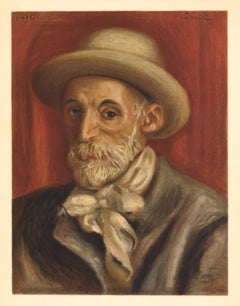
"Marine" pochoir

"Marine" pochoir

By (after) Pierre Auguste Renior

Located in Henderson, NV

Medium: lithograph with pochoir coloring (after the 1882 watercolor). Printed in 1948 on Johannot paper for the "Seize Aquarelles et Sanguines de Renoir" portfolio and published in P...

Category

1940s Impressionist (after) Pierre Auguste Renior Art
Materials

Lithograph, Stencil

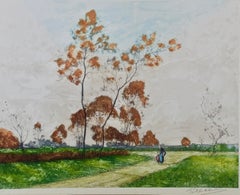
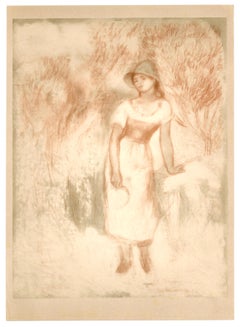
"L'arbre roux" pochoir

"L'arbre roux" pochoir

By (after) Pierre Auguste Renior

Located in Henderson, NV

Medium: lithograph with pochoir coloring (after the 1887 watercolor). Printed in 1948 on Johannot paper for the "Seize Aquarelles et Sanguines de Renoir" portfolio and published in P...

Category

1940s Impressionist (after) Pierre Auguste Renior Art
Materials

Lithograph, Stencil

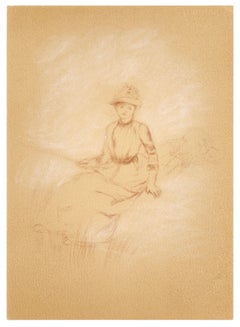
"Nu" pochoir

"Nu" pochoir

By (after) Pierre Auguste Renior

Located in Henderson, NV

Medium: lithograph with pochoir coloring (after the 1882 drawing in sanguine). Printed in 1948 on Johannot paper for the "Seize Aquarelles et Sanguines de Renoir" portfolio and publi...

Category

1940s Impressionist (after) Pierre Auguste Renior Art
Materials

Lithograph, Stencil

"La peche a la ligne" pochoir

"La peche a la ligne" pochoir

By (after) Pierre Auguste Renior

Located in Henderson, NV

Medium: lithograph with pochoir coloring (after the 1895 drawing in sanguine). Printed in 1948 on Johannot paper for the "Seize Aquarelles et Sanguines de Renoir" portfolio and publi...

Category

1940s Impressionist (after) Pierre Auguste Renior Art
Materials

Lithograph, Stencil

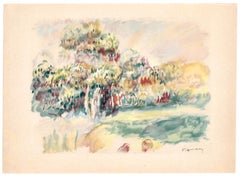
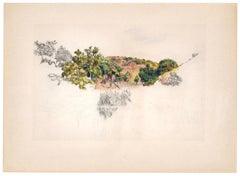
"Paysage" pochoir

"Paysage" pochoir

By (after) Pierre Auguste Renior

Located in Henderson, NV

Medium: lithograph with pochoir coloring (after the 1900 watercolor). Printed in 1948 on Johannot paper for the "Seize Aquarelles et Sanguines de Renoir" portfolio and published in P...

Category

1940s Impressionist (after) Pierre Auguste Renior Art
Materials

Lithograph, Stencil

"Nu" pochoir

"Nu" pochoir

By (after) Pierre Auguste Renior

Located in Henderson, NV

Medium: lithograph with pochoir coloring (after the 1882 drawing in sanguine). Printed in 1948 on Johannot paper for the "Seize Aquarelles et Sanguines de Renoir" portfolio and publi...

Category

1940s Impressionist (after) Pierre Auguste Renior Art
Materials

Lithograph, Stencil

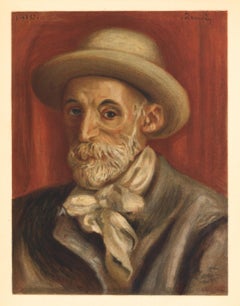
"Self Portrait" lithograph

"Self Portrait" lithograph

By (after) Pierre Auguste Renior

Located in Henderson, NV

Medium: lithograph (after the painting). Printed by Mourlot in 1951 in a limited edition of 3000. Sheet size: 12 1/2 x 9 1/2 inches (320 x 243 mm). There is text on the back side, as...

Category

1950s Impressionist (after) Pierre Auguste Renior Art
Materials

Lithograph

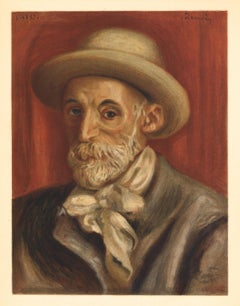
"La Bergere" pochoir

"La Bergere" pochoir

By (after) Pierre Auguste Renior

Located in Henderson, NV

Medium: pochoir (after the drawing in sanguine). Printed in 1923 in an edition of 150 on Arches paper at the atelier Jacomet and published in Paris by Bernheim-Jeune for the rare "Re...

Category

Early 20th Century Impressionist (after) Pierre Auguste Renior Art
Materials

Lithograph, Stencil

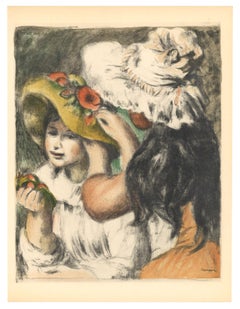
"Paysage" pochoir

"Paysage" pochoir

By (after) Pierre Auguste Renior

Located in Henderson, NV

Medium: lithograph with pochoir coloring (after the 1882 watercolor). Printed in 1948 on Johannot paper for the "Seize Aquarelles et Sanguines de Renoir" portfolio and published in P...

Category

1940s Impressionist (after) Pierre Auguste Renior Art
Materials

Lithograph, Stencil

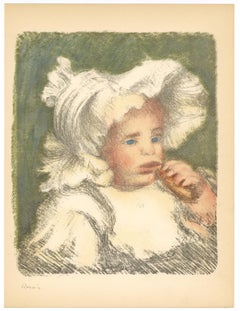
"Self Portrait" lithograph

"Self Portrait" lithograph

By (after) Pierre Auguste Renior

Located in Henderson, NV

Medium: lithograph (after the painting). Printed by Mourlot in 1951 in a limited edition of 3000. Sheet size: 12 1/2 x 9 1/2 inches (320 x 243 mm). There is text on the back side, as...

Category

1950s Impressionist (after) Pierre Auguste Renior Art
Materials

Lithograph

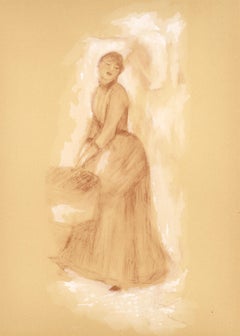
"Etude pour Les Parapluies" pochoir

"Etude pour Les Parapluies" pochoir

By (after) Pierre Auguste Renior

Located in Henderson, NV

Medium: lithograph with pochoir coloring (after the 1895 drawing in sanguine). Printed in 1948 on Johannot paper for the rare "Seize Aquarelles et Sanguines de Renoir" portfolio and ...

Category

1940s Impressionist (after) Pierre Auguste Renior Art
Materials

Lithograph, Stencil

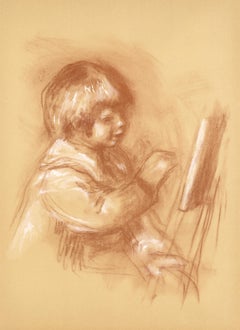
"Le petit peintre" pochoir

"Le petit peintre" pochoir

By (after) Pierre Auguste Renior

Located in Henderson, NV

Medium: lithograph with pochoir coloring (after the 1895 drawing in sanguine). Printed in 1948 on Johannot paper for the rare "Seize Aquarelles et Sanguines de Renoir" portfolio and ...

Category

1940s Impressionist (after) Pierre Auguste Renior Art
Materials

Stencil, Lithograph

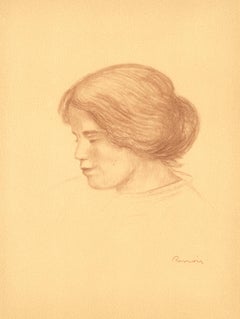
"Self Portrait" lithograph

"Self Portrait" lithograph

By (after) Pierre Auguste Renior

Located in Henderson, NV

Medium: lithograph (after the painting). Printed by Mourlot in 1951 in a limited edition of 3000. Sheet size: 12 1/2 x 9 1/2 inches (320 x 243 mm). There is text on the back side, as...

Category

1950s Impressionist (after) Pierre Auguste Renior Art
Materials

Lithograph

"L'Enfant au biscuit" lithograph

"L'Enfant au biscuit" lithograph

By (after) Pierre Auguste Renior

Located in Henderson, NV

Medium: lithograph (after Renoir). Printed in 1951 at the atelier Mourlot using the same number of stones as the original, in a limited edition of 3000. Sheet size: 12 1/2 x 9 1/2 in...

Category

1950s Impressionist (after) Pierre Auguste Renior Art
Materials

Lithograph

"Gabrielle" pochoir

"Gabrielle" pochoir

By (after) Pierre Auguste Renior

Located in Henderson, NV

Medium: lithograph with pochoir coloring (after the 1895 drawing in sanguine). Printed in 1948 on Johannot paper for the rare "Seize Aquarelles et Sanguines de Renoir" portfolio and ...

Category

1940s Impressionist (after) Pierre Auguste Renior Art
Materials

Stencil, Lithograph

Related Items
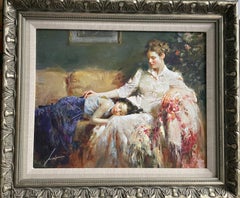
Pino Daeni Limited Edition Paper Signed Lithograph "Innocence" Ornate Frame

Pino Daeni Limited Edition Paper Signed Lithograph "Innocence" Ornate Frame

By Pino Daeni

Located in Chesterfield, MI

Sentimental is the adjective to describe this beautiful portrait of a mother with her innocent child. This is a beautifully framed limited edition lithograph (100/295) on paper sign...

Category

Late 20th Century Impressionist (after) Pierre Auguste Renior Art
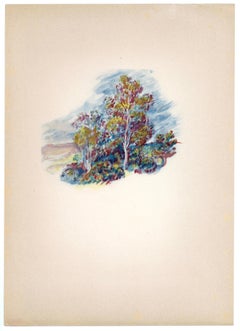
Materials

Lithograph

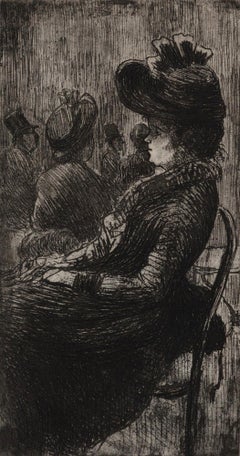
L'Avant-Foyer de l'Opera /// French Impressionist Etching Figurative Lady Man

L'Avant-Foyer de l'Opera /// French Impressionist Etching Figurative Lady Man

By Tony Minartz

Located in Saint Augustine, FL

Artist: Tony Minartz (French, 1873-1944) Title: "L'Avant-Foyer de l'Opera" Portfolio: Revue de l'Art Ancien & Moderne *Issued unsigned Year: 1903 Medium: Original Etching on cream laid paper Limited edition: Unknown Printer: Unknown Publisher: Revue de l'Art Ancien & Moderne, Paris, France Framing: Recently framed in a traditional gold and black moulding with 100% cotton rag matting Framed size: 18.63" x 16.38" Sheet size: 12" x 9" Image size: 9" x 7.25" Condition: In excellent condition Notes: Printed in one color: bistre. This review was founded in 1897 in the continuity of the review Les Beaux-Arts published between 1861 and 1865; Jules Comte, the founder, entitled his first issue Les Beaux-Arts - Revue nouvelle then changed the title to La Revue de l'art ancien et moderne. Jules Comte directed the review until his death in 1912. Raymond Woog took over , who was provisional director until the start of the war in July 1914. In 1919, André Dezarrois took over this review and was its director until December 1937, date of last issue (published in January 1938). In the meantime, it publishes the Bulletin of ancient and modern art, which has gained a certain notoriety in the community. Biography: Tony Minartz, pseudonym of Antoine Guillaume, born 8 April 1873 to Cannes and died in that city on 13 December 1944 Is a painter, draftsman , illustrator and engraver French. Painter autodidact , Tony Minartz starts to become known in 1896 by exhibiting paintings at the Salon of the National Society of Fine Arts , and then decorates the Pompadour theater of painted panels for fashion shows " Grand Guignol ", directed by L. Darthenay. In 1903, Henri Béraldi , with whom he worked, praised him in The Journal of ancient and modern art, writing that "it was thirty years ago," and he has received advice from Paul Renouard to be formed the technique of etching ; Béraldi adds that his favorite subjects are "Paris at night Paris at night, always." Minartz also gives them some high-remarkable in The Journal of ancient and modern art until 1910: balls, cafe concerts, Parisian in their most beautiful dresses, but also music-halls, music halls, restaurants, large and small theaters, are the preferred settings of his compositions. Its fertile period seems to end in 1914. In addition to the National Salon, Minartz exhibited in Paris at the gallery Bartholomew (1903), the Independent Living (1905, 1906) and the gallery Devambez (1909) and received the Academic Palms . He occasionally collaborates with periodic illustrated as The Almanac Sports (Ollendorff, 1899), or satirical as Gil Blas...

Category

Early 1900s Impressionist (after) Pierre Auguste Renior Art
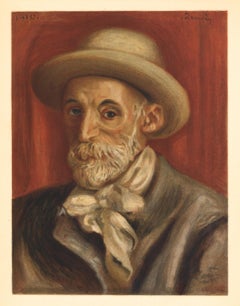
Materials

Etching, Laid Paper, Intaglio

“Le Chapeau Epingle”

Pierre-Auguste Renoir“Le Chapeau Epingle”, 1884

$1,560Sale Price|20% Off

H 4.75 in W 3.25 in D 1 in

“Le Chapeau Epingle”

By Pierre-Auguste Renoir

Located in Southampton, NY

Original etching and drypoint on wove paper. This is the third version and the second edition printed in 1921 of Le Chapeau Epingle. Condition is very good...

Category

1880s Impressionist (after) Pierre Auguste Renior Art
Materials

Archival Paper, Etching

Soledad Acostada
Soledad Acostada

Francisco ZúñigaSoledad Acostada, 1973

$1,250

H 32.5 in W 39.5 in D 2 in

Soledad Acostada

By Francisco Zúñiga

Located in San Francisco, CA

Pencil signed lithograph by Costa Rican Master Francisco Zuniga (1921-1998) Works by Zuniga are instantly recognizable. He is mostly known for his paintings of rural indigenous wome...

Category

Mid-20th Century Impressionist (after) Pierre Auguste Renior Art
Materials

Lithograph

Edgar Degas, Dancer Standing in Profile, 1945 (after)

Edgar Degas, Dancer Standing in Profile, 1945 (after)

By Edgar Degas

Located in Southampton, NY

This exquisite lithograph after Edgar Degas (1834–1917), titled Danseur debout de profil (Dancer Standing in Profile), originates from the 1945 folio Degas, Ten Ballet Sketches. Published by The Studio Publications, Inc., New York, rendered and printed by Albert Carman, City Island, 1945, this work reflects Degas’s sensitive mastery of line, movement, and intimate observation, capturing the grace, poise, and psychological immediacy that define his iconic ballet imagery. In Danseur debout de profil (Dancer Standing in Profile), Degas reveals gesture and inner emotion through economical contour and lyrical nuance. Executed as a lithograph and pochoir on velin paper, this work measures 17 x 13 inches (43.18 x 33.02 cm). Signed in the plate and unnumbered as issued. Rendered and printed by Albert Carman, City Island, one of the notable American ateliers specializing in fine art lithography during the mid-20th century. Artwork Details: Artist: After Edgar Degas (1834–1917) Title: Danseur debout de profil (Dancer Standing in Profile), from Degas, Ten Ballet Sketches, 1945 Medium: Lithograph and pochoir on velin paper Dimensions: 17 x 13 inches (43.18 x 33.02 cm) Inscription: Signed in the plate and unnumbered as issued Date: 1945 Publisher: The Studio Publications, Inc., New York Printer: Albert Carman, City Island, 1945 Condition: Well preserved, consistent with age and medium Provenance: From the 1945 folio Degas, Ten Ballet Sketches, published by The Studio Publications, Inc., New York Notes: Excerpted from the album, Born in Paris in 1834, Edgar Degas lived, and surely loved the life of that city during most of his years. These continued somewhat sadly beyond those of most of his friends— into the debacle of the first World War, during which he died in 1917. Judging by the frequency with which he used them as models, he must have had an especial admiration for the ballet girls who followed a profession that at the time brought none of the glory and prosperity which attend it today. New aspects of the human body, revealed in movement, fascinated him. But his occupation with the simply anatomical side of his subjects never resulted in a cold interpretation. On the contrary there is a warmth and sympathy that pervades all of his work. The drawings here represent the painter in one important phase of his multi-sensitive view of life; and permit an insight which a more ambitious work might not do-into the operation of the creative process, the artist's transformation of reality as it passes through the mesh of his sensibilities. The Edition of this Portfolio is limited to MMMD examples. Rendered by Albert Carman. About the Publication: Degas, Ten Ballet Sketches, published in 1945 by The Studio Publications, Inc., New York, stands as one of the most elegant and scholarly mid-century American fine art folios devoted to the ballet imagery of Edgar Degas. Conceived as a high-quality interpretive portfolio, the album presents a series of lithograph-and-pochoir renderings based on Degas’s original drawings, executed with exceptional attention to tonal subtlety, contour fidelity, and the emotional interiority that defines the artist’s draftsmanship. Rendered and printed by Albert Carman on City Island, the publication embodies an American postwar effort to restore and celebrate European masterworks through meticulous handcraft and artisanal color application, honoring Degas’s distinctive line and the atmospheric delicacy of his studio-based studies. Produced in a substantial edition of MMMD examples, the portfolio offered audiences rare access to Degas’s private working drawings—images rarely seen outside institutional collections—while exemplifying the technical refinement and interpretive care characteristic of Carman’s workshop. Today, Degas, Ten Ballet Sketches remains a sought-after historical publication, valued for its craft, fidelity to Degas’s aesthetic, and its role in preserving and disseminating the artist’s intimate ballet imagery in a beautifully executed mid-century fine art format. About the Artist: Edgar Degas (1834–1917) was a French painter, draughtsman, printmaker, and sculptor whose groundbreaking fusion of classical draftsmanship, modern experimentation, and psychological depth helped define the trajectory of Western art, positioning him as one of the most influential figures of the nineteenth and early twentieth centuries; renowned for his depictions of ballet dancers, racehorses, theater scenes, cafe life, domestic interiors, milliners, laundresses, and women at their toilette, Degas reimagined observational realism through radical compositional innovation—employing extreme cropping, asymmetrical framing, oblique viewpoints, and dramatic lighting that anticipated photographic and cinematic language long before these technologies shaped visual culture, and although associated with Impressionism, he rejected plein-air spontaneity in favor of studio-based discipline rooted in the linear precision of Jean-Auguste-Dominique Ingres, the expressive chromaticism of Eugene Delacroix, and the modernity of Edouard Manet while also drawing inspiration from Japanese ukiyo-e prints, classical sculpture, and early photography; his independent artistic philosophy resonated with and helped shape the innovations of Pablo Picasso, Alexander Calder, Alberto Giacometti, Salvador Dali, Joan Miro, Wassily Kandinsky, Marcel Duchamp, and Man Ray, whose explorations of movement, form, dream logic, abstraction, and conceptualism all find antecedents in Degas’s investigations into seriality, temporality, and the fragmented figure, and his pioneering use of pastel, monotype, and wax sculpture fundamentally transformed each medium, influencing artists from Henri Matisse, Francis Bacon, Lucian Freud, and Giacomo Manzu to Paula Rego, contemporary realists, experimental photographers, and choreographers; his works are held in nearly every major museum collection worldwide—including the Musee dOrsay, the Louvre, the Metropolitan Museum of Art, the National Gallery of Art, the Art Institute of Chicago, the Courtauld Institute, and the National Gallery, London—affirming his central place in the history of art, and the highest auction record for Degas was achieved at Sothebys London on February 3, 2015, when Danseuses en Bleu sold for 37,033,000 GBP, cementing his status as one of the most sought-after and enduringly significant artists of the Western canon. Edgar Degas lithograph...

Category

1940s Impressionist (after) Pierre Auguste Renior Art
Materials

Lithograph

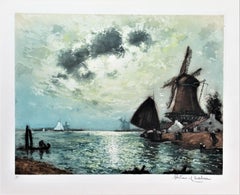
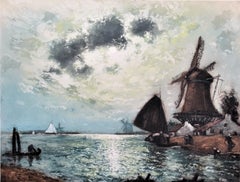
“Sur la Plage, a Bernival”

Pierre Auguste Renoir“Sur la Plage, a Bernival”, 1892

$1,280Sale Price|20% Off

H 5.25 in W 3.5 in D 1.75 in

“Sur la Plage, a Bernival”

By Pierre Auguste Renoir

Located in Southampton, NY

One of the founders of Impressionism and certainly one of its greatest masters, Pierre-Auguste Renoir (1841 - 1919) was not a prolific printmaker, but he explored several different m...

Category

1890s Impressionist (after) Pierre Auguste Renior Art
Materials

Etching, Archival Paper, Drypoint

Edgar Degas, Three Dancers, 1945 (after)

Edgar Degas, Three Dancers, 1945 (after)

By Edgar Degas

Located in Southampton, NY

This exquisite lithograph after Edgar Degas (1834–1917), titled Trois danseurs (Three Dancers), originates from the 1945 folio Degas, Ten Ballet Sketches. Published by The Studio Publications, Inc., New York, rendered and printed by Albert Carman, City Island, 1945, this work reflects Degas’s sensitive mastery of line, movement, and the intimate psychological nuances of the ballet studio. Executed as a lithograph and pochoir on velin paper, this work measures 13 x 17 inches (33.02 x 43.18 cm). Signed in the plate and unnumbered as issued. Rendered and printed by Albert Carman, City Island. Artwork Details: Artist: After Edgar Degas (1834–1917) Title: Trois danseurs (Three Dancers), from Degas, Ten Ballet Sketches, 1945 Medium: Lithograph and pochoir on velin paper Dimensions: 13 x 17 inches (33.02 x 43.18 cm) Inscription: Signed in the plate and unnumbered as issued Date: 1945 Publisher: The Studio Publications, Inc., New York Printer: Albert Carman, City Island Condition: Well preserved, consistent with age and medium Provenance: From the 1945 folio Degas, Ten Ballet Sketches, published by The Studio Publications, Inc., New York Notes: Excerpted from the album, Born in Paris in 1834, Edgar Degas lived, and surely loved the life of that city during most of his years. These continued somewhat sadly beyond those of most of his friends— into the debacle of the first World War, during which he died in 1917. Judging by the frequency with which he used them as models, he must have had an especial admiration for the ballet girls who followed a profession that at the time brought none of the glory and prosperity which attend it today. New aspects of the human body, revealed in movement, fascinated him. But his occupation with the simply anatomical side of his subjects never resulted in a cold interpretation. On the contrary there is a warmth and sympathy that pervades all of his work. The drawings here represent the painter in one important phase of his multi-sensitive view of life; and permit an insight which a more ambitious work might not do-into the operation of the creative process, the artist's transformation of reality as it passes through the mesh of his sensibilities. The Edition of this Portfolio is limited to MMMD examples. Rendered by Albert Carman. About the Publication: Degas, Ten Ballet Sketches (1945) is one of the earliest and most significant American postwar fine art portfolios devoted to Edgar Degas’s intimate works on paper. Published by The Studio Publications, Inc., New York, and rendered and printed by Albert Carman at City Island, the album sought to faithfully reproduce a group of Degas’s ballet-related drawings through a combination of lithography and hand-applied pochoir coloring. This hybrid technique allowed the edition to preserve the immediacy, tonal subtlety, and gestural delicacy central to Degas’s draftsmanship. Conceived as a fine art publication rather than a commercial book, the portfolio provided American audiences unprecedented access to Degas’s private, spontaneous studies—images that reveal the artist’s fascination with movement, anatomy, and the psychological atmosphere of the rehearsal studio. The album exemplifies the mid-20th-century revival of pochoir as a means of recreating the texture and coloristic nuance of original works on paper, and it remains an important document of how Degas’s legacy was translated into high-quality printed form for collectors, museums, and connoisseurs. About the Artist: Edgar Degas (1834–1917) was a French painter, draughtsman, printmaker, and sculptor whose groundbreaking fusion of classical draftsmanship, modern experimentation, and psychological depth helped define the trajectory of Western art, positioning him as one of the most influential figures of the nineteenth and early twentieth centuries; renowned for his depictions of ballet dancers, racehorses, theater scenes, cafe life, domestic interiors, milliners, laundresses, and women at their toilette, Degas reimagined observational realism through radical compositional innovation—employing extreme cropping, asymmetrical framing, oblique viewpoints, and dramatic lighting that anticipated photographic and cinematic language long before these technologies shaped visual culture, and although associated with Impressionism, he rejected plein-air spontaneity in favor of studio-based discipline rooted in the linear precision of Jean-Auguste-Dominique Ingres, the expressive chromaticism of Eugene Delacroix, and the modernity of Edouard Manet while also drawing inspiration from Japanese ukiyo-e prints, classical sculpture, and early photography; his independent artistic philosophy resonated with and helped shape the innovations of Pablo Picasso, Alexander Calder, Alberto Giacometti, Salvador Dali, Joan Miro, Wassily Kandinsky, Marcel Duchamp, and Man Ray, whose explorations of movement, form, dream logic, abstraction, and conceptualism all find antecedents in Degas’s investigations into seriality, temporality, and the fragmented figure, and his pioneering use of pastel, monotype, and wax sculpture fundamentally transformed each medium, influencing artists from Henri Matisse, Francis Bacon, Lucian Freud, and Giacomo Manzu to Paula Rego, contemporary realists, experimental photographers, and choreographers; his works are held in nearly every major museum collection worldwide—including the Musee dOrsay, the Louvre, the Metropolitan Museum of Art, the National Gallery of Art, the Art Institute of Chicago, the Courtauld Institute, and the National Gallery, London—affirming his central place in the history of art, and the highest auction record for Degas was achieved at Sothebys London on February 3, 2015, when Danseuses en Bleu sold for 37,033,000 GBP, cementing his status as one of the most sought-after and enduringly significant artists of the Western canon. Degas pochoir, Degas lithograph...

Category

1940s Impressionist (after) Pierre Auguste Renior Art
Materials

Lithograph

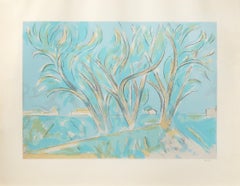
Diana's Pool
Diana's Pool

Childe HassamDiana's Pool, 1916

$3,800

H 11.25 in W 8 in

Diana's Pool

By Childe Hassam

Located in New York, NY

Etching, 1916. Signed by the artist with the monogram in pencil, lower right margin. Professionally and archivally matted and framed (framed dimensions is 21 x 17.25 inches).

Category

1910s American Impressionist (after) Pierre Auguste Renior Art
Materials

Etching

Edgar Degas, Dancer Arranging Her Dress, 1945 (after)

Edgar Degas, Dancer Arranging Her Dress, 1945 (after)

By Edgar Degas

Located in Southampton, NY

This exquisite lithograph after Edgar Degas (1834–1917), titled Danseuse arrangeant sa robe (Dancer Arranging Her Dress), originates from the 1945 folio Degas, Ten Ballet Sketches. Published by The Studio Publications, Inc., New York, rendered and printed by Albert Carman, City Island, 1945, this work reflects Degas’s sensitive mastery of line, movement, and intimate observation, capturing the grace, poise, and psychological immediacy that define his iconic ballet imagery. In Danseuse arrangeant sa robe (Dancer Arranging Her Dress), Degas reveals gesture and inner emotion through economical contour and lyrical nuance. Executed as a lithograph and pochoir on velin paper, this work measures 17 x 13 inches (43.18 x 33.02 cm). Signed in the plate and unnumbered as issued. Rendered and printed by Albert Carman, City Island, one of the notable American ateliers specializing in fine art lithography during the mid-20th century. Artwork Details: Artist: After Edgar Degas (1834–1917) Title: Danseuse arrangeant sa robe (Dancer Arranging Her Dress), from Degas, Ten Ballet Sketches, 1945 Medium: Lithograph and pochoir on velin paper Dimensions: 17 x 13 inches (43.18 x 33.02 cm) Inscription: Signed in the plate and unnumbered as issued Date: 1945 Publisher: The Studio Publications, Inc., New York Printer: Albert Carman, City Island, 1945 Condition: Well preserved, consistent with age and medium Provenance: From the 1945 folio Degas, Ten Ballet Sketches, published by The Studio Publications, Inc., New York Notes: Excerpted from the album, Born in Paris in 1834, Edgar Degas lived, and surely loved the life of that city during most of his years. These continued somewhat sadly beyond those of most of his friends— into the debacle of the first World War, during which he died in 1917. Judging by the frequency with which he used them as models, he must have had an especial admiration for the ballet girls who followed a profession that at the time brought none of the glory and prosperity which attend it today. New aspects of the human body, revealed in movement, fascinated him. But his occupation with the simply anatomical side of his subjects never resulted in a cold interpretation. On the contrary there is a warmth and sympathy that pervades all of his work. The drawings here represent the painter in one important phase of his multi-sensitive view of life; and permit an insight which a more ambitious work might not do-into the operation of the creative process, the artist's transformation of reality as it passes through the mesh of his sensibilities. The Edition of this Portfolio is limited to MMMD examples. Rendered by Albert Carman. About the Publication: Degas, Ten Ballet Sketches, published in 1945 by The Studio Publications, Inc., New York, stands as one of the most elegant and scholarly mid-century American fine art folios devoted to the ballet imagery of Edgar Degas. Conceived as a high-quality interpretive portfolio, the album presents a series of lithograph-and-pochoir renderings based on Degas’s original drawings, executed with exceptional attention to tonal subtlety, contour fidelity, and the emotional interiority that defines the artist’s draftsmanship. Rendered and printed by Albert Carman on City Island, the publication embodies an American postwar effort to restore and celebrate European masterworks through meticulous handcraft and artisanal color application, honoring Degas’s distinctive line and the atmospheric delicacy of his studio-based studies. Produced in a substantial edition of MMMD examples, the portfolio offered audiences rare access to Degas’s private working drawings—images rarely seen outside institutional collections—while exemplifying the technical refinement and interpretive care characteristic of Carman’s workshop. Today, Degas, Ten Ballet Sketches remains a sought-after historical publication, valued for its craft, fidelity to Degas’s aesthetic, and its role in preserving and disseminating the artist’s intimate ballet imagery in a beautifully executed mid-century fine art format. About the Artist: Edgar Degas (1834–1917) was a French painter, draughtsman, printmaker, and sculptor whose groundbreaking fusion of classical draftsmanship, modern experimentation, and psychological depth helped define the trajectory of Western art, positioning him as one of the most influential figures of the nineteenth and early twentieth centuries; renowned for his depictions of ballet dancers, racehorses, theater scenes, cafe life, domestic interiors, milliners, laundresses, and women at their toilette, Degas reimagined observational realism through radical compositional innovation—employing extreme cropping, asymmetrical framing, oblique viewpoints, and dramatic lighting that anticipated photographic and cinematic language long before these technologies shaped visual culture, and although associated with Impressionism, he rejected plein-air spontaneity in favor of studio-based discipline rooted in the linear precision of Jean-Auguste-Dominique Ingres, the expressive chromaticism of Eugene Delacroix, and the modernity of Edouard Manet while also drawing inspiration from Japanese ukiyo-e prints, classical sculpture, and early photography; his independent artistic philosophy resonated with and helped shape the innovations of Pablo Picasso, Alexander Calder, Alberto Giacometti, Salvador Dali, Joan Miro, Wassily Kandinsky, Marcel Duchamp, and Man Ray, whose explorations of movement, form, dream logic, abstraction, and conceptualism all find antecedents in Degas’s investigations into seriality, temporality, and the fragmented figure, and his pioneering use of pastel, monotype, and wax sculpture fundamentally transformed each medium, influencing artists from Henri Matisse, Francis Bacon, Lucian Freud, and Giacomo Manzu to Paula Rego, contemporary realists, experimental photographers, and choreographers; his works are held in nearly every major museum collection worldwide—including the Musee dOrsay, the Louvre, the Metropolitan Museum of Art, the National Gallery of Art, the Art Institute of Chicago, the Courtauld Institute, and the National Gallery, London—affirming his central place in the history of art, and the highest auction record for Degas was achieved at Sothebys London on February 3, 2015, when Danseuses en Bleu sold for 37,033,000 GBP, cementing his status as one of the most sought-after and enduringly significant artists of the Western canon. Edgar Degas lithograph...

Category

1940s Impressionist (after) Pierre Auguste Renior Art
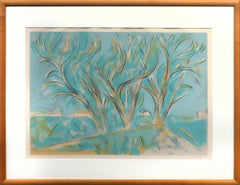
Materials

Lithograph

Edgar Degas, Dancer at the Barre, 1945 (after)

Edgar Degas, Dancer at the Barre, 1945 (after)

By Edgar Degas

Located in Southampton, NY

This exquisite lithograph after Edgar Degas (1834–1917), titled Danseur au bar (Dancer at the Barre), originates from the 1945 folio Degas, Ten Ballet Sketches. Published by The Stud...

Category

1940s Impressionist (after) Pierre Auguste Renior Art
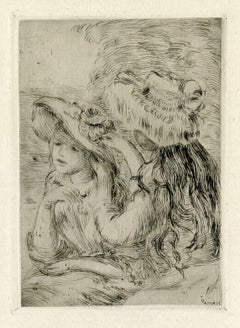
Materials

Lithograph

“Le Chapeau Epingle”

Pierre-Auguste Renoir“Le Chapeau Epingle”, 1884

$1,560Sale Price|20% Off

H 4.75 in W 3.25 in D 2 in

“Le Chapeau Epingle”

By Pierre-Auguste Renoir

Located in Southampton, NY

Original etching and drypoint on wove paper. This is the third version and the second edition printed in 1921 of Le Chapeau Epingle. Condition is very good...

Category

1880s Impressionist (after) Pierre Auguste Renior Art
Materials

Archival Paper, Etching

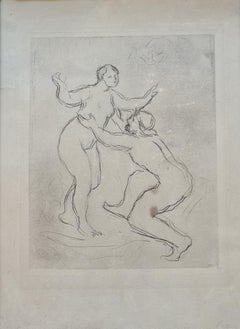
Pierre-Auguste Renoir - Le Chapeau Épinglé (2e planche).

Pierre-Auguste Renoir - Le Chapeau Épinglé (2e planche).

By Pierre Auguste Renoir

Located in Los Angeles, CA

Pierre-Auguste Renoir (French 1841-1919) Le Chapeau Épinglé, 2e planche (Delteil 30) Lithograph in colours on laid paper. Signed in stone. From the edition of 200 59.9 x 49.6cm (shee...

Category

18th Century Impressionist (after) Pierre Auguste Renior Art
Materials

Lithograph

Previously Available Items
"Portrait de Mademoiselle D" lithograph

"Portrait de Mademoiselle D" lithograph

By (after) Pierre Auguste Renior

Located in Henderson, NV

Medium: lithograph (after Renoir). Printed in 1921 and published in Paris by Henri Floury. Sheet size: 10 x 7 3/4 inches (256 x 196 mm). Signed in the plate, not hand-signed.

Category

1920s Impressionist (after) Pierre Auguste Renior Art
Materials

Lithograph

Le Fleuve Scamandre, (Stella 24, Delteil 24), First sheet, First State.

Le Fleuve Scamandre, (Stella 24, Delteil 24), First sheet, First State.

By (after) Pierre Auguste Renior

Located in Cotignac, FR

Early 20th century, dry point etching of 'le Fleuve Scamandre' by Renoir possibly from the first state after the reduction, the smaller edition, be...

Category

Early 20th Century Impressionist (after) Pierre Auguste Renior Art
Materials

Drypoint, Etching

(after) Pierre Auguste Renior art for sale on 1stDibs.

Find a wide variety of authentic (after) Pierre Auguste Renior art available for sale on 1stDibs. You can also browse by medium to find art by (after) Pierre Auguste Renior in lithograph, stencil, etching and more. Much of the original work by this artist or collective was created during the 20th century and is mostly associated with the Impressionist style. Not every interior allows for large (after) Pierre Auguste Renior art, so small editions measuring 6 inches across are available. (after) Pierre Auguste Renior art prices can differ depending upon medium, time period and other attributes. On 1stDibs, the price for these items starts at $200 and tops out at $450, while the average work can sell for $200.
Questions About (after) Pierre Auguste Renior Art
  • 1stDibs ExpertApril 5, 2022
    Pierre-Auguste Renoir is known for his Impressionist paintings. His works reflect the interest in displaying the effects of light indicative of the movement. Some of the French artist's most famous works include Luncheon of the Boating Party, Two Sisters and La Grenouillère. You'll find a variety of Pierre-Auguste Renoir art on 1stDibs.