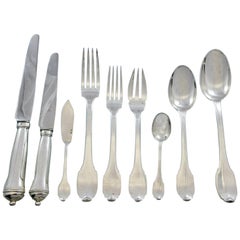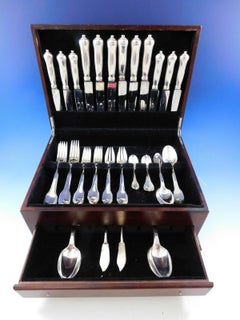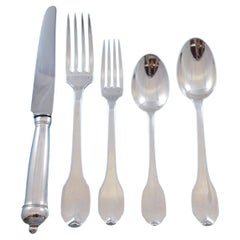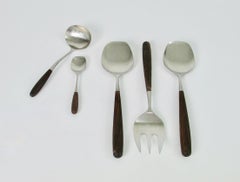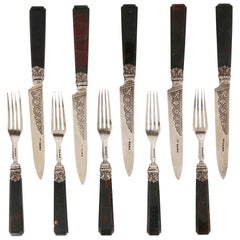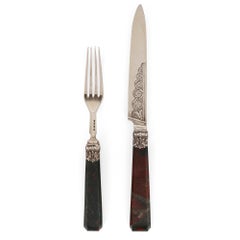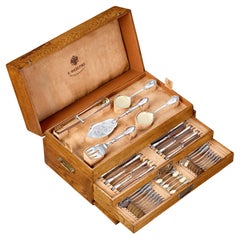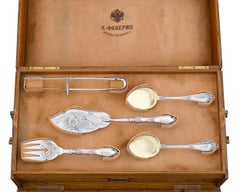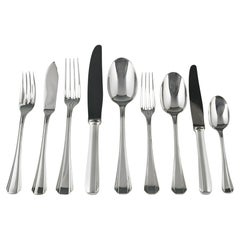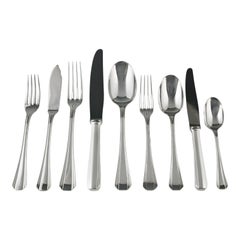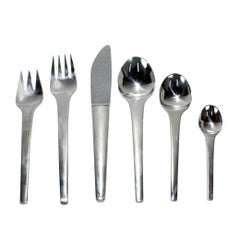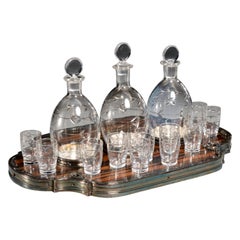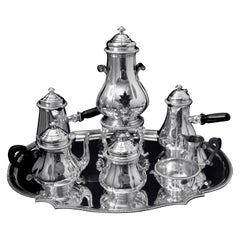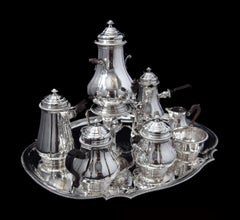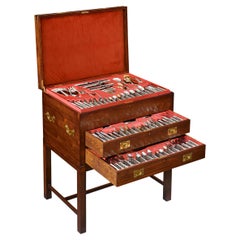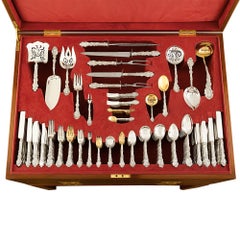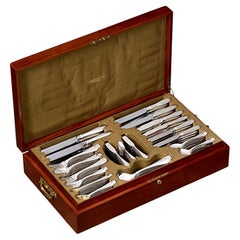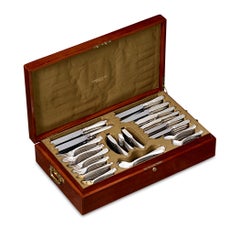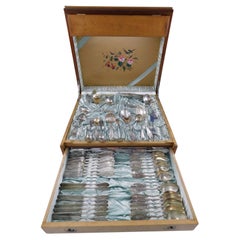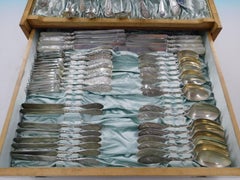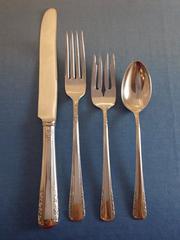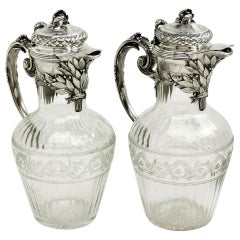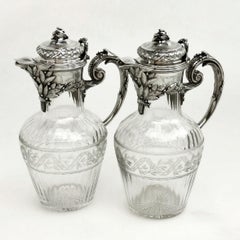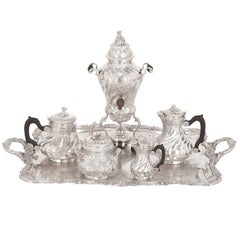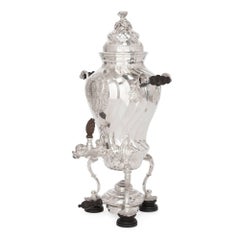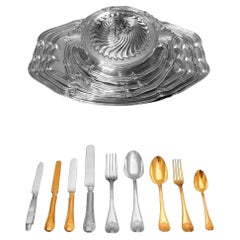
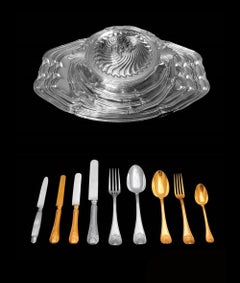
Boin Taburet - Sterling Table Service, 322pc Flatware Set + 15pc Platter Set !
By Boin-Taburet
Located in Wilmington, DE
Direct from St. Tropez: Direct from a private mansion in St. Tropez, a stunning 19th century 950 sterling silver and vermeil table service by premier French silversmith "Boin Taburet", consisting of a 322-piece flatware set plus a 15 piece Serving platter set in their classic shell pattern, absolutely magnificent, circa late 1890s. The 19th century represented a golden age for French decorative arts, particularly in the realm of silversmithing, where technical precision and artistic innovation converged to produce some of the most exquisite tableware in European history. Among the luminaries of this era, the Parisian firm Boin-Taburet emerged as a preeminent force, celebrated for its exceptional craftsmanship, royal patronage, and the enduring beauty of its silver creations. Specializing in sterling silver and vermeil flatware, as well as ornate serving pieces such as Louis XVI-style platters, Boin-Taburet’s work epitomized the elegance and sophistication of French luxury during a period marked by opulent dining culture and aristocratic refinement. The Early Years: The origins of Boin-Taburet can be traced to the early 19th century, a time when Paris reasserted itself as the epicenter of fine silver production following the upheavals of the French Revolution and the Napoleonic Wars. The firm’s exact founding date remains uncertain due to incomplete archival records, but it is widely accepted that it rose to prominence during the Bourbon Restoration (1814–1830) and the subsequent July Monarchy (1830–1848). These periods witnessed a resurgence of aristocratic wealth and a renewed demand for luxury goods, creating fertile ground for master silversmiths to thrive. Boin-Taburet distinguished itself early on by adhering to the highest standards of craftsmanship while embracing stylistic influences from both the Empire and Restoration periods. The firm’s name likely derives from its founders, though historical documentation regarding its earliest proprietors is sparse. What is clear, however, is that by the mid-19th century, Boin-Taburet had secured a place among the elite Parisian silversmiths, alongside illustrious contemporaries such as Odiot, Christofle, and Puiforcat. The firm’s workshops, likely located in the historic silversmithing district of the Marais, employed highly skilled artisans who specialized in forging, chasing, and gilding silver, ensuring that each piece met exacting standards. The 19th century was a transformative period for French silver, as the burgeoning bourgeoisie and the returning aristocracy sought tableware that reflected their social standing. Boin-Taburet responded to this demand by producing works that blended functionality with artistic grandeur. The firm’s designs frequently drew inspiration from the Louis XVI style, a neoclassical aesthetic characterized by symmetry, floral motifs, and restrained elegance. This stylistic choice not only aligned with the prevailing tastes of the time but also ensured that Boin-Taburet’s creations would remain timeless, transcending the fleeting trends that influenced other manufacturers. Focus on Quality: The foundation of Boin-Taburet’s enduring reputation lay in its unwavering commitment to quality. Unlike many manufacturers who began to adopt industrial techniques in the latter half of the 19th century, Boin-Taburet remained steadfast in its dedication to traditional handcrafting methods. Each piece was meticulously shaped, engraved, and finished by master silversmiths who had undergone years, if not decades, of apprenticeship to perfect their skills. This painstaking approach ensured that every item bore the hallmarks of exceptional artistry - precise detailing, balanced proportions, and a flawless surface finish. A defining feature of Boin-Taburet’s work was its use of 950 sterling silver, a higher silver content than the standard 925 (Britannia silver) commonly used by other firms. This elevated purity not only enhanced the metal’s luster but also improved its resistance to tarnishing, making Boin-Taburet’s pieces particularly desirable for discerning clients. The firm’s Louis XVI-style serving platters, for example, were crafted from this superior alloy, resulting in pieces that were both visually striking and remarkably durable. These platters often featured elaborate chased borders adorned with acanthus leaves, floral swags, and scalloped edges, demonstrating the silversmiths’ ability to manipulate silver into intricate, three-dimensional forms. In addition to sterling silver, Boin-Taburet excelled in the production of vermeil - a technique that involved the application of a thick layer of gold over sterling silver through either fire-gilding or electrolysis. Vermeil flatware sets...
Late 19th Century Louis XVI Antique Boin-Taburet Tableware
Silver