Christian Rothmann Figurative Photography

b. 1954

Christian Rothmann is a painter, photographer and graphic artist. In 1976, he first studied at the Hochschule für Gestaltung Offenbach am Main, Germany and moved to Berlin in 1977, where he graduated in 1983 at the Hochschule der Künste. From 1983–95, he taught at the university as a lecturer and as an artist with a focus on screenprinting and American art history. To date, a versatile body of work has been created, which includes not only paintings but also long-standing photo projects, videos and public art. Guest lectures, teaching assignments, scholarships and exhibitions regularly lead Rothmann to travel home and abroad.

to
10
Overall Width
to
Overall Height
to
10
3
3
2
1
10
9
8
1
1
1
10
41
4,909
1,746
324
303
10
Artist: Christian Rothmann
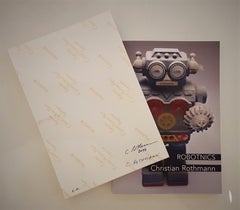
Untitled (from ROBOTNICS Series)

Untitled (from ROBOTNICS Series)

By Christian Rothmann

Located in Kansas City, MO

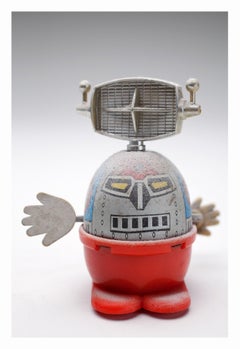
Christian Rothmann ROBOTNICS Series C-Print 2019 Edition S (Edition of 10) 12 x 8.3 inches (30.5 x 21 cm) Signed, dated and numbered verso Other Edition Sizes available: - Edition ...

Category

2010s Modern Christian Rothmann Figurative Photography

Materials

C Print

Untitled (from ROBOTNICS Series)

Untitled (from ROBOTNICS Series)

By Christian Rothmann

Located in Kansas City, MO

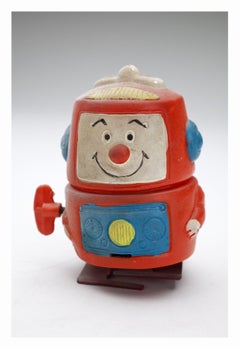
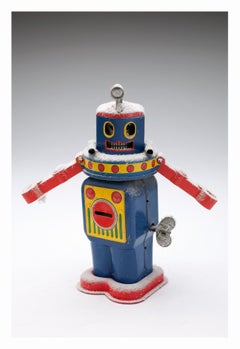
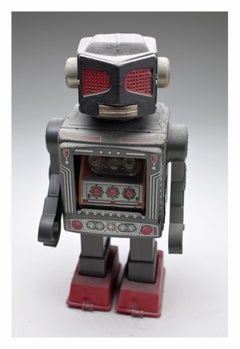
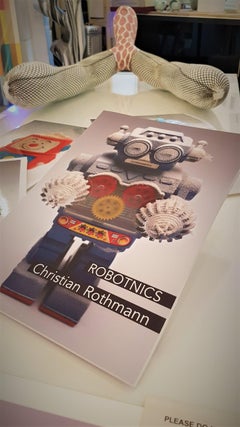
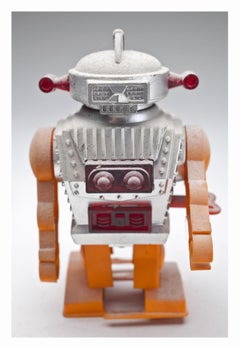
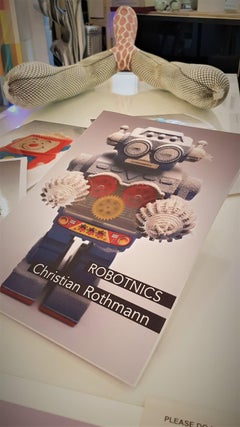
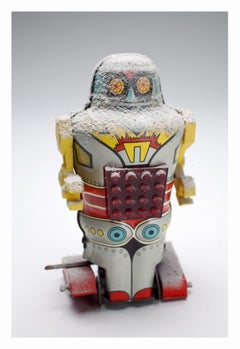
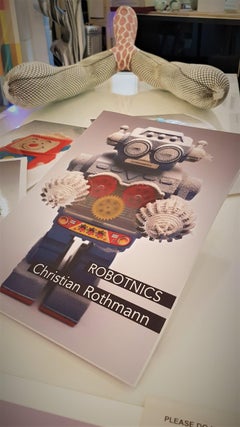
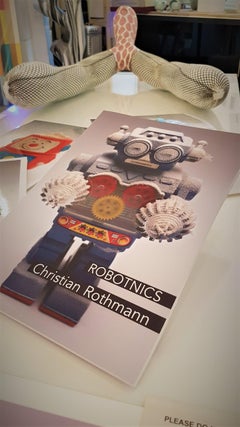
Christian Rothmann ROBOTNICS Series C-Print 2019 Edition S (Edition of 10) 12 x 8.3 inches (30.5 x 21 cm) Signed, dated and numbered verso Other Edition Sizes available: - Edition M (Edition of 6) 35.4 x 23.6 inches (90 x 60 cm) - Edition L (Edition of 6) 47.2 x 31.5 inches (120 x 80 cm) - Edition XL (Edition of 3) 88.8 x 58.8 inches (225 x 150 cm) PUR - Price Upon Request -------------- Since 1979 Christian Rothmann had more than 40 solo and 80 group exhibitions worldwide. Christian Rothmann had guest lectures, residencies, art fairs and biennials in Europe, Japan, USA, Australia and Korea. Christian Rothmann (born 1954 in Kędzierzyn, Poland ) is a painter, photographer, and graphic artist.⁠ ⁠ In 1976 he first studied at the “Hochschule für Gestaltung” in Offenbach, Germany and moved to Berlin in 1977, where he graduated in 1983 at the “Hochschule der Künste”. From 1983 to 1995 he taught at the university as a lecturer and as an artist with a focus on screenprinting and American art history. To date, a versatile body of work has been created, which includes not only paintings but also long-standing photo projects, videos, and public art.⁠ ⁠ Guest lectures, teaching assignments, scholarships and exhibitions regularly lead Rothmann to travel home and abroad.⁠ ------------------------ Rothmann's Robots These creatures date back to another era, and they connect the past and the future. They were found by Christian Rothmann, a Berlin artist, collector and traveler through time and the world: In shops in Germany and Japan, Israel and America, his keen eye picks out objects cast aside by previous generations, but which lend themselves to his own work. In a similar way, he came across a stash of historic toy robots of varied provenance collected by a Berlin gallery owner many years ago. Most of them were screwed and riveted together in the 1960s and 70s by Metal House, a Japanese company that still exists today. In systematically photographing these humanoids made of tin - and later plastic - Rothmann is paraphrasing the idea of appropriation art. Unknown names designed and made the toys, which some five decades on, Rothmann depicts and emblematizes in his extensive photo sequence. In their photographs of Selim Varol's vast toy collection, his German colleagues Daniel and Geo Fuchs captured both the stereotypical and individual in plastic figures that imitate superheroes which were and still are generally manufactured somewhere in Asia. Christian Rothmann looks his robots deep in their artificially stylized, painted or corrugated eyes - or more aptly, their eye slits - and although each has a certain degree of individuality, the little figures remain unknown to us; they project nothing and are not alter egos. Rothmann trains his lens on their faces and expressions, and thus, his portraits are born. Up extremely close, dust, dents, and rust become visible. In other words, what we see is time-traces of time that has passed since the figures were made, or during their period in a Berlin attic, and - considering that he robots date back to Rothmann's childhood - time lived by the photographer and recipients of his pictures. But unlike dolls, these mechanical robots bear no reference to the ideal of beauty at the time of their manufacture, and their features are in no way modeled on a concrete child's face. In this art project the robots appear as figures without a context, photographed face-on, cropped in front of a neutral background and reduced to their qualities of form. But beyond the reproduction and documentation a game with surfaces is going on; our view lingers on the outer skin of the object, or on the layer over it. The inside - which can be found beneath - is to an extent metaphysical, occurring inside the observer's mind. Only rarely is there anything to see behind the robot's helmet. When an occasional human face does peer out, it turns the figure into a robot-like protective casing for an astronaut of the future. If we really stop and think about modern toys, let's say those produced from the mid 20th century, when Disney and Marvel films were already stimulating a massive appetite for merchandising, the question must be: do such fantasy and hybrid creatures belong, does something like artificial intelligence already belong to the broader community of humans and animals? It is already a decade or two since the wave of Tamagotchis washed in from Japan, moved children to feed and entertain their newly born electronic chicks in the way they would a real pet, or to run the risk of seeing them die. It was a new form of artificial life, but the relationship between people and machines becomes problematic when the machines or humanoid robots have excellent fine motor skills and artificial intelligence and sensitivity on a par with, or even greater than that of humans. Luckily we have not reached that point yet, even if Hollywood adaptations would have us believe we are not far away. Rothmann's robots are initially sweet toys, and each toy is known to have a different effect on children and adults. They are conceived by (adult) designers as a means of translating or retelling history or reality through miniature animals, knights, and soldiers. In the case of monsters, mythical creatures, and robots, it is more about creating visions of the future and parallel worlds. Certainly, since the success of fantasy books and films such as Lord of the Rings or The Hobbit, we see the potential for vast enthusiasm for such parallel worlds. Successful computer and online games such as World of Warcraft...

Category

2010s Modern Christian Rothmann Figurative Photography

Materials

C Print

Untitled (from ROBOTNICS Series)

Untitled (from ROBOTNICS Series)

By Christian Rothmann

Located in Kansas City, MO

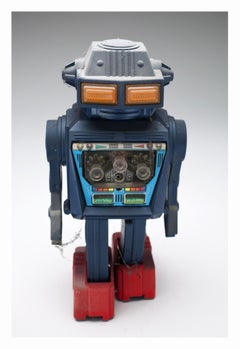
Christian Rothmann ROBOTNICS Series C-Print 2019 Edition S (Edition of 10) 12 x 8.3 inches (30.5 x 21 cm) Signed, dated and numbered verso Other Edition Sizes available: - Edition M (Edition of 6) 35.4 x 23.6 inches (90 x 60 cm) - Edition L (Edition of 6) 47.2 x 31.5 inches (120 x 80 cm) - Edition XL (Edition of 3) 88.8 x 58.8 inches (225 x 150 cm) PUR - Price Upon Request -------------- Since 1979 Christian Rothmann had more than 40 solo and 80 group exhibitions worldwide. Christian Rothmann had guest lectures, residencies, art fairs and biennials in Europe, Japan, USA, Australia and Korea. Christian Rothmann (born 1954 in Kędzierzyn, Poland ) is a painter, photographer, and graphic artist.⁠ ⁠ In 1976 he first studied at the “Hochschule für Gestaltung” in Offenbach, Germany and moved to Berlin in 1977, where he graduated in 1983 at the “Hochschule der Künste”. From 1983 to 1995 he taught at the university as a lecturer and as an artist with a focus on screenprinting and American art history. To date, a versatile body of work has been created, which includes not only paintings but also long-standing photo projects, videos, and public art.⁠ ⁠ Guest lectures, teaching assignments, scholarships and exhibitions regularly lead Rothmann to travel home and abroad.⁠ ------------------------ Rothmann's Robots These creatures date back to another era, and they connect the past and the future. They were found by Christian Rothmann, a Berlin artist, collector and traveler through time and the world: In shops in Germany and Japan, Israel and America, his keen eye picks out objects cast aside by previous generations, but which lend themselves to his own work. In a similar way, he came across a stash of historic toy robots of varied provenance collected by a Berlin gallery owner many years ago. Most of them were screwed and riveted together in the 1960s and 70s by Metal House, a Japanese company that still exists today. In systematically photographing these humanoids made of tin - and later plastic - Rothmann is paraphrasing the idea of appropriation art. Unknown names designed and made the toys, which some five decades on, Rothmann depicts and emblematizes in his extensive photo sequence. In their photographs of Selim Varol's vast toy collection, his German colleagues Daniel and Geo Fuchs captured both the stereotypical and individual in plastic figures that imitate superheroes which were and still are generally manufactured somewhere in Asia. Christian Rothmann looks his robots deep in their artificially stylized, painted or corrugated eyes - or more aptly, their eye slits - and although each has a certain degree of individuality, the little figures remain unknown to us; they project nothing and are not alter egos. Rothmann trains his lens on their faces and expressions, and thus, his portraits are born. Up extremely close, dust, dents, and rust become visible. In other words, what we see is time-traces of time that has passed since the figures were made, or during their period in a Berlin attic, and - considering that he robots date back to Rothmann's childhood - time lived by the photographer and recipients of his pictures. But unlike dolls, these mechanical robots bear no reference to the ideal of beauty at the time of their manufacture, and their features are in no way modeled on a concrete child's face. In this art project the robots appear as figures without a context, photographed face-on, cropped in front of a neutral background and reduced to their qualities of form. But beyond the reproduction and documentation a game with surfaces is going on; our view lingers on the outer skin of the object, or on the layer over it. The inside - which can be found beneath - is to an extent metaphysical, occurring inside the observer's mind. Only rarely is there anything to see behind the robot's helmet. When an occasional human face does peer out, it turns the figure into a robot-like protective casing for an astronaut of the future. If we really stop and think about modern toys, let's say those produced from the mid 20th century, when Disney and Marvel films were already stimulating a massive appetite for merchandising, the question must be: do such fantasy and hybrid creatures belong, does something like artificial intelligence already belong to the broader community of humans and animals? It is already a decade or two since the wave of Tamagotchis washed in from Japan, moved children to feed and entertain their newly born electronic chicks in the way they would a real pet, or to run the risk of seeing them die. It was a new form of artificial life, but the relationship between people and machines becomes problematic when the machines or humanoid robots have excellent fine motor skills and artificial intelligence and sensitivity on a par with, or even greater than that of humans. Luckily we have not reached that point yet, even if Hollywood adaptations would have us believe we are not far away. Rothmann's robots are initially sweet toys, and each toy is known to have a different effect on children and adults. They are conceived by (adult) designers as a means of translating or retelling history or reality through miniature animals, knights, and soldiers. In the case of monsters, mythical creatures, and robots, it is more about creating visions of the future and parallel worlds. Certainly, since the success of fantasy books and films such as Lord of the Rings or The Hobbit, we see the potential for vast enthusiasm for such parallel worlds. Successful computer and online games such as World of Warcraft, or the creation of avatars are also interesting worldwide phenomena of virtual realities that are not only relevant for children and teens. So when a middle-aged Berlin photographic artist (like Christian Rothmann) chooses to study 120 toy robots with great difference in form, it represents a journey back to his own childhood - even if at the time, he played with a steam engine rather than a robot. Once batteries had been inserted, some of the largely male or gender-neutral robots, could flash, shoot, turn around and even do more complicated things. Some can even still do it today - albeit clumsily. This, of course, can only be seen on film, but the artist intends to document that as well; to feature the robots in filmic works of art. The positioning of the figures in the studio is the same as the tableau of pictures in the exhibition room. In this way, one could say Rothmann deploys one robot after the other. This systematic approach enables a comparative view; the extreme enlargement of what are actually small and manageable figures is like the macro vision of insects whose fascinating, sometimes monster-like appearance only becomes visible when they are blown up a hundredfold. The same thing goes for the robots; in miniature form, they seem harmless and cute, but if they were larger than humans and made noises to match, they would seem more threatening. Some of the tin figures...

Category

2010s Street Art Christian Rothmann Figurative Photography
Materials

C Print

Untitled (from ROBOTNICS Series)

Untitled (from ROBOTNICS Series)

By Christian Rothmann

Located in Kansas City, MO

Christian Rothmann ROBOTNICS Series C-Print 2019 Edition S (Edition of 10) 12 x 8.3 inches (30.5 x 21 cm) Signed, dated and numbered verso Other Edition Sizes available: - Edition ...

Category

2010s Outsider Art Christian Rothmann Figurative Photography
Materials

C Print

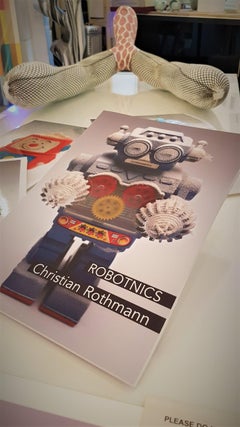
Untitled (from ROBOTNICS Series)

Untitled (from ROBOTNICS Series)

By Christian Rothmann

Located in Kansas City, MO

Christian Rothmann ROBOTNICS Series C-Print 2019 Edition S (Edition of 10) 12 x 8.3 inches (30.5 x 21 cm) Signed, dated and numbered verso Other Edition Sizes available: - Edition ...

Category

2010s Pop Art Christian Rothmann Figurative Photography
Materials

C Print

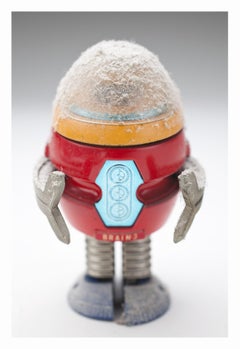
Untitled (from ROBOTNICS Series)

Untitled (from ROBOTNICS Series)

By Christian Rothmann

Located in Kansas City, MO

Christian Rothmann ROBOTNICS Series C-Print 2019 Edition S (Edition of 10) 12 x 8.3 inches (30.5 x 21 cm) Signed, dated and numbered verso Other Edition Sizes available: - Edition ...

Category

2010s Contemporary Christian Rothmann Figurative Photography
Materials

C Print

Untitled (from ROBOTNICS Series)

Untitled (from ROBOTNICS Series)

By Christian Rothmann

Located in Kansas City, MO

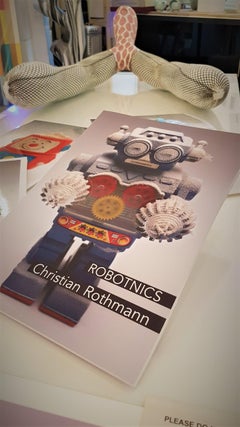
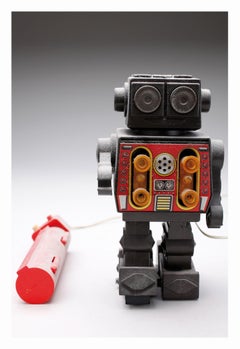
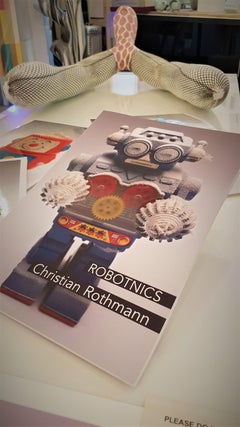
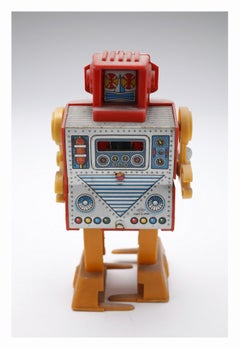
Christian Rothmann ROBOTNICS Series C-Print 2019 Edition S (Edition of 10) 12 x 8.3 inches (30.5 x 21 cm) Signed, dated and numbered verso Other Edition Sizes available: - Edition M (Edition of 6) 35.4 x 23.6 inches (90 x 60 cm) - Edition L (Edition of 6) 47.2 x 31.5 inches (120 x 80 cm) - Edition XL (Edition of 3) 88.8 x 58.8 inches (225 x 150 cm) PUR - Price Upon Request -------------- Since 1979 Christian Rothmann had more than 40 solo and 80 group exhibitions worldwide. Christian Rothmann had guest lectures, residencies, art fairs and biennials in Europe, Japan, USA, Australia and Korea. Christian Rothmann (born 1954 in Kędzierzyn, Poland ) is a painter, photographer, and graphic artist.⁠ ⁠ In 1976 he first studied at the “Hochschule für Gestaltung” in Offenbach, Germany and moved to Berlin in 1977, where he graduated in 1983 at the “Hochschule der Künste”. From 1983 to 1995 he taught at the university as a lecturer and as an artist with a focus on screenprinting and American art history. To date, a versatile body of work has been created, which includes not only paintings but also long-standing photo projects, videos, and public art.⁠ ⁠ Guest lectures, teaching assignments, scholarships and exhibitions regularly lead Rothmann to travel home and abroad.⁠ ------------------------ Rothmann's Robots These creatures date back to another era, and they connect the past and the future. They were found by Christian Rothmann, a Berlin artist, collector and traveler through time and the world: In shops in Germany and Japan, Israel and America, his keen eye picks out objects cast aside by previous generations, but which lend themselves to his own work. In a similar way, he came across a stash of historic toy robots of varied provenance collected by a Berlin gallery owner many years ago. Most of them were screwed and riveted together in the 1960s and 70s by Metal House, a Japanese company that still exists today. In systematically photographing these humanoids made of tin - and later plastic - Rothmann is paraphrasing the idea of appropriation art. Unknown names designed and made the toys, which some five decades on, Rothmann depicts and emblematizes in his extensive photo sequence. In their photographs of Selim Varol's vast toy collection, his German colleagues Daniel and Geo Fuchs captured both the stereotypical and individual in plastic figures that imitate superheroes which were and still are generally manufactured somewhere in Asia. Christian Rothmann looks his robots deep in their artificially stylized, painted or corrugated eyes - or more aptly, their eye slits - and although each has a certain degree of individuality, the little figures remain unknown to us; they project nothing and are not alter egos. Rothmann trains his lens on their faces and expressions, and thus, his portraits are born. Up extremely close, dust, dents, and rust become visible. In other words, what we see is time-traces of time that has passed since the figures were made, or during their period in a Berlin attic, and - considering that he robots date back to Rothmann's childhood - time lived by the photographer and recipients of his pictures. But unlike dolls, these mechanical robots bear no reference to the ideal of beauty at the time of their manufacture, and their features are in no way modeled on a concrete child's face. In this art project the robots appear as figures without a context, photographed face-on, cropped in front of a neutral background and reduced to their qualities of form. But beyond the reproduction and documentation a game with surfaces is going on; our view lingers on the outer skin of the object, or on the layer over it. The inside - which can be found beneath - is to an extent metaphysical, occurring inside the observer's mind. Only rarely is there anything to see behind the robot's helmet. When an occasional human face does peer out, it turns the figure into a robot-like protective casing for an astronaut of the future. If we really stop and think about modern toys, let's say those produced from the mid 20th century, when Disney and Marvel films were already stimulating a massive appetite for merchandising, the question must be: do such fantasy and hybrid creatures belong, does something like artificial intelligence already belong to the broader community of humans and animals? It is already a decade or two since the wave of Tamagotchis washed in from Japan, moved children to feed and entertain their newly born electronic chicks in the way they would a real pet, or to run the risk of seeing them die. It was a new form of artificial life, but the relationship between people and machines becomes problematic when the machines or humanoid robots have excellent fine motor skills and artificial intelligence and sensitivity on a par with, or even greater than that of humans. Luckily we have not reached that point yet, even if Hollywood adaptations would have us believe we are not far away. Rothmann's robots are initially sweet toys, and each toy is known to have a different effect on children and adults. They are conceived by (adult) designers as a means of translating or retelling history or reality through miniature animals, knights, and soldiers. In the case of monsters, mythical creatures, and robots, it is more about creating visions of the future and parallel worlds. Certainly, since the success of fantasy books and films such as Lord of the Rings or The Hobbit, we see the potential for vast enthusiasm for such parallel worlds. Successful computer and online games such as World of Warcraft...

Category

2010s Street Art Christian Rothmann Figurative Photography
Materials

C Print

Untitled (from ROBOTNICS Series)

Untitled (from ROBOTNICS Series)

By Christian Rothmann

Located in Kansas City, MO

Christian Rothmann ROBOTNICS Series C-Print 2019 Edition S (Edition of 10) 12 x 8.3 inches (30.5 x 21 cm) Signed, dated and numbered verso Other Edition Sizes available: - Edition ...

Category

2010s Pop Art Christian Rothmann Figurative Photography
Materials

C Print

Untitled (from ROBOTNICS Series)

Untitled (from ROBOTNICS Series)

By Christian Rothmann

Located in Kansas City, MO

Christian Rothmann ROBOTNICS Series C-Print 2019 Edition S (Edition of 10) 12 x 8.3 inches (30.5 x 21 cm) Signed, dated and numbered verso Other Edition Sizes available: - Edition ...

Category

2010s Pop Art Christian Rothmann Figurative Photography
Materials

C Print

Untitled (from ROBOTNICS Series)

Untitled (from ROBOTNICS Series)

By Christian Rothmann

Located in Kansas City, MO

Christian Rothmann ROBOTNICS Series C-Print 2019 Edition S (Edition of 10) 12 x 8.3 inches (30.5 x 21 cm) Signed, dated and numbered verso Other Edition Sizes available: - Edition ...

Category

2010s Modern Christian Rothmann Figurative Photography
Materials

C Print

Related Items
Penthouse Pool, Athens (Slim Aarons Estate Edition)

Penthouse Pool, Athens (Slim Aarons Estate Edition)

By Slim Aarons

Located in New York, NY

Penthouse Pool, 1961 Archival pigment print Estate stamped and hand numbered edition of 150 with certificate of authenticity from the estate. Young women by the Canellopoulos pentho...

Category

1960s Modern Christian Rothmann Figurative Photography
Materials

C Print

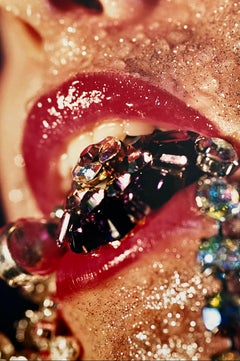
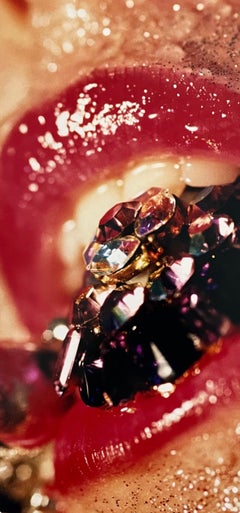
Marilyn Minter, Prism, 2009

Marilyn MinterMarilyn Minter, Prism, 2009, 2009

$19,600Sale Price|20% Off

H 20 in W 15.88 in

Marilyn Minter, Prism, 2009

By Marilyn Minter

Located in Fairfield, CT

This exquisite chromogenic print by Marilyn Minter (b. 1948), titled Prism, exemplifies the artist’s radical expansion of photo-real imagery into a realm of heightened sensuality, su...

Category

Early 2000s Pop Art Christian Rothmann Figurative Photography
Materials

C Print

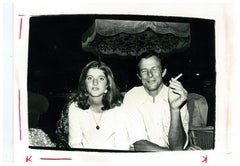
'James Dean, Elizabeth Taylor & Rock Hudson'

'James Dean, Elizabeth Taylor & Rock Hudson'

Located in London, GB

'James Dean, Elizabeth Taylor & Rock Hudson' From left -James Dean, Elizabeth Taylor and Rock Hudson, on the set of 'Giant,' 1956. (Photo: The Everett Co...

Category

1950s Modern Christian Rothmann Figurative Photography
Materials

C Print

Eric Clapton photograph (Eric Clapton Madison Square garden 1975)

Eric Clapton photograph (Eric Clapton Madison Square garden 1975)

By Fernando Natalici

Located in NEW YORK, NY

Eric Clapton Photograph by Fernando Natalici: A dreamy, classic photo of rock n roll & blues legend Eric Clapton captured at the world famous Madison Square Garden during the hirstor...

Category

1970s Pop Art Christian Rothmann Figurative Photography
Materials

C Print

Oscar Ennui - Faye Dunaway Reclining - Framed Hand Signed Limited Edition Print

Oscar Ennui - Faye Dunaway Reclining - Framed Hand Signed Limited Edition Print

By Terry O'Neill

Located in London, GB

Oscar Ennui - Faye Dunaway Reclining 1977 by Terry O;'Neill ( 1938 - 2019 ) Framed lifetime hand signed limited edition C print from terry O;'Neill's mo...

Category

1970s Modern Christian Rothmann Figurative Photography
Materials

C Print, Color

Bruce Springsteen photograph (the Bottom Line NYC 1975)

Bruce Springsteen photograph (the Bottom Line NYC 1975)

By Fernando Natalici

Located in NEW YORK, NY

Bruce Springsteen Photograph by Fernando Natalici A rare, striking photo of Bruce Springsteen at the age of 25 captured at The Bottom Line New York, 1975, by celebrated underground photographer, Fernando Natalici. Bruce and The East Street Band's 1975 shows at The Bottom Line were cited by Rolling Stone in 2004 as among the “50 Moments That Changed the History of Rock & Roll." Dimensions: 13 x 19 inches Medium: Archival Inkjet Print Hand signed & titled in ink from a limited edition of 25 Excellent condition Seller is a primary dealer rep of Fernando Natalici As Rolling Stone wrote... In August 1975, Bruce Springsteen and the E Street Band were booked to play ten shows at the tiny New York club the Bottom Line, near Washington Square Park in Greenwich Village. Springsteen was weeks away from releasing his third album, Born to Run, and his label, Columbia, invited more than 1,000 industry insiders to see what fans of the E Street Band's live shows had long known. As guitarist Steven Van...

Category

1970s Pop Art Christian Rothmann Figurative Photography
Materials

Inkjet

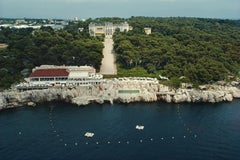
Hotel Du Cap-Eden-Roc -Slim Aarons - colour C print photography - 20th century

Hotel Du Cap-Eden-Roc -Slim Aarons - colour C print photography - 20th century

By Slim Aarons

Located in London, GB

'Hotel Du Cap-Eden-Roc' by Slim Aarons ESTATE EDITION - numbered and emboss stamped on front. (edition size 150 only) Waterskiing from the Hotel Du Cap-Eden-Roc in Cap d'Antibes, ...

Category

1960s Modern Christian Rothmann Figurative Photography
Materials

C Print

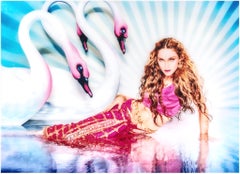
Madonna: Mythical Swans, Rolling Stone Magazine Portfolio, David LaChapelle

Madonna: Mythical Swans, Rolling Stone Magazine Portfolio, David LaChapelle

By David LaChapelle

Located in Fairfield, CT

Artist: David LaChapelle (1963) Title: Mythical Swans: Madonna, New York, Rolling Stone, 1998 Year: 1998 Medium: ​Chromogenic print, front-mounted to acrylic, flush-mounted to alumin...

Category

1990s Pop Art Christian Rothmann Figurative Photography
Materials

C Print

'Live And Let Die' 1973 Roger Moore

'Live And Let Die' 1973 Roger Moore

Located in London, GB

'Live And Let Die' 1973 Roger Moore and cast On set of the movie 'Live and Let Die' with Roger Moore as 007 James Bond, with Yaphet Kotto playing Che...

Category

1970s Modern Christian Rothmann Figurative Photography
Materials

C Print

"What?" - Limited Edition Fine Art Print

"What?" - Limited Edition Fine Art Print

By Plastic Jesus

Located in West Hollywood, CA

This entire series was inspired by a piece of graffiti by the street artist Banksy in the UK. Nick Stern - who ironically has been called the Banksy of Los Angeles and goes by the street name "Plastic Jesus" -decided to set himself the challenge to recreate the original Banksy graffiti with as much accuracy as possible, including the texture of the walls where the stencils were on and the windows on the buildings here in Los Angeles. Most were recreated “in situation”, without any photo shop. Only two works “The Maid” and “The Lovers” required minimal photoshop. Nick is English as is Banksy but based in Los Angeles so finding brick walls or a sash window was fun to find for the shoots. All photographs are printed to order and signed, with a certificate of authenticity signed by Wallspace. They are printed on 20”x16”paper with a border included - be aware that images may not all be exactly the same size as the imagery has different layouts. The paper size will be framed to the same size. The paper is a heavy weight fine art paper Entrada. fine art print...

Category

21st Century and Contemporary Street Art Christian Rothmann Figurative Photography
Materials

Archival Paper

Patti Smith photograph by Detroit photographer Leni Sinclair

Patti Smith photograph by Detroit photographer Leni Sinclair

By Leni Sinclair

Located in NEW YORK, NY

Patti Smith Ann Arbor, Michigan 1995: An intimate & charming photo of rock goddess Patti Smith by legendary Detroit photographer Leni Sinclair - Kresge Foundation's Eminent Artist of...

Category

1990s Pop Art Christian Rothmann Figurative Photography
Materials

Inkjet

Christian Rothmann figurative photography for sale on 1stDibs.
Find a wide variety of authentic Christian Rothmann figurative photography available for sale on 1stDibs. You can also browse by medium to find art by Christian Rothmann in c print and more. Much of the original work by this artist or collective was created during the 21st century and contemporary and is mostly associated with the Pop Art style. Not every interior allows for large Christian Rothmann figurative photography, so small editions measuring 9 inches across are available. Customers who are interested in this artist might also find the work of Nicholas Taylor, Alen Opsar, and Sergey Melnitchenko. Christian Rothmann figurative photography prices can differ depending upon medium, time period and other attributes. On 1stDibs, the price for these items starts at $1,125 and tops out at $1,125, while the average work can sell for $1,125.