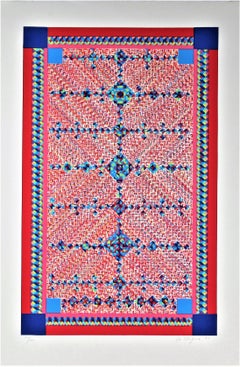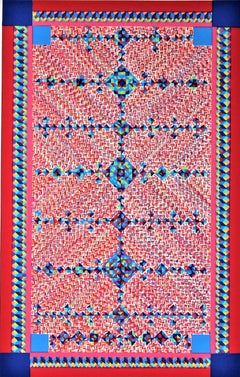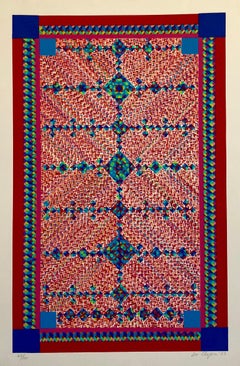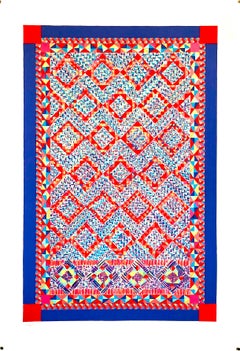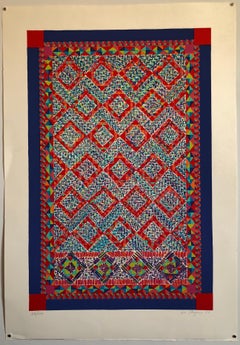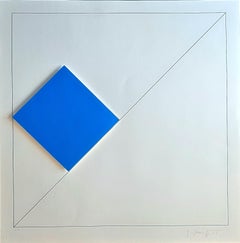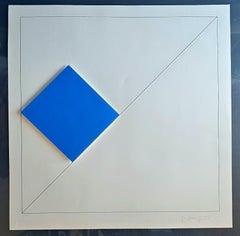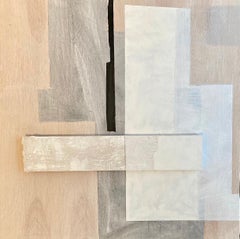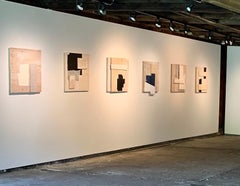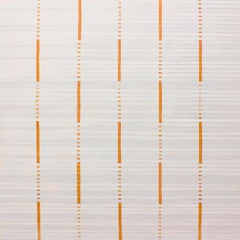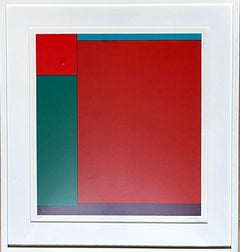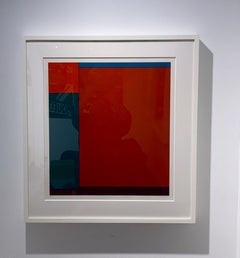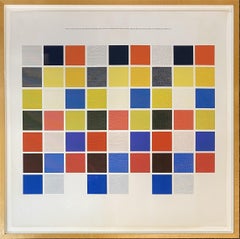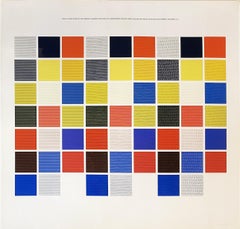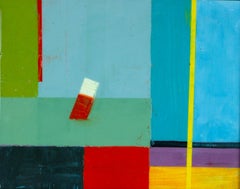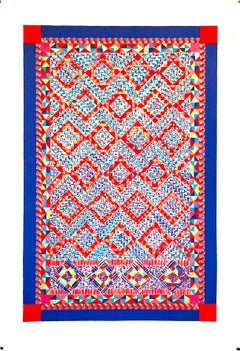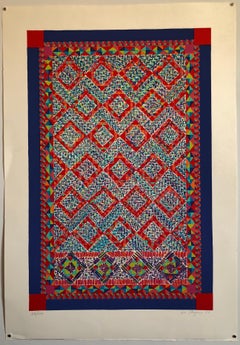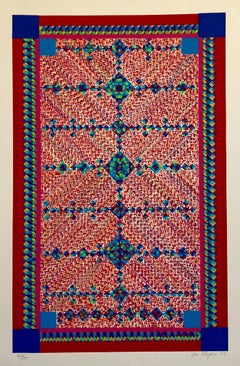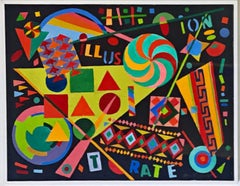
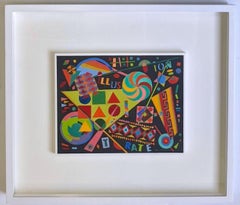
Dee ShapiroIllustrate Illusion, oil painting on panel, signed 2X Andre Zarre gallery Framed, 1990
$5,000
Illustrate Illusion, oil painting on panel, signed 2X Andre Zarre gallery Framed
By Dee Shapiro
Located in New York, NY
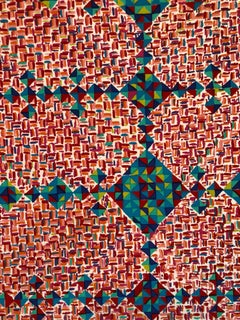
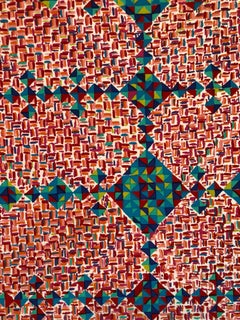
Dee Shapiro Illustrate Illusion, 1990 Oil painting on panel Signed twice: once on the front, and once on the back, with copyright, date and title Unique Oil on panel painting, unique Signed twice: once on the front, and once on the back, with copyright, date and title Provenance: Acquired from the estate of renowned New York art dealer Andre Zarre Frame included: Double framed in an elegant white wood museum quality frame Measurements: Framed 14.5 inches by 16.75 inches by 1.75 inches Artwork: 7.75 inches by 9.5 inches DEE SHAPIRO BIOGRAPHY Biography • Dee Shapiro (b. 1936) Dee Shapiro was born in Brooklyn, NY. She studied art and psychology in college, receiving both a BA and an MA from Queens College (1954-1960). There she studied color with abstract artist John Ferren. A semester in Mexico in 1956 introduced her to bright patterns and colors, as well as the murals of River, Orozco, and Siqueiros. From 1960 to 1968, Shapiro taught, got married, and raised kids. She still made time for art, taking painting classes with Richard Mayhew at the Brooklyn Museum. When she and her family moved to Great Neck in 1968, she founded Central Hall, the first women’s cooperative gallery in Long Island. Shapiro was also a contributor to Heresies, a feminist publication on art and politics. Shapiro explores the intersections of pattern, geometry, nature, and craft in her work. As a child, knitting instilled an interest in how patterns develop from small individual components into larger compositions, as well as the importance of counting and learning numerical patterns. Her first abstract paintings in the 1970s were based on mathematical concepts, particularly the Fibonacci sequence that generates the Golden Mean. Early works included arrangements of ordered tally marks in bright colors or gridded diagrams of the Fibonacci sequence. Shapiro soon moved to patterns that allowed her to use color intuitively within a grid. She built up the surface of the paintings by squeezing paint directly from the tube to create a woven or knitted texture. Shapiro was included in Pattern Painting at PS 1 in 1977, organized by noted curator John Perreault, which presented work by twenty-two artists working in the P&D Movement. The Everson Museum in Syracuse, NY organized a solo exhibition of her work in 1981. Her New York dealer was Andre Zarre. Shapiro was a member of the Criss-Cross Artist Collective, founded in 1974. The group originated in Boulder, CO as artists interested in Systemic Pattern Painting or Structuralism. The group expanded into New York, California and Europe with its art journal Criss-Cross Art Communications, published from 1974 to 1981. They aimed to foster group work, interaction, integration, and synthesis. The artists were interested in geometry and pattern yet worked in a variety of art forms including text, sound, film, and dance. What connected the artists were: a capacity for visual organization; valuing the importance of pattern on perception and knowledge; and a methodology of system, ordering, and counting. The artists that crossed over with the Pattern and Decoration Group were Dee Shapiro, Gloria Klein...
1990s Abstract Geometric Dee Shapiro Art
Oil, Panel