Gifford Beal Art

American, 1879-1956

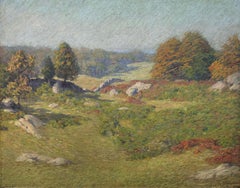
Gifford Beal, painter, etcher, muralist and teacher, was born in New York City in 1879. The son of landscape painter William Reynolds Beal, Beal began studying at William Merritt Chase's Shinnecock School of Art (the first established school of plein air painting in America) at the age of 13, when he accompanied his older brother, Reynolds, to summer classes. Beal remained a pupil of Chase's for 10 years also studying with him in New York City at the artist's private studio in the Tenth Street Studio Building. Later at his father's behest, Beal attended Princeton University from 1896–1900 while continuing his lessons with Chase. Upon graduation from Princeton, Beal took classes at the Art Students' League, studying with impressionist landscape painter Henry Ward Ranger and Boston academic painter Frank Vincent DuMond. Beal ended up as President of the Art Students League for 14 years, "a distinction unsurpassed by any other artist." Beal’s student days were spent entirely in this country. Given the opportunity to visit Paris en route to England in 1908, Beal chose to avoid it, he stated, "I didn't trust myself with the delightful life in ParisIt all sounded so fascinating and easy and loose." His subjects were predominately American and it has been said stylistically "his art is completely American." Beal achieved early recognition in the New York Art World. Beal became an associate member of the National Academy of Design in 1908 and was elected to full status as an academician in 1914. Beal was known for garden parties, circuses, landscapes, streets, coasts, flowers and marines. This diversity in subject matter created "no typical or characteristic style to his work." Beal's style was highly influenced by Chase and Childe Hassam, a long time friend of the Beal family who used to travel about the countryside with Beal in a car sketching local sights. Both Hassam and Chase were famous for their impressionist views of New York City and Connecticut and Long Island coastlines. Beal's early work reflects his acquaintance with these painters and focused on the city's commercial and industrial growth. Beal's major influence, however, remained Chase, whose "greatness" Beal attributed to the "sheer fullness of his nature, his store of energy" and his dedication to the profession of painting. "When the story of American art is finally told," Beal predicted, "Chase's name will be high on the list of the great." Regarding his use of color, one art critic wrote: "On the whole, he is inclined toward color that is rich and strong. The garden scenes have masses of deep and gleaming foliage over the gay scenes below. The circus pictures are resplendent in hue. He takes the rich green that crowns the cliffs at Montauk and with it gives depth and richness to their tawny sides. The ocean in Sword Fisherman is an intense blue, neither light nor dark and full of almost imperceptible shadings." Beal found early success with his views of the Hudson Valley where his family had an estate called Willellen in Newburgh, overlooking the Hudson River. A gifted technician and draftsman, Beal did considerable mural painting including seven panels portraying the life of scientist John Henry; North Country and Tropical Country, Department of the Interior building, Washington, D.C and others. Renewing an early interest for the sea, a subject he had favored during his student years, Beal started to achieve recognition for his marine landscapes. In 1921, Beal began spending most of his summers on the Massachusetts coast, first at Provincetown and then at Rockport. Both Beal and his brother Reynolds had a strong attraction to the sea. In the 1940s, Beal, never one to rest on his laurels made a dramatic stylistic change, his painting technique became freer as he replaced naturalistic perspective with an intricately patterned and flattened picture plane. These more decorative works echoed ancient Persian paintings as well as the work of Maurice and Charles Prendergast whose art Beal greatly admired. In the end, Beal adopted a "less objective" style that was high key and "utilizing softer edges." This new work was said to be influenced by Raoul Dufy. However many influences one may choose to cite in Beal's work this is secondary to the fact that Beal throughout his artistic career derived a strong personal statement in his art that was "fundamentally sound and aesthetically pleasing." Beal was a member of the American Academy of Arts and Letters, the American Institute of Arts and Letters, the Architectural League of America and the National Society of Mural Painters. His work can be found in numerous museums and public collections across the country. Beal passed away on Feb. 5th, 1956 at the age of 75 in New York City.

to
5
1
6
2
2
1
1
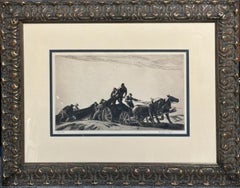
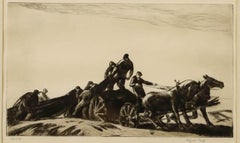
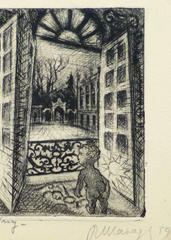
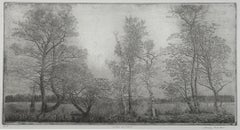
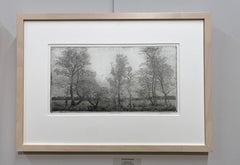
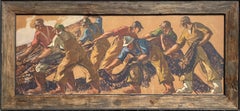
Gifford Beal, Net Wagon – Signed American Maritime Etching

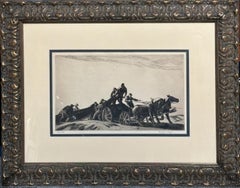
Gifford Beal, Net Wagon – Signed American Maritime Etching

By Gifford Beal

Located in Rockport, MA

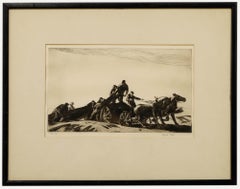
"Net Wagon" is a powerful etching by American artist Gifford Beal, depicting a group of fishermen hauling a heavy wagon of nets across a rugged coastal landscape, drawn by a team of ...

Category

20th Century American Impressionist Gifford Beal Art

Materials

Etching

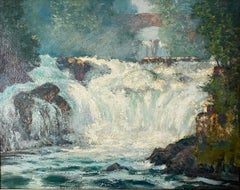
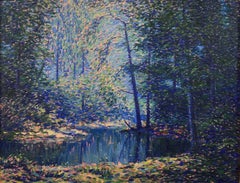
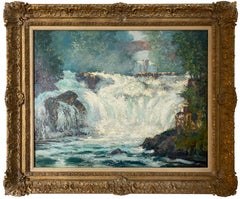
Waterfall Impressionist summer landscape

Waterfall Impressionist summer landscape

By Gifford Beal

Located in New York, NY

Gifford Beal is a very noted American artist represented in American museums and within the Impressionist and Post Impressionist era. Elegant and abstracted this has jewel tones and...

Category

Early 1900s Impressionist Gifford Beal Art

Materials

Canvas, Oil

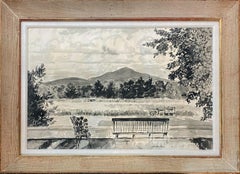
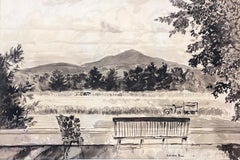
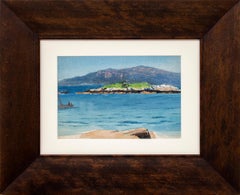
Mount Monadnock
Mount Monadnock

Mount Monadnock

By Gifford Beal

Located in Milford, NH

A fine monochromatic watercolor landscape painting of Mount Monadnock in New Hampshire by American artist Gifford Beal (1879-1956). Beal was b...

Category

Mid-20th Century American Impressionist Gifford Beal Art

Materials

Paper, Watercolor

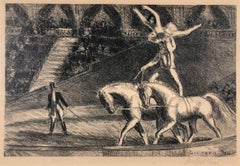
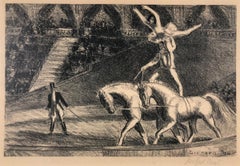
Bareback Act, Old Hippodrome

Bareback Act, Old Hippodrome

By Gifford Beal

Located in Missouri, MO

Gifford Beal (1879-1956) "Bareback Act, Old Hippodome" 1950 Lithograph Signed Lower Right With original Associated American Artists label verso image: 6 3/8 x 9 5/8 in. (16.2 x 24.6 cm) sheet: 12 x 16 in. (30.4 x 40.6 cm) framed: 17 x 20 in. Gifford Beal, painter, etcher, muralist, and teacher, was born in New York City in 1879. The son of landscape painter William Reynolds Beal, Gifford Beal began studying at William Merritt Chase's Shinnecock School of Art (the first established school of plein air painting in America) at the age of thirteen, when he accompanied his older brother, Reynolds, to summer classes. He remained a pupil of Chase's for ten years also studying with him in New York City at the artist's private studio in the Tenth Street Studio Building. Later at his father's behest, he attended Princeton University from 1896 to 1900 while still continuing his lessons with Chase. Upon graduation from Princeton he took classes at the Art Students' League, studying with impressionist landscape painter Henry Ward Ranger and Boston academic painter Frank Vincent DuMond. He ended up as President of the Art Students League for fourteen years, "a distinction unsurpassed by any other artist." His student days were spent entirely in this country. "Given the opportunity to visit Paris en route to England in 1908, he chose to avoid it" he stated, "I didn't trust myself with the delightful life in ParisIt all sounded so fascinating and easy and loose." His subjects were predominately American, and it has been said stylistically "his art is completely American." Gifford achieved early recognition in the New York Art World. He became an associate member of the National Academy of Design in 1908 and was elected to full status of academician in 1914. He was known for garden parties, circuses, landscapes, streets, coasts, flowers and marines. This diversity in subject matter created "no typical or characteristic style to his work." Beal's style was highly influenced by Chase and Childe Hassam, a long time friend of the Beal family who used to travel "about the countryside with Beal in a car sketching...

Category

1950s American Realist Gifford Beal Art

Materials

Lithograph

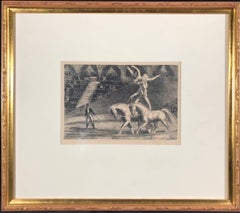
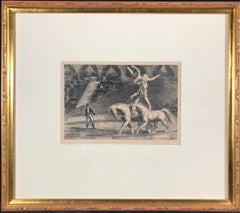
Bareback Act, Old Hippodrome

Bareback Act, Old Hippodrome

By Gifford Beal

Located in Missouri, MO

Bareback Act, Old Hippodrome By Gifford Beal (1879-1956) Signed Lower Right Unframed: 6.5" x 9.5" Framed: 17.5" x 20" Gifford Beal, painter, etcher, muralist, and teacher, was born in New York City in 1879. The son of landscape painter William Reynolds Beal, Gifford Beal began studying at William Merritt Chase's Shinnecock School of Art (the first established school of plein air painting in America) at the age of thirteen, when he accompanied his older brother, Reynolds, to summer classes. He remained a pupil of Chase's for ten years also studying with him in New York City at the artist's private studio in the Tenth Street Studio Building. Later at his father's behest, he attended Princeton University from 1896 to 1900 while still continuing his lessons with Chase. Upon graduation from Princeton he took classes at the Art Students' League, studying with impressionist landscape painter Henry Ward Ranger and Boston academic painter Frank Vincent DuMond. He ended up as President of the Art Students League for fourteen years, "a distinction unsurpassed by any other artist." His student days were spent entirely in this country. "Given the opportunity to visit Paris en route to England in 1908, he chose to avoid it" he stated, "I didn't trust myself with the delightful life in ParisIt all sounded so fascinating and easy and loose." His subjects were predominately American, and it has been said stylistically "his art is completely American." Gifford achieved early recognition in the New York Art World. He became an associate member of the National Academy of Design in 1908 and was elected to full status of academician in 1914. He was known for garden parties, circuses, landscapes, streets, coasts, flowers and marines. This diversity in subject matter created "no typical or characteristic style to his work." Beal's style was highly influenced by Chase and Childe Hassam, a long time friend of the Beal family who used to travel "about the countryside with Beal in a car sketching...

Category

20th Century American Modern Gifford Beal Art

Materials

Lithograph

Related Items
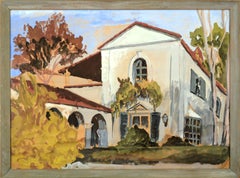
Mid Century California Mission Landscape

Mid Century California Mission Landscape

$600Sale Price|20% Off

H 18.5 in W 25 in D 1 in

Mid Century California Mission Landscape

Located in Soquel, CA

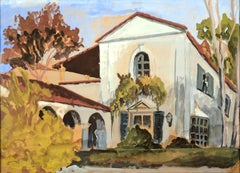
Beautiful mid century landscape of a historic California mission, highlighting its iconic architectural details such as a columned arches, white was...

Category

Mid-20th Century American Impressionist Gifford Beal Art

Materials

Paper, Gouache, Cardboard

"Oxidized Boxcar" Encaustic painting

"Oxidized Boxcar" Encaustic painting

Located in Denver, CO

Dale O Roberts' "Oxidized Boxcar" is an original, hand made encaustic painting that depicts a rusting boxcar in an industrial setting. About the artist: Born 1959 in Waterville NY, ...

Category

2010s American Impressionist Gifford Beal Art

Materials

Encaustic

Charles Partridge Adams California Coastal Watercolor, American Impressionist

Charles Partridge Adams California Coastal Watercolor, American Impressionist

By Charles Partridge Adams

Located in Denver, CO

This exquisite California coastal watercolor by American Impressionist Charles Partridge Adams (1858–1942) captures the serene beauty of the shoreline in vibrant hues of blue, green,...

Category

1920s American Impressionist Gifford Beal Art

Materials

Watercolor

Mount Shasta in Spring

Robert WagnerMount Shasta in Spring, c.1970

$1,600

H 34.25 in W 40.25 in D 3 in

Mount Shasta in Spring

Located in San Francisco, CA

This artwork Titled "Mount Shasta in Spring" c.1970 is an oil painting on canvas by California artist Robert Wagner. It is signed at the lower right corner by the artist. The canvas ...

Category

Late 20th Century American Impressionist Gifford Beal Art

Materials

Oil

Original 'The U. S. Marines Want You' vintage military recruiting poster

Original 'The U. S. Marines Want You' vintage military recruiting poster

Located in Spokane, WA

Original vintage poster: The U.S. Marines Want You. This military vintage poster is archival linen-backed and in fine condition, ready to frame. There is no date, artist, or printer'...

Category

1910s American Realist Gifford Beal Art

Materials

Lithograph

Amarillo By Morning - Desert Landscape Nature Painting on Handmade Paper

Amarillo By Morning - Desert Landscape Nature Painting on Handmade Paper

Located in Los Angeles, CA

Michaela Jean is an accomplished painter, devoted gardener, and mother from Southern California (USA). Her lifelong passion for art and nature began in childhood, inspired by her gra...

Category

2010s Impressionist Gifford Beal Art

Materials

Ink, Acrylic, Watercolor, Color Pencil, Mixed Media, Handmade Paper

Floating Lilies, Floral Impressionism Original oil Painting, Ready to Hang

Floating Lilies, Floral Impressionism Original oil Painting, Ready to Hang

By Vahe Yeremyan

Located in Granada Hills, CA

Artist: Vahe Yeremyan Title: Floating Lilies Medium: Oil on Canvas Year: 2025 Style: Impressionism Dimensions: 30" x 56" x 1" inch (76 x 142 x 3cm) Presentation: Unframed, Gallery Wr...

Category

2010s Impressionist Gifford Beal Art

Materials

Canvas, Oil

Southern Coast with Beach, Trees and Sailboat, Impressionistic Painting, 1920´s

Southern Coast with Beach, Trees and Sailboat, Impressionistic Painting, 1920´s

Located in Stockholm, SE

A Southern Coastal Landscape by Charles Bisschops. This oil on canvas, signed L. Ch. Bisschops, depicts a southern coastal scene with a beach bordered by trees. Across the bay, mount...

Category

1920s Impressionist Gifford Beal Art

Materials

Oil, Canvas

Vintage Colorado Ghost Town Oil Painting by Harold Skene, Western Landscape

Vintage Colorado Ghost Town Oil Painting by Harold Skene, Western Landscape

By Harold Vincent Skene

Located in Denver, CO

“Ghost Town” by Harold Skene (1883–1978) is a compelling vintage oil painting that evokes the quiet drama of Colorado’s mining past. This atmospheric Western landscape depicts a lone prospector and his pack mule standing among the weathered remnants of an abandoned mountain town. Set in late summer or early autumn, the scene is painted in a rich, earthy palette of golden yellows, sage greens, dusty pinks, and soft blues, capturing the stillness and solitude of the high desert West. Painted in oil on board, the work is signed by the artist at the lower right and titled and dated on the verso, underscoring its authenticity and historical value. Skene’s careful attention to structure and perspective reflects his architectural training, while his expressive handling of landscape conveys the emotional weight of a once-thriving community now reclaimed by nature. The painting measures 24 x 30 inches (image size) and is presented in a classic mahogany frame with overall dimensions of 30 x 35.5 x 2.75 inches, offering strong visual presence and immediate display appeal. A graduate of Harvard’s School of Architecture, Harold Skene studied at the Denver Art Academy and the Broadmoor Art Academy, and served as an assistant to noted Western artist Allen Tupper True...

Category

1960s American Impressionist Gifford Beal Art

Materials

Oil

1950s Denver Skyline Painting – Graphite & Watercolor Colorado Cityscape Art

1950s Denver Skyline Painting – Graphite & Watercolor Colorado Cityscape Art

Located in Denver, CO

A captivating midcentury cityscape titled "Denver Skyline", this original 1950s watercolor and graphite painting offers a rare industrial-era view of lower downtown Denver, Colorado....

Category

1950s American Impressionist Gifford Beal Art

Materials

Watercolor, Graphite

"Along The Creek" Point Pleasant Pike Bucks County Bucks County PA River Snow

"Along The Creek" Point Pleasant Pike Bucks County Bucks County PA River Snow

Located in New York, NY

A wonderful Impressionist winter pastoral scene of colorful quaint homes by the river. Willet has portrayed this piece in a most intimate, yet energetic way, and has packed much feel...

Category

20th Century American Impressionist Gifford Beal Art

Materials

Oil, Board

"Train Station, " Max Kuehne, Industrial City Scene, American Impressionism

"Train Station, " Max Kuehne, Industrial City Scene, American Impressionism

By Max Kuehne

Located in New York, NY

Max Kuehne (1880 - 1968) Train Station, circa 1910 Watercolor on paper 8 1/4 x 10 1/4 inches Signed lower right Provenance: Private Collection, Illinois Max Kuehne was born in Halle, Germany on November 7, 1880. During his adolescence the family immigrated to America and settled in Flushing, New York. As a young man, Max was active in rowing events, bicycle racing, swimming and sailing. After experimenting with various occupations, Kuehne decided to study art, which led him to William Merritt Chase's famous school in New York; he was trained by Chase himself, then by Kenneth Hayes Miller. Chase was at the peak of his career, and his portraits were especially in demand. Kuehne would have profited from Chase's invaluable lessons in technique, as well as his inspirational personality. Miller, only four years older than Kuehne, was another of the many artists to benefit from Chase's teachings. Even though Miller still would have been under the spell of Chase upon Kuehne's arrival, he was already experimenting with an aestheticism that went beyond Chase's realism and virtuosity of the brush. Later Miller developed a style dependent upon volumetric figures that recall Italian Renaissance prototypes. Kuehne moved from Miller to Robert Henri in 1909. Rockwell Kent, who also studied under Chase, Miller, and Henri, expressed what he felt were their respective contributions: "As Chase had taught us to use our eyes, and Henri to enlist our hearts, Miller called on us to use our heads." (Rockwell Kent, It's Me O Lord: The Autobiography of Rockwell Kent. New York: Dodd, Mead and Co., 1955, p. 83). Henri prompted Kuehne to search out the unvarnished realities of urban living; a notable portion of Henri's stylistic formula was incorporated into his work. Having received such a thorough foundation in art, Kuehne spent a year in Europe's major art museums to study techniques of the old masters. His son Richard named Ernest Lawson as one of Max Kuehne's European traveling companions. In 1911 Kuehne moved to New York where he maintained a studio and painted everyday scenes around him, using the rather Manet-like, dark palette of Henri. A trip to Gloucester during the following summer engendered a brighter palette. In the words of Gallatin (1924, p. 60), during that summer Kuehne "executed some of his most successful pictures, paintings full of sunlight . . . revealing the fact that he was becoming a colorist of considerable distinction." Kuehne was away in England the year of the Armory Show (1913), where he worked on powerful, painterly seascapes on the rocky shores of Cornwall. Possibly inspired by Henri - who had discovered Madrid in 1900 then took classes there in 1906, 1908 and 1912 - Kuehne visited Spain in 1914; in all, he would spend three years there, maintaining a studio in Granada. He developed his own impressionism and a greater simplicity while in Spain, under the influence of the brilliant Mediterranean light. George Bellows convinced Kuehne to spend the summer of 1919 in Rockport, Maine (near Camden). The influence of Bellows was more than casual; he would have intensified Kuehne's commitment to paint life "in the raw" around him. After another brief trip to Spain in 1920, Kuehne went to the other Rockport (Cape Ann, Massachusetts) where he was accepted as a member of the vigorous art colony, spearheaded by Aldro T. Hibbard. Rockport's picturesque ambiance fulfilled the needs of an artist-sailor: as a writer in the Gloucester Daily Times explained, "Max Kuehne came to Rockport to paint, but he stayed to sail." The 1920s was a boom decade for Cape Ann, as it was for the rest of the nation. Kuehne's studio in Rockport was formerly occupied by Jonas Lie. Kuehne spent the summer of 1923 in Paris, where in July, André Breton started a brawl as the curtain went up on a play by his rival Tristan Tzara; the event signified the demise of the Dada movement. Kuehne could not relate to this avant-garde art but was apparently influenced by more traditional painters — the Fauves, Nabis, and painters such as Bonnard. Gallatin perceived a looser handling and more brilliant color in the pictures Kuehne brought back to the States in the fall. In 1926, Kuehne won the First Honorable Mention at the Carnegie Institute, and he re-exhibited there, for example, in 1937 (Before the Wind). Besides painting, Kuehne did sculpture, decorative screens, and furniture work with carved and gilded molding. In addition, he designed and carved his own frames, and John Taylor Adams encouraged Kuehne to execute etchings. Through his talents in all these media he was able to survive the Depression, and during the 1940s and 1950s these activities almost eclipsed his easel painting. In later years, Kuehne's landscapes and still-lifes show the influence of Cézanne and Bonnard, and his style changed radically. Max Kuehne died in 1968. He exhibited his work at the National Academy of Design, the Art Institute of Chicago, the Carnegie Institute in Pittsburgh, the Memorial Art Gallery of the University of Rochester, and in various New York City galleries. Kuehne's works are in the following public collections: the Detroit Institute of Arts (Marine Headland), the Whitney Museum (Diamond Hill...

Category

1910s American Impressionist Gifford Beal Art

Materials

Paper, Watercolor

Previously Available Items
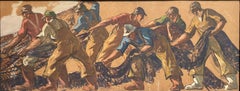
Hauling The Nets
Hauling The Nets

Gifford BealHauling The Nets

Sold

H 43 in W 93.5 in D 2 in

Hauling The Nets

By Gifford Beal

Located in Milford, NH

A wonderful huge WPA painting of working fishermen hauling the nets by American artist Gifford Beal (1879-1956). Beal was born in New York City The son of landscape painter William R...

Category

Early 20th Century Impressionist Gifford Beal Art

Materials

Oil, Panel

"Beach, Haiti, " Gifford Beal, Sunny Seascape Resort, American Impressionist

"Beach, Haiti, " Gifford Beal, Sunny Seascape Resort, American Impressionist

By Gifford Beal

Located in New York, NY

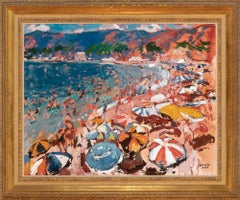
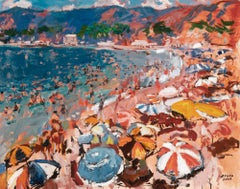
Gifford Beal (1879 - 1956) Beach, Haiti, 1954 Oil on canvas 28 x 36 inches Signed lower right Provenance: Estate of the artist Kraushaar Gallery, New York Exhibited: Youngstown, OH, Butler Institute of American Art, 1955 Lincoln, MA, DeCordova and Dana Museum, 1955 New York, American Academy of Arts and Letters, 1956 and 1960 Fitchburg, MA, Fitchburg Art Museum, 1960 New York, Art Dealers Association of America, 1963 New York, Art Students League, 1975, New York, Kraushaar Galleries, Gifford Beal (1879-1956): Retrospective Exhibition of Paintings, Apr. 29 - May 29, 1975, no. 36 New York, Kraushaar Galleries, Gifford Beal (1879-1956): A Centennial Exhibition, Nov. 6 - Dec. 1, 1979, no. 26 Gifford Beal, painter, etcher, muralist, and teacher, was born in New York City in 1879. The son of landscape painter William Reynolds Beal, Gifford Beal began studying at William Merritt Chase's Shinnecock School of Art (the first established school of plein air painting in America) at the age of thirteen, when he accompanied his older brother, Reynolds, to summer classes. He remained a pupil of Chase's for ten years also studying with him in New York City at the artist's private studio in the Tenth Street Studio Building. Later at his father's behest, he attended Princeton University from 1896 to 1900 while still continuing his lessons with Chase. Upon graduation from Princeton he took classes at the Art Students' League, studying with impressionist landscape painter Henry Ward Ranger and Boston academic painter Frank Vincent DuMond. He ended up as President of the Art Students League for fourteen years, "a distinction unsurpassed by any other artist." His student days were spent entirely in this country. "Given the opportunity to visit Paris en route to England in 1908, he chose to avoid it" he stated, "I didn't trust myself with the delightful life in ParisIt all sounded so fascinating and easy and loose." His subjects were predominately American, and it has been said stylistically "his art is completely American." Gifford achieved early recognition in the New York Art World. He became an associate member of the National Academy of Design in 1908 and was elected to full status of academician in 1914. He was known for garden parties, circuses, landscapes, streets, coasts, flowers and marines. This diversity in subject matter created "no typical or characteristic style to his work." Beal's style was highly influenced by Chase and Childe Hassam, a long time friend of the Beal family who used to travel "about the countryside with Beal in a car sketching...

Category

1920s American Impressionist Gifford Beal Art
Materials

Canvas, Oil

Gifford Beal art for sale on 1stDibs.
Find a wide variety of authentic Gifford Beal art available for sale on 1stDibs. You can also browse by medium to find art by Gifford Beal in paint, canvas, fabric and more. Much of the original work by this artist or collective was created during the 20th century and is mostly associated with the Impressionist style. Not every interior allows for large Gifford Beal art, so small editions measuring 10 inches across are available. Customers who are interested in this artist might also find the work of William Lester Stevens, Frank Vincent Dumond, and Wilson Henry Irvine. Gifford Beal art prices can differ depending upon medium, time period and other attributes. On 1stDibs, the price for these items starts at $1,200 and tops out at $36,000, while the average work can sell for $19,950.
Artists Similar to Gifford Beal