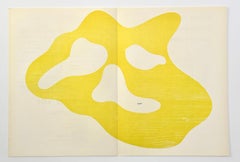
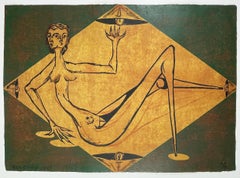
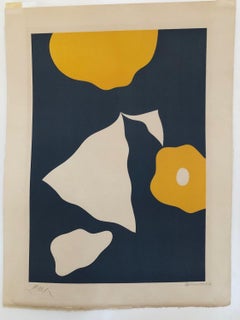
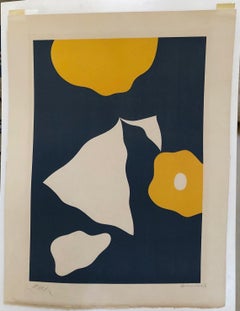
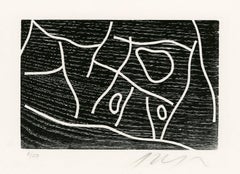
original woodcut
By Jean (Hans) Arp
Located in Henderson, NV
Medium: original color woodcut. Printed in 1948 and published in New York by Wittenborn and Schultz. Size: 10 x 7 1/4 inches (253 x 186 mm). Not signed.
1940s Jean (Hans) Arp Art
Woodcut
original woodcut
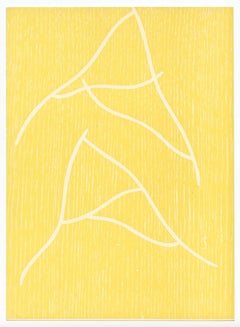
By Jean (Hans) Arp
Located in Henderson, NV
Medium: original color woodcut. Printed in 1948 and published in New York by Wittenborn and Schultz. Size: 10 x 7 1/4 inches (253 x 186 mm). Not signed.
Woodcut
original woodcut
By Jean (Hans) Arp
Located in Henderson, NV
Medium: original woodcut. Printed in 1950 for the art revue Derriere le Miroir (issue number 33) and published in Paris by Maeght. Size: 15 x 21 3/4 inches (377 x 553 mm). There is a...
Woodcut
untitled ( Pikachu Pokémon )
Located in New York, NY
untitled woodcut by Kjell Otterness from the early 2000s printed in an edition of 6. Pickachu Pokémon
Woodcut
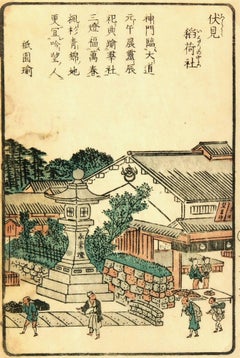
Japanese Woodblock - Street Scene
Located in Houston, TX
Lively Japanese woodblock print featuring street life. Ink on paper, circa 1860. Original artwork on paper displayed on a white mat with a gold ...
Paper, Woodcut
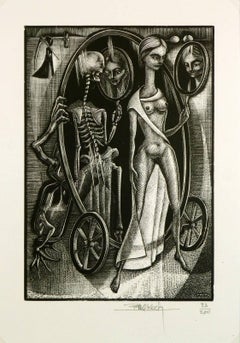
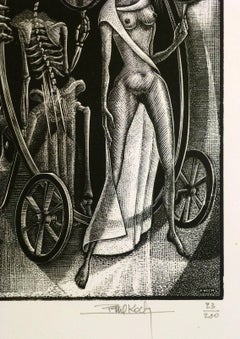
Female Figure and Skeletal Woodcut
By Paul Koch
Located in Houston, TX
Woodcut of female figure and skeleton by English artist Paul Koch, 1964. Signed lower right. 23/200 Original artwork on paper displayed on a white mat with a gold border. Mat fits ...
Woodcut
$7,718
H 9.26 in W 9.73 in
Karl Schmidt-Rottluff Haus mit Pappeln 1913 Woodcut German Expressionism
Located in Eltville am Rhein, DE
Karl Schmidt-Rottluff 1884 Rottluff - 1976 Berlin Haus mit Pappeln, 1913 Woodcut on firm brownish paper Signed in pencil lower right Image: 23.5 x 24.7 cm Frame: 51 x 61 cm Publishe...
Woodcut
$3,800
H 8.75 in W 19 in
Bronc by Lon Megargee, Woodblock Print ca. 1920s with Handmade Saguaro Rib Frame
Located in Phoenix, AZ
SHIPPING CHARGES INCLUDE SHIPPING, PACKAGING & **INSURANCE** Bronc by Lon Megargee, Woodblock Print ca. 1920s Handmade Saguaro Rib Frame, double linen mat, museum archival materials Bronc Woodblock Print, signed in print Image: 8 3/4 x 9 7/8 inches Frame: 21 x 20 inches SHIPPING CHARGES INCLUDES, SHIPPING, PACKAGING & INSURANCE FINE ART ESTATE OF LON MEGARGEE Megargee Custom Handmade Saguaro Frame We offer signed in print and original signature block prints. Custom, hand carved, signature frames, with archival standards and a speciality in hand dyed mats and french matting are provided for a beautiful and timeless presentation. Free shipping Continental US Biography Megargee explored different mediums; printmaking captivated him in particular. The contrast of the black and white block print method captured perfectly his interpretation of a bold American West. The first print was produced around 1921 and culminated with the creation of “The Cowboy Builds a Loop” in 1933 with 28 images and poetry by his friend, Roy George. Megargee continued producing prints throughout the 1940s and early 50s. Creator of the iconic logo for the Stetson Hat Company, " Last Drop From his Stetson", still in use today. Fine Art Estate of Lon Megargee At age 13, Lon Megargee came to Phoenix in 1896 following the death of his father in Philadelphia. For several years he resided with relatives while working at an uncle’s dairy farm and at odd jobs. He returned to Philadelphia in 1898 – 1899 in order to attend drawing classes at the Pennsylvania Academy of the Fine Arts. Back in Phoenix in 1899, he decided at the age of 16 to try to make his living as a cowboy. Lon moved to the cow country of Wickenburg where he was hired by Tex Singleton’s Bull Ranch. He later joined the Three Bar Ranch . . . and, after a few years, was offered a job by Billy Cook...
Woodcut
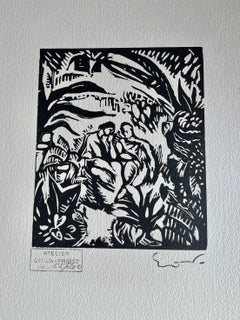
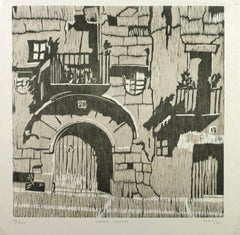
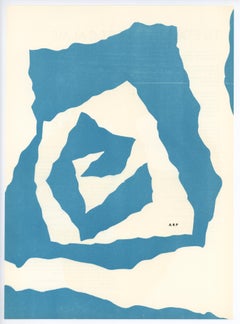
Maison Typique Doorways
Located in Houston, TX
Delightful French woodcut titled "Maison Typique", 1981. Signed and dated lower right. 66/200 Original artwork on paper displayed on a white mat with...
Woodcut
$2,900
H 11 in W 11 in
Hopi by Lon Megargee, Original Signed Block Print ca. 1920s
Located in Phoenix, AZ
Title: Hopi ca. 1920s Artist: Lon Megargee Medium: Block Print Size: 11 x 11 inches (Sight Measurement) SHIPPING CHARGES INCLUDE SHIPPING, PACKAGING & INSURANCE Creator of Stetson's hat logo "Last Drop from his Hat" Image of Lon Megargee not included in purchase. Lon Megargee 1883 - 1960 At age 13, Lon Megargee came to Phoenix in 1896 following the death of his father in Philadelphia. For several years he resided with relatives while working at an uncle’s dairy farm and at odd jobs. He returned to Philadelphia in 1898 – 1899 in order to attend drawing classes at the Pennsylvania Academy of the Fine Arts. Back in Phoenix in 1899, he decided at the age of 16 to try to make his living as a cowboy. Lon moved to the cow country of Wickenburg, Arizona where he was hired by Tex Singleton’s Bull Ranch. He later joined the Three Bar R. . . and after a few years, was offered a job by Billy Cook of the T.T. Ranch near New River. By 1906, Megargee had learned his trade well enough to be made foreman of Cook’s outfit. Never shy about taking risks, Lon soon left Cook to try his own hand at ranching. He partnered with a cowpuncher buddy, Tom Cavness, to start the El Rancho Cinco Uno at New River. Unfortunately, the young partners could not foresee a three-year drought that would parch Arizona, costing them their stock and then their hard-earned ranch. Breaking with his romantic vision of cowboy life, Megargee finally turned to art full time. He again enrolled at the Pennsylvania Academy of Art and then the Los Angeles School of Art and Design during 1909 – 1910. The now well-trained student took his first trip to paint “en plein air” (outdoors) to the land of Hopi and Navajo peoples in northern Arizona. After entering paintings from this trip in the annual Territorial Fair at Phoenix, in 1911, he surprisingly sold his first oil painting to a major enterprise – the Santa Fe Railroad . . . Lon received $50 for “Navajos Watching the Santa Fe Train.” He soon sold the SFRR ten paintings over the next two years. For forty years the railroad was his most important client, purchasing its last painting from him in 1953. In a major stroke of good fortune during his early plein-air period, Megargee had the opportunity to paint with premier artist, William R. Leigh (1866 – 1955). Leigh furnished needed tutoring and counseling, and his bright, impressionistic palette served to enhance the junior artist’s sense of color and paint application. In a remarkable display of unabashed confidence and personable salesmanship, Lon Megargee, at age 30, forever linked his name with Arizona art history. Despite the possibility of competition from better known and more senior artists, he persuaded Governor George Hunt and the Legislature in 1913 to approve 15 large, historic and iconic murals for the State Capitol Building in Phoenix. After completing the murals in 1914, he was paid the then princely sum of roughly $4000. His Arizona statehood commission would launch Lon to considerable prominence at a very early point in his art career. Following a few years of art schooling in Los Angeles, and several stints as an art director with movie studios, including Paramount, Megargee turned in part to cover illustrations for popular Western story magazines in the 1920s. In the 1920s, as well, Lon began making black and white prints of Western types and of genre scenes from woodblocks. These prints he generally signed and sold singly. In 1933, he published a limited edition, signed and hard-cover book (about 250 copies and today rare)containing a group of 28 woodblock images. Titled “The Cowboy Builds a Loop,” the prints are noteworthy for strong design, excellent draftsmanship, humanistic and narrative content, and quality. Subjects include Southwest Indians and cowboys, Hispanic men and women, cattle, horses, burros, pioneers, trappers, sheepherders, horse traders, squaw men and ranch polo players. Megargee had a very advanced design sense for simplicity and boldness which he demonstrated in how he used line and form. His strengths included outstanding gestural (action) art and strong figurative work. He was superb in design, originality and drawing, as a study of his prints in the Hays collection reveals. In 1944, he published a second group of Western prints under the same title as the first. Reduced to 16 images from the original 28 subjects, and slightly smaller, Lon produced these prints in brown ink on a heavy, cream-colored stock. He designed a sturdy cardboard folio to hold each set. For the remainder of his life, Lon had success selling these portfolios to museum stores, art fairs and shows, and to the few galleries then selling Western art. Drawing on real working and life experiences, Lon Megargee had a comprehensive knowledge, understanding and sensitivity for Southwestern subject matter. Noted American modernist, Lew Davis...
Woodcut
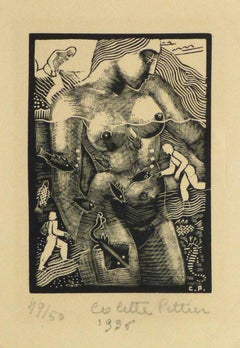
French Woodcut - La Mer et Les Fleuves
By Colette Pettier
Located in Houston, TX
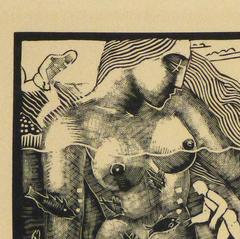
Absorbing black and white woodcut of a nude female figure in the water surrounded by sea life and small figures by French artist Colette Pettier, 1936. Signed, dated and numbered 49 ...
Ink, Paper, Woodcut
Touching and Tasting
By Barbara Kuebel
Located in New Orleans, LA
Edition 1/5 BARBARA KUEBEL is a Daphne, AL-based artist who uses oil and pencil for her works on paper and on canvas. She was born and raised in Austria and earned two art degrees f...
Paper, Woodcut
Unavailable|$11,597
H 18.51 in W 23.23 in
Small Steamers 1911, colour woodcut Signed German Expressionist
By Max Pechstein
Located in Eltville am Rhein, DE
Hermann Max Pechstein Zwickau 1881 - 1955 Berlin Kleine Dampfer 1911 / Small Steamboats, 1911 Colour woodcut on yellow-greenish clay printing plate on vellum Signed and dated in penc...
Woodcut
The Sheepherder by Lon Megargee
Located in Phoenix, AZ
Lon Megargee 1883-1960 "The Sheepherder" Wood block print Signed in plate, lower right Image size: 10 x 10 inches Frame size 22 x 22 inches Creator of Stetson's hat logo "Last Drop from his Hat" Lon Megargee 1883 - 1960 At age 13, Lon Megargee came to Phoenix in 1896 following the death of his father in Philadelphia. For several years he resided with relatives while working at an uncle’s dairy farm and at odd jobs. He returned to Philadelphia in 1898 – 1899 in order to attend drawing classes at the Pennsylvania Academy of the Fine Arts. Back in Phoenix in 1899, he decided at the age of 16 to try to make his living as a cowboy. Lon moved to the cow country of Wickenburg, Arizona where he was hired by Tex Singleton’s Bull Ranch. He later joined the Three Bar R. . . and after a few years, was offered a job by Billy Cook of the T.T. Ranch near New River. By 1906, Megargee had learned his trade well enough to be made foreman of Cook’s outfit. Never shy about taking risks, Lon soon left Cook to try his own hand at ranching. He partnered with a cowpuncher buddy, Tom Cavness, to start the El Rancho Cinco Uno at New River. Unfortunately, the young partners could not foresee a three-year drought that would parch Arizona, costing them their stock and then their hard-earned ranch. Breaking with his romantic vision of cowboy life, Megargee finally turned to art full time. He again enrolled at the Pennsylvania Academy of Art and then the Los Angeles School of Art and Design during 1909 – 1910. The now well-trained student took his first trip to paint “en plein air” (outdoors) to the land of Hopi and Navajo peoples in northern Arizona. After entering paintings from this trip in the annual Territorial Fair at Phoenix, in 1911, he surprisingly sold his first oil painting to a major enterprise – the Santa Fe Railroad . . . Lon received $50 for “Navajos Watching the Santa Fe Train.” He soon sold the SFRR ten paintings over the next two years. For forty years the railroad was his most important client, purchasing its last painting from him in 1953. In a major stroke of good fortune during his early plein-air period, Megargee had the opportunity to paint with premier artist, William R. Leigh (1866 – 1955). Leigh furnished needed tutoring and counseling, and his bright, impressionistic palette served to enhance the junior artist’s sense of color and paint application. In a remarkable display of unabashed confidence and personable salesmanship, Lon Megargee, at age 30, forever linked his name with Arizona art history. Despite the possibility of competition from better known and more senior artists, he persuaded Governor George Hunt and the Legislature in 1913 to approve 15 large, historic and iconic murals for the State Capitol Building in Phoenix. After completing the murals in 1914, he was paid the then princely sum of roughly $4000. His Arizona statehood commission would launch Lon to considerable prominence at a very early point in his art career. Following a few years of art schooling in Los Angeles, and several stints as an art director with movie studios, including Paramount, Megargee turned in part to cover illustrations for popular Western story magazines in the 1920s. In the 1920s, as well, Lon began making black and white prints of Western types and of genre scenes from woodblocks. These prints he generally signed and sold singly. In 1933, he published a limited edition, signed and hard-cover book (about 250 copies and today rare)containing a group of 28 woodblock images. Titled “The Cowboy Builds a Loop,” the prints are noteworthy for strong design, excellent draftsmanship, humanistic and narrative content, and quality. Subjects include Southwest Indians and cowboys, Hispanic men and women, cattle, horses, burros, pioneers, trappers, sheepherders, horse traders, squaw men and ranch polo players. Megargee had a very advanced design sense for simplicity and boldness which he demonstrated in how he used line and form. His strengths included outstanding gestural (action) art and strong figurative work. He was superb in design, originality and drawing, as a study of his prints in the Hays collection reveals. In 1944, he published a second group of Western prints under the same title as the first. Reduced to 16 images from the original 28 subjects, and slightly smaller, Lon produced these prints in brown ink on a heavy, cream-colored stock. He designed a sturdy cardboard folio to hold each set. For the remainder of his life, Lon had success selling these portfolios to museum stores, art fairs and shows, and to the few galleries then selling Western art. Drawing on real working and life experiences, Lon Megargee had a comprehensive knowledge, understanding and sensitivity for Southwestern subject matter. Noted American modernist, Lew Davis...
Woodcut
Tracking a place
By Barbara Kuebel
Located in New Orleans, LA
Edition 1/3 BARBARA KUEBEL is a Daphne, AL-based artist who uses oil and pencil for her works on paper and on canvas. She was born and raised in Austria and earned two art degrees f...
Paper, Woodcut
original etching for Paroles Peintes
By Jean (Hans) Arp
Located in Henderson, NV
Medium: original etching. Executed in 1965 for the deluxe limited edition "Paroles Peintes II" portfolio, published in Paris by Lazar-Vernet. A rich impression with plate tone, one o...
Etching
Composition aux cinq formes
By Jean (Hans) Arp
Located in Greenwich, CT
Hans (Jean) Arp (French/Swiss, 1886-1966) titled : "Constellation de cinq formes" - 1956 Lithograph in colors handsigned by the artist l.l. and inscribed ‘épreuve d’artiste’ l.r...
Lithograph
original woodcut
By Jean (Hans) Arp
Located in Henderson, NV
Medium: original woodcut. Printed in 1950 for the art revue Derriere le Miroir (issue number 33) and published in Paris by Maeght. Size: 15 x 11 inches (377 x 277 mm). There is print...
Woodcut
'Signes' — Mid-Century Modernist Abstraction
By Jean (Hans) Arp
Located in Myrtle Beach, SC
Jean Arp, Signes, woodcut, edition 50, 1949. A fine, black impression, with all the fine lines printing clearly, on cream wove paper; the full sheet with wide margins (1 5/8 to 6 7/8 inches), in excellent condition. Signed and numbered '8/50' in pencil. Matted to museum standards, unframed. ABOUT THE ARTIST Jean Arp was born Hans Arp on September 16, 1886, in Strassburg. In 1904, after leaving the Ecole des Arts et Métiers, Strasbourg, he visited Paris and published his poetry for the first time. From 1905 to 1907, Arp studied at the Kunstschule, Weimar, and in 1908 went to Paris, where he attended the Académie Julian. In 1909, he moved to Switzerland and in 1911 was a founder of the Moderner Bund group there. The following year, he met Robert and Sonia Delaunay in Paris and Vasily Kandinsky in Munich. Arp participated in the Erste deutsche Herbstsalon in 1913 at the gallery Der Sturm, Berlin. After returning to Paris in 1914, he became acquainted with Guillaume Apollinaire, Max Jacob, Amadeo Modigliani, and Pablo Picasso. In 1915, he moved to Zurich, where he executed collages and tapestries, often in collaboration with his future wife Sophie Taeuber (who became known as Sophie Taeuber-Arp after they married in 1922). In 1916, Hugo Ball...
Woodcut