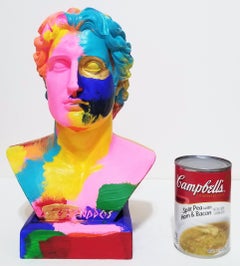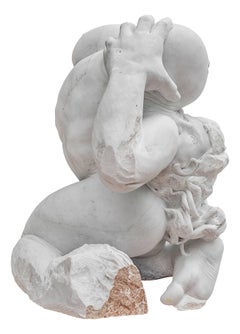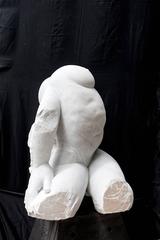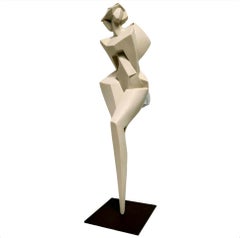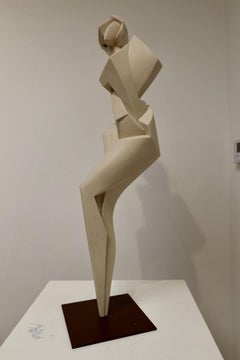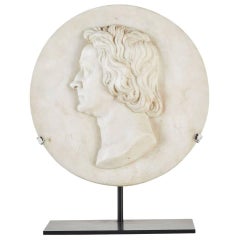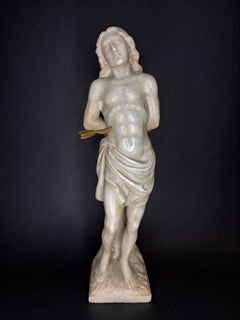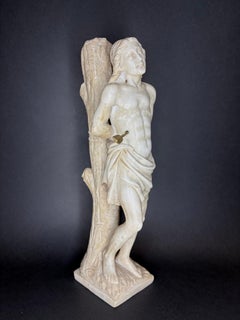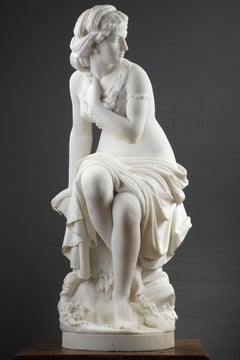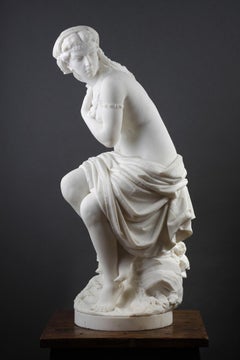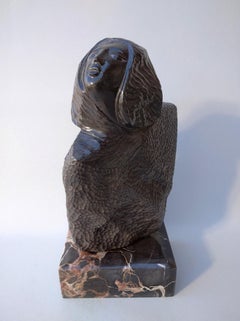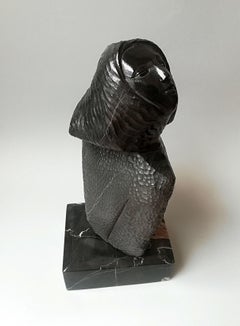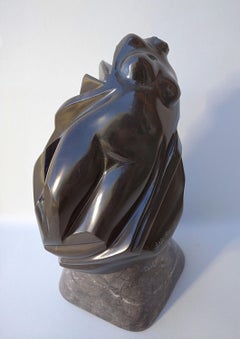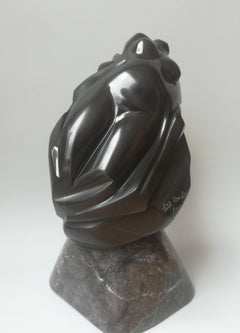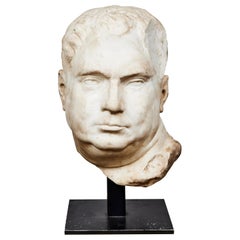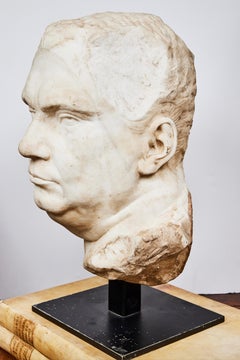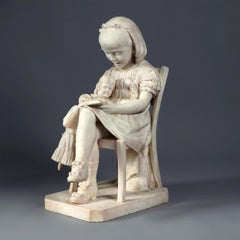
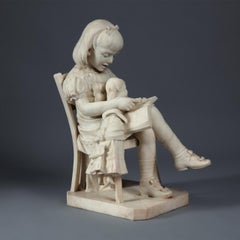
L. Tolducci Figurative Sculptures

to
1
Overall Width
to
Overall Height
to
1
1
1
1
1
1
1
1
140
103
92
72
1
Artist: L. Tolducci
Related Items
Inspiration
Inspiration

Inspiration

Located in Los Angeles, CA

Beautiful Art Nouveau marble. Campagne, Pierre Étienne Daniel French , 19th century , male. Active in Paris. Born 1851 , in Gontaud (Lot-et-Garonne). S...

Category

1890s Art Nouveau L. Tolducci Figurative Sculptures

Materials

Marble
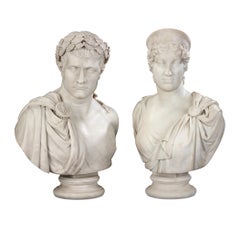
Art Nouveau sculpture “Woman blowing bubbles”, Bronze and marble, Germany

Art Nouveau sculpture “Woman blowing bubbles”, Bronze and marble, Germany

Located in Valladolid, ES

Gorgeous Sculpture “Woman blowing bubbles”, Bronze and marble, Art Nouveau, 1920 – Germany Refined antique solid bronze sculpture depicting a woman blowing bubbles. This piece is of...

Category

1920s Art Nouveau L. Tolducci Figurative Sculptures

Materials

Marble, Bronze

Heavy Bronze Sculpture Austrian Israeli judaica Jewish Couple Bench Nicky Imber

Heavy Bronze Sculpture Austrian Israeli judaica Jewish Couple Bench Nicky Imber

By Nicky Imber

Located in Surfside, FL

Large and heavy with magnificent patina. This is the large version of this piece. we cannot find any markings on it and it might be unique. Nicky Imber (Vienna, Austria, 1920 -1996) was a multidisciplinary Jewish artist best known for his sculptures on Jewish themes. Grand nephew of Naftali Herz Imber, author of the Israeli national anthem 'Hatikva'. After escaping the Nazi concentration camp in Dachau, he pledged to dedicate his art to perpetuating the memory of the Holocaust. Among his more famous works are "The Hope" and "The Love of Torah". His work can be seen around the world, in Northern Israel, the United States, and the Venezuelan Museum of Natural History in Caracas. Nicky Imber was born in Vienna, Austria. During his studies at the Academy of Arts in Vienna, he drew anti-Nazi caricatures for Jewish student publications. After several thwarted attempts by the family to leave Vienna, in 1938, in the wake of the 'Anschluss', Imber was deported to Dachau. Witnessing the murders of family and friends, he plotted his escape. Using skills he had learned in art school, he made a face mask out of bread and sand, stole a Nazi soldier's uniform and walked out the front gate unnoticed. In 1940, he boarded a ship headed to Haifa. The ship's passengers were refused entry by the British mandatory authorities and imprisoned in a detention camp in Mauritius. In 1943, Imber worked out a deal with the authorities for his release by joining the British Army, serving as a war artist and a dental assistant in East Africa. After the war, he opened an art school in Nairobi, Kenya, and worked as a photographer and a safari guide. In 1949 to 1954, he lived in Venezuela, where he was contracted to do an East African Diorama series. The National Museum added an entire wing to display it. During this period he got married and had a daughter Raquel, who accompanied and assisted him. In 1959, Imber was commissioned to create sculptures and dioramas for the Haifa Prehistory Museum at Gan Ha-em in Haifa, Israel. In 1960 he returned to Venezuela to restaured the Phelps series of Dioramas for the Museum in Caracas. Between 1961 and 1971 he travelled extensively around Europe and after establishing an international name for himself, returned to the United States. In New York he became famous for his realistic oil paintings of portraits of Aga Khan, Tyrone Power, Ava Gardner, David Ben-Gurion, Golda Meir, Sir Richard Burton...

Category

Mid-20th Century Post-Impressionist L. Tolducci Figurative Sculptures

Materials

Marble, Bronze

Allan Houser Marble Sculpture - Two Figures

Allan Houser Marble Sculpture - Two Figures

By Allan Houser

Located in Phoenix, AZ

Wonderful sculpture of two figures by Native American artist Allan Houser (1914-1994). The work is in excellent condition and measures 19 1/2"h x 12"w x 9"deep. His signature is seen...

Category

Late 20th Century L. Tolducci Figurative Sculptures

Materials

Marble
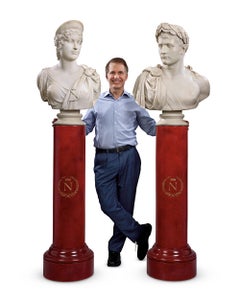
Allegory of Love
Allegory of Love

Albert-Ernest Carrier-BelleuseAllegory of Love, 1868

Unavailable|$17,066

H 26.97 in W 9.85 in D 7.49 in

Allegory of Love

By Albert-Ernest Carrier-Belleuse

Located in PARIS, FR

Allegory of Love by Albert-Ernest CARRIER-BELLEUSE (1824-1887) A sculpted group in white Carrara marble signed "A. Carrier" and dated "1868" France 1868 height 68,5 cm width 25 cm...

Category

1860s French School L. Tolducci Figurative Sculptures

Materials

Marble
Sleeping Owl, Bronze Sculpture by Antonovici - Brancusi's Protege

Sleeping Owl, Bronze Sculpture by Antonovici - Brancusi's Protege

By Constantin Antonovici

Located in Long Island City, NY

Artist: Constantin Antonovici, Romanian (1911 - 2002) Title: Sleeping Owl Year: 1947 Medium: Bronze with Patina on Marble Base, signature and number inscribed Edition: 1/9 Size: 29 i...

Category

1940s Modern L. Tolducci Figurative Sculptures

Materials

Marble, Bronze

Song of Zorba, Bronze Sculpture by Anthony Quinn

Song of Zorba, Bronze Sculpture by Anthony Quinn

By Anthony Quinn

Located in Long Island City, NY

Artist: Anthony Quinn Title: Song of Zorba Year: 1984 Medium: Bronze sculpture on marble base, signature and year inscribed Size: 24 in. x 20 in. x 9 in. (60.96 cm x 50.8 cm x 22.86...

Category

1980s Modern L. Tolducci Figurative Sculptures

Materials

Marble, Bronze

Sydney Kumalo Bronze Minimalist African Modernist Sculpture Figural Female Nude

Sydney Kumalo Bronze Minimalist African Modernist Sculpture Figural Female Nude

Located in Surfside, FL

Sydney Kumalo. Features a bronze stylized female figural form sculpture fixed to a marble plinth and wood base. Bears signature on base. Measures 9 1/2" x 4 1/4". There is no edition number on the piece. Sydney Kumalo (1935 - 1988) was born in Sophiatown, Johannesburg, on 13 April 1935. His was one of the families who had to move out of the "white" city to the South Western Townships, or Soweto. Raised in Diepkloof and educated at Madibane High School, he took with him from old Sophiatown the curious and diverse heritage of its heyday. Art classes in the Catholic school, "Sof' town" blues and jazz, the vibrant street culture and growing defiance of its population of various races who were gradually forced out into separate race-group areas. So it was that these various aspects of his early life created for Kumalo a cultural mix of a Zulu family related to the traditional royal house; city schooling, nascent township music and lingo; growing urbanised political defiance and the deep-rooted Zulu pride and respect for the legends and ancient stories of a tribal people. This mix of old and new cultures was reinforced when he began his studies at the Polly Street Art Centre in 1953 where he became a member of Cecil Skotnes group of serious artists who were encouraged to acquire professional skills. Skotnes introduced a basic training programme with modelling as a component, which marked the introduction of sculpting (in brick-clay) at Polly Street. Kumalo was Skotnes’ assistant at Polly Street from 1957 to 1964, and having recognised his great talent as a sculptor, Skotnes encouraged him to become a professional artist. After Kumalo’s very successful assistance with a commission to decorate the St Peter Claver church at Seeisoville near Kroonstad, with painting designs, sculpture and relief panels in 1957, Skotnes arranged for Kumalo to continue his art training by working in Edoardo Villa ’s studio from 1958 to 1960. Working with Villa, he received professional guidance and began to familiarize himself with the technical aspects of sculpting and bronze casting. In 1960 he became an instructor at the Polly Street Art Centre. Kumalo started exhibiting his work with some of the leading commercial Johannesburg galleries in 1958, and had his first solo exhibition with the Egon Guenther Gallery in 1962. He was a leader of the generation who managed to leave behind the forms of African curios, reject the European-held paternalism which encouraged notions of "naive" and "tribal" African art, and yet still hold fast to the core of the old legends and spiritual values of his people. He introduced these subjects into his bronze sculptures and pastel drawings, evolving his own expressive, contemporary African "style". Together with Skotnes, Villa, Cecily Sash and Giuseppe Cattaneo, Kumalo became part of the Amadlozi group in 1963. This was a group of artists promoted by the African art collector and gallery director Egon Guenther, and characterised by their exploration of an African idiom in their art. Elza Miles writes that Cecil Skotnes’ friendship with Egon Guenther had a seminal influence on the aspirant artists of Polly Street: “Guenther broadened their experience by introducing them to German Expressionism as well as the sculptural traditions of West and Central Africa. He familiarised them with the work of Ernst Barlach, Käthe Kollwitz, Gustav Seitz, Willi Baumeister and Rudolf Sharf.” It is therefore not surprising that some of Kumalo’s sculptures show an affinity with Barlach’s powerful expressionist works. Guenther organised for the Amadlozi group to hold exhibitions around Italy, in Rome, Venice, Milan and Florence, in both 1963 and 1964. Kumalo’s career took off in the mid 1960s, with his regular participation in exhibitions in Johannesburg, London, New York and Europe. He also represented South Africa at the Venice Biennale in 1966, and in 1967 participated in the São Paulo Biennale. EJ De Jager (1992) describes Kumalo’s sculpture as retaining much of the “canon and formal aesthetic qualities of classical African sculpture. His work contains the same monumentality and simplicity of form.” His main medium for modelling was terra cotta, which was then cast in bronze, always paying careful attention to the finish of both the model as well as the final cast. He began casting the pieces he modelled in clay or plaster into bronze at the Renzo Vignali Artistic Foundry in Pretoria North. He worked throughout his life with its owners, the Gamberini family, and enjoyed learning the technical aspects of the casting process, refining his surfaces according to what he learned would produce the best results in metal. De Jager further writes that Kumalo’s distinctive texturing of the bronze or terra cotta is reminiscent of traditional carving techniques of various African cultures. “In many respects Kumalo thus innovated a genuine contemporary or modern indigenous South African sculpture”. Kumalo came to admire the works of the Cubists, and of British sculptors Henry Moore and Lynn Chadwick. He became noted for adapting shapes from them into his own figures. The success of his use of the then current monumental simplicity and purely aesthetic abstractions of natural forms has been emulated by many South African sculptors since the 1970s. He was in many ways the doyen of South African Black art. As such he was an important influence especially on younger African sculptors, by whom he is greatly revered. Through his teaching at Polly Street and at the Jubilee Centre, as well as through his personal example of integrity, dedication and ability, he inspired and guided students who in their own right became outstanding artists, for example, Ezrom Legae, Leonard Matsoso and Louis Maqhubela From 1969 onward, he allied himself with Linda Givon, founder of The Goodman Gallery in Johannesburg, where he exhibited regularly until his death in December 1988. Working with Givon also perpetuated his associations with his many friends of strong principles. Skotnes, Villa, Legae and later such peers from the Polly Street era as Leonard Matsoso, Durant Sihlali and David Koloane have all exhibited at The Goodman Gallery. Kumalo, Legae, and later Fikile (Magadlela) and Dumile (Feni) were among the leading exponents of a new Afrocentric art...

Category

20th Century Modern L. Tolducci Figurative Sculptures

Materials

Marble, Bronze

Bronze Modern Sculpture, The Family, Dancing, French German Artist Gerard Koch

Bronze Modern Sculpture, The Family, Dancing, French German Artist Gerard Koch

Located in Surfside, FL

Untitled (Man, Woman and Child Dancing) bronze on marble plinth base. signed and numbered Gerard Koch was a French Post War & Contemporary sculptor who was born in 1926. Gérard K...

Category

20th Century Modern L. Tolducci Figurative Sculptures

Materials

Marble, Bronze

Bronze Bowl With Marble and Wood Sculpture

Bronze Bowl With Marble and Wood Sculpture

Located in Lake Worth Beach, FL

Bronze Marble Wood Sculpture Four separate pieces, unsigned artist Sarah Schwartz was born 1953 Chicago, Illinois. Education: 1971-72 York University/Ontario College of Art, Toronto...

Category

1980s American Modern L. Tolducci Figurative Sculptures

Materials

Marble, Bronze

L. Tolducci figurative sculptures for sale on 1stDibs.

Find a wide variety of authentic L. Tolducci figurative sculptures available for sale on 1stDibs. You can also browse by medium to find art by L. Tolducci in marble, stone and more. Not every interior allows for large L. Tolducci figurative sculptures, so small editions measuring 14 inches across are available. L. Tolducci figurative sculptures prices can differ depending upon medium, time period and other attributes. On 1stDibs, the price for these items starts at $32,000 and tops out at $32,000, while the average work can sell for $32,000.