Roberto Matta Nude Prints

Chilean, 1911-2002

“The function of art,” the Surrealist Roberto Matta once stated, “is to unveil the enormous economic, cultural and emotional forces that materially interact in our lives and that constitute the real space in which we live.” In his paintings, Matta sought to expose those forces through the Surrealist practice of automatism, creating work in a free-associative state intended to conjure the unconscious.

After studying architecture in his native Chile, Matta, then 22, chose to pursue the field in Paris, where he mingled with stars of the avant-garde like Gertrude Stein, Salvador Dalí and Walter Gropius. In the late 1930s, he abandoned Paris, together with his job at Le Corbusier’s studio and (for a time) his career, for modern art’s new epicenter, New York City. There, he became a colleague of art legends like Marcel Duchamp and Arshile Gorky.

Although celebrated primarily for his work as a painter, Matta was an equally talented furniture designer. His furniture pieces, like his artworks, are the stuff of dreams. The back of his totem chair, for example, is composed of smiling, cartoonish creatures stacked on top of each other. In his MAgriTTA armchair, the top half of a plush green apple sticks out of large black bowler in homage to its namesake, the Belgian Surrealist René Magritte.

But perhaps the piece that most truly embodies his artistic philosophy is his 1966 Mallite modular system: a collection of spongy, undulating sofas and lounges that can be fitted together to form a puzzle-like room divider. The work, an original edition of which is in MoMA’s permanent collection, has in recent decades been a hard-to-find collectors’ item — until 2019, when Italian design brand Paradisoterrestre issued a reedition, available through Duplex.

Browse Roberto Matta's paintings and furniture designs on 1stDibs.

to
2
Overall Width
to
Overall Height
to
1
151
93
62
56
56
2
1
1
1
1
1
2
2
2
Artist: Roberto Matta
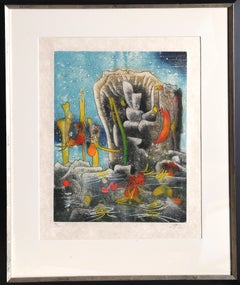
Nymphee, Surrealist Etching by Roberto Matta
By Roberto Matta
Located in Long Island City, NY
"Nymphee" is a colorful Roberto Matta etching from his Requiem pour la Fin des Temps suite. The print is signed and numbered (44/100) in pencil w...
Category

1970s Surrealist Roberto Matta Nude Prints

Materials

Etching, Aquatint

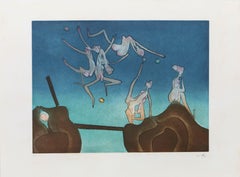
Sans Titre, Surrealist Aquatint Etching by Roberto Matta
By Roberto Matta
Located in Long Island City, NY
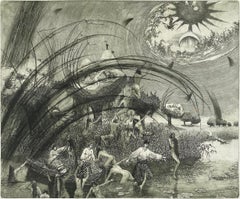
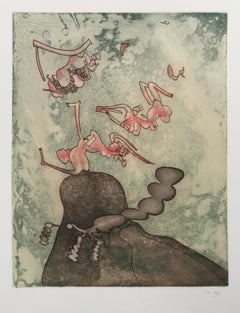
This raucous scene by Latin American Surrealist Roberto Matta shows leaping nude figures flying through the air above what look like boulders. Their bodies are warped and stretched a...
Category

1960s Roberto Matta Nude Prints

Materials

Etching, Aquatint

Related Items
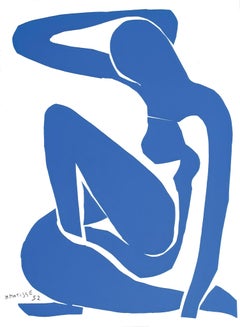
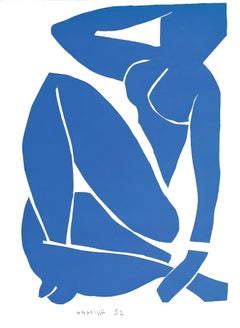
Henri Matisse, Blue Nude VI, from Verve, Revue Artistique, 1958 (after)
By Henri Matisse
Located in Southampton, NY
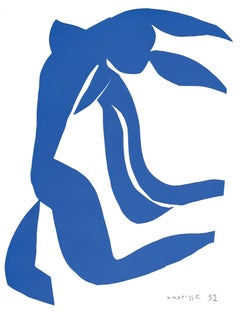
This exquisite lithograph after Henri Matisse (1869–1954), titled Nu Bleu VI (Blue Nude VI), from Verve, Revue Artistique et Litteraire, Vol. IX, No. 35–36, originates from the 1958 ...
Category

1950s Modern Roberto Matta Nude Prints

Materials

Lithograph

Man Ray, Composition, Man Ray (after)
By Man Ray
Located in Southampton, NY
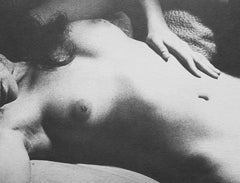
Lithograph on vélin paper. Inscription: unsigned and unnumbered, as issued. Good condition. Notes: From the folio, Man Ray, 1984. Published by Centre National des Arts Plastiques, Ni...
Category

1980s Surrealist Roberto Matta Nude Prints

Materials

Lithograph

Man Ray, Composition, Man Ray (after)
$716 Sale Price
20% Off
H 10.83 in W 8.27 in
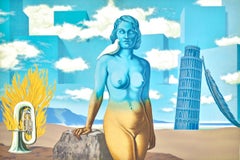
Rene Magritte, A Bombardon Releases its Bouquet of Flames, 1968 (after)
By René Magritte
Located in Southampton, NY
This exquisite lithograph after Rene Magritte (1898–1967), titled Un Bombardon Libere son Bouquet de Flammes (A Bombardon Releases its Bouquet of Flames), from the folio Les Enfants Trouves de Magritte (The Found Children of Magritte), 1968, originates from the edition published by A.C. Mazo et Cie, Paris, and printed by Mourlot Freres, Paris, on November 20, 1968. The work embodies Magrittes sustained inquiry into semiotics and visual epistemology, translating his characteristic strategies of displacement, symbolic inversion, and conceptual ambiguity into an image that operates as both a poetic metaphor and a philosophical proposition concerning the instability of meaning. Executed as a lithograph on grand velin dArches paper, this work measures 17.5 x 23.5 inches (44.5 x 59.7 cm). Signed in the plate by the artist; hand signed by Fernand Mourlot, Editeur. The edition exemplifies the technical mastery of the Mourlot atelier. Artwork Details: Artist: After Rene Magritte (1898–1967) Title: Un Bombardon Libere son Bouquet de Flammes (A Bombardon Releases its Bouquet of Flames), from the folio Les Enfants Trouves de Magritte (The Found Children of Magritte) Medium: Lithograph on grand velin dArches paper Dimensions: 17.5 x 23.5 inches (44.5 x 59.7 cm) Inscription: Signed in the plate by the artist; hand signed by Fernand Mourlot, Editeur Date: 1968 Publisher: A.C. Mazo et Cie, Paris Printer: Mourlot Freres, Paris Catalogue Raisonne: Magritte, Rene, et al. Rene Magritte: Catalogue Raisonne, Vol. 3. Menil Foundation; Philip Wilson Publishers; Distributed in the USA and Canada by Rizzoli International, 1992, nos. 791–792 and 1056; vol. 5, p. 218, Bibliography entry 68.28. Condition: Well preserved, consistent with age and medium Provenance: From the folio Les Enfants Trouves de Magritte, 1968 Notes: Excerpted from the folio (translated from French), Finished printing in Paris on November 20, 1968, on the presses of Mourlot, for the lithographs. The unpublished text by Louis Scutenaire was composed in Elzevir Casion corps 28 and printed by Fequet et Baudier, typographers. The unpublished compositions numbered from I to IV were specially made by Rene Magritte for this album. The compositions of the Enchanted Domain, are the renderings of the eight paintings of the mural of the Casino de Knokke. They were printed with the benevolent authorization of Mr. Gustave J. Nellens. Justification of the draw, this album was taken from CCCL examples on grand velin dArches numbered from I to CCCL, plus a few examples for collaborators and assistants. About the Publication: Les Enfants Trouves de Magritte (The Found Children of Magritte), published in 1968 by A.C. Mazo et Cie, Paris, represents one of the most significant late life print projects devoted to Rene Magrittes work. Conceived as both a literary and visual tribute, the folio pairs texts by the Belgian writer Louis Scutenaire, Magrittes close friend and fellow Surrealist, with lithographic interpretations produced at the Mourlot atelier, the premier lithographic workshop of twentieth century France. The album includes compositions by Magritte alongside lithographic renderings of the celebrated Enchanted Domain mural from the Casino de Knokke, printed with the authorization of Gustave J. Nellens, who commissioned the original mural. Issued in a single edition of CCCL examples on grand velin dArches, the folio stands as a testament to the collaboration between artist, writer, publisher, and master printer, and remains one of the most culturally important Surrealist print albums of the post war era. About the Artist: Rene Magritte (1898–1967) was a Belgian Surrealist painter whose visionary, intellectual, and poetic imagery redefined twentieth century art and forever changed how the world perceives reality and illusion. Celebrated for his calm precision and thought provoking juxtapositions of ordinary objects in extraordinary contexts, Magritte used painting as a philosophical tool, transforming the everyday into visual paradoxes that challenged the boundaries between what is seen and what is known. Born in Lessines, Belgium, and trained at the Academie Royale des Beaux Arts in Brussels, he absorbed early influences from Cubism, Futurism, and Symbolism before embracing Surrealism, where he found his true voice. In Paris, he became part of the avant garde circle that included Pablo Picasso, Alexander Calder, Alberto Giacometti, Salvador Dali, Joan Miro, Wassily Kandinsky, Marcel Duchamp, and Man Ray—all artists whose radical ideas helped him forge his distinctive synthesis of logic and mystery. Unlike Dalis dream...
Category

1960s Surrealist Roberto Matta Nude Prints

Materials

Lithograph

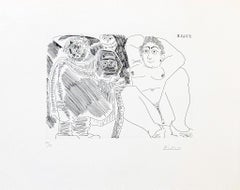
Pablo Picasso ( 1881 – 1973 ) – hand-signed etching on wove paper – 1968
By Pablo Picasso
Located in Varese, IT
Grosse Prostituée, Sorcière à la Chouette et Voyageur en Sabots ( Ref: Bloch 1760) etching on wove paper, Edited in 1968 Limited edition of 50 copies Current copy numbered: 37/50 on...
Category

1960s Cubist Roberto Matta Nude Prints

Materials

Paper, Etching

Henri Matisse, Nu Bleu IX, from Verve, Revue Artistique, 1958 (after)
By Henri Matisse
Located in Southampton, NY
This exquisite lithograph after Henri Matisse (1869–1954), titled Nu Bleu IX (Blue Nude IX), from Verve, Revue Artistique et Litteraire, Vol. IX, No. 35–36, originates from the 1958 ...
Category

1950s Modern Roberto Matta Nude Prints

Materials

Lithograph

Henri Matisse, Blue Nude V, from Verve, Revue Artistique, 1958 (after)
By Henri Matisse
Located in Southampton, NY
This exquisite lithograph after Henri Matisse (1869–1954), titled Nu Bleu V (Blue Nude V), from Verve, Revue Artistique et Litteraire, Vol. IX, No. 35–36, originates from the 1958 is...
Category

1950s Modern Roberto Matta Nude Prints

Materials

Lithograph

Ukrainian Dream
Located in Palm Springs, CA
Vitaly was considered an up and coming artist in his native Ukraine, after years of training under one of the Ukraine’s greatest graphic artists...
Category

Early 2000s Contemporary Roberto Matta Nude Prints

Materials

Etching, Aquatint

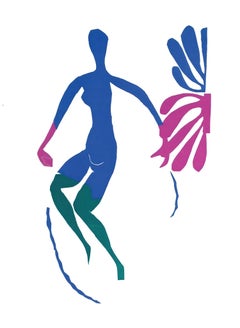
Henri Matisse, The Parakeet and the Mermaid, Verve, Revue, 1958 (after)
By Henri Matisse
Located in Southampton, NY
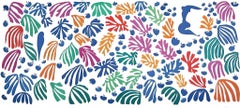
This exquisite lithograph after Henri Matisse (1869–1954), titled La Perruche et la Sirene (The Parakeet and the Mermaid), from Verve, Revue Artistique et Litteraire, Vol. IX, No. 35...
Category

1950s Modern Roberto Matta Nude Prints

Materials

Lithograph

Rene Magritte, A Young Woman Presents with Grace, 1968 (after)
By René Magritte
Located in Southampton, NY
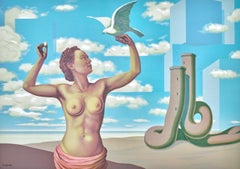
This exquisite lithograph after Rene Magritte (1898–1967), titled Une Jeune Femme Presente avec Grace (A Young Woman Presents with Grace), from the folio Les Enfants Trouves de Magritte (The Found Children of Magritte), 1968, originates from the edition published by A.C. Mazo et Cie, Paris, and printed by Mourlot Freres, Paris, on November 20, 1968. The work embodies Magrittes sustained inquiry into semiotics and visual epistemology, translating his characteristic strategies of displacement, symbolic inversion, and conceptual ambiguity into an image that operates as both a poetic metaphor and a philosophical proposition concerning the instability of meaning. Executed as a lithograph on grand velin dArches paper, this work measures 17.5 x 23.5 inches (44.5 x 59.7 cm). Signed in the plate by the artist; hand signed by Fernand Mourlot, Editeur. The edition exemplifies the technical mastery of the Mourlot atelier. Artwork Details: Artist: After Rene Magritte (1898–1967) Title: Une Jeune Femme Presente avec Grace (A Young Woman Presents with Grace), from the folio Les Enfants Trouves de Magritte (The Found Children of Magritte) Medium: Lithograph on grand velin dArches paper Dimensions: 17.5 x 23.5 inches (44.5 x 59.7 cm) Inscription: Signed in the plate by the artist; hand signed by Fernand Mourlot, Editeur Date: 1968 Publisher: A.C. Mazo et Cie, Paris Printer: Mourlot Freres, Paris Catalogue Raisonne: Magritte, Rene, et al. Rene Magritte: Catalogue Raisonne, Vol. 3. Menil Foundation; Philip Wilson Publishers; Distributed in the USA and Canada by Rizzoli International, 1992, nos. 791–792 and 1056; vol. 5, p. 218, Bibliography entry 68.28. Condition: Well preserved, consistent with age and medium Provenance: From the folio Les Enfants Trouves de Magritte, 1968 Notes: Excerpted from the folio (translated from French), Finished printing in Paris on November 20, 1968, on the presses of Mourlot, for the lithographs. The unpublished text by Louis Scutenaire was composed in Elzevir Casion corps 28 and printed by Fequet et Baudier, typographers. The unpublished compositions numbered from I to IV were specially made by Rene Magritte for this album. The compositions of the Enchanted Domain, are the renderings of the eight paintings of the mural of the Casino de Knokke. They were printed with the benevolent authorization of Mr. Gustave J. Nellens. Justification of the draw, this album was taken from CCCL examples on grand velin dArches numbered from I to CCCL, plus a few examples for collaborators and assistants. About the Publication: Les Enfants Trouves de Magritte (The Found Children of Magritte), published in 1968 by A.C. Mazo et Cie, Paris, represents one of the most significant late life print projects devoted to Rene Magrittes work. Conceived as both a literary and visual tribute, the folio pairs texts by the Belgian writer Louis Scutenaire, Magrittes close friend and fellow Surrealist, with lithographic interpretations produced at the Mourlot atelier, the premier lithographic workshop of twentieth century France. The album includes compositions by Magritte alongside lithographic renderings of the celebrated Enchanted Domain mural from the Casino de Knokke, printed with the authorization of Gustave J. Nellens, who commissioned the original mural. Issued in a single edition of CCCL examples on grand velin dArches, the folio stands as a testament to the collaboration between artist, writer, publisher, and master printer, and remains one of the most culturally important Surrealist print albums of the post war era. About the Artist: Rene Magritte (1898–1967) was a Belgian Surrealist painter whose visionary, intellectual, and poetic imagery redefined twentieth century art and forever changed how the world perceives reality and illusion. Celebrated for his calm precision and thought provoking juxtapositions of ordinary objects in extraordinary contexts, Magritte used painting as a philosophical tool, transforming the everyday into visual paradoxes that challenged the boundaries between what is seen and what is known. Born in Lessines, Belgium, and trained at the Academie Royale des Beaux Arts in Brussels, he absorbed early influences from Cubism, Futurism, and Symbolism before embracing Surrealism, where he found his true voice. In Paris, he became part of the avant garde circle that included Pablo Picasso, Alexander Calder, Alberto Giacometti, Salvador Dali, Joan Miro, Wassily Kandinsky, Marcel Duchamp, and Man Ray—all artists whose radical ideas helped him forge his distinctive synthesis of logic and mystery. Unlike Dalis dream...
Category

1960s Surrealist Roberto Matta Nude Prints

Materials

Lithograph

Henri Matisse, Blue Nude XI, from Verve, Revue Artistique, 1958 (after)
By Henri Matisse
Located in Southampton, NY
This exquisite lithograph after Henri Matisse (1869–1954), titled Nu Bleu XI (Blue Nude XI), from Verve, Revue Artistique et Litteraire, Vol. IX, No. 35–36, originates from the 1958 ...
Category

1950s Modern Roberto Matta Nude Prints

Materials

Lithograph

Original Palm Springs Desert Oasis psychedelic vintage poster
Located in Spokane, WA
Original poster: Palm Springs The Desert Oasis original poster by Bill Ogden. The poster is not linen-backed. Excellent condition. Mint. 1969. ...
Category

1960s American Modern Roberto Matta Nude Prints

Materials

Offset

German Surrealist Hans Bellmer Etching Engraving Print Cecile Reims Surrealism
By Hans Bellmer
Located in Surfside, FL
After Hans Bellmer (German, 1902-1975) Surrealist engraving, etching after drawings from a 1942 notebook, engraved in 1974-75 by Cecile Reims Printed by L'Atelier de Chalcographie du Louvre, Paris, Having printed monogram lower left in plate, pencil notations verso Editioned from a very small edition of #7/10 'Musee du Louvre' blindstamp. Dimensions: Sheet 11 X 7.5, Plate size 6.5 X 4 Hans Bellmer ( 1902 – 1975) was a Polish born German artist, best known for his drawings, etchings that illustrates the 1940 edition of Histoire de l’œil, and the life-sized female sculpture mannequin dolls he produced in the mid-1930s. Historians of art and photography also consider him a Surrealist photographer. Bellmer was born in the city of Kattowitz, then part of the German Empire (now Katowice, Poland). Up until 1926, he worked as a draftsman for his own advertising company. Bellmer is most famous for the creation of a series of dolls as well as photographs of them. He was influenced in his choice of art form in part by reading the published letters of Oskar Kokoschka (Der Fetisch, 1925) and Surrealism. Bellmer's puppet doll project is also said to have been catalysed by a series of events in his personal life. Hans Bellmer takes credit for provoking a physical crisis in his father and brings his own artistic creativity into association with childhood insubordination and resentment toward a severe and humorless paternal authority. Perhaps this is one reason for the nearly universal, unquestioning acceptance in the literature of Bellmer's promotion of his art as a struggle against his father, the police, and ultimately, fascism and the state. Events of his personal life also including meeting a beautiful teenage cousin in 1932 (and perhaps other unattainable beauties), attending a performance of Jacques Offenbach's Tales of Hoffmann (in which a man falls tragically in love with an automaton), and receiving a box of his old toys. After these events, he began to actually construct his first dolls. In his works, Bellmer explicitly sexualized the doll as a young girl (his work bears connection to the works of Bathus). Hirschfeld has claimed (without further argumentation) that Bellmer initiated his doll project to oppose the fascism of the Nazi Party by declaring that he would make no work that would support the new German state. Represented by mutated forms and unconventional poses, his dolls (according to this view) were directed specifically at the cult of the perfect body then prominent in Germany. He visited Paris in 1935 and made contacts there, such as Paul Éluard, but returned to Berlin because his wife Margarete was dying of tuberculosis. He was part of the circle of Surrealist luminaries such as Man Ray, Marcel Duchamp, Max Ernst, Joan Miro, André Masson, René Magritte, Alberto Giacometti and Salvador Dali as well as women artists—such as Frida Kahlo, Dorothea Tanning and Leonora Carrington. Bellmer produced the first doll in Berlin in 1933. Long since lost, the assemblage can nevertheless be correctly described thanks to approximately two dozen photographs Bellmer took at the time of its construction. Standing about fifty-six inches tall, the doll consisted of a modeled torso made of flax fiber, glue, and plaster; a mask-like head of the same material with glass eyes and a long, unkempt wig; and a pair of legs made from broomsticks or dowel rods. One of these legs terminated in a wooden, club-like foot; the other was encased in a more naturalistic plaster shell, jointed at the knee and ankle. As the project progressed, Bellmer made a second set of hollow plaster legs, with wooden ball joints for the doll's hips and knees. There were no arms to the first sculpture, but Bellmer did fashion or find a single wooden hand, which appears among the assortment of doll parts the artist documented in an untitled photograph of 1934, as well as in several photographs of later work. Bellmer's 1934 anonymous book, The Doll (Die Puppe), produced and published privately in Germany, contains 10 black-and-white photographs of Bellmer's first doll arranged in a series of "tableaux vivants" (living pictures). The book was not credited to him, as he worked in isolation, and his photographs remained almost unknown in Germany. Yet Bellmer's work was eventually declared "degenerate" (entartete kunst) by the Nazi Party, and he was forced to flee Germany to France in 1938, where Bellmer's work was welcomed by the Surrealists around Andre Breton. He aided the French Resistance during the war by making fake passports. He was imprisoned in the Camp des Milles prison at Aix-en-Provence, a brickworks camp for German nationals, from September 1939 until the end of the Phoney War in May 1940. After the war, Bellmer lived the rest of his life in Paris. Bellmer gave up doll-making and spent the following decades creating erotic drawings, etchings, sexually explicit photographs, paintings, and prints of pubescent girls. In 1954, he met Unica Zürn...
Category

20th Century Roberto Matta Nude Prints

Materials

Etching

Previously Available Items
Così Fan Tutte - Original Etching by Roberto Matta - 1970
By Roberto Matta
Located in Roma, IT
Hand signed and numbered. Edition of 25 prints in Roman Numerals. Excellent conditions.
Category

1970s Surrealist Roberto Matta Nude Prints

Materials

Etching

Un Pourquoi Final - Original Lithograph by Roberto Matta
By Roberto Matta
Located in Roma, IT
Edition of 100 prints, numbered and hand signed. Excellent conditions.
Category

1970s Surrealist Roberto Matta Nude Prints

Materials

Lithograph

Così Fan Tutte - Original Etching by Roberto Matta - 1970
By Roberto Matta
Located in Roma, IT
Image dimensions: 47x37 cm. Edition of 25 prints numbered in roman numbers. Excellent conditions.
Category

1970s Surrealist Roberto Matta Nude Prints

Materials

Etching

Così Fan Tutte III - Original Etching by Roberto Matta - 1970
By Roberto Matta
Located in Roma, IT
Image dimensions: 47x37 cm. Edition of 25 prints numbered in roman numbers. On rear: "Matta, Così Fan Tutte, n.III" Excellent conditions.
Category

1970s Surrealist Roberto Matta Nude Prints

Materials

Etching

Roberto Matta nude prints for sale on 1stDibs.

Find a wide variety of authentic Roberto Matta nude prints available for sale on 1stDibs. You can also browse by medium to find art by Roberto Matta in lithograph, aquatint, etching and more. Much of the original work by this artist or collective was created during the 20th century and is mostly associated with the Surrealist style. Not every interior allows for large Roberto Matta nude prints, so small editions measuring 20 inches across are available. Customers who are interested in this artist might also find the work of Ernst Fuchs, Hans Bellmer, and Paula Craioveanu. Roberto Matta nude prints prices can differ depending upon medium, time period and other attributes. On 1stDibs, the price for these items starts at $1,500 and tops out at $2,500, while the average work can sell for $2,000.
Questions About Roberto Matta Nude Prints
  • 1stDibs ExpertApril 5, 2022
    Roberto Matta is a painter who became a noted part of the Surrealist movement. Born Roberto Antonio Sebastian Matta Echaurren in 1922 in Santiago, Chile, the artist began his professional life as an architect and slowly switched to painting. His work often featured complex biomorphic forms in disturbing settings, making him an important influence in the post World War II era. Shop a selection of Roberto Matta pieces from some of the world’s top art dealers on 1stDibs.
  • 1stDibs ExpertApril 5, 2022
    Chilean-born Roberto Matta is a modern art painter primarily known for his work in blending surrealism with abstract expressionism. You can shop a selection of expertly vetted Fairfield Porter pieces from some of the world’s top art dealers on 1stDibs.

Still Thinking About These?

All Recently Viewed