Long before the Tiffany & Co. store became an iconic New York City breakfast spot, the company was a stationery and gift shop. It would later build an international reputation for fine silver and earn its place in jewelry history with the iconic six-prong Tiffany Setting, introduced in 1886. Since then, Tiffany has indeed been an important arbiter of style in the design of diamond engagement rings, and today the legendary house is one of the most prominent purveyors of luxury goods in the United States, known widely for its expertly crafted necklaces, bracelets, earrings and other jewelry.
Tiffany & Co. was established in Connecticut in 1837 by Charles Lewis Tiffany and John B. Young. Charles had launched the company’s famed catalogue, the Blue Book, and, with it, the firm’s signature robin’s-egg blue in 1845. In 1853, Tiffany and Young shifted their focus to fine jewelry. At the start of the Gilded Age, in 1870, Tiffany & Co. opened its flagship store at 15 Union Square West in Manhattan.
While Tiffany & Co. gained renown all over the world for its designs for silver tableware, ceremonial silver and other objects, its jewelry was also a highly sought-after indicator of status and taste. The firm additionally became closely associated with diamonds, even lending its name to one particularly rare and exceptional yellow stone. Tiffany bought the Tiffany Diamond in its raw state from the Kimberley Mine of South Africa in 1878. Cut to create a 128.54-carat gem with an unprecedented 82 facets, it is one of the most spectacular examples of a yellow diamond in the world.
Tiffany & Co. broadly helped put diamonds on the map in 1886 by introducing the American marketplace to the solitaire diamond design, which is still the quintessential engagement ring style. Designed to maximize a diamond’s sparkle, the trademark Tiffany Setting elevated the stone on six prongs (in contrast to the bezel setting, which was common at the time). This setting raises the stone above the band, allowing its facets to catch the light.
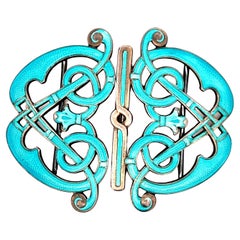
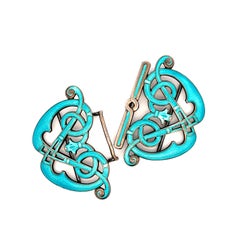
Among the firm’s glittering creations of the late 19th century were masterworks of Art Nouveau jewelry. The revolutionary work of Tiffany’s designers continued to evolve in the 20th century. The French-born Jean Schlumberger joined the house in the mid-1950s and designed jewelry until he retired in the late 1970s. His body of work encompassed sculptural, often whimsical, forms, boldly colored gemstones and the iconic pailloné-enamel bangle of which Jacqueline Kennedy was a fan. He was the first designer to mount the famous Tiffany Diamond in a jewel.
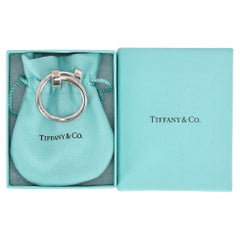
Other designers whose pieces have filled Tiffany’s trademark light-blue boxes include Elsa Peretti, known for her softly sculpted organic forms; Paloma Picasso, whose Graffiti collection was inspired by 1980s pop culture; Angela Cummings, who created exquisite juxtapositions in her work by mixing precious gemstones with wood and iron; and Frank Gehry, who translated his architectural forms into jewelry.
Find Tiffany & Co. engagement rings, earrings, heart necklaces and other jewelry on 1stDibs.