Ursula Schneider Art

to
1
Overall Width
to
Overall Height
to
1
1
1
1
1
1
1
1
1
1
1
10,300
2,809
2,500
1,408
1
1
Artist: Ursula Schneider
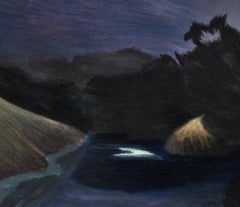
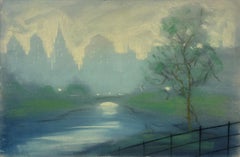
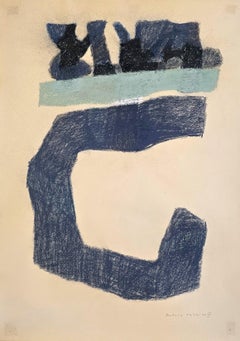
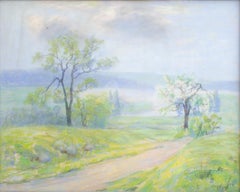
Pond #4
Pond #4

Pond #4

By Ursula Schneider

Located in San Francisco, CA

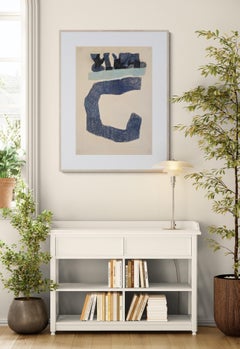
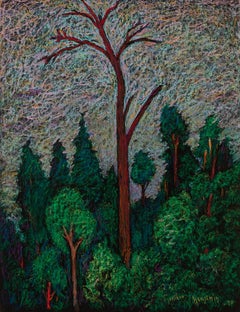
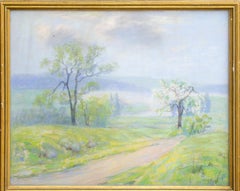
This artwork titled "Pond #4" 1984 is an original soft pastel on paper by Swiss/American artist Ursula Schneider, b.1943. It is unsigned. The artwork size is 15 x 22 inches, framed size is 17.25 x 24.5 inches. Custom framed in a black metal frame. It is in excellent condition. About the artist: The work of Ursula Schneider include pastel drawings, paintings, small-scale sculptural paintings and woodcuts, working on one medium at a time. These processes complement and enrich each other by stimulating a fresh approach and allowing for experimentation. Drawing from observation in the landscape has been the basis for the work. She attended Kunstgewerbeschule in Zurich and Keramische Fachschule in Bern and holds an Undergraduate Degree in Ceramics from Switzerland. In 1968 she moved to the United States and graduated in 1972 with an MFA in Painting from the San Francisco Art Institute. She lived and worked in New York from 1980-2004 and taught painting at the San Francisco Art Institute, Cooper Union and Sarah Lawrence College. Grants And Awards: 1985 National Endowment for the Arts. Major Fellowship Grant 1976 San Francisco Art Festival Award 1974 The Oakland Museum. The New Talent Award 1968 Swiss Government Grant: Kunststipendium Selected Solo Exhibitions: Kunstmuseum Bern Switzerland UC Art Museum Berkley, CA Oakland Museum, CA Forum Febicus, Switzerland Selected Group Exhibitions: Museum of Fine Arts, Forth Worth, TX Biennial Exhibition Whitney Museum, NY San Francisco Museum, CA Los Angeles Institute of Contemporary Art, CA Rockland Center for the Arts, NY. Collections: UC Berkley Art Museum, Di Rosa Preserve in CA, U.S. Department of State, Auditorium Netzwerk, Germany, The Union Bank of Switzerland, UBS Security, Bell Savings Art Plus, Security Pacific Bank, CA, Swiss Bank...

Category

Late 20th Century Modern Ursula Schneider Art

Materials

Pastel

Related Items
"Empire State Building" Leon Dolice, New York City Street Scene, Mid-Century

"Empire State Building" Leon Dolice, New York City Street Scene, Mid-Century

By Leon Dolice

Located in New York, NY

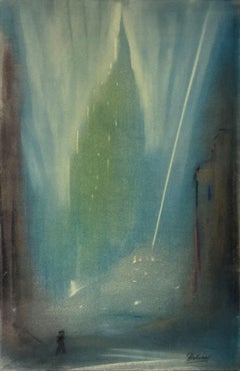
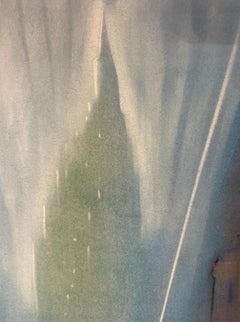
Leon Dolice Empire State Building Signed lower right Watercolor on paper 19 x 12 inches The romantic backdrop of Vienna at the turn of the century had a life-long influence upon th...

Category

1930s American Modern Ursula Schneider Art

Materials

Paper, Pastel

"Central Park" Leon Dolice, New York Central Park Scene, Mid-Century

"Central Park" Leon Dolice, New York Central Park Scene, Mid-Century

By Leon Dolice

Located in New York, NY

Leon Dolice Central Park Signed lower left Watercolor on paper 12 x 19 inches The romantic backdrop of Vienna at the turn of the century had a life-long influence upon the young ma...

Category

1930s American Modern Ursula Schneider Art

Materials

Paper, Pastel

Park XV (Berlin artist, Postwar, Contemporary, Abstract vs Figurative)

Park XV (Berlin artist, Postwar, Contemporary, Abstract vs Figurative)

Located in Kansas City, MO

Barbara Keidel Park XV (Berlin artist, Postwar, Contemporary, Abstract vs Figurative) Mixed media, pastel on handmade, toned laid paper 1997 Size: 29.5 × 21.25 inches (75 × 54 cm) Si...

Category

1990s Modern Ursula Schneider Art

Materials

Pastel, Mixed Media, Laid Paper

"New York Harbor Nocturne" Leon Dolice, New York Harbor Scene Mid-Century

"New York Harbor Nocturne" Leon Dolice, New York Harbor Scene Mid-Century

By Leon Dolice

Located in New York, NY

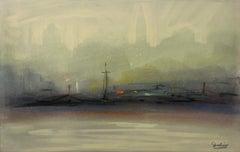
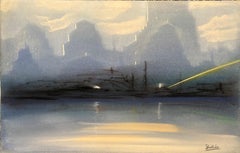
Leon Dolice New York Harbor Nocturne Signed lower right Pastel on paper 12 x 19 inches The romantic backdrop of Vienna at the turn of the century had a life-long influence upon the...

Category

1930s American Modern Ursula Schneider Art

Materials

Paper, Pastel

"Tokyo Diptych" Yvonne Jacquette, Japanese Urban Cityscape Nocturnal Aerial

"Tokyo Diptych" Yvonne Jacquette, Japanese Urban Cityscape Nocturnal Aerial

By Yvonne Jacquette

Located in New York, NY

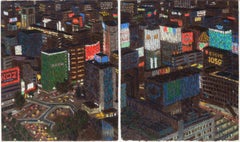
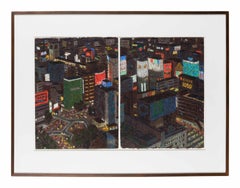
Yvonne Jacquette (American, b. 1935) Tokyo Diptych, 1985 Pastel on paper Overall 17 1/4 x 28 1/2 inches Signed lower center Provenance: Carey Ellis Company, Houston, Texas Brooke Alexander, New York Collection of an American Corporation Exhibited: New York, Brooke Alexander, Yvonne Jacquette: Tokyo Nightviews, April 5 - May 3, 1986, n.p., illustrated; this exhibition later traveled to Brunswick, Maine, Bowdoin College Museum of Art, Yvonne Jacquette: Tokyo Nightviews, June 27 - August 24, 1986. Yvonne Jacquette has a preference for high places, a circling plane, a penthouse window, an aerie from which to watch the world. Her work has often depicted the city and man-made landscape from the vantage of angels. It is a privileged perspective, long loved by photographers, who were perhaps the first to recognize the geometric grandeur of the city below. That grandeur structures Jacquette's images but is not its full content. Her work attempts to resolve the visual and emotional pardoxes of the modern metropolis. Only from the tower is there the possibility of order and context. And unlaced beauty. Jacquette first visited Japan in 1982. Nighttime Tokyo, its cars and crowds and canyons of loud Vegas neon, made a vivid and bewildering impression on her. The neon signs, pulsing, scaling the walls of high rises, fascinated the artist, "like Times Square spread over miles." Her fascination was equal parts marvel, confusion, and curiosity—the sparks of art. She returned to Tokyo in May of 1985, choosing hotel rooms with expansive vistas. From these views Jacquette excerpted images for a series of pastel night scenes. The basic forms and colors of each drawing were blocked in during night sessions by the window. She worked in the dark, selecting colors by flashlight. In daylight, she sharpened the geometry and corrected ambiguous passages. She refined the drawings further in the studio until the images read clearly. Photographic correctness was not important. The finished drawings are complete statements, not simply preparatory sketches for paintings. They have the authority of expert witness. In clear, discreet jots of pastel they record the performance of seeing, each touch of color attesting to a moment's close scrutiny. Yvonne Jacquette was born on December 15, 1934 in Pittsburgh, Pennsylvania and grew up in Stamford, Connecticut. She attended the Rhode Island School of Design, Providence from 1952 to 1955, when she moved to New York City. Her late husband was photographer Rudy Burckhardt, and the couple were part of a circle of artist friends that included Fairfield Porter, Alex Katz, Red Grooms, and Mimi Gross. She continues to live and work in New York City, as well as in Searsmont, Maine. A flight to San Diego in 1969 sparked Jacquette’s interest in aerial views, after which she began flying in commercial airliners to study cloud formations and weather patterns. She soon started sketching and painting the landscape as seen from above, beginning a process that has developed into a defining element of her art. Her first nocturnal painting...

Category

1980s American Modern Ursula Schneider Art

Materials

Paper, Pastel

"Chrysler Building" Leon Dolice, New York City Street Scene, Mid-Century

"Chrysler Building" Leon Dolice, New York City Street Scene, Mid-Century

By Leon Dolice

Located in New York, NY

Leon Dolice Chrysler Building Signed lower right Watercolor on paper 19 x 12 inches The romantic backdrop of Vienna at the turn of the century had a life-long influence upon the yo...

Category

1930s American Modern Ursula Schneider Art

Materials

Paper, Pastel

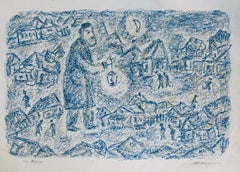
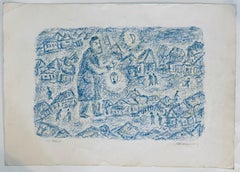
Shtetl Scene
Shtetl Scene

Anatoli Lvovich KaplanShtetl Scene

$2,200

H 16.5 in W 23.5 in

Shtetl Scene

By Anatoli Lvovich Kaplan

Located in Surfside, FL

Pastel or Tempera on paper. Judaica Shtetl scene of village. Anatoli Lwowitch Kaplan was a Russian painter, sculptor and printmaker, whose works often reflect his Jewish origins. his...

Category

20th Century Modern Ursula Schneider Art

Materials

Acrylic Polymer, Pastel

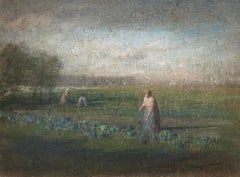
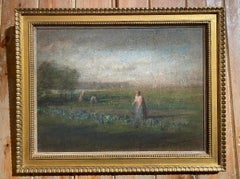
Field Workers, 19th Century Pastel Drawing

Field Workers, 19th Century Pastel Drawing

Located in London, GB

Pastel on paper Image size: 13 3/4 x 18 3/4 inches (35 x 48 cm) Gilt frame Unsigned The scene depicts three woman working in a field in the afternoon. Pastel had fallen out of fash...

Category

Mid-19th Century Modern Ursula Schneider Art

Materials

Pastel, Paper

"Trees"

Gershon Benjamin"Trees", 1970

$24,375

H 35 in W 30 in D 2 in

"Trees"

By Gershon Benjamin

Located in Lambertville, NJ

Jim’s of Lambertville is proud to offer this artwork by: Gershon Benjamin (1899-1985) An American Modernist of portraits, landscapes, still lives, and the urban scene, Gershon Benj...

Category

1970s Modern Ursula Schneider Art

Materials

Paper, Pastel

Burning Bush  Forrest landscape solo female figure biblical narrative

Burning Bush Forrest landscape solo female figure biblical narrative

By Stephen Basso

Located in Brooklyn, NY

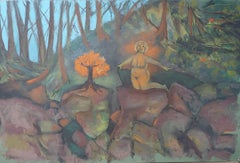
ABOUT Stephen Basso Stephen Basso's highly original pastels and oil paintings are romantic, yet thought provoking fantasies. His whimsical works are alive with boundless imaginat...

Category

2010s American Modern Ursula Schneider Art

Materials

Pastel, Archival Paper

"New York Harbor Nocturne" Leon Dolice, Mid-Century New York Nocturnal Landscape

"New York Harbor Nocturne" Leon Dolice, Mid-Century New York Nocturnal Landscape

By Leon Dolice

Located in New York, NY

Leon Dolice New York Harbor Nocturne Signed lower right Pastel on paper 12 x 19 inches The romantic backdrop of Vienna at the turn of the century had a life-long influence upon the...

Category

1930s American Modern Ursula Schneider Art

Materials

Paper, Pastel

Beautiful large impressionist pastel by Francesco Spicuzza

Beautiful large impressionist pastel by Francesco Spicuzza

By Francesco Spicuzza

Located in New York, NY

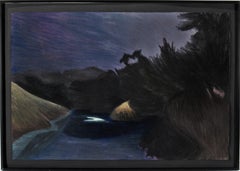
Francesco Spicuzza (American, 1883-1962) Untitled Landscape, 20th century Pastel on paper Sight size: 24 x 30 in. Framed: 26 1/4 x 32 3/8 in. Signed lower right: Spicuzza Italian-born Francesco Spicuzza was primarily a Wisconsin painter who did portraits, still-lives and local landscapes. He spent the first part of his life in near-poverty to become a painter. An eternal optimist, in 1917, the artist reported: "I am happy and my only ambition now is to paint better and better until I shall have reached the measure of the best of which I am capable." (Spicuzza, 1917, p. 22). His predilection for beach scenes germinated early: reportedly, the five-year-old boy first drew the outlines of his father's fishing boat in the sand on the seashore near their home in Sicily. After setting himself up as a fruit peddler in Milwaukee, Spicuzza's father sent for his family when Francesco was eight years old. For the following six years the boy was unable to attend school because of his job in his father's fruit and vegetable business. The poor lad suffered a caved-in shoulder from carrying a heavy wooden crate. The young Spicuzza was aided by moral and financial support from a sympathetic Milwaukee businessman named John Cramer, publisher and editor of the Evening Wisconsin, who raised Spicuzza's salary as a newspaper assembler so that he could attend school. In 1899 or 1900, Spicuzza began studying drawing and anatomy under Robert Schade (1861-1912), a painter of panoramas who had been trained in Munich under Carl Theodor von Piloty. Spicuzza was also taught by Alexander Mueller (1872-1935), a product of the Weimar and Munich academies. Mueller realized Spicuzza was a colorist and encouraged that orientation (Madle, 1961). Spicuzza found it beneficial to accept an apprenticeship in a lithographic studio for $8 a week, which demanded most of his time. During the St. Louis Universal Exposition in 1904, still a struggling student, Spicuzza attended the fair, thanks to Cramer. It was not long before Spicuzza received a twenty-five dollar portrait commission, and this inaugural success led to new commissions and allowed him to continue as a painter. The earliest influences in his work appear to be from Edward H. Potthast and Maurice Prendergast, though Spicuzza never mentioned either artist. Already in August 1910, Spicuzza was described in a newspaper as "one of the most talented of Milwaukee's rising workers." He undoubtedly received lasting inspiration from his one summer study period in 1911 with John F. Carlson at the Art Students League's Summer School in Woodstock, New York. Certainly Spicuzza would have picked up spontaneity in handling the brush from Carlson. Although he executed numerous still-lives and an occasional religious work, Spicuzza is best known for his Milwaukee beach scenes populated with frolicking bathers in multi-colored attire, not unlike the images of Potthast, who used a similar technique. Many of these are small, preparatory works on canvas board executed between 1910 and 1915. Frequently with even greater animation than Potthast, Spicuzza produced moving images of youthful energy and uninhibited child's play. These beach genre scenes reflect the attitude of American impressionists who depicted the more pleasant side of life. Spicuzza manipulated a successful balance of rich pigment applied in varying degrees of impasto texture with subtle nuances of hue. Working all'aperto, he sought "the soft enticing shades of yellow, blue, green, pink and lavender . . . to get the effects of bright glistening summer air." (L.E.S., n.d.). As a painter whose color not only derived from direct observation but also from a personal theory of color symbolism, Spicuzza traded the linear approach of lithography for dynamic patches of brilliant color. Like Prendergast, he would often tilt the angle of the picture plane to bring the viewer's position above the scene. Spicuzza was unable to enter the 1913 Armory Show or the Panama-Pacific International Exposition two years later but he did submit work to the annual exhibitions of the Pennsylvania Academy of the Fine Arts and those of the Art Institute of Chicago. His first important award was the bronze medal presented by the St. Paul Institute in 1913, which was followed by the silver medal two years later. Before long, Spicuzza had acquired a greater sense of security in his profession and was described by a writer in International Studio (April 1917) as "an independent artist with an assured future. His pastels and water-colours are poetic and joyous bits of nature with a genuine out-of-door feeling." In 1918, his Spirit of Youth, exhibited at the National Academy of Design, sold for $112.50. Four years later, the artist achieved his greatest local recognition by winning the gold medal from the Milwaukee Art Institute. Spicuzza spent a great deal of time painting en plein air and by 1925 he began summering at Big Cedar Lake, near West Bend, Wisconsin to gather his subject matter. Easter Morning (1926) owes something to the Symbolist movement, with its figure of Christ appearing over a seascape. During the difficult era of the Depression, patrons came to Spicuzza's aid and during the 40s, he taught housewives, businessmen and students at the Milwaukee Art Institute, the Milwaukee Art Center, and in his private studio. In the following decade, although his kind of art was no longer popular in the "make-it-or-break-it" New York gallery world, Spicuzza enjoyed regular patronage and sales. His beach scenes became more static and he would experiment with modernist techniques. Spicuzza died at the age of seventy-eight. Sources: L.E.S., "Do Colors Change a Person's disposition? Experiments of a Milwaukee Artist...

Category

20th Century American Modern Ursula Schneider Art
Materials

Paper, Pastel

Ursula Schneider art for sale on 1stDibs.

Find a wide variety of authentic Ursula Schneider art available for sale on 1stDibs. You can also browse by medium to find art by Ursula Schneider in crayon, pastel and more. Much of the original work by this artist or collective was created during the 20th century and is mostly associated with the modern style. Not every interior allows for large Ursula Schneider art, so small editions measuring 25 inches across are available. Customers who are interested in this artist might also find the work of Tony Broderick, Vito Alghisi, and Katherine Librowicz. Ursula Schneider art prices can differ depending upon medium, time period and other attributes. On 1stDibs, the price for these items starts at $800 and tops out at $800, while the average work can sell for $800.

Artists Similar to Ursula Schneider