Items Similar to Late 19th Century Bronze Entitled 'La Verité Meconnue' by Aime-Jules Dalou
Want more images or videos?
Request additional images or videos from the seller
1 of 11
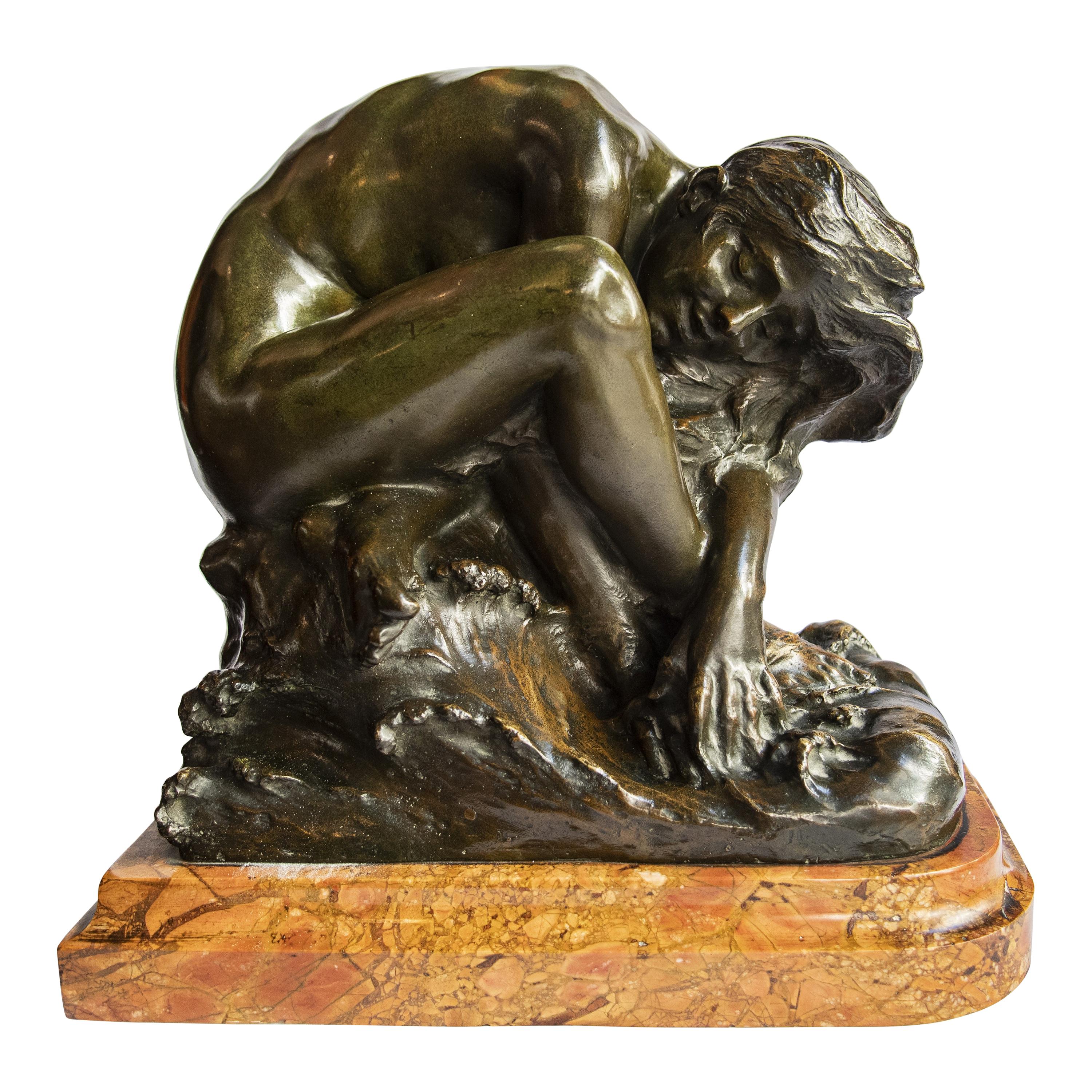
Late 19th Century Bronze Entitled 'La Verité Meconnue' by Aime-Jules Dalou
$6,267.87
£4,500
€5,321.37
CA$8,532.14
A$9,563.43
CHF 4,979.40
MX$116,773.58
NOK 63,220.26
SEK 59,927.12
DKK 39,703.21
Shipping
Retrieving quote...The 1stDibs Promise:
Authenticity Guarantee,
Money-Back Guarantee,
24-Hour Cancellation
About the Item
An enigmatic late 19th Century bronze study of a seated female nude leaning on her knees, hiding her face, on integral naturalistic canted rectangular base, signed to one side DALOU above the cracked mirror (facing to the rear), the opposing side marked Susse Fres Edts the rear with Susse Freres pastille flanked by the letters H P and S.
The title of this subject translates as 'The Truth Revealed' and refers to the young woman inconsolable having seen her true reflection in a mirror, which she has dropped and lies broken on the hard floor.
ADDITIONAL INFORMATION
Height: 14 cm
Width: 12 cm
Depth: 8 cm
Condition: Excellent Original Condition
Circa: 1890
Foundry: Susse Frères Paris
Materials: Bronze
SKU: 8790
ABOUT
Aimé-Jules Dalou (31 December 1838 – 15 April 1902) was a French sculptor, recognised as one of the most brilliant virtuosos of nineteenth-century France, admired for his perceptiveness, execution, and unpretentious realism.
He was born in Paris to a working-class family of Huguenot background, he was raised in an atmosphere of secularity and Republican socialism. He was the pupil of Jean-Baptiste Carpeaux, who sponsored him for the Petite École, where he sympathised with Alphonse Legros and Fantin-Latour. In 1854 he attended the École des Beaux-Arts de Paris in the François-Joseph Duret classroom. He combined the vivacity and richness of Carpeaux, for "he was, technically, one of the most distinguished modellers of his time", with the academic insistence on harmonious outlines and scholarly familiarity with the work of Giambologna, Pierre Puget, Peter Paul Rubens and others.
Dalou first exhibited at the Paris Salon in 1861, but he made no secret of his working-class sympathies. His politics obstructed his career under the Second Empire: he was repeatedly refused the Prix de Rome that opened sculptors' careers to future official commissions. He started to work for decorators, and through this work met Auguste Rodin and began their friendship. He made a quiet living providing decorative sculpture for the structures that lined Paris's new boulevards and providing wax models for jewelry. He married Irma Vuillier, a partnership that sustained him throughout his life; they had one daughter, Georgette, who was mentally handicapped and required constant care. Dalou's Daphnis and Chloe shown at the Paris salon of 1869, was purchased by the State.
Having identified himself too publicly with the Paris Commune of 1871, as curator at the Musée du Louvre under Gustave Courbet, he took refuge in England in July 1871, staying at first with his friend the painter and engraver Alphonse Legros. He rapidly made a name through his appointment teaching at the South London Technical Art School and the South Kensington School of Art, also in London. He was convicted in absentia by the French government of participation in the Commune, and given a life sentence.
In his eight-year English exile, Dalou's association with City and Guilds of London Art School, the National Art Training School and the artists of the New Sculpture movement laid the foundation for new developments in the post-classical British school of sculpture. He also recommended his friend and colleague Édouard Lantéri to move from France to England. At the same time Dalou executed a remarkable series of terracotta statuettes and groups, such as A French Peasant Woman and The Reader; a series of Boulogne women, such as A Woman of Boulogne telling her Beads; and a series of informal terracotta portrait busts of friends and acquaintances, rarely signed. He was commissioned to produce the large public fountain called Charity, erected at the back of the Royal Exchange (1878), and for Queen Victoria a monument to two young granddaughters in her private chapel at Windsor (1878).
He returned to France in 1879, after the declaration of amnesty, and produced a number of masterpieces. His great relief of Mirabeau replying to Dreux-Brézé illustrating an encounter of 23 June 1789, which was exhibited in 1883 and later at the Palais Bourbon, and the highly decorative panel Fraternity were followed in 1885 by The Triumph of Silenus. For the city of Paris he executed his most elaborate and splendid achievement, the vast monument, The Triumph of the Republic, erected after twenty years of work in the Place de la Nation, showing a symbolical figure of the Republic, aloft on her car, drawn by lions led by Liberty, attended by Labour and Justice, and followed by Abundance. It is somewhat in the taste of the Louis XIV period, ornate, but with a forward thrust to the ensemble and exquisite in every detail.
Dalou, who was awarded the Grand Prix of the Exposition Universelle (1889), was made a commander of the Legion of Honor. He was one of the founders of the Société Nationale des Beaux-Arts, and was the first president of the sculpture section.
Dalou died in Paris on 15 April 1902, aged 63, and was interred in the Cimetière du Montparnasse in Paris. His auction record, set at Sotheby's on 21 May 2014 is £362,500 for Boulonnaise Allaitant Son Enfant (a young mother from Boulogne feeding her child).
- Creator:Aimé-Jules Dalou (Artist)
- Dimensions:Height: 5.52 in (14 cm)Width: 4.73 in (12 cm)Depth: 3.15 in (8 cm)
- Style:Art Nouveau (Of the Period)
- Materials and Techniques:Bronze,Cast
- Place of Origin:
- Period:
- Date of Manufacture:1890
- Condition:Wear consistent with age and use.
- Seller Location:London, GB
- Reference Number:Seller: 87901stDibs: LU3216331268942
About the Seller
5.0
Gold Seller
Premium sellers maintaining a 4.3+ rating and 24-hour response times
Established in 1936
1stDibs seller since 2017
80 sales on 1stDibs
Typical response time: 3 hours
- ShippingRetrieving quote...Shipping from: London, United Kingdom
- Return Policy
Authenticity Guarantee
In the unlikely event there’s an issue with an item’s authenticity, contact us within 1 year for a full refund. DetailsMoney-Back Guarantee
If your item is not as described, is damaged in transit, or does not arrive, contact us within 7 days for a full refund. Details24-Hour Cancellation
You have a 24-hour grace period in which to reconsider your purchase, with no questions asked.Vetted Professional Sellers
Our world-class sellers must adhere to strict standards for service and quality, maintaining the integrity of our listings.Price-Match Guarantee
If you find that a seller listed the same item for a lower price elsewhere, we’ll match it.Trusted Global Delivery
Our best-in-class carrier network provides specialized shipping options worldwide, including custom delivery.More From This Seller
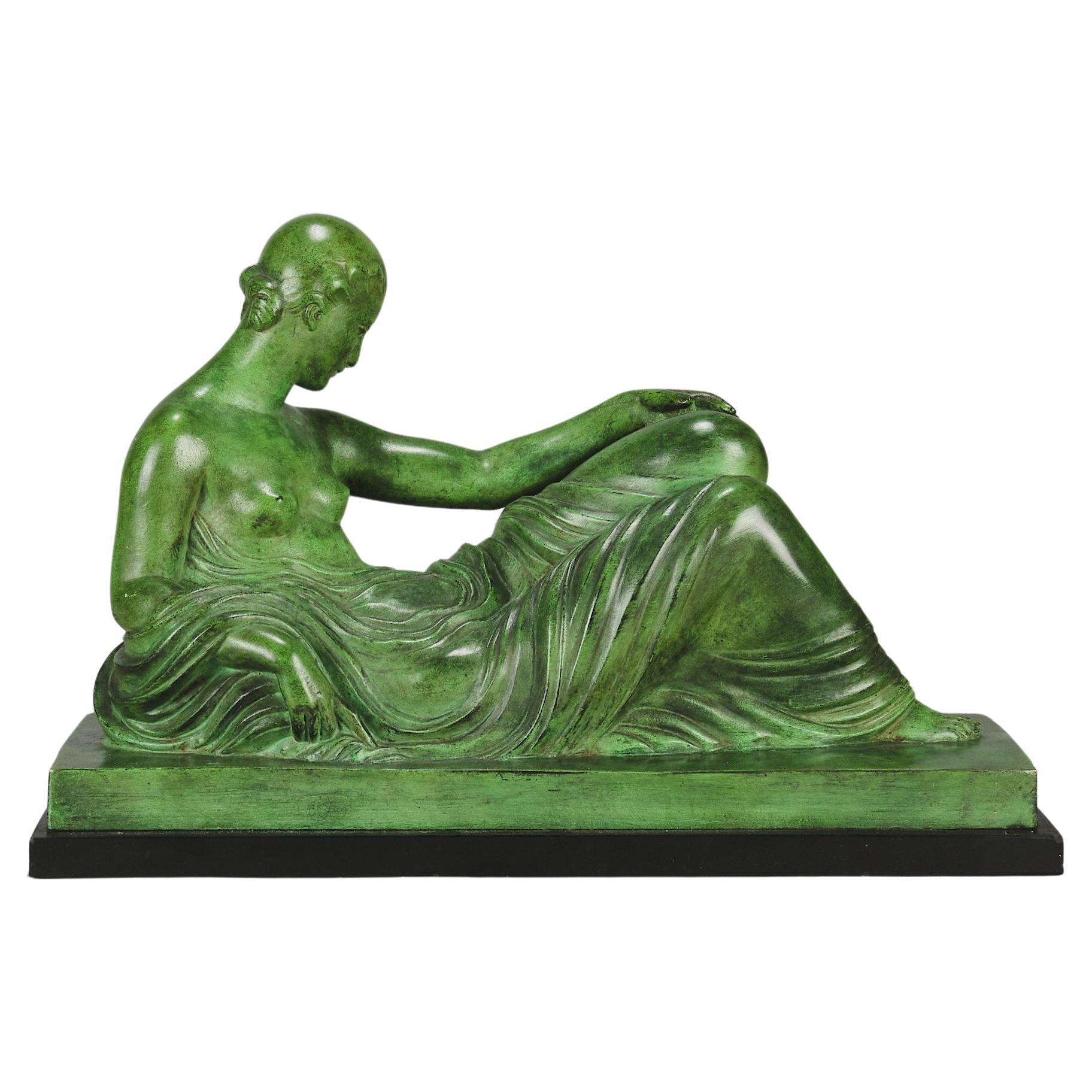
View AllEarly 20th Century Patinated Bronze Entitled "Femme Allongée" by Gaston Béguin
By Gaston Béguin
Located in London, GB
An attractive early 20th century French Art Deco bronze figure of a resting beauty reclining on a daybed with a shawl delicately draped over her. The bronze exhibiting attractive dee...
Category
Early 20th Century French Art Deco Figurative Sculptures
Materials
Marble, Bronze
19th Century Art Nouveau Bronze Sculpture "Fille au Puits" by Auguste Moreau
By Auguste Moreau
Located in London, GB
A very fine late 19th Century Art Nouveau bronze figure of a young girl sat upon a well feeding a small bird, exhibting excellent rich brown variegated patina and very fine hand fini...
Category
Antique Late 19th Century French Art Nouveau Figurative Sculptures
Materials
Bronze
Early 20th Century Art Nouveau Bronze Entitled "La Jeuneuse" by Antonin Carlès
By Antonin Carlès
Located in London, GB
A delightful Art Nouveau early 20th Century gilt bronze figure of a very beautiful young lady holding a flower in her right hand, the surface of the bronze exhibiting fine detail and...
Category
Antique Early 1900s French Art Nouveau Figurative Sculptures
Materials
Bronze

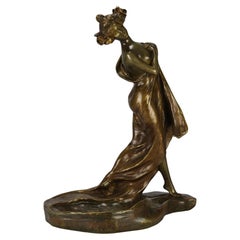
Late 19th Century Art Nouveau Bronze "Nouveau Lady" by Georges Van Der Straeten
By Georges Van der Straeten
Located in London, GB
A delightful Art Nouveau Bronze figure of a young beauty scantily dressed with only a shawl draped across her body in a striking pose. The surface of the bronze with rich golden/brow...
Category
Antique Late 19th Century Belgian Art Nouveau Figurative Sculptures
Materials
Bronze
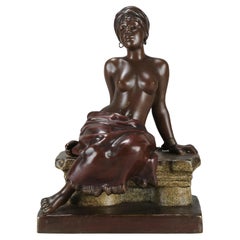
Late 19th Century Art Nouveau Bronze figure "Slave Girl" by Emmanuel Villanis
By Emmanuel Villanis
Located in London, GB
A beautiful patinated Art Nouveau bronze study of a young Art Nouveau beauty sat upon a wall wearing chains with excellent variegated rich brown patina and excellent hand chased surf...
Category
Antique Late 19th Century French Art Nouveau Figurative Sculptures
Materials
Bronze
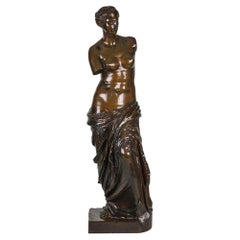
Late 19th Century Art Nouveau Sculpture "Venus de Milo" by F. Barbedienne
By F. Barbedienne Foundry
Located in London, GB
A large and impressive late 19th Century bronze study of the famous Venus de Milo sculpture of antiquity with excellent rich brown patina and good hand finished surface detail, inscribed F.Barbedienne foundry
ADDITIONAL INFORMATION
Height: 95 cm
Width: 28 cm
Depth: 28 cm
Condition: Excellent Original Condition
Circa: 1890
Materials: Bronze
Foundry: F.Barbedienne
SKU: 7741
ABOUT
The Barbedienne Foundry is a famous 19th century bronze foundry, whose statues and art objects became rapidly very renowned. This bronze studio co-worked with other trades, and put his name to a great variety of works, such as furnishing in particular. Attending every World's Fair of its time, the Barbedienne Foundry was regularly awarded, notably at the World's Fair of 1855 where it was awarded the Great Medal of Honor.
A Parisian bronze maker and caster, Ferdinand Barbedienne (1810-1892) creates a firm in 1839 in collaboration with Achille Collas, the inventor of the mechanical method to obtain copies of sculptures at a smaller scale. With this groundbreaking proceed, they facilitated an unprecedented production. Under the “Collas et Barbedienne” name, they specialized in Antiquity copies and perfected new chemical methods for the color and patina finish of their bronzes. As a true Romantic, Ferdinand Barbedienne is committed to democratization of arts, he thus realizes numerous Antiquity copies and stimulates his contemporaries’ works broadcasting. A great deal of famous sculptures are hence cast by the Barbedienne Foundry. All his life, Barbedienne co-worked with the greatest artists, sculptors or designers of his time, such as Edouard Lievre, Ferdinand Levillain, Attarge, Aizelin, Barye or Fremiet.
Statues aside, he products a great deal of decorative artifacts, such as clocks, vases, mirrors, etc. Since 1855, Ferdinand Barbedienne collaborates with the famous decoration designer Louis-Constant Sévin (1821-1888). Joining the firm as a sculptor-designer, he stays loyal to it his life long, always finding more new designs for daily objects, which hence become true art works. Sevin’s creations, specialized in the “Neo-Greek” style, were particularly appreciated for antiquity reference in decorative arts, just like the great mirror preserved by the Orsay Museum. He also teams up with enamelers including Alfred Serre, and develops a set of “cloisonnés” enamels that made the headlines at the World's Fair of 1862 in London, which was the very beginning of the art of enamel’s return. In collaboration with Serre, Barbedienne realized between 1878 and 1889 the Monumental Clock in Renaissance style, decorated with enamels, which is preserved in the Paris City Hall.
Venus de Milo
Facts about Venus de Milo sculpture.
For much of the world, the mystery of the Venus de Milo lies in her missing arms. But there’s much more to this iconic statue than a couple of absent appendages.
1. Venus de Milo‘s title is a bit misleading.
It’s popularly believed that this Grecian statue depicts the Greek Goddess of love and beauty, who was often rendered half-naked. However, the Greeks would have called this deity Aphrodite. Nonetheless, the Roman-inspired Venus de Milo caught on.
2. She’s named in part for where she was discovered.
On April 8, 1820, a farmer named Yorgos Kentrotas came across the statue in pieces within the ruins of an ancient city on the island of Milos (formerly known as Melos).
3. Alexandros of Antioch is credited with her creation.
A sculptor of the Hellenistic period, Alexandros is believed to have carved this masterpiece between 130 and 100 BCE. The inscription on the plinth—the slab on which the statue rested—that identified him as Venus de Milo‘s creator was lost nearly 200 years ago.
4. She might not be Venus.
Some have suggested the sculpture is not Aphrodite/Venus, but Amphitrite, the sea goddess who was particularly adored on Milos. Still others have proposed she’s Victory, or perhaps a prostitute. With her arms long missing, would-be context clues have been lost for centuries. A spear could have meant one thing, a spool of thread another. If she held an apple—as some reports claim—it could mean she was Aphrodite, holding the award given to her by Paris before the Trojan War began. To this day, it’s a matter of passionate debate.
5. She became a gift to the King of France.
When Kentrotas called upon a French naval officer to help him unearth the spectacular sculpture, he began a chain of events that would eventually lead to the Marquis de Rivière presenting Venus de Milo to Louis XVIII. In turn, the ruler gave the statue to the Louvre, where it is on display to this very day.
6. The loss of her limbs is the fault of the French.
Kentrotas did find fragments of an arm and a hand when he uncovered the statue in the ruins, but as Venus de Milo was being reassembled, those arms were discarded for having a “rougher” appearance. Modern art historians believe that the variation of finish does not mean those arms did not belong to Venus, but both the arms and the original plinth have been lost since the piece moved to Paris in 1820.
7. The original plinth was ditched on purpose.
Sight unseen, early 19th century art historians decided the newly discovered Venus must have been the work of Greek artist Praxiteles, and publicized the work as such. This attribution would have placed the piece in the Classical period (5th through 4th centuries BCE), which was more respected artistically than the Hellenistic period. To save face and better promote Venus de Milo—even at the cost of misinforming the public—the plinth was removed before it was presented to the King.
8. Venus de Milo was meant to make up for a national embarrassment.
During his conquests, Napoleon Bonaparte had plundered one of the finest examples of Greek sculpture, Venus de’ Medici, from Italy. In 1815, the French government returned that beloved sculpture, but in 1820, France embraced the chance to fill the hole its absence left in the French culture and national pride. As such, Venus de Milo was promoted as being even greater than Venus de’ Medici upon her Louvre debut. The ploy worked, and the piece was met with almost universal praise from artists and critics.
9. Renoir was not impressed.
Perhaps the most famous of Venus de Milo‘s detractors, the celebrated Impressionist painter dismissed this delicate depiction of grace and female beauty as “a big gendarme.”
10. She went into hiding during World War II.
By the autumn of 1939, war threatened to descend on Paris, so Venus de Milo along with some other priceless pieces, such as Winged Victory of Samothrace and Michelangelo’s Slaves, were whisked away for safekeeping at various châteaux in the French countryside.
11. She’s been robbed!
Venus is missing more than just her arms. She was originally draped in jewellery including a bracelet, earrings and a headband. These flourishes are long lost, but the holes for fixing them to the piece remain in the marble, giving clues to the missing accessories.
12. She lost her colour.
While it’s easy for today’s art admirers to think of Greek statues as white, the marble was often painted in the style of polychromy. However, no trace of the original paint scheme remains on Venus de Milo today.
13. She’s taller than most people.
Even with her slight slouch, Venus de Milo stands at 6 feet 8 inches tall.
14. She could be a copy.
Art historians have noted that Venus de Milo bears a striking resemblance to Aphrodite of Capua, which is a Roman era copy of a possibly late 4th century BCE bronze Greek original. That would be at least 170 years before Alexandros carved his goddess, leading some to speculate that both statues are actually replicas of an older statue...
Category
Antique Late 19th Century French Art Nouveau Figurative Sculptures
Materials
Bronze
You May Also Like
Bronze Sculpture, "Baigneuse", Signed A. Gory, Paris, circa 1920
By Affortunato Gory
Located in CABA, AR
Experience the timeless beauty of Affortunato Gory's "Baigneuse," a captivating bronze sculpture that epitomizes the elegance and grace of the Art Deco era. This exquisite piece dep...
Category
Early 20th Century French Art Deco Figurative Sculptures
Materials
Marble, Bronze

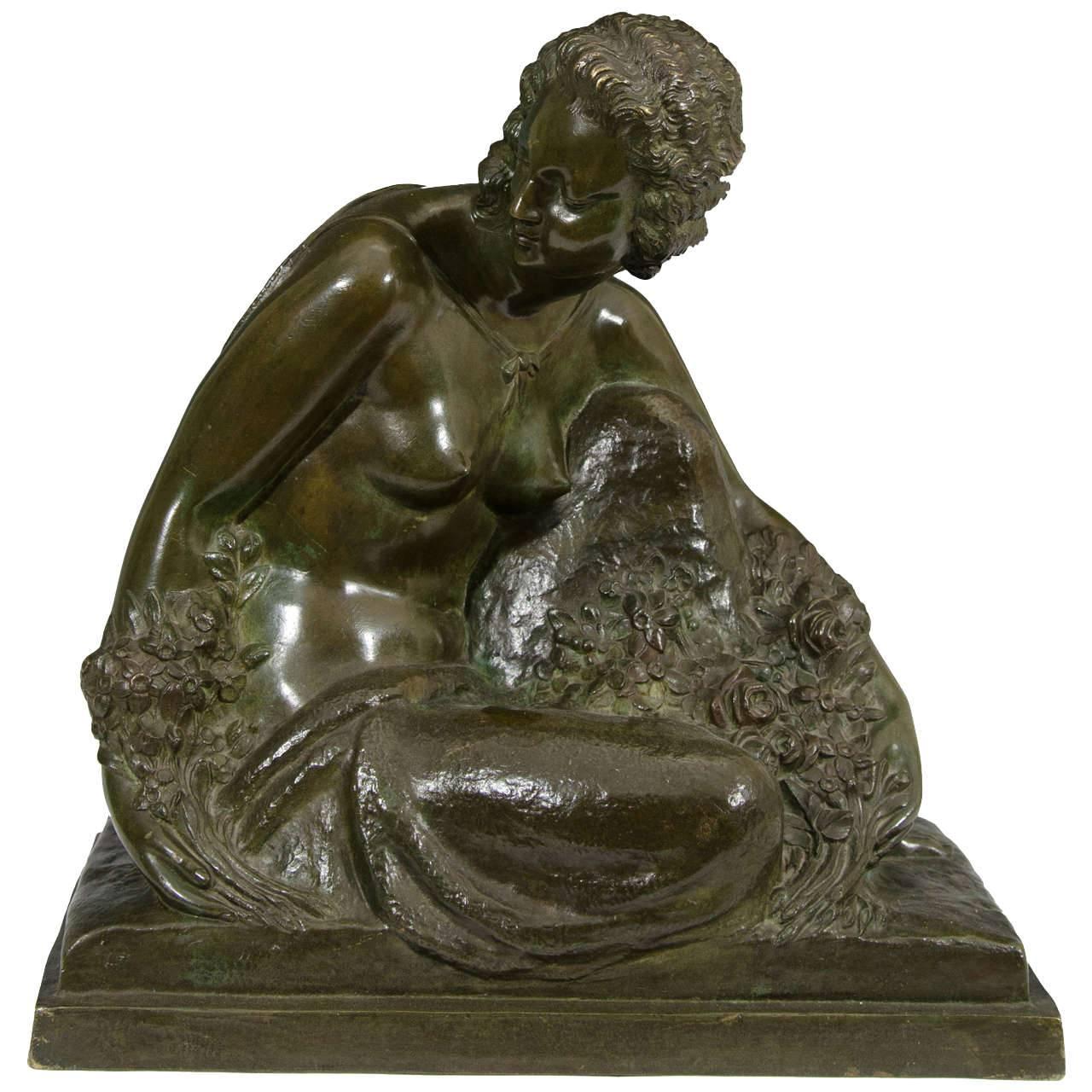
Marcel-André Bouraine, Nude, French Art Deco Bronze Sculpture, circa 1920s
By Marcel-André Bouraine
Located in New York, NY
An Art Deco bronze sculpture of a seated semi-nude woman by Marcel-André Bouraine, French, 1886-1948.
Category
Vintage 1920s French Art Deco Figurative Sculptures
Materials
Bronze
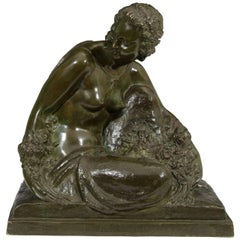
$4,550 Sale Price
30% Off
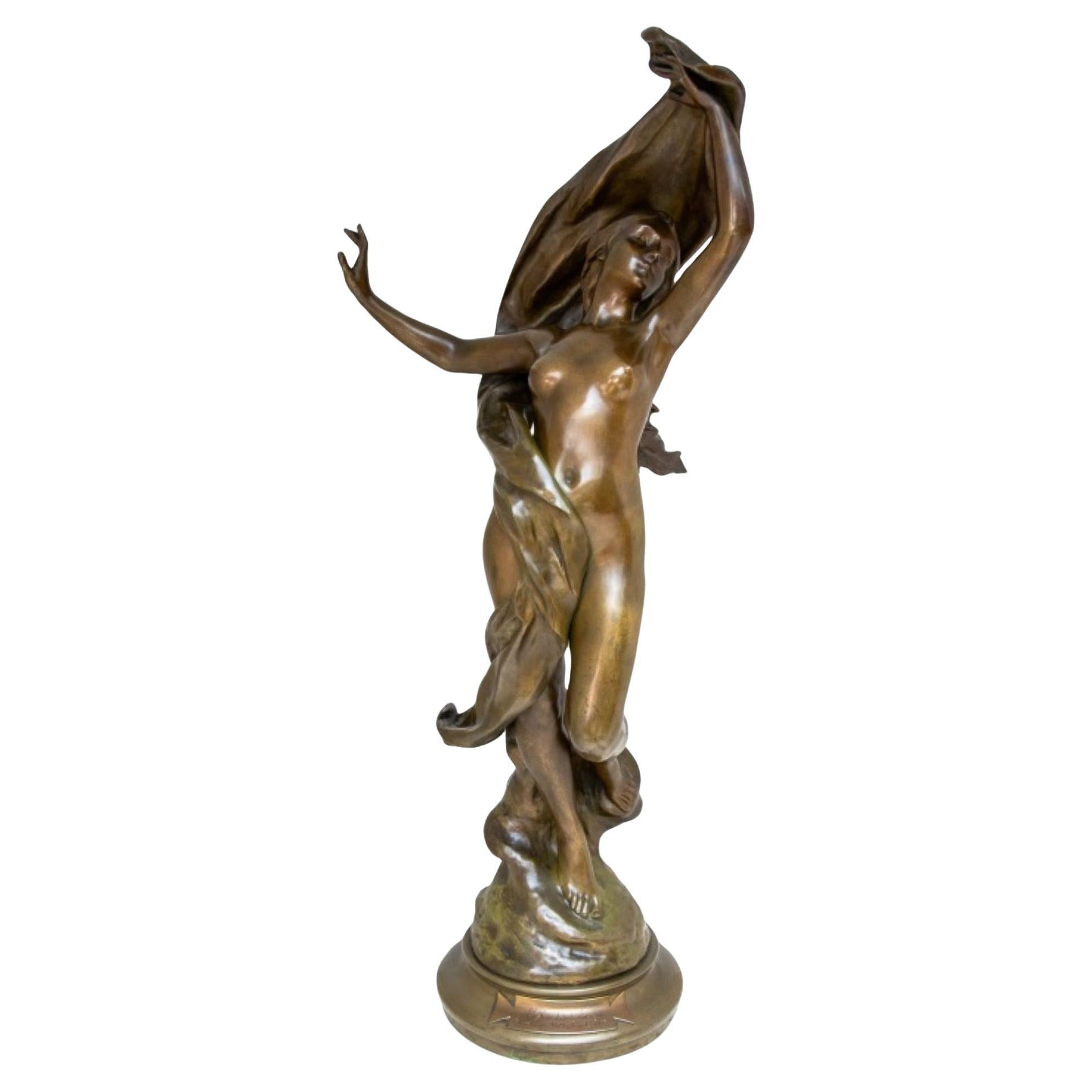
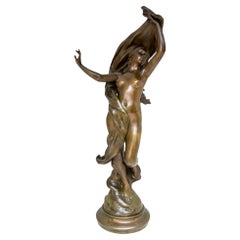
Henri Godet "L'Aurore" Patinated Bronze Sculpture
By Henri Godet
Located in Astoria, NY
Henri Godet (French, 1863-1937) "La Reveil de L'Aurore" [The Awakening of Dawn] Patinated Bronze Sculpture, early 20th century, on a circular base with applied plaque "La Reveil de L...
Category
Early 20th Century French Art Nouveau Figurative Sculptures
Materials
Bronze
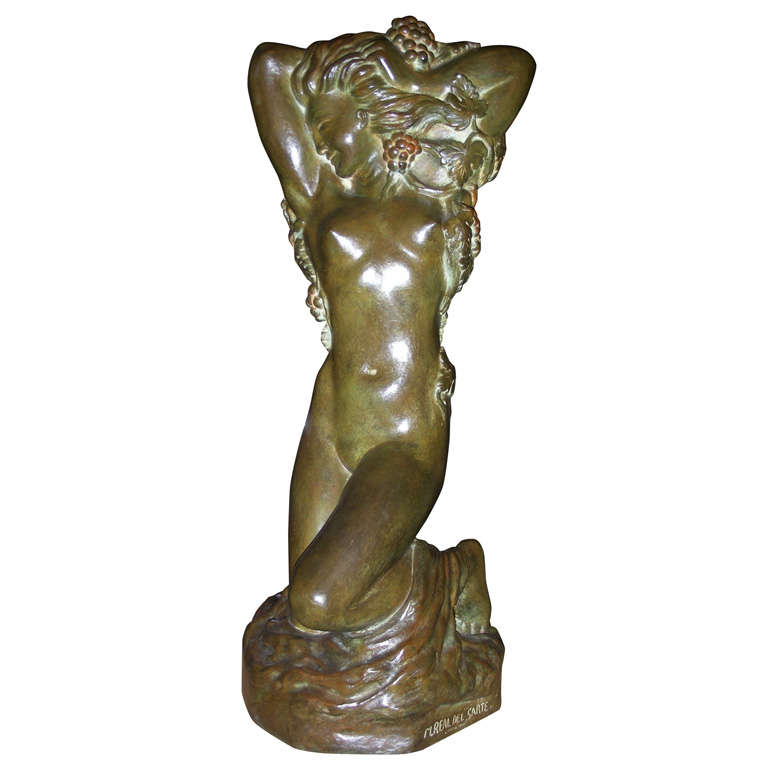
20th C. Bronze Statue of "Ivresse" by Maxime Real del Sarte
By Maxime Real del Sarte
Located in Paris, FR
Patinated bronze statue representing a kneeling nude woman holding grapes, by Maxime Real del Sarte, titled "Ivresse" ("Drunkenness").
Category
20th Century French Sculptures
Materials
Bronze
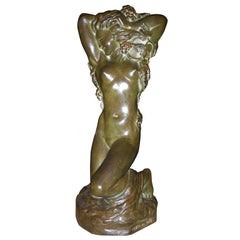
Patinated bronze sculpture "Le Torrent" by Jean-Baptiste Germain
By Jean-Baptiste Germain
Located in Autonomous City Buenos Aires, CABA
Patinated Bronze Sculpture "Le Torrent" by Jean-Baptiste Germain
Patinated bronze sculpture titled "Le Torrent" by French sculptor Jean-Baptiste Germain (1841-1910). The piece depict...
Category
20th Century French Art Nouveau Figurative Sculptures
Materials
Bronze

Patinated Bronze Statue "Ivresse" by Maxime Real del Sarte
By Maxime Real del Sarte
Located in Paris, FR
Patinated bronze statue representing a kneeling nude woman holding grapes, by Maxime Real del Sarte, signed and titled "Ivresse".("Drunkenness").
Category
20th Century French Sculptures
Materials
Bronze
More Ways To Browse
Classical Relief Sculpture
Bronze Relief Panel
Bronze Seated Woman
Cast Bronze Fountain
Bronze Seated Woman Sculpture
Susse Freres Bronze
Art Nouveau Bronze Female
Cracked Mirror
Gold Mirror Art Nouveau
Late 19th Century Bronze Sculpture Of A Woman
Car Bronze Sculpture
Eight Sided Mirror
Art Nouveau Bronze Nude
19th Century French Female Portraits
Terracotta Child
Antique Gold Floor Mirror
Young Child Nude
Female Nude Art Nouveau