Items Similar to Sailor's Woolwork of Royal Navy Five-Masted Ship under Steam, Minotaur Class
Want more images or videos?
Request additional images or videos from the seller
1 of 8
Sailor's Woolwork of Royal Navy Five-Masted Ship under Steam, Minotaur Class
$3,750
£2,868.09
€3,282.25
CA$5,337.28
A$5,778.72
CHF 3,072.28
MX$69,695.33
NOK 38,635.63
SEK 36,019.41
DKK 24,514.23
About the Item
Sailor's Woolwork of Royal Navy Five-masted Ship under Steam,
HMS Minotaur or HMS Agincourt,
Minotaur Class Broadside Ironclad,
circa 1880
The sailor's woolie depicts a portside view of a five-masted ship underway with steam, depicted as French knots issuing from the two funnels. The ship with a ram bow. The rigging is extremely well made. The ship steams on a dark blue sea with shades of blue in the sky. A Union Jack flies from the Foremast and a banner with a Red Cross from the Mainmast. The Stern shows a White Ensign.
This is one of only three Royal Navy Ships built with five masts- HMS MINOTAUR, HMS AGINCOURT, HMS NORTHUMBERLAND.
The Minotaur-class ironclads consisted of three armoured frigates built for the Royal Navy during the 1860s. They were enlarged versions of HMS Achilles with heavier armament, thicker armour, and more powerful engines. The ships of this class were unique among ironclad warships in possessing on completion five masts, named fore-, second-, main-, fourth- and mizzen-.
HMS Minotaur was the lead ship of the Minotaur-class armoured frigates built for the Royal Navy during the 1860s. They were the longest single-screw warships ever built.[1] Minotaur took nearly four years between her launching and commissioning because she was used for evaluations of her armament and different sailing rigs.
The ship spent the bulk of her active career as flagship of the Channel Squadron, including during Queen Victoria's Golden Jubilee Fleet Review in 1887. She became a training ship in 1893 and was then hulked in 1905 when she became part of the training school at Harwich. Minotaur was renamed several times before being sold for scrap in 1922 and broken up the following year.
Dimensions: 22 1/2 inches x 29 1/2 inches wide x 1 3/4 inches
Reference:
They were originally intended to mount forty Armstrong 110-pounder breech-loading guns on the main deck, with ten more on pivot mountings on the upper deck. The failure of these guns in service led to a complete re-evaluation of their armament, with a concomitant delay in the arming of the whole class. The ships were armed with a combination of 9-inch muzzle-loading rifles (MLR) on metal carriages and 7-inch MLRs on rope-worked carriages. In a moderate swell these 7-inch guns were virtually unworkable, making the Minotaurs both the heaviest and the worst armed of the Victorian battleships.
The Minotaurs were poor sailors, never exceeding a speed under sail of about 9.5 knots (17.6 km/h; 10.9 mph) with all sail set and a favourable wind. They were, in spite of the number of masts they exhibited, the most sluggish of all British ironclads under sail. They were regarded as good sea-boats and were considered to be among the steadiest ships in the battle-fleet. They were slow in manoeuvre under hand-steering, but were regarded as good after steam steering was fitted.
- Dimensions:Height: 22.5 in (57.15 cm)Width: 29.5 in (74.93 cm)Depth: 1.75 in (4.45 cm)
- Style:Folk Art (Of the Period)
- Materials and Techniques:
- Place of Origin:
- Period:
- Date of Manufacture:1870
- Condition:Wear consistent with age and use.
- Seller Location:Downingtown, PA
- Reference Number:Seller: NY9611-umrx1stDibs: LU861027864122
About the Seller
5.0
Recognized Seller
These prestigious sellers are industry leaders and represent the highest echelon for item quality and design.
Gold Seller
Premium sellers maintaining a 4.3+ rating and 24-hour response times
Established in 1916
1stDibs seller since 2009
431 sales on 1stDibs
Typical response time: 1 hour
Associations
The Art and Antique Dealers League of AmericaAntiques Associations Members
- ShippingRetrieving quote...Shipping from: Downingtown, PA
- Return Policy
More From This Seller
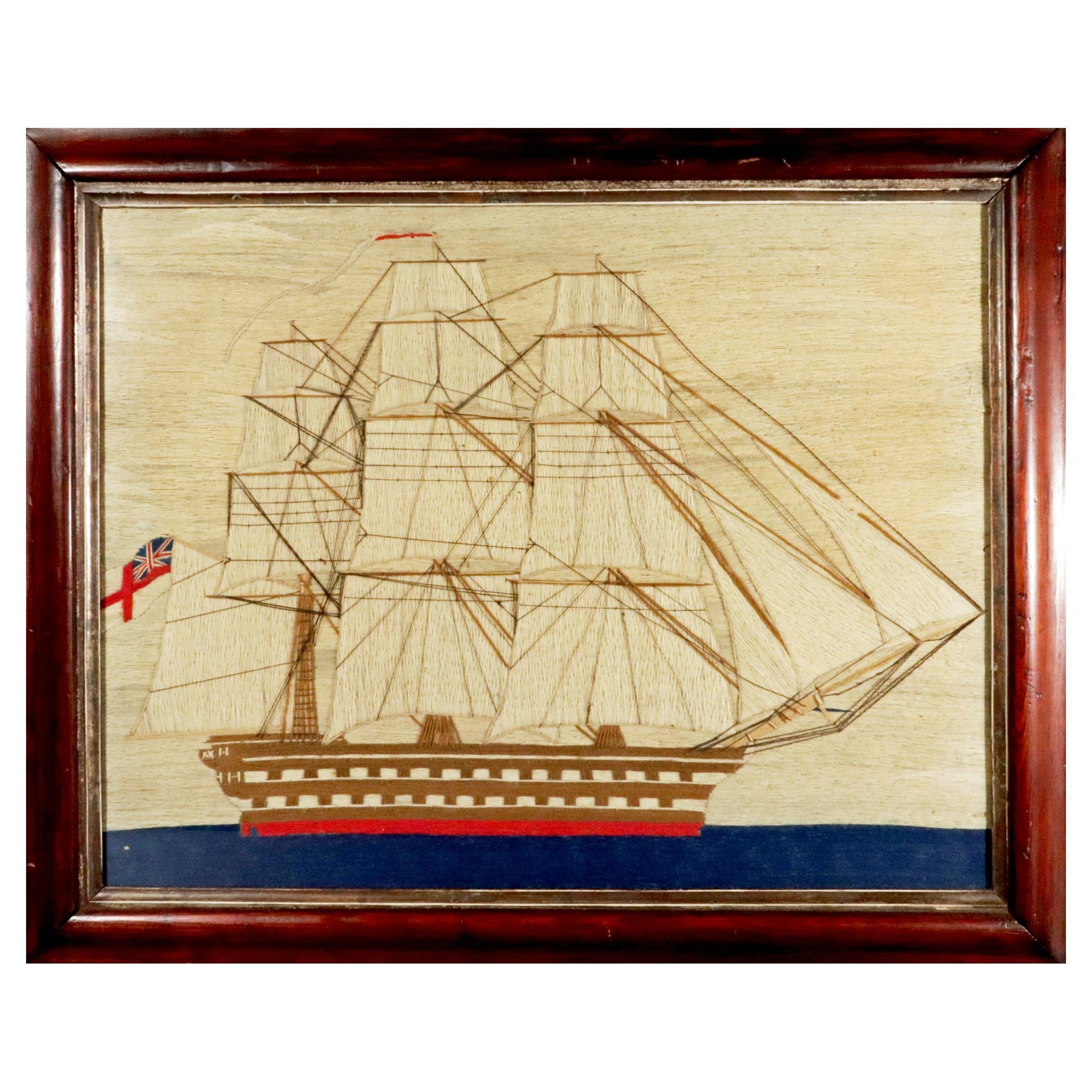
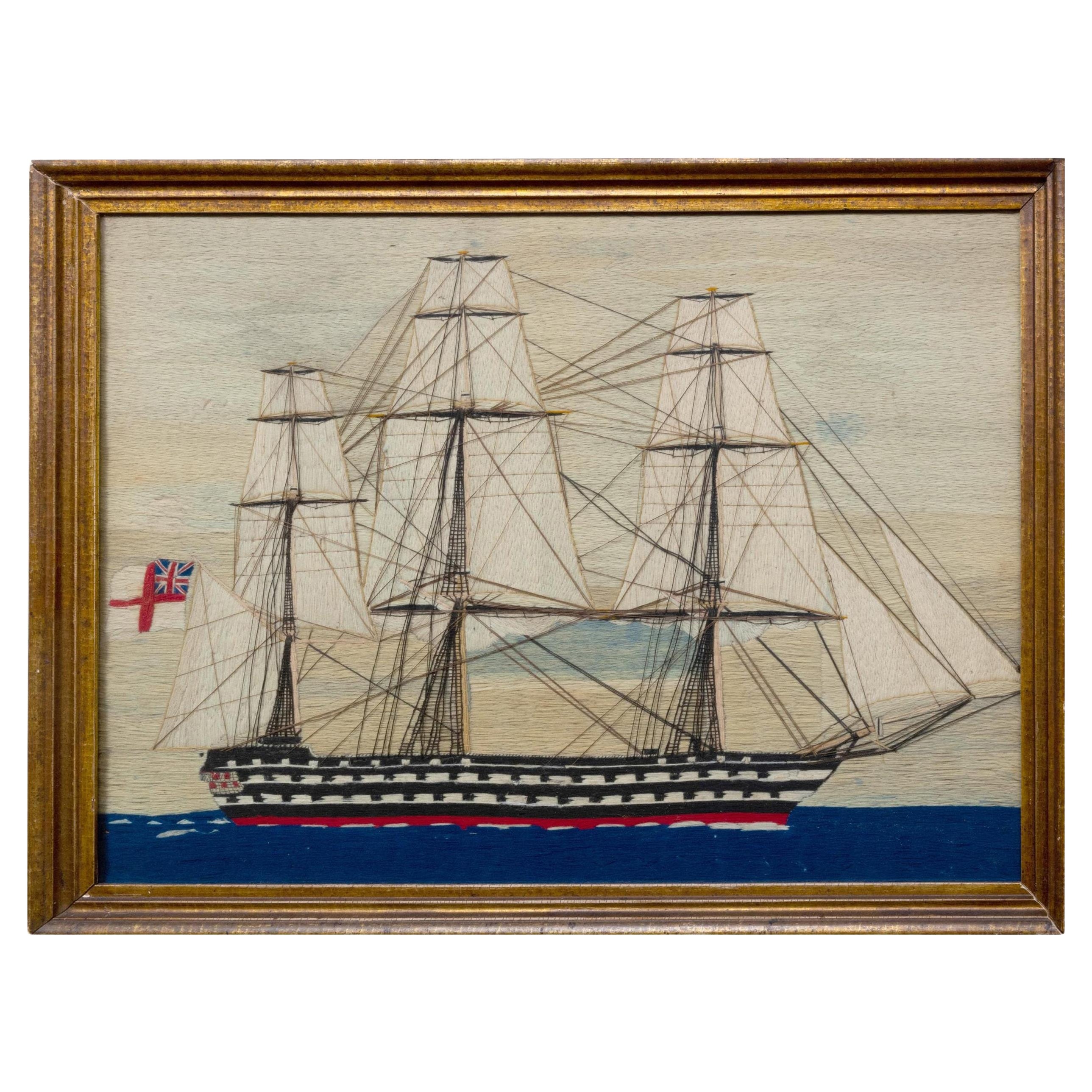
View AllBritish Sailor's Woolwork of a Royal Navy Second Rate Battleship
Located in Downingtown, PA
British Sailor's Woolwork of a Royal Navy Second Rate Battleship,
Circa 1875
The charming simple sailor's woolie depicts a starboard side view of a Royal Navy second rate battleship...
Category
Antique 1870s English Folk Art Nautical Objects
Materials
Wool
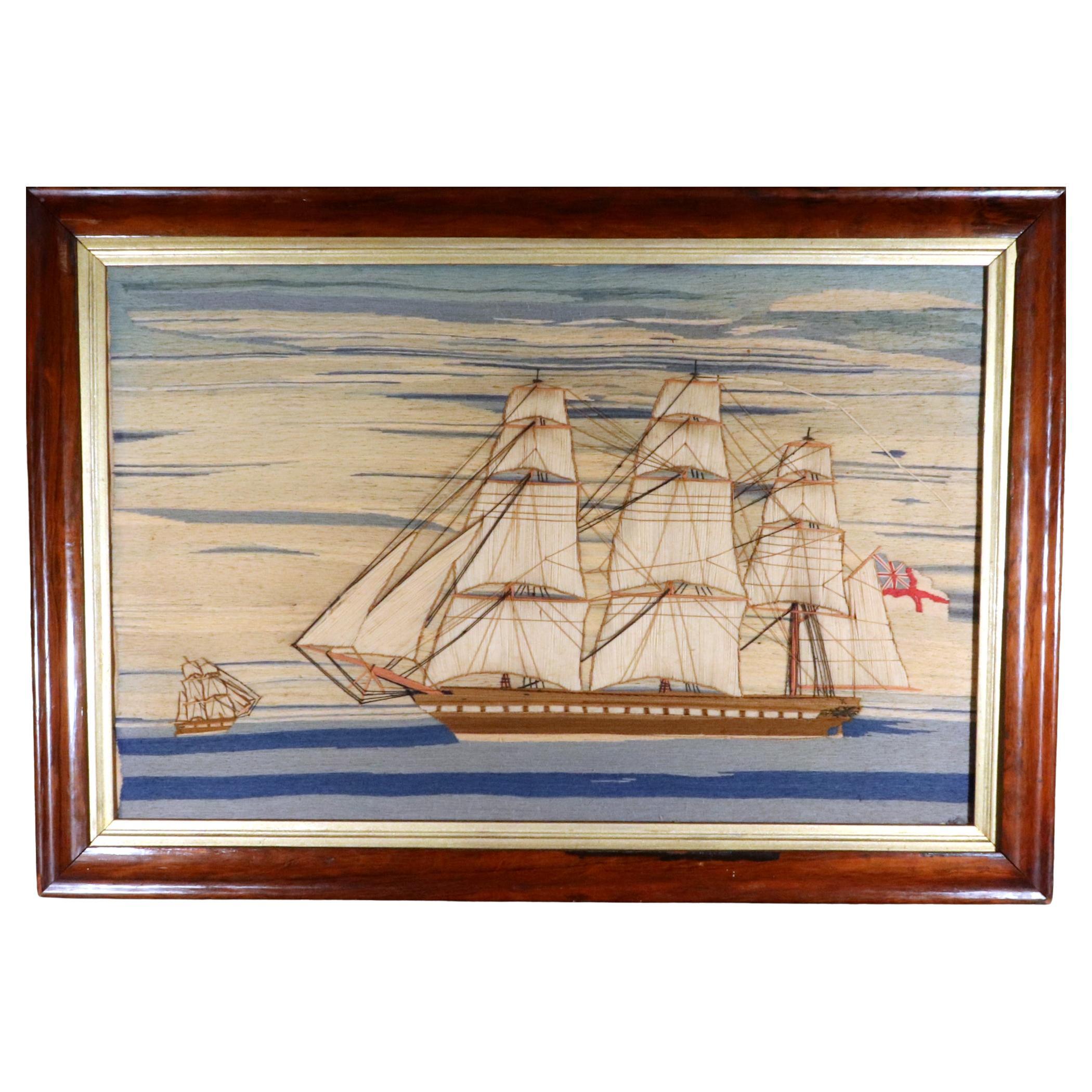
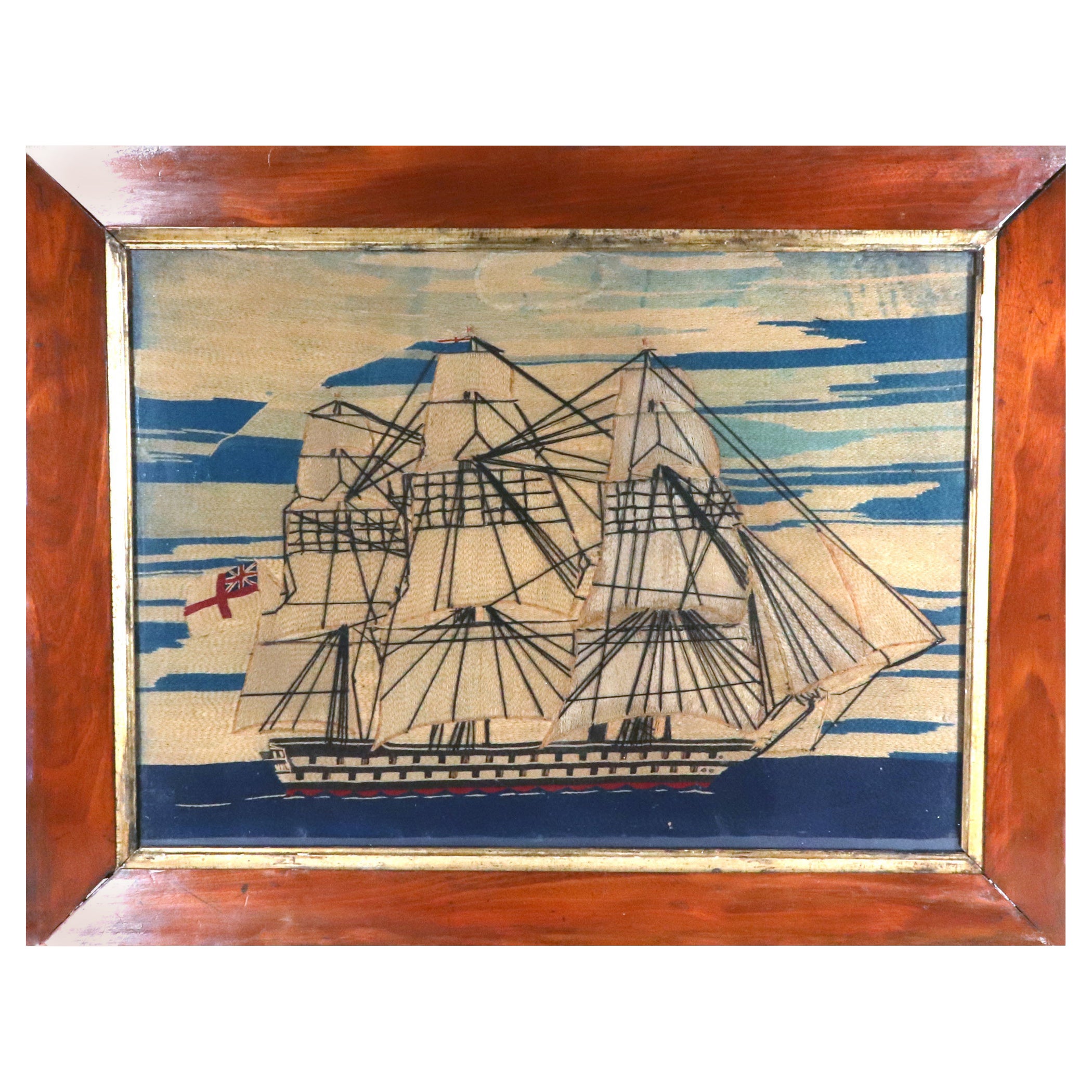
British Sailor's Woolwork of a Royal Navy White Fleet Frigate
Located in Downingtown, PA
British Sailor's Woolwork of a Royal Navy White Fleet Frigate
The sailor's woolwork depicts a portside view of a square-rigged three masted ship flying the White Ensign. The blue s...
Category
Antique 1870s English Folk Art Nautical Objects
Materials
Wool
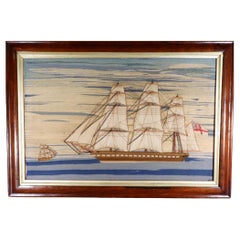
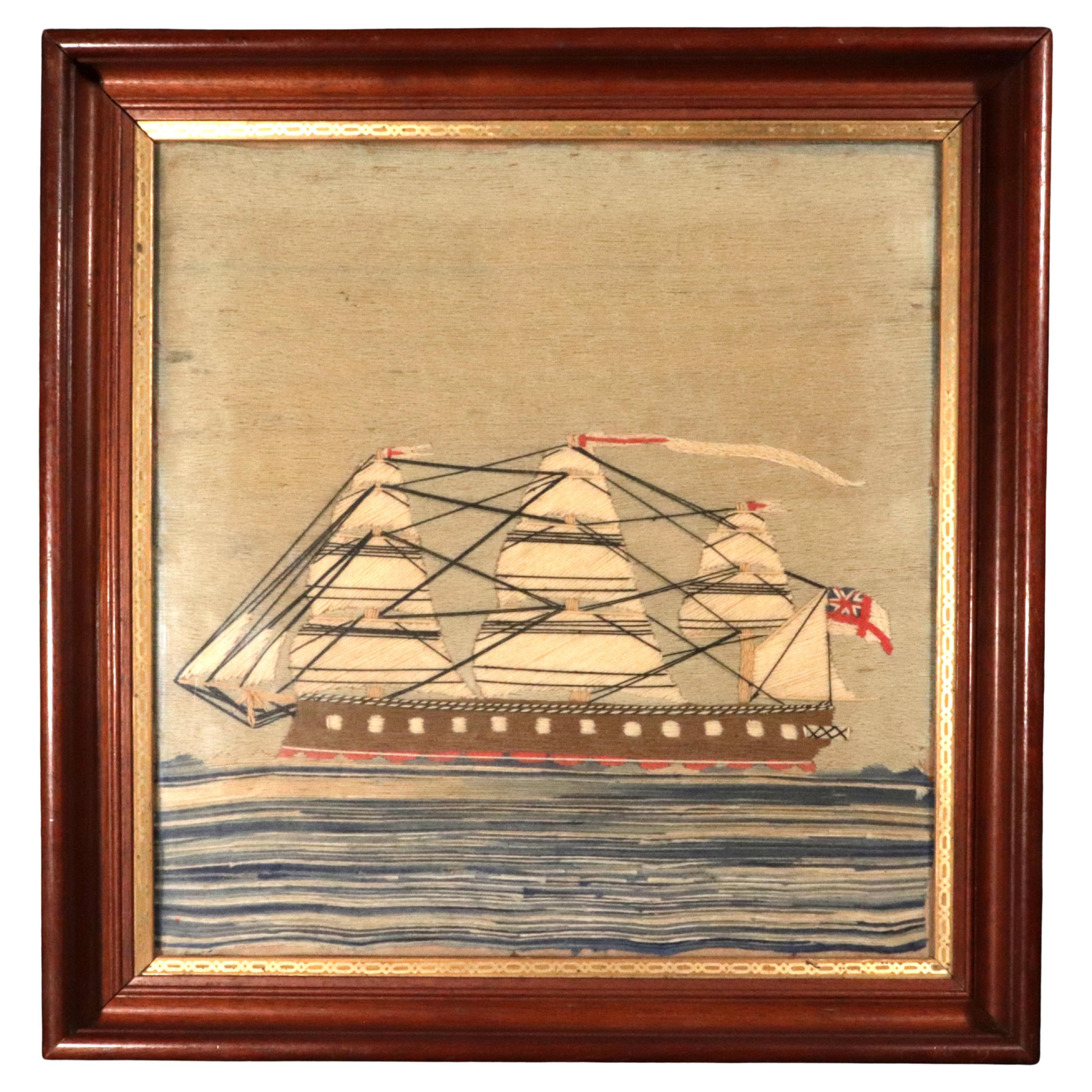
British Sailor's Woolwork with Port Side view of Ram-bowed Royal Navy Ship
Located in Downingtown, PA
Iron and Thread: A Sailor's Vision of the Ram-Bow Era
This striking 19th-century sailor’s woolwork, or "woolie," captures the essence of a rapidly modernizing Royal Navy, depicting a warship whose very design speaks to an era of dramatic technological change. Crafted with painstaking detail from colored yarns, this textile artwork is a superb example of the folk art traditionally made by British sailors during their long hours at sea , between journeys or in retirement.
Dimensions: 19 inches high x 18 1/8 inches wide x 2 inches deep.
Historical Context: The Dawn of the Ironclads
The vessel illustrated is a powerful, sail-assisted steam warship, but what makes her distinctive is the pronounced, jutting ram-bow visible at her waterline. This feature was a direct consequence of the rise of ironclad warships in the mid-19th century, following the tactical use of ramming during the American Civil War and the Austro-Italian War. The ram-bow was incorporated into new British warship designs from the 1860s onward, turning the bow itself into a formidable weapon.
Dating to circa 1880, this woolie belongs to a period when the Royal Navy was building large, powerful capital ships—the very ships that carried the ram. The ship is accurately shown flying the White Ensign, the distinguishing flag of a commissioned Royal Navy warship, and a long white masthead pennant, confirming her status as a vessel in active commission. The simple, bold execution of the ship, set against a classic background of sea and segmented land, creates a work of remarkable visual strength.
A Unique Square Presentation
The woolwork is notable for its unusual and attractive near-square format, offering a distinct aesthetic among nautical woolies...
Category
Antique Late 19th Century Folk Art Nautical Objects
Materials
Wool
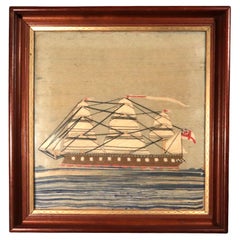
English Sailor's Woolwork of a Battleship with White Ensign
Located in Downingtown, PA
English Sailor's Woolwork of a Battleship,
Circa 1865-75.
The sailor's woolie depicts a starboard side view of a second rate battleship flying the White ensign under sail. White se...
Category
Antique Mid-19th Century English Early Victorian Nautical Objects
Materials
Wool
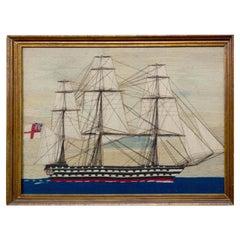
British Sailor's Woolwork of Royal Navy Ship
Located in Downingtown, PA
British Sailor's Woolwork of Royal Navy Ship,
The sailor's woolwork or woolie depicts a starboard view of a Second-Rate Royal Navy Ship with three masts. T...
Category
Antique 1870s English Folk Art Nautical Objects
Materials
Wool
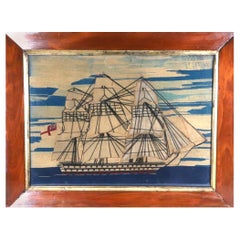
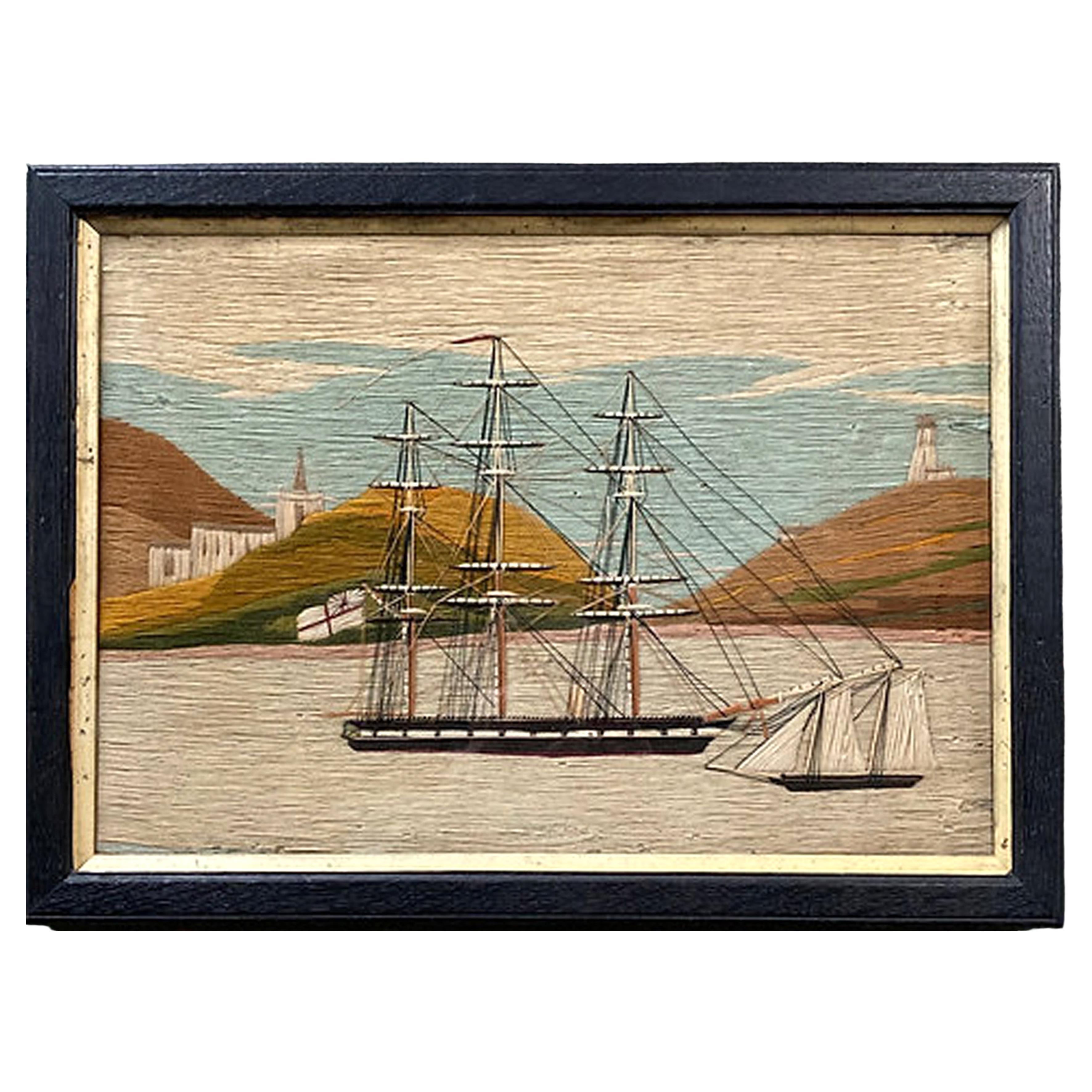
British Sailor's Woolwork of Royal Navy Ships in a Bay
Located in Downingtown, PA
British Sailor's Woolwork of Royal Navy Ships in a Bay,
Circa 1860-75
This charming sailor's woolwork, commonly referred to as a "woolie," presents a Royal Navy frigate at anchor in...
Category
Antique Mid-19th Century English Folk Art Nautical Objects
Materials
Wool
You May Also Like
19th Century sailor's Woolie of a British Steam Frigate, circa 1850
Located in Nantucket, MA
19th Century Sailor's Woolie of a British Steam Frigate, circa 1850, a hand crafted sailor's woolwork picture with larboard side view of a British Naval Auxiliary Steam Frigate unde...
Category
Antique 1850s English Folk Art Nautical Objects
Materials
Wool
19th Century sailor's Woolie of a British Frigate, circa 1870
Located in Nantucket, MA
19th Century Sailor's Woolie of a British Frigate, circa 1870 , a British sailor's hand-crafted woolwork picture with a large starboard side view of a frigate with single gun deck, u...
Category
Antique 1870s English Folk Art Nautical Objects
Materials
Wool
19th Century Sailor's Woolie of a Steam Frigate Under Good Head of Steam
Located in Nantucket, MA
19th Century Sailor's Woolie of a Steam Frigate Under Good Head of Steam, circa 1870s, a British sailor's hand-crafted woolwork picture of an Auxiliary Steam Ship or "Steam Frigate,"...
Category
Antique 1870s English Folk Art Nautical Objects
Materials
Wool
English Victorian Framed Woolwork Nautical Ship Embroidery
Located in Queens, NY
English Country Victorian maple framed embroidered woolwork clipper ship with brown and white hulls.
Category
Antique Late 19th Century British Victorian Tapestries
Materials
Maple
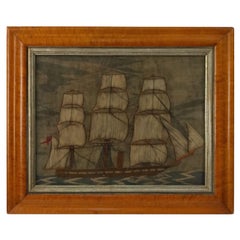
19th Century Sailor's Woolie of Flag Bedecked Triple Decker Ship of the Line
Located in Nantucket, MA
19th Century Sailor's Woolie of Flag-Bedecked Triple Decker Ship of the Line, circa 1850, a British sailor's hand-crafted woolwork picture with a larboard side view of a triple decke...
Category
Antique 1850s English Folk Art Nautical Objects
Materials
Wool
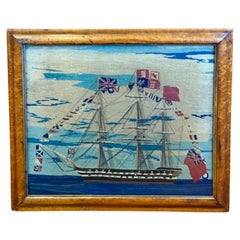
Sailor's Folk Art Woolie of a Single Decker Ship of the Line, circa 1850
Located in Nantucket, MA
Antique Sailor's Folk Art Woolie of a Single Decker Ship of the Line, circa 1850, a sailor's folk art woolwork picture handcrafted of woolen yarn in a bold variety of stitches, depic...
Category
Antique Mid-19th Century English Folk Art Nautical Objects
Materials
Wool