Items Similar to Art Deco Commode in Burl Walnut attributed Osvaldo Borsani , Atelier Di Varedo
Want more images or videos?
Request additional images or videos from the seller
1 of 8
Art Deco Commode in Burl Walnut attributed Osvaldo Borsani , Atelier Di Varedo
$13,106.31
£9,721.40
€11,000
CA$17,946.93
A$19,953.56
CHF 10,444.49
MX$244,723.83
NOK 132,984.73
SEK 125,553.34
DKK 83,727.32
Shipping
Retrieving quote...The 1stDibs Promise:
Authenticity Guarantee,
Money-Back Guarantee,
24-Hour Cancellation
About the Item
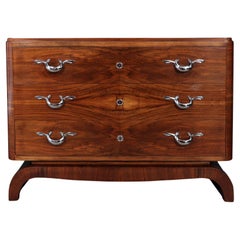
Majestic and elegant chest of drawers attributed Osvaldo Borsani designer, produced in the Varedo Atelier , original in every part, with bakelite handles, 1930s Art Deco chest of drawers, commode , in burl walnut with mirror, polished to wax. Excellent condition.
Measures cm: D 53, W 120, H 100.
mirror cm: W 90 H 75.
About Osvaldo Borsani
Osvaldo Borsani (born 1911, Varedo, Italy–died 1985, Milano, Italy) was an Italian designer and architect, born into a family of furniture makers with along and well established artisanal tradition. His father, Gaetano Borsani, owned his own furniture shop, the Atelier di Varedo, where the 16-year-old Osvaldo received his first training. At that time, the designer of the atelier was the architect Gino Maggioni, who brought with him influences of the early 20th century Jugendstil movement from Vienna and who instilled in the young Borsani an appreciation for the arts and crafts and furniture making. Osvaldo Borsani first studied fine arts at Accademia di Belle Arti di Brera in Milan, graduating in 1931, and then pursued studies in architecture at Politecnico di Milano, where he graduated in 1936.
In 1933, two years before graduating as an architect, Borsani designed the Casa Minima project for the V Triennale di Milano (Milan Triennial), along with architects Cairoli and Varisco. This project earned him a silver medal for its Rationalist code and geometries, and he received positive reviews from the critic Edoardo Persico of Casabella magazine.
Villa Borsani And Other Prominent Architectural Work
In 1937, Osvaldo Borsani designed Villa Presenti in Forte dei Marmi, a sea town in Tuscany where the Italian aristocracy and industrial elite would build their houses, a project that displayed the same rationalistic rigor displayed in Casa Minima, but softened by the use of mediterranean finishes and materials.
Villa Borsani designed by Osvaldo Borsani. Varedo, Italy
Villa Borsani. Varedo, Italy
In 1943, Osvaldo designed and built his own house, the Villa Borsani, in Varedo, which, despite being conceptualized under strict Rationalist principles, incorporated objects and art of younger artists that communicate a freer approach to the human expression. The Villa Borsani project involved artists such as Adriano Spilimbergo, Fausto Melotti, Lucio Fontana (who made the ceramic fireplace and the ceramic Madonna), and Agenore Fabbri (who made the bronze statue in the staircase). To this day, Villa Borsani has been preserved with most of its original furniture and it remains with Osvaldo Borsani’s family along with the extensive archives of his work.
Osvaldo Borsani As a Successful Product and Furniture Designer
After Villa Borsani, Osvaldo continued to develop many projects for the Milanese bourgeoisie, frequently with many of the same artists whom he employed for his villa. A particularly strong relationship was the one that Osvaldo developed with artist Lucio Fontana, a close friend since the time of the Accademia de Belle Arti di Brera, and whom Borsani assigned to make a large metal balcony for the Tecno company in 1956.
Osvaldo Borsani’s design work, just as his larger architectural projects, which he also considered design work, very often incorporated elements created by other artists and designers such as: Roberto Crippa, Arnaldo and Giò Pomodoro, Agenore Fabbri, Fausto Melotti, Andrea Cascella, and Lucio Fontana. Of all of these collaborations, the one that Borsani forged with Lucio Fontana resulted in the creation of many of Borsani’s furnishing designs of the late 1930s and 1940s. With Fontana, Borsani integrated sculptural ceramic and bronze elements, wood and gilded stucco, and interventions on glass tabletops with decorations, to name a few design elements, to his furniture designs.
In 1953, Osvaldo understood the imminent need to transform the artisan approach to furniture making into a modern industry capable of meeting a larger demand at more accessible prices. It was then that Osvaldo and his twin brother Fulgenzio founded the manufacturer Tecno, with the aim of utilizing modern manufacturing techniques that will deliver high-quality furniture to a larger international market. Initially, Tecno manufactured only Borsani’s furniture designs, and, although he continued to design furniture and objects until the early 1980s, by the late 1950s, Tecno also manufactured furniture from other designers, including Vico Magistretti, Roberto Mango, Gae Aulenti, Eugenio Gerli, Carlo de Carli, and Gio Ponti.
Black P40 chair by Osvaldo Borsani for Tecno (1955) Italian design and furniture gallery Casati Gallery
P40 chair by Osvaldo Borsani for Tecno (1955)
Among the most successful and iconic Tecno designs are the 1954 D70, a sofa that can assume approximately 20 positions; the 1955 P40 adjustable lounge chair, described as a “machine for sitting,” which could assume 486 distinct postures; the 1954 T41 dining table; the 1961 AT 16 coat rack; the 1965 Canada chair; the 1968 Graphis office furniture system; and the 1972 P128 office chair.
- Creator:Atelier Borsani Varedo (Cabinetmaker)
- Attributed to:Osvaldo Borsani (Designer)
- Dimensions:Height: 39.38 in (100 cm)Width: 47.25 in (120 cm)Depth: 20.87 in (53 cm)
- Style:Art Deco (Of the Period)
- Materials and Techniques:
- Place of Origin:
- Period:
- Date of Manufacture:1920-1930
- Condition:Wear consistent with age and use.
- Seller Location:Vigonza, IT
- Reference Number:Seller: FM871stDibs: LU2495330135262
About the Seller
4.9
Vetted Professional Seller
Every seller passes strict standards for authenticity and reliability
Established in 2017
1stDibs seller since 2017
301 sales on 1stDibs
Typical response time: 1 hour
- ShippingRetrieving quote...Shipping from: Vigonza, Italy
- Return Policy
Authenticity Guarantee
In the unlikely event there’s an issue with an item’s authenticity, contact us within 1 year for a full refund. DetailsMoney-Back Guarantee
If your item is not as described, is damaged in transit, or does not arrive, contact us within 7 days for a full refund. Details24-Hour Cancellation
You have a 24-hour grace period in which to reconsider your purchase, with no questions asked.Vetted Professional Sellers
Our world-class sellers must adhere to strict standards for service and quality, maintaining the integrity of our listings.Price-Match Guarantee
If you find that a seller listed the same item for a lower price elsewhere, we’ll match it.Trusted Global Delivery
Our best-in-class carrier network provides specialized shipping options worldwide, including custom delivery.More From This Seller
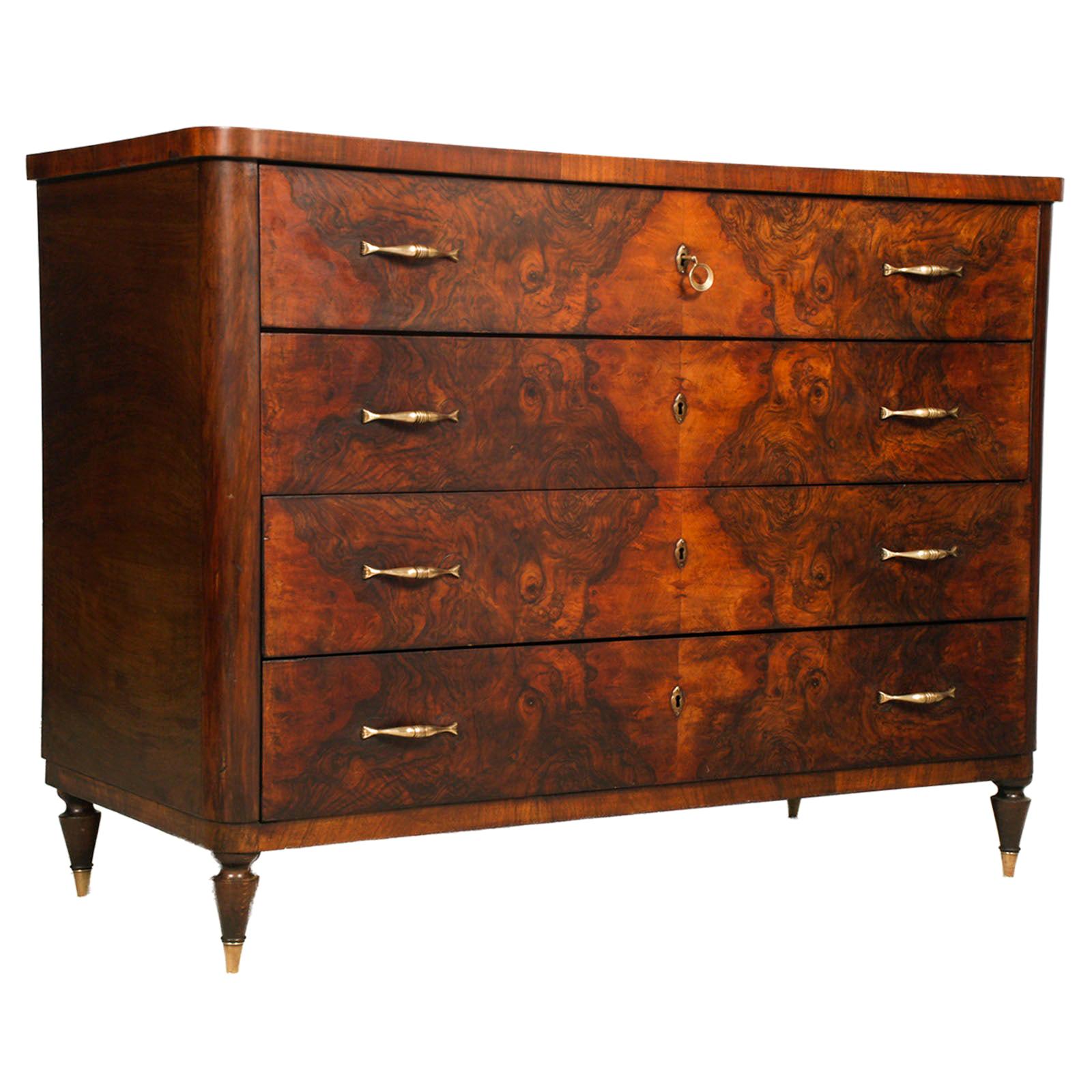
View All1920s Art Deco Commode by Gaetano Borsani, Burl Walnut, wox-polished
By Gaetano Borsani
Located in Vigonza, Padua
Italian, 1920s Art Deco commode by Gaetano Borsani, in walnut and burl walnut, with golden brass handle and foot. Polished to wax.
Gaetano Borsani, with his Atelier di Varedo was a n...
Category
Vintage 1920s Italian Art Deco Commodes and Chests of Drawers
Materials
Walnut, Burl
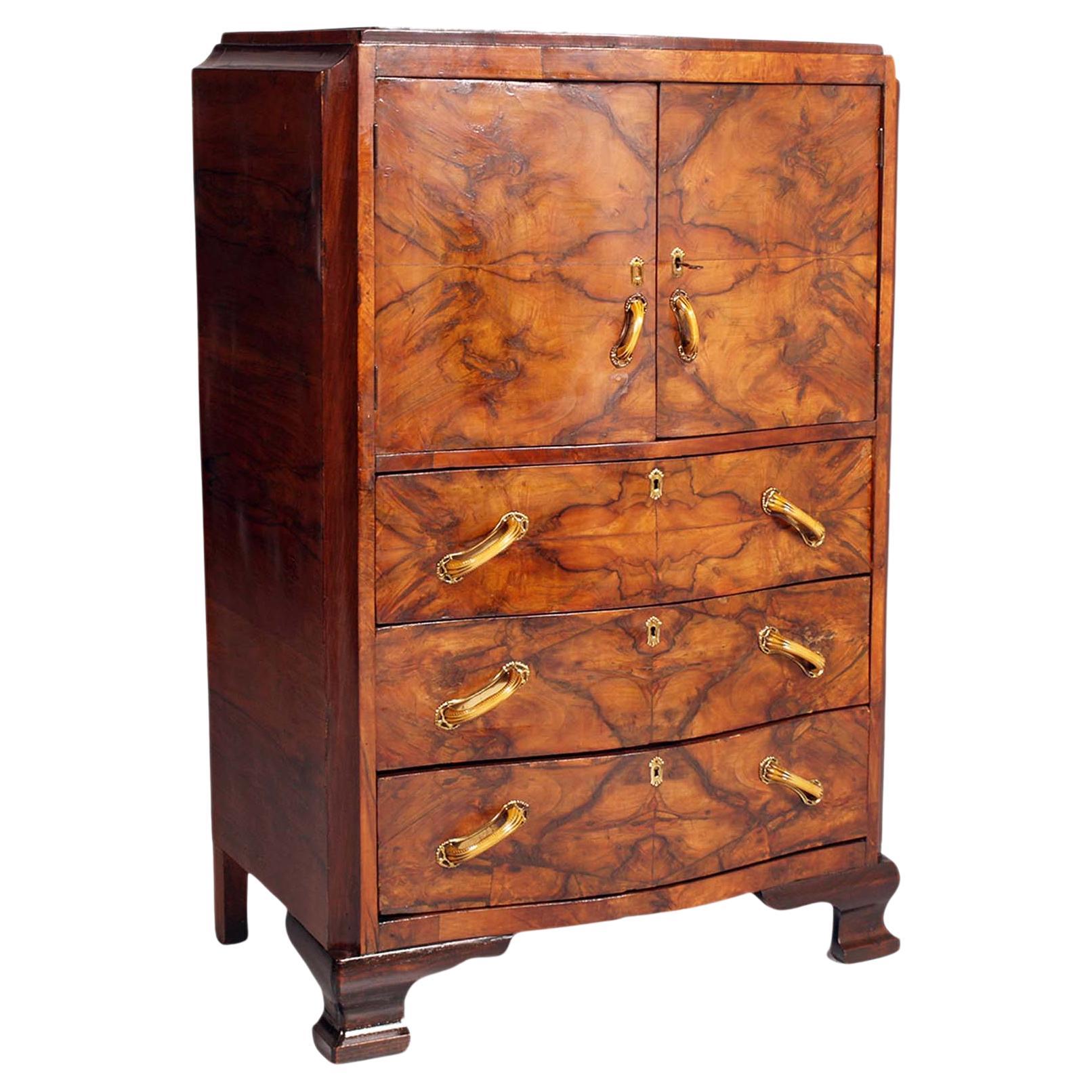
Art Deco Trumeau Cabinet in Walnut Briar by Atelier di Varedo, Gaetano Borsani
By Atelier Borsani Varedo, Gaetano Borsani
Located in Vigonza, Padua
Art Deco Trumeau Cabinet in Walnut Briar by Atelier di Varedo, Gaetano Borsani, with three external drawers, spacious upper compartment that can be opened with two doors containing t...
Category
Early 20th Century Italian Art Deco Cabinets
Materials
Walnut
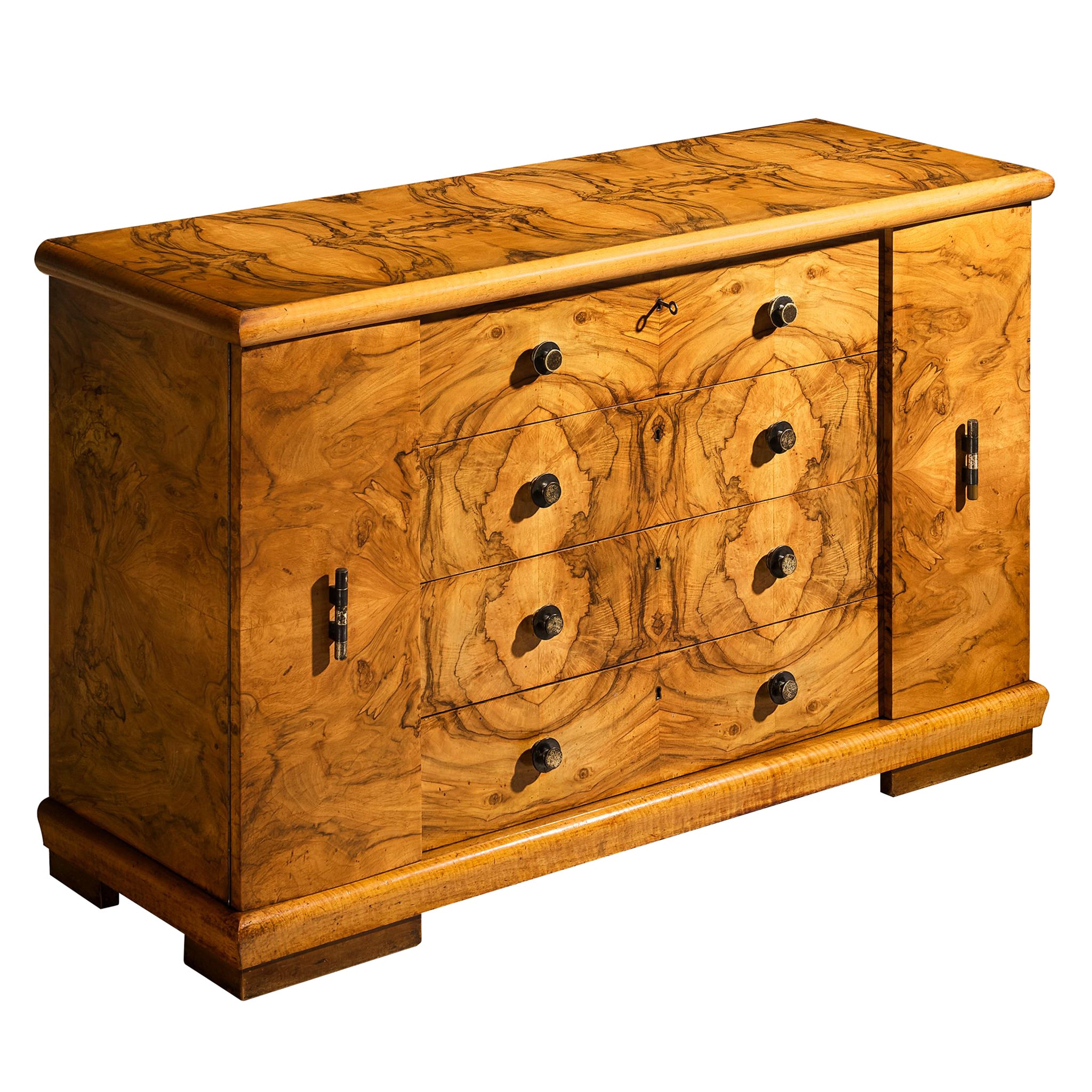
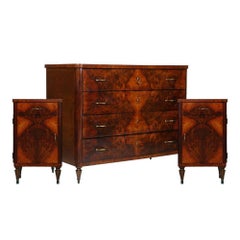
1920s Art Deco Commode & Nightstands, in Burl Walnut , by Gaetano Borsani
Located in Vigonza, Padua
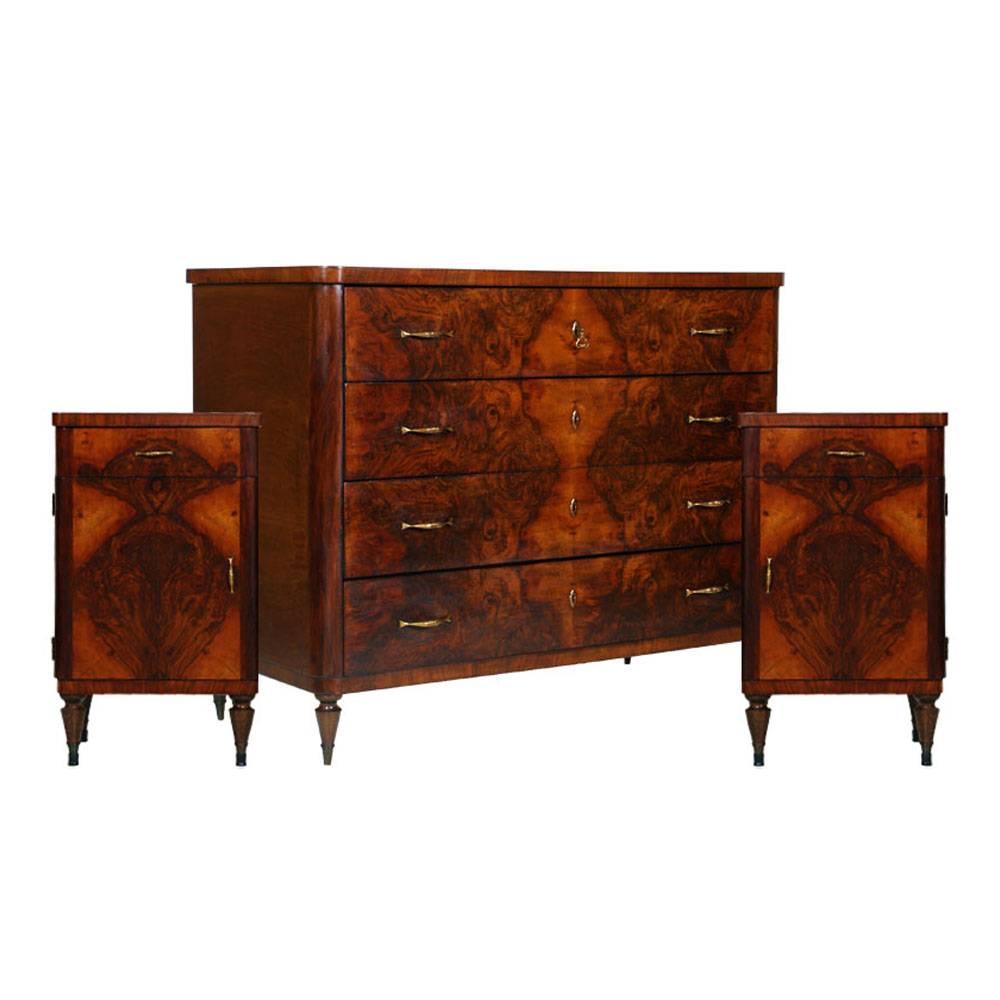
Italian 1920s elegant Art Deco Commode with pair of nightstands in burl walnut
Two nightstands with commode by Gaetano Borsani , in burl walnut , with golden brass handle and foot. ...
Category
Vintage 1930s Italian Art Deco Commodes and Chests of Drawers
Materials
Walnut, Burl
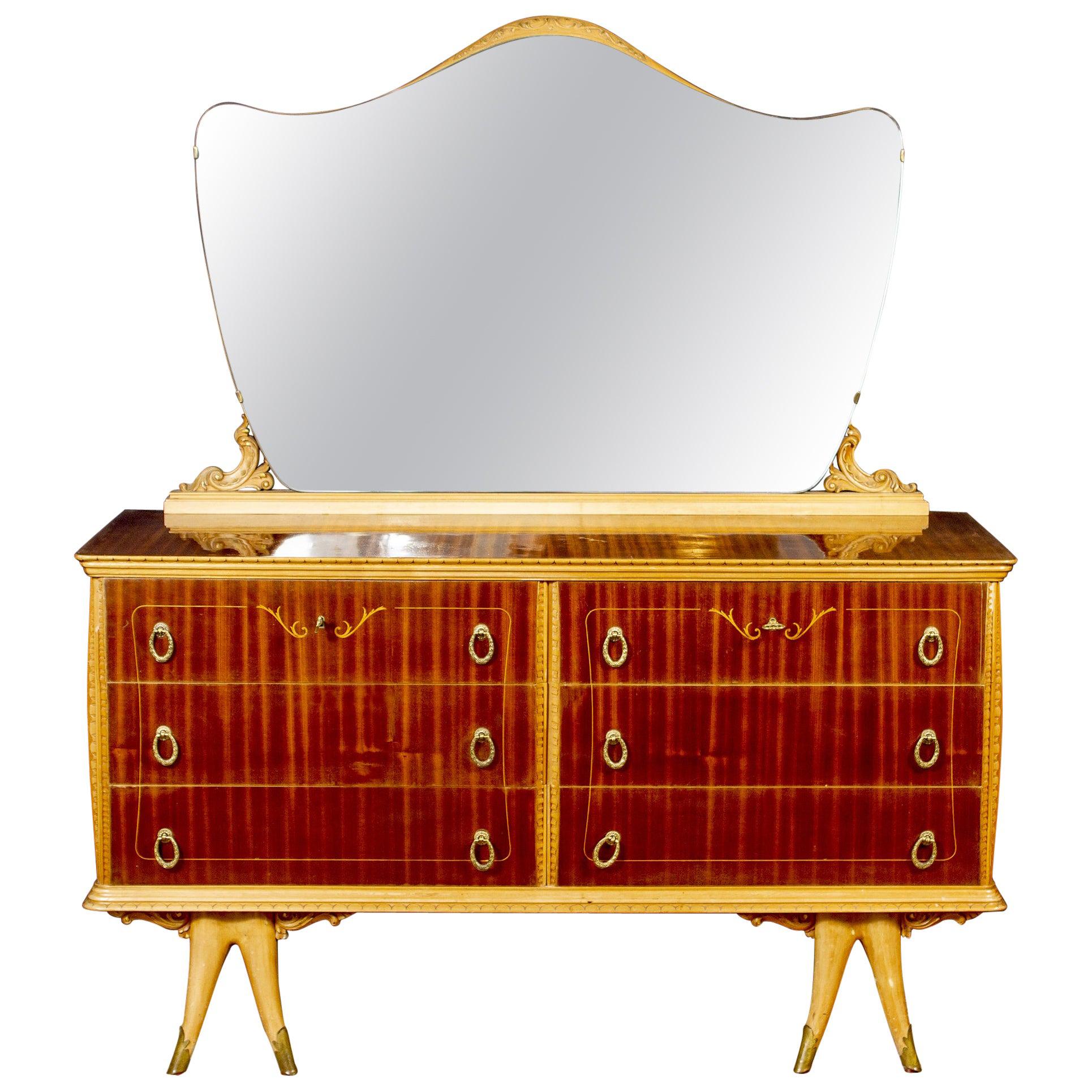
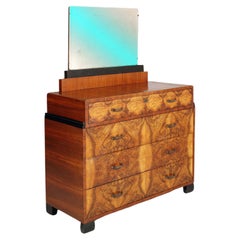
Art Deco Commode & Mirror in walnut by Atelier Varedo, Gino Maggioni attributed.
By Atelier Borsani Varedo, Gino Maggioni
Located in Vigonza, Padua
Commode of innovative design inspired by the geometrism of Josef Hoffmann, the great Viennese designer; this commode is attributed to Gino Maggioni, architect and furniture designer ...
Category
Vintage 1920s Italian Art Deco Bedroom Sets
Materials
Walnut
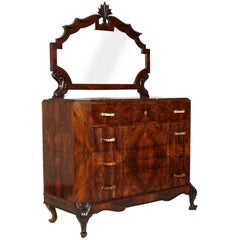
1910s Art Nouveau Dresser Carved Walnut Burl Walnut by Testolini Salviati Venice
By Testolini & Salviati
Located in Vigonza, Padua
Early 20th century Venetian commode Art Nouveau Belle Époque with mirror, carved walnut and burl walnut by Testolini & Salviati , Venice
Precious Bakelite handles fixed with stainles...
Category
Early 20th Century Italian Art Nouveau Commodes and Chests of Drawers
Materials
Burl, Walnut
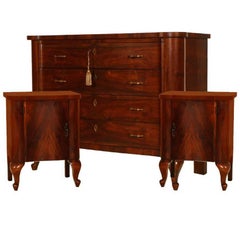
Art Deco Dresser and Nightstands, Walnut and Burl Walnut Gaetano Borsani style
By Gaetano Borsani, Gino Maggioni
Located in Vigonza, Padua
Set of 3 ( Chest of drawers & two nightstands) Art Deco in walnut and burl walnut . Shaped top, four wide two-handed drawers each, front wings with baroque reclining curl end. Couple nightstands in walnut and walnut maple, elegant line of baroque recall. Shaped top, with a pointed handle, large inner compartment in mahogany folder. Wavy front feet.
Restored and wax polished
Dresser measures cm: H 97, W 127, D 55
Bedside tables measures cm: H 60, W 45, D 35.
About Gino Maggioni
Gaetano Borsani, owned his own furniture shop, the Atelier di Varedo, where the 16-year-old Osvaldo received his first training. At that time, the designer of the atelier was the architect Gino Maggioni, who brought with him influences of the early 20th century Jugendstil movement from Vienna and who instilled in the young Borsani an appreciation for the arts and crafts and furniture making.
Luigi Maggioni, known as Gino (San Giorgio su Legnano, 5 May 1898 – Diano Marina, 14 December 1955), was an Italian architect, known for having made an important contribution to the development of the interior architecture and furnishing sector.
Gino Maggioni's work has been offered at auction multiple times, with important realized prices
We can sell the Dresser and bedside tables...
Category
Vintage 1930s Italian Art Deco Commodes and Chests of Drawers
Materials
Walnut, Burl
You May Also Like
Gaetano Borsani for Atelier di Varedo Chest of Drawers in Walnut Burl and Brass
By Gaetano Borsani
Located in Waalwijk, NL
Gaetano Borsani for Atelier di Varedo - Gaetano Borsani, chest of drawers, walnut burl, brass, linoleum, Milan, Italy, 1930
An exceptional commode designed by Gaetano Borsani, foun...
Category
Vintage 1930s Italian Art Deco Commodes and Chests of Drawers
Materials
Brass
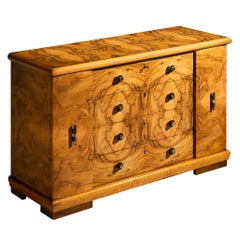
Elegant Italian Design Art Deco Commode 1940 Attributed to Osvaldo Borsani
By Osvaldo Borsani
Located in Rome, IT
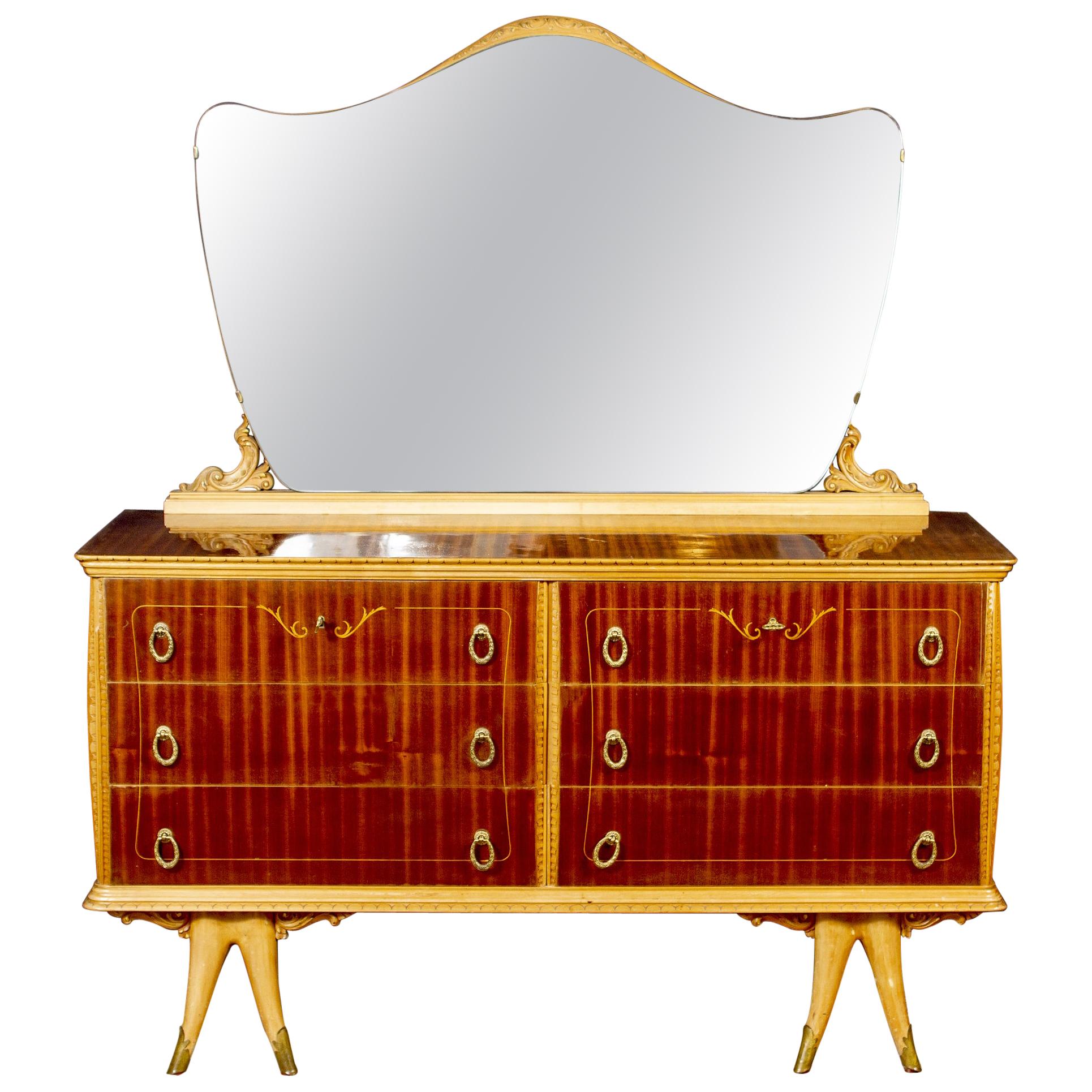
In birch and mahogany veneered with six drawers and brass handles. Available also the finely carved mirror.
Measures: Width 155 cm, height cm 88, depth cm.55
Mirror cm 130 x 90.
...
Category
Vintage 1930s Italian Art Deco Commodes and Chests of Drawers
Materials
Birch
$4,289 Sale Price
20% Off
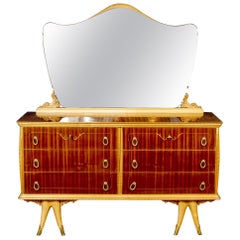
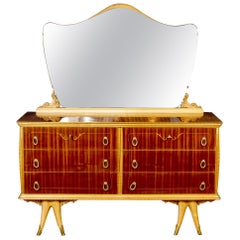
Elegant Italian Design Art Deco Commode 1940 Attributed to Osvaldo Borsani
By Osvaldo Borsani
Located in Rome, IT
In birch and mahogany veneered with six drawers and brass handles. Available also the finely carved mirror.
Measures: Width 155 cm, height cm 88, depth cm.55
Mirror cm 130 x 90.
...
Category
Vintage 1930s Italian Art Deco Commodes and Chests of Drawers
Materials
Birch
$4,289 Sale Price
20% Off
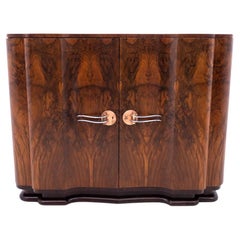
Art Deco walnut commode cabinet, Western Europe, mid-20th century.
Located in Chorzów, PL
A unique old chest of drawers with a geometric shape, typical of the Art Deco style
Made of walnut wood, with original handles
Origin: Western Europe, around 1940
Chest of drawers...
Category
Mid-20th Century Unknown Art Deco Commodes and Chests of Drawers
Materials
Walnut
Large French Art Deco Walnut Chest
Located in Paddock Wood Tonbridge, GB
Art Deco Walnut Chest
A Large French Art Deco Walnut Chest, a stunning embodiment of 1930s elegance that will elevate any interior space. This remarkable piece boasts three long, do...
Category
Vintage 1930s French Art Deco Commodes and Chests of Drawers
Materials
Walnut
1930s Art Deco Double Chest of Drawers, Mirror, Walnut, Mahogany - Italy
Located in Girona, Girona
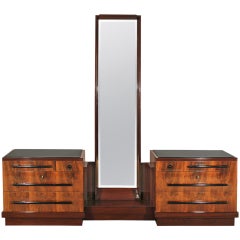
Art Deco double chest of drawers with central original mirror, walnut and mahogany veneered, eight drawers, black opaline on top.
Chests height: 68 cm.
Italy, 1930.
Category
Vintage 1930s Italian Art Deco Commodes and Chests of Drawers
Materials
Walnut, Mahogany
More Ways To Browse
Used Furniture Gallery
Makers Of Antique Furniture
Names Of Antique Furniture
Dining Room Chest
Shop Of The Crafters
Antique Chairs Canada
Architect Drawers
Italian Burl Walnut
Architects Storage Drawers
Sculptural Chest
Dining Commode
Century Black Burl
Industrial Metal Drawers
Art Deco Mirrored Drawers
Walnut Burl Art Deco
Walnut Burl Chest Of Drawers
Black Walnut Chest
Metal Cabinet Drawers Industrial