Items Similar to Indian Gold Coin (Fanam) from about 1700 AD set in 18k Gold
Want more images or videos?
Request additional images or videos from the seller
1 of 5
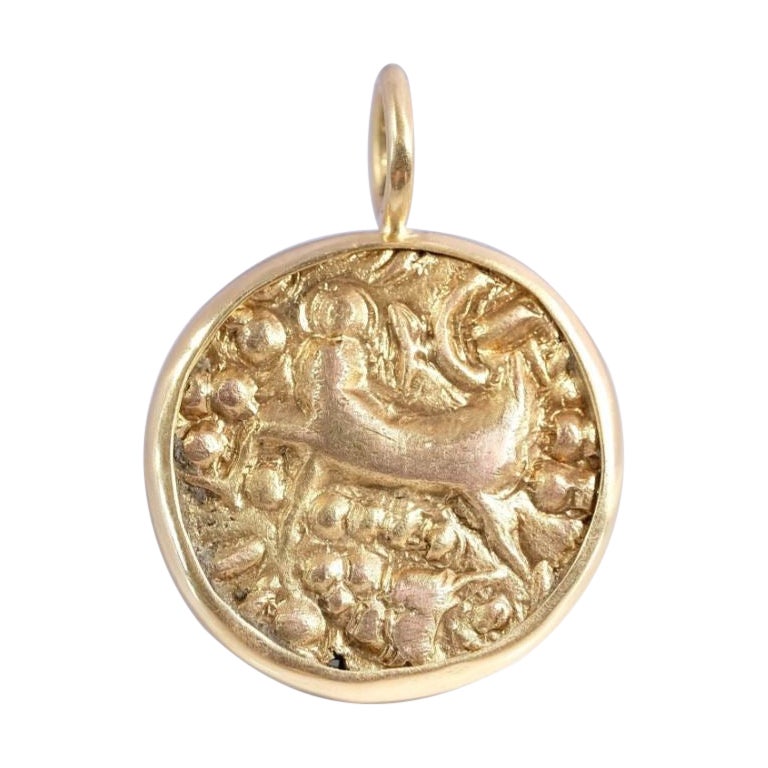
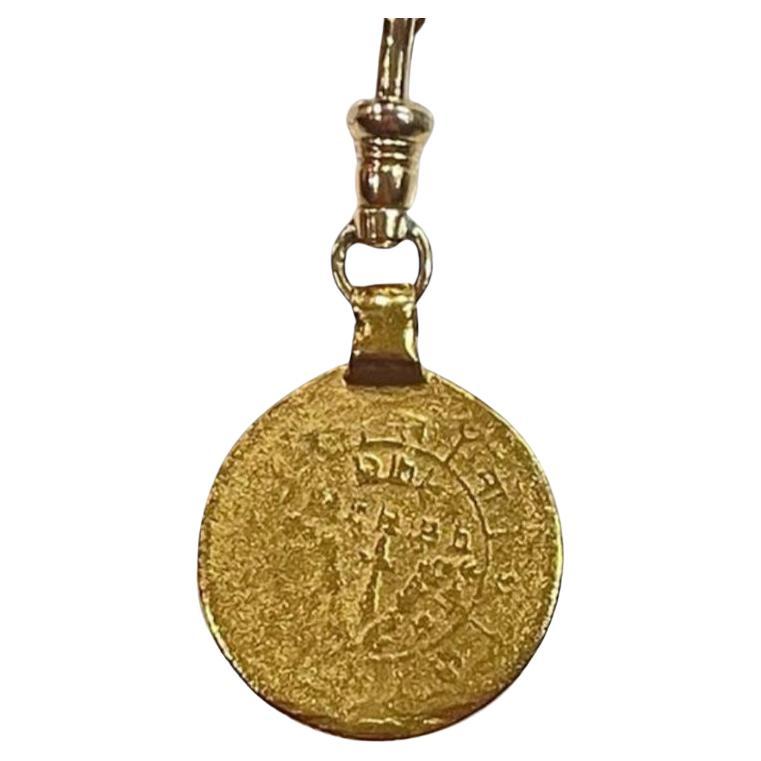
Indian Gold Coin (Fanam) from about 1700 AD set in 18k Gold
$920
$1,15020% Off
£684.32
£855.4120% Off
€801.21
€1,001.5120% Off
CA$1,283.71
CA$1,604.6420% Off
A$1,436.51
A$1,795.6420% Off
CHF 750.08
CHF 937.6020% Off
MX$17,660.40
MX$22,075.5020% Off
NOK 9,463.10
NOK 11,828.8820% Off
SEK 8,904.73
SEK 11,130.9120% Off
DKK 5,977.63
DKK 7,472.0420% Off
Shipping
Retrieving quote...The 1stDibs Promise:
Authenticity Guarantee,
Money-Back Guarantee,
24-Hour Cancellation
About the Item
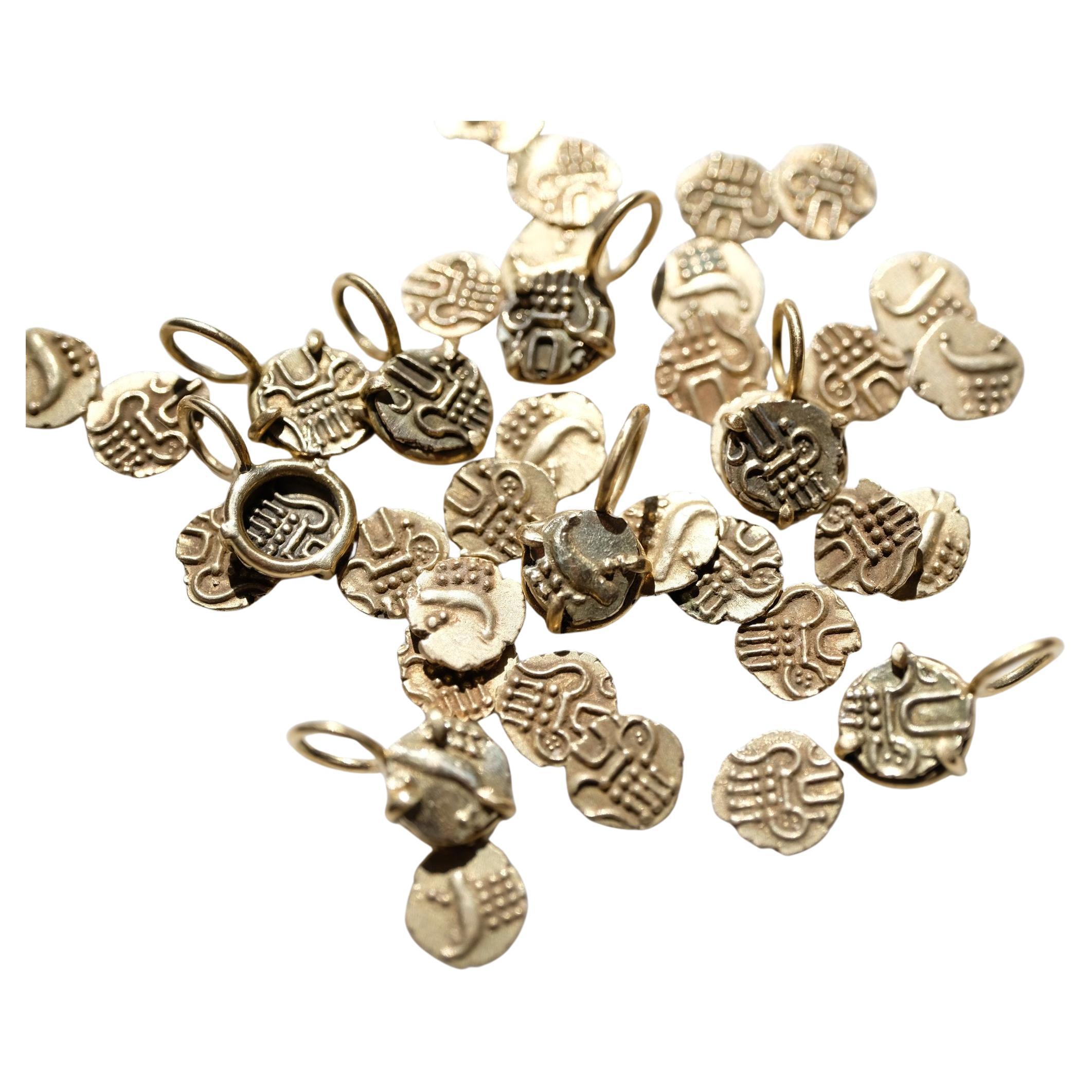
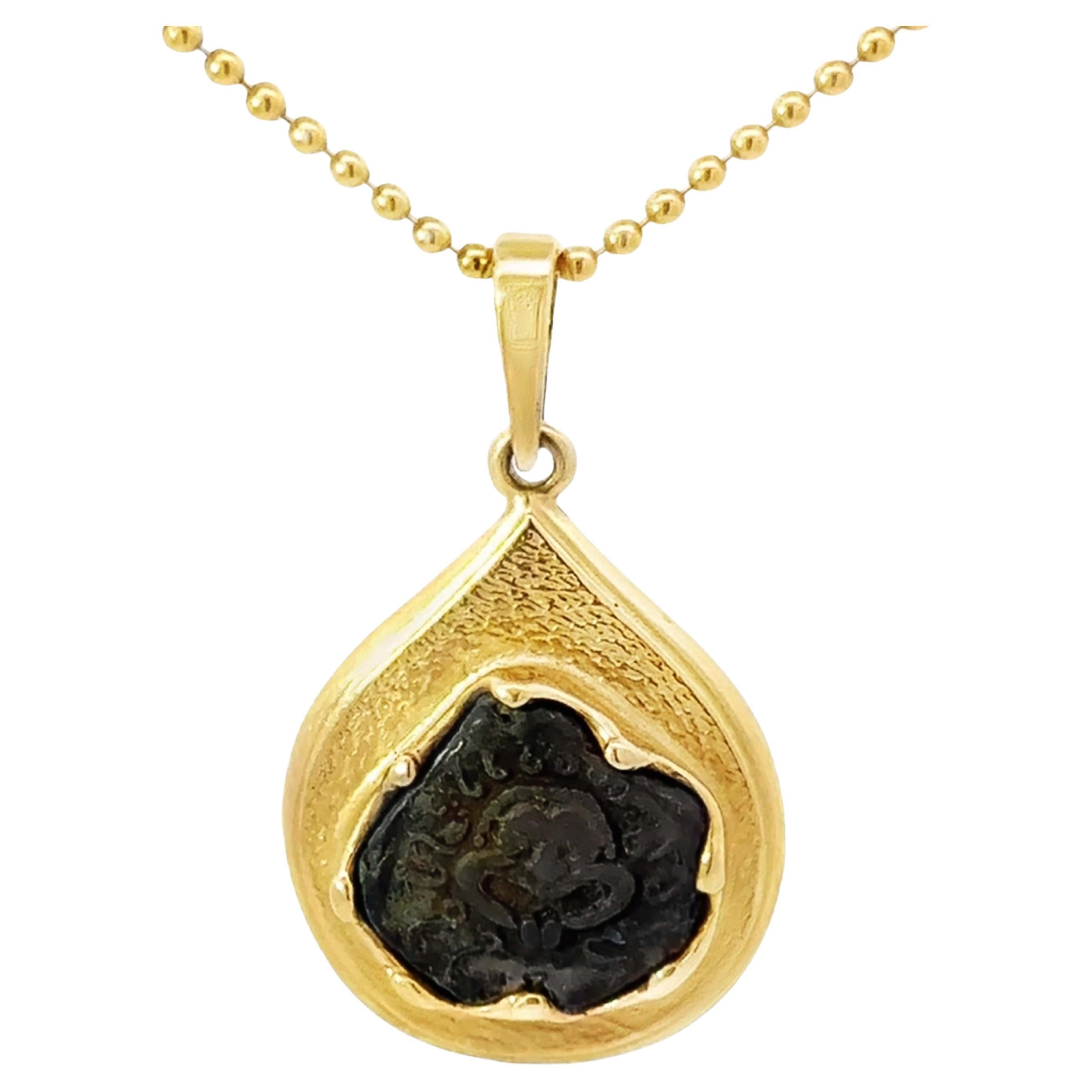
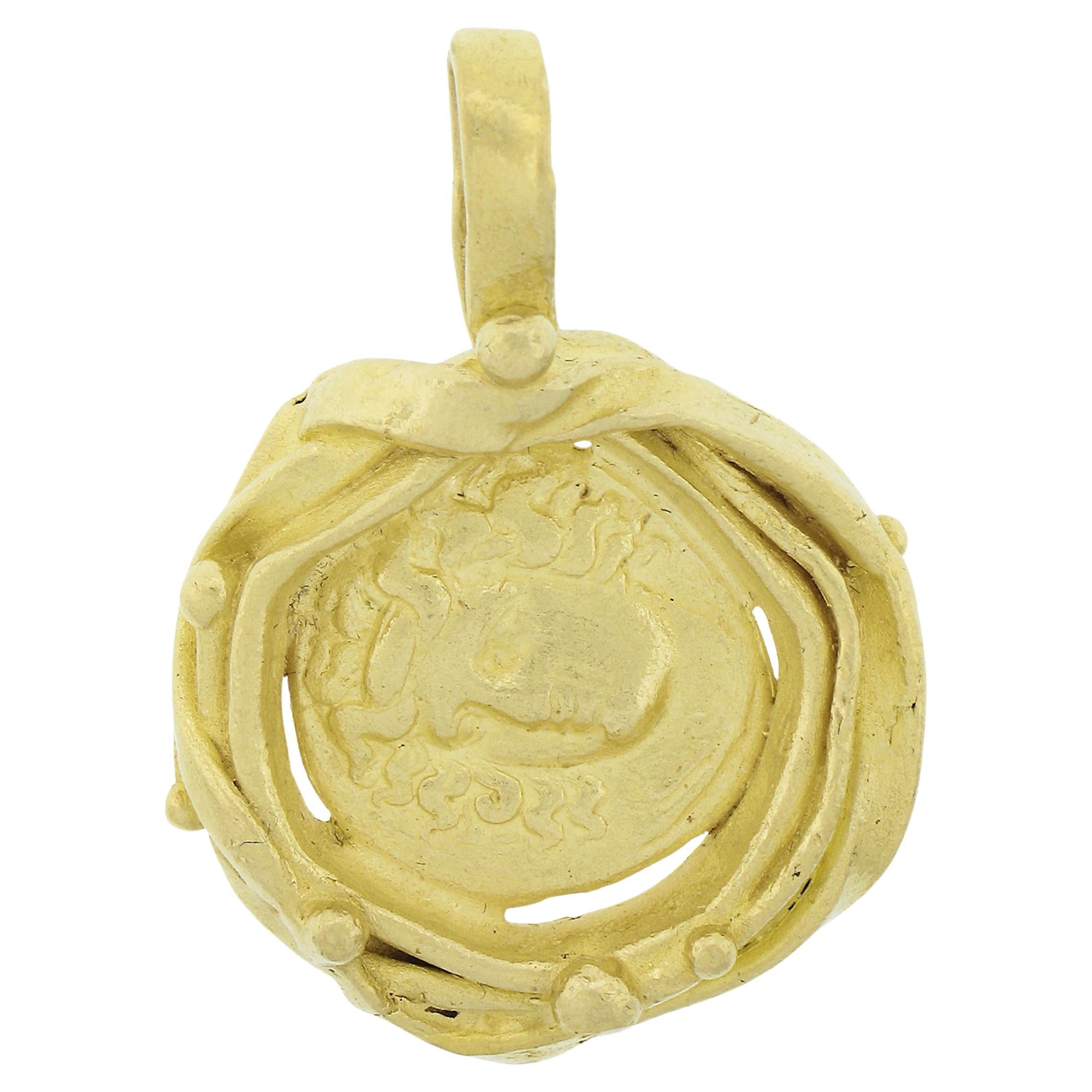
Comes with certificate which guarantees authenticity and provides background information (listed below) on the acquired coin. This coin is very small and cute (see a couple next to a US Quarter for scale)
Gold Rajahs of Coachin, fanam
Obverse: stylized boar standing right right, The legs represented by the rows of dots
Reverse: stylized lion (sardula) standing right, crescent above
Mint: between 1600 and 1750 AD in Coachin
The Travancore Fanam was a type of money that was issued by the State of Travancore, now mainly a part of Kerala in South India. The Fanams (also spelt Fanoms) and Chuckrams (or Chakrams) were known to be some of the smallest coins in the world. The word Fanam appears to be an Anglo-Germanic sound shift from the word Panam, which means money in Dravidian languages. Historically, the Fanam and Chuckram coins were the regular unit of currency in medieval Travancore and appear to have been extensively used for trading in the region of South India. The words Fanam and Panam literally mean money and are still used as a synonym for wealth in Kerala in the native language of Malayalam
- Creator:Peregrine Pendants
- Metal:
- Period:
- Date of Manufacture:2023
- Condition:
- Seller Location:Chicago, IL
- Reference Number:1stDibs: LU4094222915902
About the Seller
5.0
Vetted Professional Seller
Every seller passes strict standards for authenticity and reliability
1stDibs seller since 2024
6 sales on 1stDibs
- ShippingRetrieving quote...Shipping from: Chicago, IL
- Return Policy
Authenticity Guarantee
In the unlikely event there’s an issue with an item’s authenticity, contact us within 1 year for a full refund. DetailsMoney-Back Guarantee
If your item is not as described, is damaged in transit, or does not arrive, contact us within 7 days for a full refund. Details24-Hour Cancellation
You have a 24-hour grace period in which to reconsider your purchase, with no questions asked.Vetted Professional Sellers
Our world-class sellers must adhere to strict standards for service and quality, maintaining the integrity of our listings.Price-Match Guarantee
If you find that a seller listed the same item for a lower price elsewhere, we’ll match it.Trusted Global Delivery
Our best-in-class carrier network provides specialized shipping options worldwide, including custom delivery.More From This Seller
View AllMADE to ORDER - Indian Gold Coin Jammu and Kashmir - 600 AD Set in 18k Gold
Located in Chicago, IL
This listing is made to order, meaning I will make the pendant and ship within three weeks. This coin was purchased from reputable ancient coin dealer.
Excellent gold coin - see picture with US Quarter for scale (also shows smaller gold Indian coins I have for sale).
Comes with certificate which guarantees authenticity and provides background information (listed below) on the acquired coin.
Indian, Post-Kushan (Jammu and Kashmir) - Kidarite Successors, Vinayaditya
Obverse: abstract Kushan style king standing left; ka in Brahmi to left; to right, jaya and monogram of Kidara in Brahmi
Reverse: Abstract Ardoxsho seated facing, holding filleted investiture garland and cornucopia; ditya in Brahmi to left, śri vinaya in Brahmi down right
Struck 5th-7th century
The Kidarites, or Kidara Huns, were a dynasty that ruled Bactria and adjoining parts of Central Asia and South Asia in the 4th and 5th centuries. The Kidarites belonged to a complex of peoples known collectively in India as the Huna, and in Europe as the Chionites (from the Iranian names Xwn/Xyon), and may even be considered as identical to the Chionites. The 5th century Byzantine historian Priscus called them Kidarite Huns, or "Huns who are Kidarites". The Huna/Xionite tribes are often linked, albeit controversially, to the Huns who invaded Eastern Europe during a similar period. They are entirely different from the Hephthalites, who replaced them about a century later.
Ardoksho (Bactrian script Αρδοχϸο), also Romanised as Ardochsho, Ardokhsho and Ardoxsho, the Iranic goddess of wealth was a female deity of the Kushan Empire...
Category
Antique 15th Century and Earlier Pendant Necklaces
Materials
18k Gold
$920 Sale Price
20% Off
Free Shipping
Gold set - India Gold Coin (Fanam) Dainty - Stylized Animals (circa 1700 AD)
Located in Chicago, IL
Comes with certificate which guarantees authenticity and provides background information (listed below) on the acquired coin. Price is for ONE pendant hand set in 18k gold. These coins were bought from a leading US ancient coin dealer...
Category
Antique 15th Century and Earlier Pendant Necklaces
Materials
18k Gold
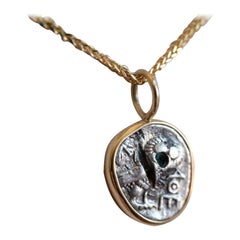
Greek Levant - Owl & Athena - Ancient Greek Coin from set in 18k Gold
Located in Chicago, IL
This is a drachm in the style of the Athenian tetradrachm showing the owl and Athena. Athenian owls were very famous throughout the region, with many localities imitating the coinage...
Category
Antique 15th Century and Earlier Pendant Necklaces
Materials
18k Gold
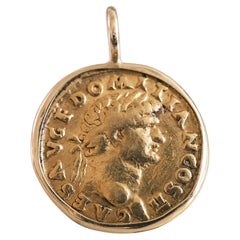
Roman Gold Aureus of Domitian, AD 73, Set in 18k Gold Necklace
Located in Chicago, IL
This rare pendant features an authentic Roman gold aureus, struck in Rome circa AD 73, during the Flavian dynasty, when Domitian held the title of Caesar under his father, Emperor Ve...
Category
Antique 15th Century and Earlier Pendant Necklaces
Materials
18k Gold
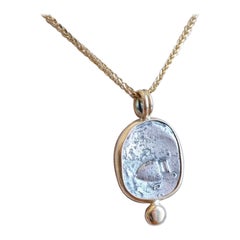
Amphora and Boeotian Shield - Thebes coin from 370 BC IN Gorgeous 18k Gold Setti
Located in Chicago, IL
The thick gold bail, bezel setting and gold accent make it a truly unique pendant with amazing imagery. The last few images depict the coin before I set it.
Comes with certificate ...
Category
Antique 15th Century and Earlier Pendant Necklaces
Materials
18k Gold
$2,360 Sale Price
20% Off
Free Shipping
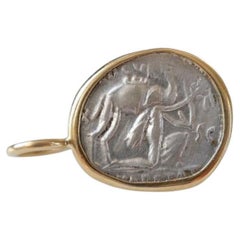
Roman Coin Pendant: Camel and Kneeling King, 1 nd Century
Located in Chicago, IL
Detailed and awesome ancient Roman coin showing poppy and grain.
To appreciate the pendant's size, the relief of the coin, and the shape of the bail, see the picture showing the co...
Category
Antique 15th Century and Earlier Pendant Necklaces
Materials
22k Gold
You May Also Like
Ancient Coin Pendant Necklace 14k Yellow Gold
Located in Honolulu, HI
Item Specifications:
Necklace Metal: 14k Yellow Gold
Total Weight: 12.0 Grams
Chain Length: 20"
Pendant Diameter: 1.25" x 0.75 "
Stamped: chain is stamped "14K" "ITALY"
Conditi...
Category
21st Century and Contemporary Italian Modern Pendant Necklaces
Materials
14k Gold, Yellow Gold
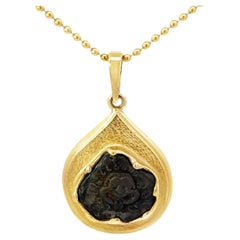
Denise Roberge 22k Yellow Gold Ancient Coin Textured & Bead Work Charm Pendant
By Denise Roberge
Located in Montclair, NJ
Material: 22k Solid Yellow Gold
Total Weight: 28.93 Grams
Diameter: 29.6mm (1.1")
Height w/ Bail: 40mm (1.5")
Thickness: 6.2mm
Bail Measurements: 9.7x6.2mm (inside)
Stamp: ©Denise R...
Category
21st Century and Contemporary Pendant Necklaces
Materials
Yellow Gold
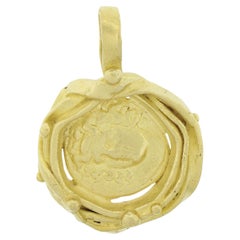
22ct Yellow Gold Ancient Coin Pendant
Located in Brisbane, AU
Ancient coin pendant
22ct Yellow Gold
Enhancer and chain not included*
Please contact to source enhancer and chain or to gift wrap.
Please al...
Category
2010s Australian Artisan Pendant Necklaces
Materials
22k Gold, Yellow Gold
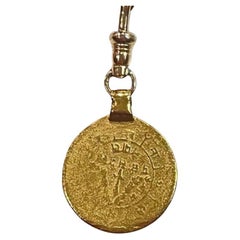
Vintage Queen Nefertiti Hand Made Pendant 15 Karat Gold
Located in Miami, FL
Vintage Queen Nefertiti 15k Gold. One of a kind hand made in 15 karat gold pendant. The pendant measures 50mm in diameter and weights 23 grams.
What is the reason one wears Nefertiti pendant...
Category
Vintage 1980s African Pendant Necklaces
Materials
Gold, 15k Gold
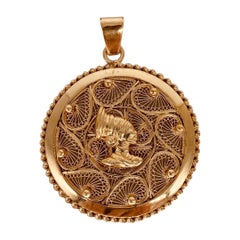
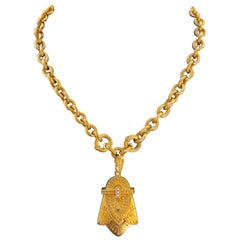
Antique 14k Yellow Gold Etruscan Revival Victorian Locket Pendant Chain Necklace
Located in Bernardsville, NJ
Dating back to the 1870s, this fabulous Victorian locket necklace, is artfully ornamented in consummate Etruscan Revival style. The locket suspends from a very fine 20 inch chain ma...
Category
Antique 1870s Victorian Pendant Necklaces
Materials
14k Gold, Yellow Gold
$11,995
Free Shipping
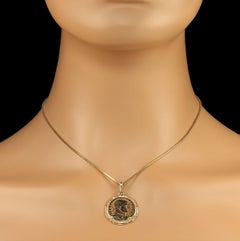
AJD 14k Yellow Gold Coin Replica on 14k Yellow Gold Chain
By Aria Jewelry Design
Located in Raleigh, NC
Antique Coin Replica Pendant in Rich 14K Yellow Gold Bezel – Featuring Soldier Head and Upright Man Design
Step into the past with this timeless antique coin replica pendant, beautif...
Category
Late 20th Century Unknown Artisan Pendant Necklaces
Materials
Yellow Gold, 14k Gold, Mixed Metal
More Ways To Browse
Antique Kerala Jewellery
Turler Automatic
Turquoise Gurhan
Tv Screen Jumbo
Tw Steel Watch Blue
Twizzle Stick
Twly Kelly
U Boat Chimera
Ulysse Nardin Classico Hourstriker 6106
Ulysse Nardin Freak
Ulysse Nardin Maxi Marine Diver
Ulysse Nardin Maxi Marine
Universal Genève On Sale
Used Bulova Marine Star
Used Omega De Ville Tresor
Used Railmaster
Used Rgm Watch
Used Rolex Air King 40mm