Art

41,344 Results
to
6,807
18,384
9,443
7,013
4,830
3,285
Overall Width
to
Overall Height
to
7,650
21,584
166,379
236,252
2,156
2,350
4,722
6,516
6,001
15,869
21,300
26,651
19,314
14,111
5,461
16,714
3,218
2,388
2,235
1,672
1,410
873
818
270
188
156
86
12
1
24,368
13,799
4,158
22,535
11,849
8,758
6,127
4,605
4,182
4,019
3,390
3,032
2,612
2,563
2,140
1,966
1,521
1,361
1,310
1,252
1,250
1,202
1,161
9,831
9,262
6,971
5,410
5,323
6,451
2,365
1,161
658
450
7,011
13,924
26,135
16,618
Art For Sale
Period: 1960s
Period: 1950s
Period: 1940s
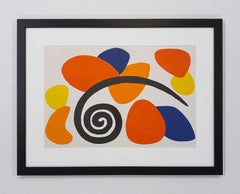
original lithograph

original lithograph

By Walasse Ting

Located in Henderson, NV

Medium: original lithograph. Printed in 1964 and published by Eberhard Kornfeld in an edition of 2000 for the 1 Cent Life portfolio. Size 16 1/8 x 11 3/8 inches (410 x 288 mm). There...

Category

1960s Art

Materials

Lithograph

Abstract Composition, "Nocturnal", Signed Oil on Canvas

Abstract Composition, "Nocturnal", Signed Oil on Canvas

Located in Stockholm, Stockholm

Abstract Composition, "Nattligt" (Nocturnal) possibly from Blidö, Swedish island in the archipelago. Oil on canvas laid on panel, signed with monogram lower centre "UW". The present...

Category

1950s Abstract Geometric Art

Materials

Canvas, Oil, Panel

The Migratory Bird (Constellations)

The Migratory Bird (Constellations)

By Joan Miró

Located in Paris, FR

Stencil, 1959 Publisher : Pierre Matisse (New York) Printer : Mourlot (Paris) Catalog : [Cramer p. 166] Image dimensions : 43.30 cm. × 35.70 cm. (17.05 in. × 14.06 in.) Paper dimensi...

Category

1950s Abstract Art

Materials

Stencil

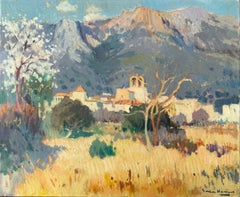
Mediterranean Village Landscape in Catalonia, Original Oil Painting Spain Europe

Mediterranean Village Landscape in Catalonia, Original Oil Painting Spain Europe

By Antonio Sala Herrero

Located in Sitges, Barcelona

Mediterranean Village Landscape in Catalonia, Original Oil Painting Artist: Antonio Sala Herrero (Barcelona, 1926/27–2012) Title/Subject: Palau-saverdera, Girona, Spain Medium: Oil ...

Category

1960s Post-Impressionist Art

Materials

Canvas, Oil

Cubist Tabletop Still Life with Fruit

Cubist Tabletop Still Life with Fruit

Located in Wilton Manors, FL

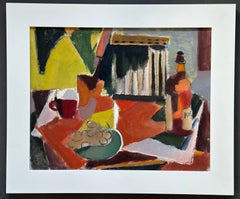
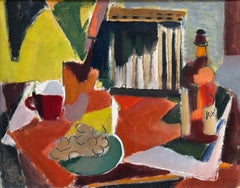
Edgar A. (Ted) Batzell (1915=1996) Cubist Tabletop Still Life Composition, ca. 1960. Oil on artist board measuring 16 x 20 inches. Measuring 24 x 28 inches in a wide white frame. Signed by the artist lower right. Ted Batzell, was listed in Who's Who in American Art in 1957, and is now listed in Who Was Who in American Art. First in his class in the Master's of Fine Art program at Syracuse University he was awarded the highest honor along with the Augusta Hazard scholarship to study abroad. In high school he entered a nationwide poster contest and won a four year scholarship to Syracuse, where today for one year's tuition the cost is $45,000. But he never got to use the Augusta Hazard award because World War II broke out and he went to New York City where he studied at the Art Students League and with artist Walt Kuhn as well as others. Hired by the General Electric company art department in Schenectady, N.Y. , he progressed over the 35 years he was there (the only job he had until retirement), to an art director. At General Electric he was a "Madison Avenue Ad Man" for many years, like those in the series "Mad Men", spending every week at General Electric headquarters in New York City. He was known to his fellow artists, many also renowned, as "the Renaissance Man" having a voracious appetite for reading and collecting art books...

Category

1960s Cubist Art

Materials

Oil, Illustration Board

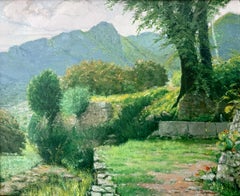
Catalan Post-Impressionist Mountain Landscape, El Montmell Spain Oil Canvas

Catalan Post-Impressionist Mountain Landscape, El Montmell Spain Oil Canvas

Located in Sitges, Barcelona

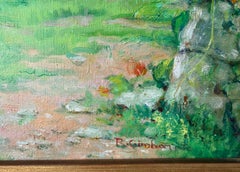
Catalan Post-Impressionist Mountain Landscape, El Montmell Spain Artist: Mossèn Ramon Gimbert Canals Title: Font de Volta, Montmell Medium: Oil on canvas Dimensions: 60 x 73 cm / 23.62 x 28.74 in Signature: Signed lower right, “R. Gimbert” Date: 1965 Frame: Unframed Condition: Good vintage condition, consistent with age. Please see photographs for full details. Inscription: Inscribed, titled and dated on the reverse: “Font de Volta – Montmell – 1965” Origin: Catalonia, Spain Description Atmospheric 1965 Catalan Post-Impressionist landscape by Mossèn Ramon Gimbert Canals, depicting the mountainous surroundings of El Montmell in the Baix Penedès region of Tarragona, Catalonia. The painting is specifically identified on the reverse as “Font de Volta – Montmell – 1965”. The Font del Montmell is located in the recreational area of La Joncosa del Montmell, a mountainous landscape in southern Catalonia traditionally associated with the walking route known as the Volta al Montmell. Gimbert presents the landscape through an intensely Mediterranean palette of emerald greens, turquoise blues, ochres and luminous whites. The composition opens from a secluded foreground garden bordered by stone walls and dense vegetation toward the monumental mountain range beyond. A large tree rising at the right edge acts almost as a natural architectural element, framing the view and creating a powerful sense of depth. The handling of the paint is especially attractive. Areas of broad, vigorous brushwork alternate with thicker passages of impasto, particularly across the mountains, vegetation and cloudy sky. Rather than describing every detail literally, Gimbert builds the landscape through colour, texture and light, giving the scene a distinctly modern and expressive character. Painted in 1965, only four years before the artist’s death, the work belongs to Gimbert’s late period and shows the confidence of a painter deeply familiar with the Catalan countryside. El Montmell was not an isolated subject in his production. Other documented works by the artist depict the same area, confirming its importance within his landscape painting. The combination of identifiable location, original reverse inscription, strong Mediterranean character and substantial 60 x 73 cm format makes this a particularly representative example of mid-20th-century Catalan landscape painting. Biography Mossèn Ramon Gimbert Canals was born in Sant Quirze del Vallès on 25 May 1882 and died in Barcelona on 31 July 1969. He was ordained as a Catholic priest in 1908 while simultaneously developing a sustained career as a painter. These biographical dates are recorded by the Arxiu Diocesà de Barcelona. His artistic production concentrated principally on landscape, especially views of Catalonia, rural architecture, gardens, mountain scenery and coastal subjects. El Montmell appears repeatedly among his known works, alongside subjects including Horta, Camprodon and maritime scenes. Gimbert participated actively in the Barcelona art world. His most significant documented exhibition was a solo presentation at the prestigious Galeries Laietanes in Barcelona from 28 December 1935 to 10 January 1936. The exhibition is recorded in the Institut d’Estudis Catalans repertory of individual art exhibitions in Catalonia and included a catalogue listing the exhibited works and their prices. His paintings belong to the broader tradition of 20th-century Catalan landscape painting, combining naturalistic observation with increasingly free brushwork, expressive colour and a distinctly Mediterranean sensitivity to light. Artistic Inspiration The work belongs to the rich tradition of Catalan modern landscape painting developed from the late 19th century onward. Its expressive treatment of colour and vegetation recalls the Mediterranean landscapes of Joaquim Mir, while its luminous atmosphere and direct observation of nature can also be related to painters such as Eliseu Meifrèn, Santiago Rusiñol and Joaquim Sunyer. Rather than suggesting direct stylistic dependence, these comparisons place Gimbert within the wider Catalan and Spanish tradition in which landscape became a vehicle for colour, atmosphere and personal expression. Landscape Paintings Mountain Paintings Post-Impressionist Paintings Spanish Paintings Catalan Art Modern European Paintings Mediterranean Landscape Paintings Post-Impressionism Catalan Modernism Spanish Modern Art Mediterranean Landscape Painting Catalan landscape, Spanish landscape painting, El Montmell, Baix Penedès, Tarragona landscape, Catalonia painting, Mediterranean landscape, mountain landscape, Post-Impressionist landscape, Spanish Post-Impressionism, Catalan Post-Impressionism, 1960s Spanish painting...

Category

1960s Impressionist Art

Materials

Canvas, Oil

Pair of Dachshunds Dogs Oil Paintings set in a Wood Frame

Pair of Dachshunds Dogs Oil Paintings set in a Wood Frame

Located in Douglas Manor, NY

6239 Pair of dachshund in a moody oil painting Set in a gilt frame signed Image size 19.5x23.5"

Category

1940s Art

Materials

Oil

original lithograph

original lithograph

By Alexander Redein

Located in Henderson, NV

Medium: original lithograph. This lithograph is from the rare 1952 "Improvisations" portfolio, published by the Artists Equity Association of New York on the occasion of the 1952 Spr...

Category

1950s Art

Materials

Lithograph

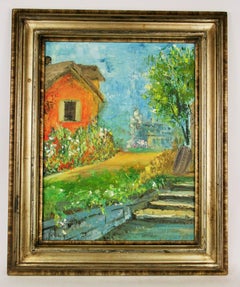
Vintage Impressionist Tuscan Country House Landscape oil Painting

Vintage Impressionist Tuscan Country House Landscape oil Painting

Located in Douglas Manor, NY

#5-2752b Tuscan Country House Landscape, a country scene painting , oil on artist board displayed in a gilt-silver wood frame, signed lower left by Wane. Image size 17 H x 12.5 W

Category

1960s Art

Materials

Oil

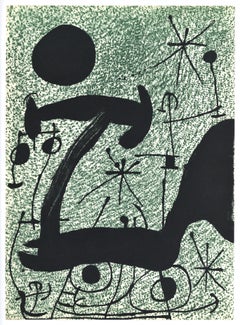
original lithograph

original lithograph

By Joan Miró

Located in Henderson, NV

Medium: original lithograph. Catalogue reference: Mourlot 508. Printed in 1967 for the art revue Derriere le Miroir (issue number 164-165 -- L'Oiseau Solaire, L'Oiseau Lunaire, Etinc...

Category

1960s Abstract Art

Materials

Lithograph

Fernand Leger, Untitled, from Circus, 1950

Fernand Leger, Untitled, from Circus, 1950

By Fernand Léger

Located in Fairfield, CT

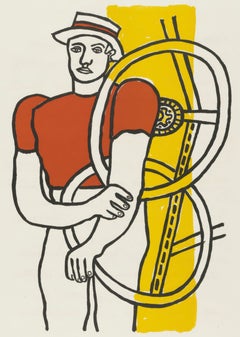
Artist: Fernand Leger (1881–1955) Title: Untitled (Sans titre) Year: October 5, 1950 Medium: Lithograph on velin d'Arches paper Paper Size: 16.63 x 12.69 inches (42.24 x 32.23 cm) Co...

Category

1950s Cubist Art

Materials

Lithograph

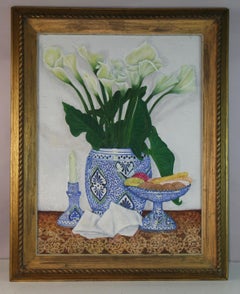
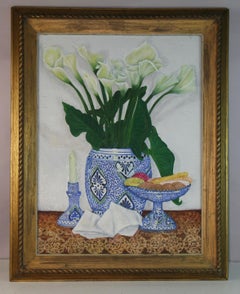
Delft Blue and White Vase with LiliesTable Setting Oversized oil Painting

Delft Blue and White Vase with LiliesTable Setting Oversized oil Painting

Located in Douglas Manor, NY

6068 Oversized oil on canvas of Deft ceramics with lilies interior table setting Custom gilt wood frame Image size 31x23.5"

Category

1960s Art

Materials

Oil

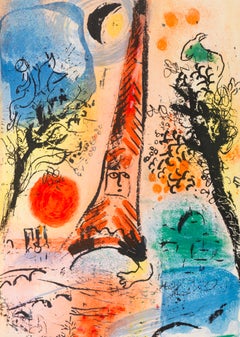
Ballet - printed in 1969

Ballet - printed in 1969

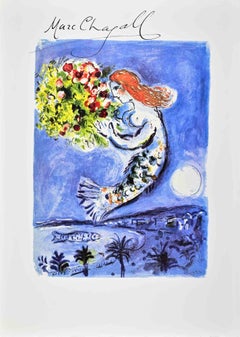
By (after) Marc Chagall

Located in Henderson, NV

Medium: offset lithograph (after the watercolor). Printed in 1969 at the Mourlot Freres atelier for the "Marc Chagall: dessins et aquarelles pour le Ballet" book. Sheet size: 13 3/4 ...

Category

1960s Art

Materials

Offset

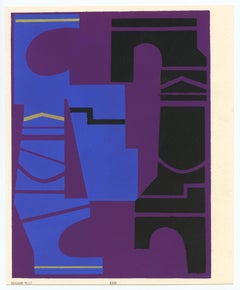
(after) Edgard Pillet - pochoir, 1952

(after) Edgard Pillet - pochoir, 1952

Located in Henderson, NV

Medium: pochoir. Printed in 1952 for the Temoignages pour l'art abstrait portfolio (Witnesses for Abstract Art) and published by Editions d'Art d'Aujourd'hui in an edition of 1500. S...

Category

1950s Art

Materials

Lithograph, Stencil

Fauvist oil on canvas, rural landscape, France, signed and dated

Fauvist oil on canvas, rural landscape, France, signed and dated

Located in Valladolid, ES

An extraordinary painting in the style of André Derain’s Fauvist school. It evokes A. Derain’s work *Landscape near Chatou* (1904–1905). The painting clearly demonstrates a stylistic...

Category

1950s Fauvist Art

Materials

Canvas

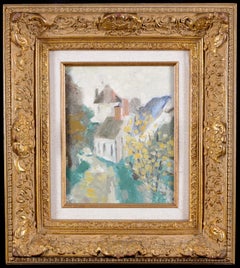
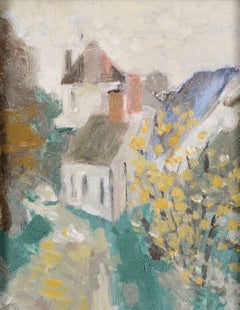
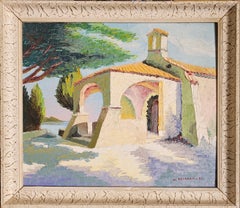
Church in a Provençal Landscape, Oil on Board, Signed, 1960s Framed

Church in a Provençal Landscape, Oil on Board, Signed, 1960s Framed

Located in Cotignac, FR

A mid-century Provençal landscape of a chapel by the coast by Italian artist, Jo Bernardi. Signed, dated and framed. A Mediterranean atmosphere radiates from this composition. The ...

Category

1960s Fauvist Art

Materials

Oil, Board

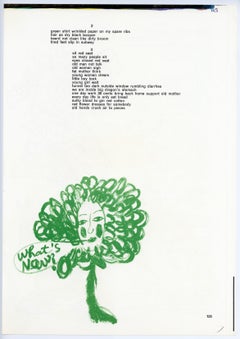
'Woman In Bagdad' — 1950s Japanese Sôsaku-hanga Signed Woodblock Print

'Woman In Bagdad' — 1950s Japanese Sôsaku-hanga Signed Woodblock Print

Located in Myrtle Beach, SC

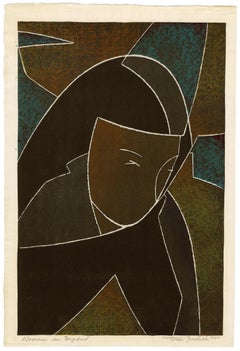
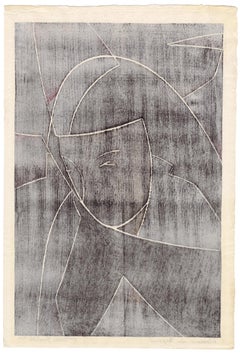
Toshi Yoshida, 'Woman In Bagdad', color woodblock print, 1954, edition not stated. Signed, dated, and titled, in pencil. A fine, richly-inked impression, with fresh colors, on cream-wove Japan paper; the full sheet with margins (1/2 to 7/8 inch); minor toning in the margins, otherwise in excellent condition. Self-carved and self-printed by the artist. Archivally sleeved, unmatted. Image size 14 13/16 x 9 7/8 inches; sheet size 16 1/4 x 11 inches (oban tate-e). Literature: Oliver Statler, Modern Japanese Prints: An Art Reborn, 1959, pp. 168–69. Eugene M. Skibbe, “Yoshida Toshi 1911–1999: Diversity, Change, and Continuity in the Yoshida Art Tradition,” Andon, no. 53, Society for Japanese Arts, 1996, pp. 5–14. Kendall H. Brown, “Yoshida Toshi: The Nature of Tranquility,” in A Japanese Legacy: Four Generations of Yoshida Family Artists, Minneapolis Institute of Arts, 2002, pp. 72–80; Woman in Bagdad catalogued p. 91, no. 55. Exhibitions: 'Japan & Beyond: The Yoshida Family Legacy in Japanese Woodblock Prints', curated by Kendall Brown and Quyen Le, The Ruth and Sherman Lee Institute for Japanese Art, Hanford, CA. February 3, 2004 - March 27, 2004. 'Color in Relief: Wood Block Prints from Origins to Abstraction', Georgetown University Library, 2016. Collections: Art Institute of Chicago, Clark Center for Japanese Art and Culture, Minneapolis Institute of Art, University of California Merced, University of Oregon (The Lavenberg Collection of Japanese Prints). ABOUT THIS WORK Woman in Bagdad belongs to an important group of figure studies Yoshida created in 1954 as he moved beyond the naturalistic landscape tradition associated with his father, Hiroshi Yoshida. The veiled figure is reduced to broad, interlocking shapes of deep brown, ochre, and blue-green, separated by narrow carved white lines. Yoshida appears to have printed the composition from a single block, applying individual colors to separately defined areas—a technique closely related to the white-line color woodcut developed by B. J. O. Nordfeldt and the Provincetown Printers and refined by Blanche Lazzell. The continuous white channels serve as both boundaries between colors and an active linear structure, transforming the figure into a near-abstract arrangement of flattened forms while retaining its human presence. Created at a pivotal moment in Yoshida's development, the print anticipates the increasingly nonobjective woodcuts that occupied him during the following two decades. ABOUT THE ARTIST Yoshida Toshi (1911–1995) began training at the age of fourteen under his father, Yoshida Hiroshi, a leading artist of the twentieth-century Japanese printmaking revival known as shin-hanga (“new prints”), which continued the traditional collaborative system of Japanese woodblock printing. From 1932 to 1935, Toshi studied at the Taiheiyo-Gakai (Pacific Painting Association), which his father had helped establish. Before the Pacific War, Toshi traveled extensively with his father in Asia, Europe, Egypt, and the United States. He later continued his international travels, particularly in Mexico, the United States, Canada, and Africa. His early prints remained strongly influenced by Hiroshi's work and the highly refined techniques practiced in the Yoshida studio. Following his father's death in 1950, Toshi assumed responsibility for the studio while increasingly pursuing an independent artistic direction. Beginning in the early 1950s, he undertook a highly personal exploration of abstraction, creating and printing his own works in the sōsaku-hanga (“creative print”) manner, in which the artist assumes direct responsibility for the design, carving, and printing. During this exceptionally productive period, Toshi produced a large body of nonobjective woodcuts characterized by complex geometric structures, richly layered color, and experimentation with the expressive possibilities of the woodblock medium. His abstract work placed him among the more adventurous Japanese printmakers of the postwar period. The British Museum holds a substantial group of these works, including Misty Dance (1957), Frontier (1962), Mystery (1964), Isotope (1968), and Where (1972). In the early 1960s, Toshi also returned to representational subjects, eventually concentrating on large-scale scenes of African wildlife in its natural habitat. In 1984 he published the first of a series of illustrated children's books devoted to African animals (Dōbutsu Ehon Shirīzu), which he continued into the early 1990s. In 1966, with artist Yuki Rei...

Category

1950s Abstract Art
Materials

Woodcut

original lithograph

original lithograph

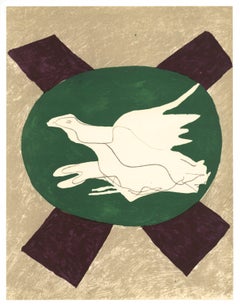
By Georges Braque

Located in Henderson, NV

Medium: original lithograph. Printed in 1958 for the art revue XXe Siecle (issue number 11) and published in Paris by San Lazzaro. Sheet size: 12 3/8 x 9 1/2 inches (314 x 242 mm). N...

Category

1950s Art

Materials

Lithograph

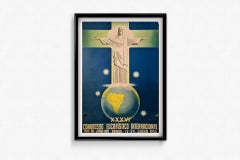
1955 Original Poster by La Motta Rio de Janeiro Eucharistic Congress

1955 Original Poster by La Motta Rio de Janeiro Eucharistic Congress

By Paolo La Motta

Located in PARIS, FR

Created by La Motta in 1955, this original poster was commissioned for the 36th International Eucharistic Congress in Rio de Janeiro. Held from July 17 to 24, the congress was an important international Catholic gathering organized around the theme of Christ the Redeemer and his Eucharistic kingdom. The composition places Rio’s celebrated statue of Christ the Redeemer at the center of an expansive celestial vision. With his arms extended, Christ forms the upper section of a monumental cross rendered in the green and yellow colors associated with Brazil. Below, he stands upon a globe centered on South America, where a radiant star indicates the location of Rio de Janeiro. A deep blue background and surrounding constellation of stars give the poster a sense of spiritual grandeur. The restrained palette of blue, green, yellow and ivory combines religious symbolism with the visual identity of Brazil, while the bold typography at the bottom clearly announces the congress and its dates. Signed La Motta in the lower right, the design is characteristic of mid-century event posters, using simplified forms and carefully balanced geometry to communicate a powerful message from a distance. The poster was printed by Rebizzi in São Paulo. This original 1955 poster is an evocative document of Brazilian religious and cultural history. Its striking combination of Christ the Redeemer, cartographic imagery and modern graphic design makes it particularly appealing to collectors of Brazilian posters...

Category

1950s Art

Materials

Paper, Lithograph, Cardboard

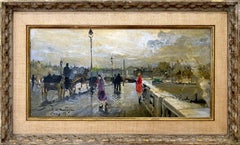
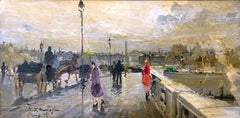
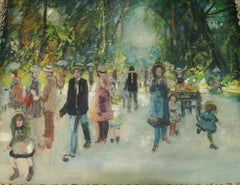
Parisians Strolling in The Park, Oil on Canvas, Framed, 1940s

Parisians Strolling in The Park, Oil on Canvas, Framed, 1940s

Located in Douglas Manor, NY

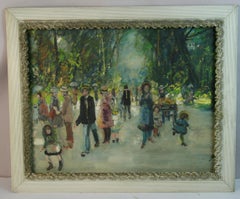
6069 Oversized Oil on canvas of Parisians strolling in the park set in a period frame Image size 22.5x27.5"

Category

1940s Art

Materials

Oil

original lithograph

original lithograph

By Andre Beaudin

Located in Henderson, NV

Medium: original lithograph. This Beaudin lithograph was printed in Paris in 1961 by the Mourlot Freres atelier and published by Editions Verve. Size: 11 1/2 x 8 1/2 inches (293 x 21...

Category

1960s Art

Materials

Lithograph

original lithograph

original lithograph

By Jean Cocteau

Located in Henderson, NV

Medium: original lithograph. Printed in Paris in 1957 at the Mourlot Freres atelier. Size: 8 3/4 x 6 inches (225 x 150 mm). Jean Cocteau executed this original lithograph to depict a...

Category

1950s Art

Materials

Lithograph

Shop Art on 1stDibs: Photography, Drawings, Prints, Sculptures and Paintings for Sale

Whether growing your current fine art collection or taking the first steps on that journey, you will find an extensive range of original photography, drawings, prints, sculptures, paintings and more on 1stDibs.

Visual art is among the oldest forms of expression, and it has been evolving for centuries. Beautiful objects can provide a window to the past or insight into our current time. Art collecting enhances daily life through the presence of meaningful work. It displays an appreciation for culture, whether a print by Elizabeth Catlett channeling social change or a narrative quilt by Faith Ringgold.

Contemporary art has lured more initiates to collecting than almost any other category, with notable artists including Yayoi Kusama, Marc Chagall, Kehinde Wiley and Jean-Michel Basquiat. Navigating the waiting lists for the next Marlene Dumas, Jeff Koons or Jasper Johns has become competitive.

When you’re living with art, particularly as people more often work from home and enjoy their spaces, it’s important to choose art that resonates with you. While the richness of art with its many movements, styles and histories can be overwhelming, the key is to identify what is appealing and inspiring. Artwork can play with the surrounding color of a room, creating a layered approach. The dynamic shapes and sizes of sculptures can set different moods, such as a bronze by Miguel Guía on a mantel or an Alexander Calder mobile suspended over a table. A wall of art can evoke emotions in an interior while showing off your tastes and interests. A salon-style wall mixing eclectic pieces like landscape paintings with charcoal drawings is a unique way to transform a space and show off a collection.

For art meditating on the subconscious, investigate Surrealists like Joan Miró and Salvador Dalí. Explore Pop art and its leading artists such as Andy Warhol, Rosalyn Drexler and Keith Haring for bright and bold colors. Not only did these artists question art itself, but also how we perceive society. Similarly, 20th-century photography and abstract painting reconsidered the intent of art.

Abstract Expressionists like Helen Frankenthaler and Lee Krasner and Color Field artists including Sam Gilliam broke from conventional ideas of painting, while Op artists such as Yaacov Agam embraced visual trickery and kinetic movement. Novel visuals are also integral to contemporary work influenced by street art, such as sculptures and prints by KAWS.

Realist portraiture is a global tradition reflecting on what makes us human. This is reflected in the work of Slim Aarons, an American photographer whose images are at once candid and polished and appeared in Holiday magazine and elsewhere. Innovative artists Mickalene Thomas and Kerry James Marshall are now offering new perspectives on the form.

Collecting art is a rewarding, lifelong pursuit that can help connect you with the creative ways historic, modern and contemporary artists have engaged with the world. For more tips on piecing together an art collection, see our guide to buying and displaying art.

Find photography, drawings, paintings, prints and other art for sale on 1stDibs.

Questions About Art
  • 1stDibs ExpertOctober 30, 2024
    How much Amos Amit art is worth depends on its size, condition and other factors. In 2022, his Birch Trees, Batik sold for $250 at an auction in Washington, D.C. An Israeli-American, Amit produces artwork out of batik fabric, which he waxes and dyes. He also offers signed giclée reproductions of his works. Generally, these prints are worth less than his originals. If you own an Amit, a certified appraiser or experienced art dealer can help you determine how much it may be worth. Shop a large selection of fine art on 1stDibs.
  • 1stDibs ExpertSeptember 16, 2024
    Yes, some Bob Ross paintings are worth something. In 2023, the first painting featured on his television series The Joy of Painting sold for more than $9.8 million at auction. Other pieces have sold for tens or hundreds of thousands of dollars. How much a particular painting is worth will depend on its size, history, condition and other factors. If you own a Ross painting, a certified appraiser or knowledgeable art dealer can help you with the valuation process. Find a large collection of fine art on 1stDibs.
  • 1stDibs ExpertAugust 15, 2024
    The difference between traditional East and West art comes down largely to the aims of artists. Traditionally, Eastern artists sought to tell stories and reveal their perceptions of the world around them, seeking to make their works visually appealing, not realistic. Until the modern era, which began in the mid-19th century, most Western artists focused on depicting scenes as realistically as possible, using techniques like linear perspective to give two-dimensional images the illusion of existing in three dimensions. On 1stDibs, shop a large collection of fine art.
  • 1stDibs ExpertMay 30, 2024
    A few things make art valuable. The technical skill that goes into producing a work contributes to its value, as do its aesthetic qualities, such as its composition, visual appeal and colors. Pieces that have some historical significance due to their subject or history of ownership tend to fetch higher prices. The importance and level of fame of the artist, as well as the overall condition of the piece, also affect how much it is worth. On 1stDibs, shop a wide range of fine art.
  • 1stDibs ExpertMay 30, 2024
    The oldest art in the world is widely considered to be the cave paintings produced by early ancestors. These works date back more than 45,000 years. Paleolithic artists who produced these paintings depicted people, places and animals, often developing specialized systems of symbols to convey meaning. On 1stDibs, shop a large selection of fine art.
  • 1stDibs ExpertFebruary 27, 2024
    The most famous painting in the Louvre is arguably the Mona Lisa. Painted in the early 16th century by Italian Renaissance master Leonardo da Vinci, it is a half-length oil-on-wood portrait of Lisa del Giocondo. Some other famous paintings in the Louvre include Liberty Leading the People by Eugène Delacroix, Oath of the Horatii by Jacques-Louis David, The Wedding at Cana by Paolo Veronese, The Raft of the Medusa by Théodore Géricault and Death of the Virgin by Caravaggio. On 1stDibs, explore a large selection of fine art.
  • 1stDibs ExpertAugust 8, 2024
    Leonardo da Vinci actually painted the Mona Lisa. Although works of fiction, including novels and films, have led some people to falsely believe that the work was secretly created by someone else, there is no historical evidence to support this. Interestingly, there is a very similar painting in the collection of the Museo del Prado in Madrid, Spain. Called La Gioconda, it was most likely painted by one of da Vinci's apprentices and completed while the master artist worked on the Mona Lisa. On 1stDibs, explore a large collection of fine art.
  • 1stDibs ExpertFebruary 21, 2024
    The seven elements of art are line, shape, space, value, form, texture and color. Line refers to the strokes that form an object, while space is how these elements are positioned within the work. Color is the term for the hues in a piece, and value is a description of how light or dark these hues are. Texture can refer to actual differences in the feel of the art or to techniques that create an illusory visual textural effect. Shape is the word for the two-dimensional elements of a work, and form refers to three-dimensional works. Find a large selection of fine art on 1stDibs.
  • 1stDibs ExpertSeptember 16, 2024
    The Salvator Mundi is likely worth more than $450 million. That's the price the painting fetched when it sold at auction in 2017, establishing a new record for the most expensive selling price for any work of art in the world. With inflation, the painting is likely worth millions more today. Leonardo da Vinci painted the Salvator Mundi sometime between 1499 and 1510. The painting is a portrait of Christ making the sign of the cross. On 1stDibs, explore a diverse assortment of fine art.
  • 1stDibs ExpertMay 30, 2024
    Art collectors buy their art from a few places. They may attend auctions to bid on works or attend gallery exhibitions to purchase pieces. Some arrange to buy art through dealers, while others shop on trusted online platforms to find paintings, prints, sculptures and other works. Explore a diverse assortment of art on 1stDibs.
  • 1stDibs ExpertSeptember 16, 2024
    How much Matt Lamb paintings are worth depends on their size, history, condition and other factors. In 2006, an oil on board painting by Lamb entitled Three Women sold for more than $800. The American artist was known as a proponent of world peace and is perhaps most famous for his Umbrellas for Peace project launched after the September 11th attacks in 2001. If you own a Lamb painting, a certified appraiser or knowledgeable art dealer can perform a valuation for you. On 1stDibs, find a wide range of American art.
  • 1stDibs ExpertFebruary 13, 2024
    Yes, artists do seem to see the world differently. Science has even confirmed it. Studies have shown that successful artists tend to focus on their entire field of vision rather than on the individual objects that fill it. Researchers speculate that this may give artists the unique ability to notice shadows and contrasts that other people are unlikely to perceive. Explore a wide range of fine art on 1stDibs.
  • 1stDibs ExpertJanuary 10, 2025
    Barrington Watson is famous for his achievements as an artist. In fact, he is one of the most acclaimed Jamaican artists of all time. He co-founded the Contemporary Jamaican Artists' Association and showed his work in exhibitions locally and abroad. Some of his most famous paintings include Conversation, The Garden Party and Broom Crew. Shop a wide variety of fine art on 1stDibs.
  • 1stDibs ExpertJanuary 10, 2025
    The term that refers to the images or symbols used to convey specific meanings in an artwork is iconography. It derives from Greek. Examining the iconography of an artwork is one way to identify the period in which it was made, as standard symbols evolved. Explore a large selection of art on 1stDibs.
  • 1stDibs ExpertJanuary 10, 2025
    Several famous painters burned their own artwork. Pablo Picasso did so in order to keep warm when he was facing financial hardships, and Camille Claudel destroyed most of her pieces by fire when suffering from mental illness. Dozens of charred paintings were discovered in Francis Bacon's home after his death as well. In some cases, the burning of art has even been part of the artwork itself. An example of this is Damien Hirst's The Currency. For this conceptual work, the contemporary artist sold 10,000 NFTs and then live-streamed himself burning the first thousand works he ever produced. On 1stDibs, explore a large collection of fine art.
  • 1stDibs ExpertJanuary 10, 2025
    Opinions may differ as to what Steven Brown's most famous painting is. However, he is widely known for his colorful depictions of animals. Some of his most popular prints among collectors include Heather McCoo, Allan & Jackie McZoo, Forest Of Argyle, Home and Save the Ocean Families. Shop a diverse assortment of art on 1stDibs.
  • 1stDibs ExpertOctober 7, 2024
    The difference between a mural and a mosaic is in the specificity of the terms. Mural is a general term for a piece of artwork applied directly to a wall. On the other hand, a mosaic is an artwork made by arranging small pieces of material, such as tiles, glass fragments or stones. Mosaics can be murals, but they may also adorn other surfaces, such as floors and furniture. Explore a diverse assortment of art on 1stDibs.
  • 1stDibs ExpertOctober 7, 2024
    The difference between fine and functional art is its purpose. Functional art usually has a practical use. Ceramics, textiles and industrial design are examples of functional art. On the other hand, fine art typically exists to tell a story, convey a message or express an idea. Examples of fine art include paintings, prints and sculptures. Shop a wide variety of fine and functional art on 1stDibs.
  • 1stDibs ExpertOctober 7, 2024
    The difference between Conté and charcoal is the binding agents that they contain. Charcoal uses graphite binding, while Conté crayons or pastels feature wax binding. Due to their differing binders, Conté pastels are less messy than charcoal but more difficult to blend. On 1stDibs, explore a diverse assortment of art from some of the world's top dealers and galleries.
  • 1stDibs ExpertOctober 7, 2024
    To tell if an artist's signature is real, you generally need to compare it to images of their signature on authenticated works. You can find such pictures posted on the pages of trusted online resources. However, some counterfeiters are very skilled at copying signatures, making it difficult to determine reproductions from originals in some cases. As a result, experts typically recommend having a certified appraiser or experienced art dealer assist you with the authentication process. Find a wide variety of art on 1stDibs.